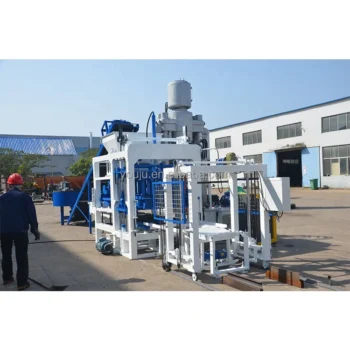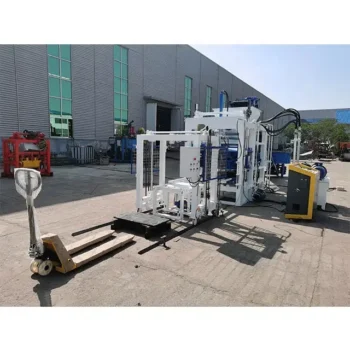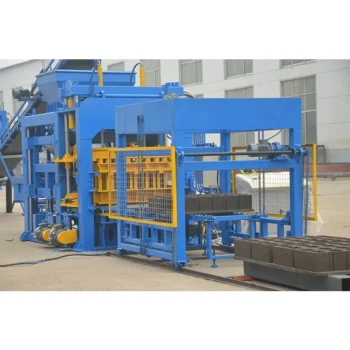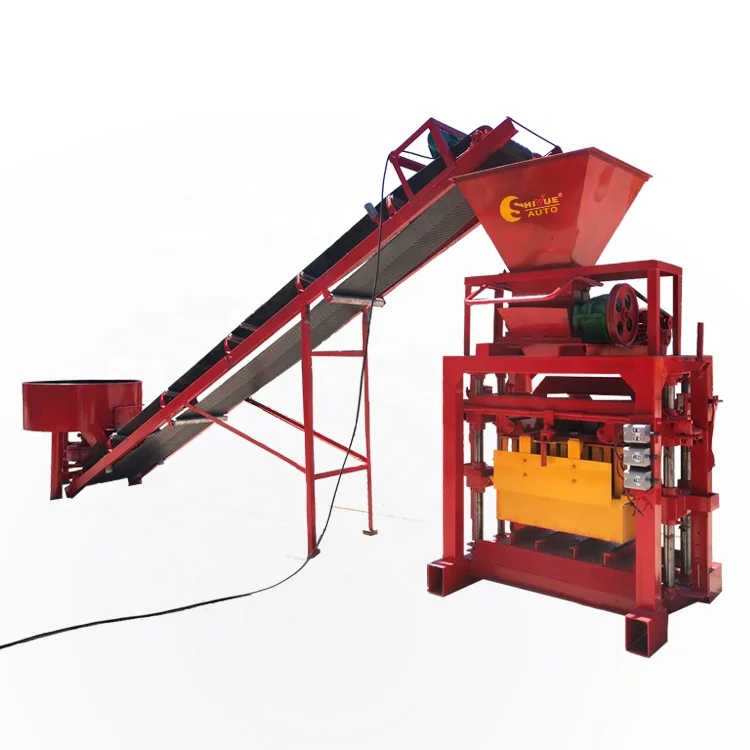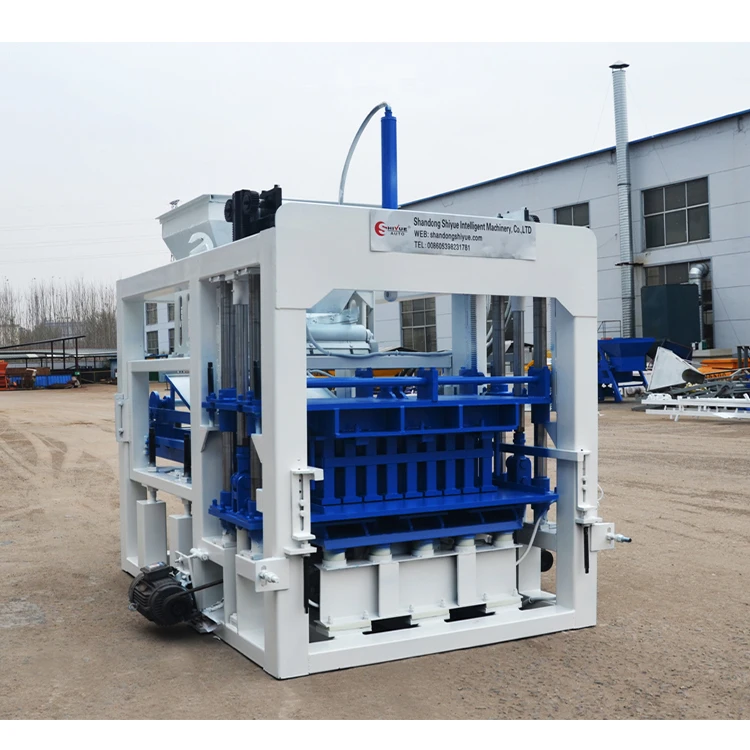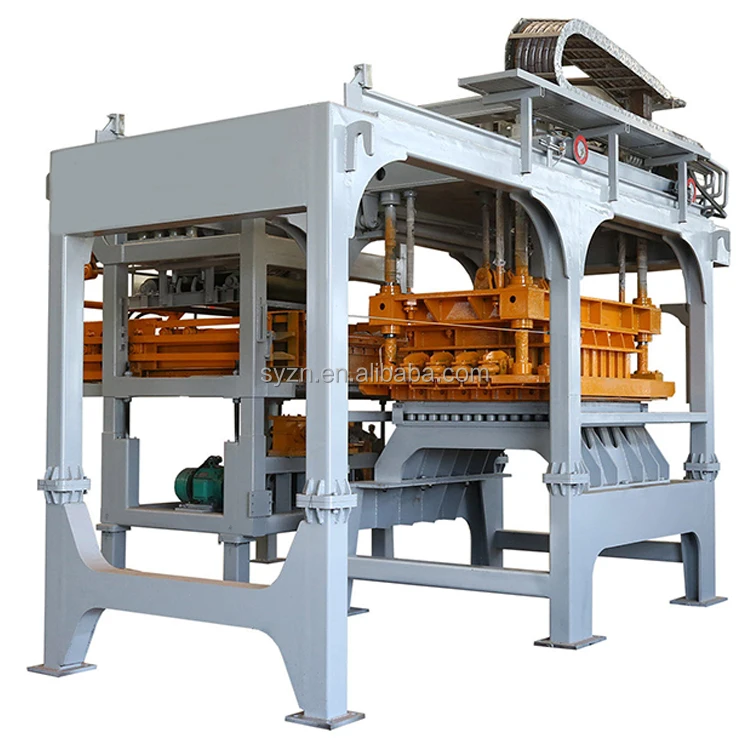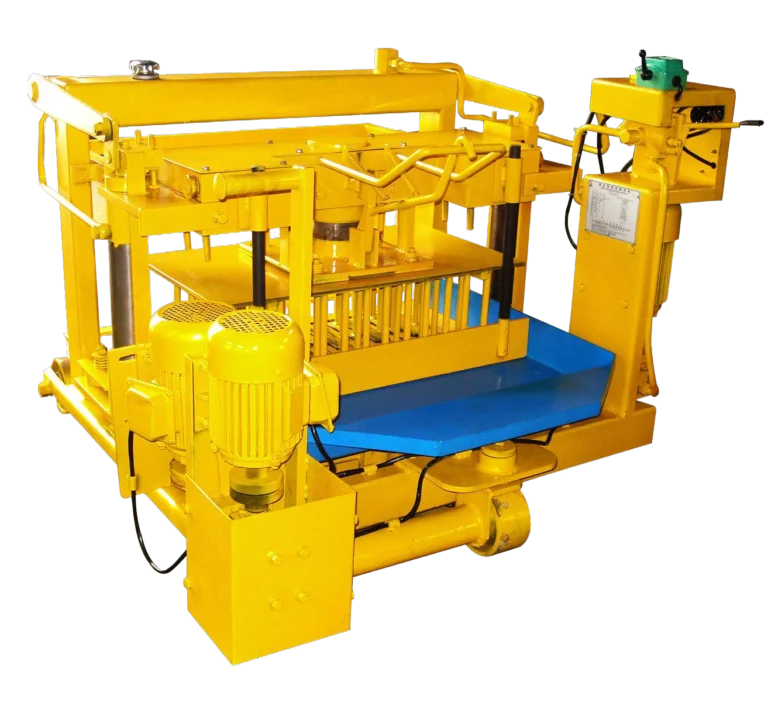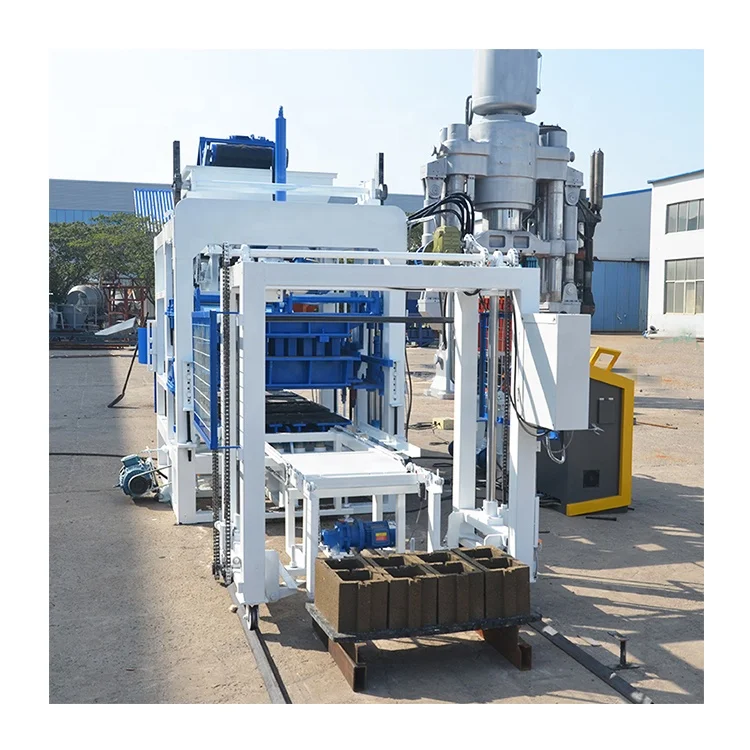


Description
Stock and Delivery Focus — the QT4-16 block machine in stock with container loading plans and arrival estimates confirmed before you commit, so project timelines stay intact.
Technical Specifications
| Parameter | Value |
|---|---|
| Product Type | Automatic Hydraulic Concrete Block Making Machine |
| Model | QT4-16 |
| Overall Dimensions (L×W×H) | 7400×1950×2800 mm |
| Rated Pressure | 21 MPa |
| Main Vibration Form | Platform Vibration |
| Vibration Frequency | 2800–4500 r/min |
| Pallet Size | 900×550 mm |
| Molding Cycle | 15–20 s (basis not stated in source — confirm block format and material) |
| Vibration Force | 40 kN |
| Total Mass | 5 T |
| Demolding Method | Hydraulic |
| Factory Area Requirement | 600 m² |
| Control System | PLC intelligent control with man-machine interface, malfunction diagnosis, remote control function |
| Automation Level | Full automatic |
| Voltage & Frequency | Configurable (confirm before shipment) |
| PLC Display Language | Configurable (confirm before shipment) |
Application Suitability
| Application | Material or Output |
|---|---|
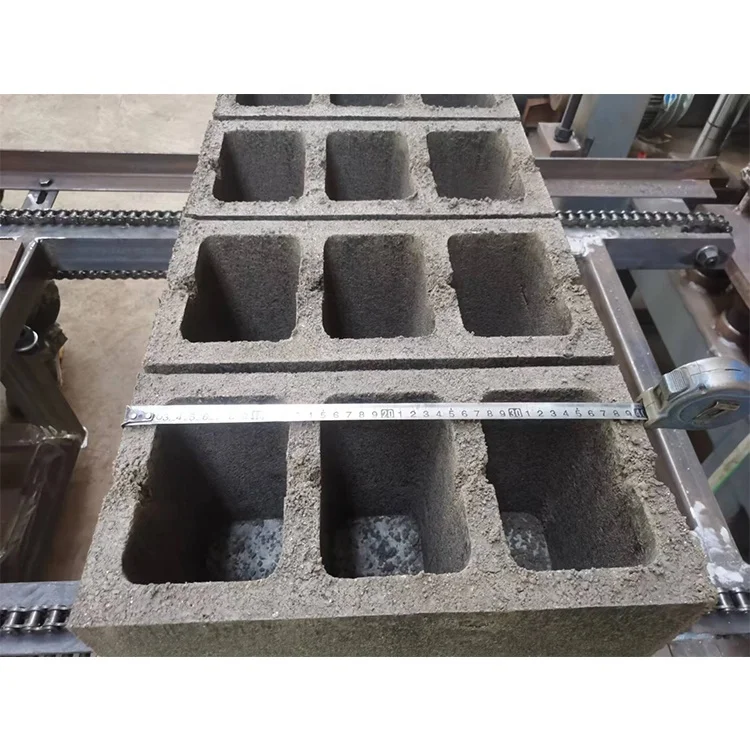
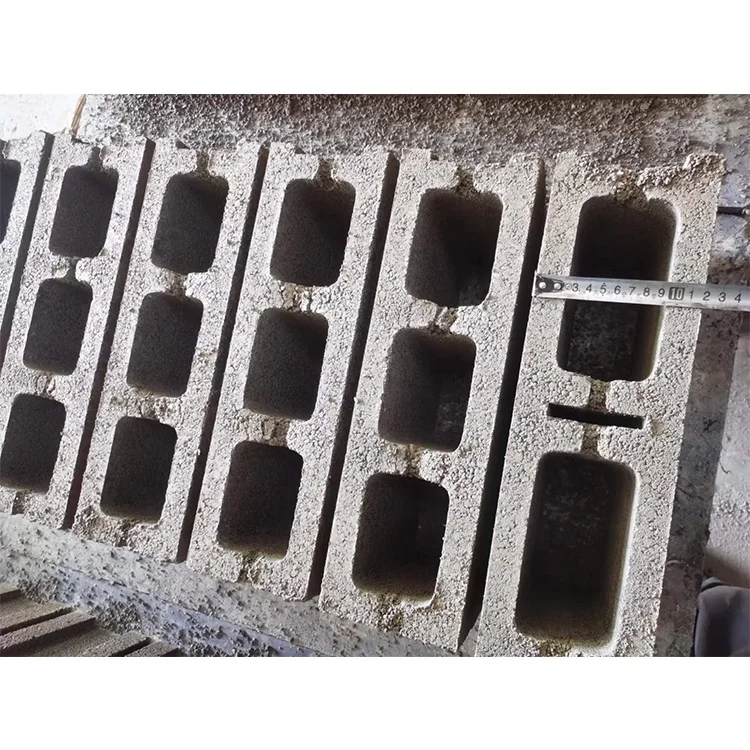
| Hollow block production for residential and commercial walls | Crushed stone, sand, cement, fly ash blends |
| Solid block manufacturing for load-bearing structures | Gravel, cement, and slag aggregates |
| Paving block and colored paver runs for driveways and walkways | Fine sand, cement, pigment additives |
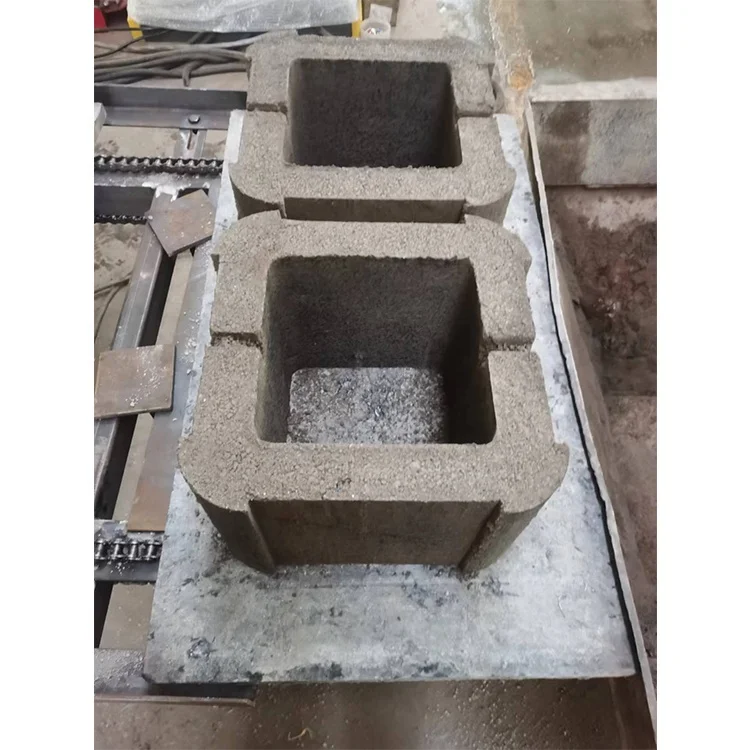
| Interlocking block production for retaining walls | Crushed stone and cement mixtures |
| Kerbstone and boundary wall elements | Coarse aggregate with cement binder |
Why Dispatch Timing Matters More Than Catalog Capacity
A machine sitting in a warehouse in Shandong does you no good if it arrives after your project deadline has passed.
When contractors work against construction schedules, the gap between order confirmation and machine arrival becomes the single most important variable. Buyers often spend weeks comparing cycle times and vibration ratings while the actual bottleneck — shipping lead time and customs clearance — gets addressed only after the purchase order is signed. The QT4-16 block machine in stock means the conversation starts from availability, not from a production queue. [NEED_CITE: typical ocean freight transit times from Qingdao to major global ports]
Container Loading and Shipment Preparation
The QT4-16 automatic hydraulic block making machine ships in standard ocean containers, with the main frame and hydraulic station dismantled to fit within container dimensions. Every QT4-16 block machine in stock undergoes a factory test run before dismantling, and packing photographs document the machine condition at the point of loading. This record gives you a verifiable reference if any transit damage claim arises at the destination port.
Arrival Estimates Quoted Before You Order
Rather than providing a vague shipping window after payment, the dispatch lead time and estimated arrival date are stated during the quotation stage. For the QT4-16 block machine in stock, this means you can align your foundation work, electrical rough-in, and operator hiring against a known timeline. Voltage, frequency, and PLC display language are confirmed in writing before the machine leaves the factory, preventing the all-too-common situation where a machine sits idle on-site because the control panel is in the wrong language or the motor is wound for the wrong voltage. [NEED_CITE: voltage and frequency standards by export market]
Reading the Specs That Actually Affect Your Site
The 900×550 mm pallet size determines how many blocks are produced per cycle and must match the curing racks and forklifts you already operate or plan to purchase. A mismatch here means either buying new handling equipment or running the machine below its designed output. The 21 MPa rated hydraulic pressure combined with 40 kN vibration force defines the compaction energy available to densify your specific aggregate blend. If your local sand carries high clay content, that vibration energy gets absorbed before it reaches the mix, and blocks come out weaker than expected — a reality no catalog figure accounts for. The PLC control with malfunction diagnosis allows on-site troubleshooting without waiting for a technician to fly in, which matters when your nearest service center is an ocean away.
The Cost of Skipping Pre-Shipment Confirmation
Machines configured for one market’s electrical standard routinely arrive in another market where the voltage and frequency differ, requiring motor rewinding or transformer installation before commissioning can begin. PLC displays left in the factory default language force operators to guess at error codes during the critical first weeks of production. Pallet specifications chosen without consulting the buyer’s curing layout result in manual restacking that eliminates the automation advantage the machine was purchased to deliver. Each of these oversights adds days or weeks of non-productive time to a project that was already on a tight schedule. [NEED_CITE: common commissioning delays caused by unconfirmed electrical specifications]
What This Supply Point Actually Provides
Block machinery is the single focus here, meaning the QT4-16 is specified as a matched system — press, mould, pallet, and handling — rather than assembled from disconnected suppliers. Configuration is set against your local aggregate and target block format, not pulled from a catalog default. Standard moulds and pallets ship with the machine so production can begin immediately upon commissioning. Factory test records and packing photographs are provided before dispatch, not after. Customs documentation support is included to reduce friction at the destination port.
Documentation & Verification
- Factory test record on your specified block format before dispatch
- Machine specification sheet confirming pallet size and voltage
- Mould drawing and format list matching your order
- Hydraulic and electrical schematic for on-site maintenance
- Packing photographs documenting condition at container loading
- CE declaration provided where applicable to your market
Installation, Commissioning & Support
- Foundation plan aligned with the 7400×1950 mm footprint and 5 T operating mass
- Electrical supply confirmation for the configured voltage and frequency before wiring begins
- Dismantled components reassembled on-site with hydraulic station reconnection
- PLC malfunction diagnosis system tested during first production run
- Operator training covering mould change procedure and cycle parameter adjustment
- Wear parts and mould replacement list supplied for long-term maintenance planning
What We Need From You to Move Forward
Provide your target block formats and daily output requirement so we can confirm which moulds ship with the machine. Share your local raw material source — particularly aggregate type and any known clay or silt content — so vibration and pressure settings are adjusted before dispatch. Confirm your site’s voltage, frequency, and preferred PLC display language to eliminate electrical and control mismatches on arrival.
Frequently Asked Questions
Q: What is the dispatch lead time for the QT4-16, and is it currently in stock?
A: Stocked QT4-16 units are available for immediate dispatch preparation once voltage, frequency, and PLC language are confirmed. The exact lead time depends on your chosen mould configuration and any pre-shipment testing requirements. We quote the dispatch date and estimated arrival during the quotation stage, not after payment.
Q: How is the machine packed for container shipment, and what dismantling is required?
A: The main frame is separated from the hydraulic station and control cabinet to fit within standard container dimensions. All dismantled joints are marked for reassembly. Packing photographs are taken at the loading point and shared with you before the container is sealed, giving you a condition record for transit verification.
Q: Will voltage, frequency, and PLC language be confirmed before the machine leaves the factory?
A: Yes. These three parameters are confirmed in writing during the order stage and verified during the factory test. The PLC display language is set to your specification so operators can read error codes and production data from the first day of operation without translation guesswork.
Q: What arrival estimate can I expect once the machine ships?
A: The estimated arrival date is calculated based on the shipping route from the port of origin to your destination port and is quoted alongside the dispatch lead time. Ocean transit variables such as port congestion can shift this estimate, and we communicate any changes as soon as they become known.
Q: Are standard moulds and pallets included in the shipment, or ordered separately?
A: Standard moulds matching your specified block formats and the corresponding 900×550 mm pallets are included in the shipment. Custom mould designs based on your drawings are quoted separately with their own production lead time, which may differ from the machine dispatch schedule.