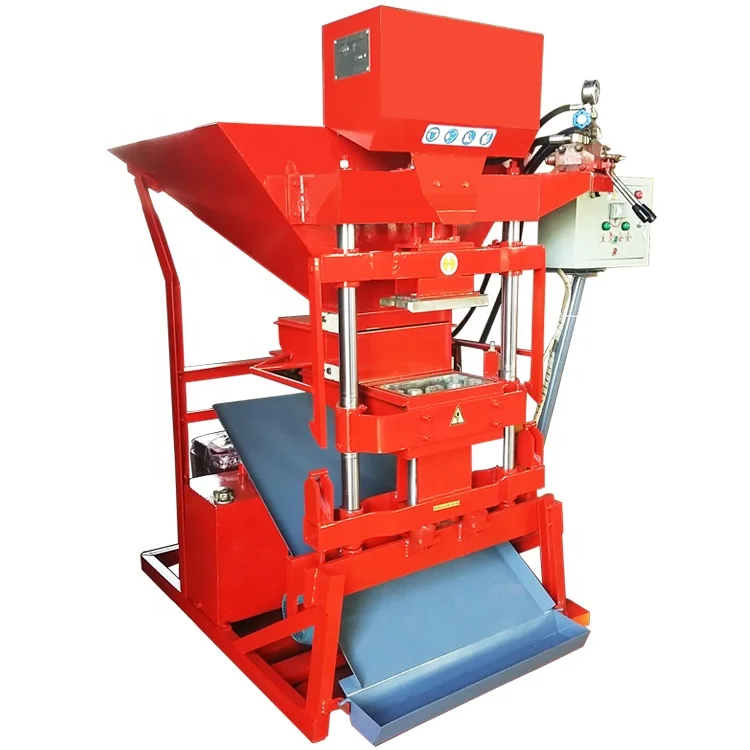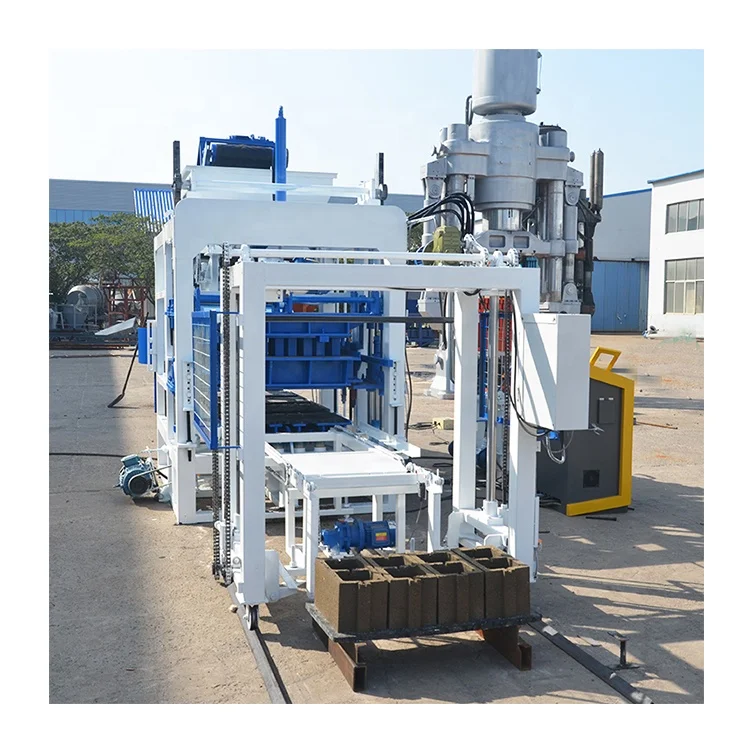
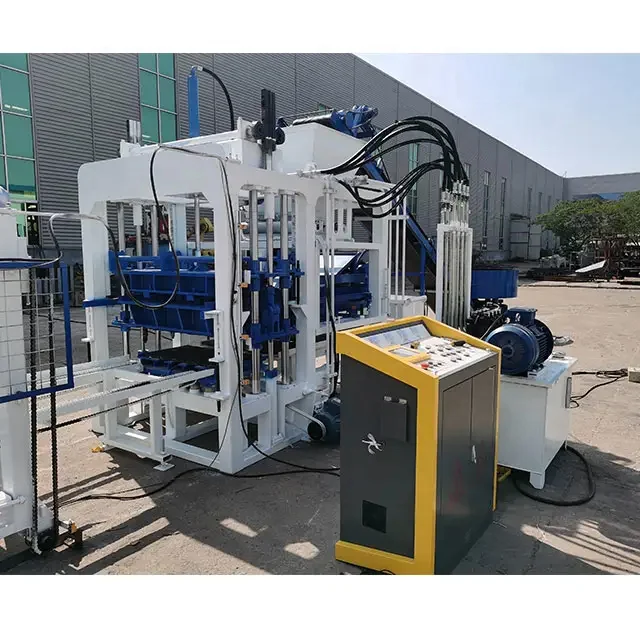

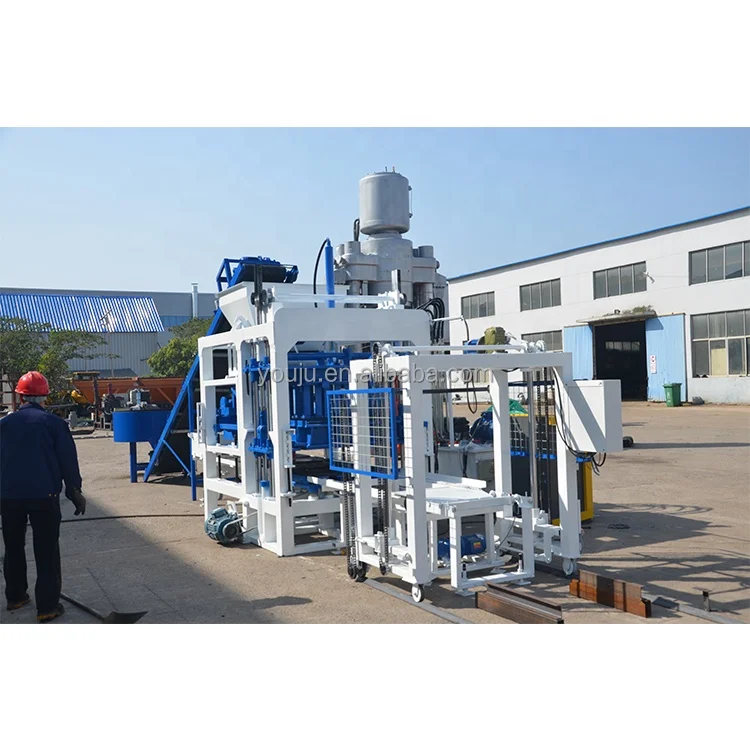
Description
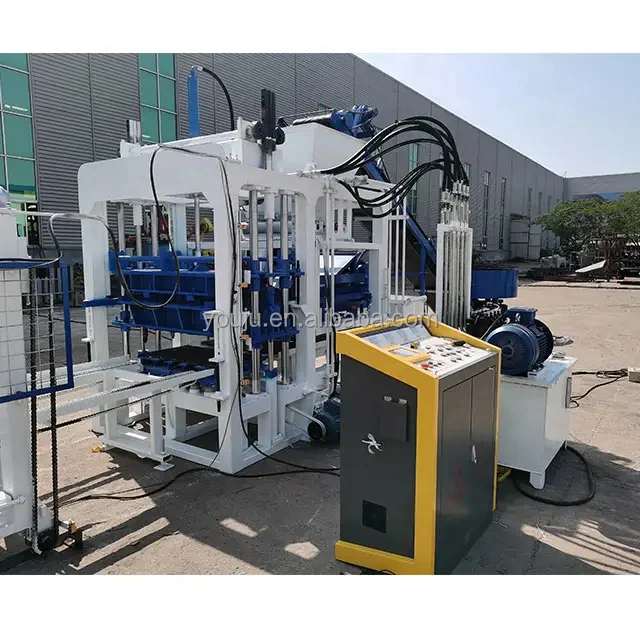
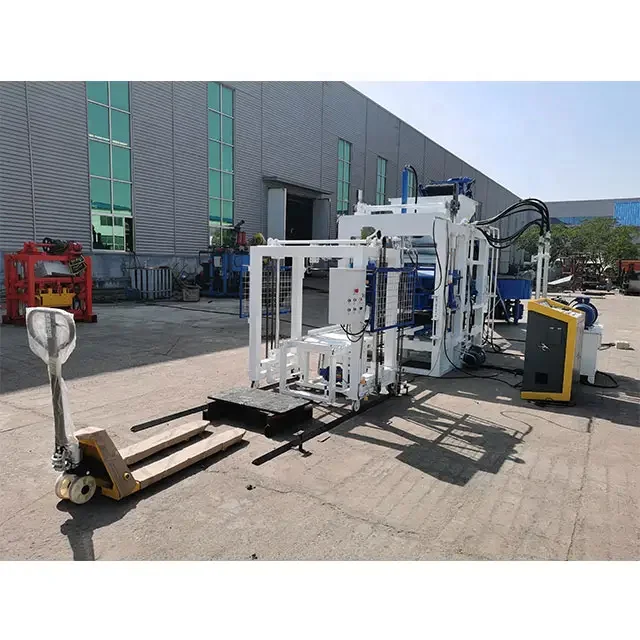
Stocked configuration — QT4-18 automatic concrete block machine in stock fast delivery means container loading plans and dispatch lead times are confirmed before you pay, not guessed after.
Technical Specifications
| Parameter | Value |
|---|---|
| Model | QT4-18 |
| Product Type | Automatic Concrete Block Making Machine |
| Overall Dimensions (L×W×H) | 2500×1750×2200 mm |
| Rated Pressure | 16 MPa |
| Vibration Form | Platform Vibration |
| Pallet Size | 950×550 mm |
| Molding Cycle | 18–25 s (basis to be confirmed with block format and material) |
| Overall Power | 27.5 kW |
| Control System | PLC with frequency converter, Schneider electrical components |
| Automation Level | Automatic (mixer, pallet conveyor, molding machine, block conveyor, hydraulic station, PLC console) |
| Mould Lifting Mechanism | Double-sided synchronous gears |
| Material Feeder | Distribution belt hopper |
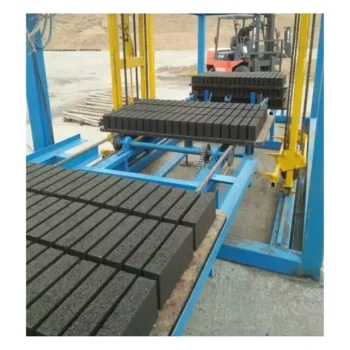
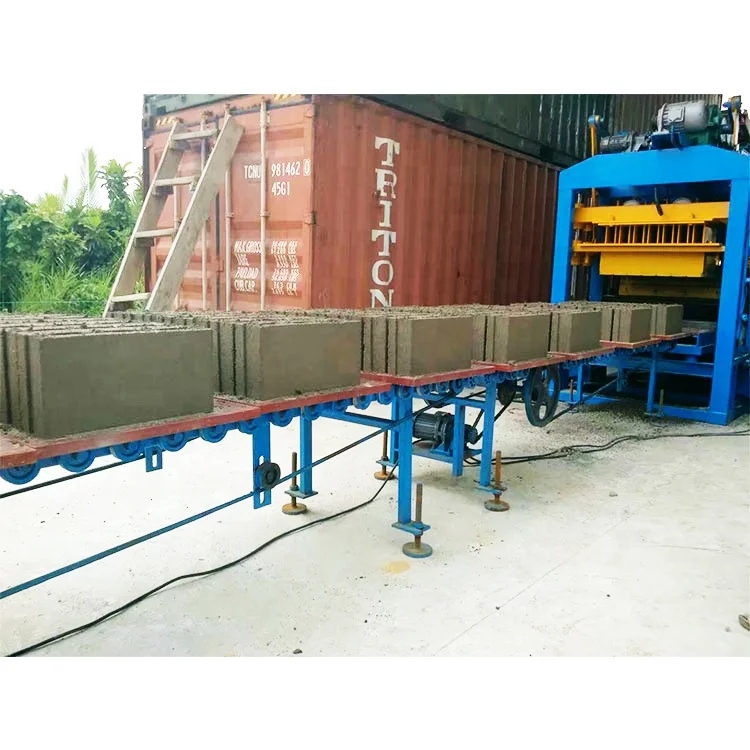
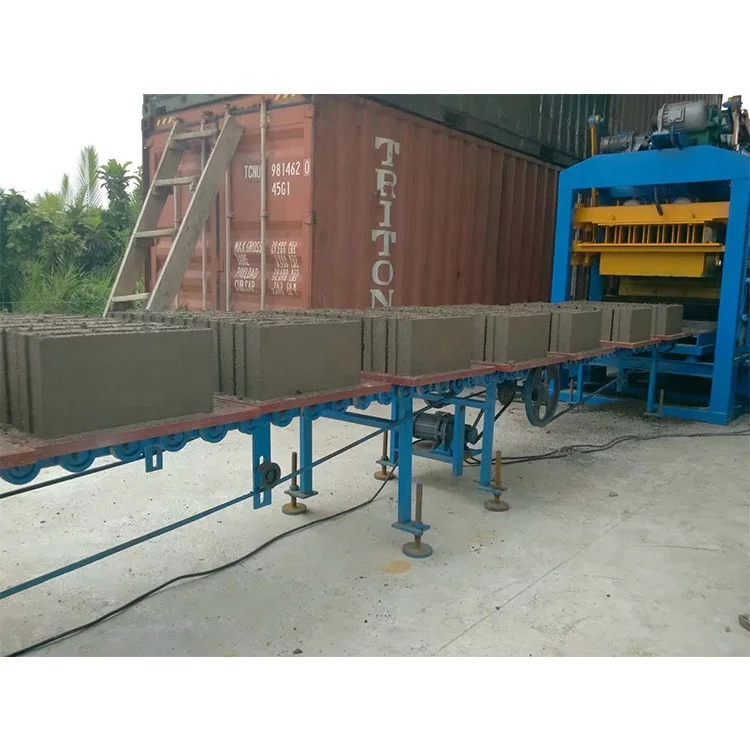
| Block Receiver | Motor-driven conveyor with idler wheels |
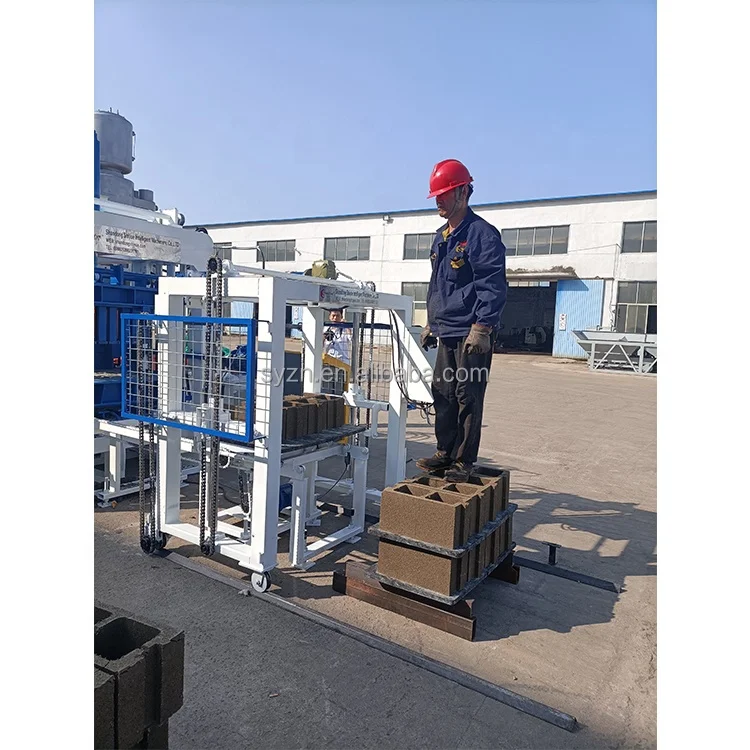
| Supporting Equipment Options | JQ500 pan mixer, 8 m or 6 m belt conveyor, stacker, block clamper, extra moulds, trolley, cement silo, batching plant |
| Voltage & Frequency | Configurable to destination before shipment (confirm before order) |
| Daily Output Capacity | Depends on block format, mix design, and curing schedule (basis to be confirmed) |
Application Suitability
| Application | Material or Output |
|---|---|
| Hollow block production for residential walls | Crushed stone, sand, cement, water |
| Solid block production for load-bearing structures | Dense aggregate mixes with cement binder |
| Paving block production for walkways and yards | Fine aggregate surface layer over coarse base |
| On-site block production for housing projects | Local sand, gravel, and Portland cement |
| First block plant for entrepreneurs | Standard concrete masonry unit formats |
Why Dispatch Lead Time Matters More Than Cycle Time
A fast cycle means nothing if the machine is still on the factory floor three months after you needed it on site.
Contractors racing a construction deadline often chase the lowest molding cycle number, only to discover the automatic concrete block machine in stock fast delivery they were promised actually requires a long production run. By the time the machine arrives, the project schedule has slipped and penalty clauses kick in. I have watched buyers lose entire dry seasons because their block press sat in a port waiting for a customs document that was never prepared [NEED_CITE: common customs delays for industrial machinery imports]. When you are working backward from a handover date, the calendar day the container leaves the factory gate matters far more than whether the press cycles in eighteen or twenty-five seconds.
What In-Stock Really Means for Your Timeline
When we list a QT4-18 as stocked, the main frame, hydraulic station, and PLC console are already assembled and factory-tested. Standard moulds for hollow and solid blocks sit on the rack beside the press. You receive a dispatch lead time quoted in calendar days from order confirmation to container loading — not a vague production window. This is the core promise behind every automatic concrete block machine in stock fast delivery listing on this page.
How Container Loading Is Planned Before You Commit
The QT4-18 main frame is dismantled into shipping sections that fit a standard container alongside the JQ500 mixer, belt conveyor, and pallet stack. Each section is photographed before crating, so you see exactly what goes into which container. Machine dismantling for shipment is documented with packing photographs and shared before the container is sealed [NEED_CITE: standard container loading practices for heavy machinery].
Reading the Numbers That Actually Affect Your Output
The 16 MPa rated pressure and platform vibration together determine how densely the concrete is compacted inside the mould. Higher compaction means the block holds its shape when stripped, reducing breakage during the move to the curing rack. The 950×550 mm pallet size must match the curing area and forklift you already have on site — ordering a pallet size that your forklift cannot handle turns every transfer into a two-person job. The 27.5 kW overall power draw dictates the transformer and dedicated circuit your electrician needs to install before the press arrives. Finally, the PLC with frequency converter and Schneider components means the control language and voltage must be confirmed to your destination standard before the wiring harness is assembled [NEED_CITE: voltage and frequency standards by export market].
The Cost of Ordering the Wrong Configuration
A buyer who skips the voltage confirmation step and receives a 380 V/50 Hz machine in a 440 V/60 Hz market faces a transformer rental, rewired motor, or a dead PLC — all before the first block is pressed. Similarly, choosing a pallet size without measuring the curing yard leads to pallets stacked on bare ground, warping in the sun, and jamming the pallet feeder. These are the silent budget killers that never show up in the quotation comparison [NEED_CITE: common installation failures due to unconfirmed site conditions].
Why Buyers Source This Machine Here
Block machinery is the single focus of the workshop, so the QT4-18 press, moulds, pallets, and handling equipment leave the factory as one matched system rather than a collection of parts from different suppliers. Configuration is set against your actual mix design and local aggregate, not a catalogue default. Standard moulds for the formats your market sells are stocked alongside the press, cutting the wait for custom tooling. Supporting equipment — mixer, conveyor, stacker, trolley — ships in the same container, so you are not chasing separate deliveries. Installation and commissioning support with operator training is included, so your crew is producing saleable blocks by the end of the first week.
Documentation & Verification
- Factory test record on your block format and pallet size before dispatch
- Machine specification sheet with confirmed voltage and control language
- Mould drawing and format list for every mould included in the shipment
- Packing photographs showing each dismantled section before crating
- CE declaration provided where applicable to your import market
- Customs documentation support including HS code and certificate of origin
Installation, Commissioning & Support
- Foundation pad sized to 2500×1750 mm footprint with level tolerance confirmed on site
- Dedicated 27.5 kW circuit with correct voltage and frequency verified before energizing
- Main frame, hydraulic station, and PLC console reassembled and aligned by the installation team
- First production run supervised with vibration and pressure adjusted to your local aggregate
- Operator training covers PLC menu navigation, mould change procedure, and daily maintenance checklist
- Wear parts list and mould spares provided so replacements are on hand when needed
What We Need From You to Confirm Dispatch
Tell us the block formats your market sells and the daily volume you need to meet. Share the local sand and aggregate type so we can set the vibration parameters before the press leaves the factory. Confirm your site voltage, frequency, and preferred PLC display language so the wiring harness is built to match. If you have an existing curing yard and forklift, send us the dimensions so we can confirm the 950×550 mm pallet fits your layout.
Frequently Asked Questions
Q: Which QT4-18 units and moulds are currently in stock and ready to ship?
A: Stocked units include the QT4-18 main frame, hydraulic station, and PLC console, fully assembled and factory-tested. Standard hollow and solid block moulds matching the 950×550 mm pallet are on the rack. We confirm exact available quantities and mould formats at the time of your inquiry so you receive an up-to-date stock list.
Q: What is the dispatch lead time from order to container loading?
A: Once the order is confirmed and the voltage configuration is locked in, dispatch lead time is quoted in calendar days covering final inspection, dismantling, crating, and container loading. The exact number of days depends on current stock levels and destination documentation requirements, all confirmed before you commit.
Q: How is the machine dismantled and packed for container shipment?
A: The QT4-18 main frame is broken down into sections that fit a standard container alongside the mixer, conveyor, and pallets. Each section is photographed before crating. A container loading plan is shared with you showing weight distribution and lashing points so you know exactly how the cargo is secured.
Q: Can I get an arrival estimate for my destination port before placing the order?
A: Yes. We provide an arrival estimate based on your destination port and current shipping schedules before you pay. This estimate covers sea transit and typical port handling time so you can plan foundation work, electrical installation, and raw material delivery around a known arrival window.
Q: What voltage and frequency configuration is applied before shipment?
A: Voltage and frequency are configured to your site specification during final assembly. The PLC display language is also set to your preference. We confirm all electrical details in writing before the wiring harness is built, so the machine powers up correctly on arrival without needing on-site rewiring.