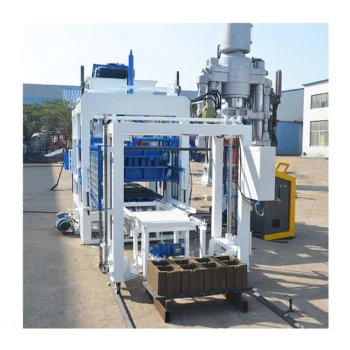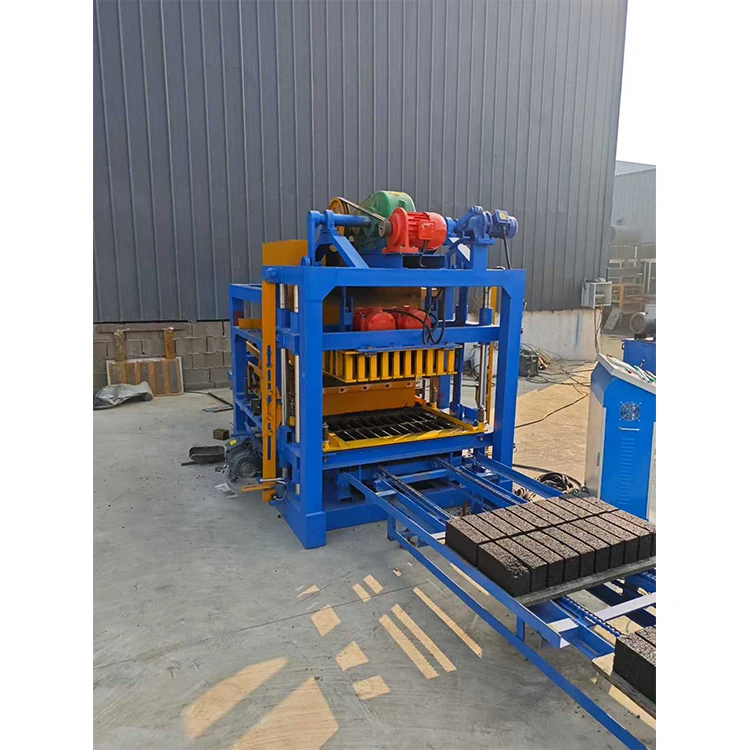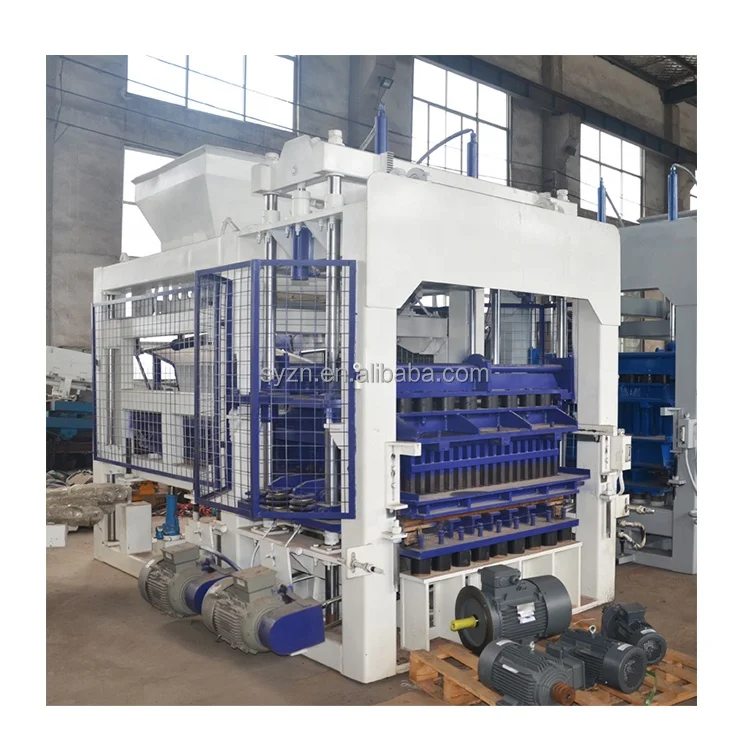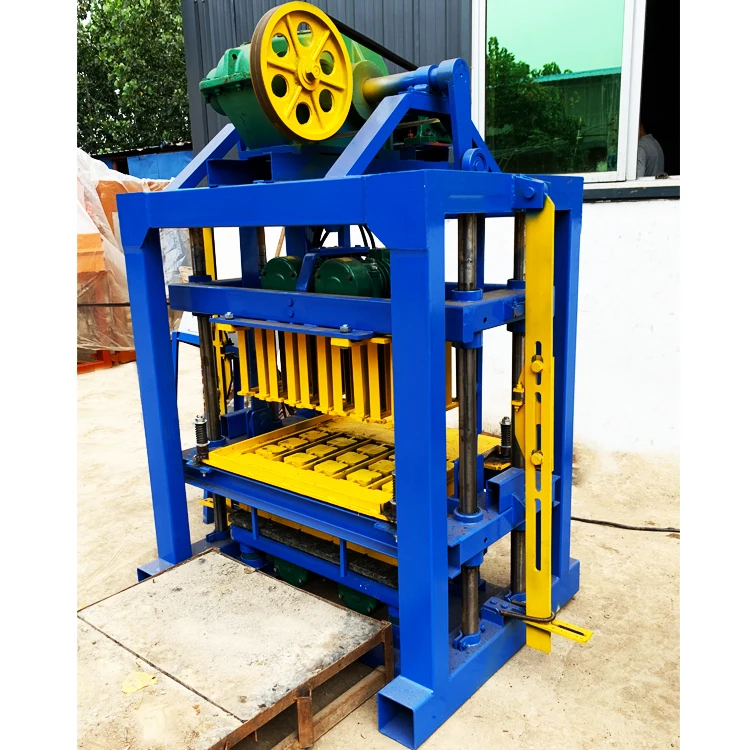

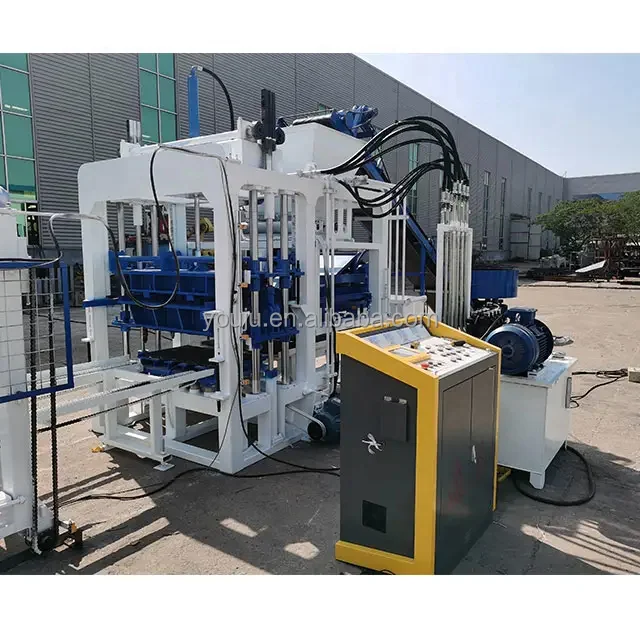
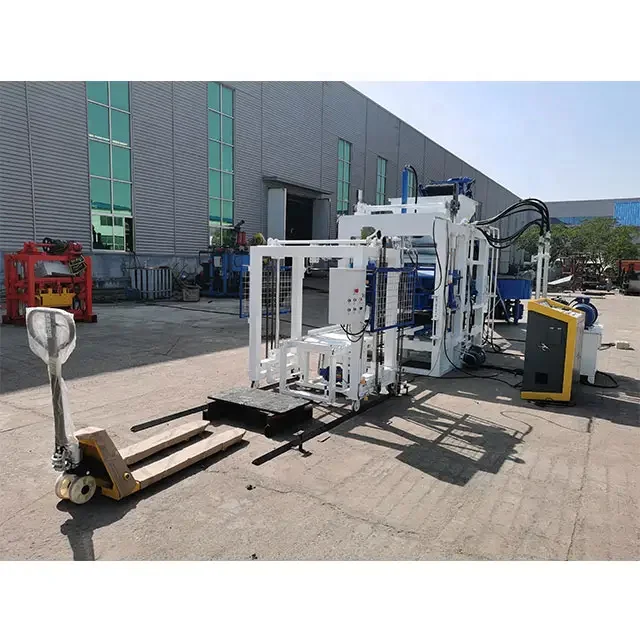
Description
Stocked availability with confirmed lead time — QT4-18 block machines are held in readiness or built on a fast-track schedule, with dispatch dates, container loading plans, and arrival windows quoted before you commit, eliminating the guesswork for project-deadline buyers.
Technical Specifications
| Parameter | Value |
|---|---|
| Model | QT4-18 |
| Product Type | Automatic Concrete Block Making Machine |
| Overall Dimensions | 2500 x 1750 x 2200 mm |
| Rated Pressure | 16 MPa |
| Vibration Form | Platform Vibration |
| Pallet Size | 950 x 550 mm |
| Molding Cycle | 18–25 s (basis: dependent on block format and mix) |
| Overall Power | 27.5 kW |
| Control System | PLC with frequency converter |
| Electrical Components | Schneider brand |
| Mould Lifting Mechanism | Double-sided synchronous gears |
| Automation Level | Automatic (pallet feeding, molding, block conveying) |
| Support Equipment Compatibility | JQ500 pan mixer, 8 m / 6 m belt conveyor, stacker, block clamper, cement silo, batching plant |
Application Suitability
| Application | Material or Output |
|---|---|
| Concrete hollow block production | Cement, crushed stone, sand, and water |
| Solid block manufacturing | Standard concrete mix with local aggregates |
| Paver and kerbstone production | High-density mix designs using available regional materials |
| On-site contractor block making | Project-specific formats for housing and infrastructure builds |
What "Cycles per Hour" Leaves Out When Ordering a QT4-18 Automatic Block Machine in Stock Fast Delivery
The molding cycle range only becomes meaningful once you lock in the block format and mix design you will actually run.
I have stood on sites where the QT4-18 automatic block machine in stock fast delivery was quoted at a cycle speed that assumed a thin-wall hollow block, only to find the buyer’s market demanded a dense solid paver that pushed every cycle well past the upper end of the range. The daily output then fell noticeably short of the project schedule, and the contractor had to extend shifts to compensate [NEED_CITE: block format impact on realistic cycle time and daily output]. Stating the cycle as a range rather than a single number is the honest starting point; matching it to your actual format is where real planning begins.
Dispatch Timing You Can Plan Around
The primary reason buyers come to this QT4-18 automatic block machine in stock fast delivery page is schedule pressure. A housing project in the Middle East or a road-side paver contract does not wait for a twelve-week production slot. When the machine is held in stock or on a rapid build track, the dispatch date is confirmed at the quotation stage, not estimated vaguely after payment.
Container Loading and Machine Dismantling
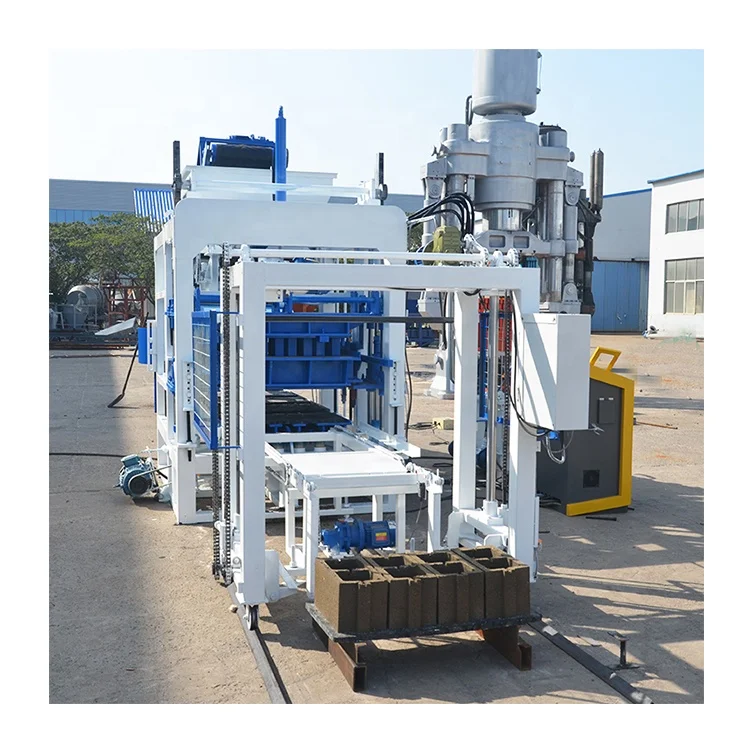
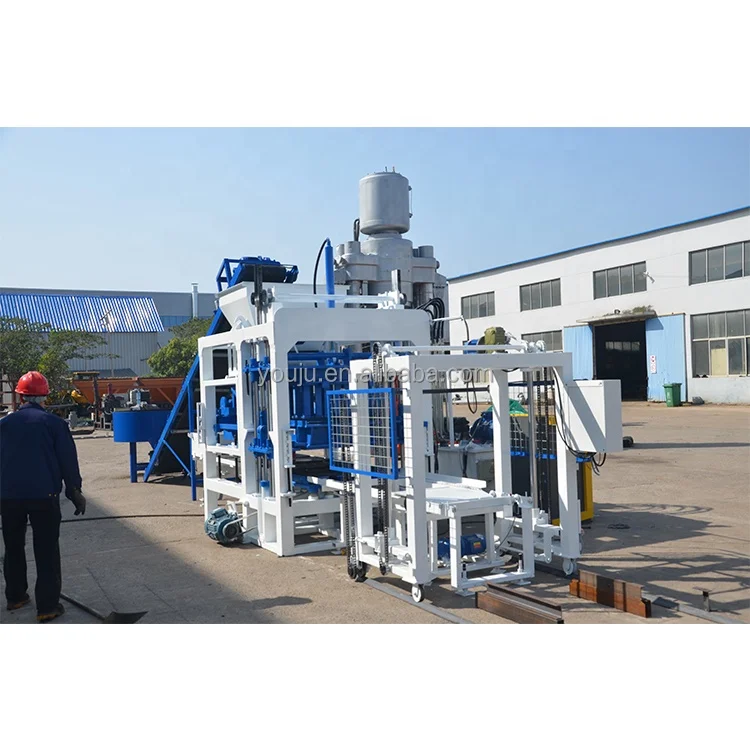
Shipping is where surprises usually appear. The overall dimensions of 2500 x 1750 x 2200 mm mean the QT4-18 cannot simply roll into a standard container intact. The machine is dismantled into major assemblies — press frame, vibration platform, hydraulic station, feeder system, and control cabinet — and a loading plan specifies which assembly goes into which container, how many containers are needed, and what arrives at your port. Knowing this before you sign avoids the situation where a second container is discovered mid-ocean.
Reading the Specs That Actually Matter
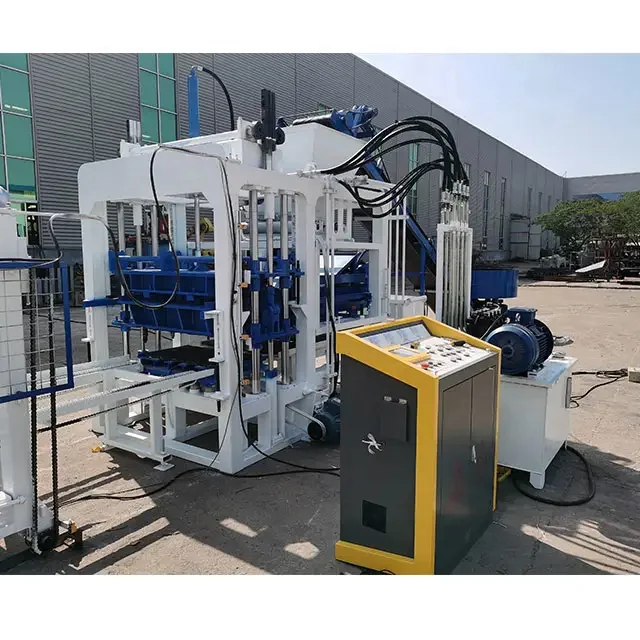
The rated pressure of 16 MPa and platform vibration work together to compact the mix into the mould cavity. Higher pressure with insufficient vibration leaves voids; strong vibration with low pressure produces weak edges. The 950 x 550 mm pallet size dictates how many blocks are formed per cycle and must align with your existing curing racks and forklift forks — a mismatch here means replacing your entire curing infrastructure or running a pallet adapter [NEED_CITE: pallet size compatibility with curing area and forklift specifications]. The PLC with frequency converter allows the operator to adjust vibration frequency from the control panel, which matters when switching between a lightweight hollow block and a dense paver in the same shift.
The Cost of Skipping Pre-Shipment Checks
When voltage and frequency are assumed rather than confirmed, the first day on site ends with a tripped breaker or a burnt motor winding. I have watched a 27.5 kW machine sit idle for three weeks because the local grid ran at a frequency the motor was not wound for, and a replacement transformer had to cross two borders [NEED_CITE: voltage and frequency mismatch consequences on industrial electric motors]. The same applies to PLC display language: if the operator cannot read the fault codes, every alarm becomes a phone call. These are not engineering problems — they are checklist items that cost nothing when done before dispatch and cost weeks when done after arrival.
Why Buyers Source the QT4-18 Here
Block machinery is the single focus, so the QT4-18 is specified as a matched system — press, mould, pallet, and handling — rather than assembled from separate suppliers who point blame at each other during commissioning. Configuration is set against your actual mix design and local aggregate, not a catalogue default that assumes washed river sand you cannot source. Mould design covers the formats your market sells, and custom mould drawings are accepted to buyer specifications. The automation level is selectable, meaning you can start with automatic pallet feeding and molding now and add stacking later. Installation support includes operator training on your specific block format, not a generic video [NEED_CITE: operator training impact on block consistency and mould wear].
Documentation & Verification
- Factory test record run on your specified block format before dispatch
- Voltage, frequency, and PLC language confirmation sheet signed before production
- Container loading plan with dismantling method and packing photographs
- Hydraulic and electrical schematic matching the shipped machine configuration
- Operation and maintenance manual with wear parts and mould replacement list
Installation, Commissioning & Support
- Foundation pad must accommodate 2500 x 1750 mm footprint and vibration isolation
- Dedicated power circuit rated for 27.5 kW at confirmed voltage and frequency
- Machine arrives dismantled; reassembly covers press frame, vibration platform, and feeder
- First-day commissioning sets PLC parameters, vibration frequency, and molding cycle for your mix
- Operator training on pallet feeding sequence, mould change procedure, and fault code reading
- Wear parts list includes mould liners, hydraulic seals, and vibration motor bearings
What to Have Ready When You Inquire
To get a firm dispatch date and arrival estimate for a QT4-18 automatic block machine in stock fast delivery, share the block format you intend to produce, your target daily output, and the local aggregate type you will use. Confirm your site voltage, frequency, and preferred PLC display language. If you already have curing racks and forklifts on site, provide their dimensions so the 950 x 550 mm pallet specification can be verified before the quotation is finalized.
Frequently Asked Questions
Q: Is the QT4-18 currently in stock, or will it be built to order?
A: Availability depends on the configuration you need. Standard QT4-18 units with common mould sets are often held ready for dispatch, while machines requiring custom mould designs, specific voltage windings, or non-standard PLC languages are built on a fast-track schedule. The exact dispatch date — whether from stock or from production — is confirmed in the quotation before you commit.
Q: How many containers does the QT4-18 line require for shipment?
A: The machine is dismantled into major assemblies for container loading. The number of containers depends on whether you order the press alone or include the JQ500 mixer, belt conveyor, and support equipment. A detailed loading plan showing which assembly goes into which container is provided before shipment so you can arrange port clearance in advance.
Q: What voltage and PLC language options are confirmed before dispatch?
A: Voltage, frequency, and PLC display language must be locked before the machine enters production or leaves stock. The QT4-18 draws 27.5 kW, and the motor winding, transformer, and Schneider electrical components are all configured to your confirmed grid parameters. The PLC screen language is set to match your operator’s requirement, avoiding unreadable fault codes on site.
Q: What arrival estimate can I expect from order to site delivery?
A: Once the configuration is confirmed and dispatch date is set, transit time depends on your destination port and shipping route. Stocked machines can be containerized and dispatched within days, while built-to-order units carry a stated production window. The arrival estimate covers ocean freight plus inland transport to your site, quoted upfront so your project schedule stays intact.
Q: Which moulds ship with the machine, and how long do extra moulds take?
A: The QT4-18 ships with the mould set specified for your target block format — hollow, solid, or paver. Additional custom moulds designed to your drawings are produced separately, and their lead time is quoted at the same time as the machine so you can decide whether to ship them together or follow by air freight if the project demands it.