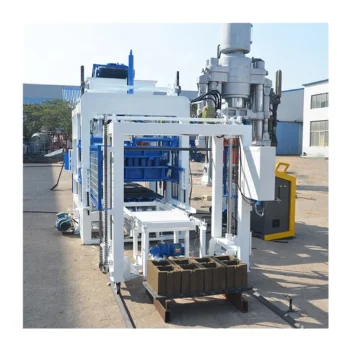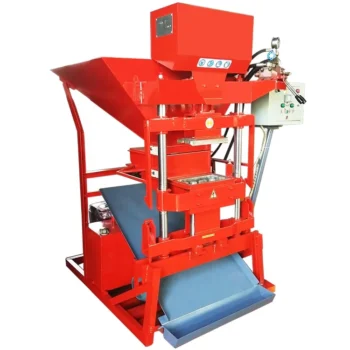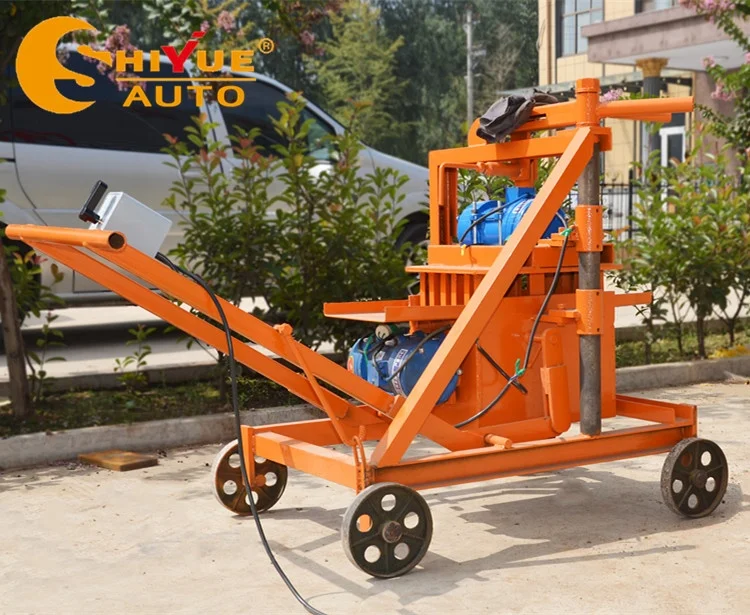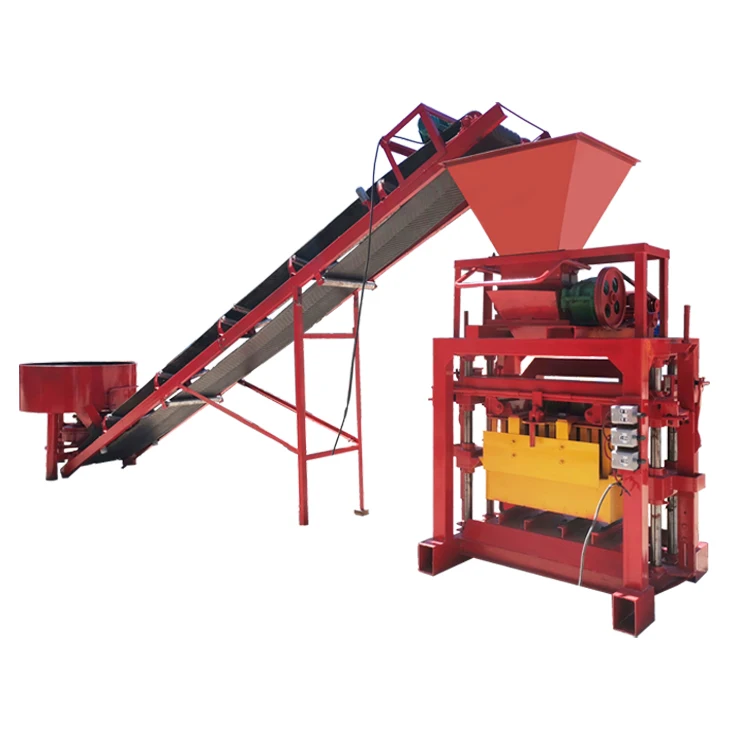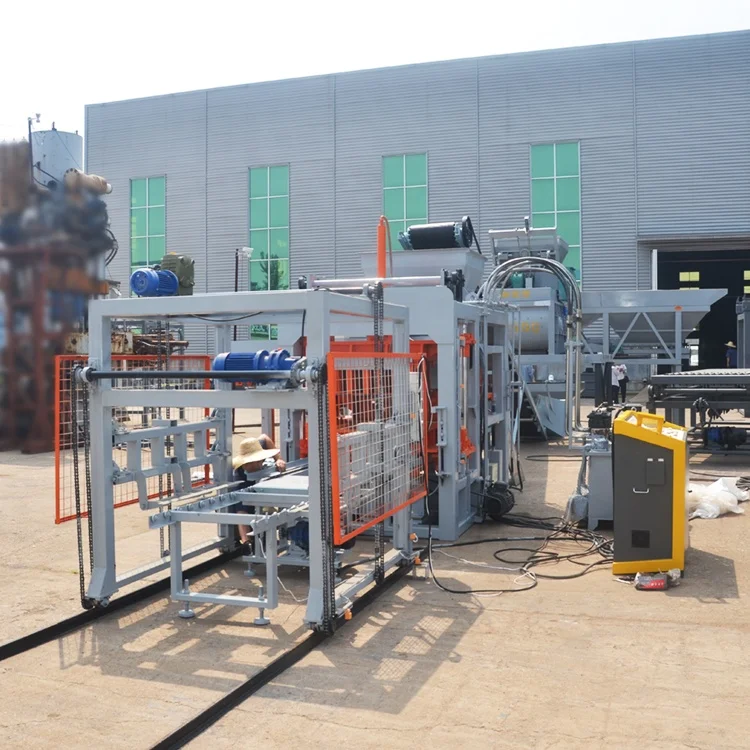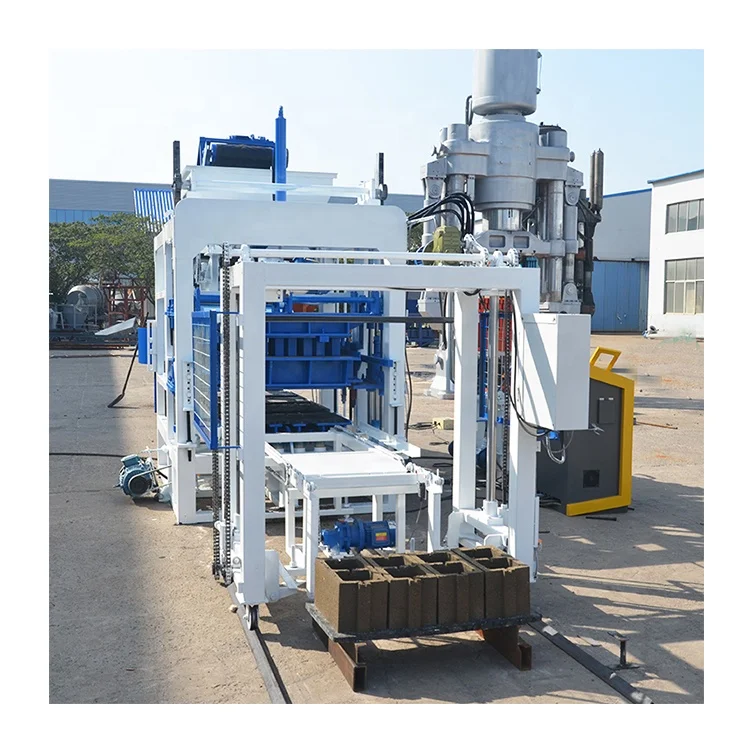
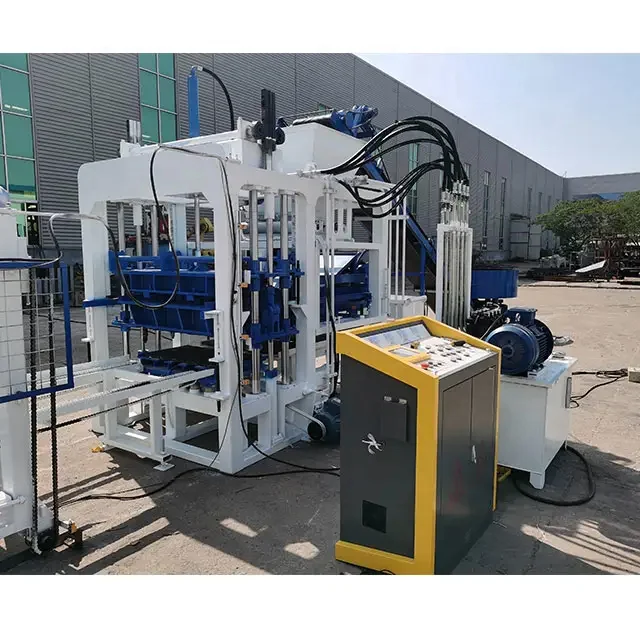

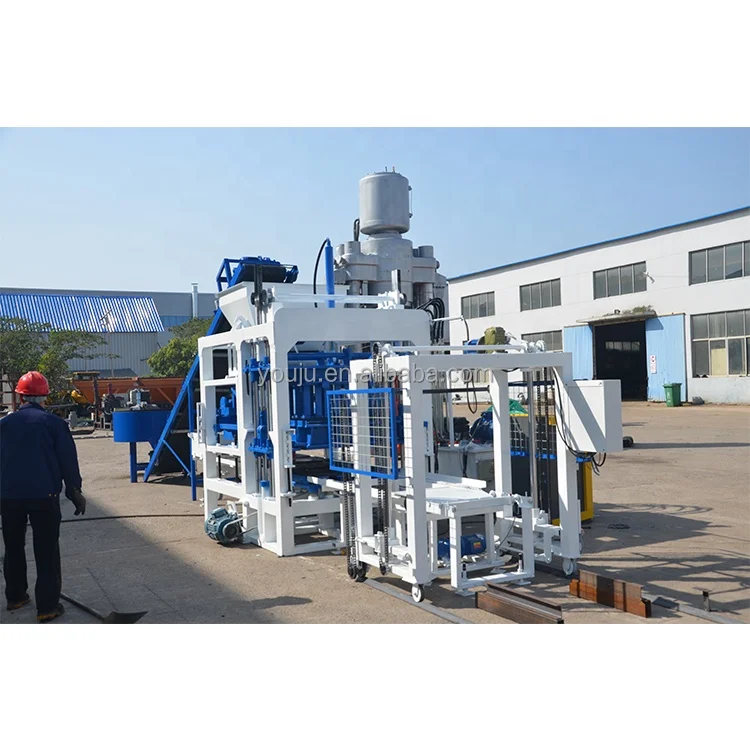
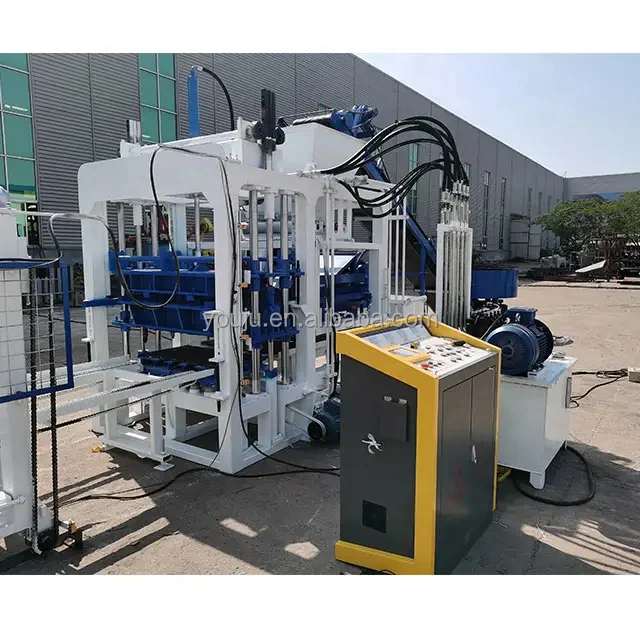
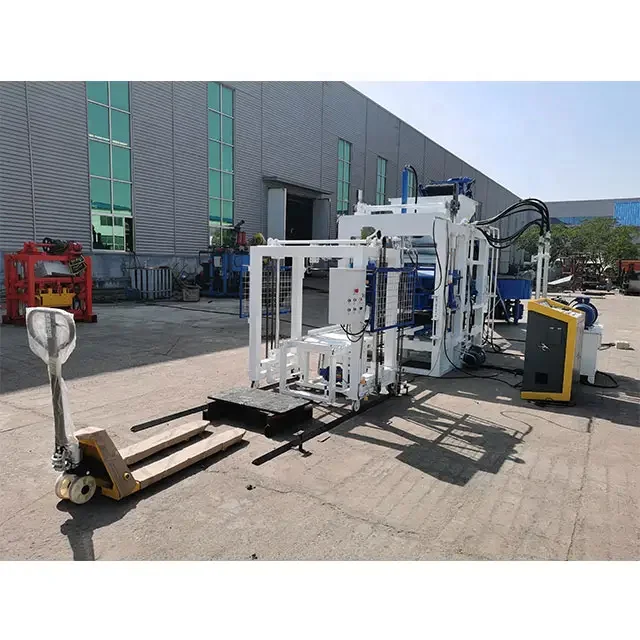
Description
Stocked Dispatch Lead Times — QT4-18 units held in inventory ship within a confirmed window, eliminating the multi-week production wait that stalls project mobilization.
Technical Specifications
| Parameter | Value |
|---|---|
| Model | QT4-18 |
| Product Type | Semi-Automatic Concrete Block Making Machine |
| Overall Dimensions | 2500 × 1750 × 2200 mm |
| Rated Hydraulic Pressure | 16 MPa |
| Vibration System | Platform Vibration |
| Pallet Size | 950 × 550 mm |
| Molding Cycle | 18–25 seconds (basis to be confirmed by block format and material) |
| Overall Power | 27.5 kW |
| Control System | PLC with frequency converter |
| Electrical Components | Schneider (source value — verify against current build) |
| Automation Level | Semi-automatic (hydraulic pallet feeder, block receiver conveyor) |
| Mould Lifting Mechanism | Double-sided synchronous gears |
| Material Feeder | Distribution belt hopper |
| Included Mould | One standard hollow block mould |
| Supporting Equipment Options | JQ500 pan mixer, 8m or 6m belt conveyor, stacker, block clamper, trolley |
Application Suitability
| Application | Material or Output Context |
|---|---|
| Hollow block production | Crushed stone, river sand, and cement blends for masonry walls |
| Solid block manufacturing | Dense aggregate mixes for load-bearing structural units |
| Paving block production | Fine aggregate and cement for pedestrian and light-traffic surfaces |
| On-site contractor production | Mobile block making at remote construction locations |
| Start-up block plant | First-line equipment for entrepreneurs entering concrete product manufacturing |
Why "18-Second Cycle" Is Only Half the Story
A molding cycle quoted without block format is a number without meaning.
Buyers often see a cycle time like 18–25 seconds and mentally calculate daily output, only to find the real number falls short once the press runs their actual block design. The QT4-18 block machine in stock fast delivery achieves its cycle range only when the mix design, block height, and vibration dwell are matched to the format being pressed. A 150mm hollow block behaves differently under platform vibration than a 60mm paving slab. When I deliver a semi-automatic line to a job site, the first thing I check is whether the quoted cycle was based on the buyer’s actual product — because that mismatch is where schedule delays begin. [NEED_CITE: relationship between block height and vibration dwell time in hydraulic presses]
Dispatch Timeline and Container Loading
When a project deadline is fixed, waiting eight to twelve weeks for a machine to be built from scratch is not an option. This QT4-18 block machine in stock fast delivery model is assembled, factory-tested, and staged for dispatch before your purchase order is finalized. The machine dismantles into components that fit within a standard 40-foot container, with the main frame, hydraulic station, and control cabinet secured separately to prevent transit damage. Container loading plans are provided at the quotation stage so you can see exactly how the press, pallets, mixer, and moulds are packed.
Arrival Estimate and Port Clearance
The gap between dispatch and commissioning is where most delays hide. Voltage mismatches, PLC display language set to the wrong standard, or missing customs paperwork can hold a machine at port for days. Before any stocked QT4-18 ships, the voltage, frequency, and control language are confirmed in writing against the buyer’s site electrical specification. Packing photographs are taken during loading, and a full documentation set — including the commercial invoice, packing list, and certificate of origin — travels with the shipment to prevent clearance holds. [NEED_CITE: common causes of customs delays for industrial machinery imports in Southeast Asia]
Reading the Specs That Actually Matter on Site
The 16 MPa rated hydraulic pressure and platform vibration system work together to compact the concrete mix into the mould cavity. Higher pressure alone does not guarantee block strength — it must be balanced with sufficient vibration frequency to settle the aggregate. The 950 × 550 mm pallet size determines how many blocks are pressed per cycle, but it also must match the curing racks and forklifts already operating at your yard. Ordering a pallet size that your existing handling equipment cannot carry means either replacing the forklift or restacking every block by hand. The PLC with frequency converter allows the vibration intensity to be adjusted per block format, which is critical when switching between a lightweight hollow block and a dense paving unit on the same machine.
The Cost of Skipping the Voltage Conversation
A semi-automatic block line that arrives with the wrong voltage specification is not a minor inconvenience — it is a full stop. Transformers must be sourced locally, wiring must be re-rated, and commissioning is delayed until the electrical supply matches the machine. On one delivery I supervised, the site had 220V/60Hz power while the machine was wired for 380V/50Hz. The press sat idle for nine days while a step-up transformer was shipped from the capital. The buyer lost more in idle labor and delayed block deliveries than the transformer cost. Confirming voltage, frequency, and phase at the inquiry stage — before the QT4-18 block machine in stock fast delivery leaves the factory — removes this risk entirely. [NEED_CITE: industrial voltage and frequency standards by region]
What Separates a Stocked Machine from a Catalogue Order
Configuration is confirmed against the buyer’s actual raw material and block format before dispatch, not defaulted to a generic catalogue setting. The 950 × 550 mm pallet is specified alongside the buyer’s curing yard layout so that handling equipment is compatible on arrival. One hollow block mould ships with the machine, and additional moulds are built to the buyer’s market dimensions rather than limited to a supplier’s standard range. Factory testing is performed before container loading, with a test record provided so the buyer can verify cycle time and block quality before the machine leaves the floor. Documentation — from hydraulic schematics to the PLC program backup — is supplied in the language the operator will actually read.
Documentation & Verification
- Machine specification sheet confirming QT4-18 power, pressure, and pallet dimensions
- Factory test record showing cycle time on the buyer’s confirmed block format
- Hydraulic and electrical schematics with Schneider component references
- Voltage, frequency, and PLC display language confirmation document
- Packing photographs taken during container loading for condition verification
- Customs documentation set including commercial invoice and packing list
Installation, Commissioning & Support
- Foundation must support 2500 × 1750 mm footprint with level tolerance for hydraulic alignment
- Dedicated 27.5 kW circuit required; confirm voltage and phase match the shipped configuration
- Machine arrives dismantled; frame, hydraulic station, and control cabinet reassembled on site
- PLC frequency converter parameters set to match local block format and mix during first run
- One hollow mould commissioned; additional custom moulds installed and cycle-adjusted sequentially
- Wear parts list provided with recommended reorder intervals for hydraulic seals and vibration components
Before You Request a Quote
To match the right stocked QT4-18 to your site, share the block formats you intend to produce, the local aggregate and cement type available, and your target daily output per format. Confirm your site voltage, frequency, and the language your operators need on the PLC display. If you have existing curing racks or forklifts, provide the pallet dimensions they accommodate so the 950 × 550 mm pallet is verified as compatible before dispatch.
Frequently Asked Questions
Q: Which QT4-18 models and standard moulds are currently in stock, and what is the dispatch lead time?
A: Stocked QT4-18 units are assembled and factory-tested, ready for container loading within a confirmed dispatch window quoted at the inquiry stage. Each stocked machine includes one standard hollow block mould. Additional moulds for solid, paving, or custom formats are built to order and can ship in the same container if timing allows. Exact lead time depends on current inventory position and is confirmed in writing.
Q: How is the machine dismantled for container loading, and what arrival estimate can I expect?
A: The QT4-18 is dismantled into main frame, hydraulic station, control cabinet, and mould assemblies for secure loading into a standard container. A loading plan is provided before dispatch. Arrival time depends on shipping route and port congestion, but the dispatch date is fixed at order so you can plan site preparation around a known vessel departure rather than an uncertain production completion date.
Q: What voltage and frequency options are available, and is the PLC display language confirmed before shipping?
A: The QT4-18 electrical system is configured to the buyer’s site voltage, frequency, and phase specification before dispatch. The PLC display language is confirmed in writing during the order stage so operators can read fault codes and cycle parameters in their working language on day one. No electrical modification should be needed after arrival if specifications are provided at inquiry.
Q: Which supporting equipment ships with the QT4-18, and which is optional?
A: The QT4-18 ships with one hollow block mould and a trolley at no additional charge. The JQ500 pan mixer, belt conveyor in 8m or 6m length, stacker, and block clamper are available as matched supporting equipment. Buyers can select which components they need based on their existing yard setup, and all selected items are loaded into the same container for coordinated arrival.
Q: What customs documentation and packing photographs are provided to support smooth port clearance?
A: Every QT4-18 shipment includes a complete documentation set: commercial invoice, packing list, bill of lading, and certificate of origin where applicable. Packing photographs are taken during container loading and shared with the buyer before the vessel departs, providing a visual record of machine condition and securing method for use during receiving inspection at destination.