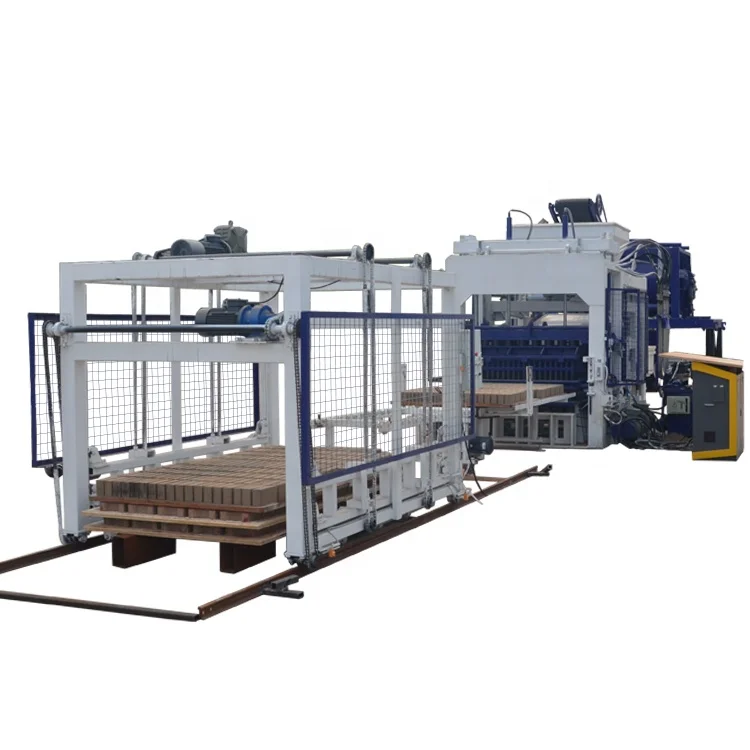
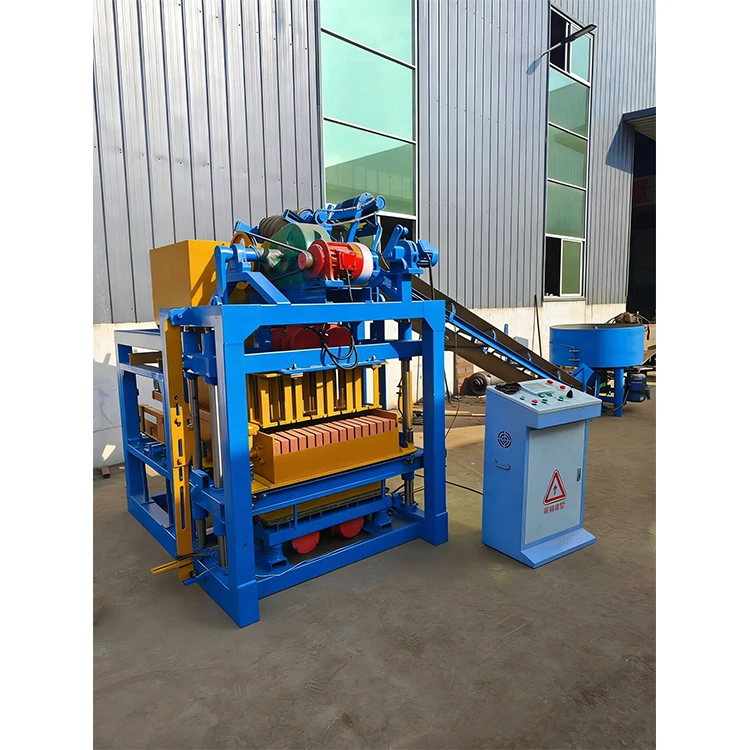
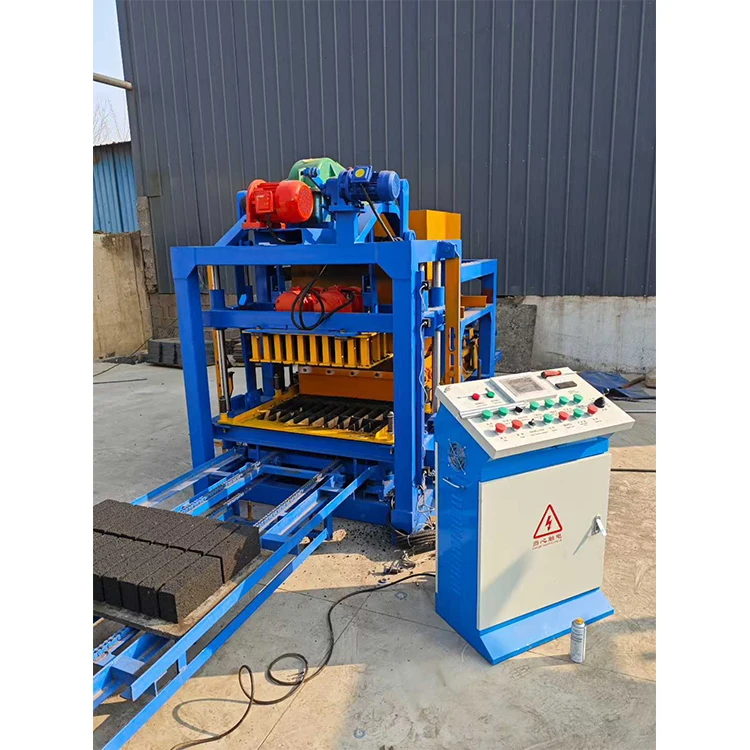

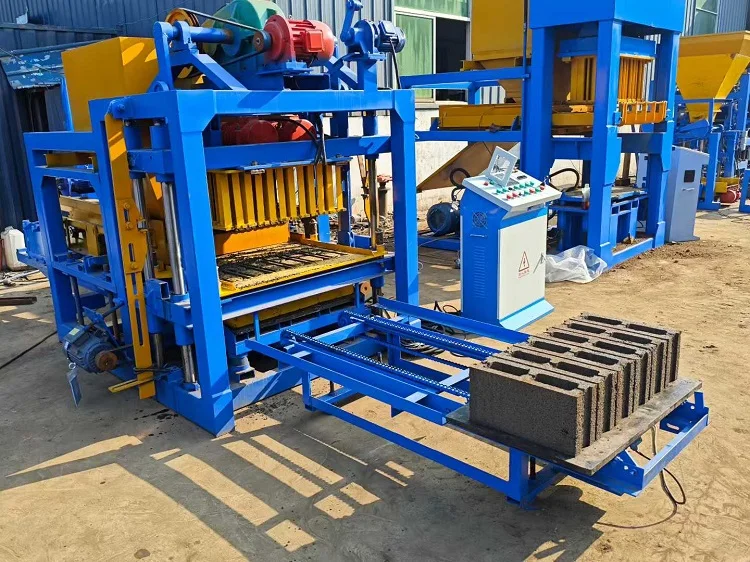
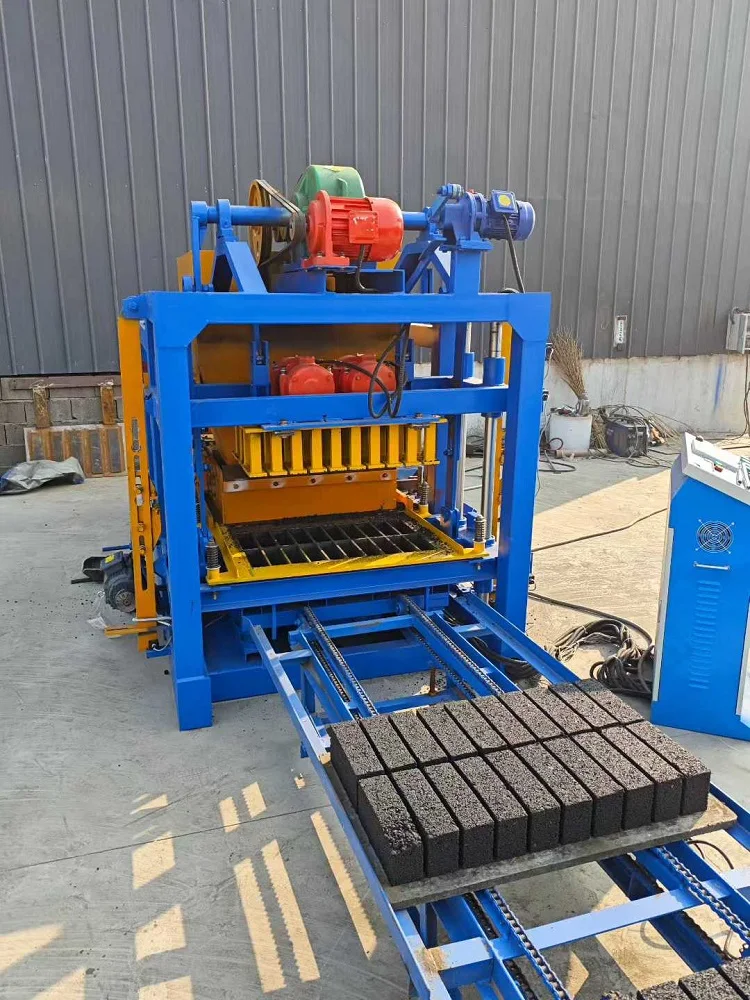
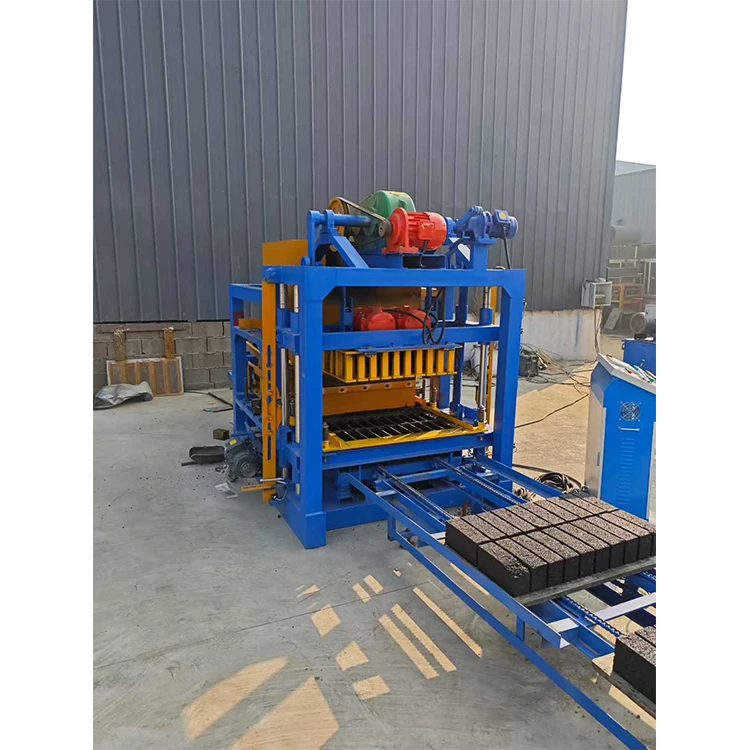
Description
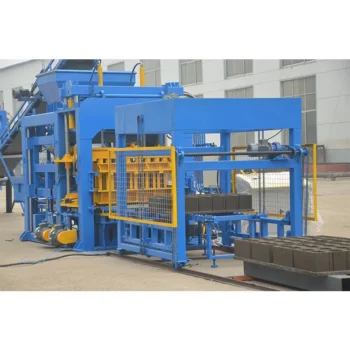
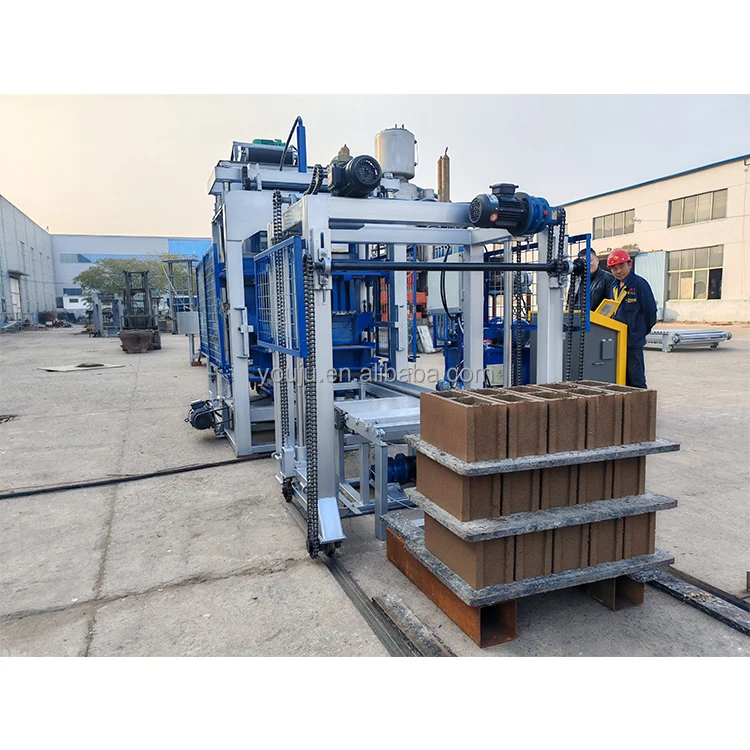
Stocked Dispatch Readiness — we hold Qt4-25 automatic block machines and standard moulds on the yard so buyers working to a project deadline can lock in a container departure date before the order is signed, not after.
Technical Specifications
| Parameter | Value |
|---|---|
| Model | Qt4-25 |
| Product Type | Automatic Concrete Block Making Machine |
| Molding Cycle | 25 seconds |
| Output Capacity | 4600 pcs / 8 hours (basis not stated in source — confirm block format and material) |
| Pallet Size | 850×480 mm |
| Overall Dimensions | 6400×1500×2700 mm |
| Net Weight | 5000 kg |
| Rated Power | 16.58 kW |
| Control System | PLC controlled, fully automatic |
| Automation Level | Pallet feeding, material feeding, scraping, block stacking |
| Vibration System | Vibration motor with large vibration box |
| Hydraulic Pressure | Not equipped (vibration-based forming) |
| Motor | Siemens motor |
| Frame | Thickened steel construction |
| Voltage | According to local voltage (to be confirmed before release) |
| Raw Materials | Concrete, sand, cement, fly ash, crushed stone, lime, water |
| Warranty | 1 year |
Application Suitability
| Application | Material or Output |
|---|---|
| Medium-sized block factory mass production | Hollow blocks from crushed stone, sand and cement |
| On-site production for housing projects | Solid blocks and bricks from local aggregate and fly ash |
| Paver stone brick runs for municipal contracts | Paving stones from fine aggregate and cement |
| First block plant for entrepreneurs | Mixed formats using standard mould inventory |
What "4600 Pieces per Shift" Actually Assumes for the Qt4-25 Block Machine in Stock
That capacity number only holds if your block format, mix design and local aggregate match what the mould cycle was tested on.
Quoted outputs on this class of automatic block machine are almost always based on a standard hollow block in a controlled factory mix. When the machine lands on a site where the sand carries high clay content or the cement ratio is leaner, the vibration force still cycles at the same 25-second interval, but the blocks come out soft or cracked. I once spent three days on a customer’s site re-tuning the vibration parameters and mix ratio because the daily output fell well below the nameplate figure — the machine was fine, the local aggregate was not. Before we release a Qt4-25 block machine in stock from our Linyi yard, we ask for your raw material sample so the configuration sheet reflects what you will actually run, not a catalogue default. [NEED_CITE: aggregate quality impact on block compressive strength]
Dispatch Timing That Matches Your Project Start Date
The entire reason a buyer looks for a Qt4-25 block machine in stock is to avoid the gap between site readiness and machine arrival. Standard configurations with common hollow block and solid block moulds are held ready for container loading, which means the dispatch lead time narrows down to voltage confirmation, PLC language setting and the vessel schedule from the port. Once those three items are locked, the departure date is confirmed before you transfer the balance.
Container Loading and Machine Dismantling for Shipment
Shipping a 5000 kg automatic block machine is not simply a matter of rolling it into a container. The frame is dismantled at specific joints so the press, the material feeder and the stacker fit within a standard high-cube container footprint. Each component is photographed in its packed state, and the packing list references those photographs so your customs broker and site crew can match the load against the manifest on arrival. This step eliminates the disputes that arise when a pallet of parts shows up unlabelled at a project gate. [NEED_CITE: container loading standards for heavy industrial machinery]
Reading the Specification Sheet Without Getting Misled
The 25-second molding cycle governs how many press strokes the Qt4-25 block machine in stock can complete in an eight-hour shift, but that cycle time applies to a single mould format. Switching from a 400×200×200 mm hollow block to a thinner paver stone changes the fill depth, vibration duration and therefore the real pieces-per-hour figure. The 850×480 mm pallet size must also align with the curing racks and forklift tines already on your site — ordering a machine without checking this compatibility means buying new racking after arrival. The PLC-controlled automation covers pallet feeding, material feeding, scraping and block stacking, which removes the manual pallet handling that typically bottlenecks a semi-automatic line. Because this model uses a vibration motor with a large vibration box rather than hydraulic pressure, the forming force is fixed at the motor rating; matching that force to your mix design is where the real capacity lives or dies. The Siemens motor specification matters for field service, since a locally available replacement keeps the line running if the original motor ever fails outside the warranty window.
The Cost of Skipping Voltage and Language Confirmation
I have watched a container arrive at a port with the PLC display locked in a language the operator cannot read, adding days of downtime while the control program is re-flashed. On another shipment, the voltage was set for a 50 Hz grid and the destination ran 60 Hz, which pushed the Siemens motor past its rated speed and shortened bearing life within the first month. These are entirely preventable delays, yet they surface repeatedly when the buyer rushes a Qt4-25 block machine in stock through the order without pausing for a one-page electrical confirmation sheet. [NEED_CITE: voltage and frequency standards by export market]
Why Buyers Source the Qt4-25 Block Machine in Stock From Our Linyi Yard
Block machinery is our single focus, so the press, the mould, the pallet and the stacking station leave as one matched set rather than components bolted together from separate vendors. Standard moulds for hollow blocks, solid blocks and paver stones are held alongside the machine, which is what makes the dispatch lead time short in the first place. We configure the vibration parameters against your actual aggregate sample, not a generic mix sheet, because that is the only way the output number holds up on your site. Voltage, frequency and PLC display language are confirmed in writing before production release, so the machine arrives ready to commission instead of waiting for a re-flash. Installation support includes operator training on the PLC interface and mould change procedure, which is where most first-week production losses occur.
Documentation & Verification
- Factory test record running your specified block format before the machine leaves the yard
- Voltage and PLC language confirmation sheet signed off prior to container loading
- Packing photographs cross-referenced to the customs packing list
- Mould drawing and format list covering every mould shipped with the machine
- Hydraulic and electrical schematic for your site electrician to plan the circuit
- Operation and maintenance manual in your confirmed PLC display language
Installation, Commissioning & Support
- Foundation plan sized to the 6400×1500 mm footprint and 5000 kg static load of the Qt4-25 frame
- Dedicated circuit rated for the 16.58 kW total draw, separated from welding and lighting loads
- Dismantled shipment with labelled joints so your crew reassembles the press, feeder and stacker in sequence
- First-shift commissioning covering vibration tuning against your local aggregate and cement ratio
- Operator training on PLC cycle start, mould change and pallet magazine reload
- Wear parts list for the vibration box bearings and scraper blades with reorder intervals
What to Include in Your Inquiry
Tell us which block formats your market actually sells, the daily output you need to hit and the local aggregate you can source. Confirm your site voltage, frequency and the language your operators read on a screen. If you already have curing racks and a forklift, send the pallet dimensions they accept so we match the 850×480 mm pallet spec before the machine is released from stock.
Frequently Asked Questions
Q: What Qt4-25 configurations and moulds are currently in stock and ready to ship?
A: Standard Qt4-25 units are held with the common hollow block and solid block moulds already fitted to the 850×480 mm pallet. Paver stone moulds from the standard catalogue are also typically on hand. Custom moulds drawn to your specifications require a separate lead time, which we quote alongside the stock items so you see the full picture before committing.
Q: How is dispatch lead time calculated and when does the container departure date get confirmed?
A: Lead time on a stocked Qt4-25 narrows to voltage confirmation, PLC language setting and the next available vessel from the port. Once those three items are agreed in writing, we confirm the container departure date before the balance transfer. The packing and dismantling sequence runs in parallel with the booking so the machine is loaded on schedule.
Q: Can voltage, frequency and PLC display language be confirmed before the machine leaves the factory?
A: Yes, and we require written confirmation of all three before releasing a stocked machine. The control panel is set to your local voltage and frequency, and the PLC display language is loaded to match your operators. Skipping this step is the most common cause of commissioning delays after arrival. [NEED_CITE: CE machinery directive requirements for control systems]
Q: What standard mould formats ship with the stocked Qt4-25, and how fast can additional moulds be supplied?
A: Stocked units ship with the moulds specified in your order — typically hollow block and solid block formats from the standard catalogue. Additional moulds drawn to your market’s dimensions are quoted separately, and the lead time depends on whether the design is new or already in our mould library. We give you that timeline before the machine order is finalised.
Q: Is on-site installation support available when the machine arrives at the project site?
A: Installation and commissioning support covers reassembly from the dismantled shipment state, first-shift vibration tuning against your local mix, and operator training on the PLC interface and mould change. We schedule this support around your confirmed container arrival date so the technician is on site when the machine is unpacked, not weeks later.