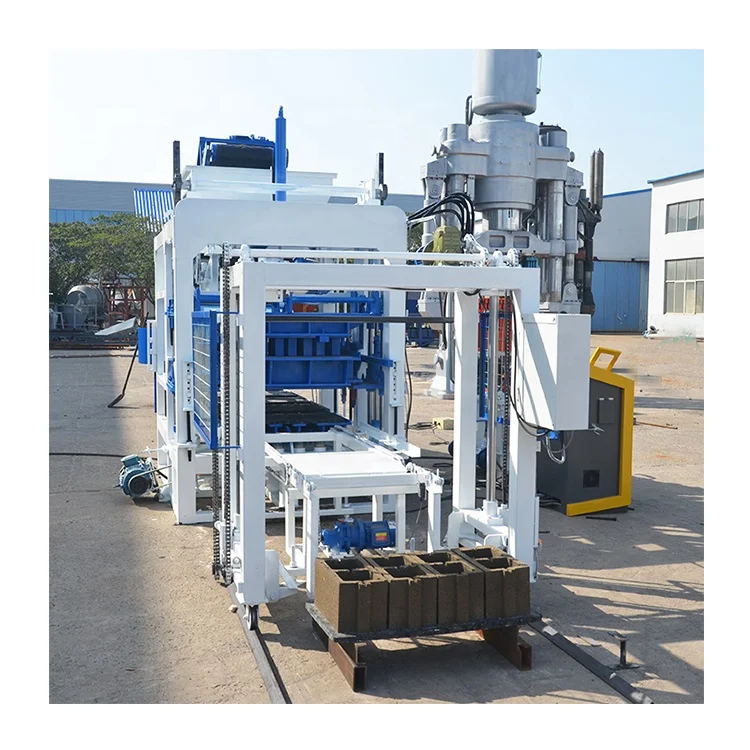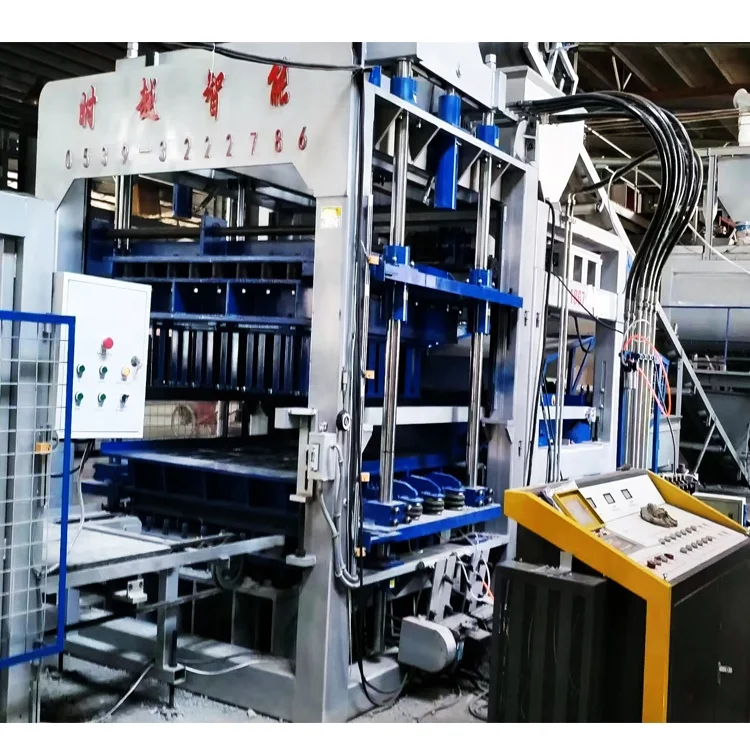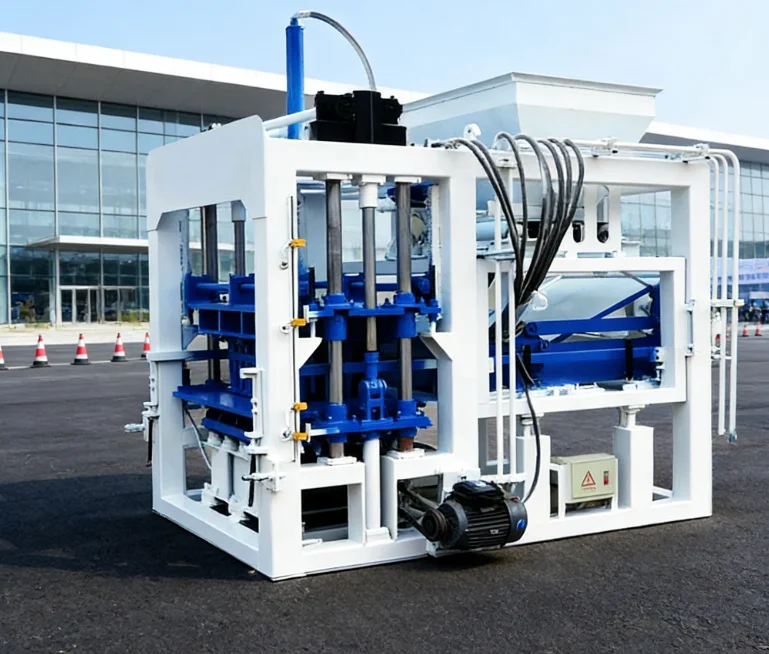
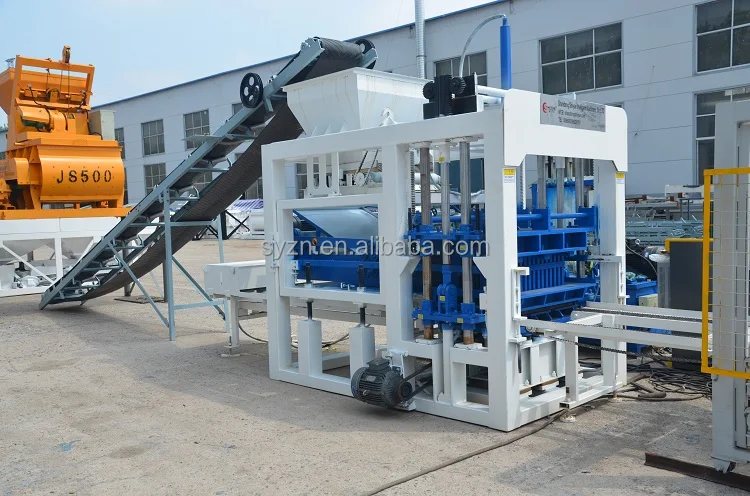
Description
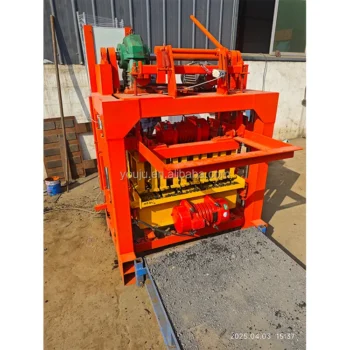
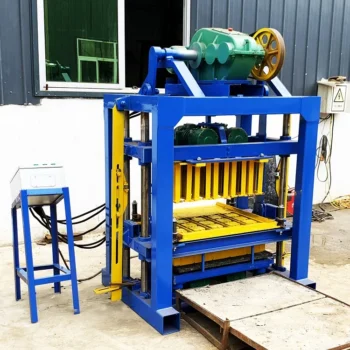
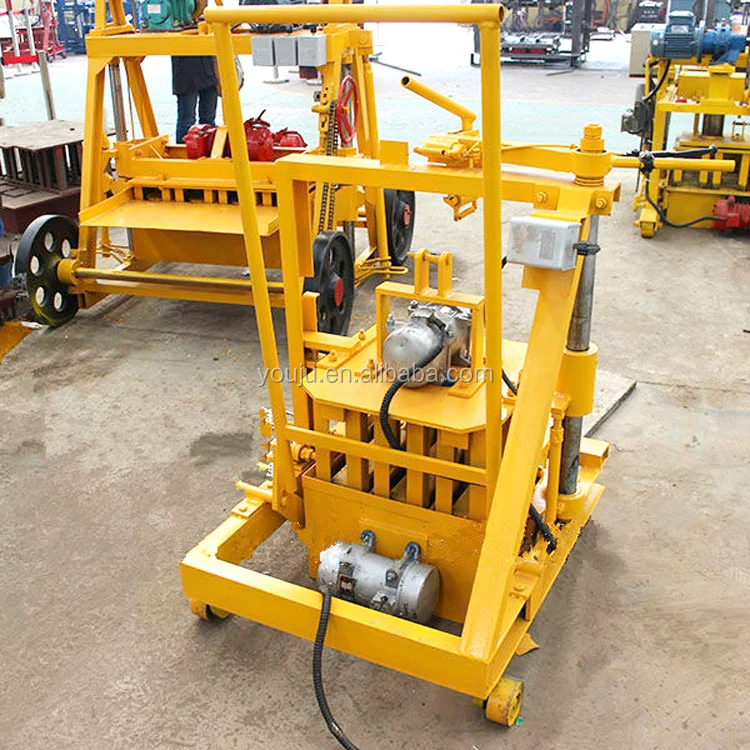
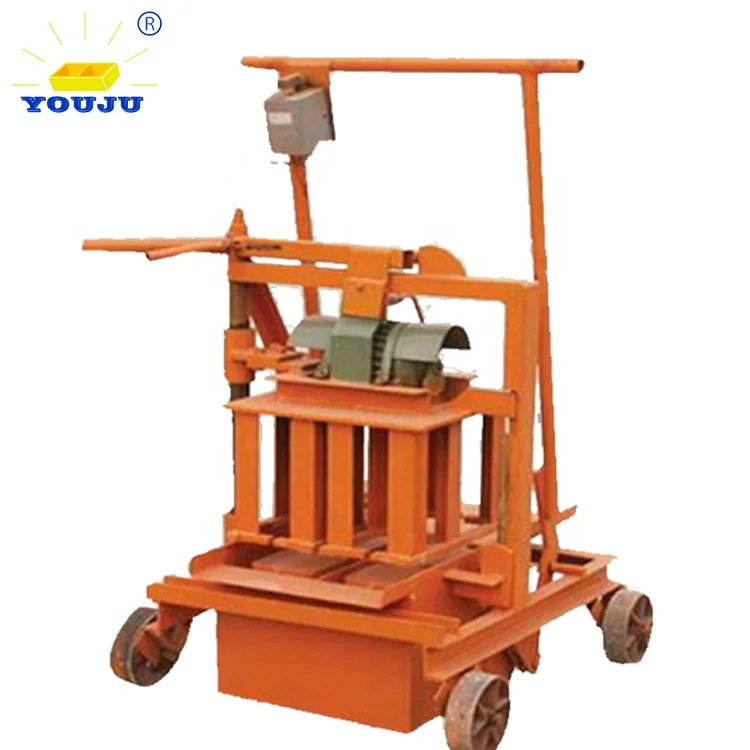
Ready from stock — the QT5-15 sits assembled on our warehouse floor, meaning order confirmation to container loading is measured in days rather than production months.
Technical Specifications
| Parameter | Value |
|---|---|
| Model | QT5-15 |
| Product Type | Automatic Concrete Block Making Machine |
| Overall Dimensions (L×W×H) | 7400×1950×2800 mm |
| Rated Pressure | 21 MPa |
| Main Vibration Form | Platform Vibration |
| Vibration Frequency | 2800–4500 r/min |
| Pallet Size | 1100×550 mm |
| Molding Cycle | 15–25 s (varies by block format) |
| Overall Power | 26.5 kW |
| Demolding Method | Hydraulic |
| Output Capacity (Hollow brick 400×200×200 mm) | 1800 pcs/h (basis: 5 pcs/mold, 16–20 s cycle) |
| Output Capacity (Hollow block 400×150×200 mm) | 1300 pcs/h (basis: 6 pcs/mold, 15–20 s cycle) |
| Output Capacity (S paver 225×112.5×60 mm) | 3700 pcs/h (basis: 16 pcs/mold, 15–17 s cycle) |
| Applied Products | Hollow/solid blocks, pavers, interlocking blocks, curbstone, colored pavers |
| Raw Material | Crushed stone, sand, cement, fly ash, gravel, slag, dust |
| Voltage & Frequency | Configurable — confirm with buyer before dispatch |
| Control System | PLC — brand and display language to confirm |
| Automation Level | Automatic |
| Warranty | 1 year (one set of spare wear parts included) |
Application Suitability
| Application | Material or Output |
|---|---|
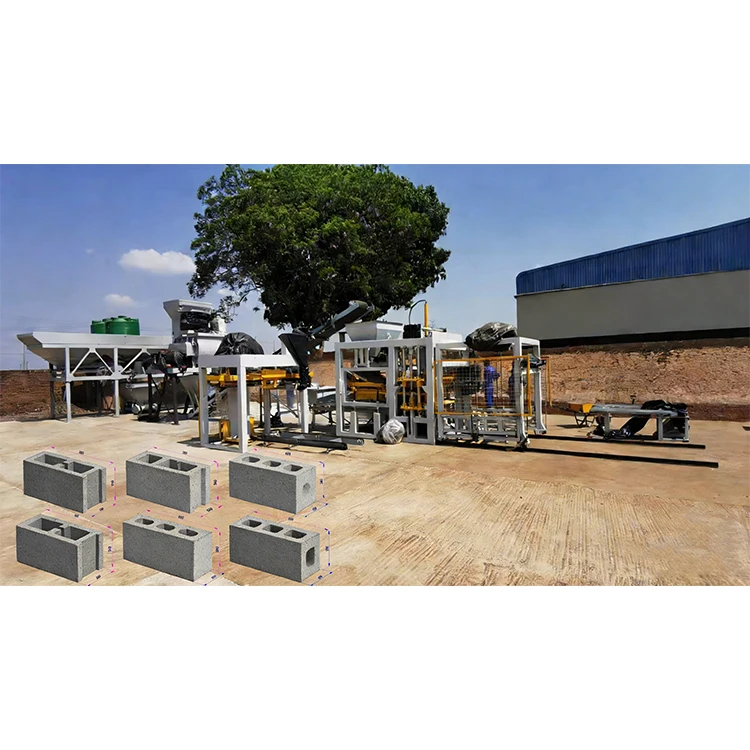
| Housing project on-site block production | Hollow blocks from crushed stone, sand, and cement |
| Paver manufacturing for municipal contracts | Interlocking and colored pavers from fine aggregate mixes |
| Mid-tier block plant daily production | Solid and hollow blocks from fly ash, slag, and gravel |
| Curbstone supply for road contractors | Kerbstones from high-strength concrete mixes |
| Building material distributor resale stock | Multiple block formats from a single press platform |
Why Dispatch Timing Matters More Than the Brochure Cycle Number
A stocked QT5-15 block machine in stock protects your project start date when every week of delay costs crew standby and penalty clauses.
Your project starts in eight weeks and the machine supplier just pushed delivery another four. That scenario repeats across the industry because most quotations quote a production lead time that begins only after all sub-components arrive at the factory. When a buyer is working toward a fixed construction milestone — a housing phase handover, a road contract mobilization date — the difference between a machine on the warehouse floor and one yet to be built is the difference between meeting deadline and paying liquidated damages. I have watched contractors lose deposits because the block press arrived after the masonry crew had already been reassigned [NEED_CITE: typical construction penalty clauses for delayed material delivery].
Stocked Means the Machine Exists Before You Pay
When we list a QT5-15 block machine in stock, the unit is assembled, hydraulically tested, and sitting under cover. You can request a live video walk-around showing the serial plate, the press frame, and the hydraulic manifold before any deposit changes hands. This eliminates the common situation where a "stock" machine turns out to mean a partial kit waiting for a vibration motor shipment. The advantage is simple: once voltage, frequency, and PLC language are confirmed on your side, the machine moves to dismantling and container loading within a short window.
Container Loading Readiness From Day One
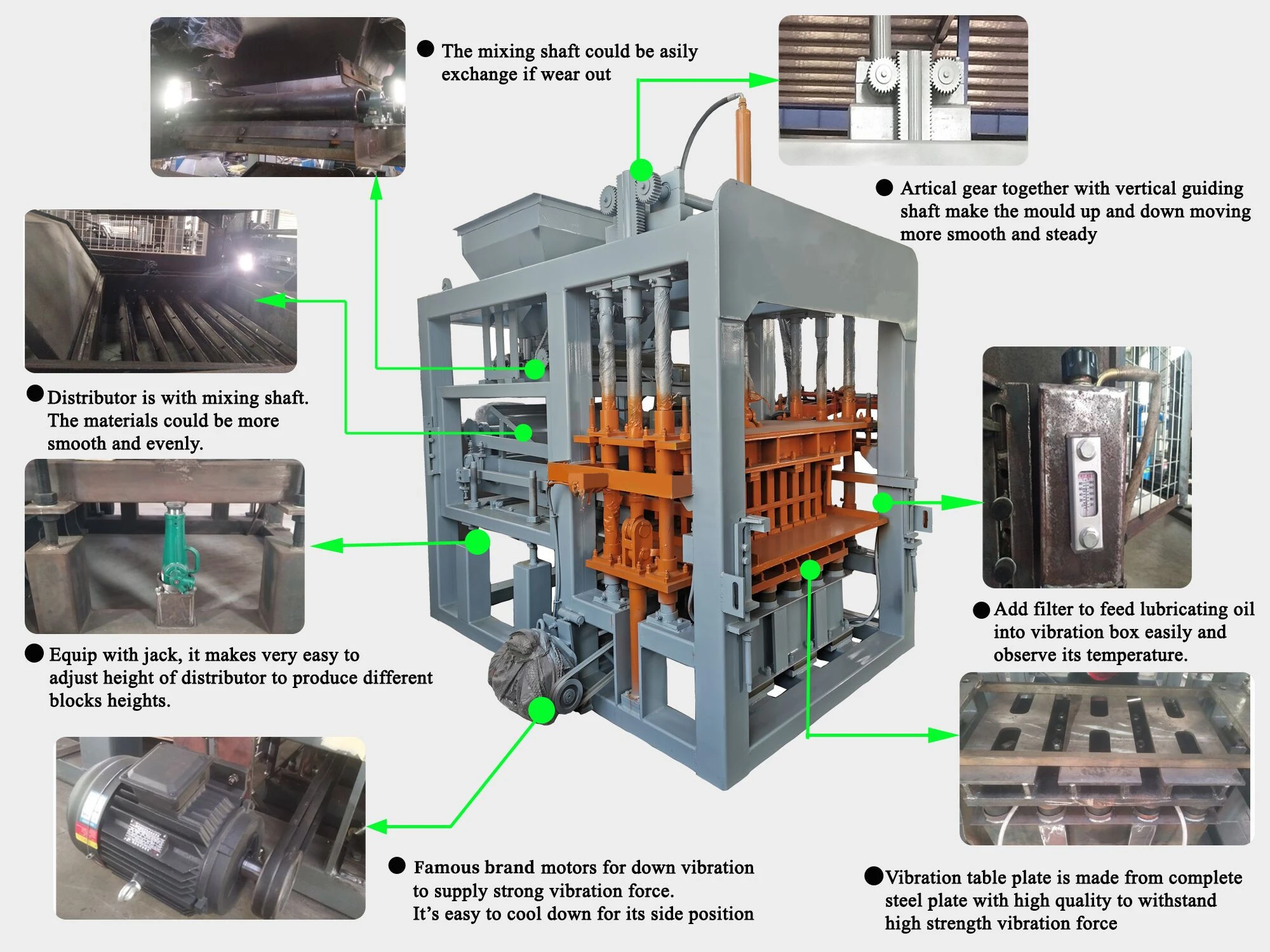
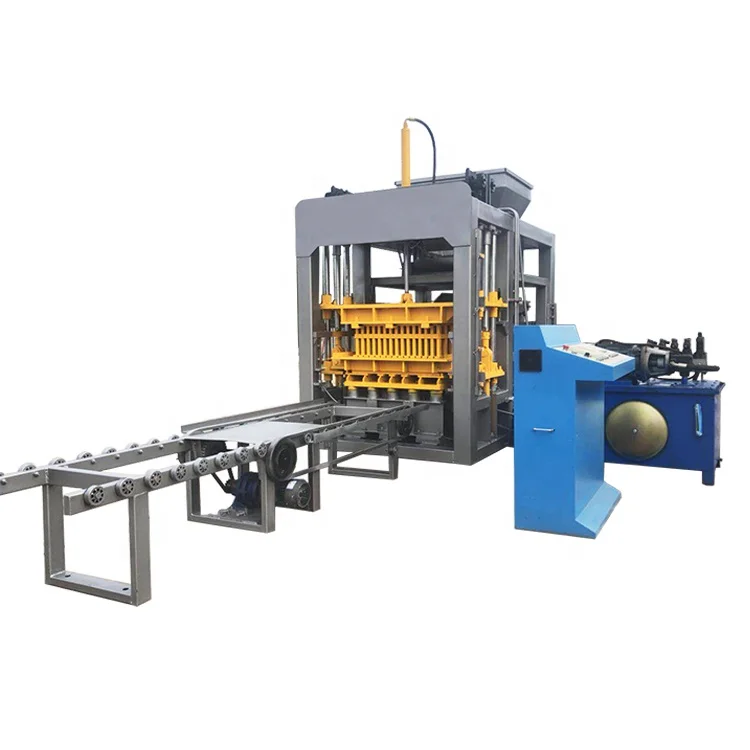
The QT5-15 block machine in stock is dismantled into its major assemblies — press frame, hydraulic station, control cabinet, pallet feeder — using the same bolt patterns every time, so the packing team works from a known loading plan rather than improvising. The 7400×1950×2800 mm overall dimension means the main frame requires careful orientation inside a standard container, and the loading sequence is planned before the first bolt is undone. You receive packing photographs and the loading diagram before the container doors close, not after [NEED_CITE: container loading standards for heavy industrial machinery].
Arrival Estimate Quoted Before Payment, Not After
The dispatch lead time and estimated port arrival are written into the order confirmation document. We do not wait until the bill of lading is issued to tell you when the ship sails. For buyers running a project Gantt chart, knowing the vessel name and estimated arrival date at quotation stage allows you to book the crane, the forklift, and the foundation crew on the same timeline. This level of scheduling transparency is what separates a stocked supply arrangement from a standard build-to-order process.
Reading the Specs That Actually Affect Your Floor
The 21 MPa rated pressure combined with platform vibration at 2800–4500 r/min determines block density and demolding integrity. Higher vibration frequency compacts finer aggregate more effectively, while hydraulic pressure at demolding must release the block without corner spalling. The 1100×550 mm pallet size must match your existing curing racks and forklift tine spacing — a mismatch here means buying new racks or cutting pallets, neither of which you want to discover after arrival. The 26.5 kW overall power draw requires a dedicated circuit with adequate breaker capacity; confirming this against your site electrical panel before shipment avoids a machine that sits idle while an electrician is called [NEED_CITE: industrial voltage and frequency standards by export market].
What Happens When Stock and Configuration Are Assumed
A buyer once confirmed an order assuming standard voltage and a default PLC language. The machine shipped on schedule but sat under tarpaulin for three weeks while a local electrician sourced a step-down transformer and the operator struggled with a control display in a language the crew could not read. The dispatch was fast; the commissioning was not. With a stocked unit, these variables must be locked in during the order confirmation call, not discovered on the dock [NEED_CITE: PLC display language and commissioning delays in exported machinery].
Why Stocked Procurement Works for This Press Class
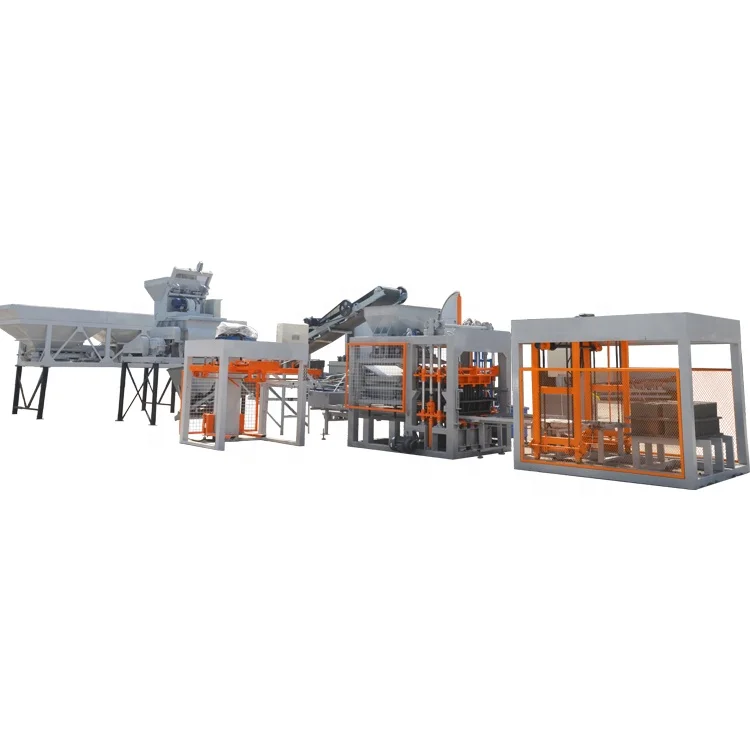
Shiyue keeps the QT5-15 as a single-focus block machinery line, meaning the press, mould, pallet, and handling equipment are specified as one matched system from one source rather than assembled from separate suppliers. Configuration is checked against your local aggregate and target block format before the container is booked, not after. Mould options cover the formats your market actually sells, with custom drawings available if your region demands a non-standard profile. The automation level is selectable so a buyer can begin with the automatic press and add stacking or cubing modules later. Installation support, operator training, and wear parts supply are included from first commissioning onward.
Documentation & Verification
- Line layout showing the QT5-15 footprint with pallet flow direction marked
- Capacity calculation table stating output per block format, not a single blanket figure
- Hydraulic and electrical schematic matching the shipped configuration
- Voltage, frequency, and PLC language confirmation sheet signed before loading
- Factory test record on your specified block format before dispatch
- Packing photographs and container loading plan provided before sealing
Installation, Commissioning & Support
- Foundation pad must support the 7400 mm frame length with level tolerance confirmed before arrival
- Dedicated 26.5 kW circuit with correct breaker rating and voltage verified on-site
- Hydraulic station reconnected using labeled hose fittings from the dismantling sequence
- PLC parameters loaded for your confirmed block format and molding cycle during first startup
- Operator training covers mould change procedure and daily vibration platform inspection
- One set of spare wear parts ships inside the same container for first replacement cycle
Before You Request a Quote
Send us your target block format and daily output requirement so we can match the stocked mould inventory to your production plan. Confirm your site voltage, frequency, and preferred PLC display language to avoid any post-arrival delay. If you have existing curing racks or forklifts, share the pallet dimensions and tine spacing so we verify the 1100×550 mm pallet compatibility before dispatch.
Frequently Asked Questions
Q: Is the QT5-15 currently in stock, and what is the dispatch lead time from order to port?
A: Stocked units are available on the warehouse floor and can be inspected via live video before payment. Once you confirm voltage, frequency, and PLC language, dismantling and container loading proceed within a short window. The dispatch lead time and estimated vessel arrival are written into your order confirmation document, not provided after the fact.
Q: Which moulds are included as standard, and can additional format moulds ship in the same container?
A: Standard moulds cover common hollow block and paver profiles. Additional format moulds can be loaded into the same container if space in the loading plan allows. We confirm the mould list and container packing arrangement before sealing so no format is left behind.
Q: How is the machine dismantled for container loading, and which container type is required?
A: The press frame, hydraulic station, control cabinet, and pallet feeder are separated at their bolt joints. The loading plan is prepared before dismantling begins, and packing photographs are shared before the container doors close. Container type is confirmed at quotation stage based on the full shipment list.
Q: What voltage and frequency configurations are available from stock, and is the PLC language pre-set before shipment?
A: The QT5-15 is configurable for common industrial voltage and frequency combinations. The PLC display language is set to your preference before the machine leaves the factory. Both items are confirmed in writing during order processing to prevent commissioning delays.
Q: Can I receive packing photographs and a loading plan before the container is sealed?
A: Yes. Packing photographs showing each major assembly and the container loading plan are provided before the container doors are closed. This lets you verify that all components, moulds, and spare parts are accounted for before the shipment leaves port.