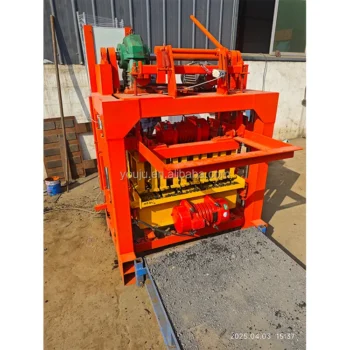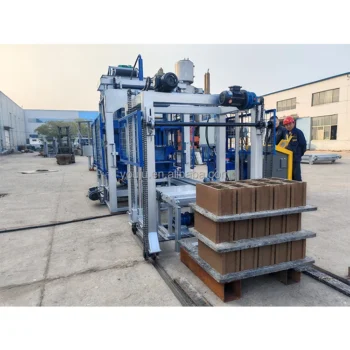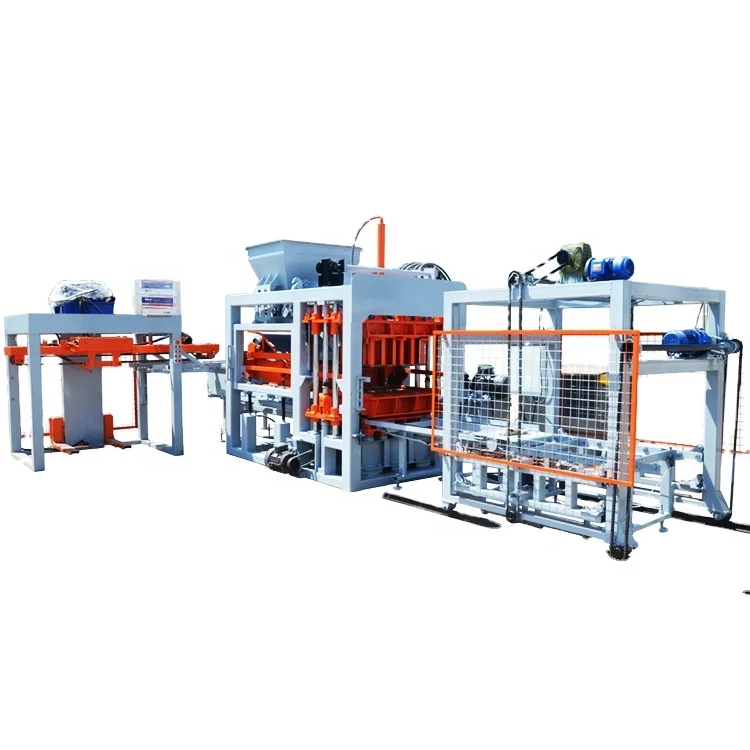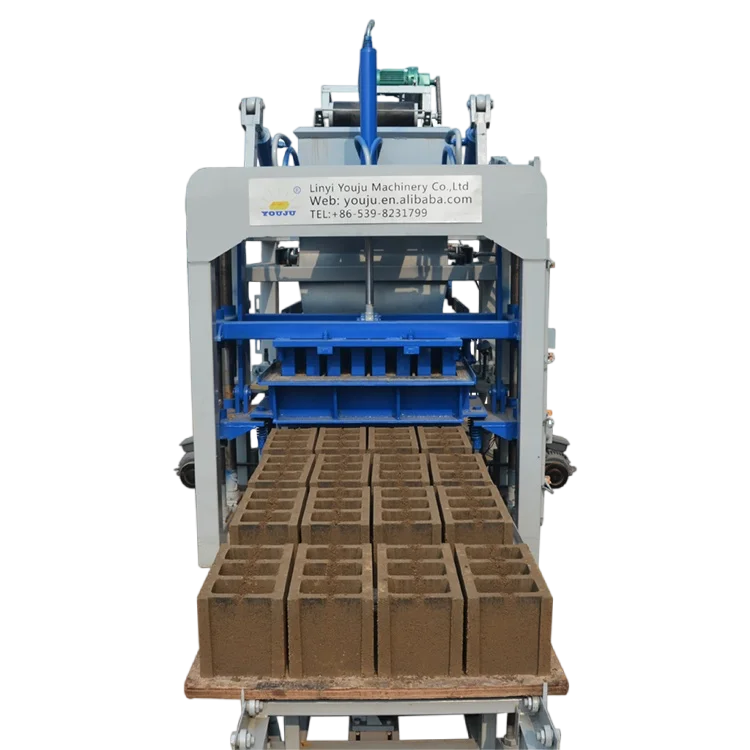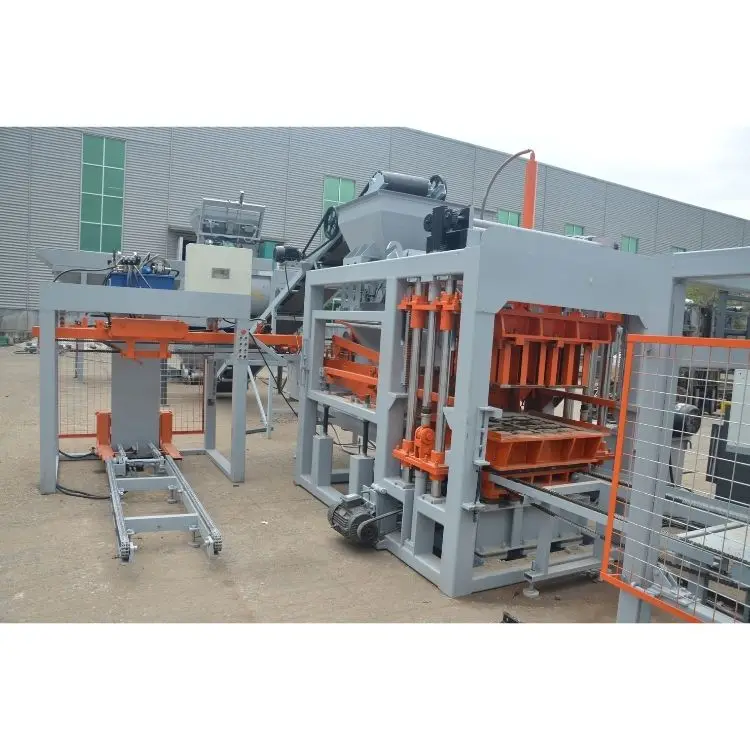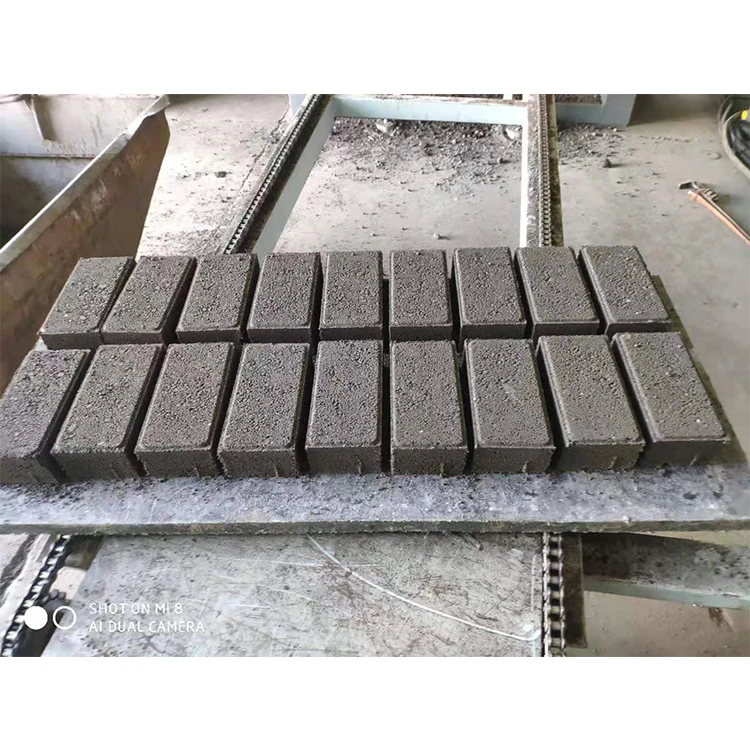


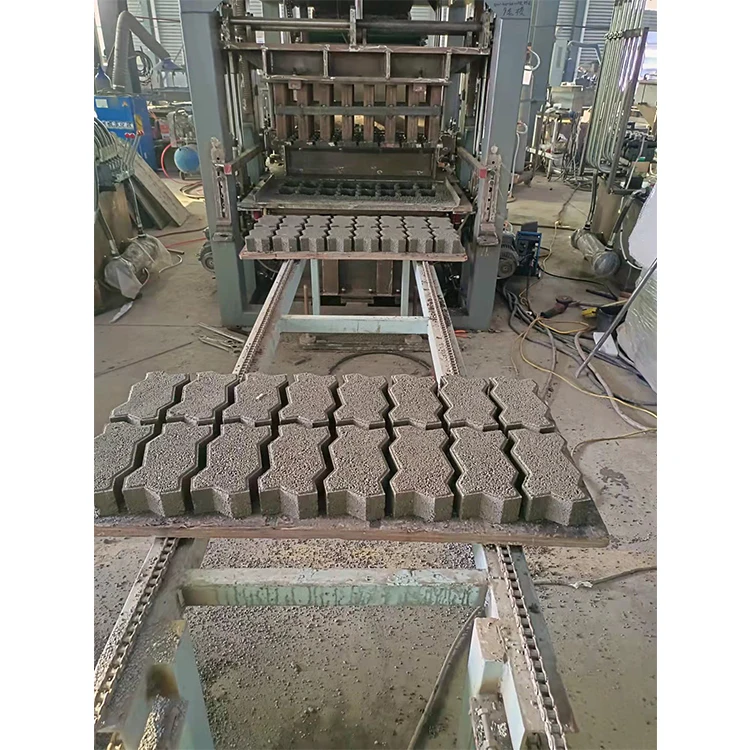
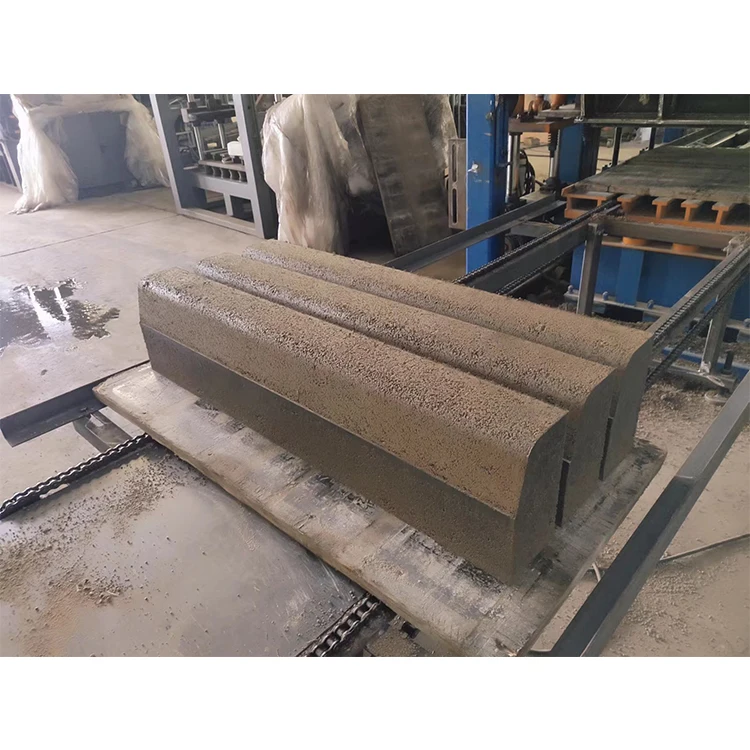

Description
Stock-Ready Dispatch — QT5-15 units held in inventory with standard mould sets, enabling confirmed lead times rather than build-to-order delays for deadline-driven projects.
Technical Specifications
| Parameter | Value |
|---|---|
| Model | QT5-15 |
| Product Type | Fully Automatic Hydraulic Concrete Block Making Machine |
| Overall Dimensions (L×W×H) | 7400×1950×2800 mm |
| Rated Pressure | 21 MPa |
| Main Vibration Form | Platform Vibration |
| Vibration Frequency | 2800–4500 r/min |
| Pallet Size | 1100×550 mm |
| Molding Cycle | 15–25 s (varies by block format) |
| Overall Power | 26.5 kW |
| Demolding Method | Hydraulic |
| Control System | PLC (language options to confirm) |
| Output – Hollow Brick 400×200×200 mm | 5 pcs/mould, 16–20 s cycle, 1800 pcs/h |
| Output – Hollow Block 400×150×200 mm | 6 pcs/mould, 15–20 s cycle, 1300 pcs/h |
| Output – S Paver 225×112.5×60 mm | 16 pcs/mould, 15–17 s cycle, 3700 pcs/h |
| Applied Products | Hollow/solid blocks, pavers, interlocking blocks, curbstone, colored pavers |
| Automation Level | Fully Automatic |
| Voltage & Frequency | Configurable (confirm before dispatch) |
Application Suitability
| Application | Material or Output |
|---|---|
| Hollow block production for residential walls | Crushed stone, sand, cement, fly ash blends |
| Solid load-bearing block manufacturing | Gravel, slag, cement mixes |
| Interlocking paver production for driveways and roads | Colored aggregates, cement, fine sand |
| Curbstone and kerbstone for infrastructure | Coarse aggregate with high cement content |
| On-site block production for housing projects | Locally sourced sand, stone dust, cement |
What "1800 Bricks per Hour" Actually Means on the QT5-15
Capacity figures only hold value when tied to a specific block format, cycle time, and mould configuration.
Every catalogue promises peak output, but that number usually assumes a format the buyer never intends to produce. I have watched machines arrive at port and sit idle because the quoted throughput referenced a solid brick the client’s market does not sell. The QT5-15 stationary block machine in stock produces 1800 pcs/h based on 400×200×200 mm hollow bricks at a 16–20 s cycle, 1300 pcs/h for 400×150×200 mm hollow blocks, and 3700 pcs/h for S pavers. Each figure is anchored to a real mould. [NEED_CITE: block format assumptions in manufacturer capacity claims]
Dispatch Timing That Matches Your Project Schedule
Project deadlines do not wait for production slots. The QT5-15 is held as a stocked stationary block machine in stock, meaning your order enters the dispatch queue rather than the build queue. Standard mould sets ship alongside the press, so you are not waiting for custom tooling to catch up. Container loading plans are confirmed at the order stage, and dismantling for shipment is documented before the machine leaves the factory floor.
Arrival Estimates Quoted Before You Commit
The gap between order and first block produced depends on shipping, customs, and port handling — variables that sellers often leave vague. For this fast delivery QT5-15, the arrival estimate is provided in writing before the purchase order is signed. Dispatch lead time accounts for current stock position, container availability, and your destination port. This removes the guesswork that stalls site mobilization. [NEED_CITE: typical shipping and customs timelines for heavy machinery exports]
How Pressure and Vibration Shape Block Density
The 21 MPa rated pressure works together with platform vibration at 2800–4500 r/min to compact the mix into dense, dimensionally accurate blocks. Higher vibration frequency settles fine particles into voids while hydraulic pressure locks the matrix. The 1100×550 mm pallet size determines curing rack spacing and forklift handling — choosing a pallet that mismatches your existing curing area creates a bottleneck the press itself cannot solve. A 15–25 s molding cycle keeps throughput steady without sacrificing compaction, which is where cheaper machines typically fail.
The Hidden Cost of Ordering Without Stock Confirmation
Machines built to order carry unpredictable lead times, and a delayed press means idle crews, rented formwork sitting unused, and missed handover dates on housing developments. When voltage, frequency, and PLC language remain unconfirmed at order, commissioning stalls further after arrival. I have seen three-week delays turn into eight-week standoffs because a buyer assumed the control panel would display in their local language. [NEED_CITE: voltage and frequency standards by export market] These are not engineering failures — they are ordering failures, and they are entirely preventable when stock and configuration are locked before dispatch.
Why Source This Machine Through Our Stock Channel
We hold QT5-15 units as a single-focus block machinery supplier, so the press, moulds, pallets, and handling equipment are specified as one matched system. Dispatch from stock means factory test records exist for the exact unit you receive, not a generic type certificate. Container loading plans address the 7400×1950×2800 mm footprint directly, with dismantling sequences that protect hydraulic lines during transit. We confirm voltage, frequency, and PLC display language before the crate is sealed, because a machine that cannot run on arrival is not a delivery — it is a problem.
Documentation & Verification
- Factory test record on your specified block format before dispatch
- Pallet specification matched to your curing rack and forklift
- Hydraulic and electrical schematic for the exact unit shipped
- Voltage and PLC control language confirmation in writing
- Packing photographs documenting loading and securing method
Installation, Commissioning & Support
- Foundation pad sized to 7400×1950 mm footprint with leveling anchors
- Dedicated power circuit rated for 26.5 kW continuous draw at confirmed voltage
- Machine arrives partially dismantled with reassembly sequence documented
- PLC touch screen configured in confirmed language before first cycle
- Operator training covers mould change procedure and hydraulic pressure adjustment
- Wear parts list provided with first replacement intervals noted
Preparing Your Inquiry
To move from inquiry to confirmed dispatch, we need your target block format and daily volume, the raw materials available at your site, and your local voltage and frequency standard. Share your curing area dimensions and existing forklift capacity so the pallet specification aligns. If you are working to a fixed project deadline, state the date — we will confirm whether stock position and shipping timelines can meet it.
Frequently Asked Questions
Q: Which QT5-15 configurations and moulds are currently in stock?
A: Stocked units ship with standard mould sets covering common hollow block, solid block, and paver formats. Custom moulds require additional lead time. We confirm which configurations are available for immediate dispatch when you submit your inquiry with target block formats.
Q: How is dispatch lead time calculated and when is arrival estimated?
A: Lead time depends on current stock position, container scheduling, and your destination port. We provide a written arrival estimate at the order stage, accounting for typical transit and customs processing windows rather than offering vague timeframes.
Q: How is the QT5-15 prepared for container shipment?
A: The machine is partially dismantled to fit standard container dimensions while protecting hydraulic lines and the PLC panel. A documented loading sequence ensures safe transit, and packing photographs are shared before the container is sealed.
Q: Are voltage, frequency, and PLC language confirmed before dispatch?
A: Yes. These are confirmed in writing before the machine leaves the factory. We verify compatibility with your local power grid and set the PLC display language so operators can begin commissioning immediately upon arrival.
Q: What standard moulds ship with the machine from stock?
A: Standard stock moulds typically include hollow block and solid block formats common in your target market. Specific available formats are confirmed during the inquiry stage based on current inventory and your production requirements.