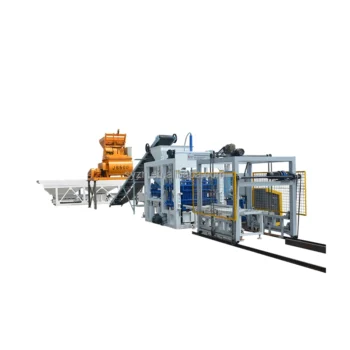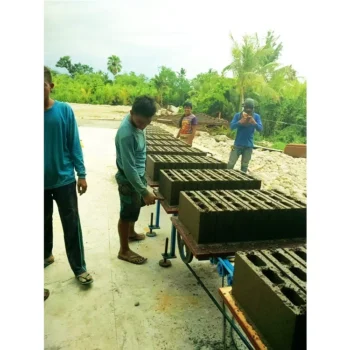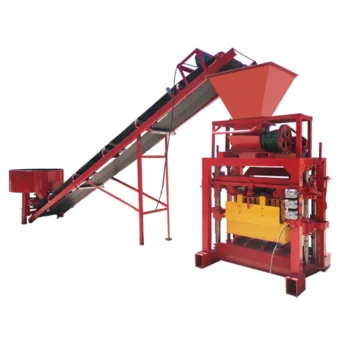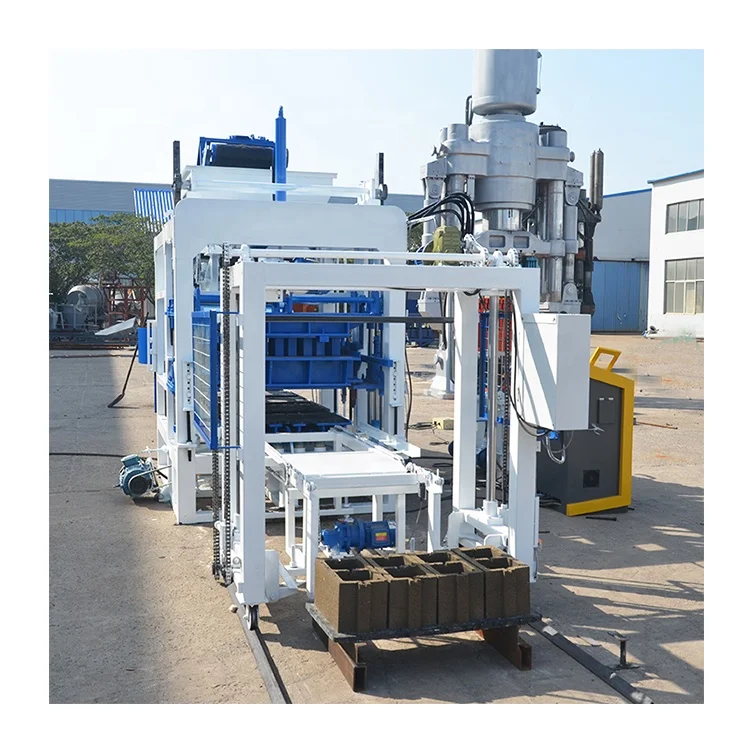
Description
Fast dispatch readiness — every QT6-15 unit is verified against the buyer’s voltage, pallet and control language before crating, so the machine you ordered is the machine that arrives.
Technical Specifications
| Parameter | Value |
|---|---|
| Model | QT6-15 |
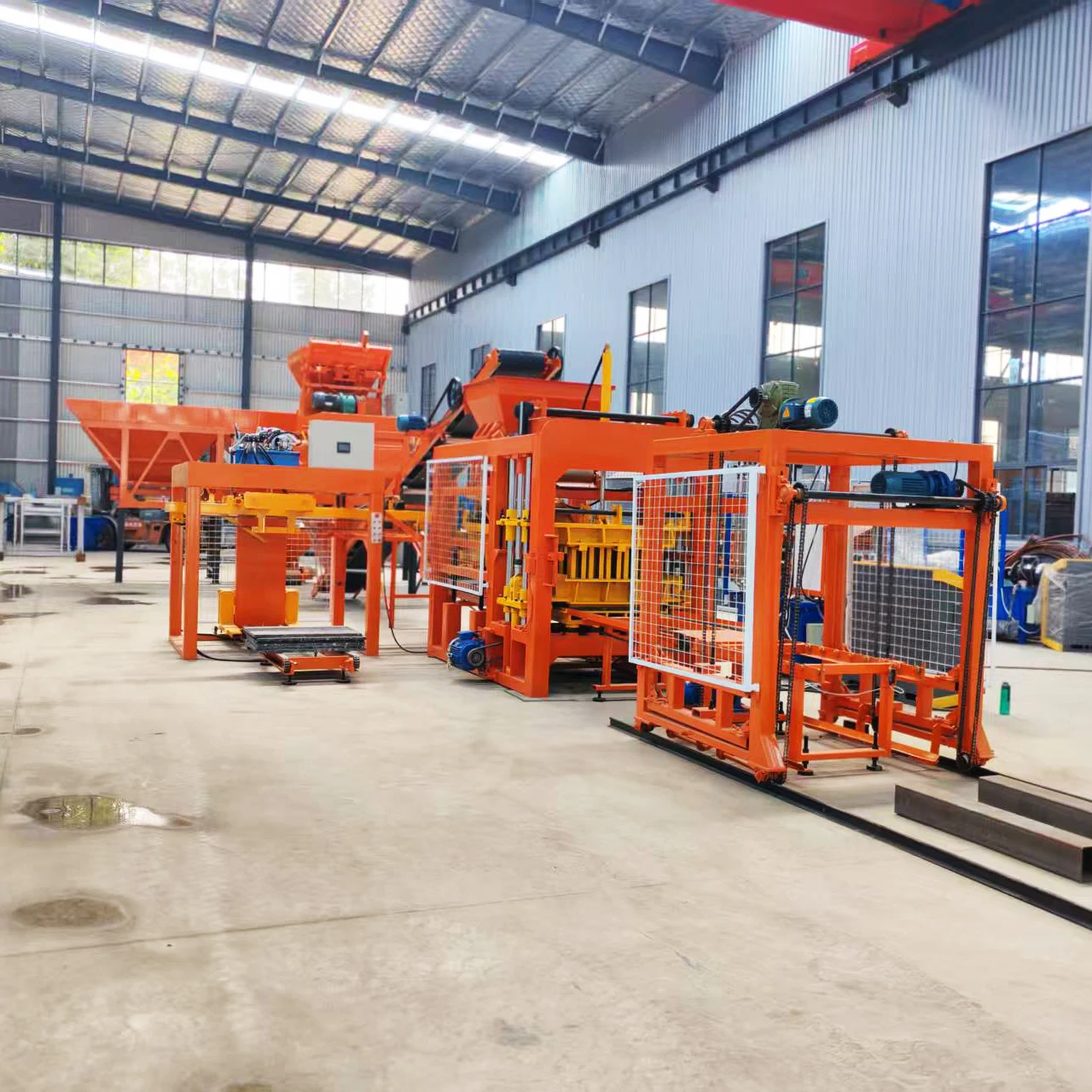
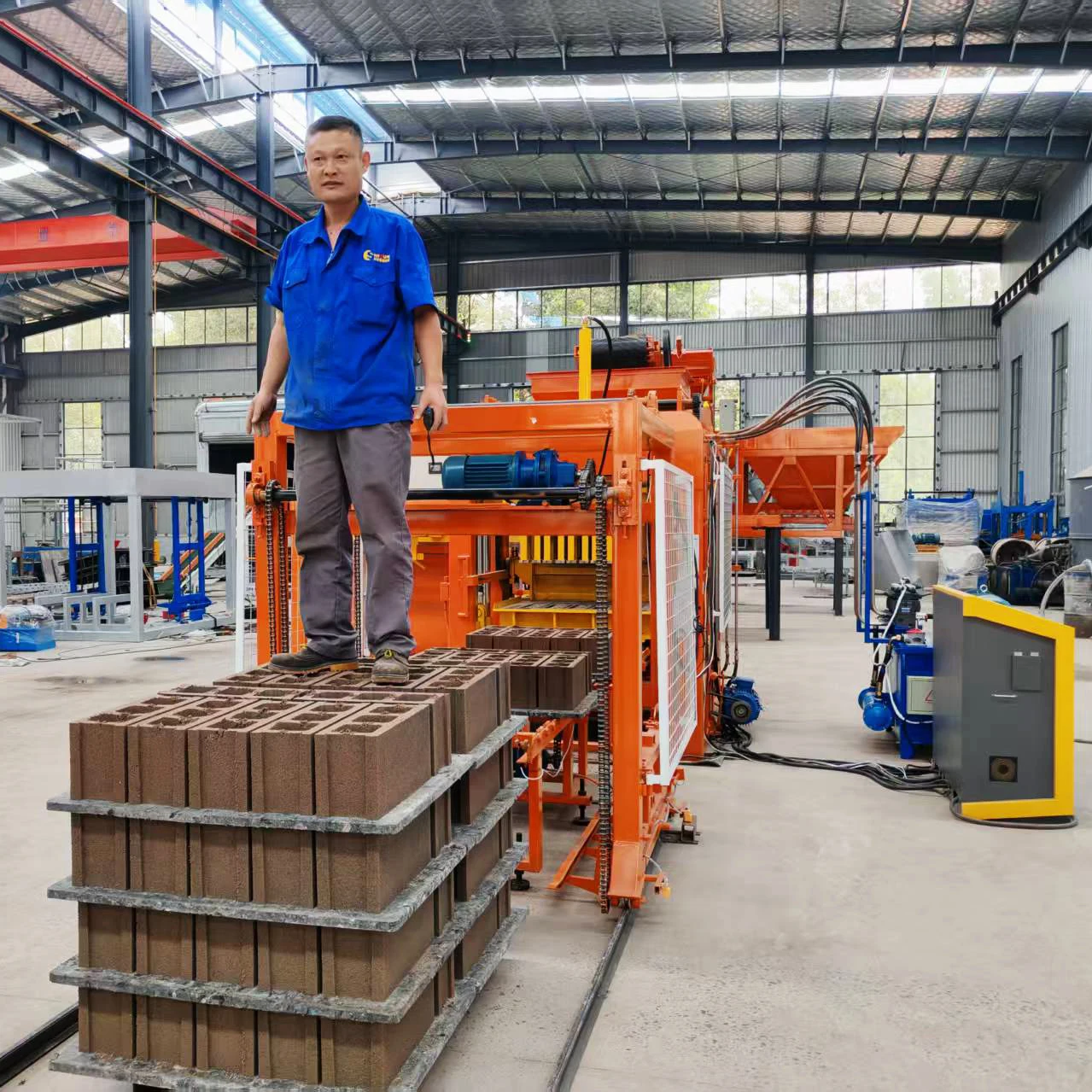
| Product Type | Hydraulic Concrete Block Making Machine |
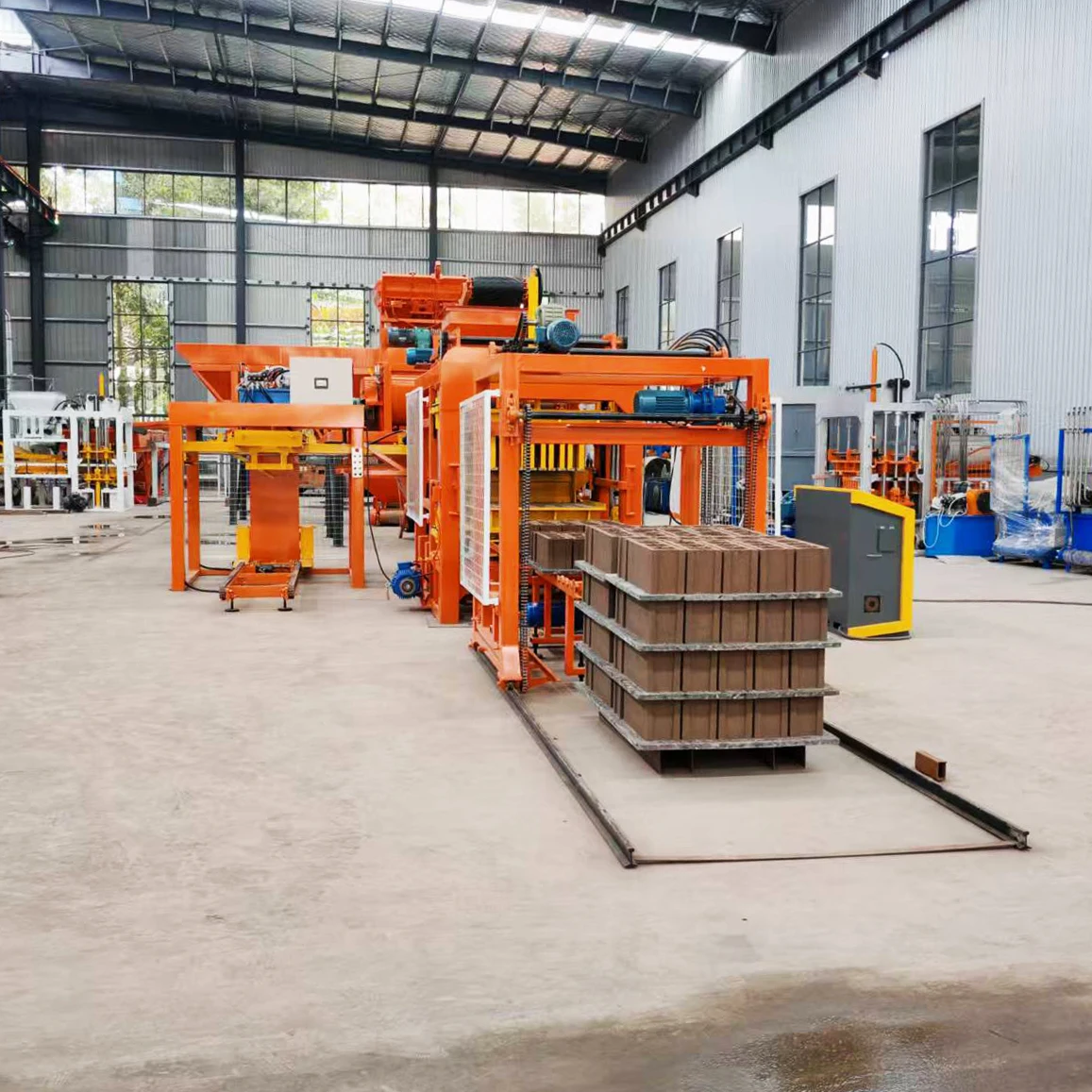
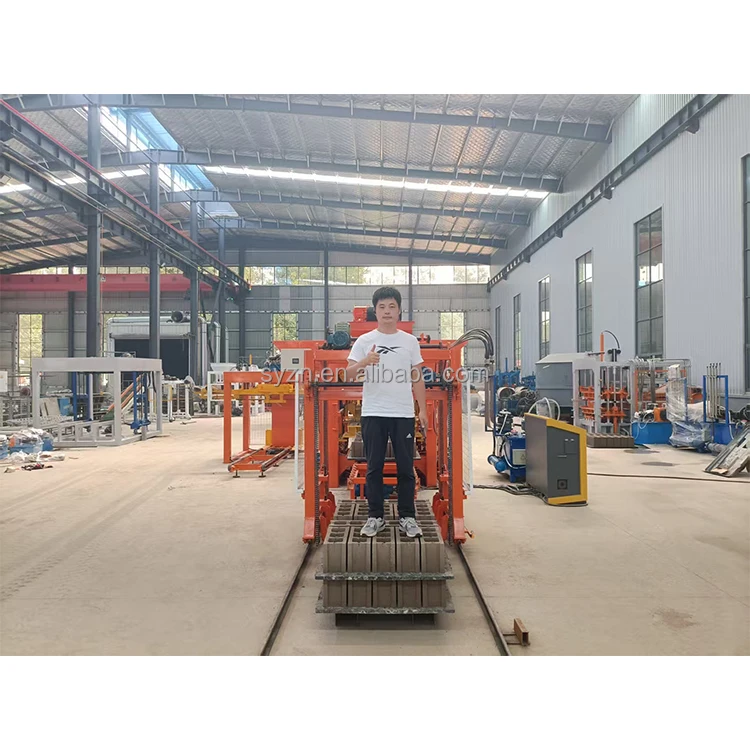
| Overall Dimensions | 8200 × 1700 × 2950 mm |
| Total Mass | 7 T |
| Overall Power | 37 kW |
| Vibration Force | 45 kN |
| Vibration Frequency | 0–60 Hz |
| Vibration Form | Platform Vibration |
| Moulding Mode | Automatic load, vibration moulding |
| Demolding Method | Hydraulic |
| Molding Cycle | 15–20 s (standard blocks); 20–25 s (paving formats) |
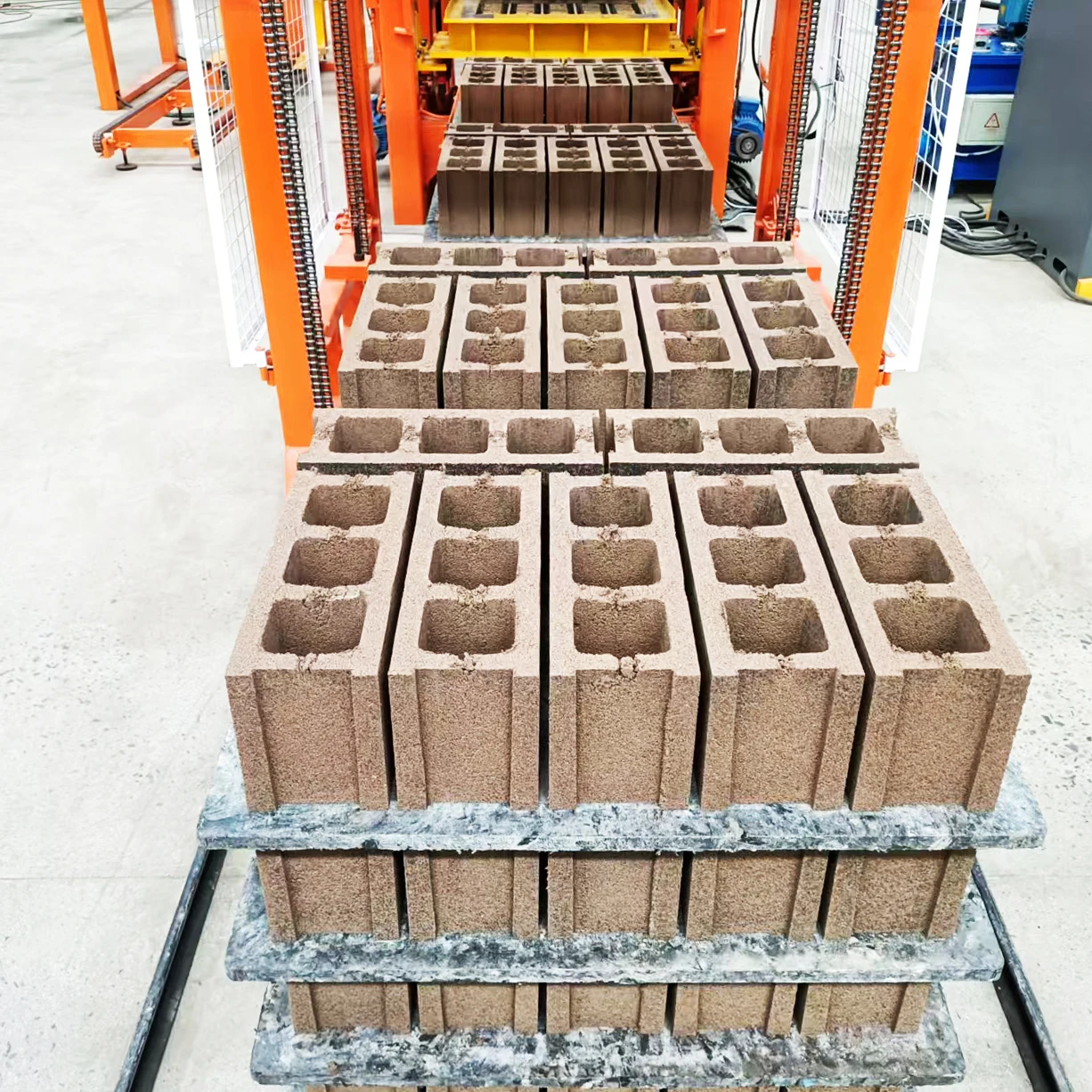
| Pallet Size | 880 × 850 mm |
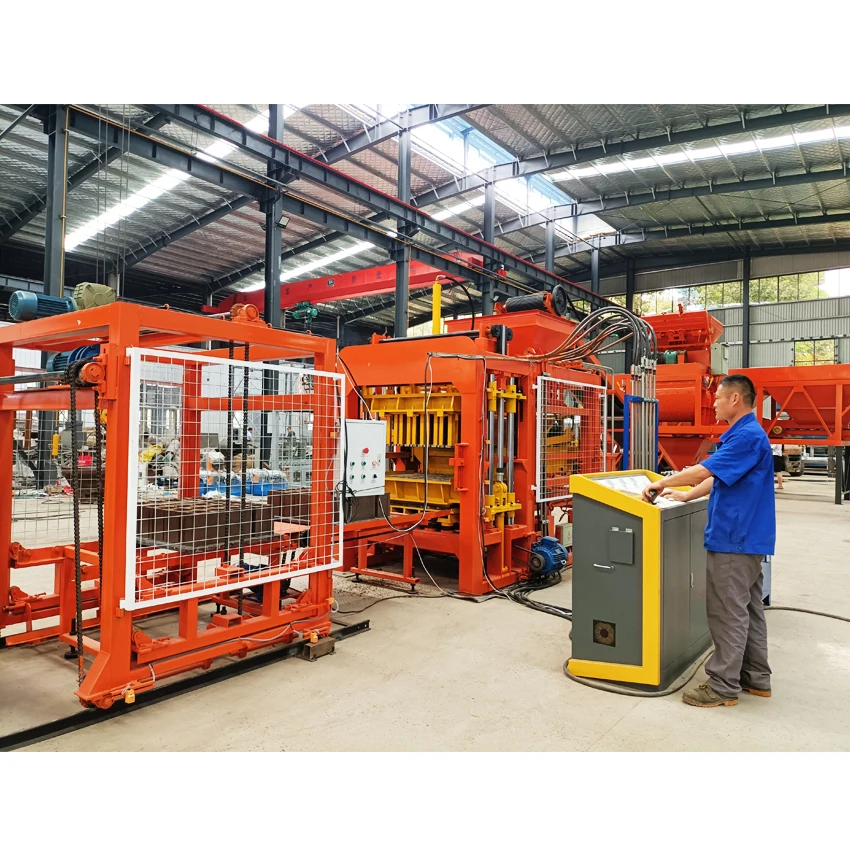
| Control System | PLC with touch screen |
| Hydraulic System | Independent integrated hydraulic station |
| Output — Hollow Block 400×200×200 mm | 1,080–1,440 pcs/h, 8,640–11,520 pcs/8 hr |
| Output — Hollow Block 400×150×200 mm | 1,440–1,920 pcs/h, 11,520–15,360 pcs/8 hr |
| Output — Solid Brick 240×115×53 mm | 5,760–7,680 pcs/h, 46,080–61,440 pcs/8 hr |
| Output — Rectangular Paver 200×100×60 mm | 2,160–2,880 pcs/h (basis: 20–25 s cycle), 17,280–23,040 pcs/8 hr |
| Output — Zigzag Paver 225×112.5×60 mm | 2,160–2,880 pcs/h (basis: 20–25 s cycle), 17,280–23,040 pcs/8 hr |
| Block Compressive Strength | > 15 MPa |
| Recommended Factory Area | 1,200 m² |
| Warranty | 1 year (excluding spare parts) |
Application Suitability
| Application | Material or Output |
|---|---|
| Hollow block production | Cement-based mixes with waste ash or slag aggregate |
| Solid brick production | Standard concrete mixes for load-bearing masonry |
| Rectangular paving brick | Crushed stone and cement blends for walkways and driveways |
| Zigzag interlocking paver | Interlocking format for heavy-duty pavement surfaces |
| On-site contractor block supply | Local aggregate and cement adapted to project specifications |
Why Voltage Verification Must Happen Before the Container Is Sealed
A machine wired for the wrong supply sits idle on your dock until a transformer arrives — and your project clock keeps running.
The QT6-15 block machine in stock ships from the warehouse with a fixed electrical configuration. If the destination site runs on a different voltage or frequency, the PLC, hydraulic pump motor and vibration system all refuse to start. I once watched a shipment reach a Philippine island where the local grid did not match the mainland standard everyone assumed. A transformer had to be sourced locally, and the crew stood around for weeks while the concrete pad cured with nothing on it. That gap between "machine arrived" and "machine running" is where project margins disappear. Confirming the QT6-15 block machine in stock against your site voltage and frequency before it leaves the floor is the single cheapest insurance you can buy [NEED_CITE: voltage and frequency standards by export market].
Stocked Configurations and What to Confirm Before Dispatch
Every QT6-15 block machine in stock sits on the warehouse floor with a specific pallet material, PLC language and electrical setup already installed. The pallet size is 880 × 850 mm, but pallet material — bamboo, PVC or steel — varies by unit. If your curing yard uses a particular forklift fork width, the pallet must match. The PLC touch screen ships in a default language that can be swapped before crating, but only if the request reaches the electrical bench before the machine is dismantled for loading.
Container Loading and the Dismantling Sequence
The QT6-15 is a seven-tonne machine with an 8,200 mm footprint, so it does not roll into a container whole. The hydraulic station, hopper assembly and mould frame are separated at defined bolt points. Each sub-assembly is photographed in position before unbolting, and the loading photographs are shared with the buyer before the container doors close. This record matters when customs at the destination port asks for a packing verification, and it gives your installation crew a reference when reassembly starts on site. The entire process from dispatch confirmation to port arrival depends on this sequence being documented, not assumed [NEED_CITE: export packing and customs documentation requirements for heavy machinery].
How the Hydraulic Station and Vibration System Shape Block Density
The independent integrated hydraulic station is physically separated from the main frame, which prevents press vibration from transmitting into the valve block. On a 37 kW machine generating 45 kN of vibration force at up to 60 Hz, that isolation keeps hydraulic response consistent across every cycle. Platform vibration pushes the mix into the mould cavity from below while hydraulic pressure clamps from above, and the two forces must peak at the same moment for the block to reach uniform density. When the vibration frequency is adjustable between 0 and 60 Hz, the operator can tune the waveform to the specific aggregate gradation — finer sand needs higher frequency, coarser crushed stone needs lower frequency with longer dwell. The result is a block compressive strength consistently above 15 MPa, provided the mix design matches the settings. Molding cycles run at 15–20 seconds for hollow and solid blocks, extending to 20–25 seconds for paving formats where surface finish quality is critical.
When the Wrong Pallet Size Reaches Your Curing Yard
A pallet that is too wide for the curing rack spacing forces workers to stack blocks by hand on the ground, turning an automatic line into a manual operation. A pallet material that warps under sun exposure in tropical climates produces uneven block curing and surface cracking. Neither problem shows up at the factory test because the test runs on the manufacturer’s own rack system. The 880 × 850 mm pallet on this machine must be measured against your existing rack dimensions and forklift capacity before the order is finalised. Correcting a pallet mismatch after the machine is overseas means either replacing the entire pallet inventory or rebuilding the curing racks — both expensive diversions from the block production you planned [NEED_CITE: pallet handling compatibility in concrete block production].
Why Procurement from a Stock-Focused Supplier Matters
Block machinery is the single product focus here, which means the machine, mould, pallet and handling equipment are specified as one matched system rather than sourced from separate vendors. The QT6-15 configuration is set against the buyer’s actual mix design and target block format, not pulled from a catalogue default. Dispatch lead time is quoted in calendar days from the moment the electrical and pallet confirmation is signed — not "after deposit" with an open-ended production queue. Container loading plans are prepared per machine, with dismantling points and loading photographs documented before sealing. Customs documentation is assembled for the destination country, so the clearance broker has the paperwork before the vessel docks.
Documentation & Verification
- Factory test record running your specific block format before dispatch
- Voltage and PLC language confirmation sheet signed before crating
- Machine specification sheet matching the stocked unit serial number
- Pallet specification with material and dimension verification
- Hydraulic and electrical schematic for the exact configuration shipped
- Packing photographs documenting dismantling and container loading sequence
Installation, Commissioning & Support
- Foundation pad sized for 8,200 × 1,700 mm footprint with anchor bolt plan provided
- Dedicated 37 kW power circuit with voltage confirmed to match site supply before arrival
- Hydraulic station reconnected and pressure tested on site during first commissioning day
- PLC touch screen language and fault diagnosis parameters verified with operator before production starts
- Mould change procedure demonstrated on the formats included with the stocked unit
- Wear parts list supplied with first replacement intervals noted for hydraulic seals and vibration springs
Before You Send the Inquiry
Share your target block formats, the daily volume your project or market demands, and the raw material available locally — especially the aggregate type and gradation. Include your site voltage, frequency and preferred PLC display language. If you already have curing racks and forklifts in place, provide their dimensions so the pallet specification can be matched before dispatch. The more complete this information is at inquiry stage, the faster the stocked QT6-15 can be confirmed, configured and loaded.
Frequently Asked Questions
Q: Which QT6-15 configurations are currently in stock and ready to ship?
A: Stocked units vary by pallet material, mould set and electrical configuration. We confirm the exact specification on the warehouse floor against your requirements before quoting. Dispatch lead time is then given in calendar days based on the preparation work needed — not a generic production estimate.
Q: How is the machine dismantled and loaded into the container?
A: The hydraulic station, hopper and mould frame are separated at engineered bolt points. Each sub-assembly is photographed in position, and the complete loading sequence is documented with photographs shared before the container is sealed. This gives your installation crew a reassembly reference on site.
Q: What is the realistic arrival estimate from order to destination port?
A: Timing depends on the configuration checks required before dispatch and the shipping route to your port. We provide an arrival estimate quoted upfront once the voltage, pallet and PLC language are confirmed. The estimate covers dispatch, sea transit and documentation handover to your customs broker.
Q: Are standard moulds included with the stocked QT6-15 unit?
A: Stocked machines typically carry a mould set from previous configuration. We verify which moulds are on the machine and match them against your required block formats. Additional or replacement moulds can be added to the shipment if the current set does not cover your product range.
Q: Can the voltage and PLC language be changed before dispatch?
A: Yes, provided the change is confirmed before the machine enters the dismantling and crating stage. The electrical bench adjusts the motor wiring, transformer taps and PLC display language to your specification. This is why we treat electrical confirmation as the first step, not the last.