Description
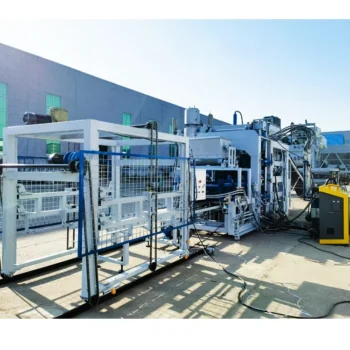
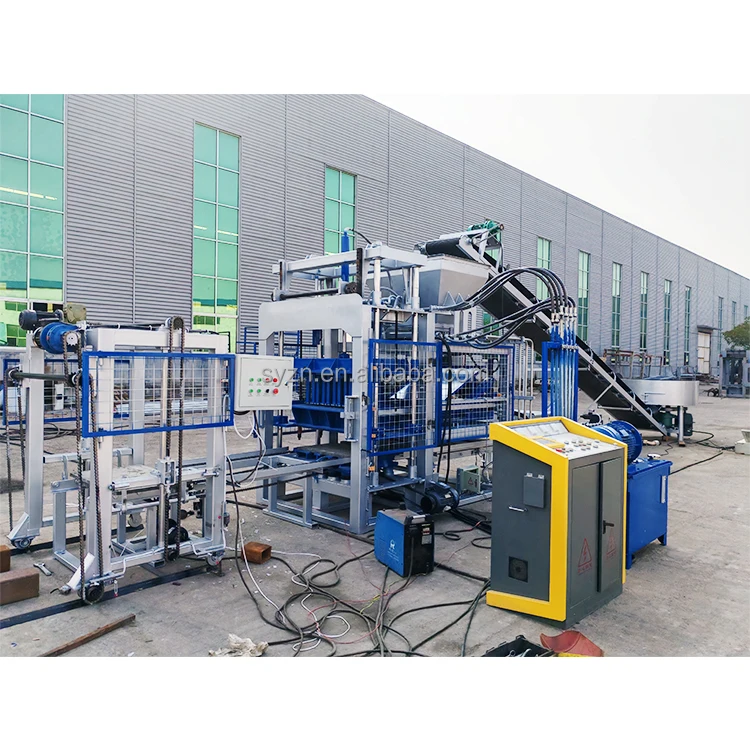
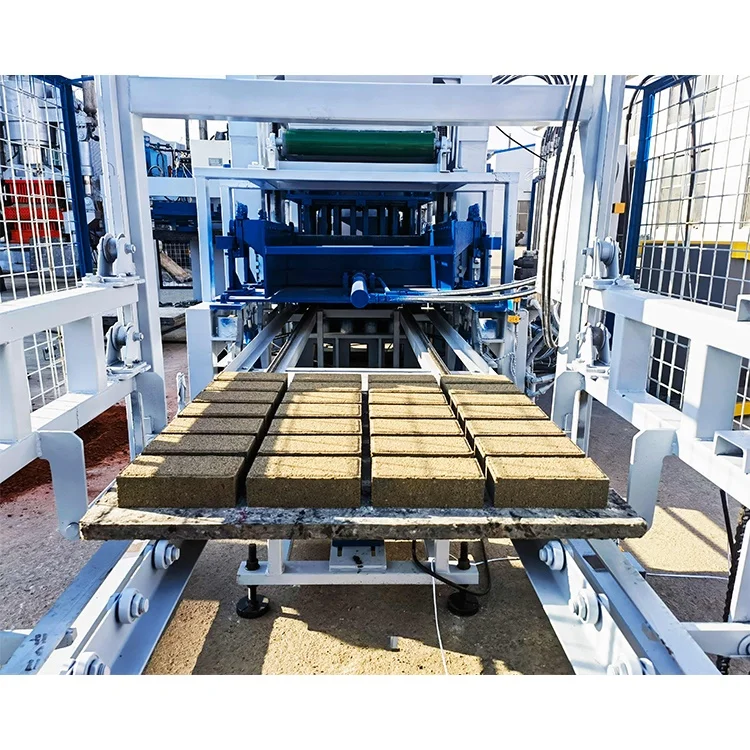
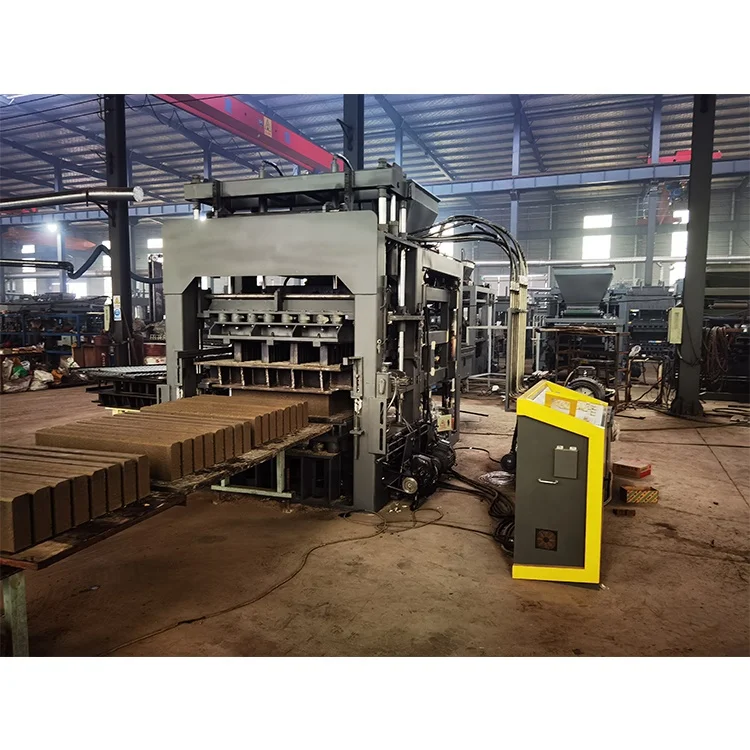
Ready for Dispatch — the QT8-15 block machine sits in stock with standard moulds, container loading planned, and arrival estimates quoted before you commit.
Technical Specifications
| Parameter | Value |
|---|---|
| Model | QT8-15 |
| Product Type | Automatic Concrete Block Making Machine |
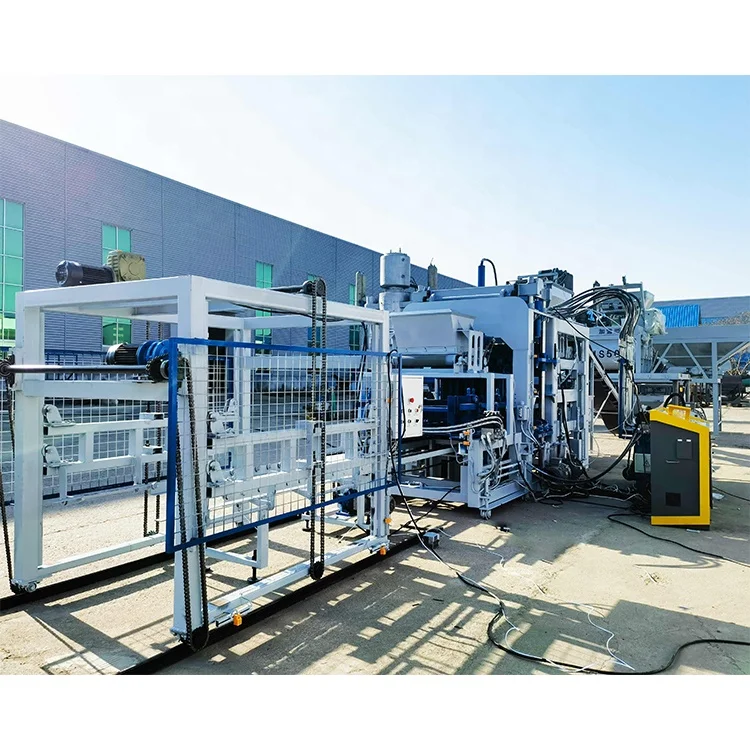
| Overall Dimensions | 8300×1860×3000 mm |
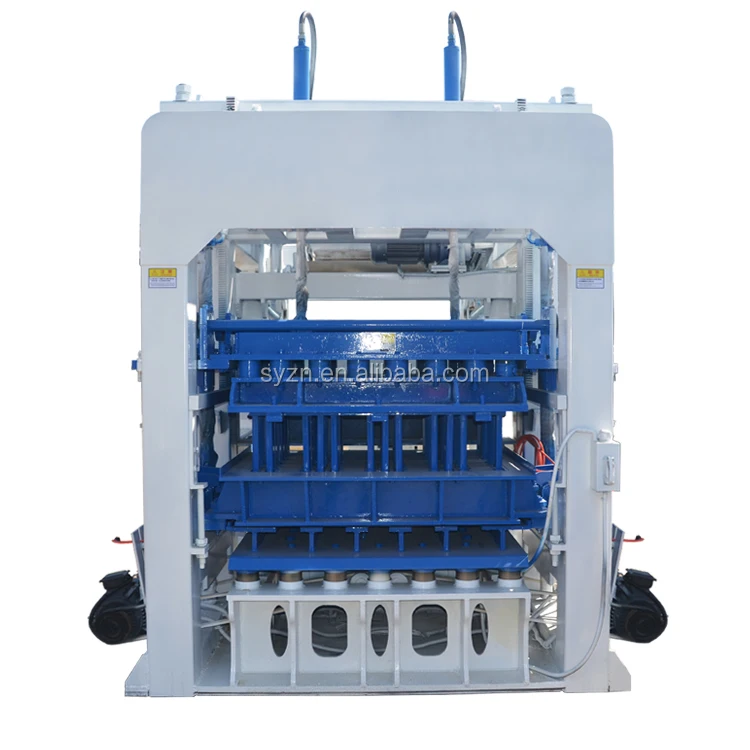
| Rated Pressure | 21 MPa |
| Main Vibration Form | Platform Vibration |
| Vibration Frequency | 2800~4500 r/min |
| Vibration Force | 60 KN |
| Pallet Size | 950×900 mm |
| Molding Cycle | 15-25 s (basis not stated in source) |
| Overall Power | 55.5 kW |
| Total Mass | 9 T |
| Demolding Method | Hydraulic |
| General Water Consumption | 12 T/Day |
| Factory Area | 600 m² |
| Control System | PLC with human-machine interface dialogue system |
| Feeding System | Semi-closed screen reticular rotational feeding unit |
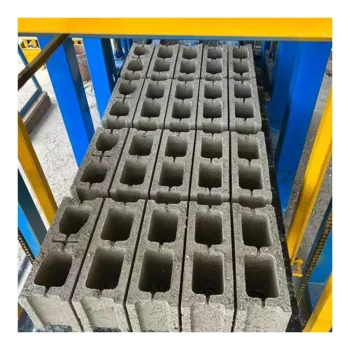
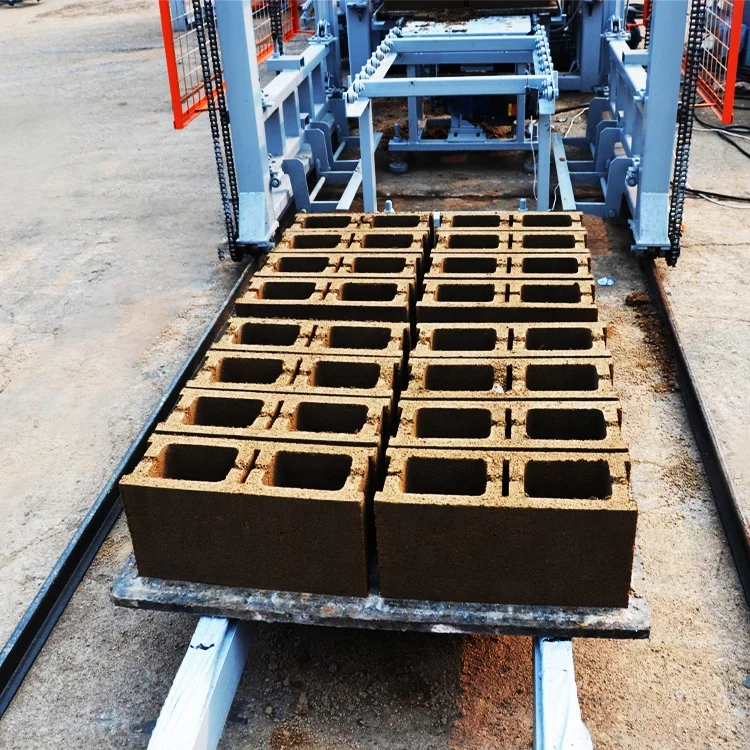
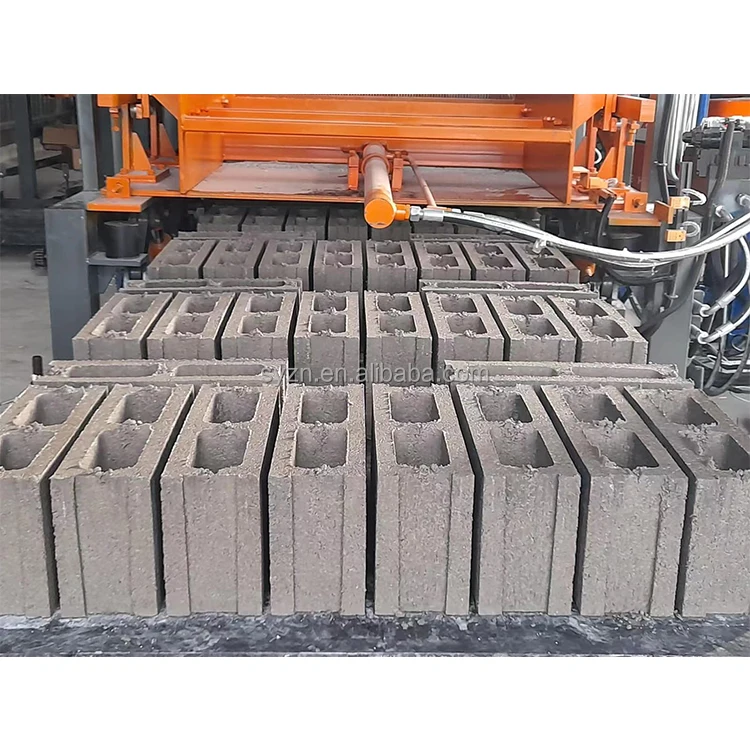
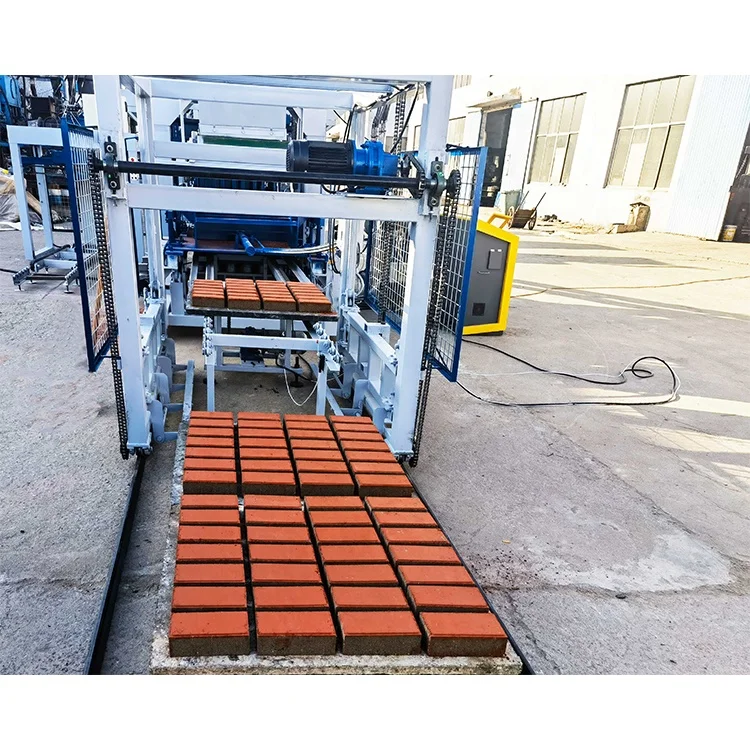
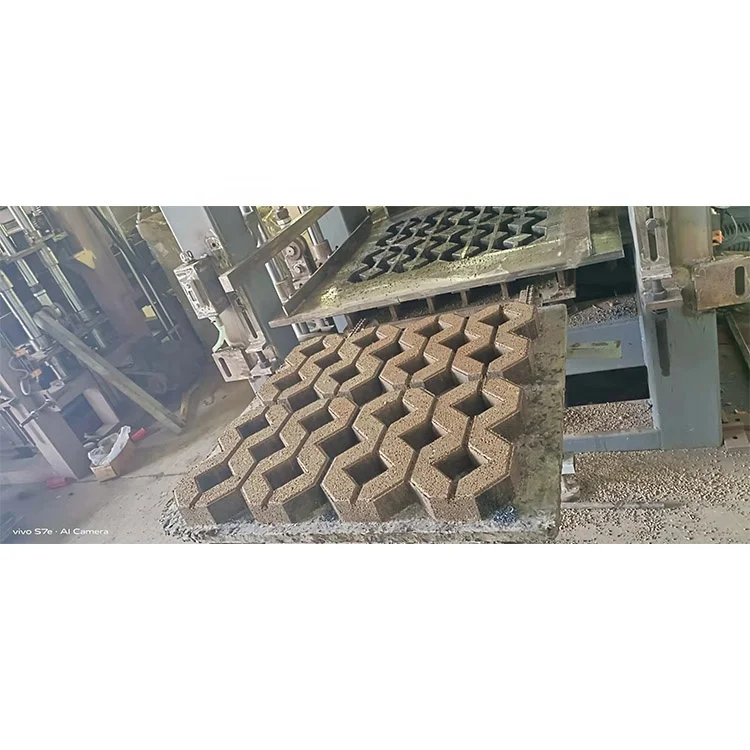
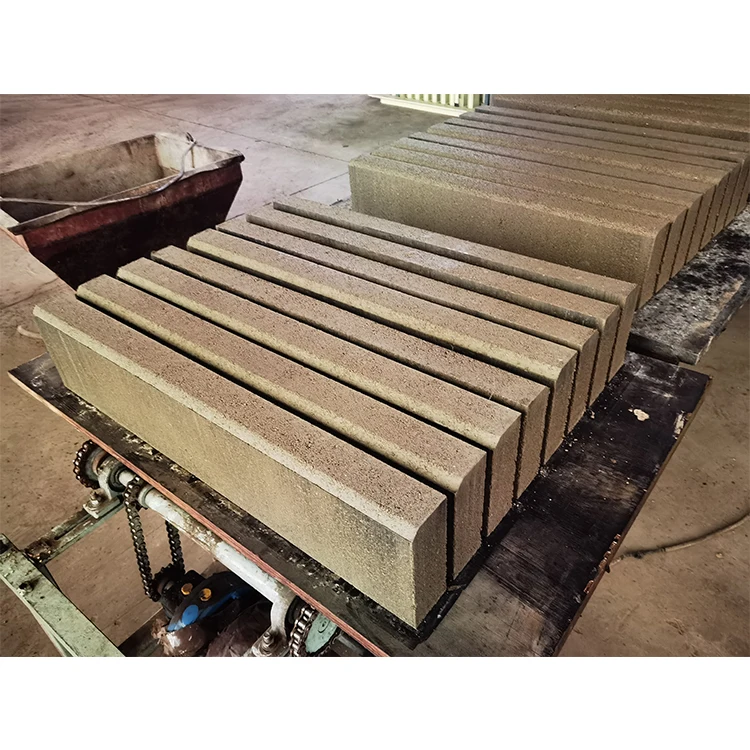
| Applied Products | Concrete blocks, hollow/solid blocks, pavers, interlocking blocks, curbstone, colored pavers |
| Raw Materials | Crushed stone, sand, cement, dust, fly ash, gravel, slag |
| Automation Level | Fully automatic |
Application Suitability
| Application | Material or Output |
|---|---|
| Hollow block production for residential housing projects | Crushed stone, sand, cement, fly ash blends |
| Solid block manufacturing for load-bearing walls | Gravel, sand, cement mixes |
| Paving block production for roads and walkways | Colored aggregates, cement, sand |
| Interlocking block output for retaining walls | Crushed stone, dust, cement |
| Curbstone and kerbstone for municipal infrastructure | Coarse gravel, cement, sand |
| Porous brick for permeable surface requirements | Slag, sand, cement blends |
Why Voltage Confirmation Must Precede the Order
A mismatched motor winding can idle an entire job site for weeks while a transformer is sourced locally.
When I first supported block machine installations across Latin America, the most expensive delays never came from the machine itself. They came from the gap between what the factory shipped and what the local grid actually delivered. One project in Ecuador had the QT8-15 block machine in stock and ready, crews on site, foundations poured — and then the electrician opened the control panel to find a 380V motor waiting for a 440V/60Hz supply. The transformer retrofit took three weeks, and the contractor paid idle wages the entire time [NEED_CITE: voltage and frequency standards by export market].
The lesson was permanent: confirm the destination voltage and frequency before the machine enters production, not after the bill of lading is issued.
Dispatch Readiness and Container Planning
When a project schedule leaves no room for a multi-week production lead, having a QT8-15 block machine in stock changes the entire timeline. Standard mould formats ship alongside the press, meaning hollow block, solid block, and paver moulds can be loaded into the same container without waiting for separate fabrication runs.
The QT8-15 automatic concrete block machine dismantles into components that fit within standard 40-foot high-cube container dimensions. The main frame, hydraulic station, PLC cabinet, and pallet feeder each receive dedicated securing points so transit vibration does not shift alignment-critical assemblies.
Arrival Estimates You Can Build a Schedule Around
Deadline-driven buyers need more than a shipping date — they need a port-to-port transit window and a realistic clearance timeline. The dispatch lead time for a stocked QT8-15 block machine in stock is quoted at the point of order confirmation, including container loading day and vessel booking reference [NEED_CITE: container shipping transit windows by major trade lane].
Packing photographs are taken before the container doors close, giving you a visual record of how each sub-assembly is braced and wrapped. Customs documentation is prepared in parallel with loading so the paperwork package arrives ahead of the vessel when possible.
How Pressure and Vibration Shape Block Density
The QT8-15 pairs 21 MPa of hydraulic rated pressure with platform vibration running between 2800 and 4500 r/min at 60 KN of vibration force. In concrete block forming, vibration consolidates the mix into the mould cavity while hydraulic pressure compacts it from above — the two forces must be matched to the specific aggregate gradation and cement content of your local mix. A fly-ash-heavy blend behaves differently under vibration than a pure crushed-stone mix, and the frequency range allows the operator to tune consolidation to the material at hand.
The 950×900 mm pallet size defines the maximum mould footprint and, by extension, the number of blocks per cycle. This dimension must align with the curing racks and forklift capacity already in place at your yard. The semi-closed screen reticular rotational feeding unit distributes material evenly across that pallet area, reducing density variation between blocks at the centre and those at the edges.
The Cost of Skipping the Specification Check
Machines configured to a catalogue default rather than the buyer’s local aggregate and target block format consistently underperform on arrival. Block strength falls short because vibration force and hydraulic pressure were never matched to the actual mix design. Mould changes consume most of a shift because the quick-release system was never specified, cancelling out the format flexibility the buyer paid for [NEED_CITE: common commissioning failures in exported concrete equipment].
Pallet handling and stacking left out of the quotation means output piles up faster than workers can move it, turning an automatic line into a manual bottleneck by mid-shift.
Why Buyers Source This Machine Here
Block machinery is the single focus, so the QT8-15 press, its moulds, pallets, and handling equipment are specified as one matched system rather than assembled from unrelated suppliers.
Configuration is set against the buyer’s actual mix design, local aggregate, and target block format — not a catalogue default that assumes material you cannot source at your project site.
Automation level is selectable, allowing a buyer to take delivery of the QT8-15 automatic concrete block machine in its fully automatic configuration now and integrate additional upstream or downstream automation later.
Standard moulds for the formats your market actually sells are stocked alongside the machine, reducing the gap between container arrival and first production run.
Dispatch lead times are quoted upfront with container loading plans, so project scheduling does not depend on open-ended production promises.
Documentation & Verification
- Factory test record run on your specified block format before container loading
- Machine specification sheet with voltage, frequency, and PLC language confirmed per destination
- Mould drawing and format list matching the pallet size and block dimensions you ordered
- Packing photographs showing bracing and wrapping of each sub-assembly before sealing
- Hydraulic and electrical schematic for your on-site maintenance team
- Customs documentation package prepared to match destination port requirements
Installation, Commissioning & Support
- Foundation pad must accommodate 8300×1860 mm footprint with clearance for pallet feed and egress
- Power supply must deliver 55.5 kW total load at confirmed voltage and frequency with dedicated circuit breaker
- Machine arrives dismantled with frame, hydraulic station, and PLC cabinet as separate lifts
- Commissioning includes first-run parameter tuning of vibration frequency to your local aggregate blend
- Operator training covers PLC human-machine interface dialogue system in confirmed display language
- Wear parts and mould maintenance schedule provided with replacement part numbers
What to Prepare Before Inquiry
Share the target block formats your market sells daily and the dimensions you need most frequently. Confirm the local voltage and frequency at your project site, along with the raw materials you can reliably source. Let us know the curing area layout and forklift capacity you already have so pallet sizing aligns with your existing yard.
Frequently Asked Questions
Q: Which QT8-15 configurations and mould formats are currently in stock and ready for dispatch?
A: Stocked units include the standard QT8-15 automatic configuration with PLC control and platform vibration system. Standard moulds for hollow blocks, solid blocks, and pavers matching the 950×900 mm pallet are typically available alongside the machine. Specific format availability is confirmed at inquiry based on current warehouse inventory and recent dispatch commitments.
Q: What is the realistic lead time from order confirmation to container loading and port arrival?
A: For a stocked QT8-15 block machine in stock, container loading typically follows order confirmation and payment clearance within a short window. Port-to-port transit depends on the destination lane. Vessel booking references and estimated arrival dates are provided at the quotation stage so you can plan site preparation around a known timeline.
Q: How is the machine dismantled and packed for container shipment to prevent transit damage?
A: The 9-ton QT8-15 is dismantled into its main frame, hydraulic station, PLC cabinet, and feeding system. Each sub-assembly is braced with dedicated securing points inside the container. Packing photographs document the wrapping and blocking of every component before the doors are sealed, giving you a complete visual record for insurance and receiving inspection.
Q: What customs and shipping documentation is provided to support smooth import clearance?
A: The documentation package includes the commercial invoice, packing list, bill of lading, and CE declaration where applicable. Machine specification sheets and hydraulic schematics accompany the shipment to satisfy local inspection authorities. All documents are prepared in parallel with container loading to minimize the gap between vessel departure and paperwork arrival at destination.
Q: Can I receive a pre-shipment factory test record and packing photographs before the container is sealed?
A: Yes. The QT8-15 undergoes a factory test run on the mould format you have ordered, and the test record is shared before dispatch. Packing photographs are taken during the container loading process and sent to you before sealing, so you can verify that every component is properly secured and protected for the ocean transit ahead.