

Description
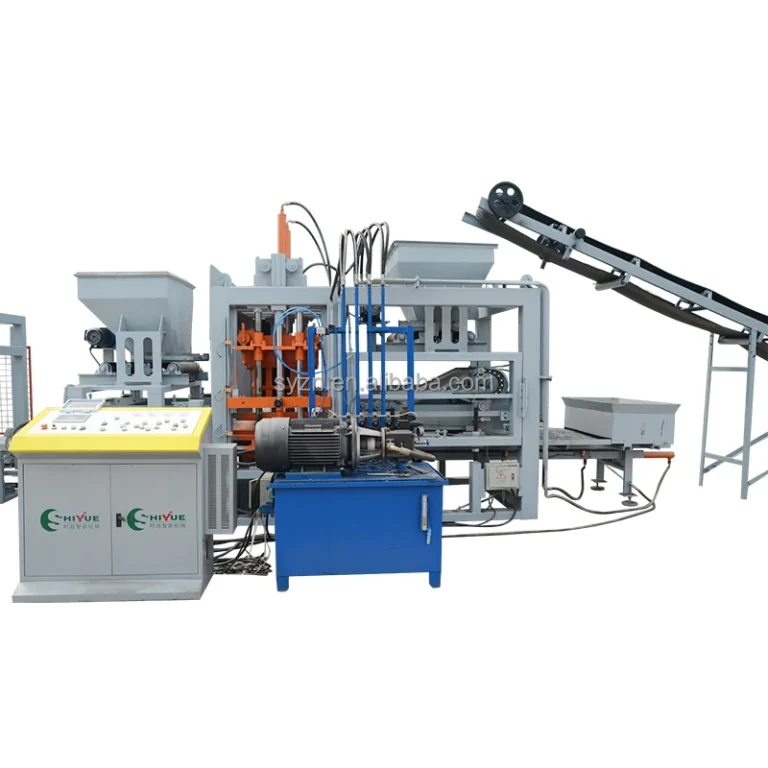
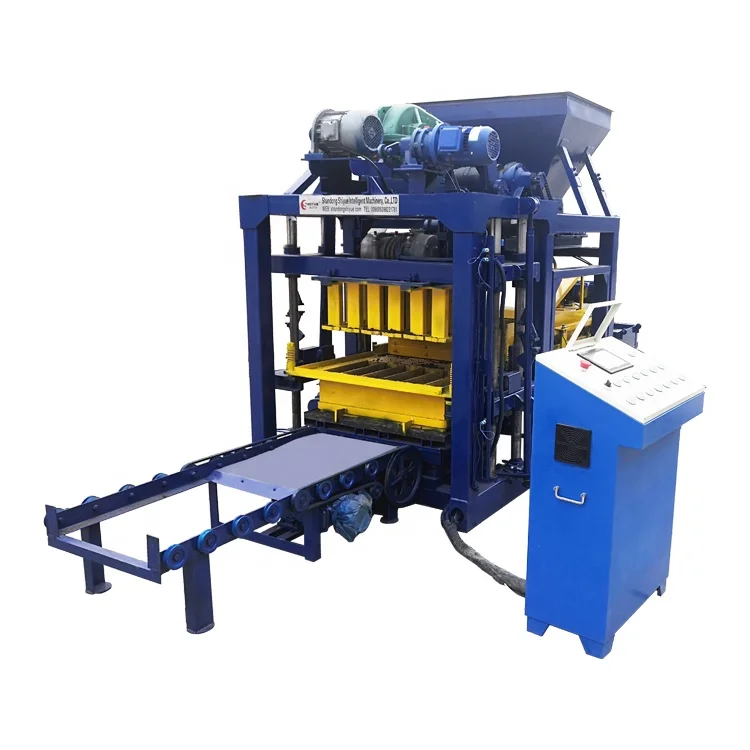
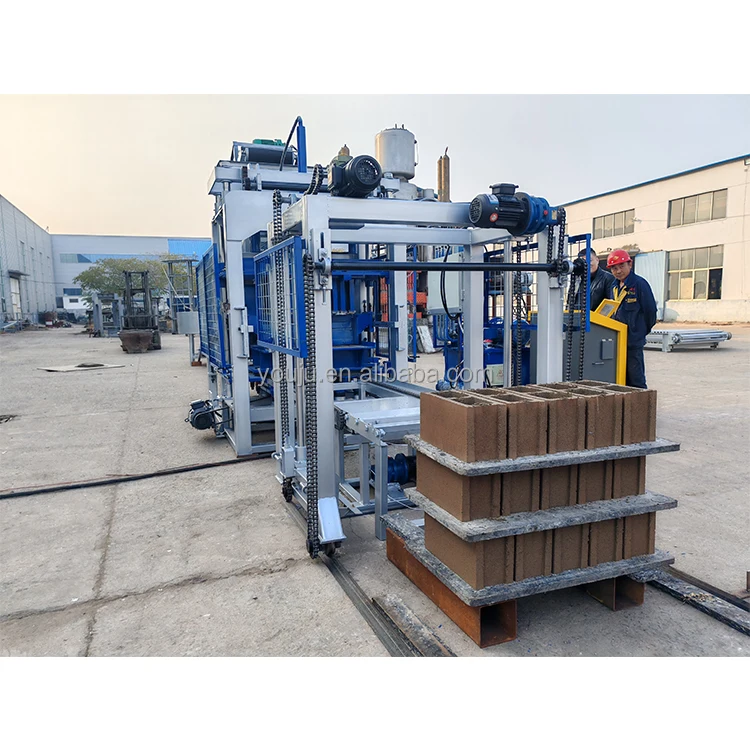
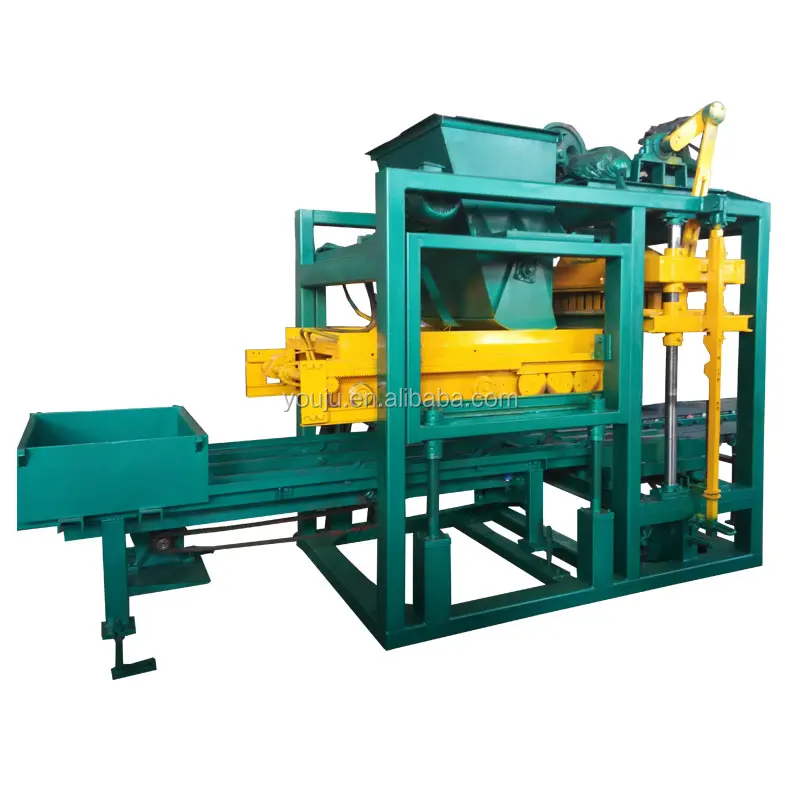
Dispatch-Ready Block Lines — the QTJ4-25 semi-automatic block machine and its standard moulds are held in stock so your project timeline is not held up by a production backlog.
Technical Specifications
| Parameter | Value |
|---|---|
| Model | QTJ4-25 |
| Product Type | Semi-Automatic Concrete Block Making Machine |
| Rated Power | 17.9 kW |
| Vibration Frequency | 2800 r/min |
| Exciting Force | 60 kN |
| Molding Cycle | 25 s |
| Overall Dimensions | 6400 × 1500 × 2700 mm |
| Total Mass | 2500 kg |
| Pallet Size | 850 × 550 × 20 mm |
| Standard Mould Format | 400 × 200 × 200 mm hollow block (4 pcs/mould) |
| Output Capacity | 960 pcs/h, 7680 pcs/day (based on 400×200×200mm hollow block, 4 pcs/mould) |
| Vibration Method | Bed mould vertical vibration + upper mould compression vibration |
| Included Mixer | JQ350 |
| Automation Level | Semi-automatic |
| Hydraulic Station | Equipped |
| Voltage & Frequency | Confirm before order (basis not stated in source) |
| Control System | Confirm PLC / relay / manual before order (basis not stated in source) |
| Certification | Confirm CE or other before order (basis not stated in source) |
Application Suitability
| Application | Material or Output |
|---|---|
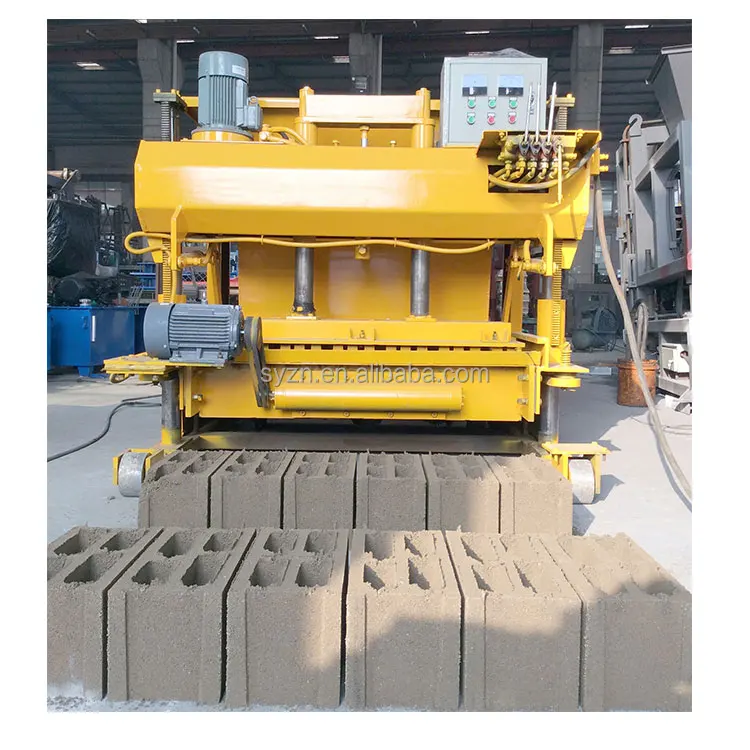
| Hollow block production for wall construction | Crushed stone, sand, cement, and water mix on 850 × 550 mm pallets |
| Solid block manufacturing for load-bearing structures | Dense aggregate blend with higher cement ratio |
| Paving block runs for walkways and yards | Fine aggregate surface layer over standard base mix |
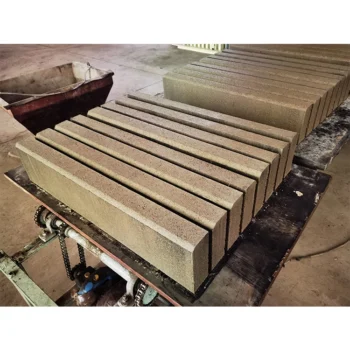
| Curbstone forming for road edges | Coarse aggregate mix with extended vibration cycle |
| On-site contractor production at remote build locations | Local sand and gravel sourced near the project |
What "In Stock" Actually Means for the QTJ4-25 Block Making Machine in Stock
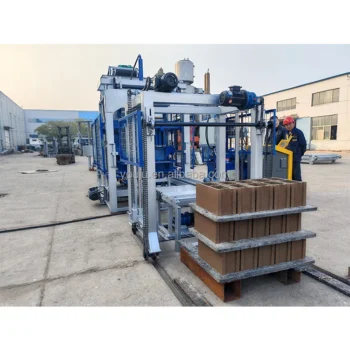
A stocked QTJ4-25 block making machine in stock means the host machine, mould, mixer, and pallets sit in the yard ready for container loading, not that a production slot has been reserved.
When a buyer is racing a project deadline, a lead time quoted in weeks can collapse the entire construction schedule. I have watched orders stall because a supplier quoted "available soon" when the machine was still on the assembly floor. With the QTJ4-25 block making machine in stock, the unit is built, tested, and photographed before you commit. Dispatch lead time then collapses to the time needed for container booking and customs paperwork rather than a full manufacturing cycle. [NEED_CITE: typical container booking lead times from Shandong ports]
Which Configurations Ship Immediately and Which Require Build Time
The QTJ4-25 host machine with its standard 400 × 200 × 200 mm hollow block mould is the configuration most commonly held in stock. This format covers a large share of wall block demand across West Africa, Southeast Asia, and South America, so finished units are kept on hand. The included JQ350 mixer is paired and stored alongside.
If your project calls for paving block, interlocking paver, or curbstone moulds, those are typically built to order because format variety is wide. Requesting a stock list before placing the order tells you exactly which moulds can ride in the same container. Adding extra pallets or a second mould set to the same shipment is straightforward when the host machine is already packed. [NEED_CITE: mould format demand patterns across export markets]
How Dispatch and Container Loading Are Handled
The QTJ4-25 is dismantled into its main frame, vibration table, hydraulic station, and mould assembly for loading. A 20-foot general purpose container is typically sufficient for one complete set including the JQ350 mixer and a pallet stack. The total mass of 2500 kg sits well within container floor load limits.
Before the container is sealed, packing photographs are taken showing the machine secured to the container floor with timber bracing. These photographs are shared with the buyer so that any transit damage can be traced. Container booking from Shandong ports usually follows within days once export documentation is cleared.
Reading the Numbers That Matter on Site
The 60 kN exciting force combined with bed mould vertical vibration and upper mould compression vibration determines how tightly the aggregate particles lock together during the 25-second molding cycle. Higher exciting force produces denser blocks, which directly affects compressive strength at the curing stage. If your local aggregate is lightweight volcanic pumice rather than crushed granite, the vibration energy needs to be matched to that material density or the blocks will crumble when stripped from the pallet.
The 850 × 550 × 20 mm pallet size must be checked against your curing rack spacing and forklift tine width before dispatch. I have seen buyers receive machines only to find their existing forklift cannot handle the pallet dimensions, forcing a last-minute equipment rental. The 17.9 kW rated power draw means a dedicated circuit with adequate breaker capacity is required at the site.
The Cost of Shipping a Machine That Does Not Match Your Site
Voltage and frequency confirmation is the single most overlooked step before dispatch. A machine wired for 380 V / 50 Hz arriving at a site with 440 V / 60 Hz supply will burn out motors within the first shift. Control language on the panel must also be set to a language the operator reads, or commissioning stretches into days of guesswork. [NEED_CITE: motor failure rates from voltage mismatch in exported machinery]
Pallet material is another hidden variable. Bamboo pallets, PVC pallets, and steel pallets each behave differently under vibration and moisture. If the quotation lists a pallet material that your curing climate will warp or corrode, replacement costs accumulate before the first month ends.
Why Buyers Source the QTJ4-25 From This Stock Channel
Every stocked QTJ4-25 block making machine in stock is listed with its exact mould format, pallet type, and configuration so there is no mismatch between what you see and what arrives. Dispatch lead time and arrival estimate are provided in writing before the order is placed, not after payment clears.
Packing photographs and container loading plans are shared before the container is sealed. The machine, mould, and JQ350 mixer are specified as one matched set rather than assembled from separate suppliers. If your project requires a specific block format, the stock list tells you honestly whether that mould is ready or needs to be built.
Documentation & Verification
- Factory test record showing the QTJ4-25 running with the included mould before dispatch
- Packing photographs of the dismantled machine inside the container before sealing
- Container loading plan confirming weight distribution and bracing method
- Voltage and frequency confirmation sheet signed before wiring is finalized
- Customs documentation package for smooth clearance at your destination port
Installation, Commissioning & Support
- The 6400 × 1500 × 2700 mm footprint requires a level concrete pad with anchor bolt provisions
- A dedicated circuit rated for the 17.9 kW total draw must be in place before the machine is energized
- The vibration table and hydraulic station are reassembled on site using the included fastener kit
- First-run block samples are produced to confirm the 25-second molding cycle matches your aggregate mix
- Pallet handling training covers loading the 850 × 550 mm pallets onto the feed rack correctly
- Wear parts list identifies the vibration springs and mould liner plates most likely to need replacement first
What to Send With Your Inquiry
Share the block format your market sells most, the daily output you need to hit, and the type of aggregate you can source locally. Confirm your site voltage, frequency, and the language your operator reads on a control panel. If you have a project deadline, state it so the stock list can be checked against your shipping window.
Frequently Asked Questions
Q: Which QTJ4-25 configurations and mould formats are currently in stock?
A: The QTJ4-25 host machine with the standard 400 × 200 × 200 mm hollow block mould and JQ350 mixer is the configuration most commonly held ready for dispatch. Paving block and curbstone moulds are generally built to order. Requesting a current stock list before ordering tells you exactly which formats can ship immediately and which require a build cycle.
Q: What is the dispatch lead time and estimated arrival at my port?
A: Once the specific QTJ4-25 configuration is confirmed in stock, dispatch lead time covers container booking, export documentation, and transport to the port. Arrival estimate depends on the destination port and shipping line schedule. Both dates are provided in writing before you place the order so your project timeline can be planned accurately.
Q: How is the machine dismantled and loaded into the container?
A: The QTJ4-25 is broken down into the main frame, vibration table, hydraulic station, and mould assembly. These components, along with the JQ350 mixer and pallet stack, fit inside a standard 20-foot container. Timber bracing secures the load, and packing photographs are shared with you before the container doors are sealed.
Q: Can I add extra moulds or pallets to the same shipment?
A: Yes. Additional mould sets and pallets can be loaded into the same container as the QTJ4-25 as long as space permits. Confirming which mould formats are in stock versus built to order helps you plan the shipment so everything arrives together rather than in separate consignments.
Q: What customs documentation is provided with the shipment?
A: The shipment includes a commercial invoice, packing list, bill of lading, and certificate of origin as standard. Additional documents such as a CE declaration or specific import permits can be arranged if your destination country requires them. Confirming documentation requirements before dispatch avoids clearance delays at your port.