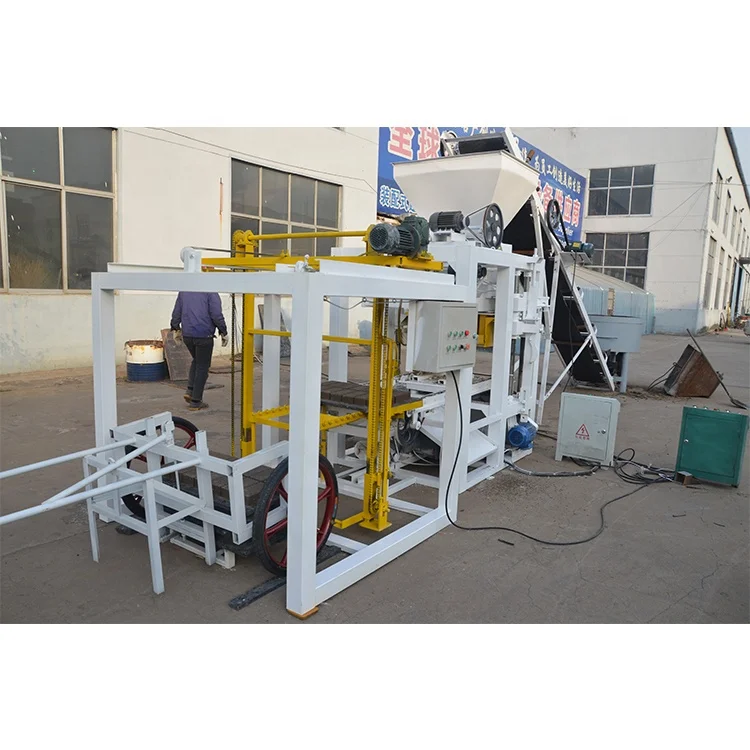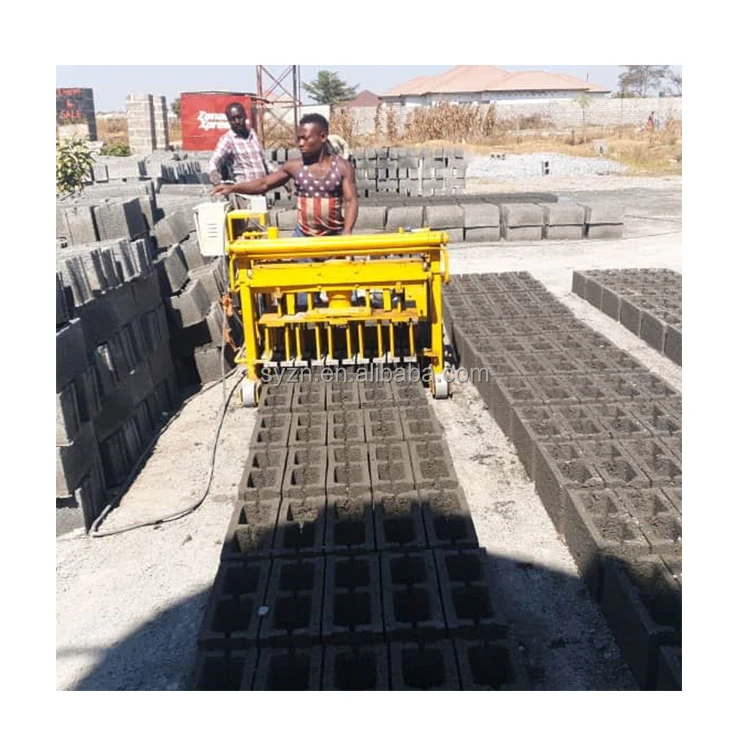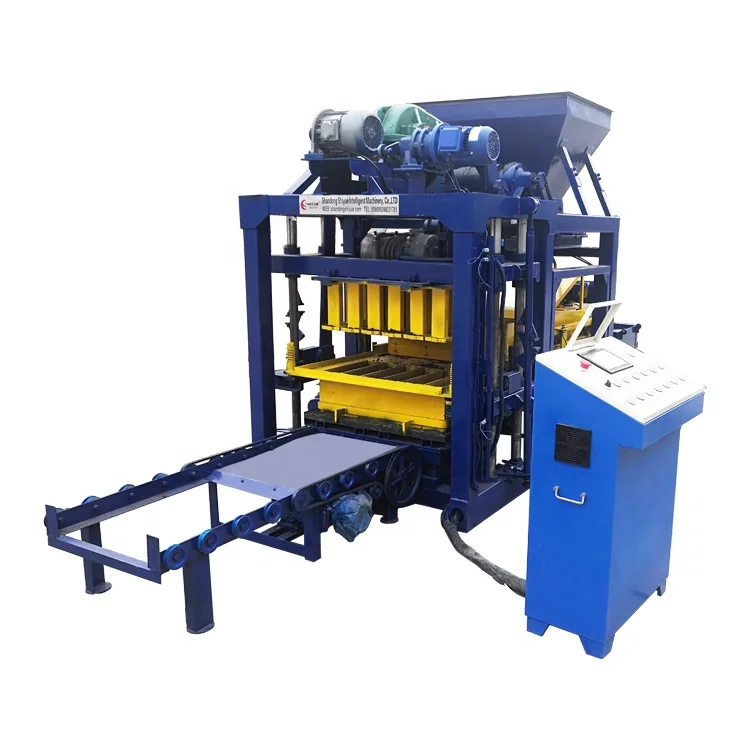
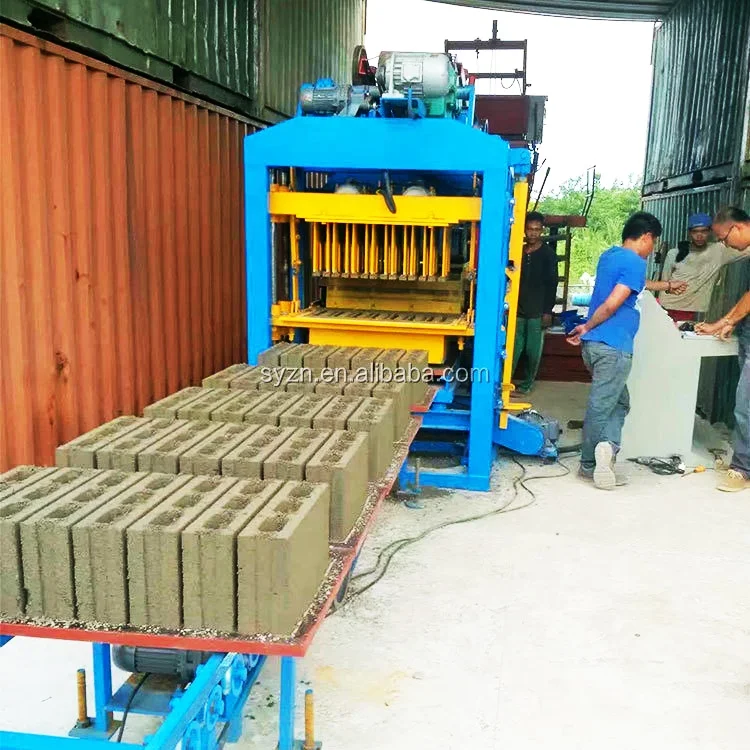
Description
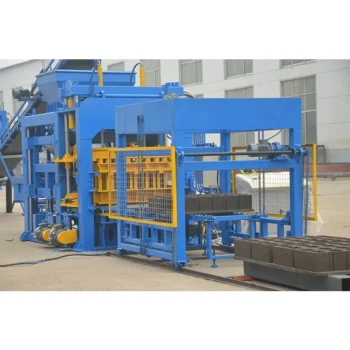
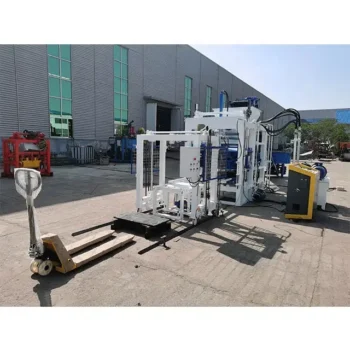
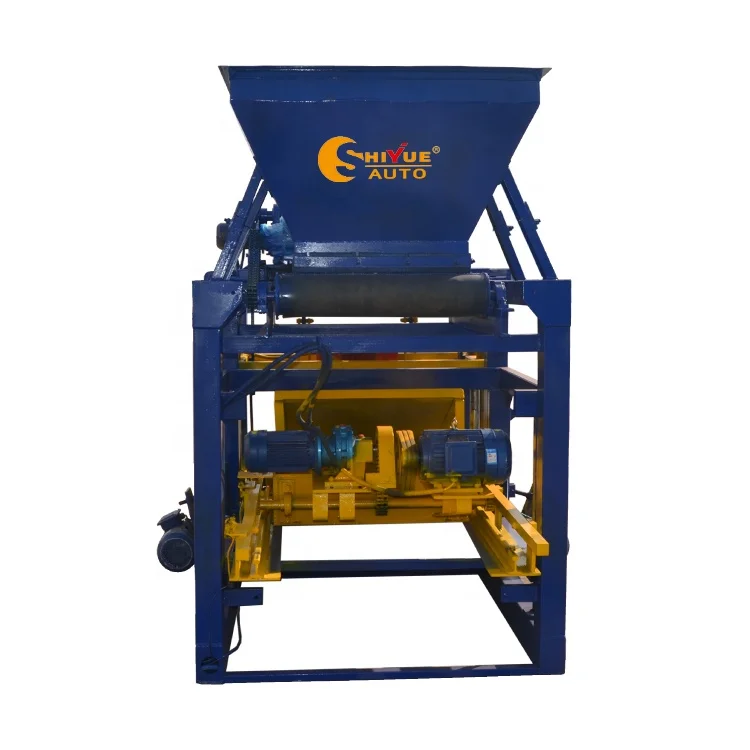
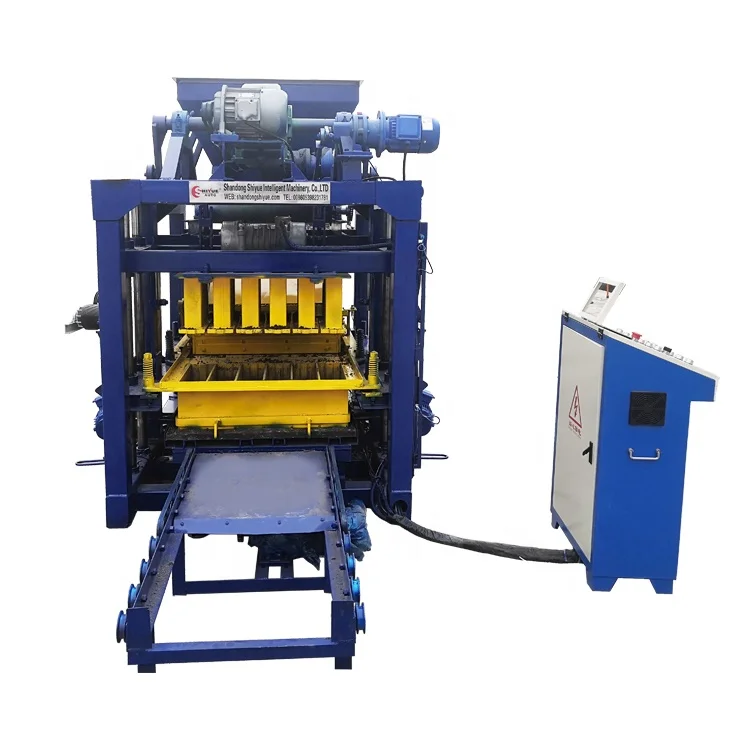
Stocked Configuration Matched to Your Site — QTJ4-25 units held in Linyi are configured with 850×550 mm pallets and standard hollow block moulds, ready to dispatch once your voltage and frequency are confirmed.
Technical Specifications
| Parameter | Value |
|---|---|
| Model | QTJ4-25 |
| Product Type | Semi-Automatic Concrete Block Making Machine |
| Overall Dimensions (L×W×H) | 3060×1730×2580 mm |
| Total Weight | 4 T |
| Cycle Time | 25 s |
| Vibration Force | 45 kN |
| Pallet Size | 850×550 mm |
| Block Height Range | 40–280 mm |
| Workshop Area | 50–150 m² |
| Material Storage Area | 300–500 m² |
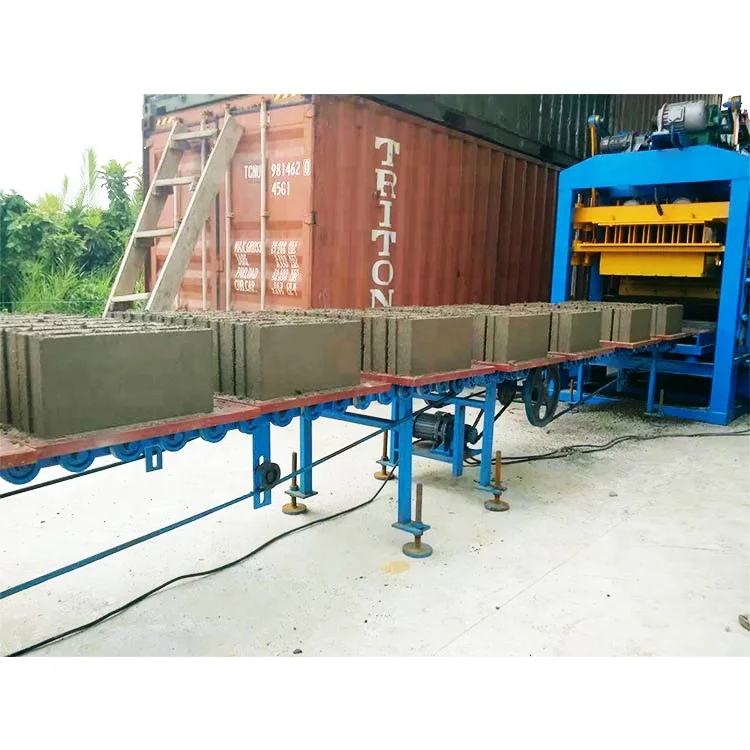
| Belt Conveyor Length | 8 m |
| Mixer Model | JQ500 |
| Motor Brand | Siemens or ABB |
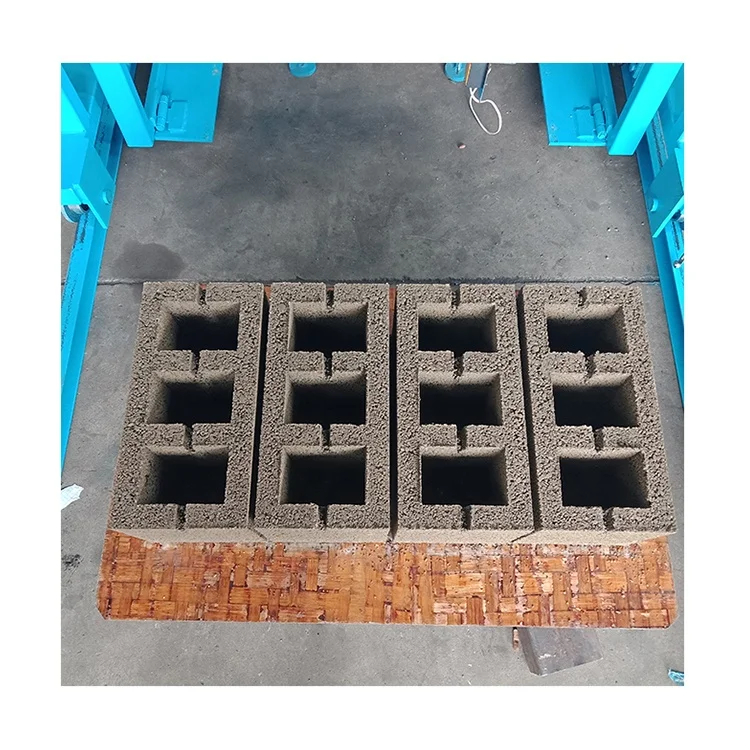
| Output Capacity (400×200×200 mm hollow block) | 480 pcs/h, 3840 pcs/8h |
| Output Capacity (400×150×200 mm hollow block) | 600 pcs/h, 4800 pcs/8h |
| Output Capacity (400×100×200 mm hollow block) | 840 pcs/h, 6720 pcs/8h |
| Output Capacity (240×115×53 mm solid brick) | 2880 pcs/h, 23040 pcs/8h |
| Mould Formats Supported | Hollow block, solid block, paver, interlocking block, curbstone, grassed brick, revetment brick, colored paver |
| Voltage & Frequency | 380V, 3-phase, 50Hz (customizable to local voltage) |
| Warranty | 1 year (excluding wearing parts) |
Application Suitability
| Application | Material or Output |
|---|---|
| On-site construction block manufacturing | Crushed stone, river sand, and cement for hollow and solid blocks |
| First block plant with limited investment | Fly ash and cement mixes for standard masonry units |
| Paver and interlocking brick production | Fine aggregate and pigment for colored paving formats |
| Curbstone and revetment brick manufacturing | Coarse aggregate blends for heavy-duty civil engineering formats |
Why the Dispatch Date Matters More Than the Cycle Time
A machine sitting in a warehouse ships in days; a machine built to order ships in weeks.
You are working against a construction milestone or a supply contract that does not move. The QTJ4-25 block machine in stock means the press, mixer, and belt conveyor are already assembled and tested in Linyi, waiting only for your electrical confirmation before container loading. Buyers who focus solely on the 25-second cycle time often overlook that a custom-built machine can add weeks to a project timeline, while a stocked unit with confirmed voltage arrives ready to commission. [NEED_CITE: typical sea freight transit times from Qingdao to major global ports]
Container Loading and Dispatch Readiness
The QTJ4-25 block machine in stock is dismantled into major assemblies for sea shipping, with the main frame, mixer, and conveyor secured separately inside the container. This partial dismantling keeps the overall shipping dimensions manageable and protects the vibration table during transit. Standard moulds and pallets are bundled in the same load, so you receive a complete production cell rather than waiting for secondary shipments. Dispatch lead time is quoted upfront once your voltage and control language are locked in.
Arrival Timing and Site Readiness
Once the container leaves Qingdao, the arrival estimate depends on your destination port and customs clearance speed. The 50–150 m² workshop requirement means most construction sites and small industrial plots can accommodate the line without major civil works. What matters is that your foundation slab, curing area, and power supply are ready before the container arrives, so commissioning starts immediately rather than waiting for site preparation. [NEED_CITE: port congestion and customs clearance variability by region]
What the 25-Second Cycle Actually Means on Site
The 25-second cycle time is measured under factory test conditions with a standard concrete mix and consistent material feed. On your site, the real cycle depends on how quickly your mixer delivers fresh material, how your operators handle pallets, and whether your aggregate grading matches the mix the machine was set up for. The 45 kN vibration force is matched to standard concrete and fly ash blends, but if your local sand has high clay content, the vibration may need adjustment or the mix redesigned to maintain block density. The output figures — such as 3840 hollow blocks per 8-hour shift for the 400×200×200 mm format — assume uninterrupted material supply and manual pallet handling at the stated cycle.
What Happens When Voltage Is Left Until the Last Minute
Arriving at your site to discover the PLC display is in a language your operators cannot read, or that the motor is wound for 50 Hz while your grid runs at 60 Hz, turns a quick commissioning into a multi-week delay. Voltage and frequency must be confirmed before the machine leaves the factory, not after it arrives. Rewinding motors or replacing control components on site adds cost and downtime that a simple pre-shipment checklist would have avoided. [NEED_CITE: electrical standards and frequency variations across export markets]
Why Buyers Source the Stocked Range
Configuration is set against your actual mix design and target block format, not pulled from a catalogue default. Pallet size and material are confirmed against your existing curing area and forklift capacity before the machine is loaded. Moulds for the formats your market actually sells are included in the stock package, with custom drawings available for non-standard sizes. Factory test records and packing photographs are provided before the container is sealed, so you see exactly what is shipping. Electrical confirmation and control language are locked in during the order process, eliminating on-site surprises.
Documentation & Verification
- Factory test record run on your specified block format before dispatch
- Pallet specification sheet confirming size and material match to your curing racks
- Voltage and control language confirmation signed off before container loading
- Packing photographs showing dismantling state and securing method inside container
- Mould drawing and format list for every mould included in the shipment
Installation, Commissioning & Support
- Foundation slab must be level and cured to support the 4 T total weight and 45 kN vibration force
- 380V 3-phase power supply with dedicated circuit breaker sized for the Siemens or ABB motor
- Machine arrives partially dismantled; main frame, mixer, and conveyor reassembled on site
- First production run verifies cycle time and block density against your local aggregate
- Operator training covers mould change procedure and manual pallet handling workflow
- Wearing parts list provided with reorder timeline for vibration table elements and mould liners
Before You Request a Quote
To give you an accurate dispatch date and arrival estimate, we need your target block format and daily output requirement, your local voltage and frequency, and the dimensions of your available workshop and curing area. If you have existing forklifts or pallet racking, share the specifications so the 850×550 mm pallet configuration can be verified against your handling equipment. Tell us which mould formats you need in the first shipment and which can follow later.
Frequently Asked Questions
Q: What QTJ4-25 models and moulds are currently in stock, and what is the dispatch lead time?
A: Standard QTJ4-25 units with hollow block moulds and 850×550 mm pallets are held in Linyi. Once your voltage, frequency, and control language are confirmed, the machine is prepared for container loading. Dispatch lead time is quoted at the inquiry stage based on current stock levels and your electrical requirements.
Q: How is the machine loaded into a container, and what is the estimated arrival time?
A: The main frame, JQ500 mixer, and 8 m belt conveyor are dismantled and secured separately inside the container. Arrival time depends on your destination port and shipping route. We provide an estimated arrival date at the quotation stage, and packing photographs are shared before the container is sealed.
Q: Can voltage and frequency be customized before shipment without delaying dispatch?
A: Yes. Standard stock is 380V 3-phase 50Hz, but motors and control components can be configured to your local supply. Confirming these details early keeps the machine on the fast dispatch track. Late changes after assembly may extend the lead time.
Q: Which spare parts ship with the machine, and how quickly can I reorder?
A: The standard package includes a wearing parts list covering vibration table elements, mould liners, and hydraulic seals. Reorder timelines depend on part availability and shipping method. We recommend placing your first spare parts order within the initial months of operation to maintain stock on site.
Q: Is the pallet size confirmed against my curing area before the machine ships?
A: Yes. The 850×550 mm pallet size must match your curing racks and forklift capacity. We confirm pallet material and quantity during the order process, along with whether you need wooden, bamboo, or composite pallets, so there are no handling mismatches when production starts.