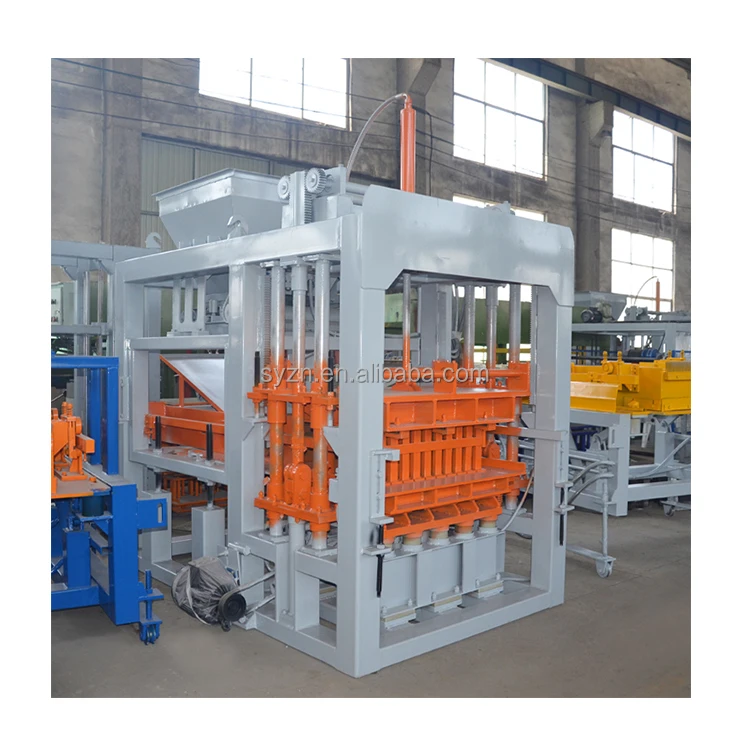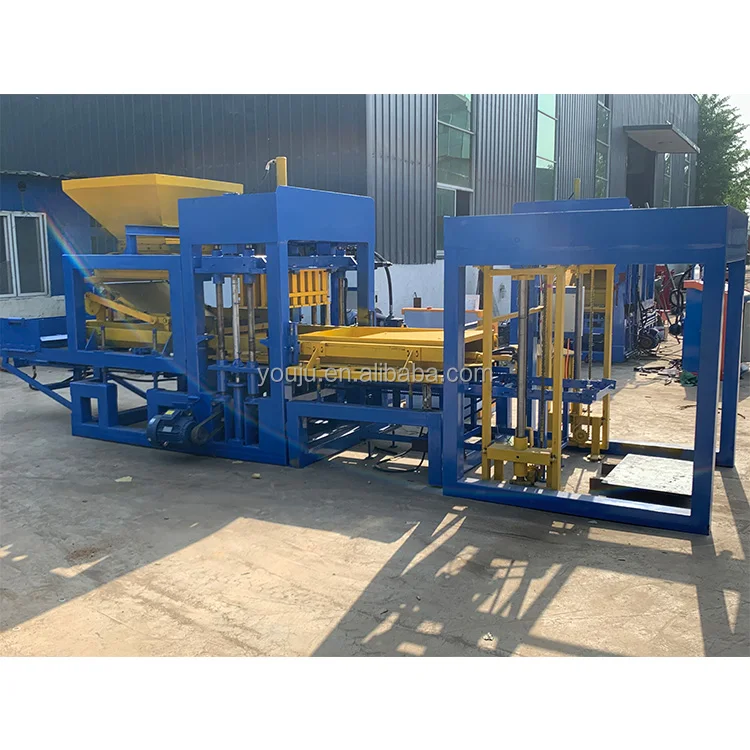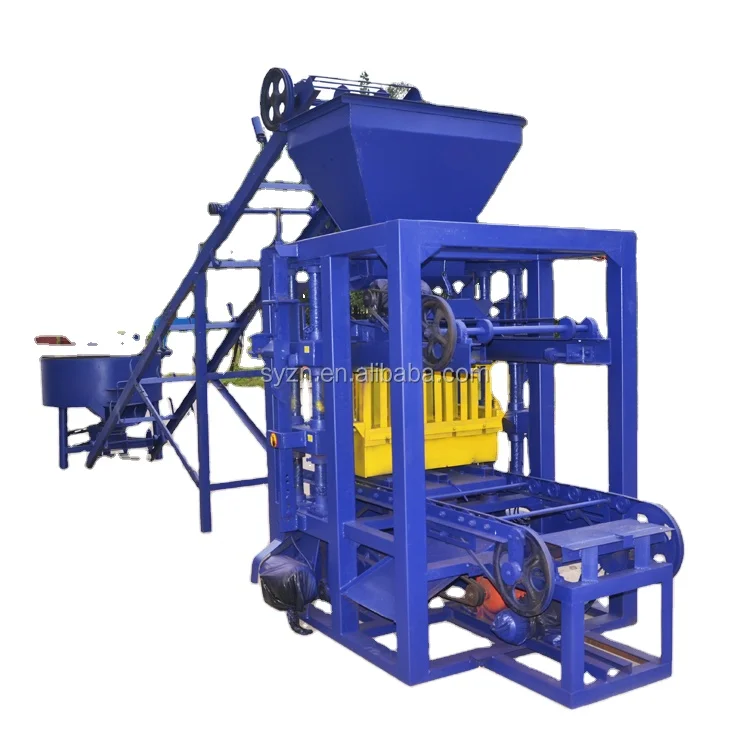


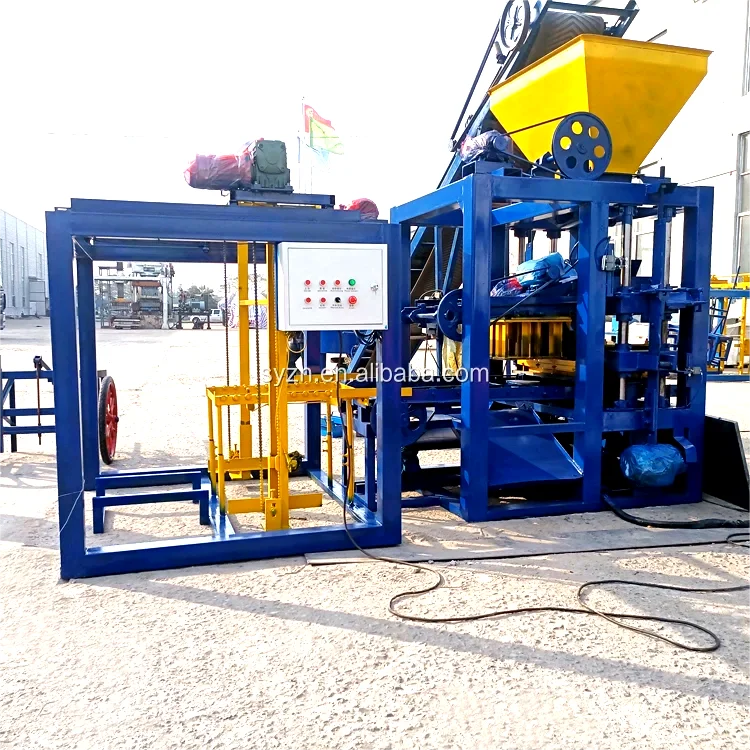


Description
Stock Availability — QTJ4-26 units held ready for container loading, with dispatch schedules confirmed before order placement rather than after.
Technical Specifications
| Parameter | Value |
|---|---|
| Model | QTJ4-26 |
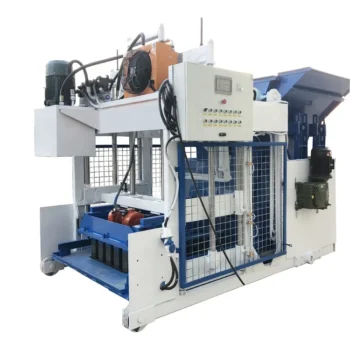
| Product Type | Concrete Block Making Machine |
| Overall Dimensions (L×W×H) | 2060×1730×2580 mm |
| Molding Cycle | 26 s |
| Vibration Frequency | 4200 r/min |
| Vibration Force | 35.5 kN |
| Rated Power | 14.25 kW |
| Mixer Model | JQ350 |
| Pallet Size | 850×450×20 mm |
| Net Weight | 1800 kg |
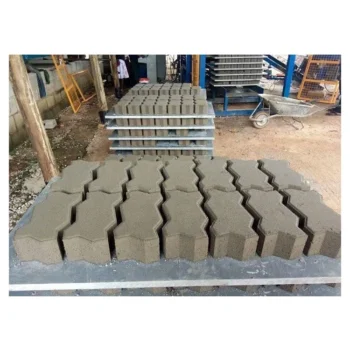
| Applied Products | Hollow block (8 inch, 6 inch), solid brick |
| Raw Materials | Crushed stones, sand, cement, dust, fly ash |
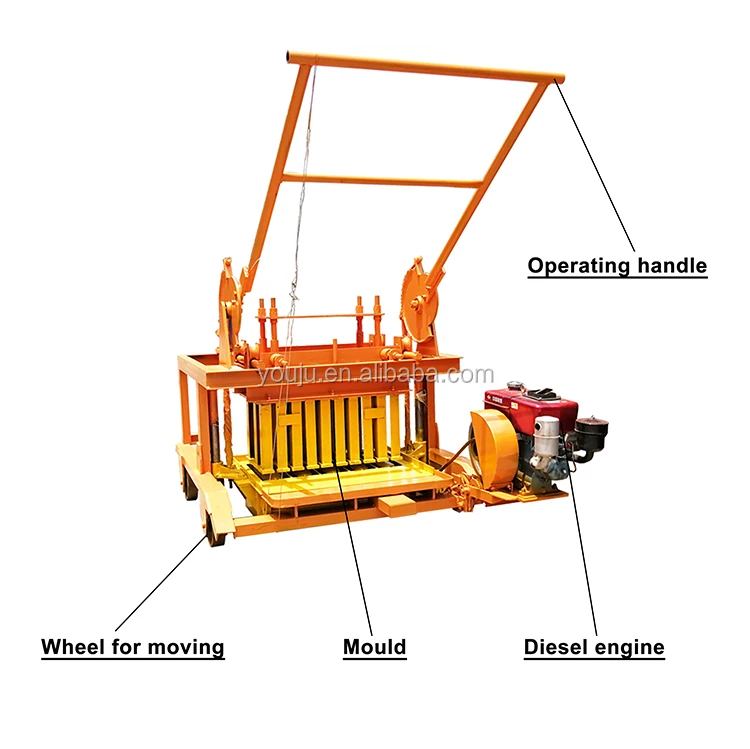
| Automation Level | Semi-automatic (four guide pillars, automatic mould movement) |
| Output Capacity (390×190×190 mm block) | 480 pcs/h, 3800 pcs/8h (4 pcs/mould) |
| Output Capacity (400×150×200 mm block) | 600 pcs/h, 4800 pcs/8h (5 pcs/mould) |
| Output Capacity (240×115×53 mm solid brick) | 2100 pcs/h, 17000 pcs/8h (18 pcs/mould) |
| Voltage & Frequency | Basis to be confirmed with buyer |
| Control System | Basis to be confirmed with buyer |
| Hydraulic Pressure | Basis to be confirmed with buyer |
Application Suitability
| Application | Material or Output |
|---|---|
| Housing project on-site production | 8-inch and 6-inch hollow blocks from crushed stone and cement |
| Small-to-medium block plant startup | Solid brick runs using local sand, fly ash, and cement blends |
| Second line for existing distributors | Supplementary hollow block output during peak construction season |
| Contractor-run temporary yard | Rapid deployment for site-specific masonry requirements |
Why Voltage Confirmation Must Happen Before the Machine Ships
A block machine sitting in a container for weeks only to arrive at a site with incompatible power is a preventable failure, not a supply chain problem.
When a buyer receives a concrete block making machine in stock and ready to run, the assumption is that commissioning begins the day it clears customs. That assumption holds only if the motor windings, control transformer, and panel indicators match the local grid. I have watched entire commissioning schedules slip because a 60 Hz motor was sent to a 50 Hz market, or a control panel labeled in a language the local operator could not read. The machine itself was fine; the paperwork step that would have caught the mismatch was skipped to save a few days [NEED_CITE: voltage and frequency standards by export market]. For the QTJ4-26, voltage and frequency are confirmed with the buyer before the unit leaves the factory floor.
Lead Time That Means Something
Stock availability only matters if it translates into a machine on your site before the project deadline. The QTJ4-26 is a compact semi-automatic press that fits into a single 20GP container with approximately 500 pallets, which means the entire shipping unit can be prepared, loaded, and dispatched without waiting for a second shipment or a partial container booking. Buyers working to construction schedules need a concrete block making machine in stock that ships as one complete lot, not a promise of balance cargo arriving weeks later.
What the Dispatch Process Actually Covers
Before any QTJ4-26 is crated, a factory test record is generated against the block format the buyer has specified. This is not a generic bench run; it confirms that the 26-second molding cycle holds under the actual mould installed and that the vibration force of 35.5 kN produces blocks at the density the buyer’s market requires [NEED_CITE: block density testing methods for concrete masonry units]. The pallets, mixer, and supporting components are photographed in loading position so the buyer knows exactly what arrived and in what condition.
Reading the Specifications Against Your Actual Product Mix
The vibration frequency of 4200 r/min and vibration force of 35.5 kN are the numbers that determine whether a hollow block leaves the mould with enough green strength to survive pallet transfer without cracking. These values are fixed for the QTJ4-26 platform and cannot be adjusted on the fly, which means the buyer’s mix design — the ratio of crushed stone, sand, cement, and any fly ash — must be tuned to match the machine’s vibration profile rather than the other way around. The JQ350 mixer included in the line is sized to feed the press at cycle pace; undersizing the mixer or substituting a smaller unit will leave the press waiting between batches. Pallet size at 850×450×20 mm dictates the curing rack spacing the buyer must build or already have on site, and choosing a different pallet dimension after delivery means rebuilding those racks from scratch.
The Cost of Skipping the Pallet and Spare Parts Conversation
A buyer who receives a machine without a clear pallet specification ends up sourcing pallets locally in whatever size is available, only to discover that the wrong thickness causes feeding jams and the wrong material warps under curing heat. I have seen production halt entirely because a vibrator belt wore through in the first week and the exact specification was not available in-country — the machine sat idle while a replacement was air-freighted across two continents [NEED_CITE: common causes of unplanned downtime in small block plants]. For the QTJ4-26, the wear parts list is reviewed against the shipment before it leaves, and spare belts, seals, and vibration components are included in the crate so the first replacement never requires an emergency order.
Why Sourcing This Machine Here Makes Sense
The QTJ4-26 is configured as a matched system — press, JQ350 mixer, and pallets specified together — rather than assembled from separate suppliers whose cycle times may not align. Each unit ships with a factory test record tied to the buyer’s chosen block format, not a catalogue default figure. Mould design and supply cover the formats the buyer’s market actually sells, including custom drawings where needed. Voltage, frequency, and control panel language are locked in before production begins, removing the most common source of commissioning delay. The semi-automatic configuration allows a buyer to start here and add automatic stacking or pallet feeding later without replacing the press.
Documentation & Verification
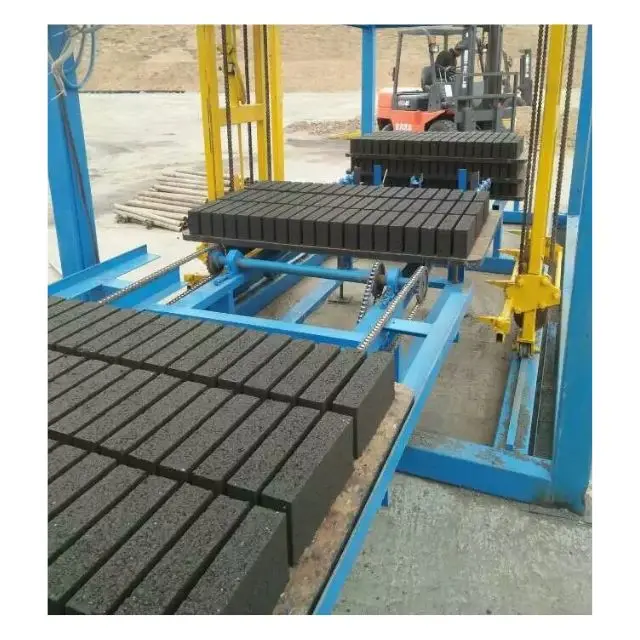
- Line layout showing QTJ4-26 footprint with pallet flow and curing area marked
- Capacity calculation per block format, not a single generic output figure
- Factory test record on buyer’s specified mould before dispatch
- Pallet specification sheet matched to 850×450×20 mm sizing
- Voltage and control language confirmation signed off pre-production
Installation, Commissioning & Support
- Foundation pad must accommodate 2060×1730 mm footprint plus mixer station clearance
- Power supply rated for 14.25 kW with dedicated circuit breaker and correct voltage
- Machine arrives semi-assembled; guide pillars and mould frame bolt into position on site
- Commissioning includes cycle time verification against the 26-second target on buyer’s mould
- Operator training covers mould change procedure and daily vibration belt inspection
- Spare wear parts pack included: belts, seals, and vibration components for first replacement cycle
Getting the Right Information Into Your Inquiry
Tell me the block format you are selling today and the one you expect to add within the next year, along with your target daily output in shifts. Confirm the voltage, frequency, and the language your operators read on a control panel. If you already have curing racks or a forklift on site, share the dimensions so pallet sizing and handling can be matched before the machine ships.
Frequently Asked Questions
Q: How is the output capacity for each block format actually verified before the machine ships?
A: Every QTJ4-26 runs a factory test on the specific mould the buyer has ordered. The 26-second cycle is timed over a continuous run, and the piece count is recorded for that format — 480 pieces per hour on the 390×190×190 hollow block, for example. The test record travels with the shipment.
Q: What is the real dispatch timeline once an order is confirmed?
A: Units held in stock can be prepared for container loading within days of confirmation, provided voltage and control language are agreed. The QTJ4-26 and approximately 500 pallets fit into a single 20GP container, which keeps shipping straightforward and avoids split-load delays.
Q: Can the voltage, frequency, and control panel language be locked in before production?
A: Yes, and this is done before the machine leaves the factory. Supplying a QTJ4-26 concrete block making machine in stock means nothing if it arrives at a site where the power supply does not match. Confirmation is part of the order process, not an afterthought.
Q: Are pallets included in the shipment, and what size are they?
A: Approximately 500 pallets at 850×450×20 mm are loaded with the machine. This size is fixed for the QTJ4-26 platform, so buyers should plan their curing rack spacing and forklift capacity around this dimension before the container arrives.
Q: How are replacement moulds and wear parts handled after delivery?
A: A wear parts list — including vibration belts, hydraulic seals, and mould components — is provided before shipment, and a first-replacement pack is included in the crate. Additional moulds can be produced to buyer drawings with lead times confirmed at order.