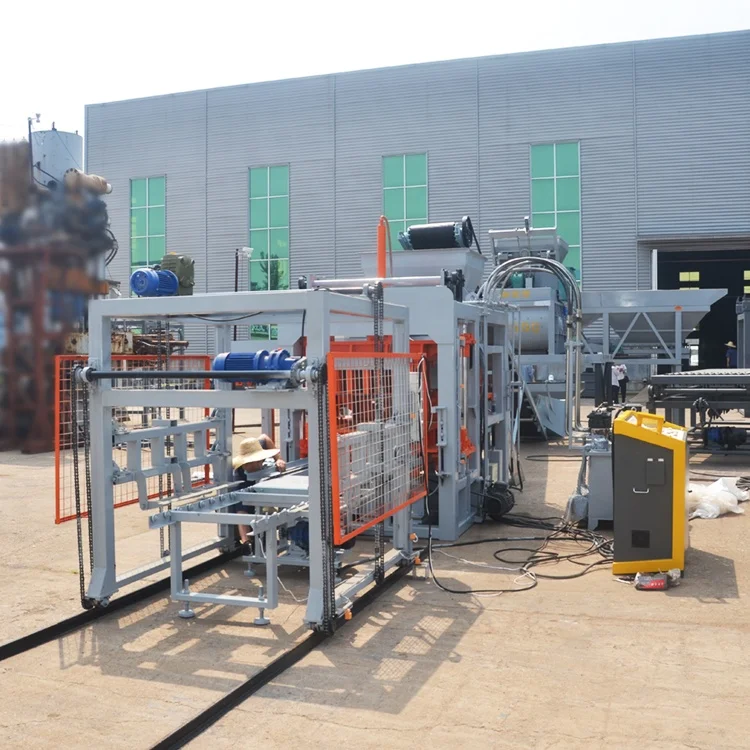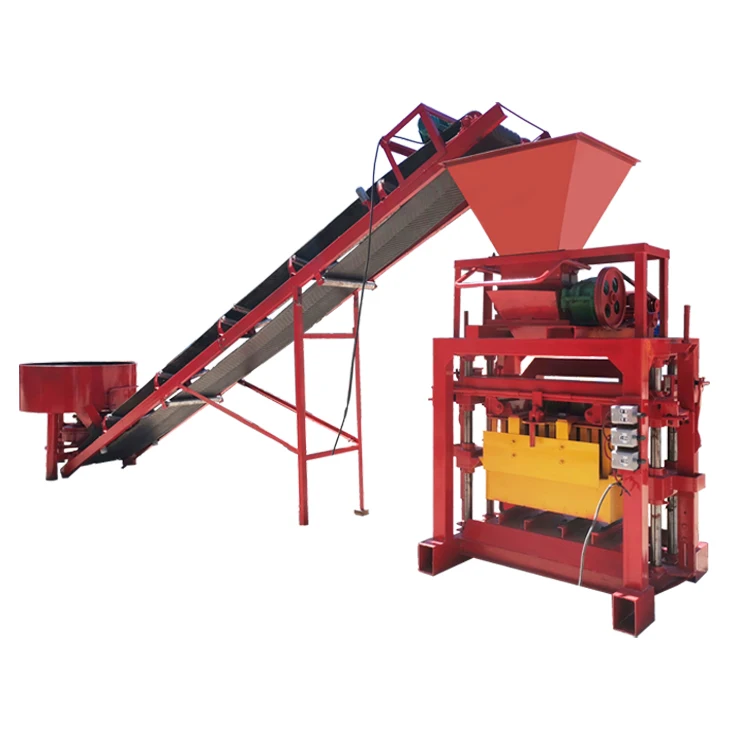
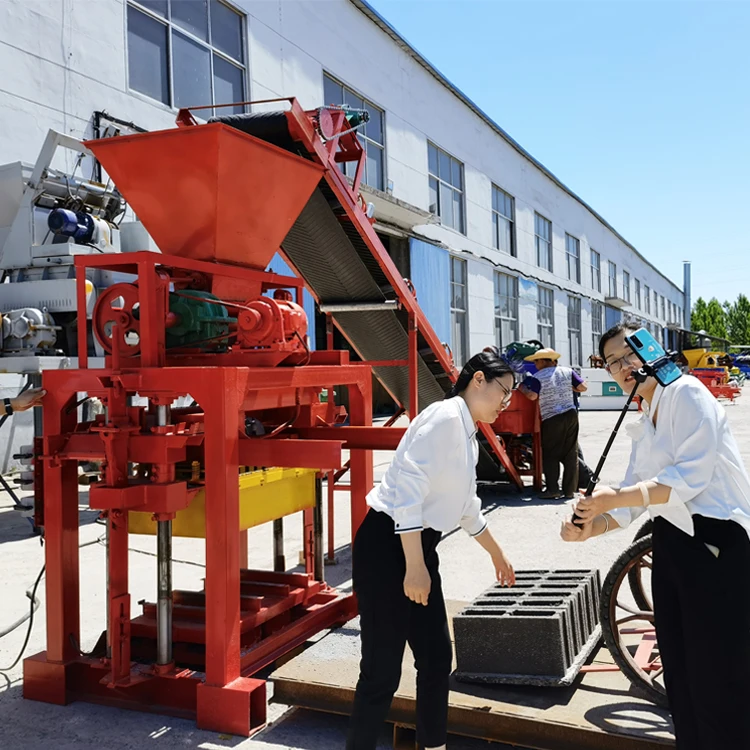
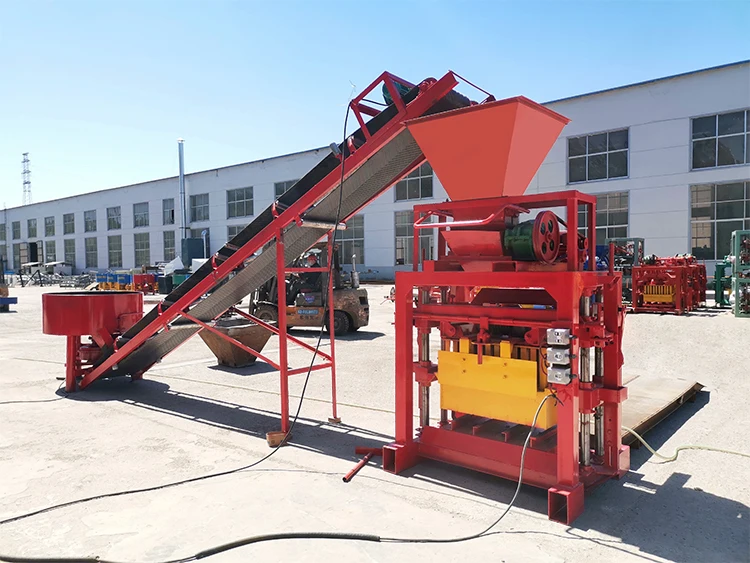

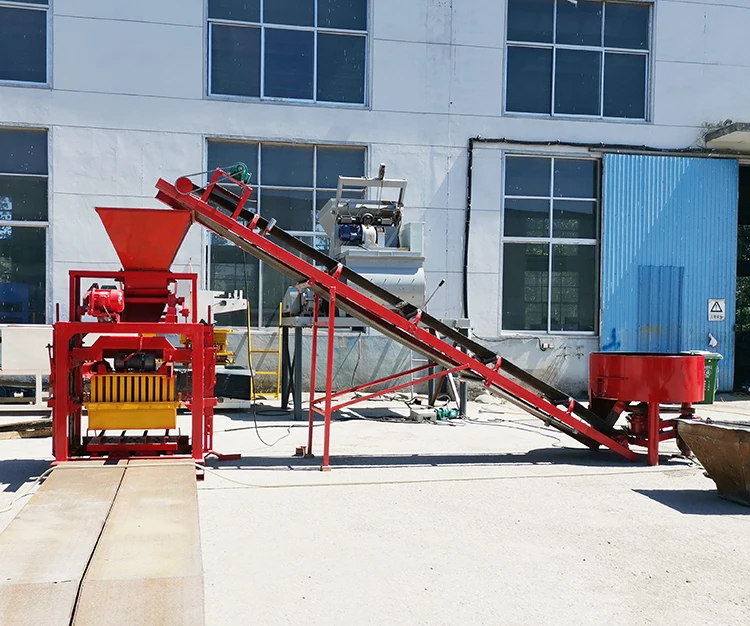

Description
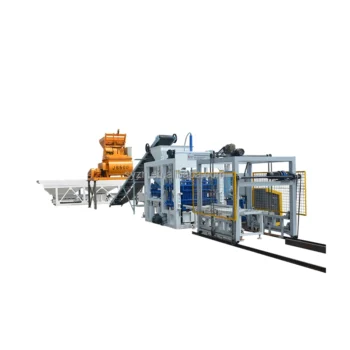
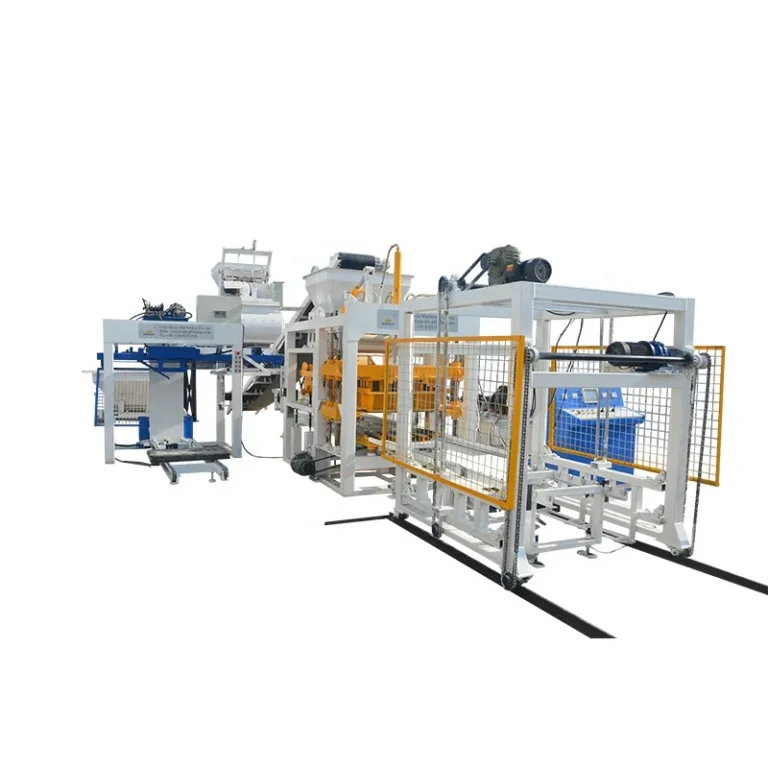
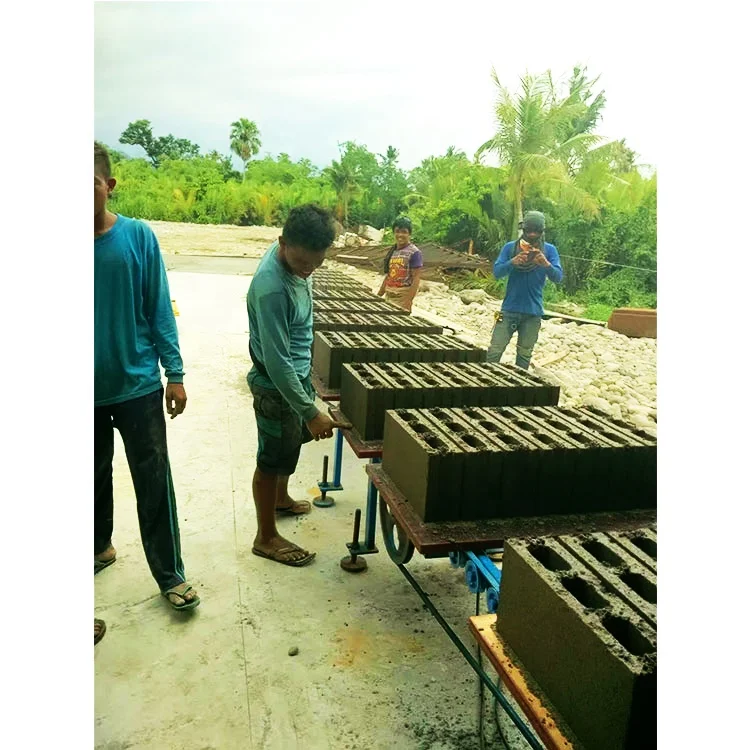
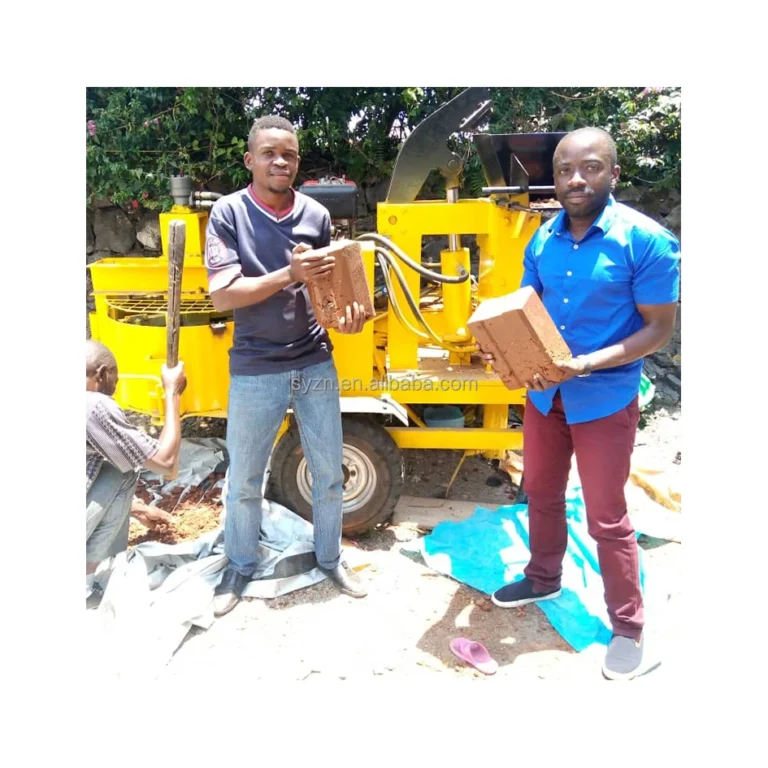
Stocked for quick dispatch — a mechanically operated QTJ4-35 block machine held in inventory so container loading and arrival estimates are confirmed before you commit to an order.
Technical Specifications
| Parameter | Value |
|---|---|
| Product Type | Mechanical Manual Block Making Machine |
| Model | QTJ4-35 |
| Overall Dimensions | 2050 x 1660 x 1900 mm |
| Main Vibration Form | Motor Vibration |
| Vibration Force | 35 KN |
| Pallet Size | 850 x 450 x 20 mm |
| Molding Cycle | 35–40 s (400×200×200 mm and 400×150×200 mm blocks); 40–50 s (240×115×53 mm, 200×100×60 mm and 225×112.5×60 mm blocks) |
| Overall Power | 9.8 kW |
| Voltage & Frequency | Configurable to destination market (basis to be confirmed before shipment) |
| Control System | Mechanical manual operation |
| Automation Level | Manual pallet handling, mechanical operation |
| Output Capacity | 360–408 pcs/h (400×200×200 mm hollow block, 4 pcs/mould); 1512–1890 pcs/h (240×115×53 mm solid brick, 21 pcs/mould); 1008–1260 pcs/h (200×100×60 mm paver, 14 pcs/mould) |
| Daily Output (8 hr) | 2880–3264 pcs (400×200×200 mm block); 12096–15120 pcs (240×115×53 mm brick); 8064–10080 pcs (200×100×60 mm paver) |
| Qty/Mould | 4 pcs (400×200×200 mm); 5 pcs (400×150×200 mm); 21 pcs (240×115×53 mm); 14 pcs (200×100×60 mm); 9 pcs (225×112.5×60 mm) |
| Mould Format Options | Hollow block, solid brick, paving block |
| Hydraulic Pressure | Not applicable (mechanical compression) |
| Assembly State | Single machine, supporting line equipment available separately |
| Stacking Method | Manual |
Application Suitability
| Application | Material or Output |
|---|---|
| On-site hollow block production | Crushed stone, sand and cement for 400×200×200 mm structural blocks |
| Small workshop solid brick runs | Local sand and cement blends for 240×115×53 mm walling bricks |
| Paver manufacturing for housing projects | Fine aggregate and cement for 200×100×60 mm interlocking pavers |
| First plant startup by entrepreneurs | Multi-format block and brick output from a single compact machine |
| Contractor block production at remote sites | Locally sourced aggregate for hollow and solid formats without a fixed plant |
What Dispatch Timelines Actually Mean for a QTJ4-35 Block Machine in Stock
Confirming the vessel booking date matters more than the ex-factory date when a construction deadline is fixed.
I once watched a buyer lose two months of a housing contract because the machine sat at the port waiting for customs paperwork that was never prepared. With a QTJ4-35 block machine in stock, the conversation starts from the container loading plan and works backward. Dispatch lead time, dismantling method for shipment, and the customs documentation package are addressed before the order is placed rather than after [NEED_CITE: export documentation requirements for construction machinery by destination country]. Buyers working against a project deadline cannot afford to discover missing paperwork after the machine has already shipped.
Stock Status and Dispatch Sequence
The QTJ4-35 block machine in stock moves through a defined sequence before it leaves the factory yard. Factory test running is completed on your specified block format, with pallet handling and mould change demonstrated on video. Container loading photographs are taken at each stage so the buyer sees exactly how the machine, moulds and pallets are secured inside the container. Voltage and control panel language are verified against the destination country standard before the container doors close.
Arrival Estimate Quoted Before the Order
A realistic arrival timeline accounts for factory dispatch, inland transport to port, ocean transit and customs clearance at destination. When a QTJ4-35 block machine in stock is confirmed for a specific buyer, the estimated arrival date at the port of destination is provided alongside the order confirmation [NEED_CITE: typical ocean freight transit times from Chinese ports to major global regions]. This prevents the common situation where a buyer plans labour and materials around an arrival date that shifts without notice.
Reading the Specification Sheet Honestly
The vibration force of 35 KN delivered by the motor vibration system determines how densely the concrete mix is compacted inside the mould cavity. For a 400×200×200 mm hollow block, the 35–40 second molding cycle allows sufficient vibration time to achieve consistent wall density. The pallet size of 850×450 mm is fixed, meaning buyers must ensure their curing racks and forklift dimensions accommodate this size before the machine arrives. Overall power of 9.8 kW places this machine within the reach of small workshop electrical supplies, but the exact voltage and frequency must still be confirmed for each destination market [NEED_CITE: industrial voltage and frequency standards across export markets].
When Arrival Delays Derail the Entire Project
A machine that arrives late forces contractors to purchase blocks from third-party suppliers at premium prices, eroding the margin the block plant was supposed to create. If voltage is wrong, the machine sits idle while a transformer is sourced locally, adding weeks of downtime. Missing customs documentation can hold a container at port, incurring daily demurrage charges that accumulate quickly [NEED_CITE: port demurrage charges for delayed container clearance]. These consequences are avoidable when stock status, electrical configuration and documentation are locked down before shipment.
Why Buyers Choose This Dispatch Path
Machine, mould, pallet and handling equipment are specified together as a matched set rather than sourced from separate suppliers, so nothing arrives incompatible. Factory test records are generated on the buyer’s target block format using the confirmed mould and pallet combination. Voltage, frequency and control language are confirmed before production rather than assumed from a catalogue default. Packing photographs and container loading plans are shared before the container is sealed, giving buyers full visibility into what is on the vessel. Installation support and operator training are arranged to align with the estimated arrival date.
Documentation & Verification
- Factory test record run on your specified hollow block or paver format before dispatch
- Packing photographs showing dismantling method and container securing at each loading stage
- Voltage and frequency confirmation sheet signed off against your local electrical standard
- Operation and maintenance manual covering mould change and daily servicing procedures
- Customs documentation package prepared for your destination port clearance requirements
Installation, Commissioning & Support
- Foundation slab sized to the 2050×1660 mm footprint with level tolerance for vibration stability
- Dedicated electrical circuit rated for the 9.8 kW overall power draw at confirmed voltage and frequency
- Machine arrives partially assembled; vibration motor and hopper mounted on site per layout drawing
- First production run supervised to verify molding cycle times on your local aggregate mix
- Operator training covers pallet handling sequence, mould change procedure and daily maintenance points
- Wear parts list provided with reorder quantities for vibration components and mould contact surfaces
What to Share Before Requesting a Quote
Provide the block formats your market demands, including dimensions and whether hollow, solid or paver. State your local aggregate type and any known issues with material quality. Confirm the voltage and frequency at your site along with the preferred language for any operational markings. A rough daily output target and available workshop or site dimensions help determine whether the manual pallet handling arrangement fits your labour plan.
Frequently Asked Questions
Q: What is the current stock status and realistic dispatch lead time for the QTJ4-35?
A: The QTJ4-35 is held as a stocked unit with standard moulds and pallets. Once your voltage, frequency and block format requirements are confirmed, the machine goes through a factory test run on your specified format before container loading. Dispatch timing is quoted based on the next available vessel booking from the nearest port, not an estimated production completion date.
Q: How is the machine packed and loaded into a container for shipment?
A: The machine is partially dismantled to fit container dimensions, with the vibration assembly and main frame secured separately. Moulds and pallets are packed in the same container where possible. Loading photographs are taken at each stage and shared with the buyer before the container is sealed, so the exact securing method is documented.
Q: What arrival timeline should I expect from order to port of destination?
A: The timeline includes factory test and packing, inland transport to the port, ocean transit and destination port clearance. An estimated arrival date is provided alongside the order confirmation based on the confirmed vessel schedule. This allows buyers to plan site preparation, labour and raw material procurement around a known date.
Q: Are standard moulds and pallets shipped together with the machine or ordered separately?
A: Standard moulds matching your specified block formats and the 850×450 mm pallets are included in the same shipment as the machine. Additional mould formats can be added to the container if confirmed before the loading plan is finalised. This ensures the machine is production-ready on arrival without waiting for a separate parts shipment.