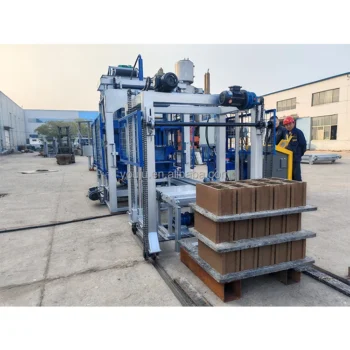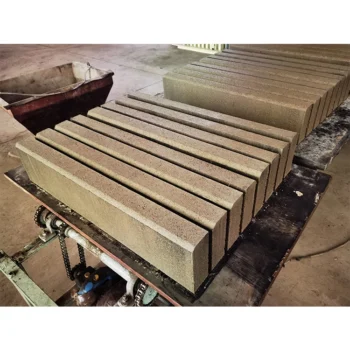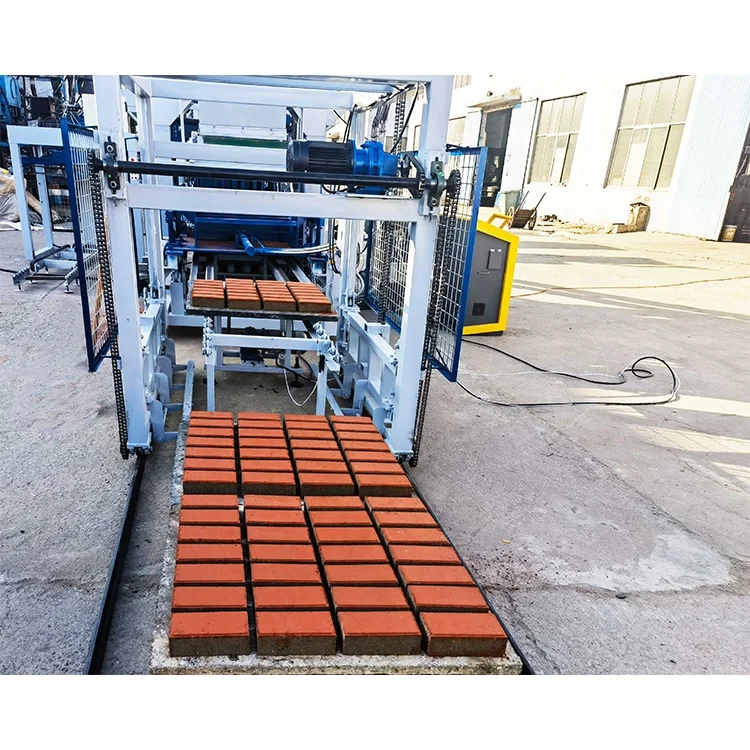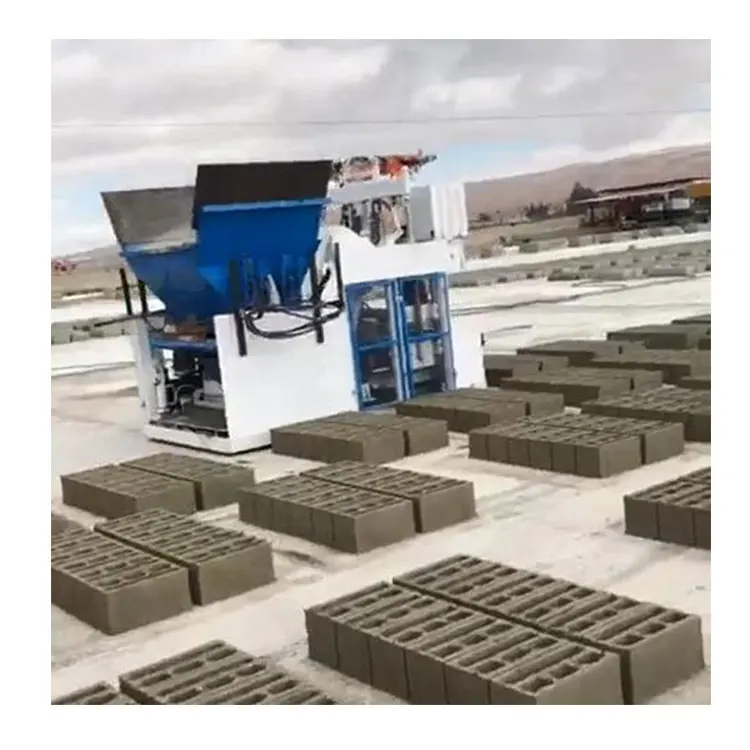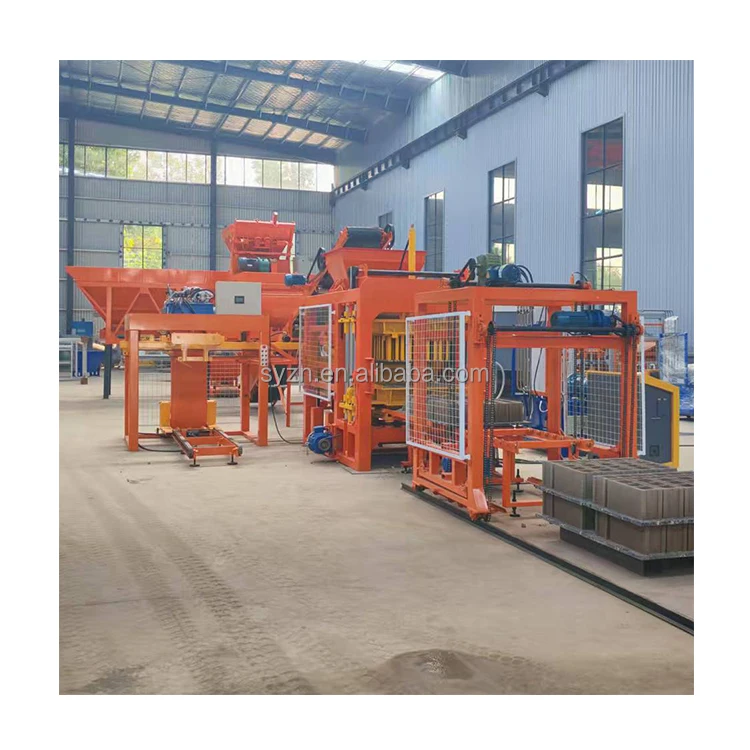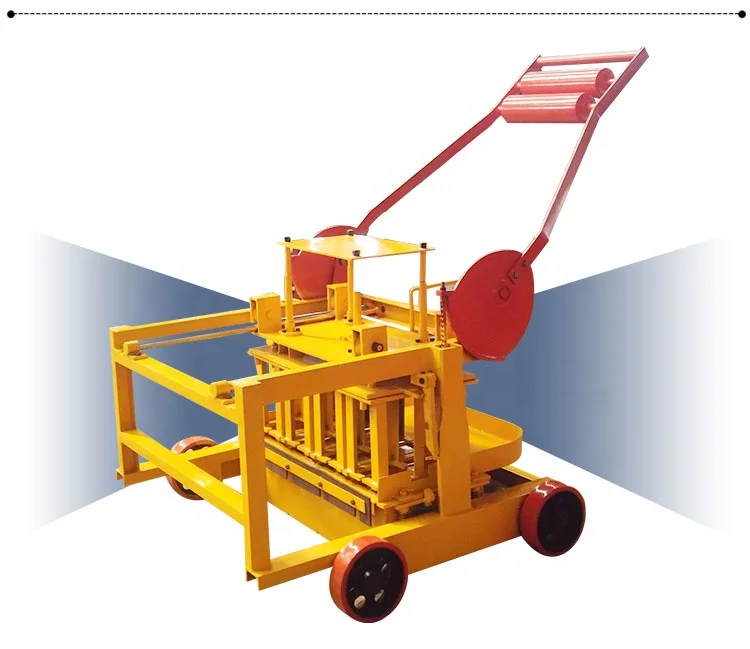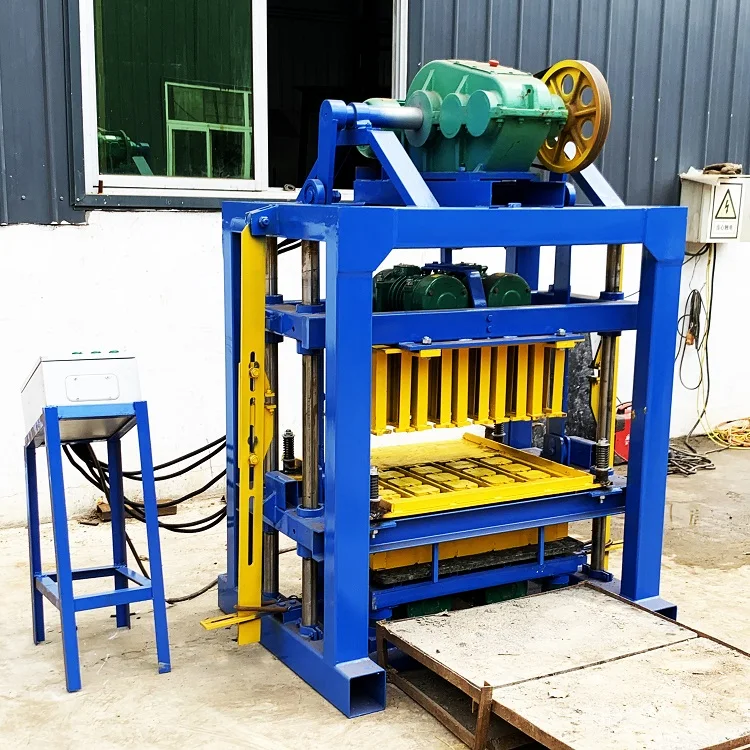
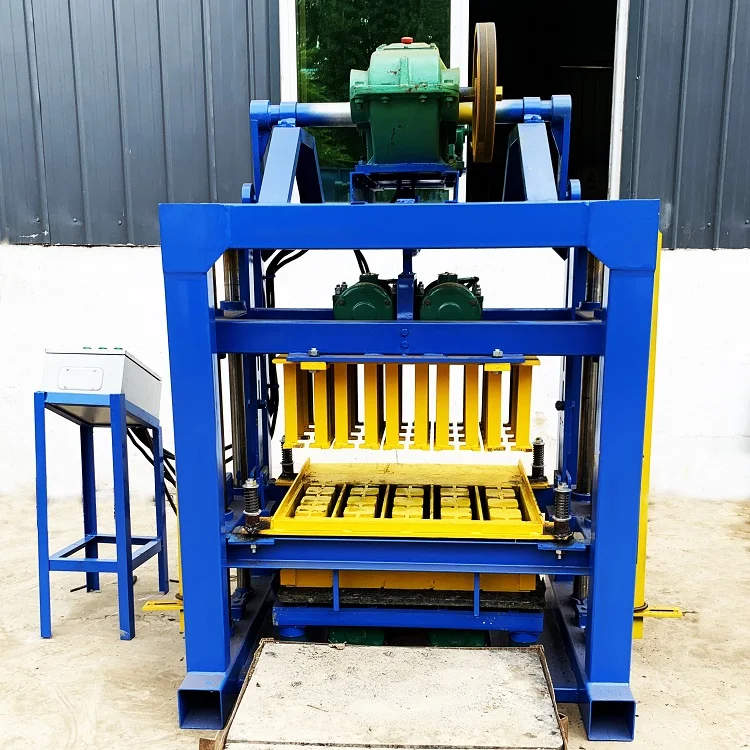

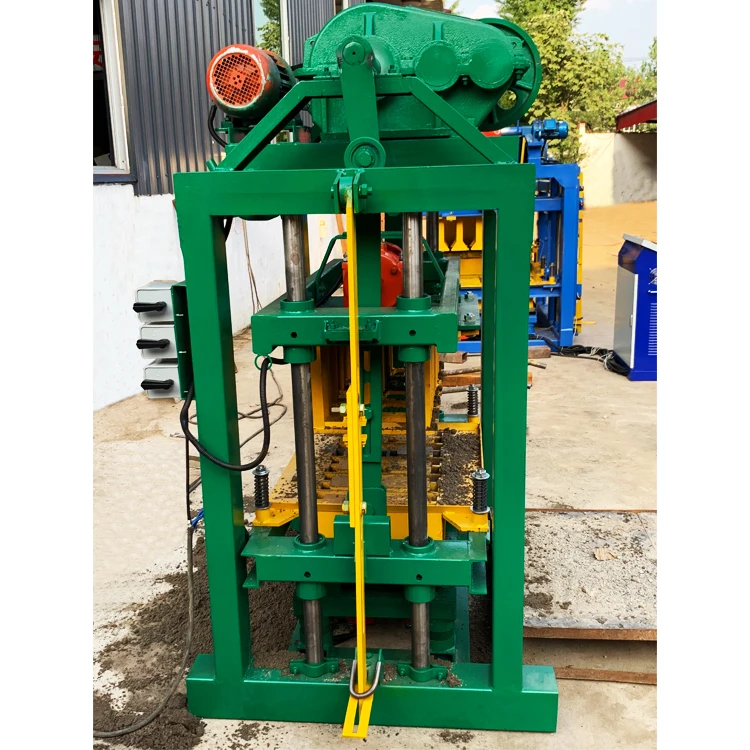
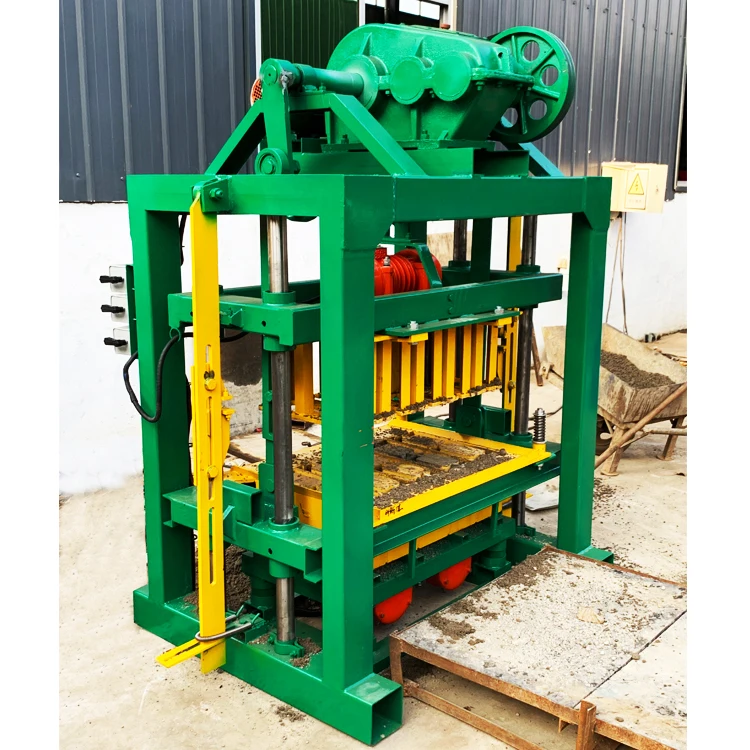
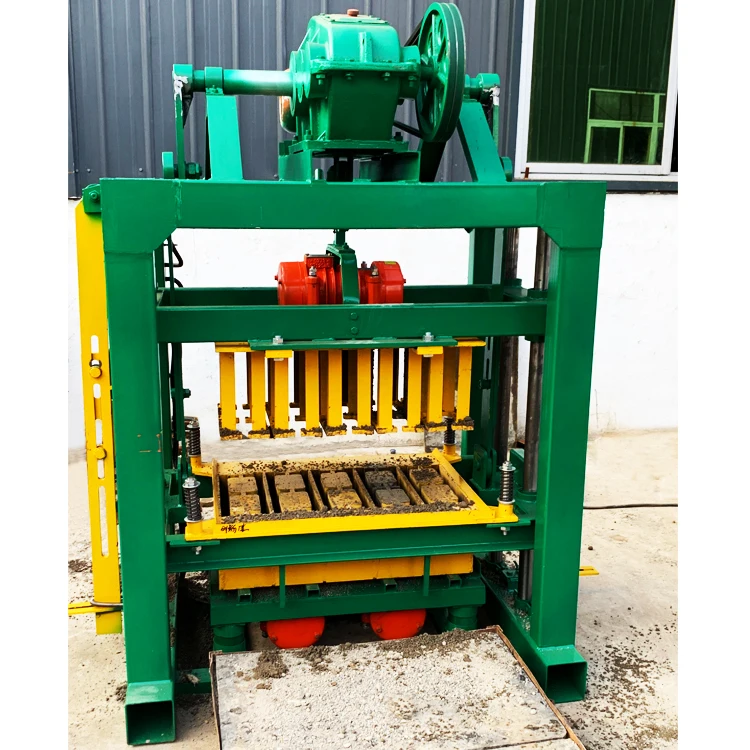
Description
Stock-Ready Configuration — Standard QTJ4-40 units and moulds held in warehouse for immediate dispatch planning, with arrival timing quoted before payment.
Technical Specifications
| Parameter | Value |
|---|---|
| Model | QTJ4-40 |
| Product Type | Manual Hydraulic Block Making Machine |
| Capacity (400×200×200mm hollow block) | 360 pcs/h, 2880 pcs/day (4 pcs per mould) |
| Capacity (400×150×200mm hollow block) | 500 pcs/h, 4000 pcs/day (5 pcs per mould) |
| Capacity (225×112.5×60mm interlocking/paver) | 900 pcs/h, 7200 pcs/day (9 pcs per mould) |
| Raw Material | Concrete, cement, fly ash, crushed stone, sand, dust, gravel, slag |
| Applied Products | Concrete blocks, hollow/solid blocks, pavers, interlocking blocks, curbstone |
| Main Vibration Form | Platform Vibration |
| Vibration Frequency | 2800 r/min |
| Pallet Size | 850×450 mm |
| Ratio of Raw Material | Cement 8%-10%, sand 30%-40%, stone 50%-60% (approx. 1:4:5) |
| Machine Weight | 1T (source value — verify against manufacturer catalog) |
| Overall Dimensions | 1350×1460×1800 mm |
| Factory Area | 200 m² |
| Worker Requirement | 1-3 people |
| Control System | Manual operation with top die push-pull and automatic scraper |
| Power Source | Engine & Motor (dual drive option) |
| Standards | CE |
Application Suitability
| Application | Material or Output |
|---|---|
| Small-scale hollow block production | Crushed stone, sand, cement (1:4:5 ratio) |
| On-site paver and interlocking brick manufacturing | Concrete mixes with fly ash or gravel |
| First-plant entrepreneurship setups | Local aggregates with 8-10% cement content |
| Contractor self-production for housing projects | Solid and hollow formats from standard moulds |
Why the Voltage Question Must Come Before Dispatch
Confirming voltage and frequency before the machine leaves the warehouse prevents three-week commissioning standstills at the job site.
I have coordinated dispatch for hydraulic block machines where the electrical cabinet was wired for a grid standard that did not exist at the destination. The machine sat idle while waiting for transformer components to arrive internationally. A QTJ4-40 block machine in stock fast delivery only matters if the motor and control circuit actually match the buyer’s local power supply. This verification takes minutes during factory testing but saves weeks of downtime after arrival. [NEED_CITE: voltage and frequency standards by export market]
Warehouse Availability and Dispatch Windows
Standard QTJ4-40 configurations with common mould sets are maintained in ready-to-ship status, meaning container loading can be scheduled within days of order confirmation rather than weeks. The 1350×1460×1800 mm footprint allows the unit to fit into standard container space without complex dismantling procedures. When a project timeline demands blocks on site before the next construction phase, having the QTJ4-40 block machine in stock fast delivery eliminates the typical production lead time that custom-built equipment requires.
Container Loading and Transit Planning
The compact 1T machine weight and manageable dimensions mean loading plans can be finalized immediately, with pallet and mould packing arrangements confirmed through pre-dispatch photographs. Port-to-port transit estimates are provided upfront so buyers can coordinate customs clearance and site preparation in parallel. A QTJ4-40 block machine in stock fast delivery includes documentation support for import procedures, reducing the administrative delays that often extend arrival timelines beyond the actual ocean transit period. [NEED_CITE: typical container shipping documentation requirements]
Understanding Vibration Force and Mould Compatibility
The platform vibration system operates at 2800 r/min, which works in conjunction with the manual top die push-pull mechanism to compact the concrete mix within the mould cavity. This vibration frequency is calibrated for standard concrete ratios where cement comprises 8-10% of the mix, sand 30-40%, and crushed stone or gravel 50-60%. The 850×450 mm pallet size determines which block formats can be produced and must align with the curing area dimensions and material handling equipment already present at the buyer’s facility. Mould change time and format flexibility depend on having the correct mould drawings and matching pallet specifications from the start.
When Stock Selection Ignores Site Conditions
Ordering a standard configuration without verifying local aggregate availability forces buyers to either source expensive imported materials or accept inconsistent block strength from unsuitable substitutes. Machines configured for one mix design cannot simply accept different raw materials without affecting the vibration force balance and final product density. The 200 m² factory area requirement assumes adequate space for raw material storage, curing racks, and pallet circulation, which compressed sites cannot accommodate. [NEED_CITE: aggregate grading standards for concrete block production]
Why Procurement Through This Channel Works
Block machinery remains the single operational focus, so the QTJ4-40 machine, mould, pallet, and handling requirements are specified as one matched system. Configuration is set against the buyer’s actual mix design and target block format rather than a catalogue default that may not reflect local market demands. Mould design and supply covers the formats that sell in the buyer’s region, including custom drawings when standard options do not match. Standard models held in stock mean the QTJ4-40 block machine in stock fast delivery promise is backed by physical inventory rather than production scheduling. Voltage and control language confirmation happens before dispatch, preventing the commissioning delays that strand equipment at destination ports.
Documentation & Verification
- Factory test record showing block output on your specified mix ratio before dispatch
- Mould drawing and format list confirming pallet size compatibility with your curing area
- Voltage and control language confirmation sheet signed off prior to container loading
- Machine specification sheet with overall dimensions for site planning verification
- Packing photographs documenting loading arrangement before container doors close
Installation, Commissioning & Support
- 200 m² factory area required with level concrete foundation for 1350×1460 mm machine footprint
- Power connection matching confirmed voltage and frequency before motor energization
- Machine arrives with minimal dismantling given compact 1350×1460×1800 mm overall dimensions
- Manual top die push-pull operation training for 1-3 worker production teams
- 850×450 mm pallet specification verified against existing forklift and curing rack inventory
- Wear parts list covering vibration components and hydraulic elements for first replacement cycle
Next Steps for Quotation
Provide your target block format, daily output requirement, and local raw material composition so the correct mould and vibration settings can be confirmed from available stock. Specify your site voltage and frequency to ensure the motor and control circuit arrive ready for immediate commissioning.
Frequently Asked Questions
Q: Which QTJ4-40 configurations and moulds are currently in stock versus made to order?
A: Standard QTJ4-40 units with common hollow block and paver mould formats are held in warehouse inventory for immediate dispatch planning. Custom mould designs or specialized automation configurations require production lead time. Confirming your target block format early allows stock availability to be verified against your specific requirements.
Q: How is the machine packed and loaded for container shipment?
A: The 1350×1460×1800 mm dimensions allow the QTJ4-40 to fit standard container space with minimal dismantling. Pallets and moulds are packed alongside the main unit. Loading photographs are taken before container doors close to document the packing arrangement for insurance and receiving verification.
Q: What is the realistic dispatch lead time and estimated arrival date?
A: Stock-available units can be scheduled for container loading within days of order confirmation rather than weeks. Port-to-port transit estimates are provided upfront based on your destination port. The QTJ4-40 block machine in stock fast delivery timeline includes customs documentation support to minimize clearance delays upon arrival.
Q: Which voltage and frequency options are available from stock for my market?
A: Standard stock units are configured for common industrial voltage ranges, but confirmation of your specific local grid standard is required before dispatch. This verification prevents commissioning delays that occur when motors and control circuits arrive mismatched to the destination power supply. Voltage confirmation happens during factory testing.