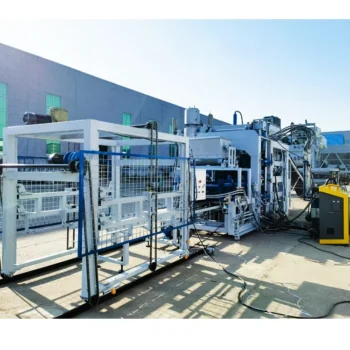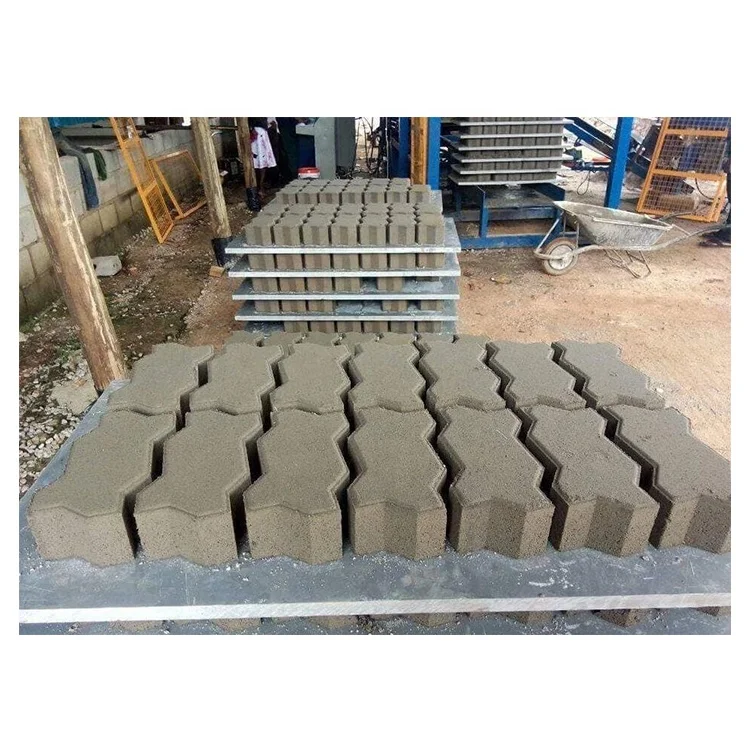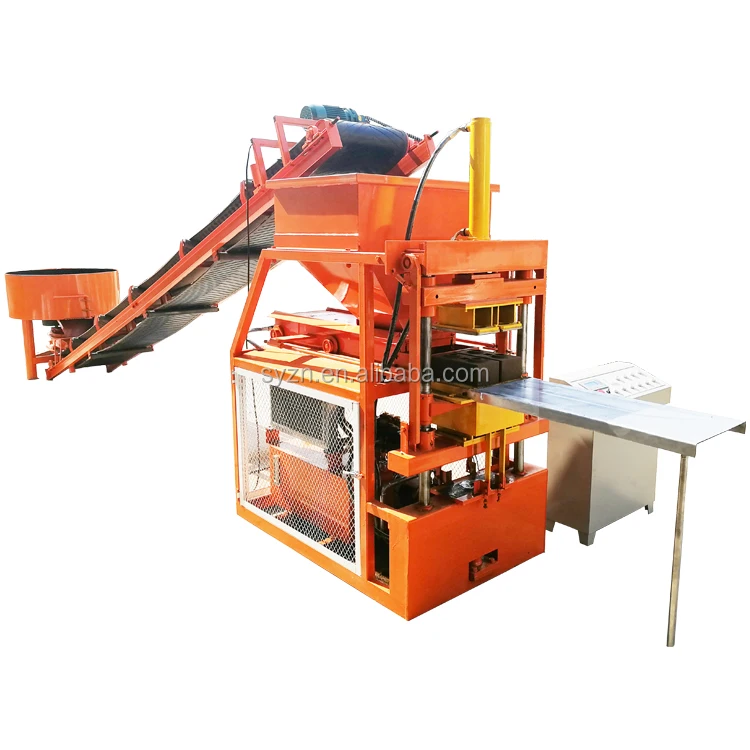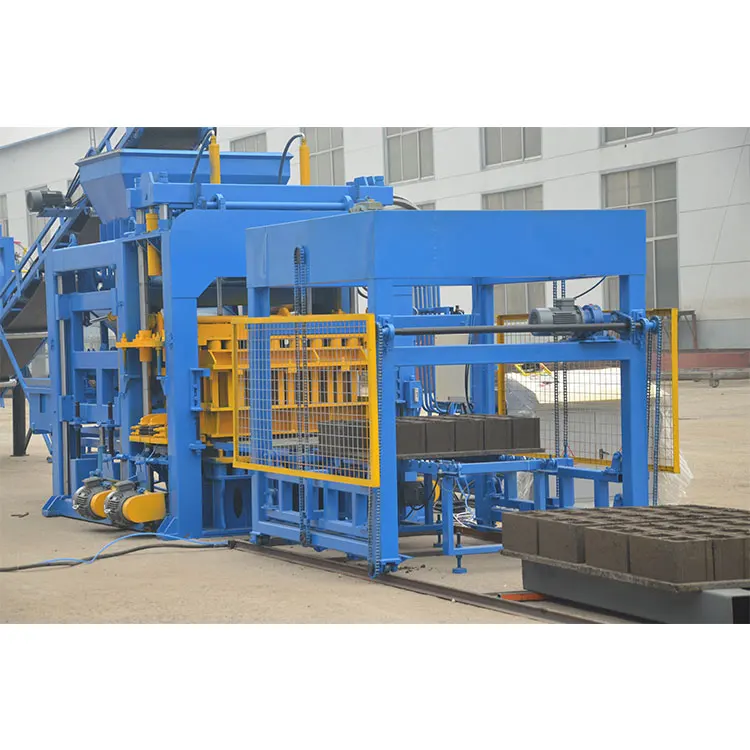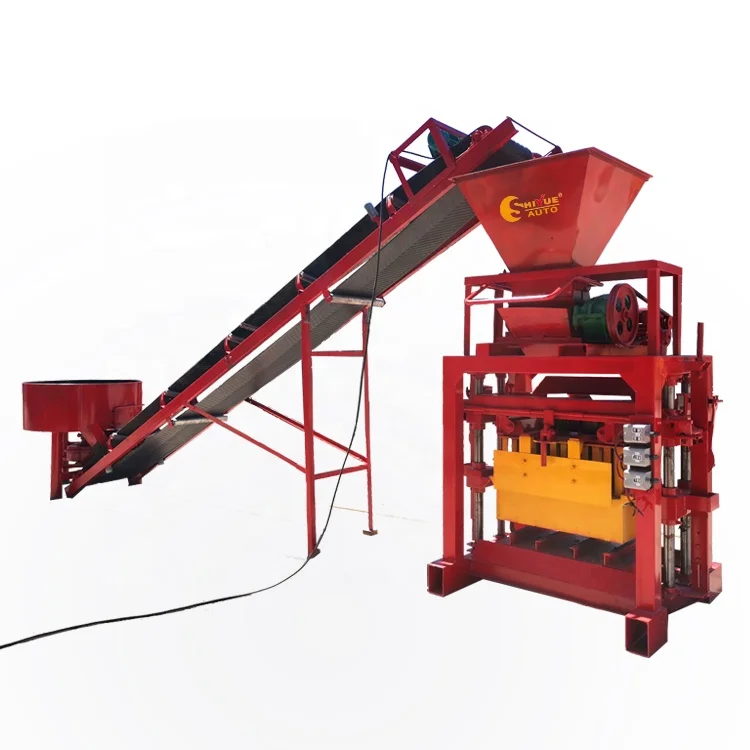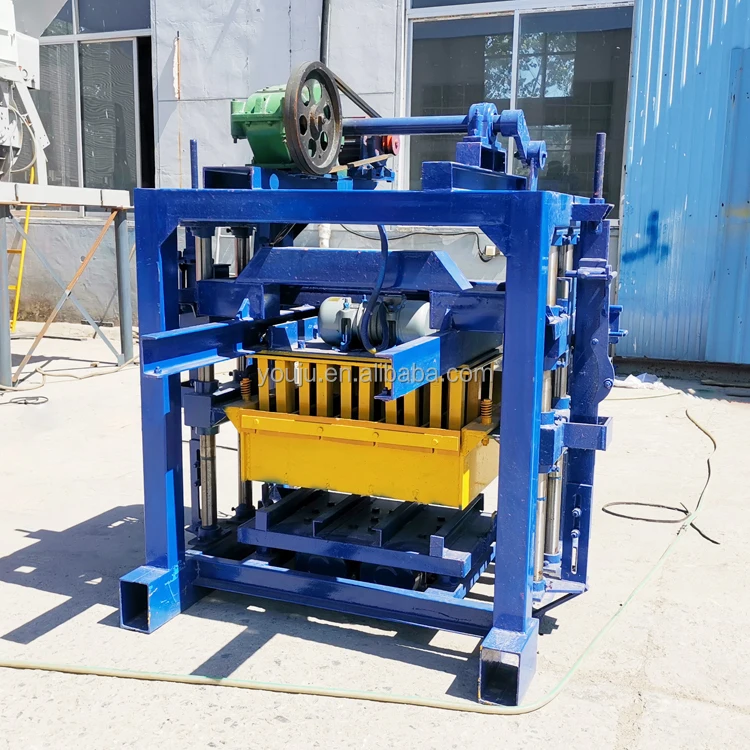

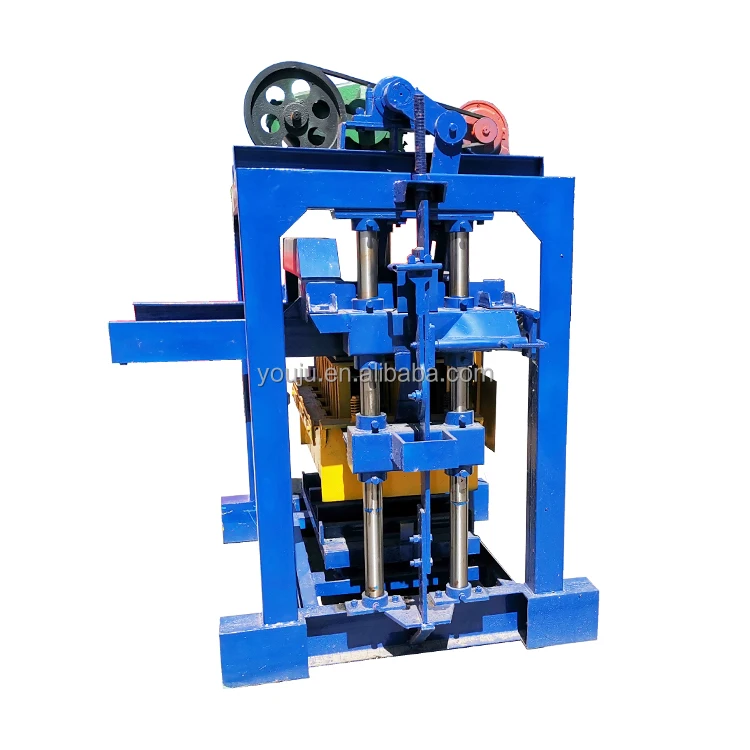
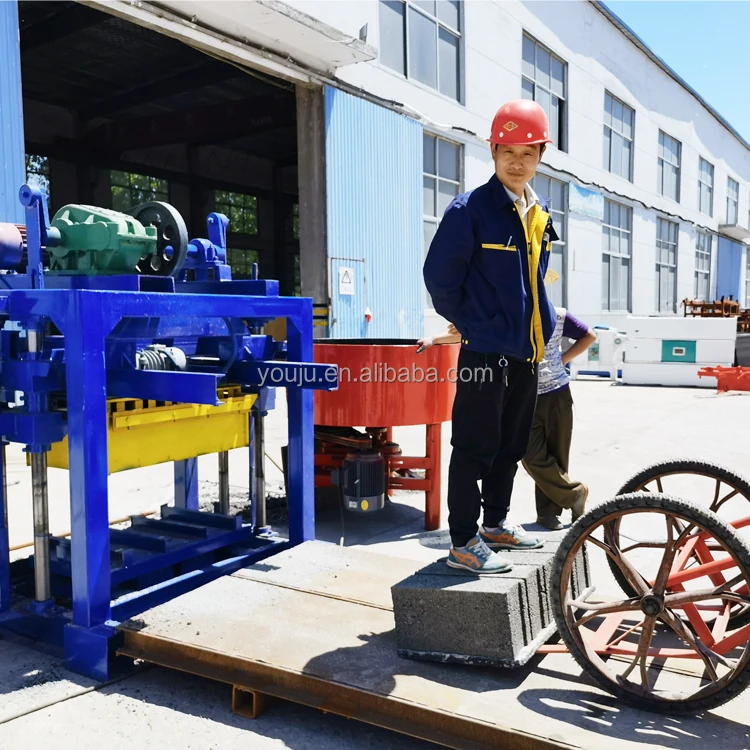
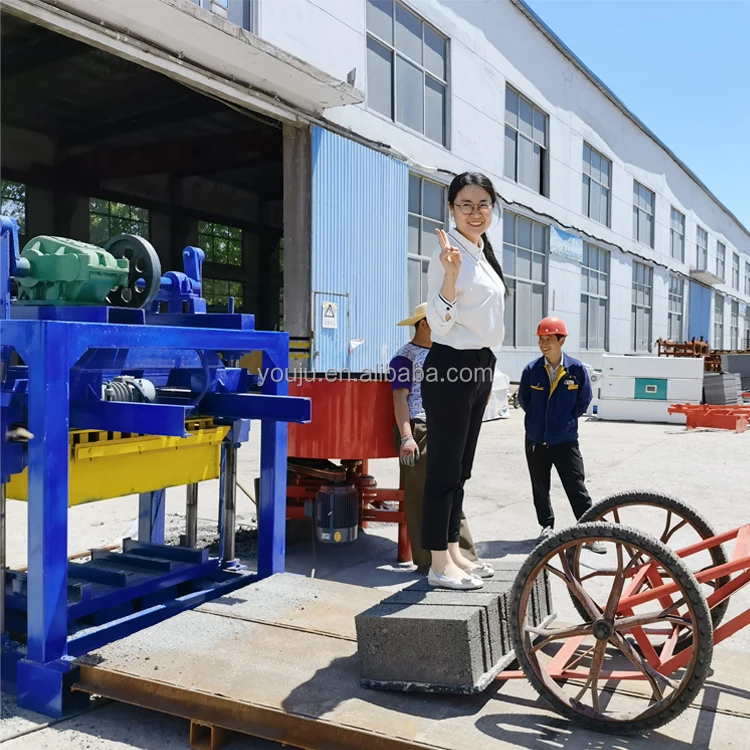

Description
Stock Availability & Fast Dispatch — QTJ4-40 block machine in stock and ready for container loading, eliminating typical multi-week production waits for buyers with tight project deadlines.
Technical Specifications
| Parameter | Value |
|---|---|
| Model | QTJ4-40 |
| Product Type | Stationary Concrete Block Making Machine |
| Vibration Form | Platform Vibration |
| Vibration Frequency | 2800 r/min |
| Pallet Size | 850×450mm |
| Overall Dimensions | 1350×1460×1800mm |
| Machine Weight | 1T |
| Output Capacity (Hollow Block) | 2880 pcs/day based on 400×200×200mm format |
| Output Capacity (Solid Block) | 4000 pcs/day based on 400×150×200mm format |
| Output Capacity (Paving Block) | 7200 pcs/day based on 225×112.5×60mm format |
| Raw Materials | Concrete, cement, fly ash, crushed stone, sand, dust, gravel, slag |
| Mix Ratio | Cement 8%-10%, sand 30%-40%, stone 50%-60% (approx. 1:4:5) |
| Worker Required | 1-3 people |
| Automation Level | Semi-automatic (top die push/pull, automatic scraper; manual pallet handling) |
| Mould Formats Included | 400×200×200mm (4 pcs/mould), 400×150×200mm (5 pcs/mould), 225×112.5×60mm (9 pcs/mould) |
| Factory Area Requirement | 200m² (basis not stated in source — confirm whether curing yard or total footprint) |
| Rated Power | To be confirmed with manufacturer |
| Voltage & Frequency | To be confirmed with manufacturer |
| Certification | CE declaration referenced (certificate number and scope to verify) |
Application Suitability
| Application | Material or Output |
|---|---|
| Hollow block production for residential walls | Crushed stone, sand, cement at 400×200×200mm format |
| Solid block manufacturing for load-bearing structures | Concrete mix with gravel and fly ash at 400×150×200mm |
| Interlocking paving block for driveways and walkways | Fine aggregate and cement at 225×112.5×60mm format |
| On-site contractor production for housing projects | Local aggregate with cement binder in multiple formats |
| Small-scale block plant startup | Standard concrete mix across hollow, solid, and paver formats |
What "Ready to Ship" Actually Means for Your Deadline
A stocked QTJ4-40 block machine in stock leaves the factory within days, not weeks, but only if voltage, frequency, and pallet compatibility are confirmed before dispatch.
I have watched containers sit at port because the buyer forgot to specify 60Hz instead of 50Hz, and the control panel language was set to Chinese for a Spanish-speaking operator. These are not factory defects — they are specification gaps that turn a fast delivery into a month-long commissioning delay. When you need a QTJ4-40 block machine in stock to meet a construction deadline, the dispatch speed only matters if the machine arrives configured for your actual site conditions [NEED_CITE: voltage and frequency standards by export market].
Dispatch Lead Time and Container Planning
The QTJ4-40 block machine in stock ships as a semi-automatic unit with platform vibration, and its compact 1350×1460×1800mm frame fits into standard container loading plans alongside pallets and standard mould sets. Dismantling for shipment involves separating the vibration platform, mould assembly, and control box, which affects how many packages arrive and whether a forklift is needed at the destination port.
Pallet and Mould Inventory Matching
Stock availability extends beyond the press itself. The 850×450mm pallet size must align with your existing curing racks and forklift capacity. If your curing yard uses a different pallet dimension, the stocked pallets become unusable, and you face a secondary procurement delay. Confirming pallet inventory and mould format availability before the container seals is what separates a smooth arrival from a stalled startup [NEED_CITE: pallet size compatibility with curing infrastructure].
Vibration and Compaction for Standard Mixes
The 2800 r/min platform vibration frequency delivers consistent compaction across the three included mould formats, from the 4-cavity hollow block to the 9-cavity paving block. This vibration form works with standard concrete mixes using the approximate 1:4:5 cement-sand-stone ratio. The semi-automatic operation requires manual pallet feeding and removal, which keeps the operator count at 1-3 people and suits buyers who have not yet invested in full automatic stacking systems.
What Happens When Specifications Are Skipped
A buyer once received a block machine configured for clean river sand, but their local quarry produced high-clay crushed dust. The mix stuck to the mould walls, cycle times stretched, and daily output dropped far below the quoted capacity. The machine was not faulty — the raw material specification had simply never been discussed. This is why confirming your actual aggregate source matters more than comparing catalogue output numbers [NEED_CITE: local aggregate variability and block machine mix compatibility].
Why Buyers Source This Model Here
- Block machinery as a single product focus means the QTJ4-40, its moulds, pallets, and handling tools are specified as one matched system rather than assembled from separate suppliers.
- Stocked machines undergo a pre-dispatch check against the buyer’s stated raw material and target block format, not just a generic factory test.
- Standard mould inventory covers hollow, solid, and paving formats, with custom mould design available if the buyer’s market demands non-standard dimensions.
- Voltage, frequency, and control language are confirmed before the machine leaves the factory, preventing commissioning delays at the destination site.
- Installation guidance includes operator training on mould change procedures and daily maintenance routines specific to the platform vibration system.
Documentation & Verification
- Factory test record on your specified block format before dispatch
- Voltage and control language confirmation sheet signed pre-shipment
- Packing photographs showing dismantling state and container load plan
- CE declaration for the specific machine serial number being shipped
- Operation manual with mould change and pallet handling procedures
Installation, Commissioning & Support
- Level concrete foundation required to match 1350×1460mm base footprint
- Dedicated electrical circuit to be confirmed for rated power and local voltage
- Machine arrives partially dismantled — reassembly covers vibration platform and mould frame
- First-run commissioning includes mix ratio adjustment to local aggregate properties
- Operator training on semi-automatic cycle, manual pallet handling, and top die operation
- Wear parts list covers vibration box seals, scraper blades, and mould liner plates
- Daily maintenance schedule for platform vibration bearings and hydraulic linkage checks
What to Share With Your Inquiry
To match a stocked QTJ4-40 to your site, provide your target block format, local raw material type, daily output requirement, available curing area dimensions, and destination country voltage and frequency. If you already operate forklifts or curing racks, share those specifications so pallet size can be verified before dispatch.
Frequently Asked Questions
Q: What is the current stock status and dispatch lead time for the QTJ4-40?
A: The QTJ4-40 block machine in stock is available for prompt dispatch once voltage, frequency, control language, and pallet specifications are confirmed with the buyer. Standard mould sets ship with the unit. Lead time from order confirmation to container loading is typically measured in days rather than production weeks, depending on pre-shipment verification requirements.
Q: How is the machine dismantled and loaded into a container?
A: The QTJ4-40 is partially dismantled for shipment, with the vibration platform, mould assembly, and control components separated into distinct packages. The 1350×1460×1800mm overall dimension allows standard container loading alongside pallets and mould inventory. A packing photograph is provided before the container is sealed so the buyer knows exactly what arrives and how many packages to expect.
Q: Can I add extra mould formats from stock, or do custom moulds require a separate lead time?
A: Standard hollow, solid, and paving block moulds matching the three included formats are typically available from stock. Custom mould dimensions based on buyer drawings require a separate production cycle. Confirming your market’s block format demand early allows the supplier to check mould inventory and advise whether additional formats can ship in the same container.
Q: Are pallets included in the shipped package, and how many come with the machine?
A: Pallets sized at 850×450mm are included with the QTJ4-40 shipment, with the quantity matched to the machine’s cycle rate and a reasonable curing rack rotation. Confirming your existing curing area dimensions and forklift capacity before dispatch ensures the pallet material and size are compatible with your site infrastructure.
Q: What is the estimated arrival time once the container departs the port of loading?
A: Arrival time depends on the destination port and shipping route selected. The supplier provides an arrival estimate quoted upfront based on the port of loading and the buyer’s discharge port. Transit duration varies by region, and buyers working to a project deadline should factor in customs clearance and inland transport from the destination port to the site.