
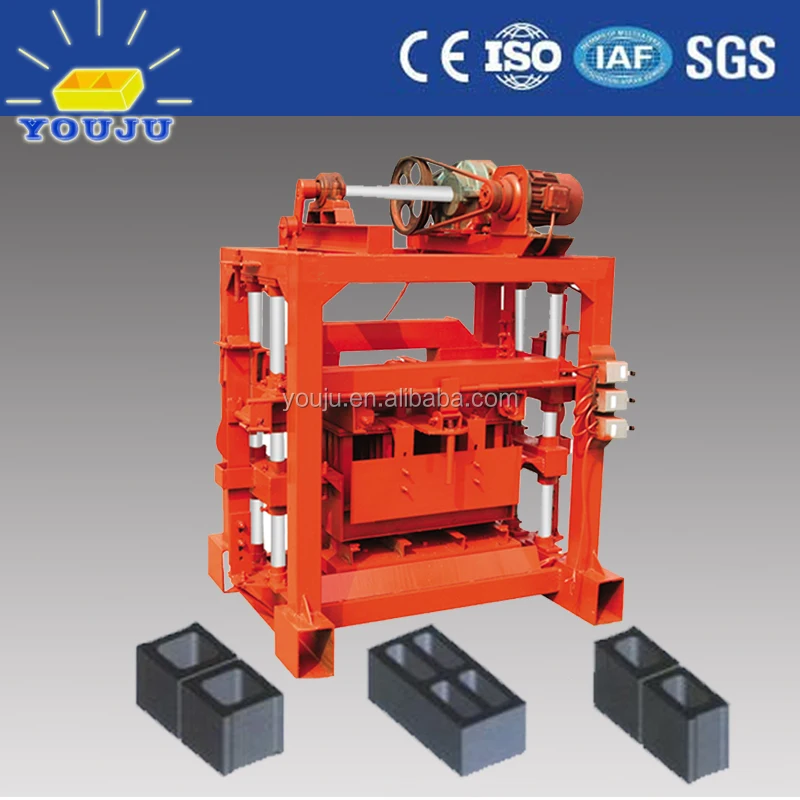


Description
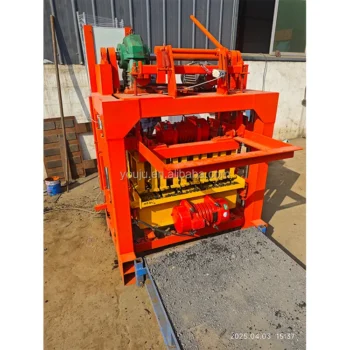
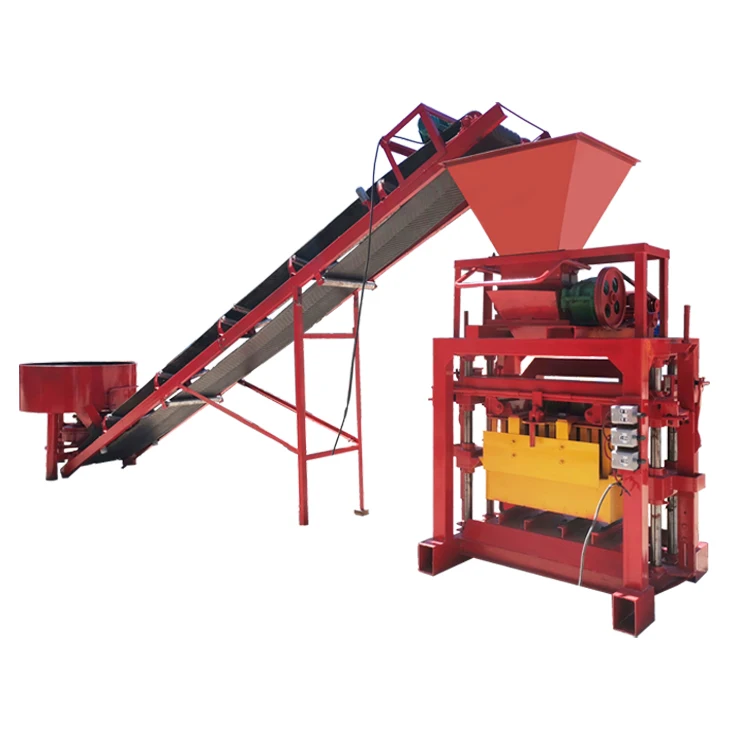
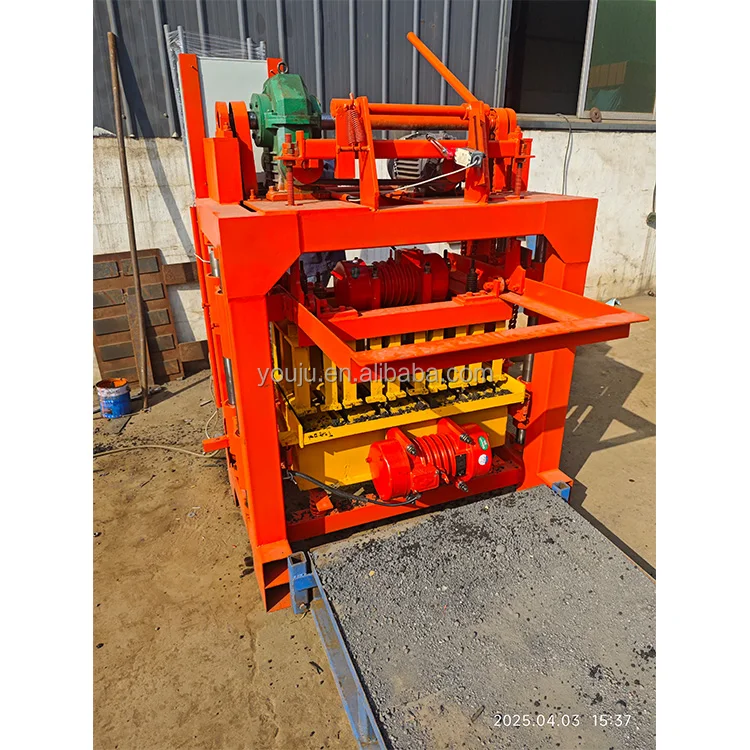
Stock Dispatch Readiness — the QTJ4-40B2 block machine is held as a stocked model so confirmed orders move to container loading without waiting for a full production cycle.
Technical Specifications
| Parameter | Value |
|---|---|
| Model | QTJ4-40B2 |
| Product Type | Stationary Concrete Block Making Machine |
| Overall Dimensions (L×W×H) | 1350×1460×1800mm |
| Net Weight | 1000kgs |
| Rated Power | 9.5kW |
| Voltage & Frequency | According to your local voltage (basis to be confirmed) |
| Vibration Frequency | 2800r/min |
| Mould Format | 390×190×190mm / 4pcs per mould |
| Output Capacity | 4pcs per mould per cycle (basis not stated in source) |
| Automation Level | Manual / semi-automatic |
| Workers Required | 3-5 |
| Warranty | 1 year |
Application Suitability
| Application | Material or Output |
|---|---|
| Hollow concrete block production | Crushed stone, river sand, cement |
| Solid block production | Quarry dust, fly ash, cement blends |
| Paving block and interlocking brick | Fine aggregate with pigment additives |
| Small-scale on-site block manufacturing | Locally sourced aggregate with standard Portland cement |
Why the Voltage Question Must Come Before the Container Booking
A stocked machine sitting in Linyi can still be delayed three weeks if the motor does not match your site supply.
I dispatch machines from this warehouse regularly, and the fastest way to lose a "ready to ship" advantage is discovering after arrival that your local grid runs a frequency or phase the factory motor was never built for. One shipment I handled went to a West African job site where the utility supply was 220V/60Hz, while the motor had been prepared on a standard domestic 380V assumption. The container sailed on schedule, but the machine sat idle until a replacement motor arrived by air. When sourcing a QTJ4-40B2 block machine in stock, confirming voltage, frequency, and phase before the unit leaves the floor is what separates fast delivery from fast disappointment [NEED_CITE: voltage and frequency standards by export market].
Dispatch Speed Only Matters When the Configuration Is Already Right
Holding the QTJ4-40B2 block machine in stock as a standard configuration means the frame, vibration assembly, and mould are pre-built and can move to packing quickly. For buyers under project deadlines, this eliminates the typical multi-week lead times associated with production scheduling. The advantage, however, only holds when the remaining configurable items — voltage, frequency, control language, and pallet specification — are locked in early. A machine that ships tomorrow but arrives with the wrong electrical specification is still a machine that does not run.
How Stocked Inventory Translates to a Predictable Arrival Date
When the QTJ4-40B2 block machine in stock is assigned to your order, the critical path shifts from manufacturing to documentation and logistics. Factory test runs can be completed within days rather than weeks. Container loading plans, including nude packing arrangements and any partial dismantling needed for a 20GP, are finalized against actual dimensions rather than estimates. This predictability matters for contractors coordinating foundation work and raw material deliveries to align with the machine’s arrival. Every day of uncertainty in the shipping window cascades into idle crews and delayed project milestones [NEED_CITE: typical container shipping timelines from Chinese ports].
Reading the Specs That Actually Affect Your Job Site
The 9.5kW rated power is low enough that many sites with limited electrical infrastructure can support it, but that low draw only helps if the supply voltage is correctly matched. The vibration frequency of 2800r/min provides the compaction energy needed for hollow block density, yet the actual block strength you achieve will depend on how well your local aggregate grading and cement ratio work with that vibration profile. The standard mould produces four 390×190×190mm hollow blocks per cycle, but the daily output you can rely on depends on cycle time, pallet handling speed, and curing logistics — factors that vary significantly between a well-organized yard and one still figuring out its workflow. Pallet size is not stated in the source, and this is a detail that must match both your curing rack spacing and the forklift you already have on site. Getting pallet dimensions wrong means either re-racking your entire curing area or handling product by hand.
The Hidden Cost of Skipping Pre-Shipment Configuration Checks
When a buyer focuses only on how fast the QTJ4-40B2 block machine in stock can ship, the configuration details that are not visible in photographs get overlooked. Mould format may match the block you need today, but if your market also sells paving blocks, the availability and changeover time for additional moulds determines whether the machine’s flexibility is real or theoretical. Voltage mismatches are the most common cause of commissioning delays I see, followed closely by pallet size conflicts with existing curing infrastructure. These are not problems you solve on site with a wrench — they require parts shipped internationally, turning a fast delivery into a slow restart [NEED_CITE: CE machinery directive requirements for industrial equipment].
Why Buyers Working to a Deadline Source Here
The QTJ4-40B2 is maintained as a stocked configuration rather than built only against confirmed orders, which is the foundation of short dispatch lead times. Machine, mould, pallet, and handling equipment are specified as one matched system rather than assembled from unrelated suppliers, reducing the risk that one component arrives incompatible with another. Voltage and frequency are confirmed per order before the unit leaves the warehouse, preventing the most common commissioning failure. Container loading plans are prepared against actual machine dimensions, so dismantling and packing decisions are made before the container door closes, not after it arrives at port. Factory test records and packing photographs are provided so you can verify condition before the shipment is beyond your reach.
Documentation & Verification
- Factory test record confirming vibration frequency and mould output before dispatch
- Voltage and frequency confirmation sheet signed off prior to motor installation
- Container loading plan with dismantling notes and nude packing photographs
- Customs documentation package including bill of lading, packing list, and commercial invoice
- Operation manual covering mould change procedure and daily maintenance schedule
- Wear parts list with reorder references for first replacement cycle
Installation, Commissioning & Support
- 9.5kW power requirement needs a dedicated circuit matching confirmed voltage and phase
- 1350×1460mm footprint requires a level concrete pad with drainage clearance around all sides
- Machine ships with standard mould mounted; additional moulds packed separately to prevent transit damage
- First commissioning includes vibration frequency verification and block density check against your mix
- Operator training covers manual pallet handling sequence and mould changeover procedure
- Wear parts inventory recommendation based on your target daily production volume
What We Need to Move Your Order Forward
To keep the dispatch timeline short, share your site voltage, frequency, and phase so the motor can be verified before packing. Confirm the block formats your market requires and whether additional moulds beyond the standard 390×190×190mm hollow block need to ship with the machine. Let us know your container preference and destination port so the loading plan and shipping documents can be prepared in parallel.
Frequently Asked Questions
Q: Is the QTJ4-40B2 currently in stock or does it require production scheduling?
A: The QTJ4-40B2 block machine is held as a stocked model, which means the frame, vibration assembly, and standard mould are pre-built. Once your voltage and configuration details are confirmed, the unit moves directly to testing, packing, and container loading without entering a production queue. This is what enables fast delivery compared to models built against confirmed orders only.
Q: How is the machine packed for shipping, and which container type is required?
A: The machine is shipped in nude packing, with the main frame secured directly inside the container and smaller components crated separately. Given the overall dimensions of 1350×1460×1800mm, a 20GP container is typically sufficient, though partial dismantling may be needed depending on the door clearance. A detailed loading plan is provided before sealing.
Q: How is voltage confirmed before the machine ships?
A: Before the QTJ4-40B2 block machine leaves the warehouse, we require your exact supply voltage, frequency, and phase. The motor is then verified or swapped to match. This step happens before packing, not after arrival, because voltage mismatches are the single most common cause of commissioning delays on export shipments.
Q: What customs and shipping documents will accompany the shipment?
A: The documentation package includes the bill of lading, commercial invoice, packing list, and certificate of origin where applicable. These are prepared in parallel with container loading so they are ready for courier dispatch as soon as the vessel departs. If your country requires specific certification formats, let us know before booking the container.
Q: What wear parts should I order with the first shipment?
A: A wear parts list is provided with every QTJ4-40B2 dispatch, identifying items that typically need replacement during the first production cycle. Ordering these with the machine ensures they arrive in the same container, avoiding a separate international shipment when the first mould or vibration component reaches its service interval.