

AAC Block Line Technical Data Sheet: Factory Direct Supplier
A technical data sheet is a promise, not a guarantee.
Most buyers treat the AAC block line technical data sheet as a final contract of performance, assuming the listed capacity and curing parameters will translate directly to their factory floor. This assumption is dangerous. The document typically reflects idealized laboratory conditions using perfect raw materials and zero downtime. To avoid production failures, you must validate critical process parameters like steam curing curves and raw material ratios against your site-specific conditions before commissioning. The gap between nominal specs and field reality is where profit margins disappear.
I learned this the hard way in Lagos. A client there trusted the printed specifications implicitly. The AAC block line technical data sheet promised a certain output, but the local sand variability was never accounted for in the supplier’s standard template. When we tried to run the line at full speed, the slurry consistency failed, and the autoclave cycle produced a high rejection rate due to cracking. We spent weeks recalibrating the mixing time and adjusting the heating ramps to match the local boiler pressure. That experience shifted my focus from reading papers to testing mud.

Understanding how to decode these documents is essential for any investor entering the aerated concrete market. It requires looking beyond the headline numbers.
Why Do Standard Tech Sheets Mislead New Plant Owners?
The primary reason for the disconnect is the difference between controlled lab environments and chaotic industrial realities. Manufacturers often generate the AAC block line technical data sheet based on tests conducted with standardized silica sand and optimal ambient temperatures. In emerging markets, raw material quality fluctuates daily.
When a buyer reviews an AAC block line technical data sheet, they often see a single set of mixing parameters. However, real-world production requires a range of adaptability. If the document does not specify how the system handles variations in sand fineness or moisture content, it is incomplete. [NEED_CITE: impact of raw material variability on AAC production stability]
Consider a project in West Africa. The nominal capacity stated in the documentation was substantial, but the actual stable output was significantly lower because the tech sheet did not account for the extra time needed to prepare local raw materials. The equipment could technically run fast, but the process could not sustain that speed without compromising quality. This highlights a crucial point: the AAC block line technical data sheet must include data on raw material adaptability, not just machine speed.
Another common issue is the omission of upstream equipment compatibility. In Southeast Asia, an upgrade project failed initially because the new mixer settings ignored the characteristics of the old batching system. The resulting uneven slurry led to efficiency losses. A comprehensive AAC block line technical data sheet should address the entire production chain, ensuring that each component works in harmony with the others.

Buyers must demand transparency about these limitations. If the supplier cannot provide data on how their system performs under non-ideal conditions, the risk falls entirely on the investor.
Critical Parameter 1: Verifying Actual vs. Nominal Capacity
Capacity claims are the most frequent source of dispute. The AAC block line technical data sheet usually lists a nominal annual output, such as one hundred thousand cubic meters. This figure assumes continuous operation, perfect maintenance, and no raw material delays. It is a theoretical maximum, not a practical expectation.
To verify capacity, you must look at the cycle times for each stage: mixing, pouring, pre-curing, cutting, and autoclaving. The AAC block line technical data sheet should provide detailed breakdowns of these intervals. If it only gives a total annual figure, it is hiding potential bottlenecks.
| Parameter | Idealized Spec (Common in Sheets) | Field Reality Check (What to Verify) |
|---|---|---|
| Annual Output | Nominal maximum based on 24/7 operation | Adjusted for maintenance, shifts, and raw material prep |
| Cycle Time | Optimal lab condition timing | Average timing including minor stoppages and adjustments |
| Uptime | Assumed near 100% | Realistic availability considering spare parts and service |
| Raw Material Prep | Instant readiness | Time required for grinding, screening, and slurry adjustment |
[NEED_CITE: methods for calculating realistic OEE in AAC plants]
In Latin America, a client followed the generic temperature curve provided in the manual. The result was a high breakage rate because the local boiler could not maintain the precise pressure spikes required by the standard profile. The AAC block line technical data sheet had not been customized for their specific energy infrastructure. By analyzing the actual cycle times and adjusting the curing ramps, we stabilized production.
This demonstrates that capacity is not just about machine speed; it is about process stability. A slower, stable line produces more sellable product than a fast, unstable one. When reviewing the AAC block line technical data sheet, ask for reference project logs that show actual hourly outputs over a sustained period, not just peak performance snapshots.
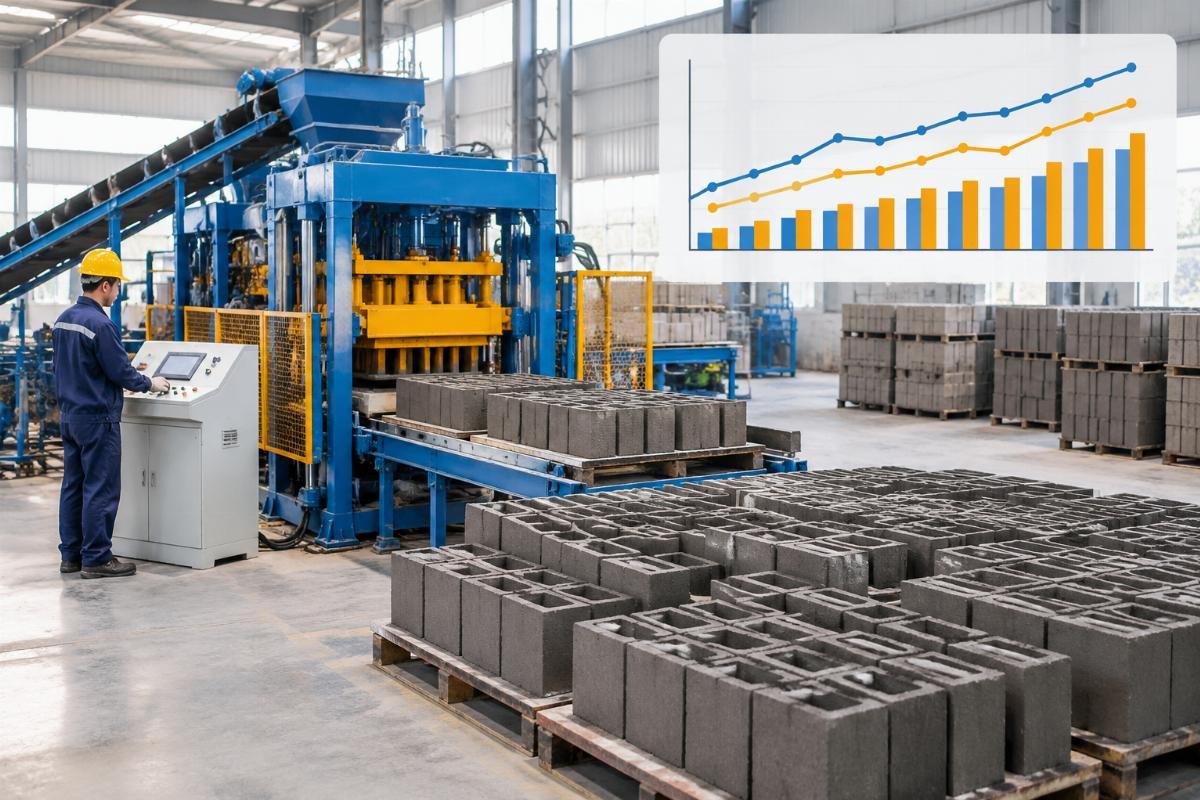
Verifying these numbers requires a skeptical eye. Demand evidence of past performance in similar climatic and operational conditions.
Critical Parameter 2: The Hidden Risk in Steam Curing Curves
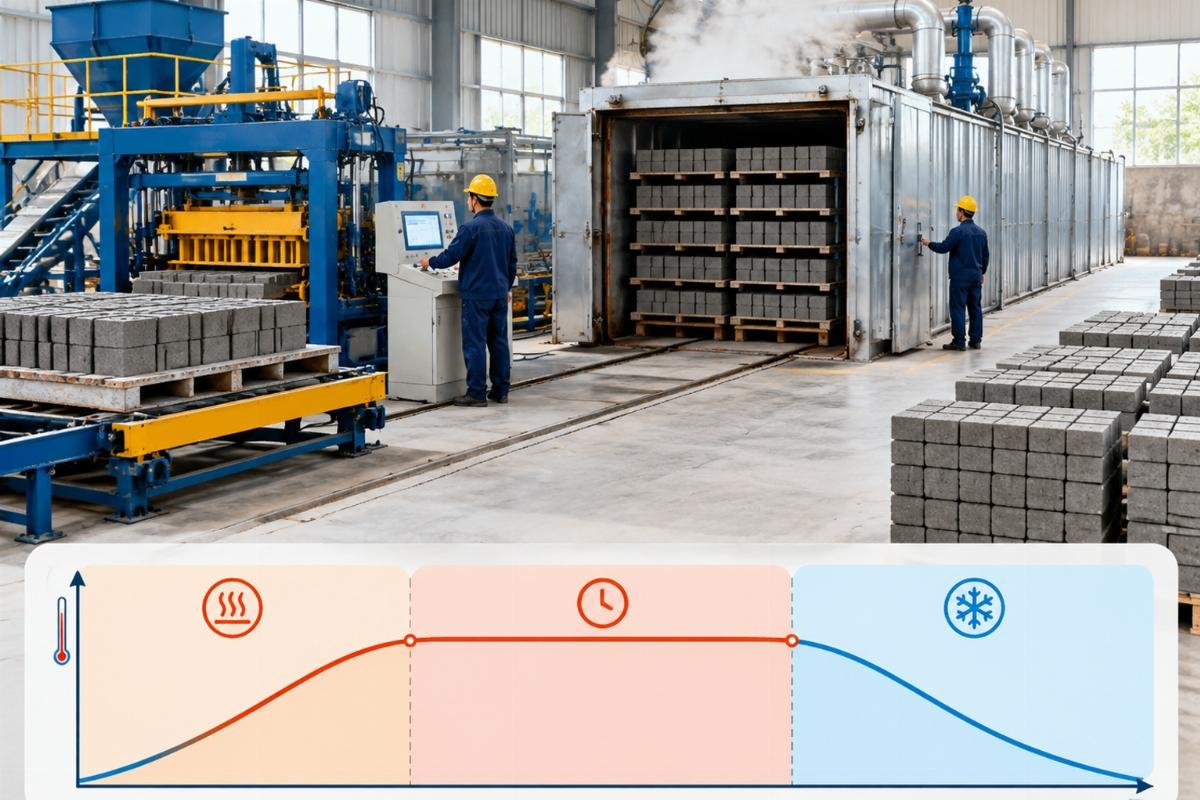
The autoclaving process is the heart of AAC production. It transforms the green cake into a strong, durable building material. The AAC block line technical data sheet typically includes a standard temperature and pressure curve. However, this "standard" curve is rarely universal.
Local water quality, sand fineness, and lime reactivity all influence how the concrete reacts to heat and pressure. A generic curve can cause internal stresses that lead to cracking or delamination. [NEED_CITE: principles of steam curing optimization for aerated concrete]
In the Lagos project mentioned earlier, the initial failure was due to an inappropriate curing profile. The AAC block line technical data sheet provided a linear heating ramp that did not account for the specific thermal mass of our blocks. When we switched to a customized curve with slower heating and cooling phases, the breakage rate dropped noticeably.
Key elements to check in the AAC block line technical data sheet regarding curing include:
- Heating Ramp Rate: Is it adjustable? Does it account for local boiler capacity?
- Pressure Hold Time: Is it sufficient for the specific mix design?
- Cooling Phase: Is it gradual enough to prevent thermal shock?
Many suppliers provide a fixed curve, assuming the buyer will adapt. This is a risky approach. The AAC block line technical data sheet should offer a range of recommended curves based on different mix designs and local conditions. If it does not, you will need to conduct extensive trial-and-error testing during commissioning, which costs time and money.
Furthermore, the correlation between pressure and temperature must be accurate. Inaccurate charts in the AAC block line technical data sheet can lead to unsafe operating conditions or inefficient energy use. Always cross-check these values against international standards for autoclave safety.
Do not accept a one-size-fits-all solution for such a critical process step.
How to Validate Data Before Signing the Contract
Prevention is better than cure. Before you sign the contract, take steps to validate the claims in the AAC block line technical data sheet. Relying solely on the manufacturer’s word is insufficient.
First, request reference project logs. Ask for contact information of previous clients in similar regions. Speak to them about their actual output and any issues they faced with the provided parameters. A reputable supplier will have a track record of successful installations.
Second, conduct third-party material tests. Send samples of your local raw materials to the manufacturer or an independent lab. Ask them to generate a mix design and a corresponding curing curve based on these specific materials. Then, compare this custom data with the standard AAC block line technical data sheet. Significant deviations indicate that the standard sheet is not suitable for your needs.
[NEED_CITE: best practices for pre-commissioning validation of AAC production lines]
Third, review the maintenance and spare parts requirements. The AAC block line technical data sheet should list critical components and their expected lifespan. If this information is vague, you may face unexpected downtime and high replacement costs.
Finally, ensure that the supplier offers on-site commissioning support. The AAC block line technical data sheet is a starting point, but real-world adjustment requires expert hands. A supplier who refuses to send technicians for parameter tuning is likely hiding weaknesses in their documentation.

Thorough validation reduces the risk of post-installation surprises and ensures a smoother startup.
Ensuring Long-Term Stability with Turnkey Support
Technical data is useless without the knowledge to apply it. The gap between paper specs and actual production is bridged by training and support. A true turnkey solution includes not just the hardware, but the transfer of expertise.
When Shiyue delivers an AAC line, we do not just drop off the AAC block line technical data sheet and leave. Our team stays on-site to adjust parameters, train operators, and troubleshoot issues. This hands-on approach ensures that the plant runs stably from day one.
Operators need to understand not just how to push buttons, but why certain parameters matter. They need to know how to adjust the mixing time if the sand gets wetter, or how to modify the curing curve if the boiler pressure drops. This contextual knowledge is often missing from standard documentation.
The AAC block line technical data sheet should be viewed as a living document. As you gain experience with your specific raw materials and market demands, you will refine the parameters. Having a supplier who supports this ongoing optimization is crucial for long-term success.

Invest in a partner who provides comprehensive support, not just a box of machines.
Conclusion
Do not let a glossy brochure dictate your production reality.
The AAC block line technical data sheet is a useful reference, but it is not a substitute for site-specific validation. By verifying capacity claims, customizing curing curves, and demanding transparent support, you can avoid costly pitfalls. Focus on actual performance metrics and seek suppliers who prioritize operational stability over nominal specs. This approach ensures that your investment delivers consistent, high-quality results.


Leave a Reply