

Hollow Block Machine vs Predecessor: Shiyue Manufacturer
Higher vibration tonnage does not guarantee superior block density.
Upgrading from manual or semi-automatic predecessors to modern PLC-controlled hollow block machines reduces unit production costs significantly through automation stability and waste reduction, typically justifying the capital expenditure within a short operational period for medium-scale plants.
I still remember the smell of hydraulic oil and wet concrete in our Linyi workshop during those early years. My mentor would hand me a wrench and point to the vibrating table of an older QT4 model, asking me to feel the difference in resonance between a loose bolt and a properly torqued one. That tactile lesson taught me more about machine integrity than any spec sheet ever could. Today, when clients ask about replacing their aging lines, I do not start with price lists. I start with the hidden costs of legacy equipment. The initial purchase price of a manual or semi-auto machine is undeniably lower, but the operational reality tells a different story. [NEED_CITE: total cost of ownership analysis for concrete block manufacturing equipment] Older units often suffer from inconsistent cycle times and higher labor dependency, which erodes profit margins silently over time.
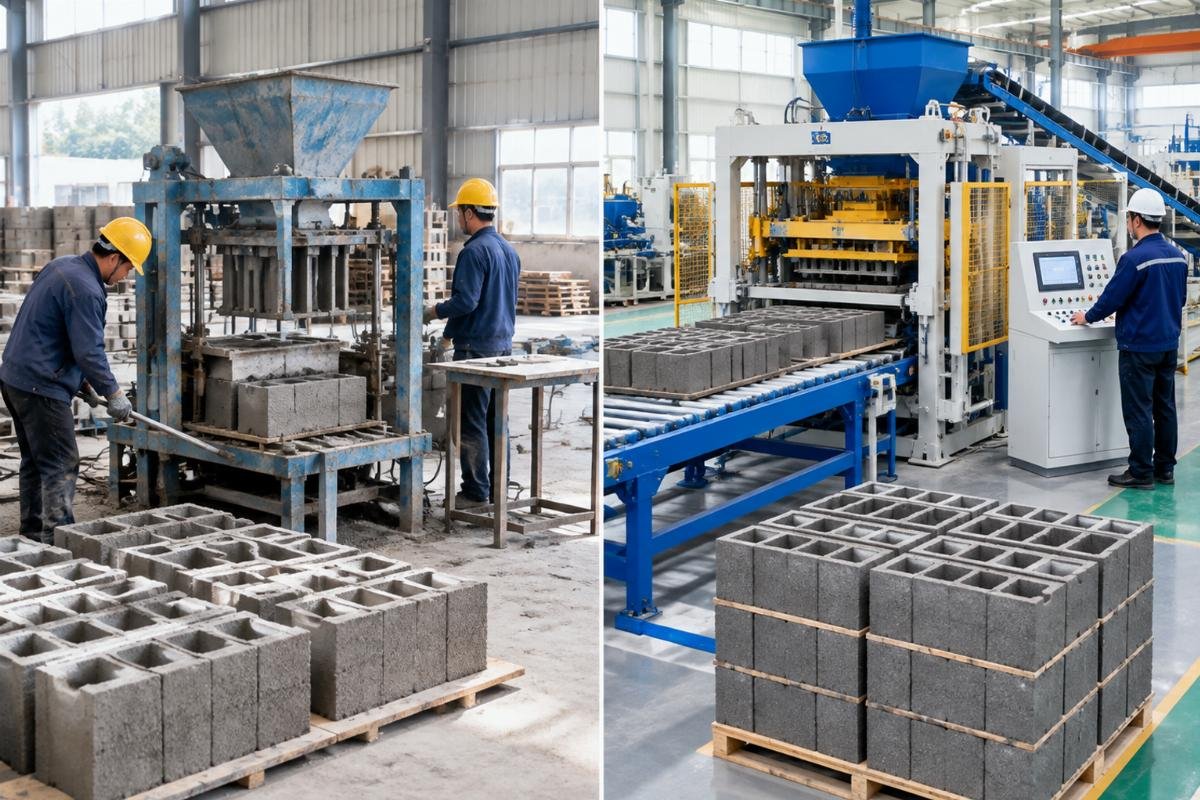
The transition from predecessor series to current generation equipment is not merely about buying new hardware; it is about shifting from a labor-intensive model to a process-driven one. In the following sections, we will dissect the technical and economic realities of this upgrade path, focusing on why modern Hollow Block Machine Comparison data favors automation for serious manufacturers.
Why Do Legacy Machines Cost More in the Long Run?
The sticker price is only a fraction of the true cost of ownership for outdated block making equipment.
Many plant owners hesitate to upgrade because their current machines "still work." However, "working" is not the same as "producing profitably." Older manual or semi-automatic machines rely heavily on operator skill and physical endurance. This human variable introduces inconsistency. A tired operator might rush the molding cycle, leading to blocks that lack sufficient density or have visible surface defects. These rejected batches are not just lost material; they represent wasted energy, labor hours, and logistics costs.
Consider a case from a client in Lagos. He was running two older semi-automatic lines to meet the demand for a housing project. While the machines were functional, his rejection rate hovered around a noticeable percentage due to uneven compaction. When we analyzed his operation, the issue was not the concrete mix but the inability of the old hydraulic system to maintain consistent pressure during the vibration phase. By switching to a newer model with PLC-controlled hydraulic sequences, he eliminated the human timing error. The result was a dramatic drop in waste and a more uniform product that met stricter tender requirements. [NEED_CITE: impact of automation on quality consistency in precast concrete production]
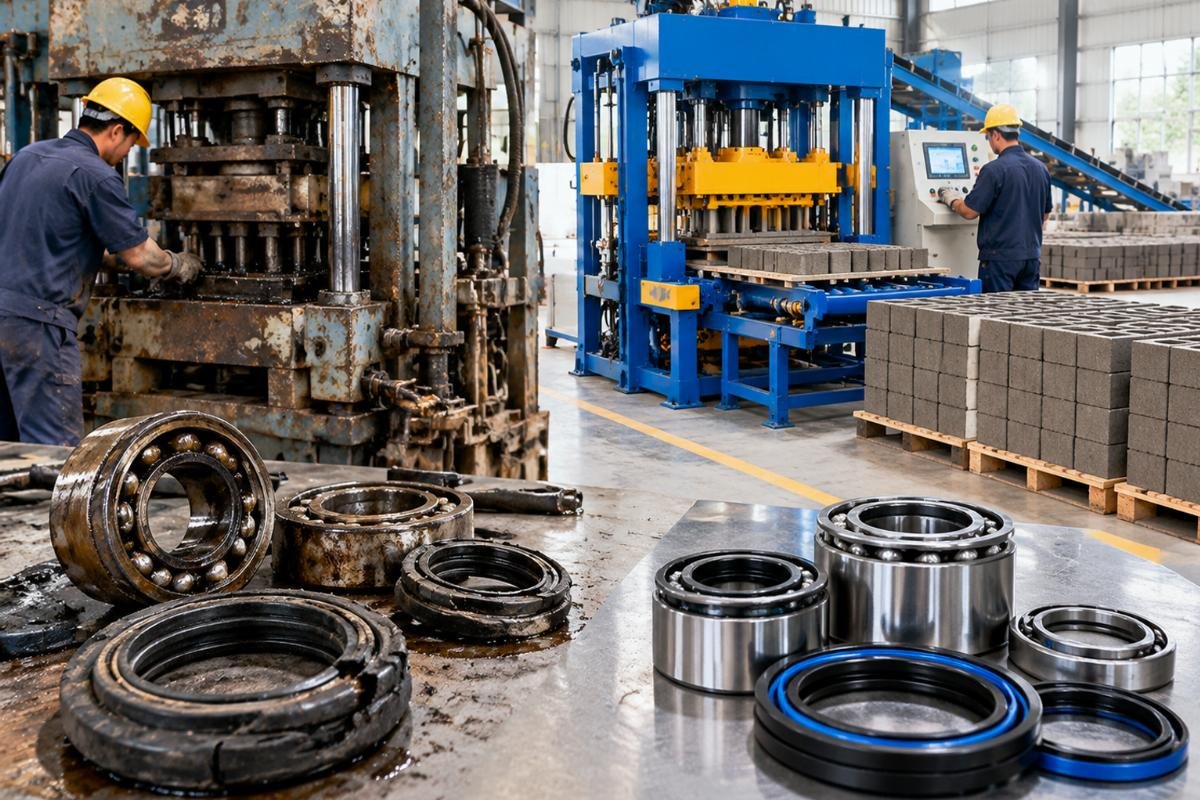
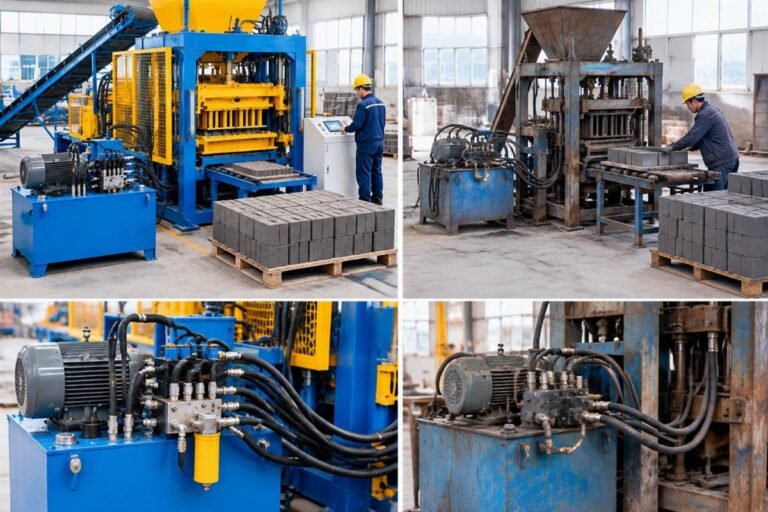
Furthermore, maintenance on predecessor models is often reactive rather than predictive. Bearings wear out faster due to unbalanced vibration, and hydraulic seals leak more frequently because of pressure spikes caused by manual valve operation. These frequent breakdowns cause unplanned downtime, which is far more expensive than the scheduled maintenance of a modern line. When conducting a Hollow Block Machine Comparison, one must account for these operational disruptions. The older machine might save money upfront, but it bleeds cash through inefficiency and repair bills.
How Do Output and Efficiency Metrics Differ Between Generations?
Modern PLC systems deliver consistent cycle times that manual operations cannot match reliably.
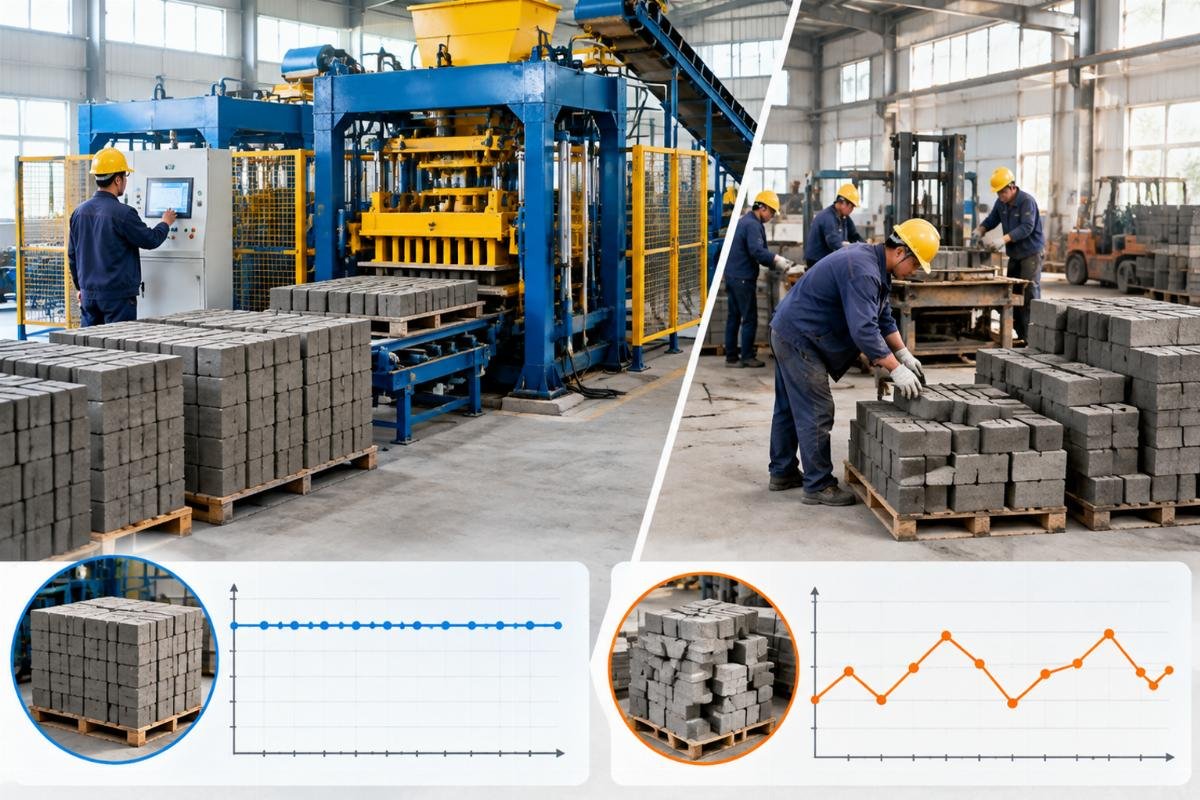
The core advantage of upgrading lies in the precision of the production cycle. In a manual or semi-auto setup, the cycle time depends on how fast the operator can move pallets, fill molds, and engage the vibration. This speed varies throughout the shift. In contrast, a fully automatic QT series machine executes every step with millisecond precision. The mold filling, vibration, and pressing phases are synchronized by the PLC, ensuring that each block receives the exact same amount of energy and pressure.
To visualize this, consider the following qualitative comparison of operational metrics:
| Performance Metric | Predecessor (Manual/Semi-Auto) | Modern PLC-Controlled Line |
|---|---|---|
| Cycle Time Consistency | Variable, dependent on operator fatigue | Constant, programmed precision |
| Daily Output Stability | Fluctuates significantly | Stable and predictable |
| Labor Requirement | High, multiple operators per shift | Low, minimal supervision needed |
| Mold Changeover Time | Lengthy, requires manual adjustment | Streamlined, faster tooling swap |
| Block Density Uniformity | Inconsistent across the batch | Highly uniform throughout |
[NEED_CITE: standard cycle time benchmarks for automatic concrete block machines]
A producer in Southeast Asia recently upgraded his molding system to handle a complex paver design. His old machine required extensive manual adjustment for each mold change, leading to long downtimes and a high breakage rate during the transition. The new system allowed for quicker mold swaps and more stable forming pressure. This did not just increase his total output; it improved his ability to take on diverse orders without sacrificing efficiency. When you look at Hollow Block Machine Comparison charts, the focus should be on this stability. Higher daily throughput is valuable, but consistent throughput is what allows a business to plan logistics and fulfill contracts reliably.
The energy consumption per unit also shifts favorably. While a larger machine might have a higher total power rating, the energy used per thousand blocks often decreases because the system operates at optimal efficiency without the idle times and inefficient starts typical of manual operations. This efficiency gain is a critical factor in calculating the real return on investment.
What Role Does Operational Stability Play in Maintenance?
Advanced hydraulic and control systems reduce the frequency of unexpected breakdowns and spare part consumption.
Maintenance is often viewed as a necessary evil, but in the context of block production, it is a key indicator of machine health. Predecessor models often use simpler hydraulic circuits that are prone to pressure surges. These surges stress hoses, seals, and pump components, leading to frequent leaks and failures. Additionally, the mechanical linkages in older machines require regular lubrication and adjustment to prevent wear. If neglected, this wear leads to misalignment, which further accelerates component failure.
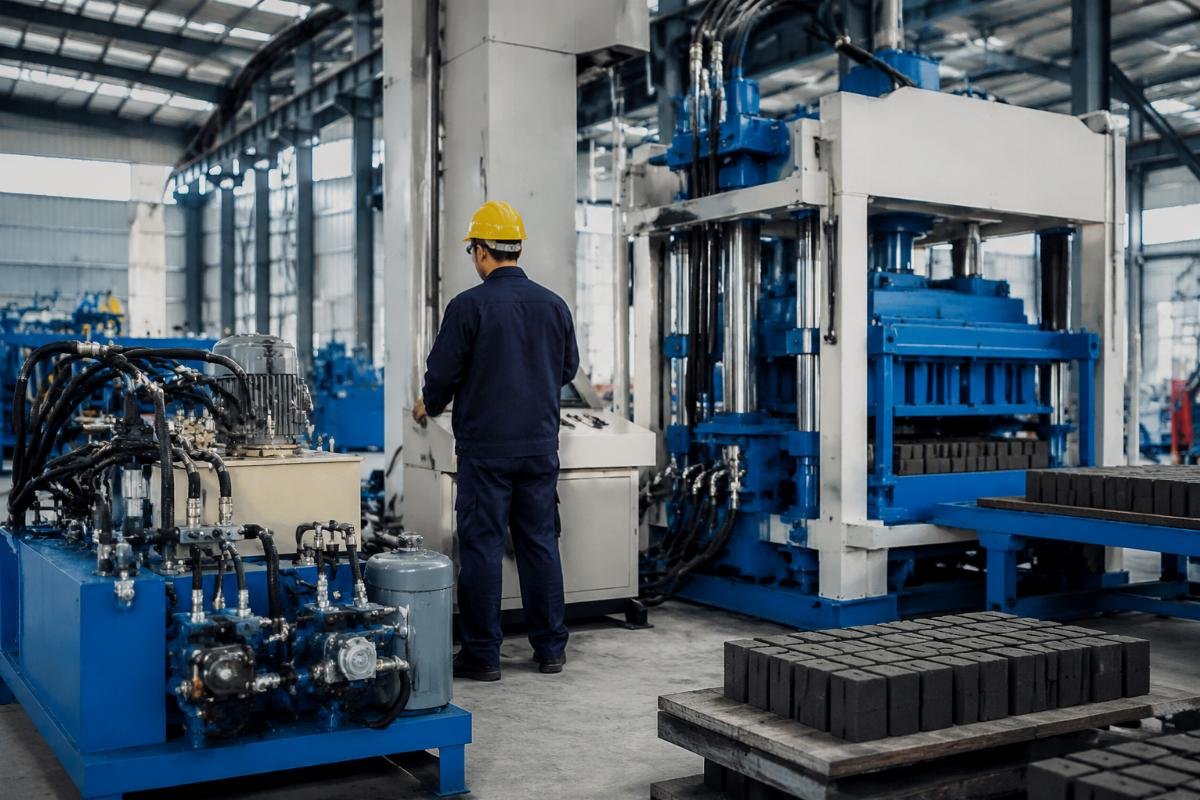
Modern machines, such as the QT10-15 or QT12-15 series, utilize advanced hydraulic systems with proportional valves and feedback sensors. These components regulate pressure smoothly, eliminating the shocks that damage older systems. The PLC monitors system parameters continuously, alerting operators to potential issues before they become catastrophic failures. This predictive capability transforms maintenance from a reactive crisis into a scheduled routine.
I recall visiting a site in the MENA region where a contractor was struggling with an old line that constantly failed during peak production hours. The hydraulic seals would blow out weekly, halting production for days. After upgrading to a new line with a stabilized hydraulic system, the maintenance schedule shifted to monthly checks rather than weekly repairs. The reduction in spare part consumption was substantial, and the availability of the machine increased dramatically. [NEED_CITE: reliability engineering principles in heavy machinery maintenance]
When evaluating a Hollow Block Machine Comparison, pay close attention to the design of the hydraulic and electrical systems. A machine that runs smoothly with minimal intervention is not just easier to manage; it is more profitable. The cost of spare parts and the labor hours spent on repairs add up quickly, often surpassing the savings from buying a cheaper, older-style machine.
How Can You Calculate the Real ROI Beyond the Price Tag?
True return on investment includes labor savings, waste reduction, and increased capacity utilization.
Calculating the ROI of a new block machine requires looking beyond the invoice price. Many buyers make the mistake of comparing only the purchase cost of the new machine against the residual value of the old one. This narrow view ignores the operational savings that drive long-term profitability. To get an accurate picture, you must factor in the reduction in labor costs, the decrease in material waste, and the value of increased production capacity.
Labor is often the largest variable cost in block production. An automated line can replace several manual workers, reducing not only wages but also the associated costs of training, management, and turnover. Furthermore, the consistency of automated production means less concrete is wasted on defective blocks. This material saving, while small per block, becomes significant over thousands of units.
Consider the example of a Nigerian client who replaced his QT4-15 with a QT6-15. He initially focused on the higher output capacity. However, after three months of operation, he realized that the biggest financial win was the reduction in labor headcount and the near-elimination of rejected batches. The machine paid for itself much faster than he had anticipated because the operational savings were so profound. [NEED_CITE: case studies on ROI for automated construction equipment in emerging markets]
To perform your own analysis, list all current costs associated with your existing line: labor, electricity, spare parts, and waste disposal. Then, estimate these costs for a new automated line based on manufacturer specifications and industry benchmarks. The difference between these two figures represents your annual savings. Divide the net cost of the new machine by this annual savings figure to determine the payback period. In many cases, this period is surprisingly short, especially when considering the potential for revenue growth from higher capacity.
When reviewing a Hollow Block Machine Comparison, use this holistic approach. A machine that costs more upfront but saves significantly on operations is often the smarter financial choice. This is where professional guidance can help, ensuring that all variables are accounted for in your calculation.
Which Replacement Model Matches Your Production Goals?
Selecting the right QT series model depends on your current volume and future expansion plans.
Not every plant needs the largest machine available. Choosing the right replacement model requires a clear understanding of your current production volume and your growth trajectory. The QT series offers a range of options, from the compact QT4-15 to the high-capacity QT12-15. Each model is designed to meet specific production needs, and selecting the wrong size can lead to either underutilization or bottlenecks.
For smaller plants or those just starting to automate, the QT4-15 or QT6-15 offers a balanced entry point. These machines provide significant improvements in automation and consistency without the massive footprint and power requirements of larger models. They are ideal for producers who want to improve quality and reduce labor while maintaining flexibility.
For established manufacturers looking to expand capacity significantly, the QT10-15 or QT12-15 is the appropriate choice. These machines are built for high-volume production and can handle demanding schedules with ease. They are suitable for large infrastructure projects or suppliers who need to produce vast quantities of blocks consistently.
A client in Latin America was torn between two models. He wanted to maximize output but was concerned about the initial investment. By analyzing his order backlog and projected growth, we determined that the mid-range model offered the best balance of capacity and cost. It allowed him to meet current demand while leaving room for moderate growth without overextending his budget. This strategic selection ensured that his investment was aligned with his business reality. [NEED_CITE: guidelines for sizing concrete block production equipment]
When engaging in a Hollow Block Machine Comparison, do not just look at maximum theoretical output. Consider the practical aspects of installation, power supply, and raw material handling. A larger machine requires a more robust infrastructure, which adds to the total project cost. The right choice is the one that fits your current operations while supporting your future goals.
Conclusion
Upgrading your production line is an investment in stability, quality, and long-term profitability.
The decision to replace a predecessor machine with a modern automated unit should be driven by data, not just desire. By understanding the hidden costs of legacy equipment and the tangible benefits of PLC-controlled systems, you can make a choice that strengthens your business. Focus on the total cost of ownership, the reliability of the technology, and the alignment with your production goals. This approach ensures that your new Hollow Block Machine Comparison leads to a successful and profitable upgrade.
Leave a Reply