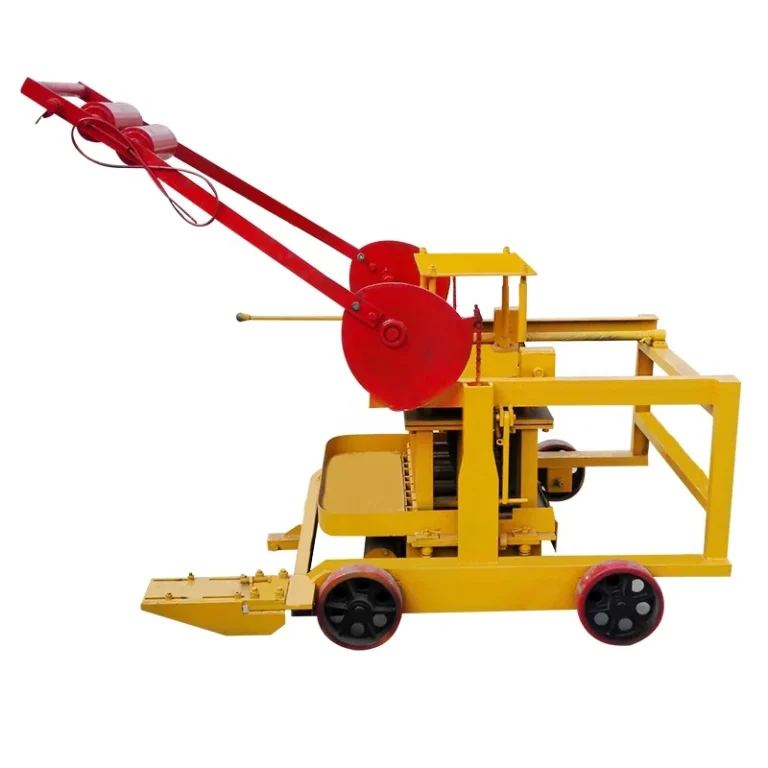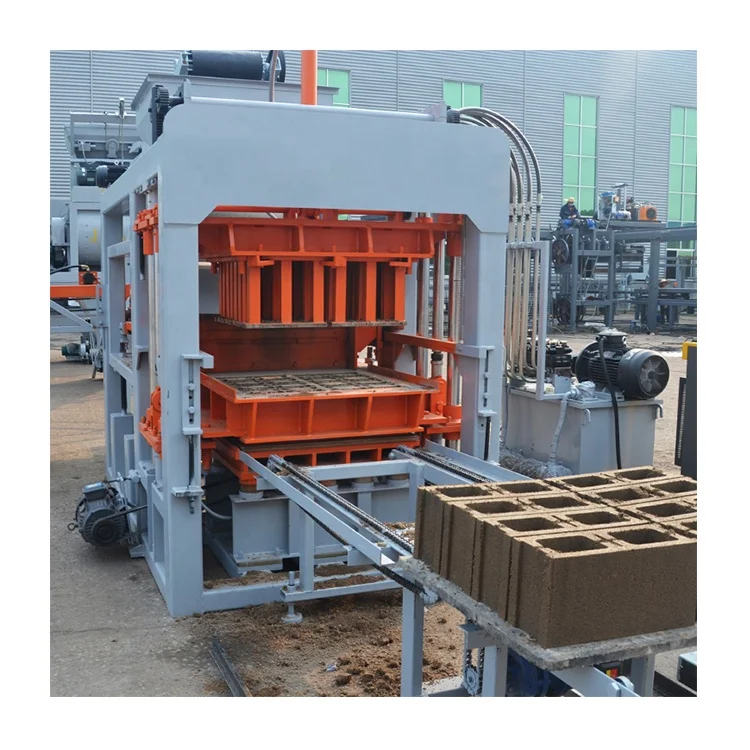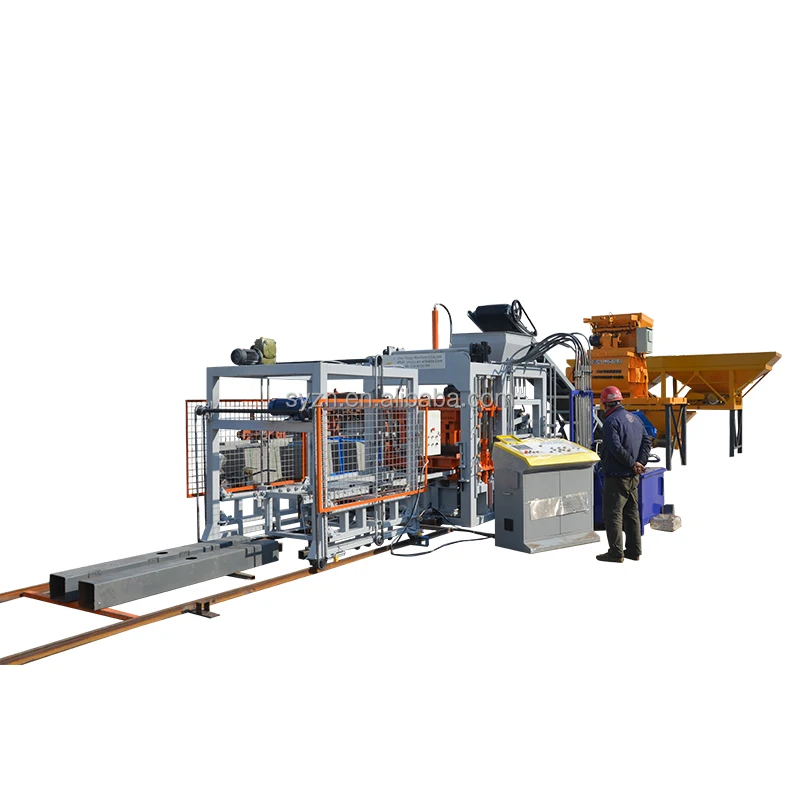
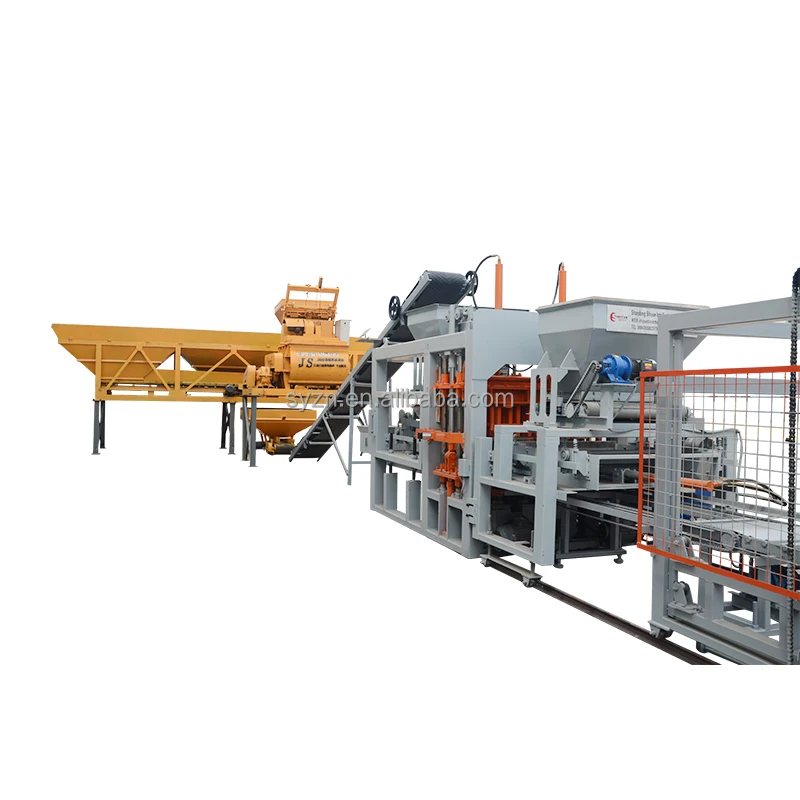


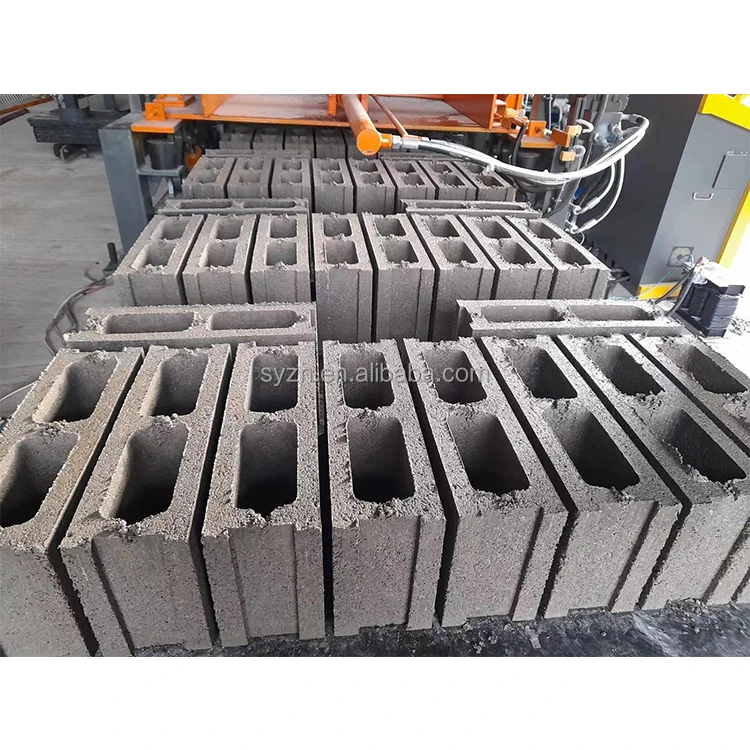
Description
Stocked QT7-15 units — every automatic block machine is factory-tested on the buyer’s actual mix sample before container loading, not just run on standard sand.
Technical Specifications
| Parameter | Value |
|---|---|
| Model | QT7-15 |
| Product Type | Full Automatic Hollow Block Machine |
| Pallet Size | 1150 x 700 mm |
| Molding Cycle | 15–20 s |
| Overall Power | 45 kW |
| Vibration Force | 100 kN |
| Vibration Frequency | 0–60 Hz (adjustable) |
| Vibration Form | Platform Vibration |
| Total Mass | 8 T |
| Demolding Method | Hydraulic |
| Control System | PLC with touch screen interface |
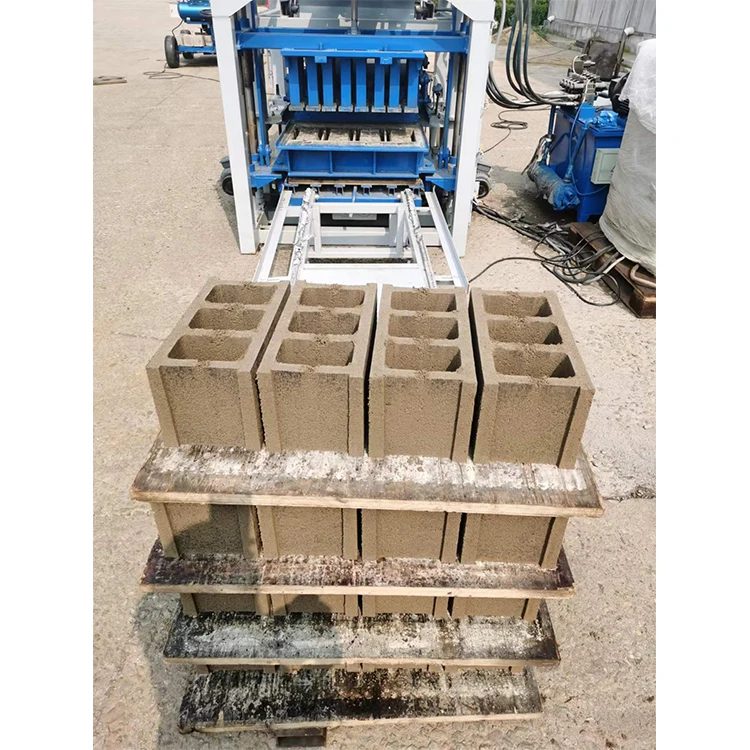
| Output Capacity (400×200×200 mm hollow block) | 1,260–1,680 pcs/hour, 10,080–13,440 pcs/8 hr |
| Output Capacity (400×150×200 mm hollow block) | 1,440–1,920 pcs/hour, 11,520–15,360 pcs/8 hr |
| Output Capacity (200×100×60 mm rectangular brick) | 3,888–4,860 pcs/hour, 31,104–38,880 pcs/8 hr |
| Automation Level | Full Automatic |
| Mould Change | Simple replacement for multi-format production |
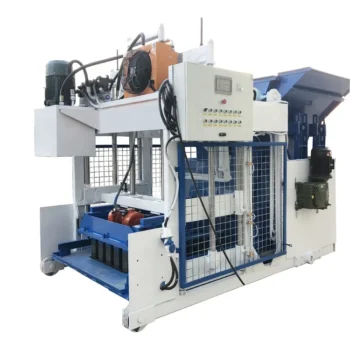
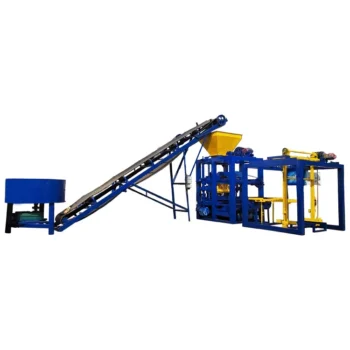
| Components | Pallet feed machine, block making machine, storage hopper, conveyor, hydraulic unit, PLC control cabinet |
| Warranty | 1 year (excluding spare parts) |
| Voltage & Frequency | Configurable per destination market (basis to be confirmed before dispatch) |
Application Suitability
| Application | Material or Output |
|---|---|
| Hollow block production for structural walls | Crushed stone, cement, sand mix in standard and lightweight aggregates |
| Rectangular paving brick for walkways and yards | Fine aggregate with cement binder, high-density finish required |
| Multi-cellular block for partition walls | Lightweight aggregate blends, reduced wall weight |
| Standard solid brick for load-bearing masonry | Dense aggregate mix, high compressive strength target |
| On-site block production for housing developments | Local raw material with portable curing rack setup |
| Commercial block plant serving regional distributors | Continuous 8-hour shift operation with pallet circulation |
Why "Ready to Ship" Needs a Voltage Confirmation First
A QT7-15 block machine in stock is only ready for your site once the electrical configuration matches your local grid.
I have watched containers leave the yard with a 380V/50Hz motor package headed for a 440V/60Hz market. The machine arrived, the contractor plugged it in, and the hydraulic pump tripped the breaker within minutes. The QT7-15 block machine in stock was sitting idle for weeks while replacement motors were sourced locally. [NEED_CITE: voltage and frequency standards by export market]
The PLC touch screen language is another detail that gets skipped when orders move fast. Operators staring at Chinese-character fault codes cannot diagnose a stuck pallet feed without calling someone who reads the manual. Confirming the display language and the voltage before the QT7-15 automatic block machine leaves the factory costs nothing but saves days on site.
Dispatch Timeline and What Controls It
A QT7-15 block machine in stock means the press, hydraulic unit, and PLC cabinet are assembled and bench-tested in the factory. Standard moulds on the shelf can be bolted to the platen the same day. The dispatch lead time from a confirmed order is measured in days for container loading, not the multi-week build cycle of a made-to-order line.
Container Loading and Machine Dismantling
The QT7-15 automatic block machine is broken down into its main assemblies for shipment: press frame, hydraulic power pack, PLC cabinet, pallet feed unit, and conveyor sections. Each assembly is secured with bolted connections rather than welded joints so field reassembly follows a documented sequence. A 40-foot high-cube container typically accommodates the press, one pallet of standard moulds, and the supporting equipment listed in the component table. [NEED_CITE: container loading practices for heavy industrial machinery]
Reading the Specs That Actually Matter on Site
The 100 kN vibration force and adjustable 0–60 Hz frequency work together with hydraulic demolding pressure to compact the mix into a dense block before the mould lifts. If the vibration frequency is set too high for a coarse aggregate, the particles segregate and the block face shows voids. Set it too low and the block slumps when the mould rises. Finding the right combination requires a trial run on the buyer’s own material, not a default saved in the PLC.
The 1150 x 700 mm pallet size dictates the curing rack spacing and the forklift tine width the buyer already has on site. A pallet that is even a few centimetres wider than the rack slot means the entire curing area must be rebuilt. Matching pallet dimensions to the existing yard layout avoids that expense before the QT7-15 block machine in stock is ever loaded.
The 15–20 second molding cycle is achievable on a standard mix; heavier lightweight aggregate blends or very tall hollow block formats push the cycle toward the upper end. The PLC touch screen lets operators adjust vibration duration per format without rewiring the control cabinet.
What Happens When the Mix Is Never Tested
Last year a Middle-East contractor took delivery of a QT7-15 to meet a housing project deadline. The factory trial used standard sand and produced blocks well within strength tolerance. On arrival the local aggregate turned out to carry a high clay content, and the blocks cracked during curing. Parameters had to be recalibrated on site, costing the contractor production days while the commissioning engineer adjusted vibration timing and water ratios. Since then I ask every buyer to ship a raw material sample before the machine leaves the factory, so the trial run reflects real conditions. [NEED_CITE: impact of aggregate clay content on concrete block compressive strength]
Why Source This Machine From a Stock-Focused Supplier
Block machinery is the only product line here, so the press, mould, pallet, and handling equipment are specified as one matched system rather than assembled from separate vendors.
Machine configuration is set against the buyer’s actual mix design and target block format before dispatch, not pulled from a catalogue default.
Standard mould inventory covers hollow block, rectangular brick, and solid block formats, meaning a buyer can add production capacity without waiting for custom tooling.
A stock-positioned QT7-15 automatic block machine ships with a documented factory test record specific to the buyer’s requested format and pallet size.
Container loading plans and dismantling drawings are prepared per shipment, so the receiving team knows which bolts connect which assembly before the container door opens.
Documentation & Verification
- Factory test record run on the buyer’s requested block format and pallet size before dispatch
- Machine specification sheet listing confirmed voltage, frequency, and PLC display language
- Mould drawing and format list showing every cavity dimension and compatible pallet
- Hydraulic and electrical schematic matched to the shipped configuration
- Container loading plan with bolt-torque values for field reassembly
- Operation and maintenance manual translated to the confirmed control language
Installation, Commissioning & Support
- Foundation pad sized to the 8 T total mass with anchor bolt pattern provided before arrival
- Dedicated 45 kW power circuit with confirmed voltage and breaker rating for the hydraulic unit
- Press frame, hydraulic pack, and PLC cabinet shipped as bolted assemblies for documented reassembly
- First production run supervised on site with vibration frequency tuned to the local aggregate
- Operator training covers PLC fault codes, mould change sequence, and daily greasing points
- Wear parts list identifies hydraulic seals and vibration motor bearings with reorder part numbers
Before You Request a Quote
Tell us which block format you need to produce and the daily volume your project demands. Share a sample of your local aggregate so we can run a trial on the QT7-15 before it enters the container. Confirm your site voltage, frequency, and the language your operators read, so the PLC and electrical package are set before dispatch.
Frequently Asked Questions
Q: What is the exact dispatch lead time once the QT7-15 order is confirmed?
A: Because the QT7-15 block machine in stock is pre-assembled and bench-tested, the typical window from order confirmation to container loading is measured in working days rather than weeks. The exact number depends on the mould formats requested and whether voltage components need swapping to match the destination grid. A written dispatch date is provided at quotation stage.
Q: Which standard mould formats ship from stock with the machine?
A: The current inventory covers hollow blocks in 400×200×200 mm and 400×150×200 mm, plus rectangular paving bricks at 200×100×60 mm. Solid block and kerbstone moulds are also held in stock. If your market needs a format outside these dimensions, custom mould drawings can be prepared, though that adds lead time beyond the stock dispatch window.
Q: How is the machine prepared for container shipment?
A: The QT7-15 automatic block machine is dismantled into bolted assemblies: press frame, hydraulic power pack, PLC cabinet, pallet feed unit, and conveyor sections. Each piece is secured inside a 40-foot high-cube container with a documented loading plan so the receiving team can follow reassembly steps without guesswork.
Q: What voltage and frequency configurations are available from stock?
A: The base configuration is set for common industrial voltages, but motors and transformer taps can be swapped before dispatch to match 380V, 400V, 415V, or 440V at either 50 Hz or 60 Hz. The buyer must confirm the exact site supply before the machine is loaded so no electrical components need replacing after arrival.
Q: What is the estimated arrival time at my destination port after dispatch?
A: Ocean transit time varies by destination, and the supplier provides an estimated arrival window based on the shipping line’s published schedule at the time of booking. The dispatch date is fixed once the container is sealed, so the buyer can plan site preparation and raw material stockpiling around a known timeline.