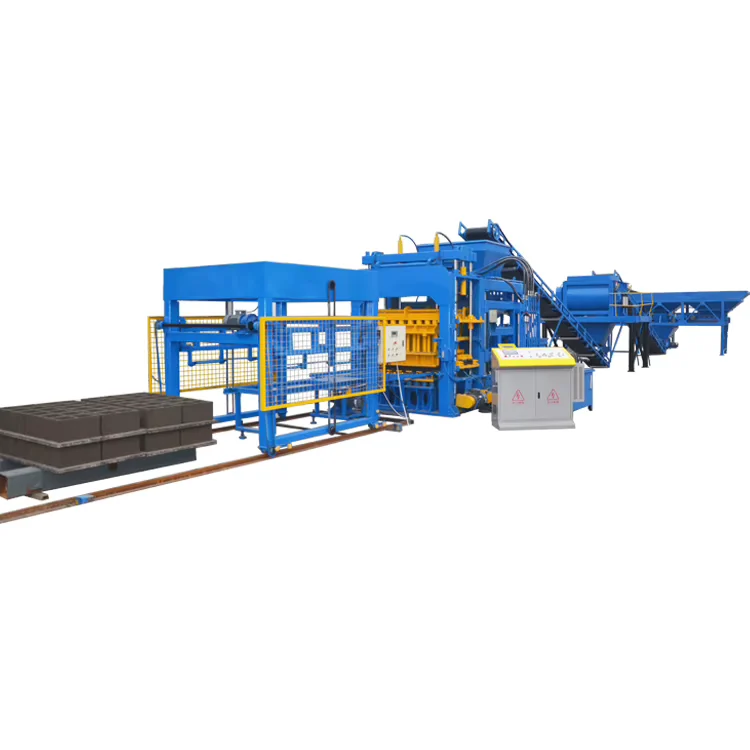
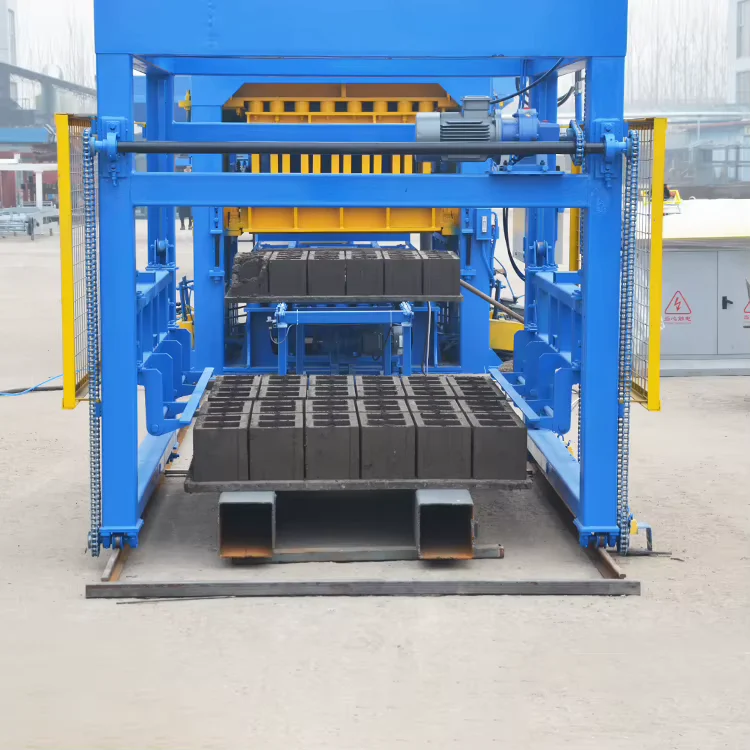
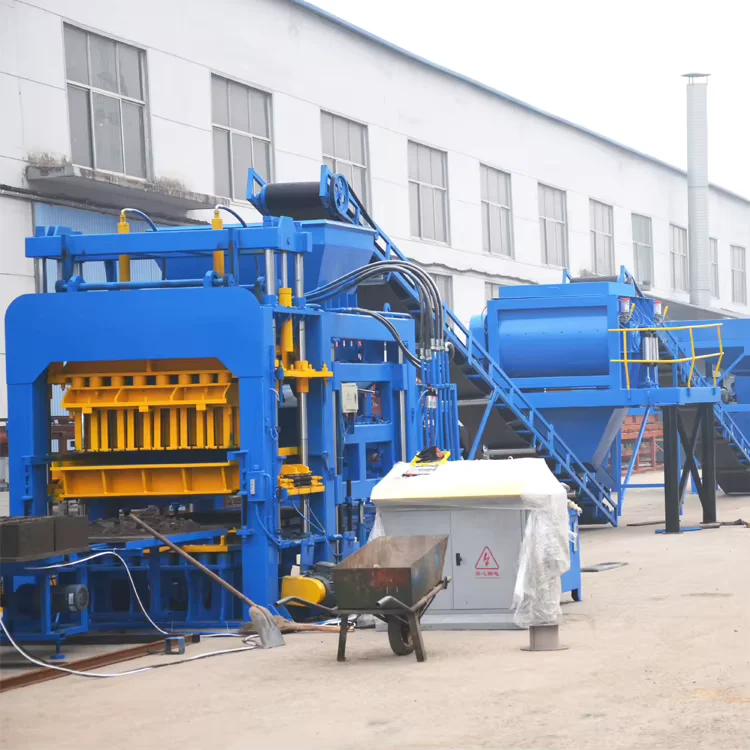
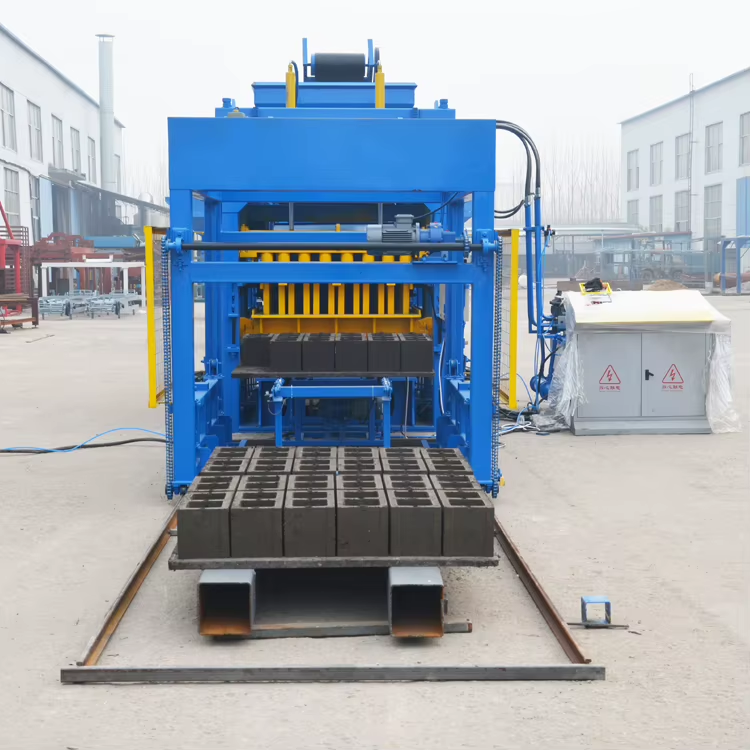
Description
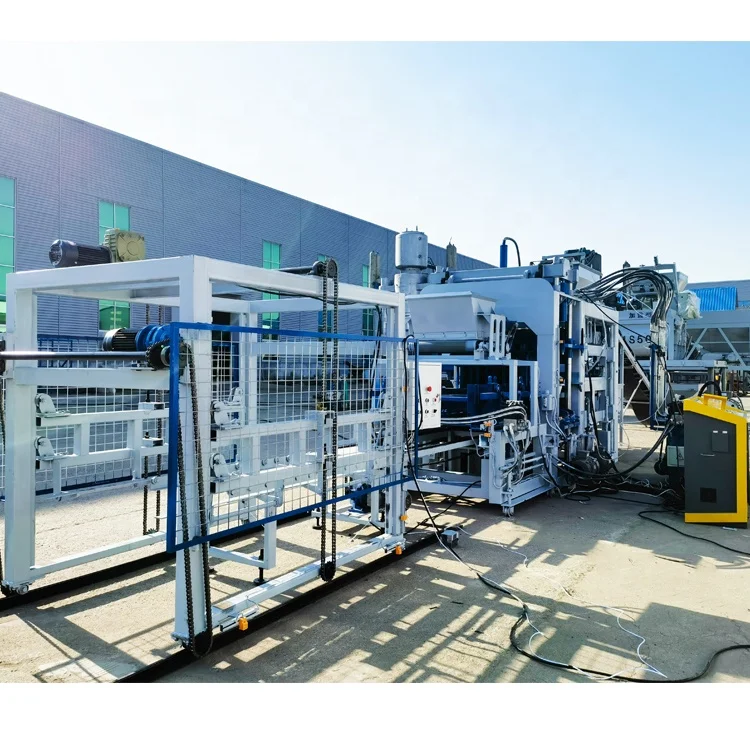
Rapid Dispatch Readiness — The QT18-15 is pre-assembled and staged for immediate container loading, eliminating factory build delays for urgent project schedules.
Technical Specifications
| Parameter | Value |
|---|---|
| Model | QT18-15 |
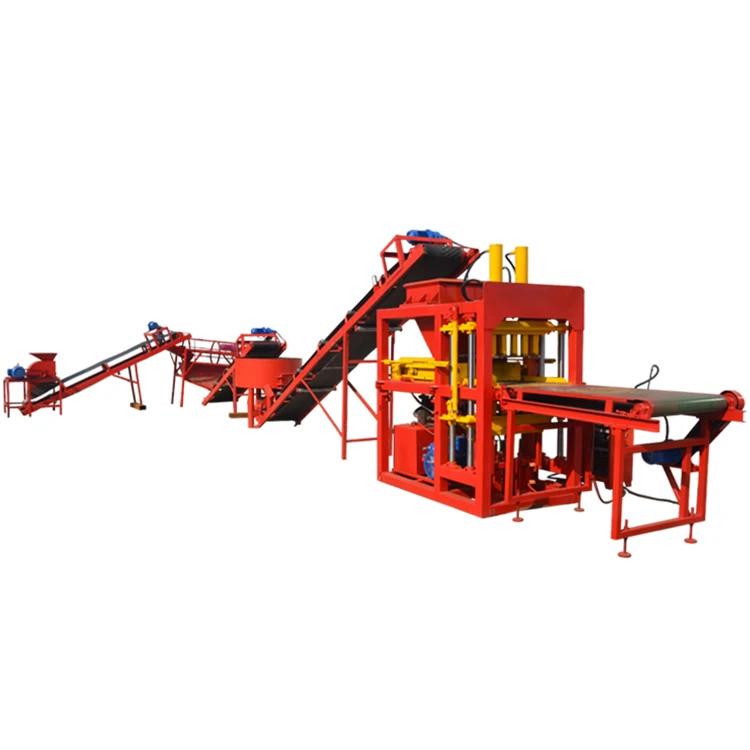
| Product Type | Fully Automatic Block Production Line |
| Machine Type | Hollow Block Making Machine, Paving Block Making Machine, Curbstone Block Machine |
| Processing Method | Hydraulic pressure |
| Control System | PLC control |
| Overall Dimensions (L×W×H) | 935025202950mm |
| Net Weight | 35000 kg |
| Hydraulic Pressure | 15-36 MPa |
| Vibration Force | 140 kN |
| Pallet Size | 1350x1350x40mm |
| Forming Cycle | 15~20 Sec |
| Voltage | Local Voltage (basis to be confirmed) |
| Core Components | PLC, Pressure Vessel, Engine, Gear, Motor, Pump, Bearing, Gearbox |
| Warranty | 1 Year (Core components: 1.5 years) |
Application Suitability
| Application | Material or Output |
|---|---|
| High-volume concrete block plants | Crushed stone, sand, and cement for hollow blocks |
| Paving and curbstone manufacturing | Dense aggregate mixes for interlocking pavers and kerbstones |
| Rapid on-site contractor production | Standard masonry formats for immediate housing project deployment |
Why the Voltage Question Must Precede the Dispatch Date
When a project deadline is tight, securing a QT18-15 block machine in stock is only the first step; confirming the exact electrical configuration is what actually protects your timeline.
Spending years procuring factory equipment across Southeast Asia taught me that the most devastating delays happen after the machine arrives. I once oversaw the delivery of a fully automatic line of this class where the local site voltage was not verified against the factory output before loading. The equipment sat idle for three weeks while transformers were sourced and control panels were rewired. [NEED_CITE: voltage and frequency standards by export market]. That experience dictates my current dispatch protocol: no container is sealed until the destination power grid specifications are locked in and matched to the motor and PLC requirements.
Container Loading and Dismantling Protocols
Shipping a 35,000 kg production line requires precise dismantling to ensure it fits standard ocean freight dimensions without damaging critical hydraulic pathways. The main press, pallet feeder, and stacking stations are separated at designated structural joints. This approach guarantees that the QT18-15 block machine in stock can be efficiently loaded into flat rack or high cube containers, minimizing port handling risks and accelerating the unloading process at your destination.
Transit Timelines and Arrival Estimates
Buyers working against strict construction schedules need predictable logistics, not vague shipping promises. We provide upfront arrival estimates based on your specific destination port and current maritime routing. By maintaining standard moulds and core assemblies ready for immediate dispatch, we eliminate the typical multi-week manufacturing lead time. [NEED_CITE: typical maritime transit variables for heavy machinery]. This ensures your site preparation and foundation pouring align perfectly with the equipment’s actual arrival date.
Interpreting the Physical and Hydraulic Footprint
The 9350×2520×2950mm overall dimension and 140 kN vibration force dictate specific site preparation requirements before the equipment arrives. The 1350x1350x40mm pallet size requires a corresponding curing area layout and forklift capacity to handle the loaded boards safely. Furthermore, the 15-36 MPa hydraulic pressure system relies on heavy-duty hoses and pressure vessels that must be inspected after ocean transit to ensure no stress fractures occurred during loading. Understanding these physical parameters ensures your facility is genuinely ready to receive and operate the line on day one.
The Hidden Costs of Overlooking Dispatch Details
Failing to verify the electrical frequency or control language before dispatch results in expensive on-site engineering corrections. If the PLC interface arrives in an unsupported language, or if the motor frequency mismatches the local grid, the entire commissioning phase stalls. [NEED_CITE: CE machinery directive requirements for industrial equipment]. These oversights force contractors to pay premium rates for local electricians and translators, entirely erasing the time saved by purchasing readily available equipment.
Why Source This Ready-to-Ship Line Here
Our inventory strategy focuses exclusively on block machinery, meaning every stocked unit is a complete, matched system rather than a collection of mismatched third-party parts. We configure the electrical and control parameters against your actual site conditions before the machine leaves our floor. Standardized moulds and pallets are pre-matched and loaded alongside the main press, preventing secondary shipment delays. Our dispatch process includes comprehensive packing photographs and customs documentation support, ensuring smooth port clearance and immediate site assembly.
Documentation & Verification
- Factory test record verifying hydraulic pressure and vibration force before dismantling
- Video outgoing-inspection showing the exact unit being loaded into containers
- Machinery test report confirming core component functionality prior to dispatch
- Customs documentation support tailored to your destination port requirements
- Voltage and control language confirmation sheet signed off before sealing
Installation, Commissioning & Support
- Foundation blueprints mapped to the 9350x2520mm footprint and 35000 kg static load
- Electrical schematics detailing dedicated circuit requirements for the heavy-duty motors
- Dismantling diagrams guiding the reassembly of structural joints and hydraulic lines
- Initial power-on protocols to verify the PLC control system and local voltage match
- Operator training focused on pallet feeding routines and standard mould change procedures
- Wear parts list identifying critical hydraulic and gearbox components for local sourcing
Preparing Your Site for Immediate Integration
To ensure the equipment integrates smoothly upon arrival, please provide your destination port, local voltage and frequency specifications, and the required PLC display language. We also need to confirm your existing forklift capacity and curing area dimensions to ensure the 1350x1350mm pallets are compatible with your material handling setup. Supplying these details allows us to finalize the dispatch configuration and lock in your arrival estimate.
Frequently Asked Questions
Q: What is the exact dispatch lead time for the QT18-15 block machine in stock?
A: Because the core press and standard assemblies are already built, the lead time is limited to final electrical verification, dismantling for container loading, and customs clearance. This typically reduces the waiting period from several months to a matter of weeks, allowing us to provide a firm departure date immediately upon order confirmation.
Q: How is the 35,000 kg line dismantled and loaded into containers?
A: The line is separated at engineered structural joints to fit standard ocean freight dimensions. The main press, hydraulic station, and pallet handling systems are secured independently. This prevents transit damage and allows your local team to unload and reassemble the components systematically using standard lifting equipment at your site.
Q: Can you provide an upfront arrival estimate for my specific port?
A: Yes. Once we confirm your destination port and the required electrical configuration, we calculate the maritime transit time and port clearance variables. We provide a realistic arrival window so your construction team can schedule foundation work and operator training without guessing when the equipment will actually land.
Q: Which standard moulds and pallets are included in the ready-to-ship package?
A: The ready-to-ship configuration includes standardized moulds for common hollow and paving formats, pre-matched to the 1350x1350mm pallet size. This ensures you can begin production immediately upon commissioning without waiting for custom tooling to be manufactured and shipped in a separate, delayed consignment.
Q: What is the process for voltage confirmation before dispatch?
A: Before any container is sealed, we require your exact local voltage and frequency specifications. We cross-reference this with the motor and PLC requirements, adjusting transformers or control components if necessary. This mandatory check prevents the equipment from sitting idle on your site due to power incompatibility.