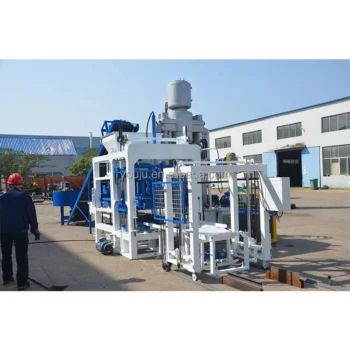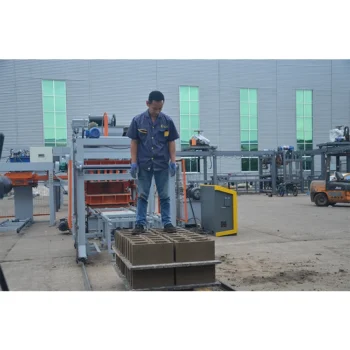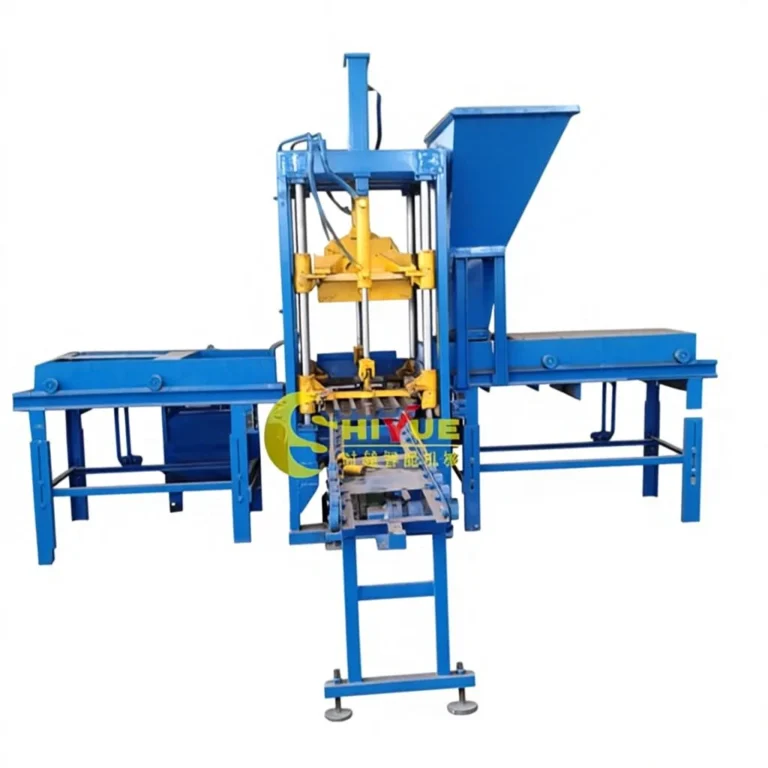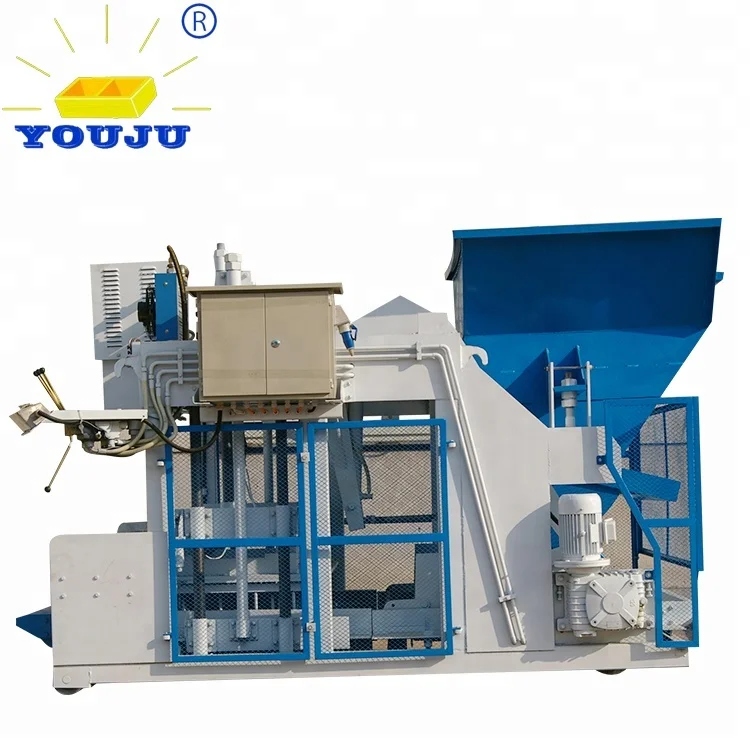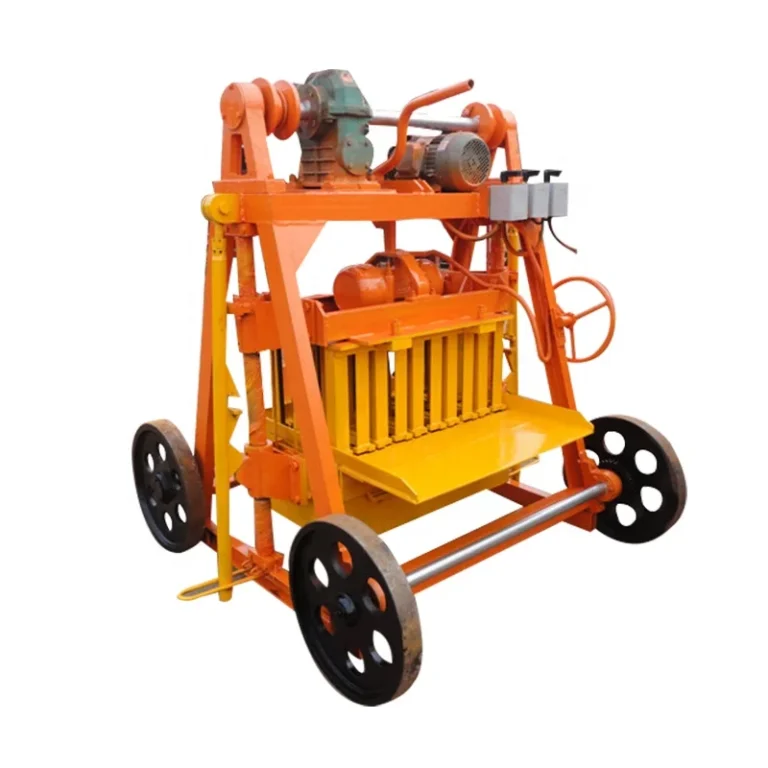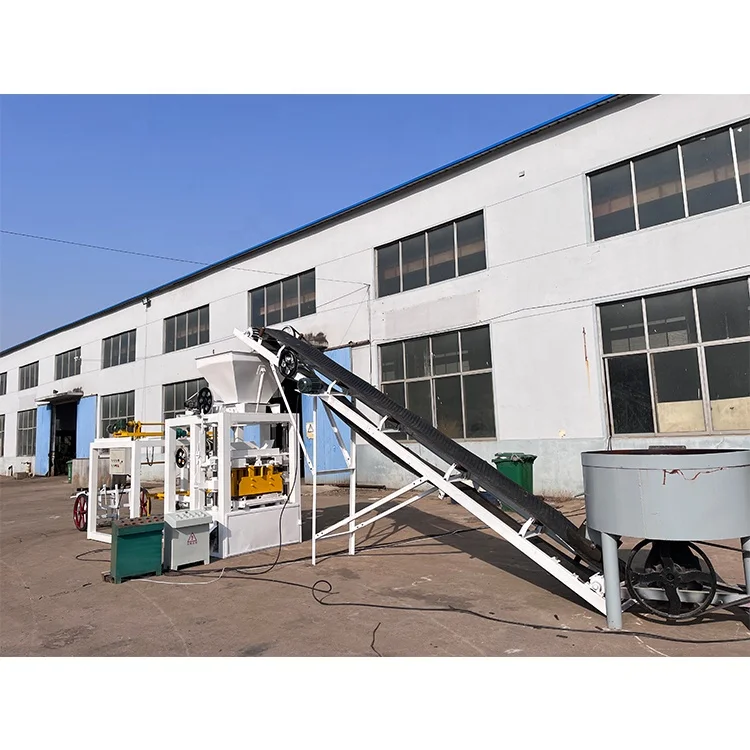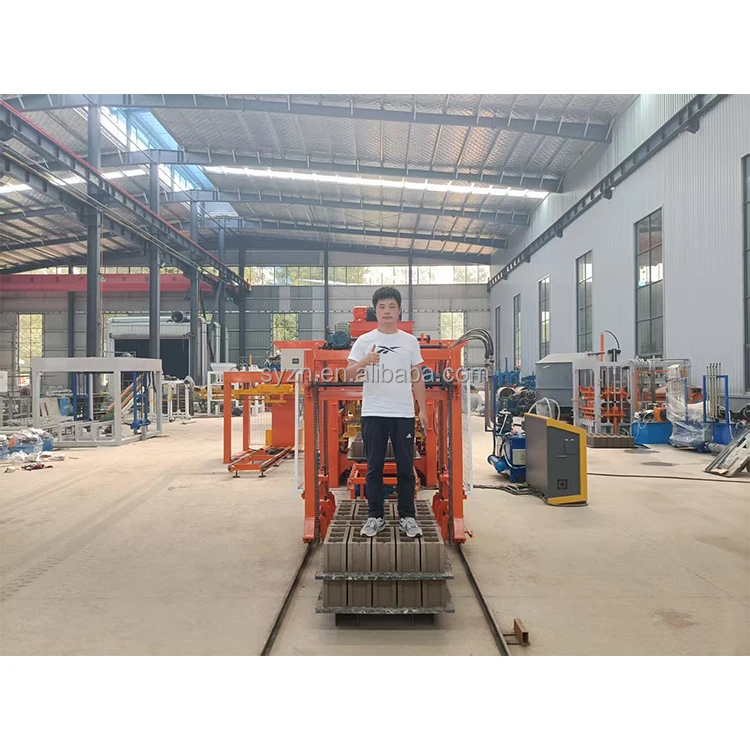
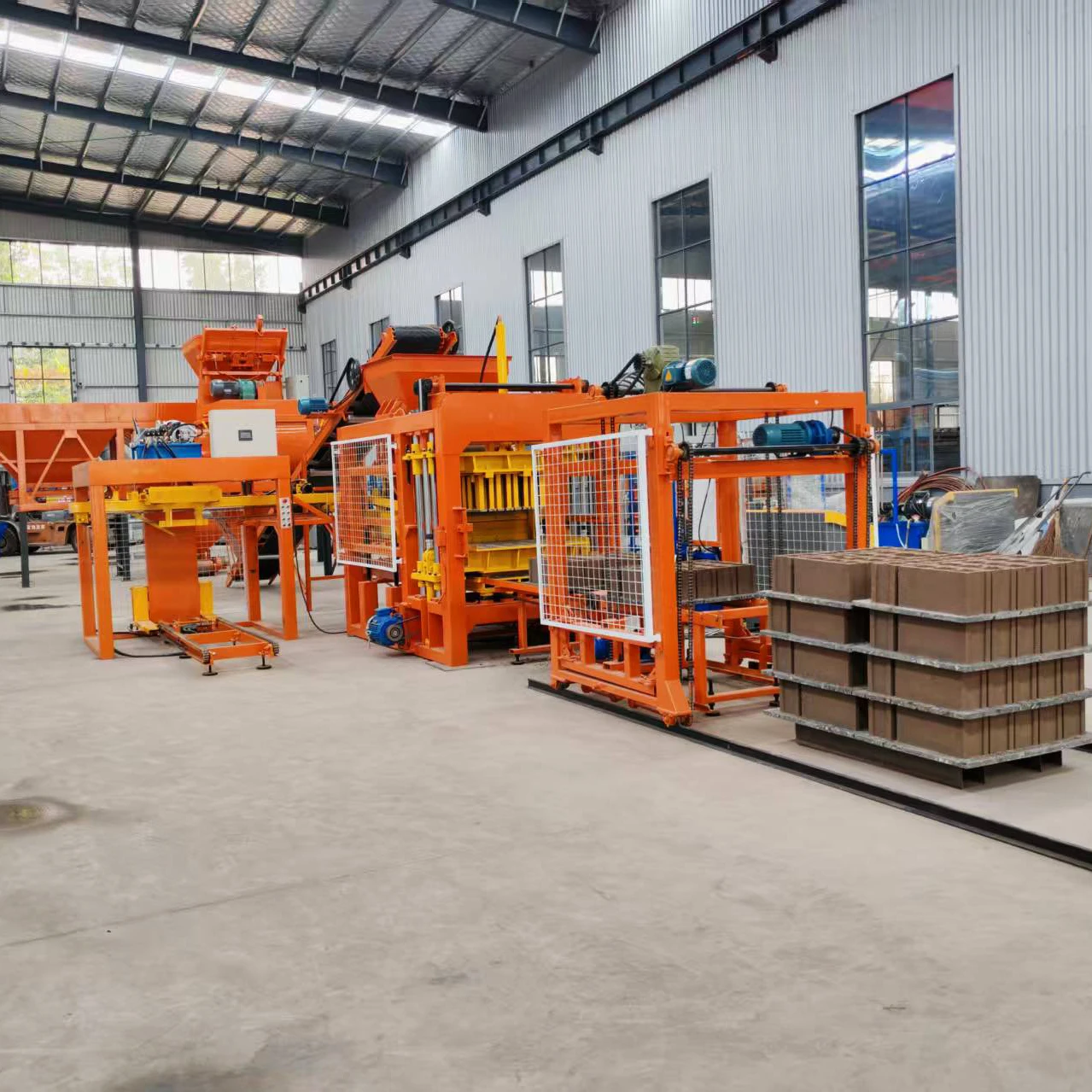
Description
Stocked Configuration Match — QT6-15 units are held as complete sets with standard moulds and pallets, verified against buyer voltage before dispatch to prevent site delays.
Technical Specifications
| Parameter | Value |
|---|---|
| Model | QT6-15 |
| Product Type | Automatic Concrete Block Making Machine |
| Rated Power | 31.25 kW |
| Voltage & Frequency | Configurable to buyer’s local supply (basis to be confirmed) |
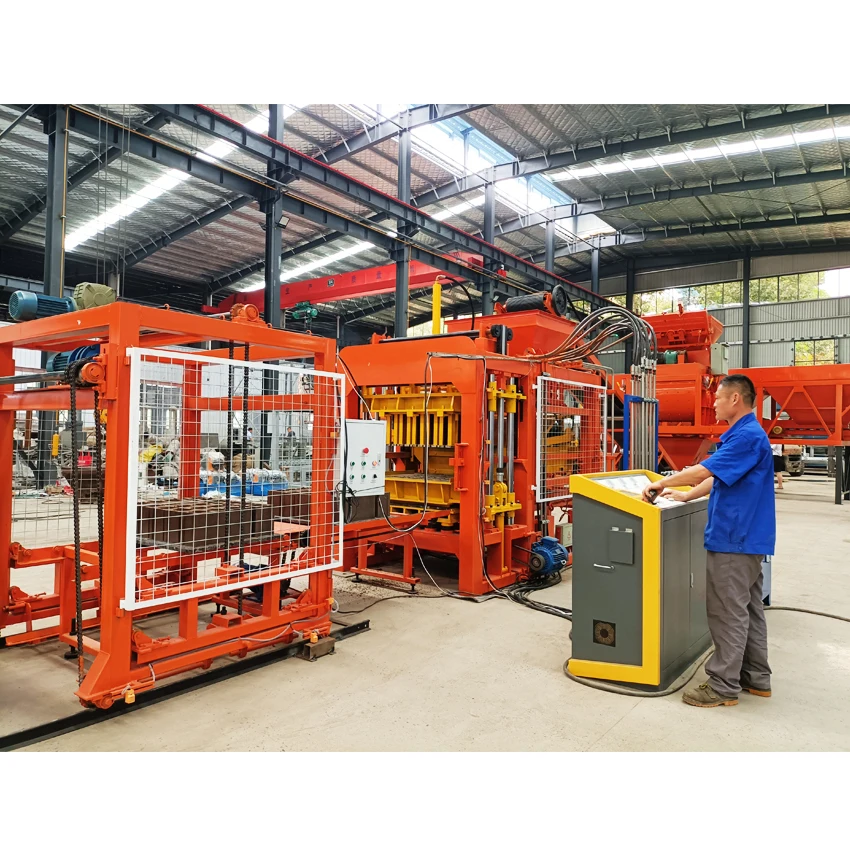
| Control System | PLC (brand and display language to be confirmed) |
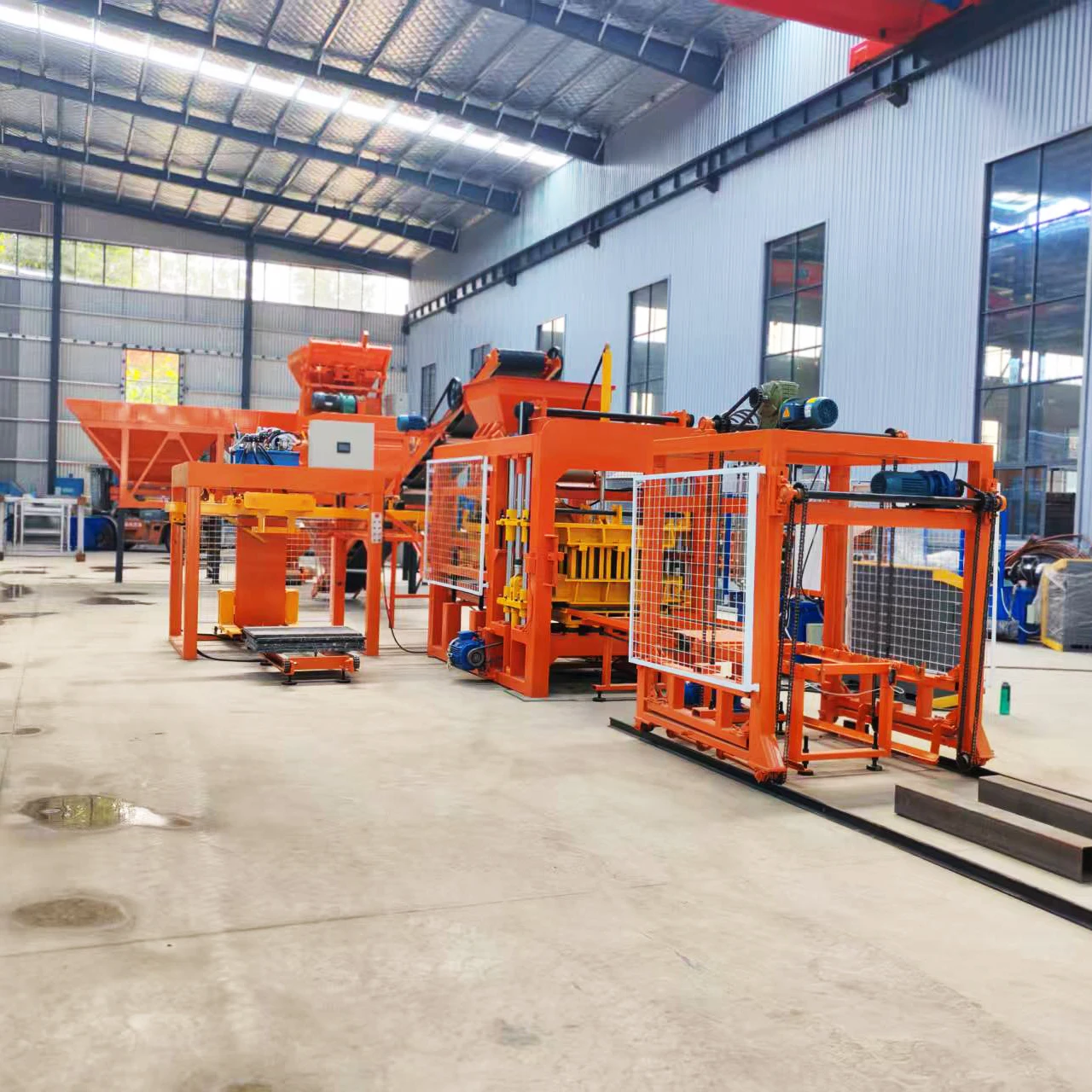
| Overall Dimensions | 7100 × 1500 × 3000 mm |
| Net Weight | 8500 kg |
| Hydraulic Pressure | 16–21 MPa |
| Vibration Form | Platform Vibration |
| Moulding Cycle | 15–20 seconds |
| Pallet Size | 850 × 680 mm |
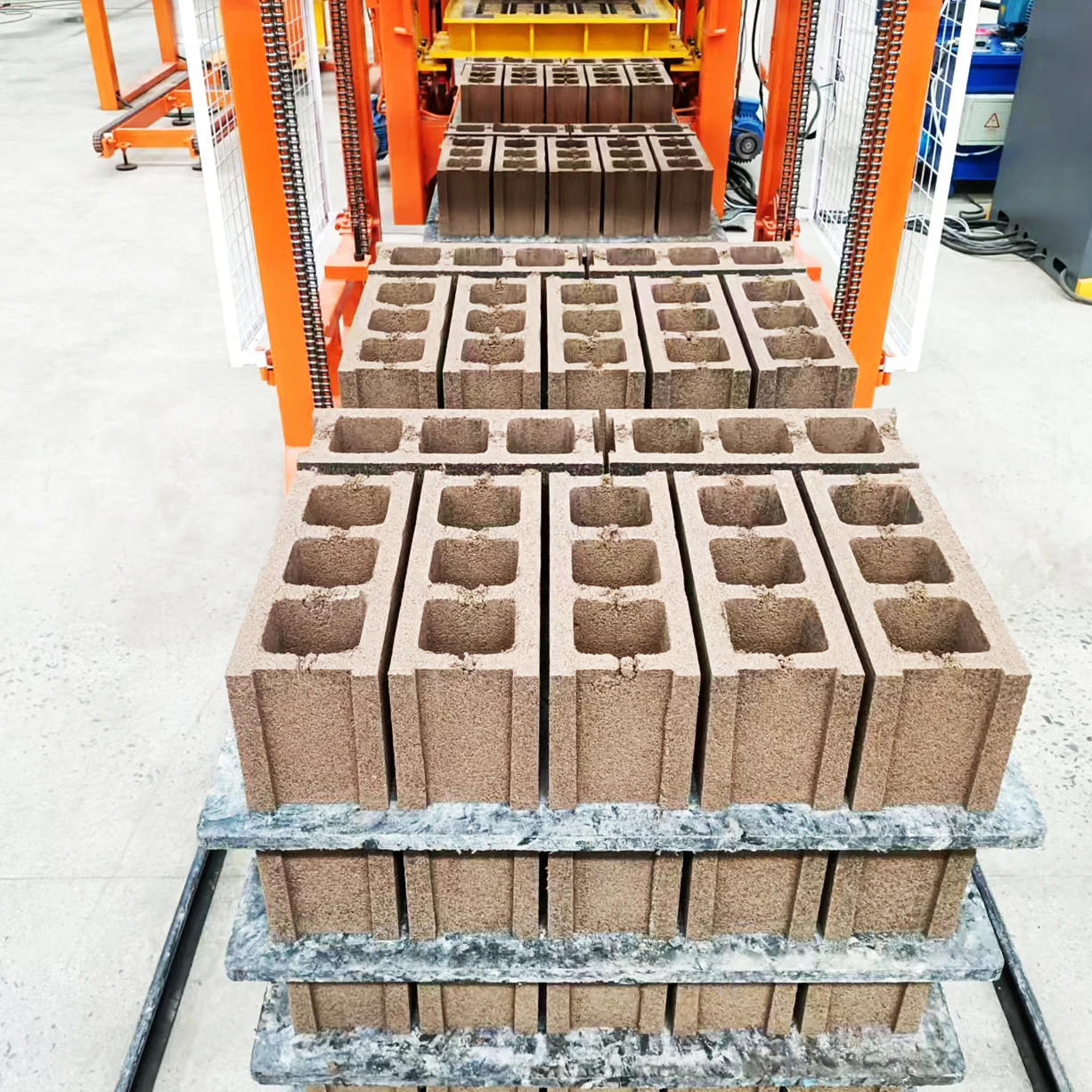
| Output – Hollow Block 400×200×200mm | 8,640 pcs/day (6 pcs/mould) |
| Output – Porous Block 240×115×90mm | 22,400 pcs/day (14 pcs/mould) |
| Output – Standard Block 240×115×53mm | 54,400 pcs/day (30 pcs/mould) |
| Mould Format Options | Hollow, solid, paver, interlocking, curbstone, colored paver |
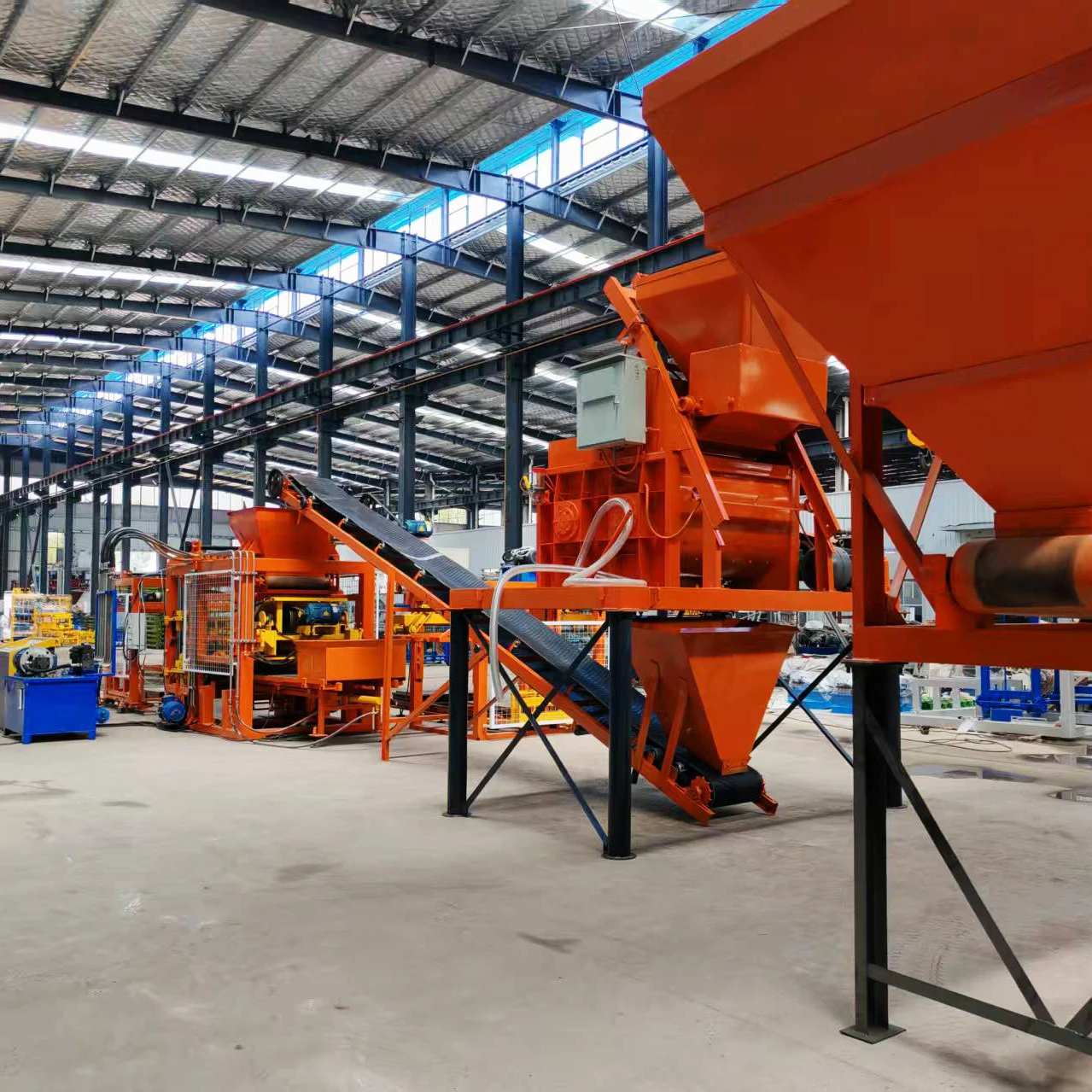
| Raw Materials | Crushed stone, sand, cement, fly ash, gravel, slag, dust |
| Automation Level | Automatic (stacking, pallet feeding and cubing inclusion to be confirmed) |
| CE Declaration | Availability to be confirmed for this model |
Application Suitability
| Application | Material or Output |
|---|---|
| Hollow block production for wall construction | Crushed stone, sand, cement, fly ash mixes |
| Solid block manufacturing for load-bearing structures | Gravel, cement, slag blends |
| Paving block and colored paver runs for roads and walkways | Fine aggregate with pigment dosing |
| Interlocking brick for landscape and retaining walls | Sand-cement mixes with interlocking mould |
| Curbstone production for road edging | High-strength aggregate and cement |
| Porous block for insulation and partition walls | Lightweight aggregate with cement binder |
Why Voltage Confirmation Must Happen Before Loading the Container
A machine that cannot start on arrival is not fast delivery — it is a three-week delay sitting on a project site.
I have stood on a concrete floor in Southeast Asia watching an entire block line sit idle because the motor was wound for the wrong frequency. The QT6-15 automatic block machine in stock fast delivery promise only holds if the electrical configuration matches the destination grid. A 50 Hz motor running on a 60 Hz supply, or the reverse, will either overheat or fail to reach operating speed, and swapping motors on site takes weeks, not hours [NEED_CITE: voltage and frequency standards by export market].
Every QT6-15 unit we hold in stock ships with its nameplate voltage and frequency left open until the buyer confirms. This means the machine is physically ready to dispatch, but the motor winding, transformer taps, and PLC power supply are set only after the buyer’s local electrical standard is verified in writing. For project contractors working to a deadline, this single check removes the most common cause of commissioning failure.
Dispatch Readiness and Container Loading Sequence
The QT6-15 automatic block machine in stock fast delivery advantage rests on how the machine is dismantled and staged before the container arrives. The press frame, hydraulic station, and pallet feeder are separated into distinct lifts, each secured to a timber skid sized for a 40-foot container door opening. Standard moulds and a pallet stack are loaded first against the container wall, creating a brace that prevents the heavier press frame from shifting during sea transit.
This dismantling sequence is not an afterthought. It is planned so that on arrival, the buyer unloads in reverse order: pallets and moulds come off first, then the feeder, and the press frame comes out last and is placed directly onto its foundation. The entire unloading can be completed with a single forklift rated for the 8500 kg net weight of the press.
Stock Positioning and Lead Time Transparency
Buyers on project deadlines cannot absorb the typical multi-week lead times that custom-built lines require. The QT6-15 is held as a stocked model because its 850 × 680 mm pallet format and 15–20 second moulding cycle cover the majority of hollow block, solid block, and paver specifications that regional markets demand [NEED_CITE: common block formats in Southeast Asian and African construction markets]. When a buyer’s target format falls within the standard mould inventory, dispatch follows container booking availability rather than a production schedule.
The arrival estimate is quoted before the order is placed, based on the buyer’s destination port and current shipping rotation. No quotation leaves the desk without a stated dispatch window and a container loading plan that the buyer can share with their site team.
Reading the Specs That Matter on Site
The 16–21 MPa hydraulic pressure range and platform vibration form together determine the density and compressive strength of every block that leaves the mould. Higher pressure within this range suits hollow blocks with thin webs, where the concrete must be compacted tightly to prevent cracking during curing. Lower pressure combined with longer vibration suits porous block formats, where over-compaction would close the voids that give the block its insulating properties.
The 850 × 680 mm pallet size is not arbitrary — it defines the curing rack spacing, the forklift tine width, and the floor area needed for a day’s production. A buyer whose existing curing yard was built around a different pallet dimension will face a choice between re-racking the yard or handling blocks manually off non-standard pallets. This is why pallet size confirmation is part of the dispatch checklist, not an optional extra.
The 31.25 kW rated power requirement means the buyer’s site transformer must supply a dedicated circuit at the confirmed voltage. Sharing a circuit with a batching plant or a welding shop will cause voltage dips that trip the PLC mid-cycle, producing half-formed blocks that must be scrapped [NEED_CITE: electrical supply requirements for hydraulic block presses].
What a Missed Configuration Check Costs on Arrival
A QT6-15 that arrives with the wrong frequency setting does not simply run slowly — the hydraulic pump delivers inconsistent pressure, the vibration motor fails to reach resonance frequency, and blocks come out under-compacted and crumbly. The buyer then waits for a replacement motor to ship internationally while the project crew stands idle and the concrete delivery trucks keep arriving.
Pallet incompatibility is quieter but just as expensive. If the 850 × 680 mm pallets do not match the curing racks already welded on site, every wet block must be hand-lifted onto the rack, adding labour and breakage to every shift. The automation advantage disappears before the first day ends [NEED_CITE: pallet handling mismatches in block production startups].
Why Buyers Source This Model Through This Channel
Block machinery is the single focus here, so the QT6-15 is not sold as a bare press — it is specified as a matched set with mould, pallet, and handling equipment sized to the buyer’s format list. Stocked units carry standard moulds for hollow, solid, paver, interlocking, curbstone, and colored paver formats, reducing the need for a separate mould order.
Configuration is set against the buyer’s actual mix design and local aggregate, not a catalogue default, which means the vibration and pressure settings are adjusted during the factory test to suit the material the buyer will actually feed. The dispatch process includes voltage and frequency written confirmation, factory test records, and a packing photograph set that documents the load plan before the container doors close.
Documentation & Verification
- Factory test record using buyer’s block format and mix proportions before dispatch
- Machine specification sheet confirming voltage, frequency, and PLC display language
- Mould drawing and format list matching stocked moulds included in shipment
- Pallet specification with dimensions and load rating for curing rack compatibility
- Packing photograph set showing container load sequence and securing method
- Hydraulic and electrical schematic for on-site commissioning reference
Installation, Commissioning & Support
- Foundation pad sized to 7100 × 1500 mm footprint with anchor bolt template provided
- Dedicated 31.25 kW circuit at confirmed voltage required before commissioning begins
- Press frame, hydraulic station, and feeder reassembled on site per dismantling sequence
- PLC parameters set to buyer’s confirmed block format and moulding cycle during first run
- Operator training covers mould change procedure and daily hydraulic fluid level check
- Wear parts list and mould maintenance schedule included with shipment
What to Prepare Before Requesting a Quote
To move from inquiry to dispatch without unnecessary back-and-forth, the most useful information a buyer can provide starts with the target block format and daily output requirement. Include the local voltage and frequency at the project site, the available curing area dimensions, and whether a forklift is already on site. If the project has a fixed deadline, state the required arrival date so the shipping rotation can be checked before the quotation is issued.
Frequently Asked Questions
Q: Which QT6-15 configurations and moulds are currently available for immediate dispatch?
A: Standard QT6-15 units are held in stock with moulds for hollow block, solid block, paver, interlocking brick, curbstone, and colored paver formats. Dispatch depends on which mould set the buyer requires and whether the voltage and frequency have been confirmed. Once those two items are verified, the machine is released for container loading.
Q: How is dispatch lead time and arrival estimated before ordering?
A: Lead time is quoted based on container booking availability at the nearest port and the destination shipping rotation. The dispatch window and estimated arrival date are stated in the quotation so the buyer can plan site preparation and crew scheduling around a known timeline rather than an open-ended promise.
Q: Can voltage and frequency be confirmed before dispatch to prevent commissioning delays?
A: Yes. The motor winding, transformer setting, and PLC power supply are configured only after the buyer provides written confirmation of local voltage and frequency. This step is built into the dispatch checklist specifically to prevent the situation where a machine arrives on site and cannot run.
Q: What is the dismantling and loading plan for container shipment?
A: The QT6-15 is separated into the press frame, hydraulic station, and pallet feeder, each secured on timber skids. Moulds and pallets are loaded first against the container wall, and the press frame is placed last for first-off unloading. The plan is documented with packing photographs before the container is sealed.
Q: Which wear parts and spares ship with the machine?
A: Each QT6-15 dispatch includes a wear parts list covering hydraulic seals, vibration springs, and mould liner plates sufficient for initial operation. The exact inventory is confirmed against the buyer’s mould format selection and stated on the packing list included in the customs documentation set.