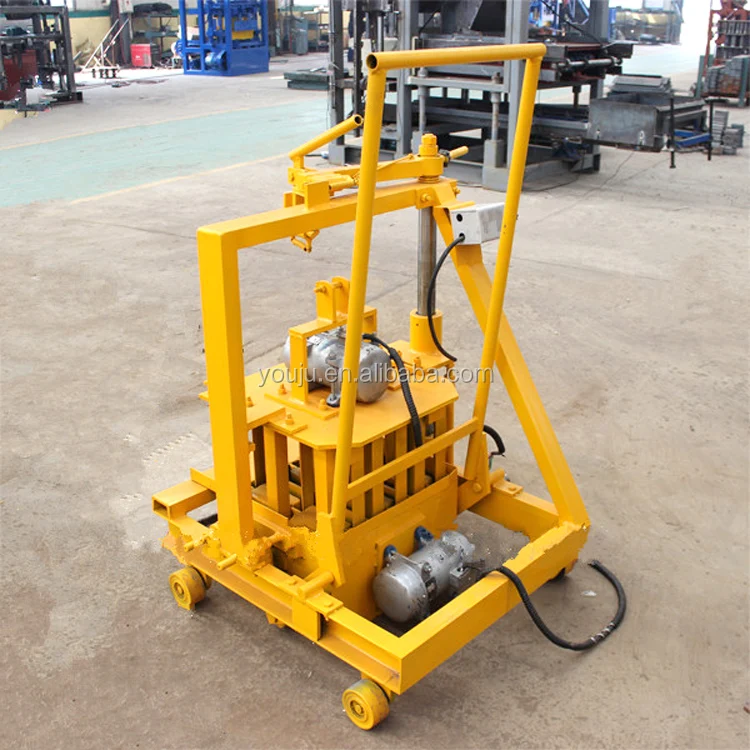
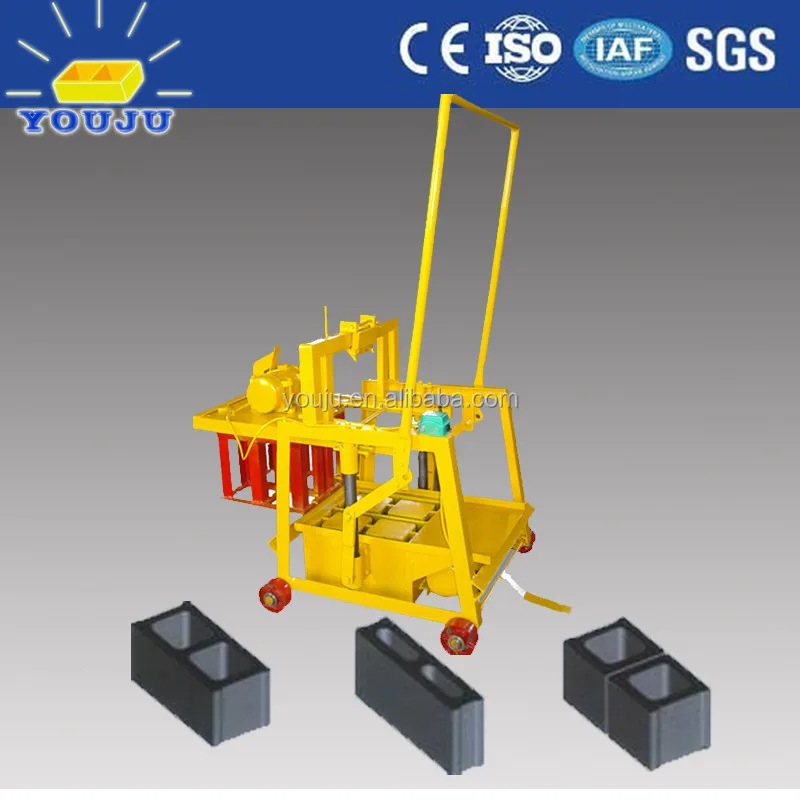
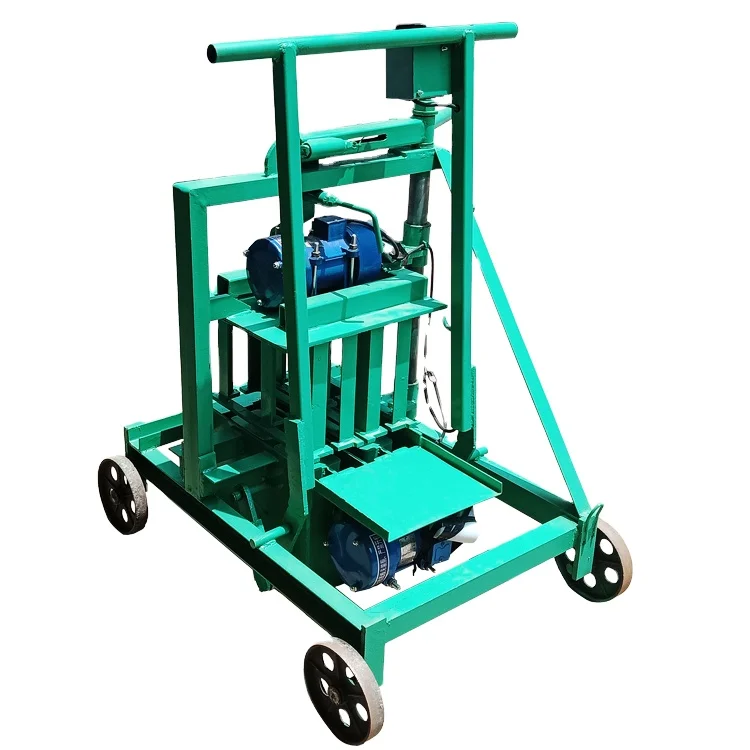
Description
Fast Dispatch Readiness — every QMJ2-45 unit is inventoried and prepared for container loading the moment your project timeline demands it.
Technical Specifications
| Parameter | Value |
|---|---|
| Model | QMJ2-45 |
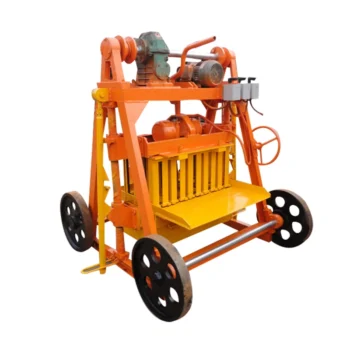
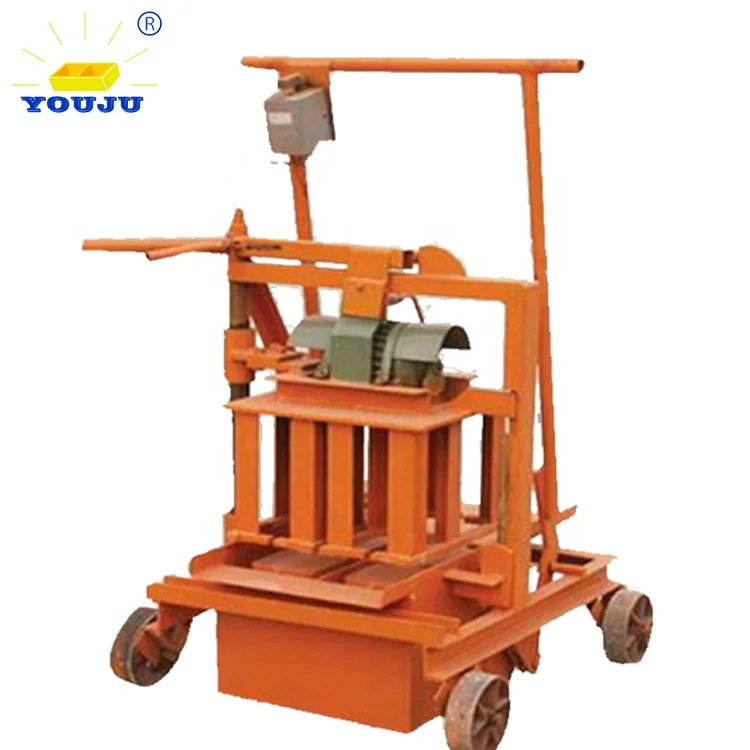
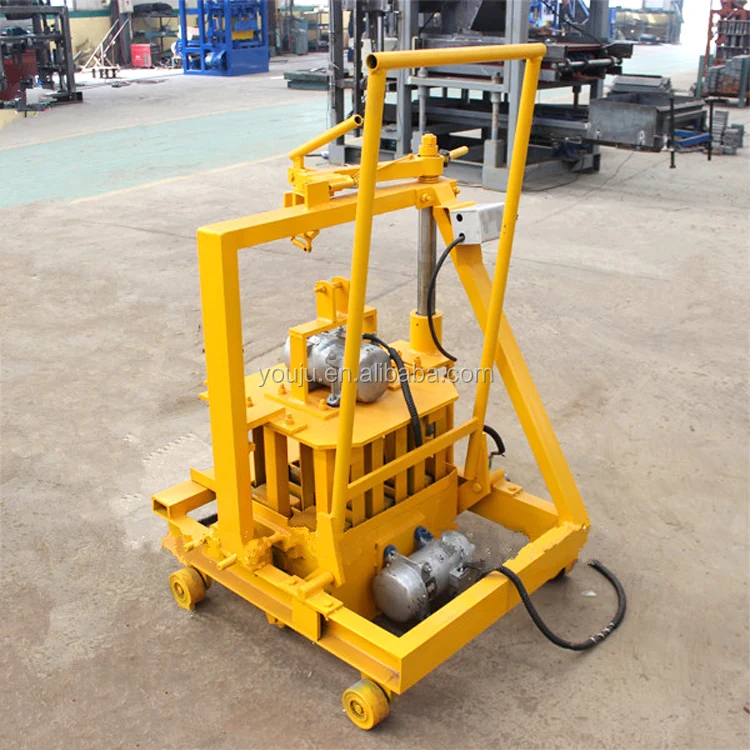
| Product Type | Mobile Block Making Machine |
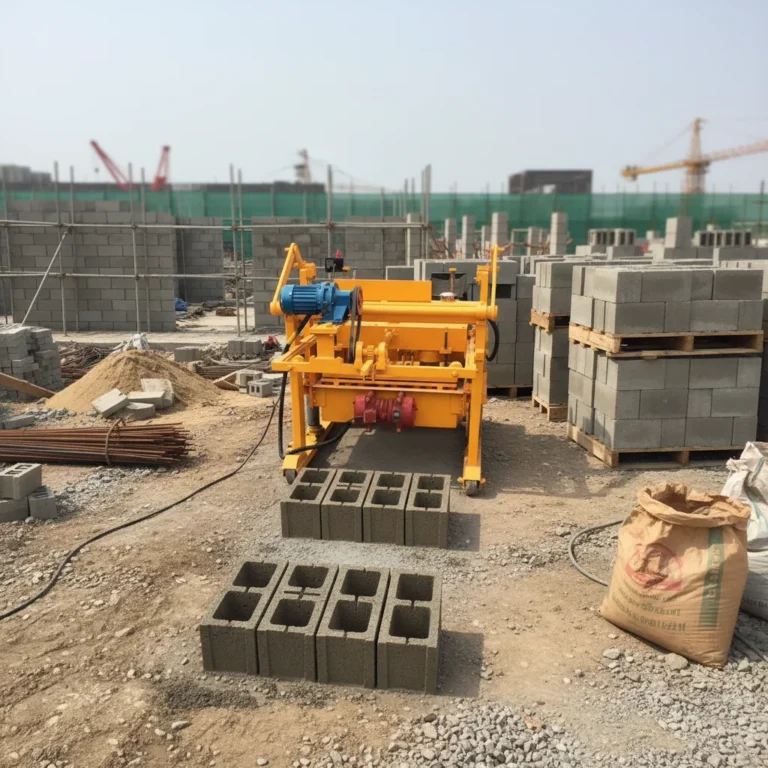
| Operation Type | Manual, egg-laying (no pallets required) |
| Mould Format | Hollow brick (changeable) |
| Cycle Time | 25–30 seconds |
| Output Capacity (400×200×200 mm) | 2 pcs/mould, 160 pcs/hour, 1280 pcs/8hr (basis not stated in source) |
| Output Capacity (400×150×200 mm) | 3 pcs/mould, 240 pcs/hour (source value — verify against manufacturer catalog) |
| Output Capacity (400×100×200 mm) | 4 pcs/mould, 320 pcs/hour, 2560 pcs/8hr (basis not stated in source) |
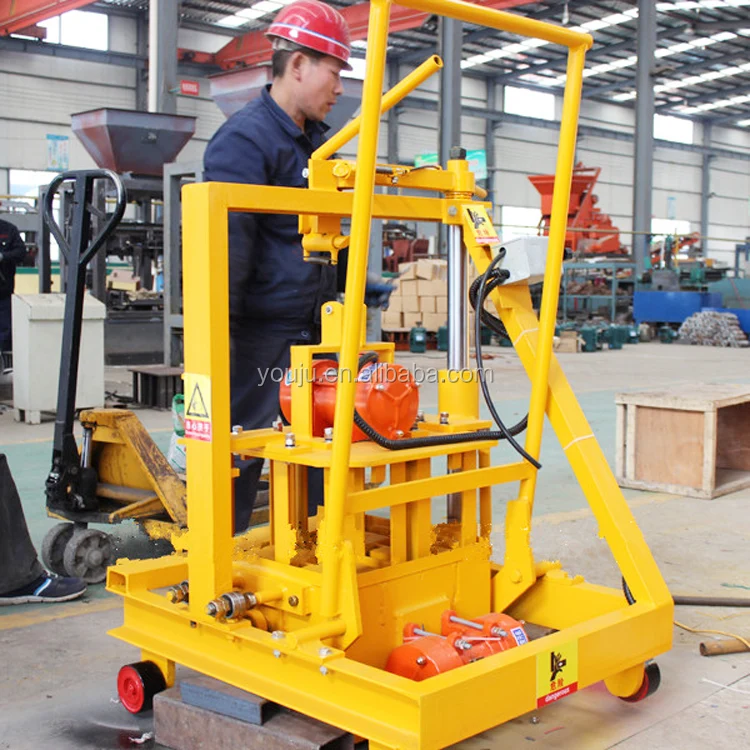
| Labor Requirement | 1 to 3 workers |
| Power Source | Manual operation (no diesel or grid power limit) |
| Pallet Requirement | None — blocks laid directly on ground |
| Standards | ISO 9001:2000, CE |
Application Suitability
| Application | Material or Output |
|---|---|
| On-site construction hollow block production | Crushed stone, sand, cement, and locally available aggregate |
| Remote project sites without reliable grid power | Manual operation independent of electrical infrastructure |
| First-time block plant with minimal investment | Hollow brick formats in 400×200×200, 400×150×200, 400×100×200 mm |
| Small-space contractor yards and urban sites | Egg-laying design requiring no fixed plant footprint |
Why "Ready to Ship" Matters More Than a Brochure Capacity Number
When a block machine arrives weeks after your foundation pour has already started, the daily output figure on the spec sheet becomes irrelevant. The QMJ2-45 mobile block making machine in stock is dispatched from a confirmed inventory position, meaning your container booking aligns with your actual site schedule rather than a factory production queue.
I have watched contractors in the Gulf region lose entire curing cycles because a machine was still "in production" when their formwork was ready. A mobile block machine sitting in a warehouse, inspected and crated, changes that equation entirely. You get a dispatch lead time and an arrival estimate before you commit, not after [NEED_CITE: typical ocean freight transit times from Chinese ports to Middle East destinations].
Dispatch Timing That Matches Your Project Deadline
Stock availability is the entire point of this page. The QMJ2-45 is not built to order on a six-week queue. Units are held in inventory, dismantled for container loading, and paired with standard hollow brick moulds so that the shipment leaves as a complete working package. When you confirm your destination port, the arrival estimate is calculated upfront against current shipping schedules.
Container Loading Without Surprises
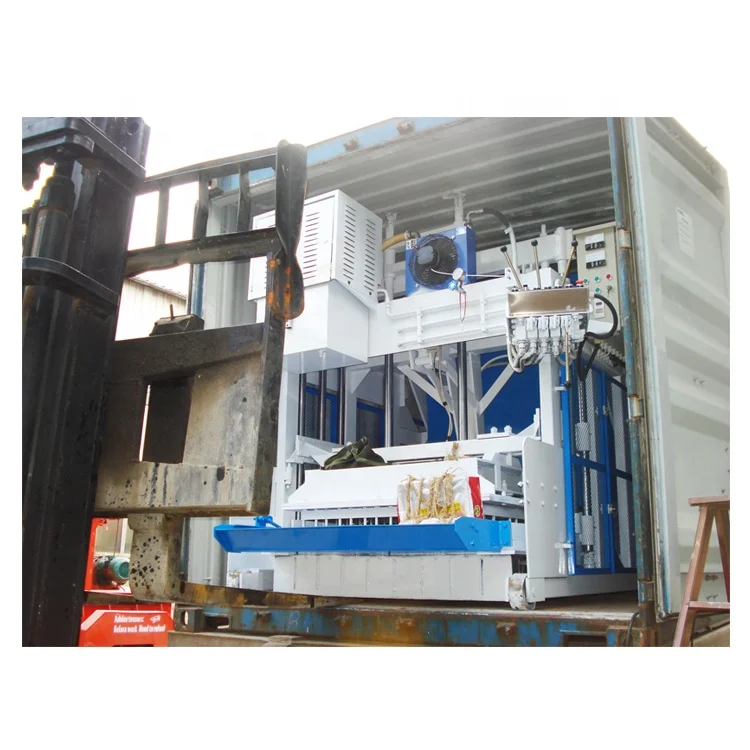
The manual, no-pallet design of the QMJ2-45 keeps the machine footprint compact. Dismantling for shipment is straightforward — the main frame, mould assembly, and vibration components are separated and secured. Packing photographs are taken before the container doors close, so you see exactly how your mobile block making machine in stock was loaded.
Stocked Moulds Mean No Waiting for Custom Tooling
The three standard hollow brick formats — 400×200×200, 400×150×200, and 400×100×200 mm — are stocked alongside the machine. You do not need to wait for a separate mould production run. The moulds ship in the same container, and the changeover on-site requires only basic hand tools.
What the 25–30 Second Cycle Time Actually Depends On
The QMJ2-45 runs a 25–30 second molding cycle, but that number assumes a mix that flows cleanly into the mould cavity and releases without sticking. Local sand with high clay content — common across many Gulf and North African sites — slows the cycle because the operator spends extra time clearing the mould face after each lay. The manual operation means cycle consistency depends entirely on the operator’s rhythm and the mix workability. I have seen crews in Jordan push the cycle faster with a drier mix, only to produce blocks that crumble at the edges [NEED_CITE: effect of aggregate clay content on block compressive strength]. Asking for a local sieve analysis before dispatch lets you adjust the cement-to-aggregate ratio so the 25–30 second cycle holds in practice, not just on paper.
The Hidden Cost of Skipping the Aggregate Check
A mobile block making machine in stock can ship in days, but if the local sand has not been characterized, the machine produces weak blocks that fail site inspection. The egg-laying design places each block directly on the ground surface, which means ground preparation and mix consistency together determine whether the block survives the first 24 hours of curing. Contractors who skip the sieve analysis often blame the machine when the real variable was the material.
Why Power Independence Matters on Remote Sites
The QMJ2-45 requires no electrical connection or diesel generator. For project sites in desert locations or rural development zones where grid power has not yet been extended, this eliminates an entire procurement headache. A crew of one to three workers operates the machine by hand, mixing and feeding the mould manually. The trade-off is throughput — manual operation will never match an automatic press — but for sites producing several hundred hollow blocks per day to keep masons working, the QMJ2-45 fills the gap without capital investment in power infrastructure.
Why Source This Machine Here
Block machinery is the single focus of this operation, which means the QMJ2-45 is specified as a complete working unit — machine, mould, and handling method — rather than assembled from separate catalogue items. The configuration conversation starts with your local aggregate and target block format, not a generic brochure line. Moulds for the formats your market actually sells are stocked or designed to your drawings. Documentation accompanies every shipment, including customs paperwork matched to your import requirements.
Documentation & Verification
- Factory test record confirming cycle time on your specified hollow brick format before dispatch
- Mould drawing and format list for all three standard hollow brick sizes
- Machine specification sheet with confirmed dimensions and weight for freight calculation
- Packing photographs showing container loading and securing method
- Customs documentation support aligned with your destination port requirements
Installation, Commissioning & Support
- No fixed foundation required — the QMJ2-45 operates on any leveled ground surface at your site
- Manual operation means no electrical wiring, dedicated circuit, or generator procurement needed
- Machine arrives dismantled with assembly instructions for reassembly using basic hand tools
- First production run guidance provided to set operator rhythm and mix consistency
- Spare mould list and wear parts catalogue shipped with the machine for future ordering
- Mould changeover procedure documented for switching between the three hollow brick formats on-site
What to Include in Your Inquiry
Send your destination port and the hollow brick format your market demands. Confirm the local aggregate type — river sand, crushed limestone, volcanic scoria — and whether a sieve analysis is available. State your daily block requirement so the output calculation can be matched to your specific format and mix. If your site has any power available at all, mention the voltage and frequency, even though the QMJ2-45 itself is manual, because future expansion to a semi-automatic line would need that data.
Frequently Asked Questions
Q: Which hollow brick formats does the QMJ2-45 produce, and what is the realistic daily output per format?
A: The QMJ2-45 produces three standard hollow brick sizes: 400×200×200 mm (2 pcs/mould), 400×150×200 mm (3 pcs/mould), and 400×100×200 mm (4 pcs/mould). Realistic daily output depends on your mix workability and operator rhythm. The 25–30 second cycle assumes a clean-flowing aggregate. Share your local sand type for a format-specific output estimate.
Q: Is this machine in stock, and what is the dispatch lead time to my port?
A: The QMJ2-45 mobile block making machine in stock is held in inventory and prepared for container loading. Dispatch lead time depends on container availability and your destination port. An arrival estimate is quoted before you place the order, based on current shipping schedules from the loading port.
Q: How is the machine loaded into a container, and what dismantling is required?
A: The QMJ2-45 is dismantled into its main frame, mould assembly, and vibration components for container loading. No heavy cutting or welding is needed for reassembly on-site. Packing photographs are taken before the container is sealed, and the loading plan is shared with you for verification.
Q: What raw materials and mix design does the QMJ2-45 work with?
A: The machine works with crushed stone, sand, cement, and locally available aggregate. Because it is manually operated, mix consistency directly affects cycle time and block quality. Provide a sieve analysis or aggregate photo so the cement ratio can be adjusted to your material before production starts.
Q: What spare moulds and wear parts ship with the machine, and how are replacements supplied?
A: A wear parts list and recommended spare mould catalogue are included with every QMJ2-45 shipment. Replacement moulds and parts are supplied on request with lead times quoted at the time of order. Standard hollow brick format moulds are typically available from stock.