
Description
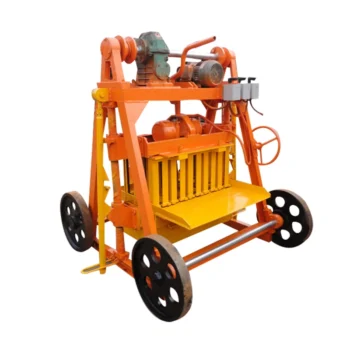
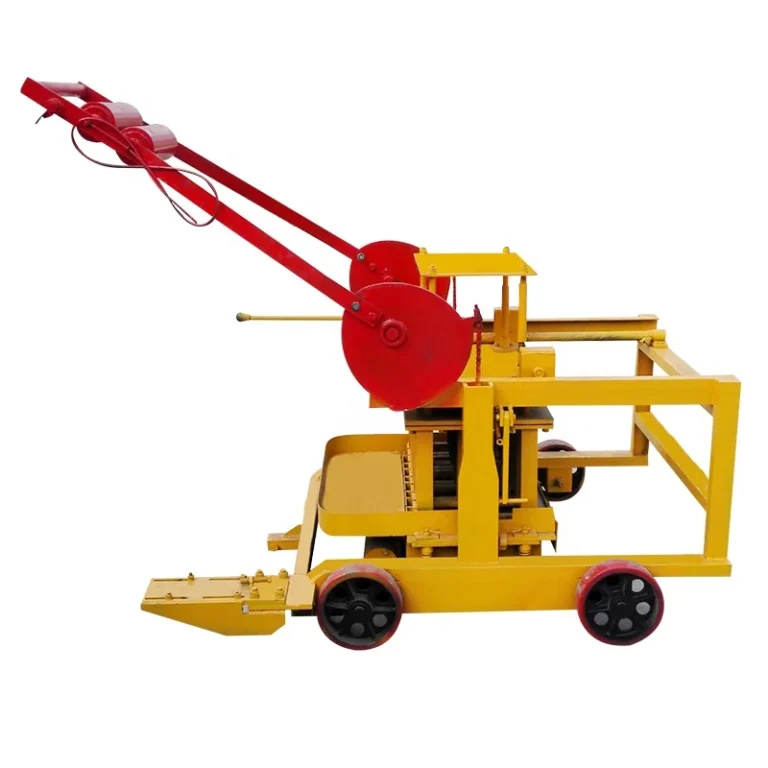
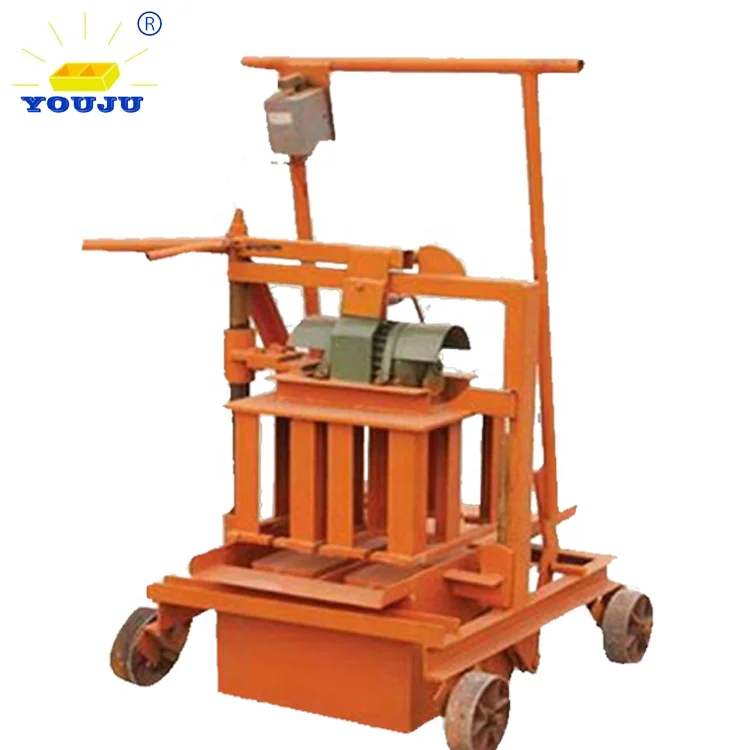
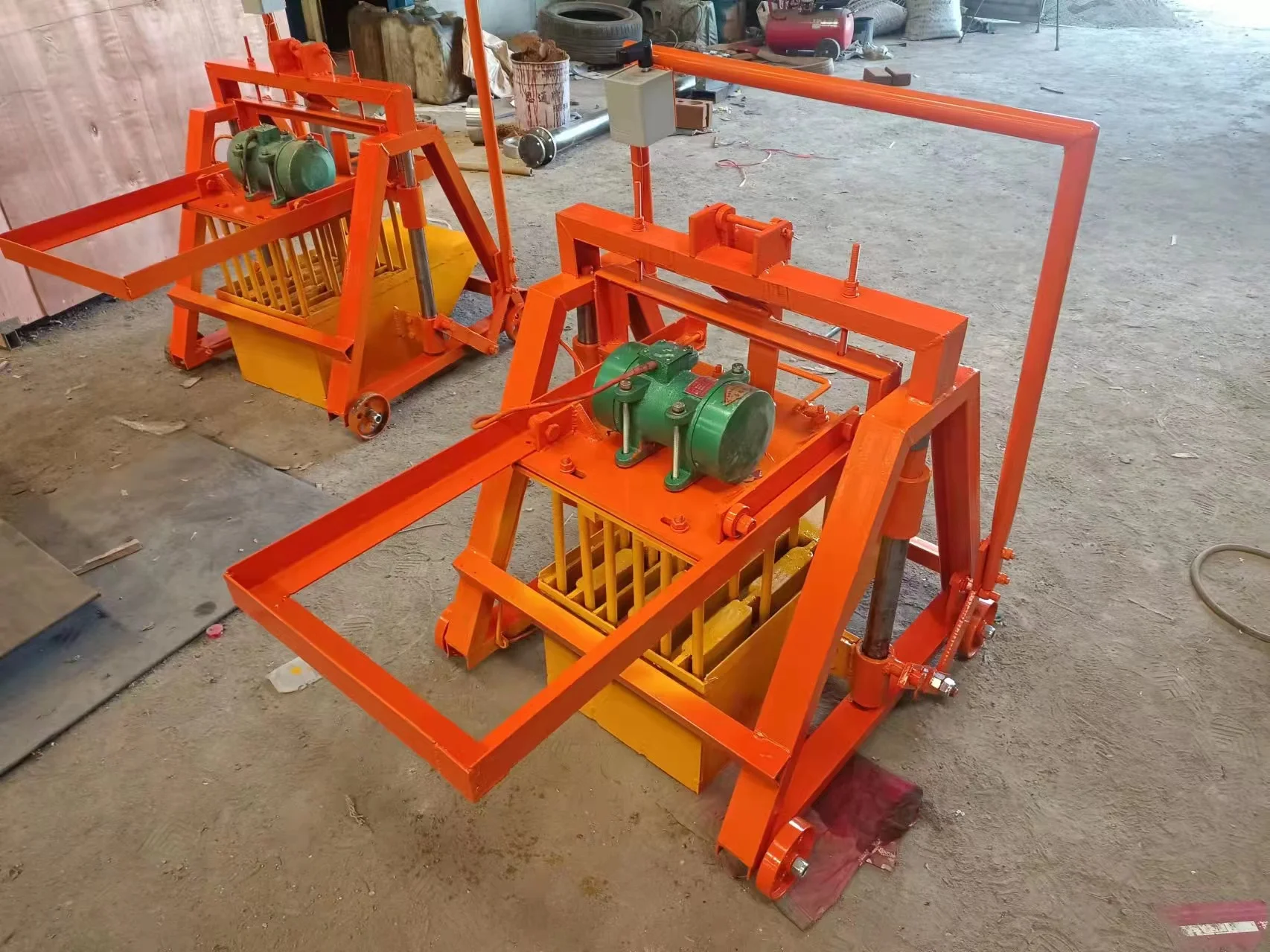
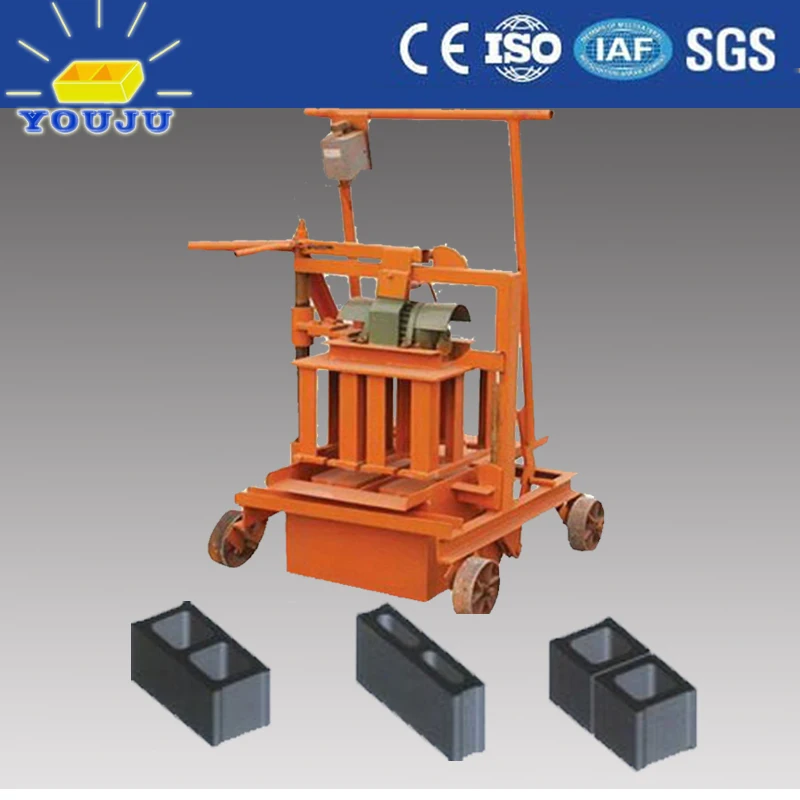
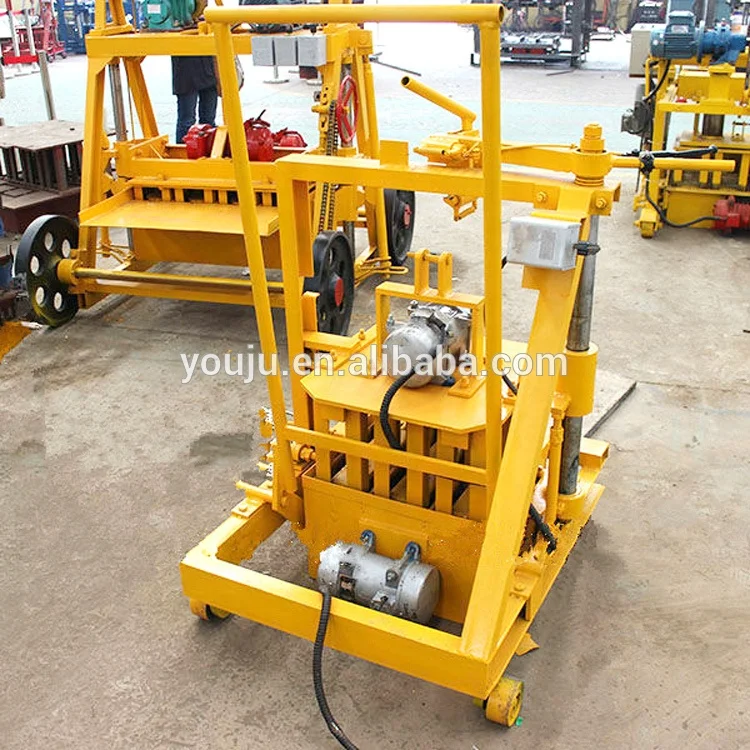
Stocked mobile block press — the QMJ2-45 hand-pushed egg-laying unit sits in our yard dismantled and ready to load, so buyers working against a fixed foundation date can skip the typical multi-week build queue.
Technical Specifications
| Parameter | Value |
|---|---|
| Model | QMJ2-45 |
| Product Type | Mobile Concrete Block Making Machine |
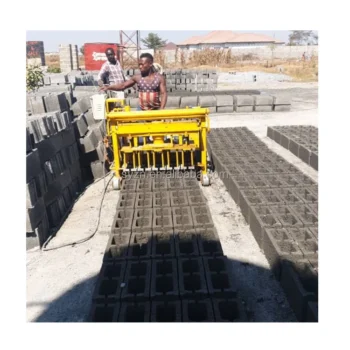
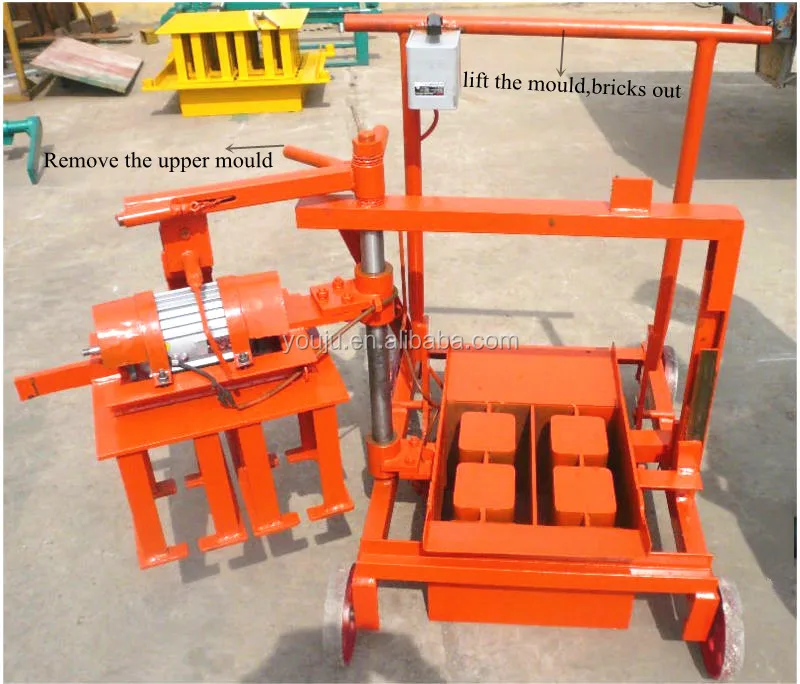
| Operation | Hand-pushed, egg-laying (no pallets required) |
| Cycle Time | 25-30s per mould |
| Hollow Brick 400×200×200mm | 2 pcs/mould, 160 pcs/h, 1280 pcs/8hr |
| Hollow Brick 400×150×200mm | 3 pcs/mould, 240 pcs/h (basis to be confirmed) |
| Hollow Brick 400×100×200mm | 4 pcs/mould, 320 pcs/h, 2560 pcs/8hr |
| Labour Requirement | 1 to 3 workers |
| Mould Heat Treatment | Carburization technology |
| Certification | ISO9001:2000, CE |
Application Suitability
| Application | Material or Output |
|---|---|
| Remote construction site block production | Crushed stone, sand, cement, water |
| Low-investment first block plant | Local aggregate hollow bricks for resale |
| On-site housing project supply | 400×200×200mm and 400×100×200mm hollow formats |
| Small contractor format diversification | Interchangeable moulds across three hollow sizes |
Why the Voltage Question Should Come Before the Dispatch Date
A QMJ2-45 mobile block machine in stock means nothing if it cannot run when the container doors open. Confirm destination voltage and frequency before the machine leaves the yard, not after it arrives.
I have stood on a dirt lot in West Africa watching a contractor lose three weeks of his build schedule because the vibration motor on a hand-pushed mobile unit was wound for a supply standard that did not exist on his site. We had to source a step-down transformer locally while foundation crews sat idle. That delay cost him more than any line-item savings on the equipment itself [NEED_CITE: voltage and frequency standards by export market]. Locking down the electrical specification during the ordering phase is the single most effective way to protect a project start date.
Dispatch Timing and Container Loading
Stock availability changes how a procurement conversation starts. When the QMJ2-45 mobile block machine in stock is already dismantled and staged for loading, the lead time discussion shifts from production scheduling to container booking and transit days. We photograph the machine in its packed state so the buyer has a visual record before the container doors close, and the customs documentation package ships with the unit rather than arriving as an afterthought.
What Arrives on Site and What Does Not
The egg-laying design eliminates the pallet procurement and curing rack infrastructure that delays many fixed-plant installations. Nothing secondary needs to ship alongside the press itself — the operator pushes the unit across the slab, the mould drops, the block cures on the ground. This simplifies the container load and means fewer items can go missing between port and project site.
Mould Cycle Time Across Three Hollow Formats
The 25-30 second cycle time is consistent across all three hollow brick formats, but output per hour varies because the mould cavity count changes with block width. The 400×200×200mm format produces two pieces per cycle while the 400×100×200mm produces four, which directly doubles the hourly figure. The carburization treatment on the mould surfaces extends the interval between replacements, which matters when a remote site has no local machine shop to rework worn tooling.
The Cost of Skipping the Pre-Shipment Checklist
Rushing a dispatch to meet a deadline without confirming the electrical specification, the included mould set, and the packing condition creates problems that only surface when the machine is unpacked. A missing mould format means a second shipment. A voltage mismatch means a local transformer search. A poorly documented packing list means customs holds at the port of entry. Every one of these delays compounds on a project where the foundation crew is already scheduled [NEED_CITE: CE machinery directive requirements for industrial equipment].
Why Buyers Source This Unit Through Us
We treat the QMJ2-45 as a stocked item rather than a build-to-order machine, which means the dispatch conversation is about container availability rather than production slots. Moulds ship matched to the formats the buyer’s local market actually sells, not a default set chosen to fill a catalogue page. Every unit undergoes a factory run before packing, and the test record ships with the documentation so the buyer can verify cycle timing against the stated figures. The carburized mould surfaces mean the first replacement order is further out, reducing early-stage parts logistics. Voltage and control confirmation happens during the order phase, protecting the arrival date [NEED_CITE: typical lead times for mobile block machine export orders].
Documentation & Verification
- Factory test record stating cycle time per hollow brick format before dispatch
- Packing photographs showing machine dismantled and secured for container transit
- Customs documentation package prepared for destination country import requirements
- Voltage and frequency confirmation sheet signed before the unit leaves the yard
Installation, Commissioning & Support
- Level compacted ground required — no fixed foundation or pallet curing racks needed
- Vibration motor power supply must match confirmed voltage and frequency at site
- Machine arrives dismantled; reassembly is bolt-together with basic hand tools
- First production run verifies cycle time and block dimensions against mould specification
- Carburized mould surfaces reduce early wear part orders for remote operations
- Operator training covers mould change sequence and daily vibration motor inspection
Before You Request a Dispatch Date
Send us the destination port, the local voltage and frequency, and which hollow brick formats your site needs first. We will confirm stock position, container loading plan, and an estimated arrival window so your project scheduling can move forward without guesswork.
Frequently Asked Questions
Q: Is the QMJ2-45 currently in stock, and how soon can it ship?
A: Stock position fluctuates, but the QMJ2-45 is a standard stocked model rather than a build-to-order machine. Once voltage, frequency, and mould formats are confirmed, container booking is the primary scheduling factor. We provide a dispatch estimate at the quotation stage so buyers can align their project timelines before committing.
Q: How is the machine packed for ocean freight?
A: The unit is dismantled into its main assemblies and secured for container loading. We photograph the packed state before the container doors close and provide those images to the buyer. This creates a visual dispatch record and helps the receiving team identify components during on-site reassembly.
Q: Which mould formats ship with the machine as standard?
A: The standard configuration includes moulds for the hollow brick formats listed in the specification table. If your local market requires a format outside that range, confirm availability before the order ships. We match the mould set to the buyer’s stated production needs rather than shipping a default assortment.
Q: What happens if the voltage does not match on arrival?
A: This is why we confirm voltage and frequency during the ordering phase, not at dispatch. If a mismatch is discovered, a local transformer becomes necessary before the machine can run, which delays commissioning. Our documentation checklist is designed to prevent this from happening.
Q: What customs documentation do you provide for export?
A: We prepare a documentation package covering commercial invoice, packing list, bill of lading support, and CE declaration where applicable. The specific requirements depend on the destination country, so confirm import documentation needs during the order phase to avoid port delays.