Description
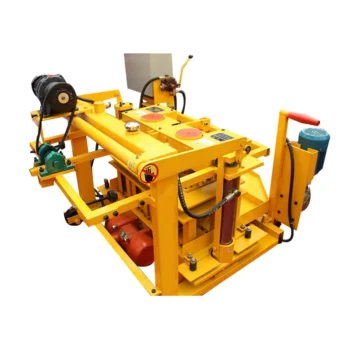
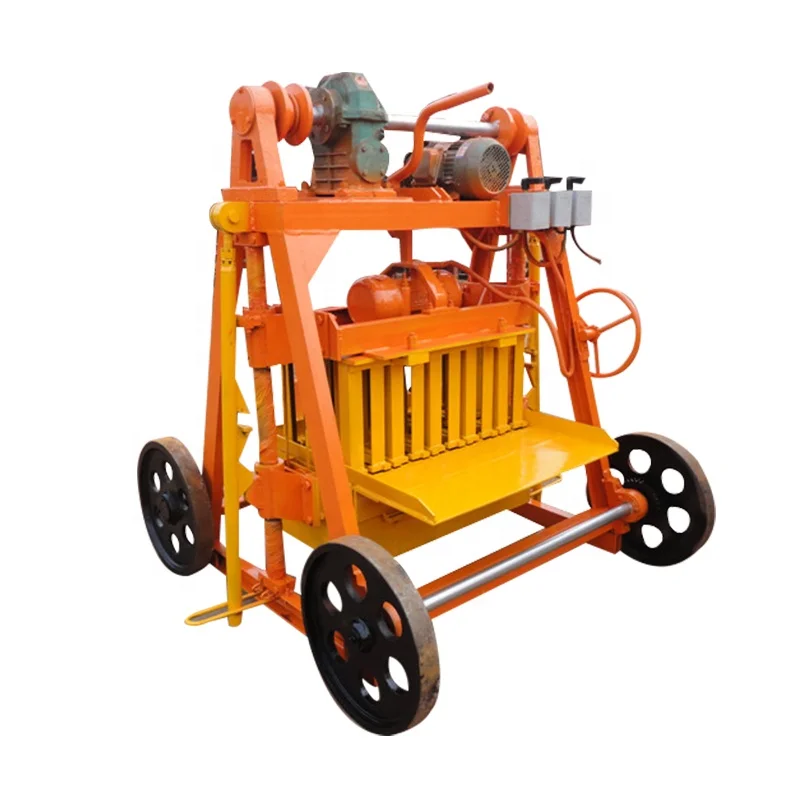
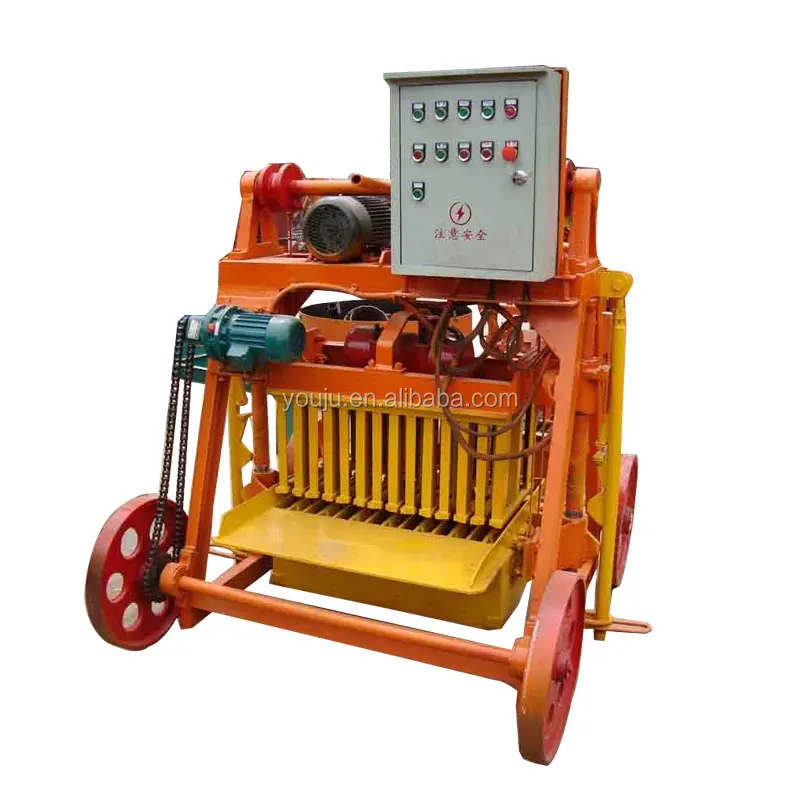
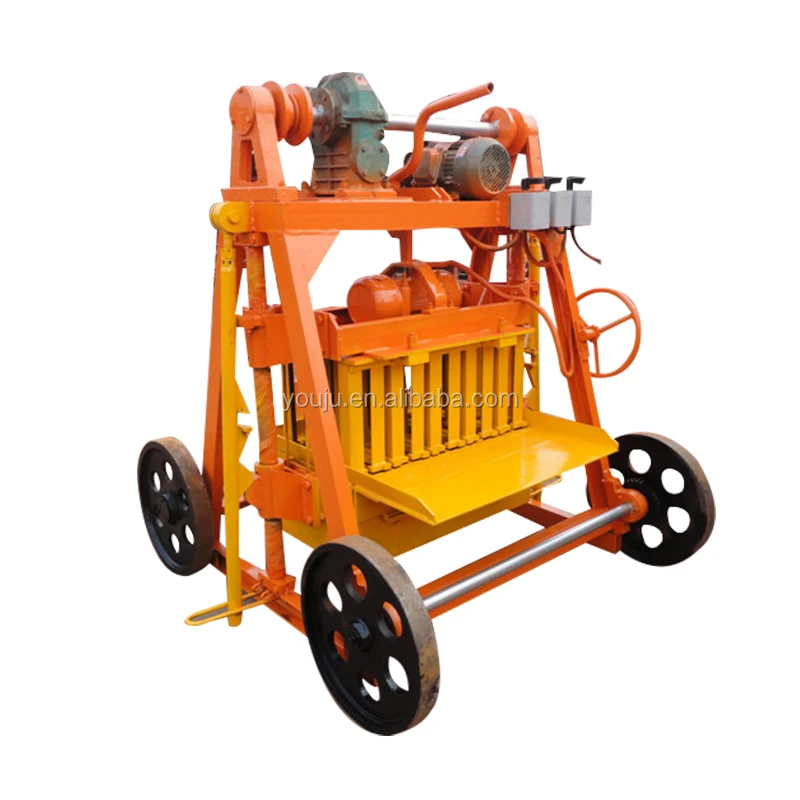
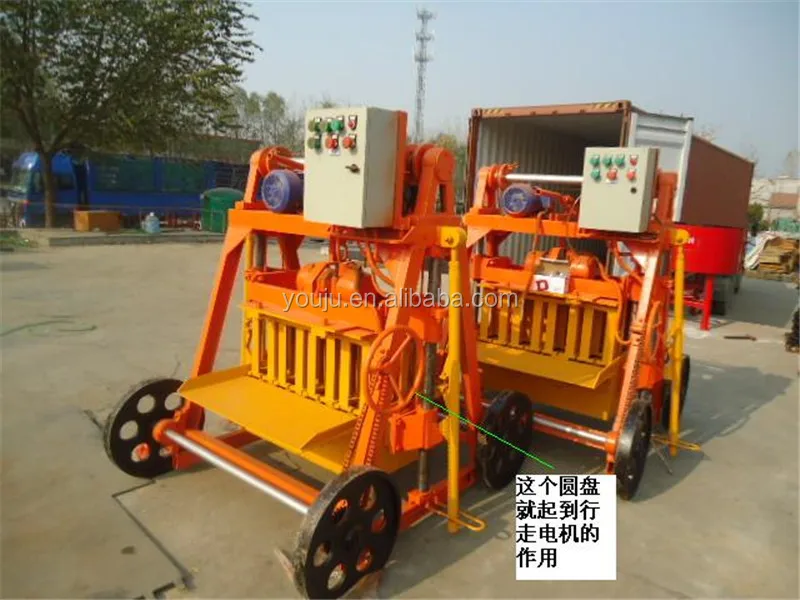
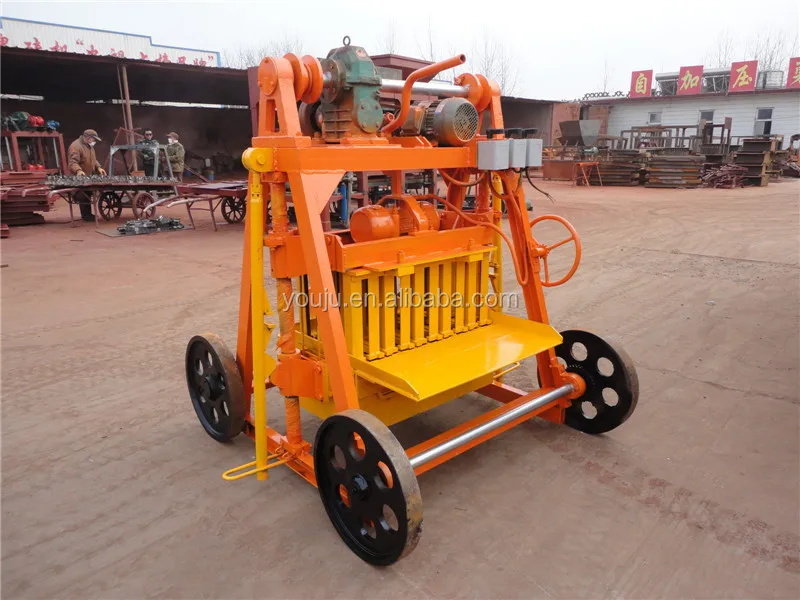
Diesel-Powered Mobility — QMJ4-45 egg laying block machine ships as a standalone mobile unit with engine option, bypassing grid dependency for immediate on-site hollow block production.
Technical Specifications
| Parameter | Value |
|---|---|
| Model | QMJ4-45 |
| Product Type | Egg Laying Block Making Machine |
| Molding Capacity | 4 pcs/mold |
| Vibration Frequency | 2400 r/m |
| Vibration Method | Mold vibration |
| Molding Cycle | 45 s |
| Demold Method | Manual |
| Turning Method | Manual |
| Total Power | 6 kW |
| Power Source | Diesel / Petrol engine |
| Productivity (Hollow block 400×200×200mm) | 3000 pcs/day (8 hours) |
| Productivity (Hollow block 400×150×200mm) | 3500 pcs/day (8 hours) |
| Productivity (Hollow block 400×120×200mm) | 4500 pcs/day (8 hours) |
| Pallet Requirement | None (egg-laying type) |
| Automation Level | Manual operation |
| Assembly State | Standalone mobile unit |
Application Suitability
| Application | Material or Output |
|---|---|
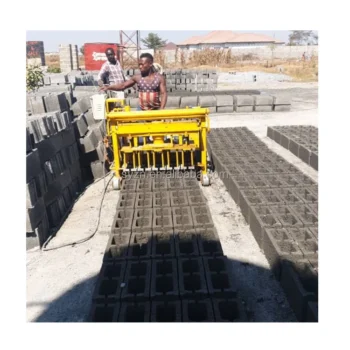
| On-site hollow block production | Crushed stone, river sand, and cement mixes laid directly on compacted ground |
| Small-scale cement block manufacturing | Concrete mixes with local aggregate for residential and farm building projects |
| Mobile brick production without fixed plant | Remote job sites where pallet logistics and curing racks are impractical |
| DIY construction and phased housing | 400×120×200mm to 400×200×200mm hollow formats produced in sequence |
What "Ready to Ship" Actually Means When the Deadline Is Real
A QMJ4-45 egg laying block machine in stock leaves the yard within days, not weeks of production scheduling.
When a housing project falls behind and the contractor suddenly needs blocks on-site, lead time becomes the only specification that matters. I have watched buyers sign contracts based on catalogue output numbers, then wait through a full production cycle because the model they wanted was not built yet. The QMJ4-45 egg laying block machine in stock avoids that gap entirely — the unit is assembled, tested, and waiting for container loading [NEED_CITE: typical dispatch timelines for stocked mobile block machines]. Dispatch lead time, dismantling for shipment, and arrival estimate are all confirmed before the order is placed, so the machine shows up when the project needs it.
Stock Availability and Dispatch Coordination
The QMJ4-45 egg laying block machine in stock is held as a complete standalone mobile unit, not a collection of sub-assemblies waiting for final fitting. Once destination port and shipping route are confirmed, an arrival estimate is quoted upfront so the buyer can align ground preparation with equipment arrival.
Container Loading and Shipment Preparation
The machine is dismantled to fit standard container dimensions, and packing photographs are provided before the container doors close. Engine specifications and voltage configurations are matched to site conditions prior to dispatch, preventing the delay of discovering a mismatch after the unit has already crossed an ocean [NEED_CITE: engine and voltage matching requirements for export machinery].
Reading the Output Figures Without Getting Burned
The specification sheet lists three hollow block formats with daily outputs ranging from 3000 to 4500 pieces over an 8-hour shift. These figures carry a specific basis: each one assumes a particular block dimension (400×200×200mm, 400×150×200mm, or 400×120×200mm) and consistent material feed. A smaller block naturally cycles more units per mold load. The molding cycle of 45 seconds governs the pace, and manual demolding and turning mean operator rhythm directly affects whether the theoretical daily rate holds in practice. Vibration frequency at 2400 r/m provides the compaction force, but the actual block density depends on how well the mix design suits the local aggregate available at the job site.
The Cost of Ignoring Site Conditions Before Dispatch
Mobile machines are often bought for remote locations where adjustments are difficult once production starts. If the diesel or petrol engine specification does not match local fuel availability, the machine sits idle until the right fuel is sourced. Likewise, if the local sand carries high clay content and the mix ratio is not adjusted beforehand, blocks may crumble under minimal pressure — a problem I have seen force a multi-day on-site troubleshooting session that delays an entire construction phase [NEED_CITE: impact of aggregate clay content on block compressive strength]. Confirming raw material samples and engine type before the machine leaves the factory prevents these costly interruptions.
Why Source This Machine From Stock Here
Block machinery is the single focus of this operation, meaning the QMJ4-45 egg laying block machine in stock is specified as a matched system with its mold and power source rather than assembled from mismatched suppliers. Machine configuration is set against the buyer’s actual mix design and target block format. Molds for the formats the buyer’s market requires are designed and supplied, including custom drawings when standard sizes do not fit. Stock dispatch removes the production wait, and installation support with operator training follows arrival.
Documentation & Verification
- Factory test record confirming molding cycle and vibration frequency before dispatch
- Machine specification sheet with output rates stated per block format
- Packing photographs documenting dismantling state and container loading
- Voltage and engine specification confirmation matched to destination site
- Operation and maintenance manual covering manual demold and turning procedures
Installation, Commissioning & Support
- Level compacted ground required as the egg-laying unit produces directly without pallets
- 6 kW total power draw addressed by the onboard diesel or petrol engine, removing grid dependency
- Machine arrives dismantled; reassembly on-site covers mold mounting and engine connection
- First-run block test with local aggregate to verify mix ratio and compaction quality
- Spare mold inventory discussed at order stage so additional formats ship with the machine
Inquiry Direction
To move forward, share the hollow block dimensions your project requires and the daily volume your crew can sustain. Provide a sample or description of your local sand and aggregate so the mix design can be evaluated before dispatch. Confirm whether your site has grid electricity or requires the diesel or petrol engine configuration, and note the destination port for an arrival estimate.
Frequently Asked Questions
Q: How quickly can the QMJ4-45 egg laying block machine in stock ship and what is the estimated arrival?
A: Because the unit is held in stock as a fully assembled mobile machine, dispatch follows container loading confirmation rather than a production schedule. The arrival estimate depends on your destination port and shipping route, both quoted before you commit. This removes the typical multi-week production wait and aligns equipment delivery with your project timeline.
Q: Which block formats and daily outputs are realistic with this mobile machine on my site?
A: The machine produces hollow blocks in 400×200×200mm, 400×150×200mm, and 400×120×200mm formats at documented rates of 3000, 3500, and 4500 pieces per 8-hour shift respectively. Actual daily output depends on your operator rhythm during manual demolding and turning, plus whether your local mix design achieves proper compaction at the 2400 r/m vibration frequency.
Q: Do I need pallets or can I produce directly on the ground with this egg-laying model?
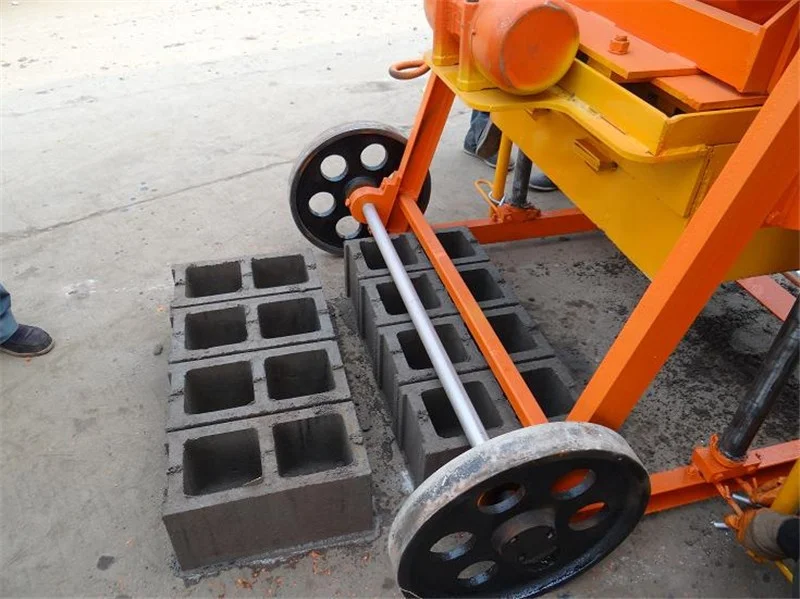
A: This is an egg-laying type machine, meaning it deposits blocks directly onto compacted ground and moves forward to the next position. No pallets are consumed during production, which removes the cost and logistics of pallet handling, storage, and return. Your site ground must be level and firm enough to support freshly molded blocks through initial curing.
Q: What container size is required and how is the machine prepared for shipment?
A: The machine is dismantled to fit standard container dimensions, and packing photographs are shared before loading so you can verify the shipment condition. Mold and engine components are secured separately to prevent transit damage. Container type and loading arrangement are confirmed during the quotation stage based on your order configuration.
Q: Can I order additional molds from stock to produce multiple block formats immediately?
A: Additional molds can be included in the same shipment if they are available in stock at the time of order. Custom mold designs based on your drawings are also possible but require a production window. Discussing your full format list during the inquiry stage ensures everything ships together and your crew can switch formats from day one.