


Description
Dispatch-ready inventory — QMJ4-45 mobile block machines are built and held in stock so container loading can begin within days of order confirmation, not weeks after production starts.
Technical Specifications
| Parameter | Value |
|---|---|
| Model | QMJ4-45 |
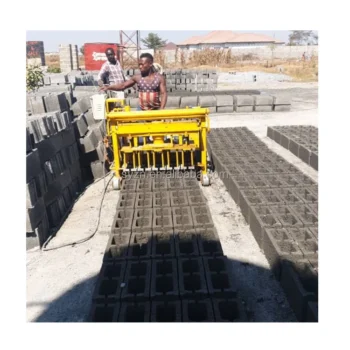
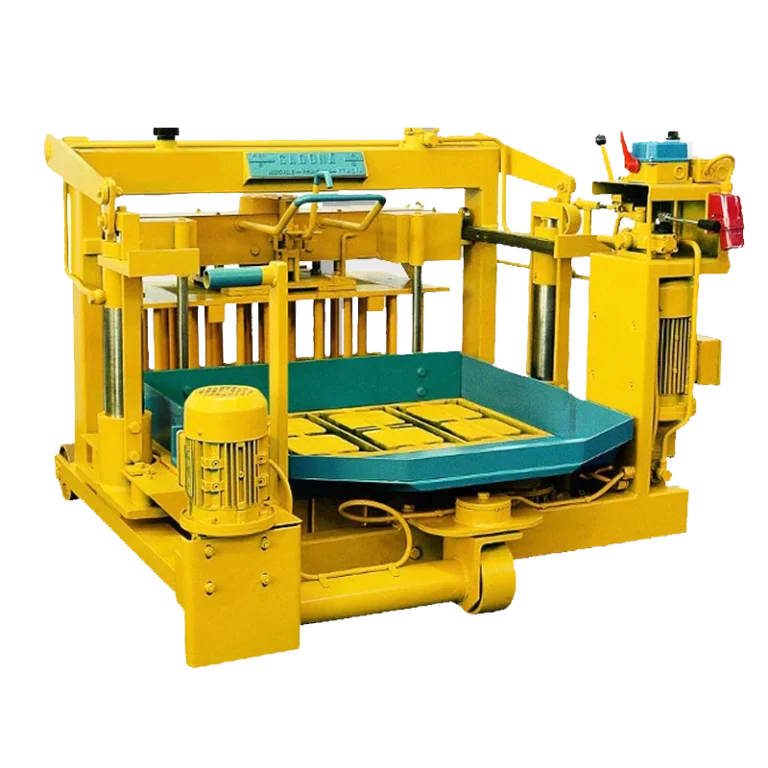
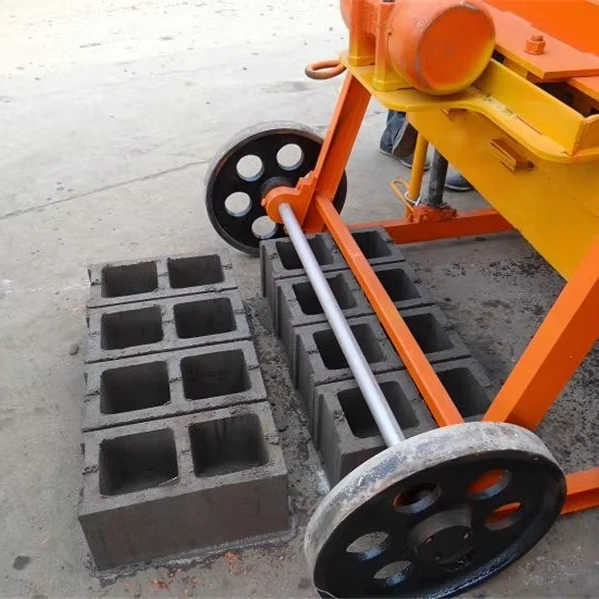
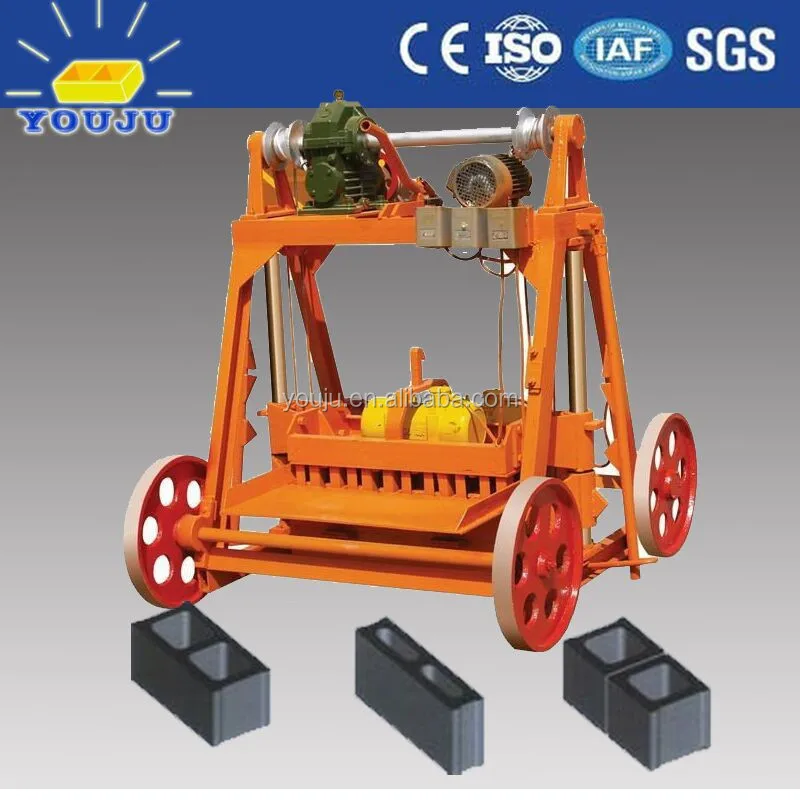
| Product Type | Mobile Egg Laying Block Making Machine |
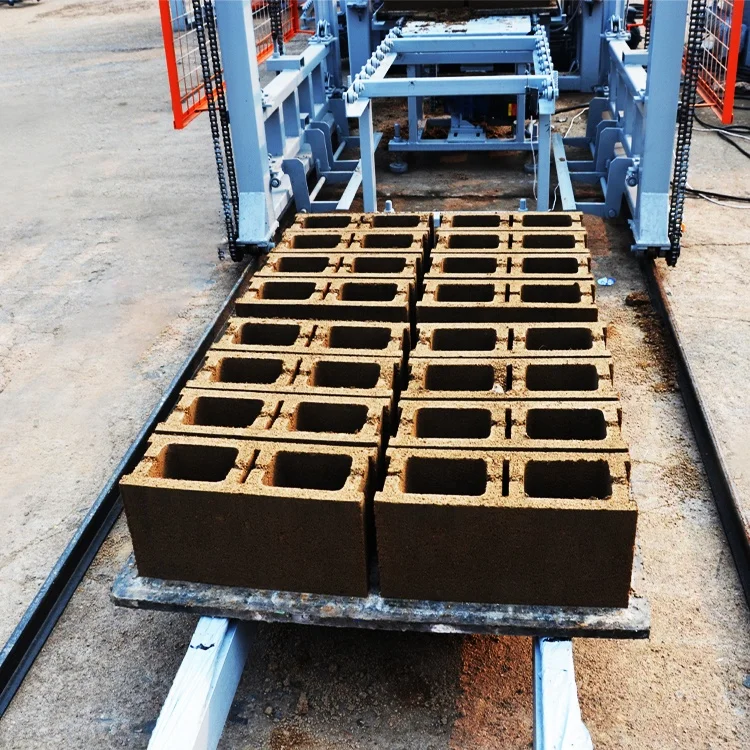
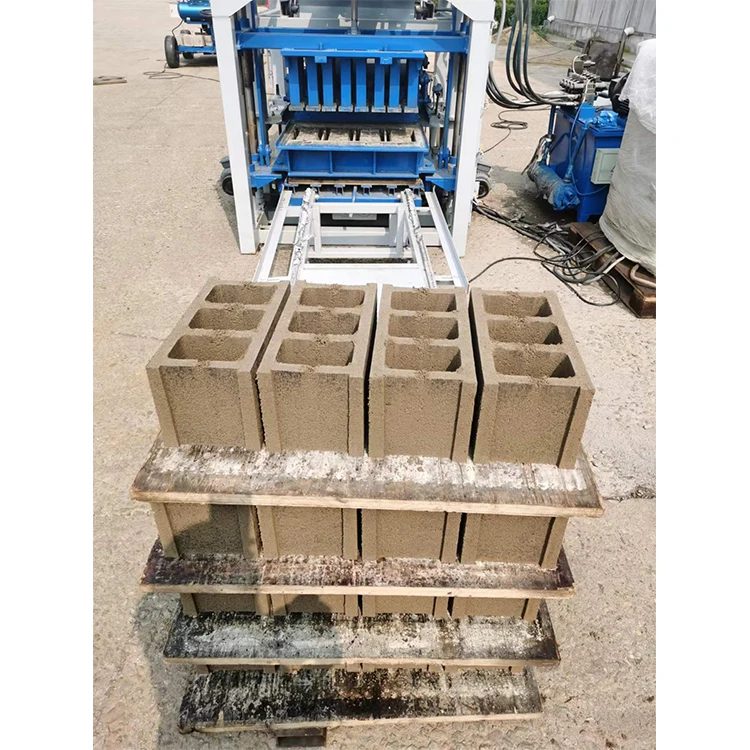
| Molding Capacity | 4 pcs/mould (basis: 400×200×200mm hollow block) |
| Productivity (400×200×200mm hollow block) | 3000 pcs/day (8-hour shift, 4 pcs/mould, 40–45s cycle) |
| Productivity (400×150×200mm hollow block) | 3500 pcs/day (8-hour shift, 5 pcs/mould, 40–45s cycle) |
| Productivity (400×120×200mm hollow block) | 4500 pcs/day (8-hour shift, 6 pcs/mould, 40–45s cycle) |
| Molding Cycle | 40–45 s |
| Vibration Frequency | 2400 r/min |
| Vibration Method | Mold vibration |
| Demolding Method | Manual |
| Turning Method | Manual |
| Total Power | 6 kW |
| Power Source | Diesel / Petrol engine |
| Automation Level | Manual (egg-laying / mobile) |
| Pallet Requirement | None (blocks laid directly on ground) |
| Warranty | One year |
Application Suitability
| Application | Material or Output |
|---|---|
| On-site hollow block production without a fixed plant | Crushed stone, sand, cement, water |
| Small-scale cement block manufacturing at construction sites | Local aggregate mixed with Portland cement |
| Hollow block production in multiple width formats | 200mm, 150mm, and 120mm widths at 400mm length |
| Remote or undeveloped sites with unreliable grid power | Diesel or petrol engine operation independent of electricity |
Why Dispatch Lead Time Matters More Than Catalogue Output
A machine sitting in a warehouse ships this week; a machine built to order ships when the factory finishes.
When your construction milestone is measured in weeks, not quarters, the difference between a stocked unit and a production queue is the difference between laying blocks on schedule and paying a crew to wait. Many suppliers quote output figures without stating which block format those numbers assume, so a buyer expecting 4500 pieces daily discovers after arrival that the real throughput depends entirely on the mould installed. The QMJ4-45 mobile block machine in stock fast delivery avoids that gap because the dispatch window is confirmed before the deposit clears, not after. Capacity claims only hold weight when the block format, shift length, and cycle time are all stated together [NEED_CITE: block output calculation standards by format and cycle time].
Stocked Models Mean Predictable Timelines
Buyers working against a project deadline cannot absorb production delays on top of ocean transit. The QMJ4-45 mobile block machine in stock fast delivery is held as a complete unit with standard hollow block moulds, so the gap between order confirmation and container loading stays short. This matters most for contractors who have already scheduled a crew and a curing area at the job site and need the press to arrive within the project window rather than an open-ended estimate.
Container Loading and Dismantling for Shipment
Mobile egg-laying machines must be partially dismantled to fit standard container dimensions, and how that dismantling is done affects reassembly time at destination. The QMJ4-45 is broken down into its main frame, vibration assembly, and engine unit, with each component secured against transit movement. Packing photographs and a loading plan are provided before the container doors close, so the receiving team knows exactly what to expect and in what order to reassemble [NEED_CITE: container loading standards for mobile construction machinery].
What the Engine-Powered Design Removes from Site Planning
Grid electricity is not available at every job site, especially in early-stage development areas or rural construction zones. The diesel or petrol engine power source on this machine means production starts the day the unit is reassembled, without waiting for a temporary power connection or a generator rental. Total power draw sits at 6 kW, which the onboard engine covers entirely, removing electrical infrastructure from the critical path.
Reading the Capacity Table Without Surprises
Output figures for the QMJ4-45 are tied directly to the block format being produced. At 3000 pieces per day for 400×200×200mm hollow blocks, the cycle runs at 40–45 seconds with four blocks per mould. Switch to the 120mm width and the same cycle produces six blocks per mould, raising daily output to 4500 pieces in an eight-hour shift. The vibration frequency of 2400 r/min is applied through the mould itself, compacting the mix around the core pins without requiring a separate hydraulic press system. Manual demolding and turning keep the mechanical complexity low, which means fewer components to maintain on a remote site where spare parts logistics are difficult.
When the Wrong Dispatch Assumption Costs Weeks
Ordering a machine with a lead time quoted as "to be confirmed" can push a construction start date past a penalty clause in the main contract. Buyers who selected a supplier based on a lower unit price have discovered that a production backlog added weeks to the timeline, and the cost of idle labour on site exceeded the machine price difference many times over [NEED_CITE: construction project delay cost factors]. Confirming dispatch availability before placing the order removes that variable from the project schedule entirely.
Why Buyers Source the QMJ4-45 From This Facility
Block machinery is the single production focus here, so the QMJ4-45 is not assembled from components sourced across unrelated product lines. Every stocked unit ships with the mould, engine, and vibration system matched as one package rather than pieced together from separate suppliers. Configuration is checked against the buyer’s target block format and local aggregate before dispatch, not left as a catalogue default. Moulds for the specific hollow block widths the buyer’s market requires are included or ordered alongside the machine so production starts in the correct format on day one. Installation guidance covers reassembly, engine commissioning, and first-run mould adjustment so the operator is producing blocks within the first shift.
Documentation & Verification
- Factory test record showing cycle time on your specified hollow block format before dispatch
- Container loading photographs and dismantling sequence provided before shipment leaves the yard
- Machine specification sheet confirming engine type, total power, and vibration frequency
- Operation and maintenance manual covering daily checks, mould change procedure, and engine service intervals
- Customs documentation support for the destination country’s import requirements
Installation, Commissioning & Support
- Level compacted ground required as working surface since the QMJ4-45 lays blocks directly without pallets
- No electrical connection needed when the diesel or petrol engine is specified as the power source
- Main frame, vibration assembly, and engine unit reassembled on site in a single working shift
- First-run mould adjustment and cycle timing verified with the buyer’s local aggregate mix
- Operator training covers manual demolding rhythm, turning sequence, and engine maintenance schedule
- Wear parts list provided at delivery so replacement moulds and vibration components can be ordered before they are needed
What to Include With Your Inquiry
Provide the hollow block width or widths your market requires so the correct mould is loaded or packed alongside the machine. State the destination port and whether your site has any access restrictions for container unloading. Confirm the block format and daily volume you need to hit so the output table can be cross-checked against your project timeline before the order is finalized.
Frequently Asked Questions
Q: What block formats does the QMJ4-45 produce, and what is the daily output for each?
A: The QMJ4-45 produces hollow blocks at 400mm length in three widths. For 400×200×200mm blocks, output reaches 3000 pieces in an eight-hour shift at 40–45 second cycles. The 400×150×200mm format yields 3500 pieces per shift, and the 400×120×200mm format produces 4500 pieces. Each figure assumes four, five, or six blocks per mould respectively.
Q: What is the dispatch lead time, and how is the machine packed for container shipment?
A: Stocked QMJ4-45 units are available for dispatch within days of order confirmation. The machine is partially dismantled into its main frame, vibration assembly, and engine unit for container loading. Packing photographs and a loading plan are shared before the container is sealed so the receiving team can plan reassembly.
Q: Can the QMJ4-45 operate on diesel engine only, without grid electricity at the site?
A: Yes. The QMJ4-45 mobile block machine in stock fast delivery is powered by a diesel or petrol engine rated at 6 kW total. This allows production on sites with no grid connection or unreliable electricity. The engine drives the vibration system and all machine functions independently.
Q: Are moulds for different hollow block widths included or ordered separately?
A: The standard mould is included with the machine. Additional moulds for other hollow block widths within the 400mm length range can be ordered alongside the machine or added later. Each mould is matched to the QMJ4-45 vibration frequency and manual demolding system.