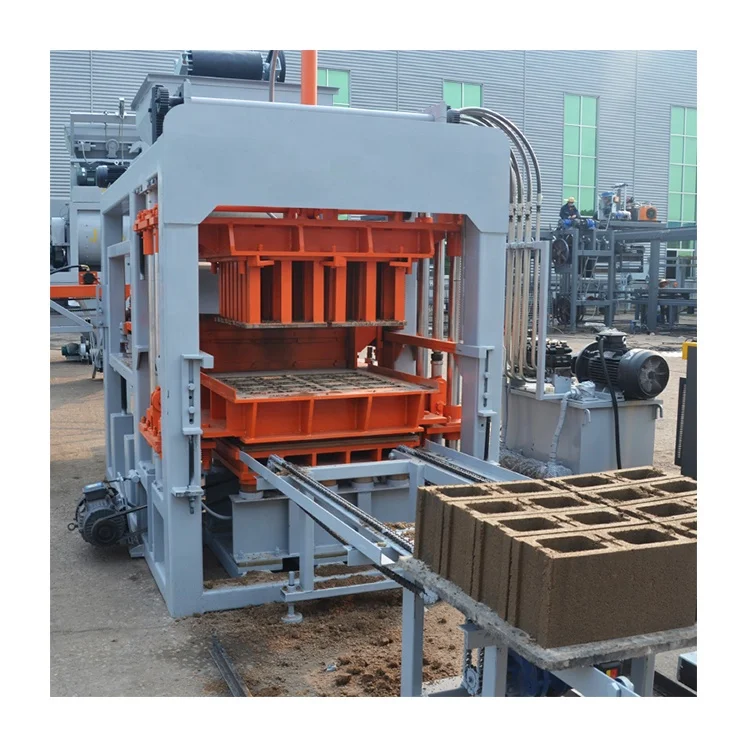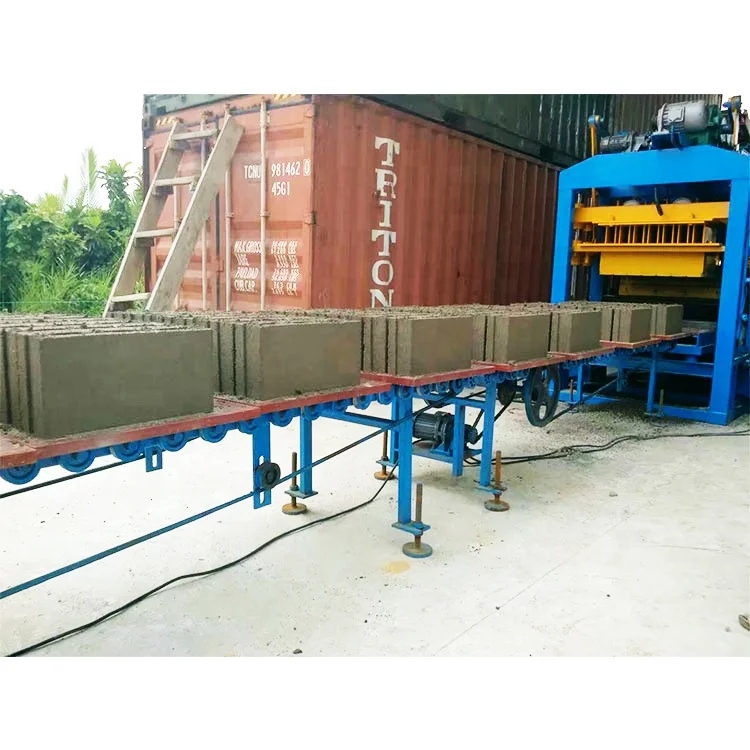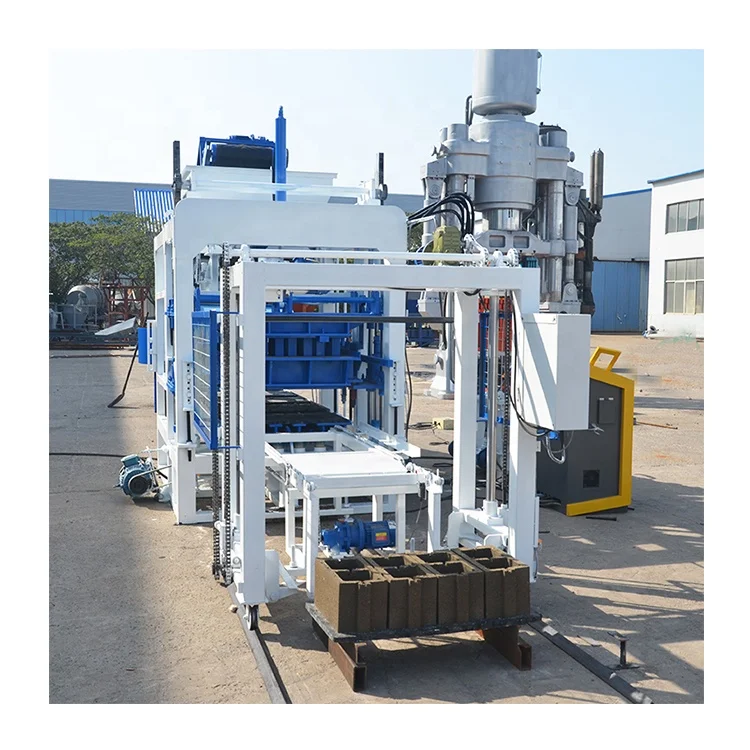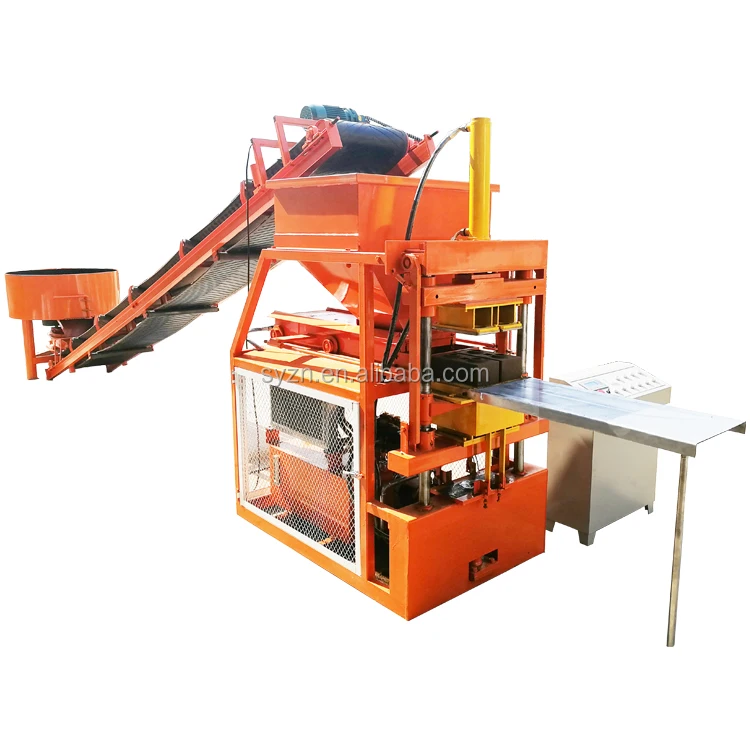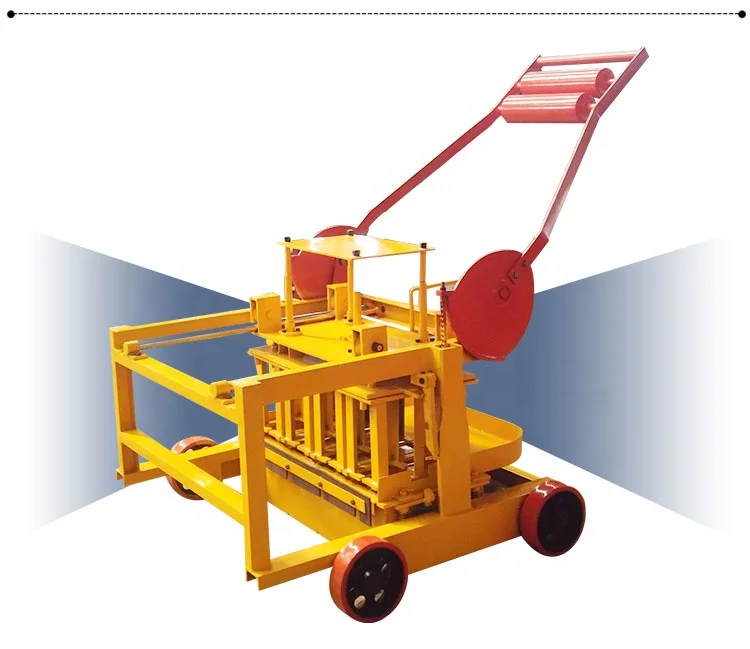

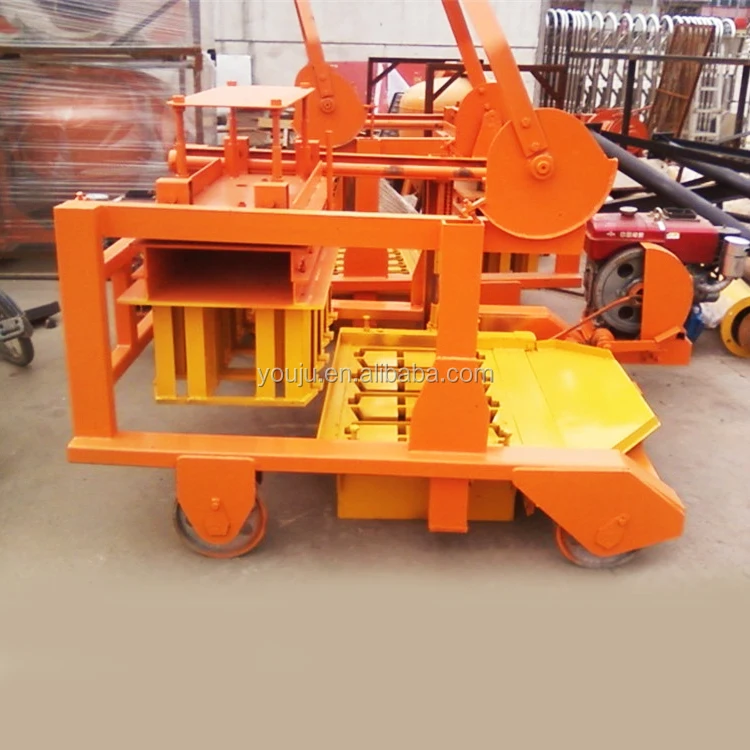
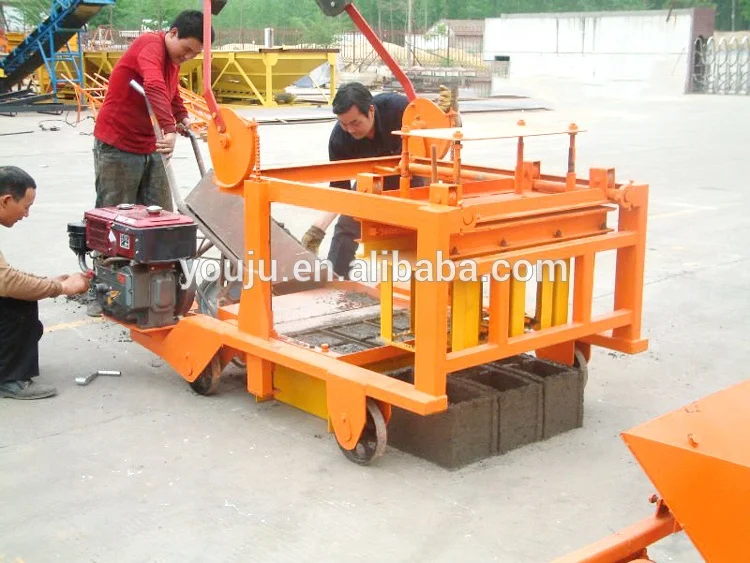
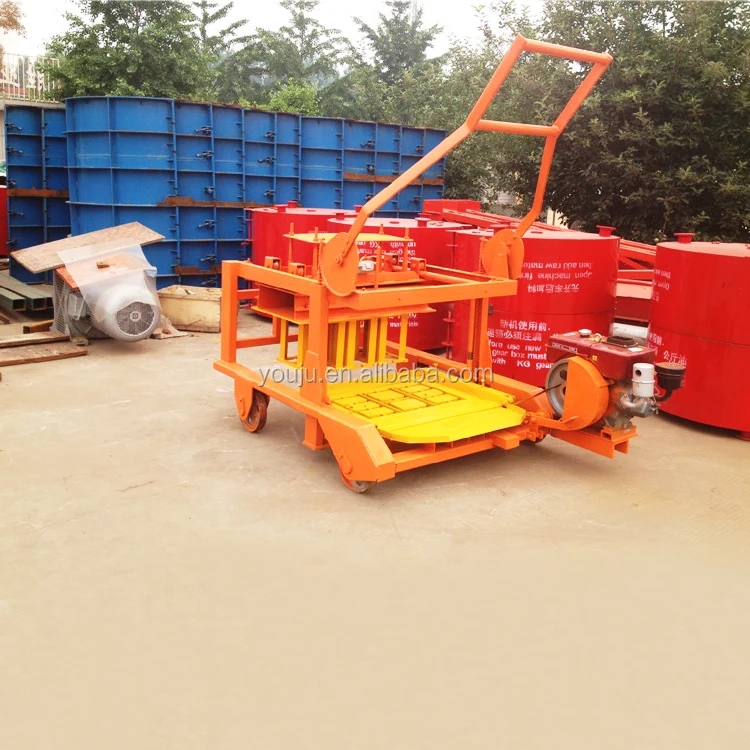

Description
Fast dispatch readiness — This QMR4-45 diesel mobile block machine ships from stock with confirmed container loading plans, eliminating manufacturing delays for contractors on tight project schedules.
Technical Specifications
| Parameter | Value |
|---|---|
| Product Type | Mobile Egg Laying Block Making Machine |
| Model | QMR4-45 |
| Overall Dimensions (L×W×H) | 2420×1320×1650mm |
| Net Weight | 810kg |
| Moulding Cycle | 40-45s |
| Pallet Requirement | No pallet required (egg laying operation) |
| Power Source | Diesel engine (6kW or 6-8HP) |
| Voltage & Frequency | 220V or 380V or according to client local voltage |
| Rated Power | 6kW |
| Hydraulic Pressure Source | Diesel engine driven |
| Automation Level | Manual operation |
| Floor Requirement | No concrete floor required |
| Assembly State | Integrated mobile unit |
| Certification | CE |
Application Suitability
| Application | Material or Output |
|---|---|
| On-site hollow block production | Crushed stone, sand, cement, and local aggregate blends |
| Remote housing project block making | Volcanic ash, river sand, and cement mixtures |
| Paving brick manufacturing on construction footprint | Fine aggregate and cement with pigment additives |
| Small-scale supplier block production | Standard concrete mix designs with locally sourced sand |
Why "3000 Blocks Per Day" Can Mislead You on Site
Output figures only hold true when the block format and material are defined.
I have seen too many mobile block machines arrive at African project sites with buyers expecting thousands of blocks daily, only to discover the quoted capacity assumed a specific hollow block size and standard river sand that was not available locally. When the actual aggregate changes, the moulding pressure and vibration may not compact the mix properly, leading to cracked or weak blocks. Before shipping a Mobile block machine in stock to your site, we confirm which exact block format and material blend you will run, so the productivity number you plan around matches reality. [NEED_CITE: aggregate gradation effects on concrete block compressive strength]
Diesel Power for Off-Grid Block Production
The QMR4-45 mobile block machine runs on a 6-8HP diesel engine, removing dependency on grid electricity entirely. This configuration suits remote housing projects, rural infrastructure builds, and any site where 380V three-phase power is unreliable or unavailable. The diesel unit drives the hydraulic pressure source directly, maintaining consistent compaction force throughout the working day without voltage drops that would weaken block density.
Pallet-Free Operation on Uneven Ground
Egg laying operation means the QMR4-45 deposits blocks directly onto the existing ground surface and moves forward after each cycle. No concrete curing floor is required before production begins, and no pallets need purchasing, storing, or circulating through a return system. The machine’s compact 2420×1320mm footprint allows it to work in confined site areas where larger static plants cannot operate. [NEED_CITE: mobile egg laying block production site preparation requirements]
Reading the Specifications That Matter on Site
The 40-45 second moulding cycle determines how many blocks you produce per hour, but only when the operator maintains consistent feeding and movement rhythm. The 810kg net weight provides enough mass for vibration compaction while remaining light enough to relocate across a building site as production zones shift. Diesel engine power at 6kW delivers adequate hydraulic pressure for standard hollow block formats, though denser paver formats may require longer cycle times. The voltage specification must be locked in before shipping, as control circuits for vibration timing differ between 220V and 380V configurations, and a mismatch delays commissioning.
What Happens When Dispatch Details Are Skipped
Skipping voltage confirmation, container loading plans, or mould inventory checks before a Mobile block machine in stock leaves the site creates cascading delays. The machine arrives, but the wrong voltage control panel requires a transformer or replacement unit. Moulds for the block format you actually sell were not in the container, forcing weeks of waiting. Container loading plans were not confirmed, so the machine does not fit the booked container or requires partial dismantling that delays reassembly. These oversights turn fast delivery promises into project setbacks. [NEED_CITE: international machinery shipping container loading best practices]
Why Buyers Source the QMR4-45 Through This Channel
Stock availability and dispatch timing are confirmed upfront, not quoted as optimistic manufacturing estimates. Container loading plans for the 2420×1320×1650mm machine dimensions are established before order confirmation, showing exactly how the unit and moulds fit in standard shipping containers. Voltage and engine specifications are locked during the order process so the machine arrives ready to connect or run immediately. Factory test records using representative mix designs accompany each shipment, documenting actual block quality before the machine left our facility. Mould inventory for common hollow block formats is checked against current stock to ensure immediate inclusion rather than back-order delays.
Documentation & Verification
- Factory test record on your specified hollow block format and local aggregate before dispatch
- Diesel engine specification sheet confirming 6-8HP output and fuel consumption rates
- Voltage and control circuit diagram matching your confirmed local electrical standard
- Container loading plan showing QMR4-45 dimensions and mould packing arrangement
- Operation manual covering diesel engine maintenance and mould change procedures
Installation, Commissioning & Support
- No concrete floor preparation required; the QMR4-45 operates directly on compacted ground at your site
- Diesel engine eliminates electrical installation; verify fuel supply and daily tank refill logistics on arrival
- Manual pallet-free operation requires operator training on consistent machine movement rhythm and block spacing
- Mould change procedures documented for switching between hollow block formats within a single shift
- Wear parts list included covering vibration components and hydraulic seals specific to the diesel-driven system
- Daily maintenance schedule focused on diesel engine oil, hydraulic fluid levels, and vibration mechanism lubrication
What We Need to Confirm Before Shipping
To match the right Mobile block machine in stock configuration to your project, provide the exact hollow block dimensions you will produce, your local aggregate type and source, and whether diesel or electric operation suits your site conditions. Confirm your target country’s voltage standard and frequency, even though this diesel model runs independently of grid power, as control circuits still require specification. Let us know your project start date and container shipping destination so we can align dispatch timing with your construction schedule.
Frequently Asked Questions
Q: How soon can the QMR4-45 be loaded and shipped from current stock?
A: Stock units can typically be prepared for container loading within days of order confirmation, depending on current inventory levels and any requested configuration adjustments such as mould selection or diesel engine specification. We confirm the exact dispatch timeline and container booking window once your block format and shipping destination are finalized, avoiding vague multi-week estimates that delay your project planning.
Q: Is a concrete curing floor required before the QMR4-45 arrives on site?
A: No. The egg laying design deposits blocks directly onto compacted ground without pallets or a dedicated concrete floor. You need a reasonably flat, firm surface where blocks can cure in place. This eliminates weeks of floor construction before production begins, which is critical for contractors working against tight project deadlines on remote or undeveloped sites.
Q: What is the container loading footprint for the QMR4-45 and moulds?
A: The machine measures 2420×1320×1650mm and weighs 810kg, fitting within standard container dimensions alongside associated moulds. We provide a detailed container loading plan before dispatch showing machine orientation, mould packing arrangement, and any dismantling requirements for transit. This plan ensures efficient use of container space and straightforward reassembly at your destination port.
Q: Can the diesel engine be swapped for an electric motor before dispatch?
A: Yes, the QMR4-45 can be configured with either the standard 6-8HP diesel engine or an electric motor matching your local voltage and frequency requirements. This decision must be confirmed before production and testing, as the hydraulic pressure source and control circuits differ between configurations. We test the machine with your selected power source before container loading to verify proper operation.
Q: Are standard hollow block moulds included in the stock package?
A: Standard hollow block moulds for common formats such as 400×200×200mm and 400×150×200mm are checked against current inventory and can be included with your QMR4-45 shipment. We confirm mould availability during the order process so you know exactly which formats ship with the machine. Custom mould designs require additional lead time and are quoted separately based on your specific block dimensions.