


Description
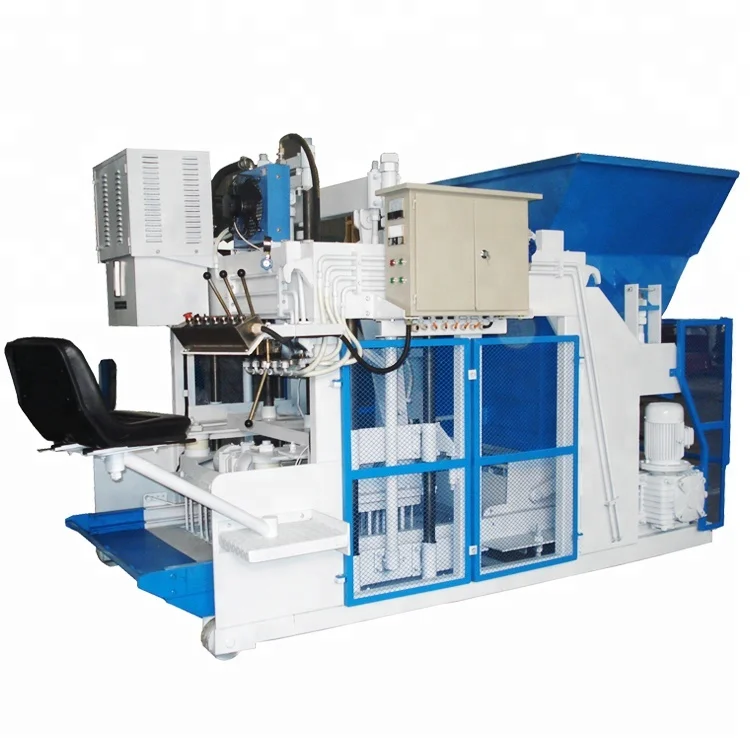
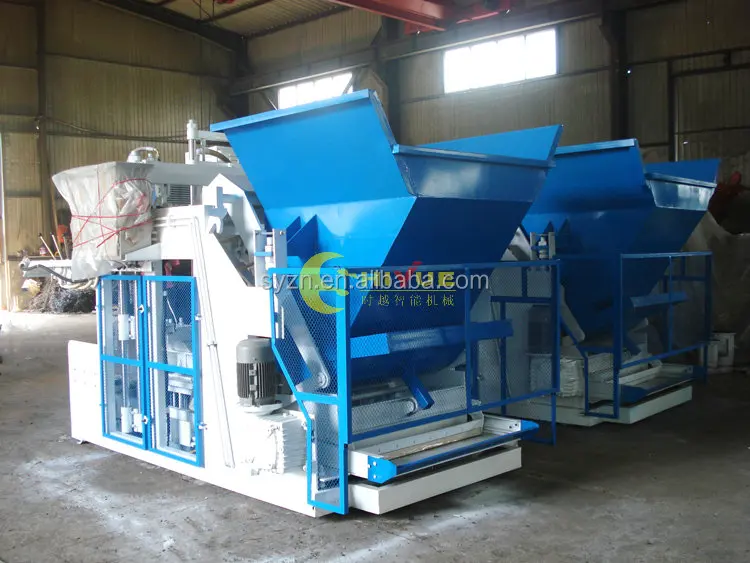
Skid-mounted dispatch readiness — QMY10-15 units and matching hollow block moulds are staged for container loading, with arrival timelines quoted before the deposit clears.
Technical Specifications
| Parameter | Value |
|---|---|
| Model | QMY10-15 |
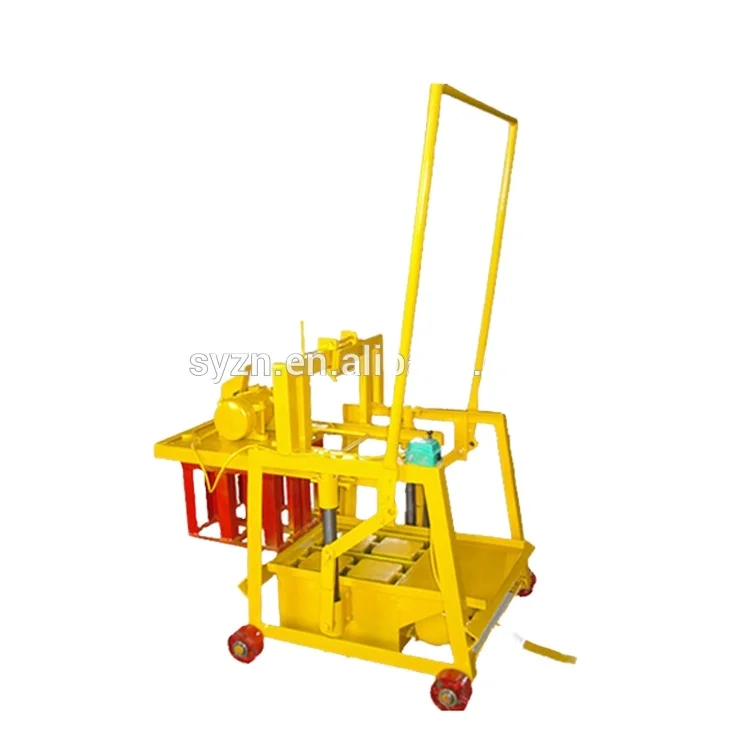
| Product Type | Mobile Automatic Cement Hollow Block Making Machine |
| Overall Dimensions | 3150×1800×2400 mm |
| Total Mass | 4500 kg |
| Forming Method | Mould vibration with hydraulic demould |
| Hydraulic Pressure | 21 MPa |
| Excitation Frequency | 4500 r/min |
| Molding Cycle | 15 s |
| Pcs per Mould | 10 pcs (400×200×200 mm) |
| Output Capacity | 2400 pcs/h based on 400×200×200 mm; 3360 pcs/h based on 400×150×200 mm; 3840 pcs/h based on 400×120×200 mm; 4320 pcs/h based on 400×100×200 mm |
| Daily Output | 19200 pcs/8h (400×200×200); 26800 pcs/8h (400×150×200); 30720 pcs/8h (400×120×200); 34560 pcs/8h (400×100×200) |
| Supported Block Formats | 400×200×200 mm / 400×150×200 mm / 400×120×200 mm / 400×100×200 mm / 390×240×190 mm / 390×150×190 mm / 390×115×190 mm / Custom |
| Total Power | 16 kW |
| Motor Voltage | 380 V, 3-phase, 50 Hz (customizable to local grid) |
| Machine Type | Mobile / egg-laying (on-site production, no fixed pallet line) |
| Raw Materials | Crushed stone, sand, cement, coal fly ash, cinder, slag, gangue, gravel, perlite, industrial waste |
| Warranty | 1 year (excluding wear parts) |
Application Suitability
| Application | Material or Output |
|---|---|
| On-site hollow block production for housing projects | Crushed stone, sand, and cement mixes laid directly on a prepared ground slab |
| Supplementary mobile unit for established block plants | Fly ash, cinder, or slag blends used to meet peak order volumes without expanding the fixed line |
| Infrastructure contractor producing kerb and channel blocks on location | Gravel and perlite aggregates formed into non-standard formats with custom moulds |
| First production run for entrepreneurs before fixed plant investment | Industrial waste and gangue materials tested for viability before committing to a curing rack system |
What "Arrival Before Your Deadline" Actually Requires
Confirming the QMY10-15 mobile block machine in stock today is only the first step; matching the dispatch date to your port’s sailing schedule is what keeps the project on track.
I have watched contractors lose weeks because a machine sat at the origin port waiting for a vessel that matched its container type, while the building site stood ready with aggregate piled and crews hired. The QMY10-15 mobile block machine in stock means the unit and its standard moulds are physically staged, but the arrival estimate depends on confirming your destination port, the next available sailing, and whether any voltage customization adds time before the container is sealed [NEED_CITE: typical ocean freight scheduling variables by trade lane]. A firm arrival date quoted in writing before payment removes the guesswork that turns a fast dispatch into a delayed commissioning.
Dispatch Readiness and What It Covers
When we list a QMY10-15 mobile block machine in stock, the skid-mounted unit is assembled, factory-tested, and paired with the standard hollow block moulds specified at order. The 16 kW motor and hydraulic pack have run through a full molding cycle on our floor, so the 15-second cycle time and 21 MPa pressure are verified before dismantling for shipment. This is the stage where voltage confirmation matters — if your site runs on a grid other than 380 V / 50 Hz, the motor swap happens here, not after the machine arrives and an electrician discovers the mismatch on day one.
Container Loading and the Dismantling Scheme
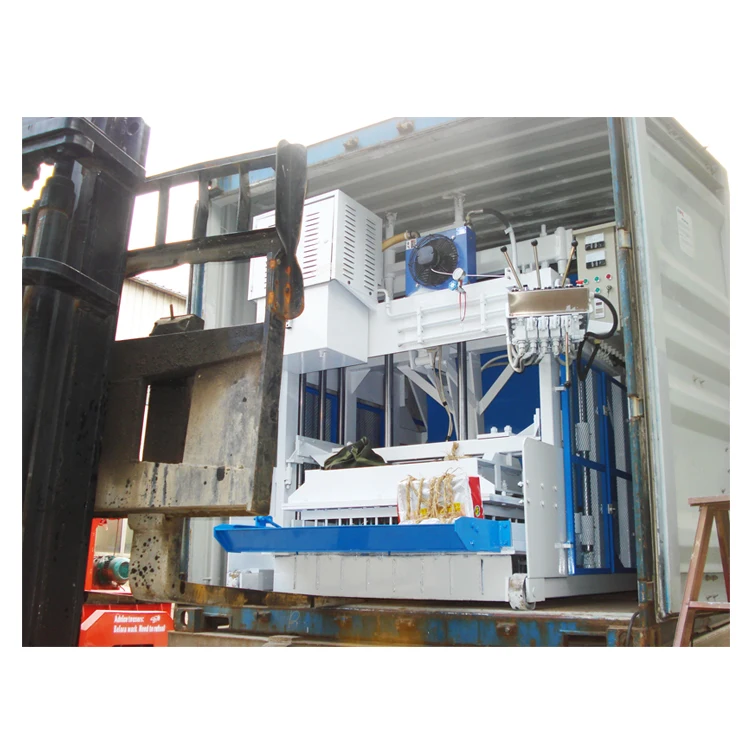
The 4500 kg mass and 3150×1800×2400 mm envelope of the QMY10-15 require a specific dismantling sequence to fit a standard container. The upper frame and hopper assembly come off as one unit, the mould sits separately on the skid base, and the hydraulic hoses are capped and bundled. This is not a process that happens after the truck arrives at the port — the loading plan, including cubic meter count and container type, is confirmed at the quotation stage so you know exactly what sails and when [NEED_CITE: container loading standards for heavy industrial machinery].
How Hydraulic Pressure and Vibration Shape the Block
The 21 MPa hydraulic pressure and 4500 r/min excitation frequency work together during each 15-second molding cycle: vibration settles the aggregate into the mould cavity while hydraulic force compacts it from above. If your local sand is fine-graded, the vibration duration may need adjustment to avoid segregation, and the hydraulic pressure must be sufficient to lock the particles before demould. This balance is what determines whether a 400×200×200 mm hollow block holds its edges when the mould lifts, or crumbles at the corners before it even reaches the curing area.
The Cost of Skipping the Voltage Conversation
A machine wired for 380 V / 50 Hz that arrives at a site running 440 V / 60 Hz will either trip immediately or burn out the motor within the first shift. I have seen this happen with mobile units that were ordered in a rush, where the buyer focused on dispatch speed and the voltage question never came up until the electrician opened the control panel. Rewinding or replacing a 16 kW motor on site adds days of downtime and a cost that could have been avoided with a single confirmation before the QMY10-15 left the factory floor [NEED_CITE: motor voltage mismatch consequences in exported industrial equipment].
Why Source This Unit Through a Stock-and-Dispatch Channel
Single-focus block machinery supply means the QMY10-15, its moulds, and any spare wear parts ship as a matched set rather than arriving from separate vendors on different schedules. Configuration is confirmed against your actual aggregate and target block format before the unit is released from stock, not defaulted to a catalogue setting. Mould design for the formats your market demands — including custom drawings for non-standard hollow sizes — is handled in-house so the first container carries everything you need to produce. Voltage, frequency, and control language are verified in writing before dispatch, preventing the commissioning delays that turn a fast arrival into a slow start.
Documentation & Verification
- Factory test record run on your specified hollow block format before the QMY10-15 leaves the floor
- Machine specification sheet confirming hydraulic pressure, excitation frequency, and motor voltage as built
- Mould drawing and format list for every cavity shipped in the container
- Voltage and control language confirmation document signed off before dispatch
- Packing photographs showing dismantling scheme and container loading sequence
- Customs documentation support including HS code and origin paperwork
Installation, Commissioning & Support
- Prepared ground slab required — the 4500 kg skid-mounted QMY10-15 operates directly on a level surface without a fixed foundation
- 16 kW total power draw needs a dedicated 3-phase circuit with confirmed voltage and frequency matching the motor nameplate
- Upper frame and hopper reassembly on site with hydraulic hoses reconnected per the labeled dismantling scheme
- First-run cycle test with your local aggregate to confirm the 15-second molding cycle produces acceptable block density
- Operator training covering mould change procedure across the supported 400×200×200 mm and alternative formats
- Wear parts list and hydraulic seal kit identified for the first replacement cycle
Before You Request a Quote
Tell us which hollow block format your market moves in volume, the destination port for arrival scheduling, and the voltage and frequency at your site. We will confirm which QMY10-15 units and mould configurations are staged for dispatch, quote the container loading plan and estimated arrival date in writing, and hold the unit while you finalize the order.
Frequently Asked Questions
Q: Is the QMY10-15 currently in stock, and how many units are available?
A: Stock status for the QMY10-15 mobile block machine is confirmed at inquiry, including which units are staged and which standard hollow block moulds are paired with them. Availability shifts as orders are placed, so we quote the specific unit serial and mould configuration in writing before you commit to a deposit.
Q: What is the dispatch lead time once the deposit is confirmed?
A: If the QMY10-15 and your requested mould format are in stock and no voltage customization is needed, the unit can be dismantled and loaded within a short window. Where motor voltage must be changed to match your local grid, additional days are added for the swap and re-test before the container is sealed.
Q: How is the machine dismantled for container loading, and what container type is needed?
A: The QMY10-15 is dismantled into the skid base with mould, the upper frame and hopper assembly, and bundled hydraulic components. The total mass of 4500 kg and overall dimensions require a specific container type, confirmed in the loading plan quoted at order along with the cubic meter count.
Q: Can the motor voltage be customized before shipment, and how long does that add?
A: The standard 380 V / 3-phase / 50 Hz motor can be swapped to match your site grid before the QMY10-15 leaves the factory. This customization is confirmed in writing at order, and the additional time for the swap and factory re-test is quoted alongside the dispatch date.
Q: What standard moulds ship with the machine, and can extra moulds be added to the same container?
A: Standard moulds for 400×200×200 mm and other common hollow formats ship with the QMY10-15 as specified at order. Additional moulds for alternative block sizes can be loaded into the same container, and the packing plan is adjusted to account for the extra weight and volume.