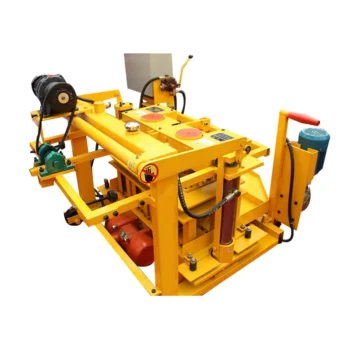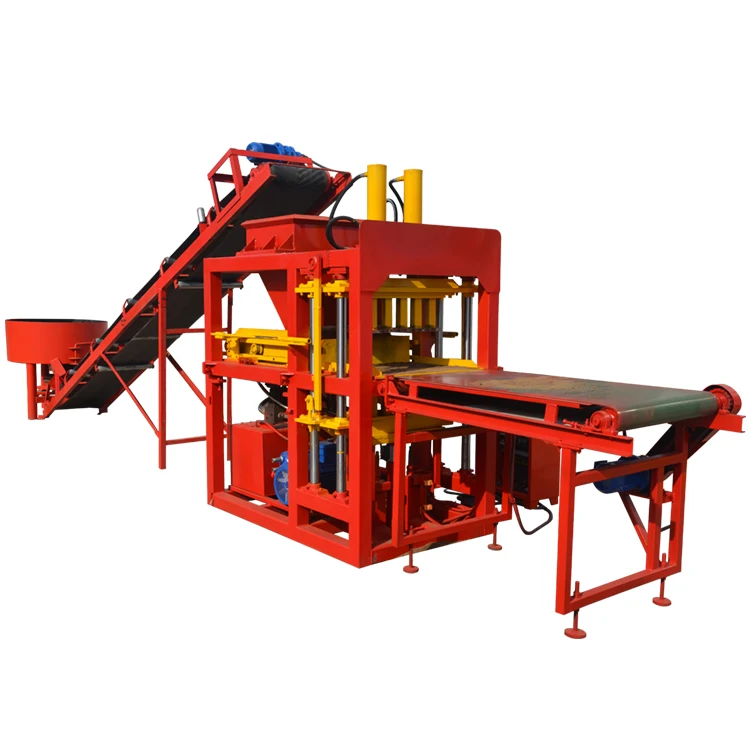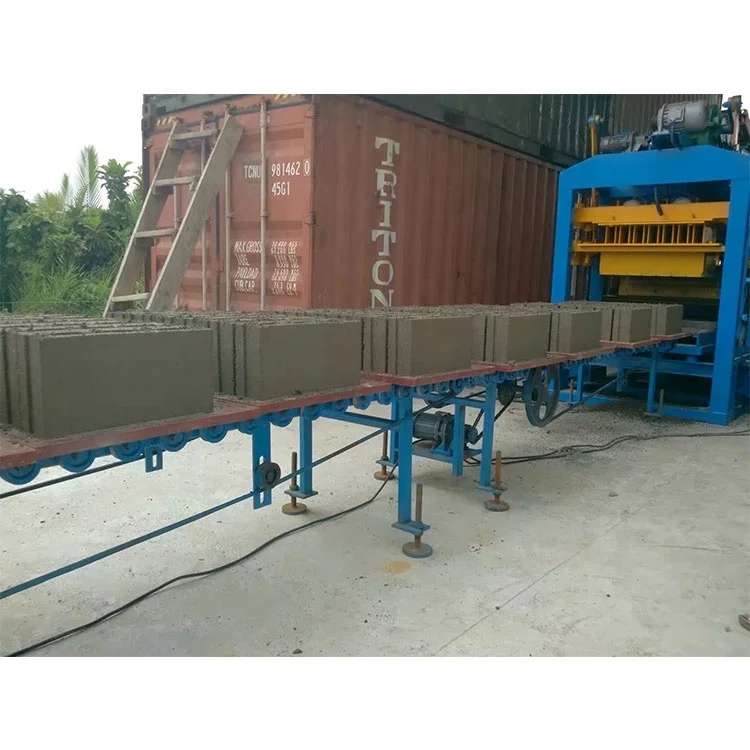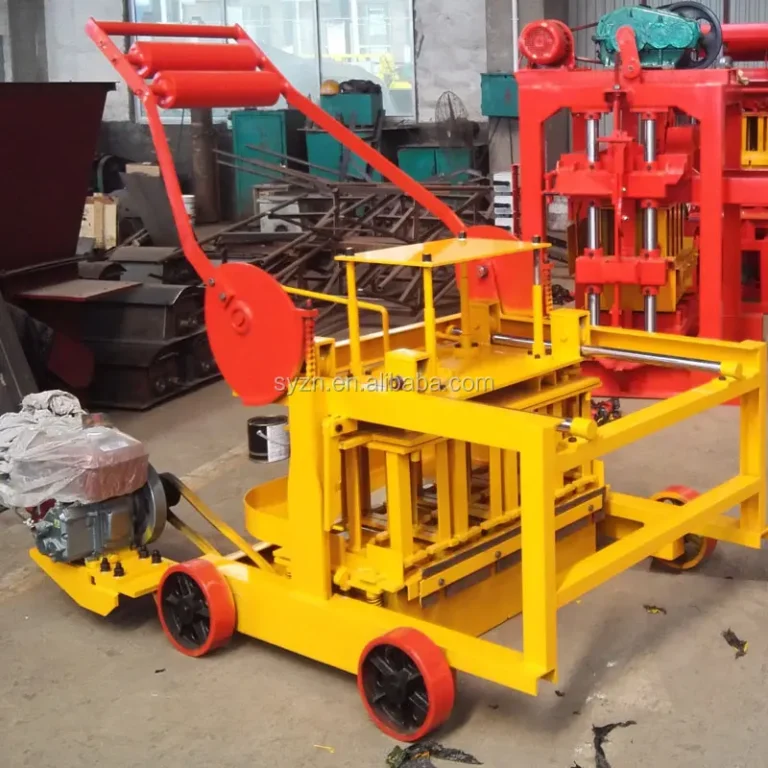



Description
Stock Dispatch Readiness — every QMY10-15 mobile block machine is checked against the buyer’s site voltage and local block format before leaving the yard, so arrival means production, not waiting for parts.
Technical Specifications
| Parameter | Value |
|---|---|
| Model | QMY10-15 |
| Product Type | Mobile Concrete Block Making Machine |
| Molding Capacity | 10 pcs/mold |
| Molding Cycle | 10s–15s |
| Total Power | 16 kW |
| Output Capacity | 11,000 pcs/day (basis not stated in source — confirm block format / material / thickness) |
| Vibration System | Dual vibration motors |
| Hydraulic System | Controls upper and lower demoulding |
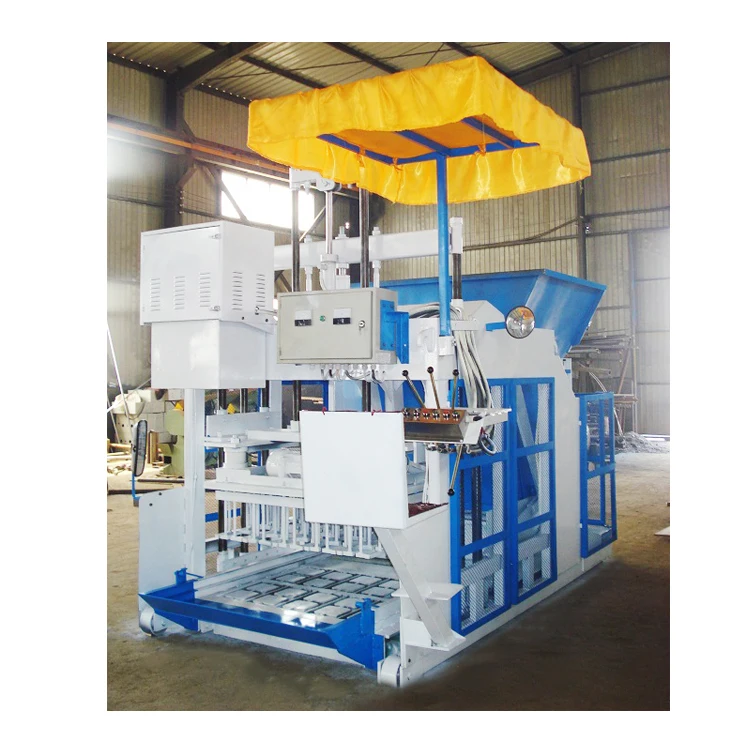
| Travel System | Electric walking, hydraulic steering |
| Heat Dissipation | Hydraulic oil heat dissipator |
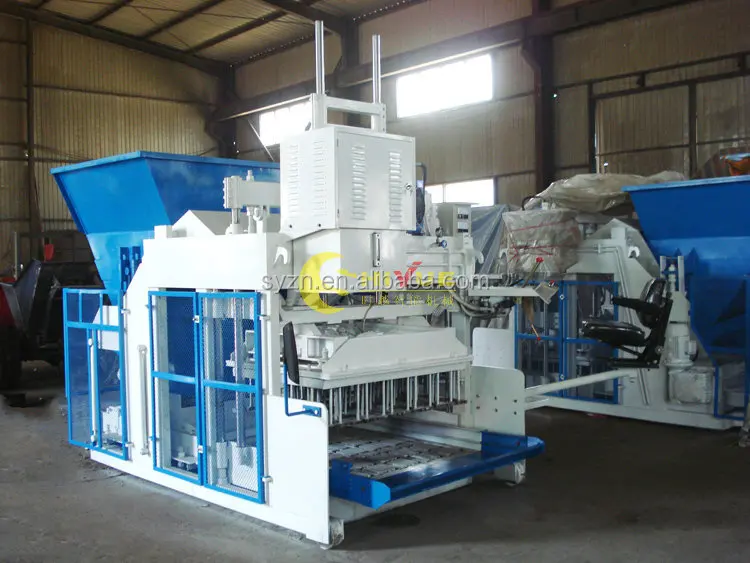
| Pallet Requirement | No pallets needed (egg-laying type) |
| Basic Equipment Included | QMY10-15 host machine, JS7500 concrete mixer, dump truck |
| Optional Equipment | PL1200 batching machine, cement silo, screw conveyor, loader |
| Voltage & Frequency | Configurable to destination market (to be confirmed at inquiry) |
| Control System | Available with PLC or manual control (to be confirmed at inquiry) |
Application Suitability
| Application | Material or Output |
|---|---|
| On-site hollow block production at construction projects | Crushed stone, sand, cement, water |
| Solid block manufacturing for housing developments | Local aggregate blended with cement |
| Mobile production moving between job sites | Standard concrete mix without pallet dependency |
| Low-investment first block plant for entrepreneurs | Regionally sourced sand and gravel |
Why "11,000 Pieces per Day" Means Nothing Without the Block Format
The daily output figure is only valid once you know the exact block size, wall thickness, and mix design being run.
I once reviewed an inquiry where a contractor in the Philippines committed to a mobile block machine based on a headline capacity number. When the machine arrived, they were producing 150mm hollow blocks instead of the 200mm format the rating assumed. Their actual output was noticeably lower than expected, and the crew fell behind the project schedule. Mobile block machine in stock listings rarely mention which format underpins the number, and that omission costs buyers time on site [NEED_CITE: block format assumptions in capacity ratings for mobile egg-laying machines]. The QMY10-15 molds 10 pieces per cycle at a 10-to-15-second cycle time, but the daily total depends entirely on your block dimensions and how consistently your mix feeds the hopper.
How Stock Availability Shortens Your Project Timeline
When a construction deadline is tight, waiting eight or more weeks for a built-to-order press is not an option. The QMY10-15 mobile block machine in stock configuration means the host machine, JS7500 mixer, and dump truck are assembled, tested, and available for container loading without a production queue. Buyers working against a project milestone can receive a dispatch lead time and loading plan before the order is confirmed, removing uncertainty from site scheduling.
What Egg-Laying Design Removes From Your Operation
Traditional stationary block machines require pallets — buying them, moving them through the curing area, and retrieving them for the next cycle. The QMY10-15 lays blocks directly onto the ground surface as it travels, eliminating pallet purchase costs and the labour of pallet handling entirely [NEED_CITE: pallet handling labour costs in small block production operations]. For contractors producing on a job site with limited space and no dedicated curing racks, this design removes an entire workflow layer. The electric walking and hydraulic steering system lets one operator guide the machine along a prepared floor while blocks cure in place behind it.
Reading the Specs That Actually Matter on Site
The dual vibration motors work alongside the hydraulic upper and lower demoulding system to compact the concrete mix evenly across all 10 mold cavities. Vibration force and hydraulic pressure must be matched to your specific aggregate — a coarse crushed stone mix requires different settings than a fine sand blend, and getting this wrong produces blocks with inconsistent density. The hydraulic oil heat dissipator keeps fluid temperature stable during continuous runs, which matters in tropical climates where ambient heat already pushes hydraulic systems toward their limits. Molding cycles of 10 to 15 seconds are achievable with a well-graded mix, but a poorly proportioned feed will extend that cycle as the operator compensates for poor compaction. Voltage and frequency must match the destination site before the machine ships — the 16 kW total power draw requires a stable supply, and a mismatch will trip breakers or damage motors within hours of first startup [NEED_CITE: voltage and frequency standards by export market].
What Happens When the Voltage Question Gets Skipped
I watched a crew in Southeast Asia lose three weeks of production because a mobile block machine arrived wired for a voltage that did not match the site transformer. The hydraulic motor tripped the main breaker on the first morning, and nobody could work until a replacement transformer was sourced locally at a premium. That experience shapes how I now approach every dispatch — voltage, frequency, and control language are confirmed against the actual site electrical infrastructure before any QMY10-15 leaves the yard. Skipping this step turns a fast delivery advantage into a costly delay on arrival [NEED_CITE: common commissioning delays caused by voltage mismatch in exported machinery].
Why Procurement Verification Matters for This Machine
The QMY10-15 is configured around a single focus on block machinery, so the host machine, mixer, and travel system are specified as a matched set rather than assembled from unrelated suppliers. Stock availability is confirmed at the inquiry stage alongside standard mold formats, so buyers know exactly which block sizes can ship immediately versus which require a mold production run. Machine dismantling and packing photographs are provided before shipment, giving the buyer visibility into container loading and condition at departure. Dispatch lead times and container loading plans are quoted upfront, removing guesswork from the project timeline. The configuration process accounts for the buyer’s local raw materials and target block format, preventing a situation where the machine is set up for a mix the site cannot actually source.
Documentation & Verification
- Factory test record on your specified block format before the machine leaves the yard
- Voltage, frequency, and control language confirmation sheet matched to destination country
- Machine specification sheet with mold drawing and format list for your block sizes
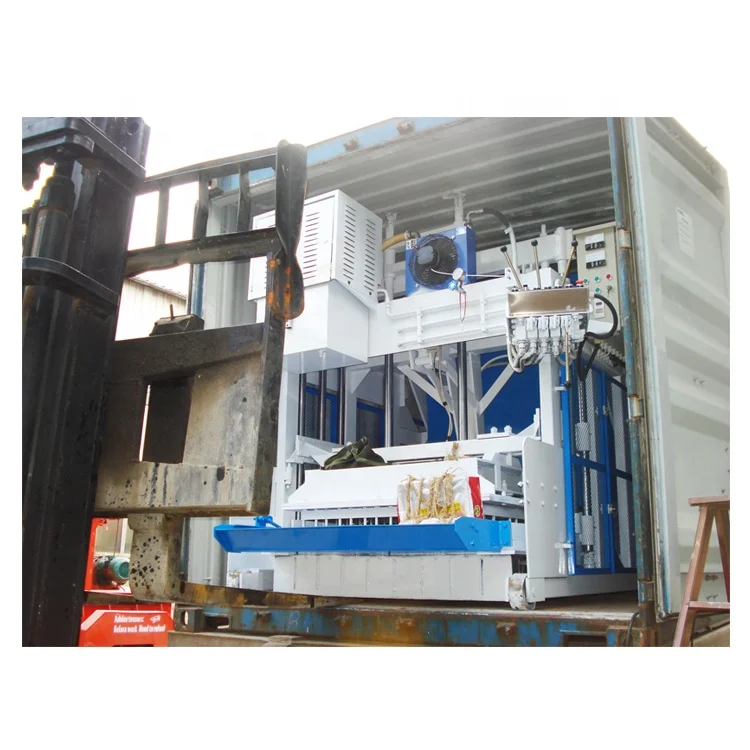
- Packing photographs and container loading plan provided prior to shipment
- Operation and maintenance manual with wear parts list for the QMY10-15 system
Installation, Commissioning & Support
- Ground preparation guidance specifying the flat, level surface the egg-laying system requires for consistent block placement
- Electrical connection plan confirming 16 kW supply capacity and dedicated circuit requirements at your site voltage
- On-site assembly support covering reassembly of the dismantled host machine and JS7500 mixer after container unloading
- First-run commissioning with hydraulic pressure and vibration adjustment matched to your local aggregate mix
- Operator training on the electric walking and hydraulic steering controls for safe daily production
- Wear parts list covering hydraulic seals and vibration motor components for scheduled replacement intervals
What to Include With Your Inquiry
Provide the exact block formats your market demands — hollow, solid, paving, or other — along with dimensions and wall thickness. Specify your site voltage, frequency, and available power capacity so the electrical system is matched before production. Include details on your local aggregate type and any existing material handling equipment on site, so the optional batching machine and cement silo can be scoped correctly.
Frequently Asked Questions
Q: What block format is the 11,000 pieces per day output based on?
A: That figure depends on the specific block size, wall thickness, and mix design used. The QMY10-15 molds 10 pieces per cycle at 10 to 15 seconds, but daily totals vary significantly between a 100mm solid block and a 200mm hollow block. We confirm realistic output against your target format before quoting.
Q: Is the QMY10-15 currently in stock and how fast can it ship?
A: Stocked machine models and standard mold formats are confirmed at the inquiry stage. Dispatch lead time and container loading plans are quoted upfront once configuration and voltage are verified. Availability varies, so early confirmation prevents scheduling gaps on your project timeline.
Q: Which mold formats ship from stock versus requiring custom production?
A: Standard hollow and solid block molds in common regional sizes are typically available with stocked machines. Custom formats or non-standard dimensions require a separate mold production run. We confirm which options are ready for immediate dispatch when you submit your block drawings.
Q: How is the machine loaded and what are the shipping dimensions?
A: The QMY10-15 host machine is dismantled for container loading alongside the JS7500 mixer. Machine dismantling and packing photographs are provided before shipment so you know the exact loading condition. Container type and loading plan are confirmed during the quotation stage based on your complete equipment list.
Q: What voltage and frequency options are available for my country?
A: Voltage and frequency are configured to match your site electrical supply before the machine enters final assembly. This confirmation includes PLC display language where applicable. Providing your local power specifications at the inquiry stage prevents commissioning delays when the machine arrives on site.