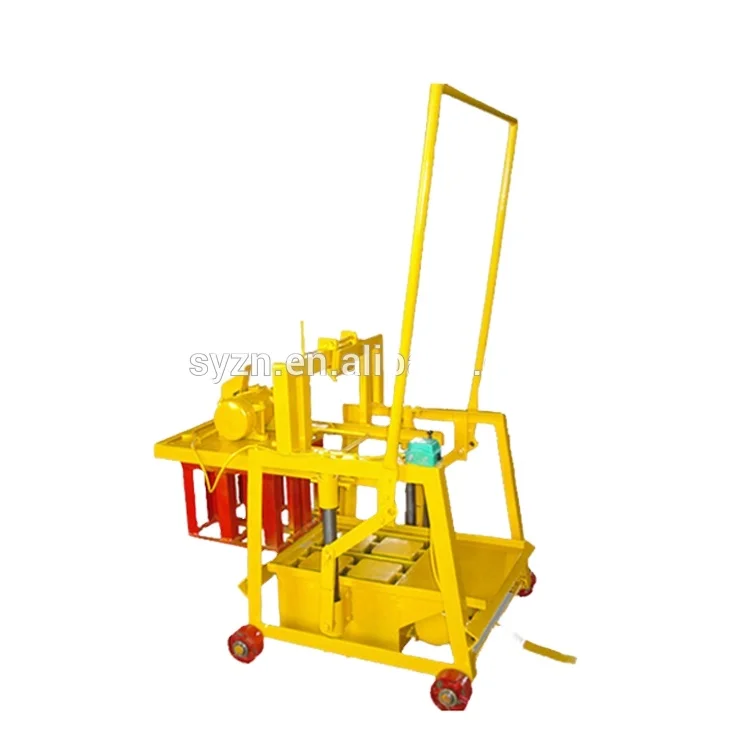
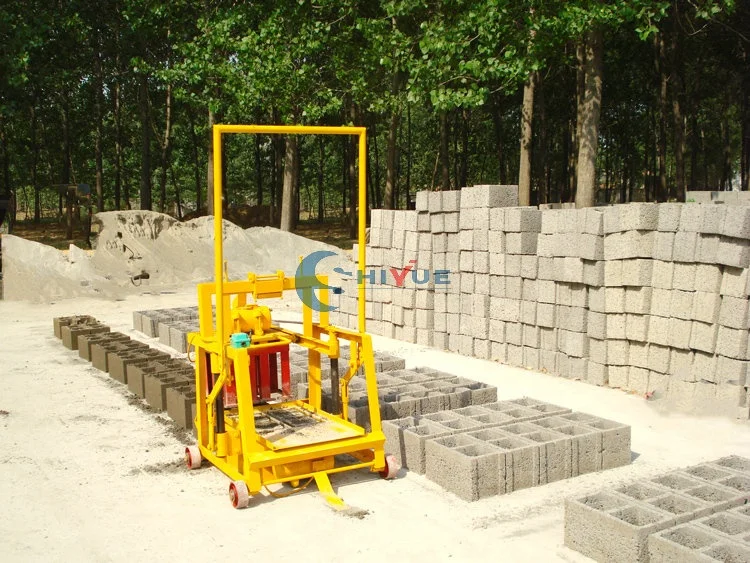
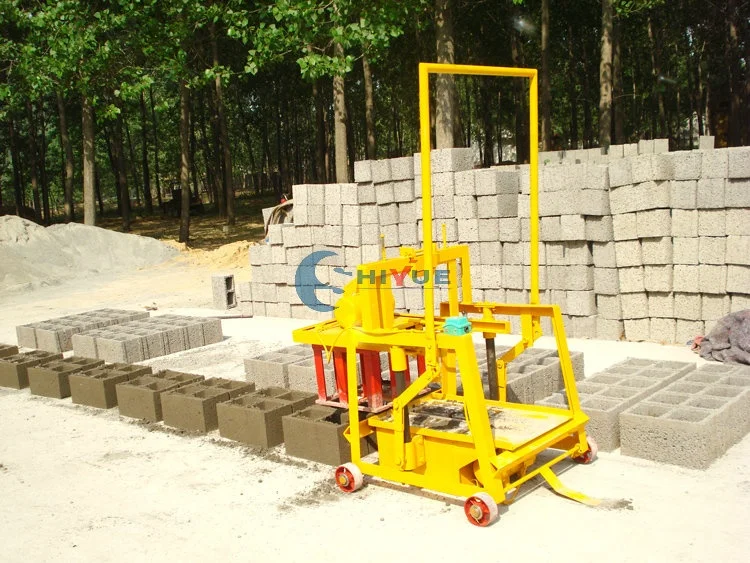


Description
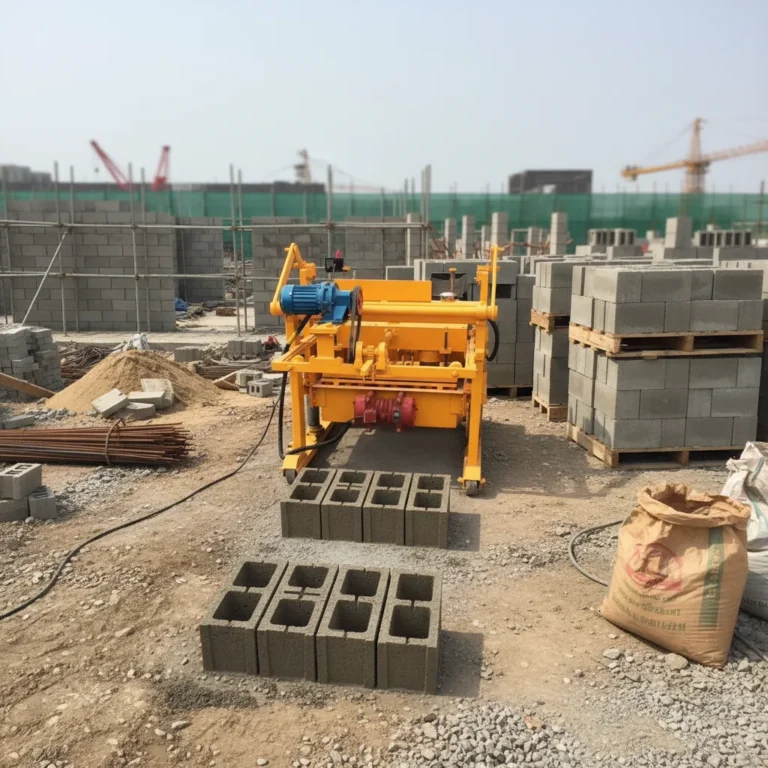
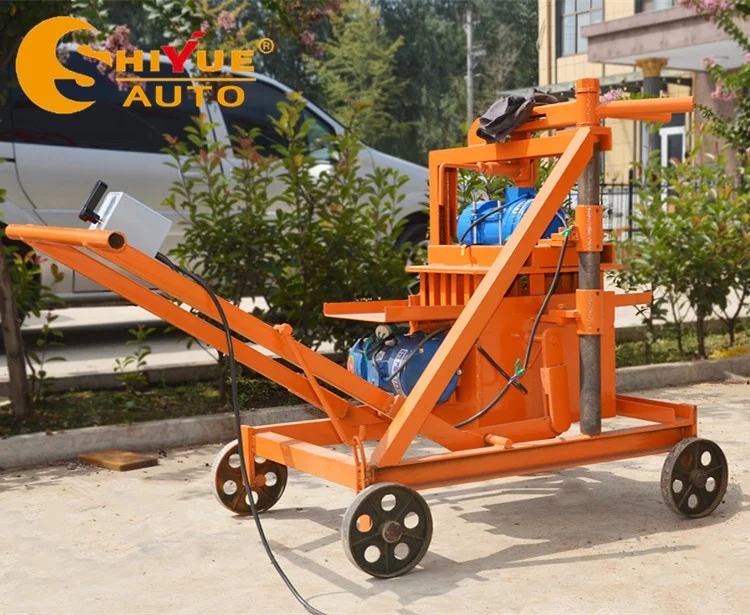
Stocked Configuration Match — Dispatch and arrival timing confirmed before you commit, with this mobile egg-laying block machine ready for container loading and your site conditions verified upfront.
Technical Specifications
| Parameter | Value |
|---|---|
| Model | QMJ2-45 |
| Product Type | Mobile Egg-Laying Block Machine |
| Overall Dimensions (L×W×H) | 1000 × 800 × 1300 mm |
| Net Weight | 215 kg |
| Total Power | 1.5 kW |
| Vibration Type | Mold Vibration |
| Output Capacity | 1000 pcs/day (basis not stated in source — confirm block format and shift length) |
| Cycle Time | 45 s (basis not stated in source — confirm block format) |
| Block Format per Cycle | 2 pcs per mold (400 × 200 × 200 mm) |
| Mould Format | 400 × 200 × 200 mm hollow block |
| Basic Equipment Included | JQ350 Mixer |
| Voltage & Frequency | Customizable to buyer’s local supply |
| Automation Level | Manual / Mobile egg-laying |
| Warranty | 1 year (excluding wearing parts) |
Application Suitability
| Application | Material or Output |
|---|---|
| On-site hollow block production for housing projects | Crushed stone, sand, and cement mixes laid directly on a flat concrete slab |
| Small-scale home-business block production | Standard hollow block format for local resale to contractors and builders |
| Contractor-led project site manufacturing | Portable production at remote building sites before a fixed plant is established |
| Distributor inventory for fast regional resale | Compact unit suitable for shared container or LCL freight to overseas markets |
Why the Arrival Date Matters More Than the Cycle Time
A mobile block machine only earns its keep when it is actually on your site, not sitting in a factory awaiting dispatch.
Buyers working against a project deadline often discover, after paying the deposit, that the quoted lead time was a factory schedule rather than a shipping schedule. The machine might be built on time, but container space, customs paperwork, and sea transit add weeks that were never discussed upfront. For a contractor who needs blocks on the ground before the wet season or a housing project handover date, those unplanned weeks can stall an entire build. [NEED_CITE: typical ocean freight transit windows from Chinese ports to major African and Southeast Asian destinations]. That is why our process locks the dispatch date and the estimated port arrival before the order is finalized, not after.
What "In Stock" Actually Means for Your Timeline
When we confirm a QMJ2-45 Mobile Block Machine in Stock, it means the unit has passed its factory test, the JQ350 mixer is paired and staged alongside it, and a container loading plan is drafted. You receive packing photographs showing the machine dismantled and braced for sea transit before your final payment clears. This eliminates the common gap between "production complete" and "actually shipped," which is where most delays hide. For buyers in the Pearl River Delta trade belt, I have watched competitors quote machines as ready only to discover the motor voltage still needs changing — a Mobile Block Machine in Stock with us means the voltage has already been matched to your destination market.
Dismantling and Loading: The Details That Protect Your Freight
A 215 kg unit with a 1000 × 800 × 1300 mm footprint sounds compact, but how it is broken down for the container determines whether it arrives with bent frames or intact moulds. We dismantle the hopper, disconnect the vibration motor wiring, and brace the mould cavity with timber blocks so the press does not shift during rough seas. The JQ350 mixer is loaded in the same container, bolted to the deck near the machine base, so both units clear customs together. [NEED_CITE: standard container lashing and bracing practices for heavy industrial equipment]. Every shipment includes a loading photograph set and container seal number, giving you visibility from our dock to your port.
Reading the Specs That Decide Your Daily Reality
The 1.5 kW total power rating tells you something important before the machine arrives: you need a small generator or a single-phase connection at the site, not a heavy electrical installation. This keeps the QMJ2-45 practical for remote project locations where grid power is unreliable. The 45-second cycle time governs your rhythm — two blocks per cycle means the operator and mixer must keep pace, and the flat slab curing area must be large enough to receive that output continuously. The mould vibration system, as opposed to full hydraulic pressing, keeps the mechanical parts count low, which directly affects what spare parts you need on the shelf when something wears. The JQ350 mixer capacity is sized to feed this press without bottlenecking, but only if your local aggregate grading matches the mix you intend to run. [NEED_CITE: relationship between mixer batch size and block press cycle matching in small mobile operations].
The Hidden Cost of Skipping the Spare Parts Conversation
I have spent years in after-sales repair before moving into export sales, and the most frustrating calls come from small buyers who got their QMY2-45 running for a home business, then hit a wall when mould wear parts need replacing. Nothing was ordered with the machine. Production sits dead while they wait weeks for an international parcel. The QMJ2-45 uses mould vibration, which means the mould lining and the vibration motor brushes are the first consumables to go. If those are not in a box on the same container as your machine, your first replacement becomes an unplanned shutdown. [NEED_CITE: impact of spare parts availability on small-scale block production continuity]. Buyers who treat spare parts as an optional add-on learn the hard way that a Mobile Block Machine in Stock is only half the solution — the other half is the parts that keep it running past month three.
Why Sourcing Here Removes the Guesswork from Your Order
Block machinery is our single focus, so the QMJ2-45 press, the JQ350 mixer, and the mould are specified and tested as one matched system rather than assembled from separate suppliers. We confirm your local voltage and motor frequency at inquiry stage, not after the machine is built, which prevents commissioning delays at your port. The dispatch lead time and container loading plan are quoted upfront, so your project schedule does not depend on a promise made after payment. Packing photographs, container seal numbers, and customs documentation support accompany every shipment, giving your freight forwarder what they need without chasing us. For buyers who may eventually scale to a fixed plant, the QMY2-45 serves as a low-risk entry point, and the automation level is selectable when you are ready to move up.
Documentation & Verification
- Factory test record on your specified block format before dispatch
- Voltage and frequency confirmation sheet matched to your local grid
- Container loading photograph set with seal number documented
- Machine specification sheet with mould drawing and format list
- Operation and maintenance manual covering JQ350 mixer and press together
- Customs documentation support including packing list and commercial invoice
Installation, Commissioning & Support
- Flat concrete slab required; the 1000 × 800 × 1300 mm footprint needs a level surface wider than the machine base
- 1.5 kW power draw fits a standard single-phase supply or small portable generator at the site
- JQ350 mixer arrives in the same container; connect water supply and test batch mixing before first press run
- Mould vibration motor wiring is pre-labeled for fast reconnection after container transit
- First-run cycle timing verified with your local aggregate to confirm the 45-second rhythm holds
- Wear parts list provided at dispatch so you can reorder mould liners and motor brushes before they run out
What We Need to Confirm Your Dispatch Window
To lock a realistic arrival estimate for your Mobile Block Machine in Stock order, we need three things from you: the destination port so we can quote transit time, your local voltage and frequency so the motor is configured before loading, and the block format you intend to produce so the correct mould is mounted and tested. If you have a project start date or a container consolidation deadline, share that as well — we plan the dispatch around your timeline, not ours.
Frequently Asked Questions
Q: Which models and moulds are currently in stock for immediate dispatch?
A: The QMJ2-45 mobile egg-laying block machine is stocked with the standard 400 × 200 × 200 mm hollow block mould mounted and tested. The JQ350 mixer is paired and staged alongside it. If you need a different block format, we confirm mould availability at inquiry and quote the changeover time before you commit, so there are no surprises after payment.
Q: What is the lead time from order confirmation to container loading?
A: Once voltage and frequency are confirmed, a stocked QMY2-45 typically moves to dismantling, packing, and container loading within a short window. We quote the dispatch date and the estimated port arrival before you pay the balance. Packing photographs and the container seal number are sent to you once the unit is loaded and the door is sealed.
Q: How is the machine packed and dismantled for sea shipment?
A: The QMJ2-45 is dismantled to reduce its shipping profile: the hopper is removed, vibration motor wiring is disconnected and labeled, and the mould cavity is braced with timber to prevent shift damage. The 215 kg unit and the JQ350 mixer are loaded in the same container, bolted and lashed to the deck. Loading photographs document every stage.
Q: When will the machine arrive at my port — can you quote an arrival estimate?
A: Yes. Once you provide the destination port, we quote the estimated transit time from our shipping port alongside the dispatch date. This gives you a projected arrival window before you commit, so your project schedule or resale inventory plan is built on a confirmed timeline, not a guess.
Q: Is the JQ350 mixer shipped in the same container as the block machine?
A: Yes. The JQ350 mixer is loaded in the same container as the QMJ2-45 press, bolted near the machine base. Both units clear customs together on one bill of lading, so you do not face partial delivery delays or separate freight charges. This keeps your site setup simple and your first production run achievable from day one.