
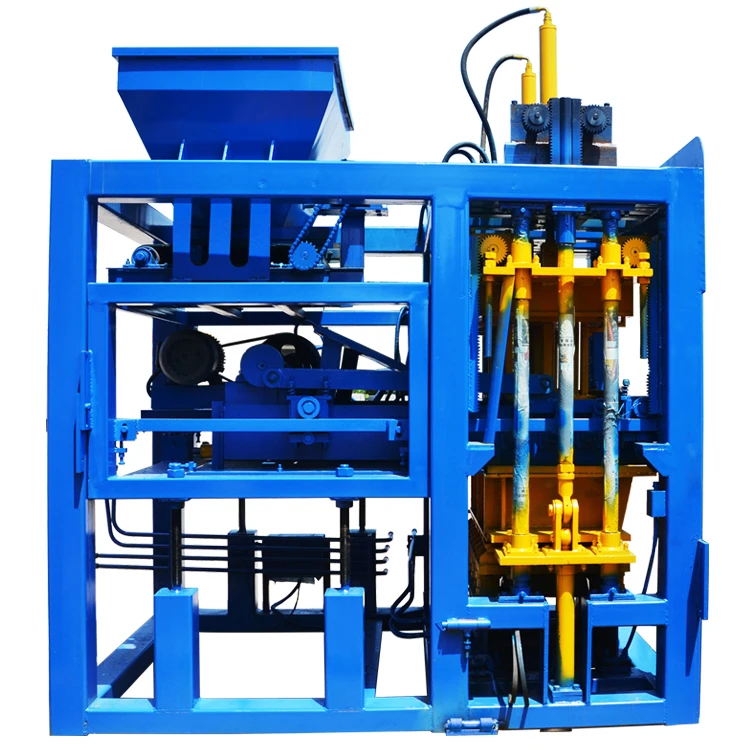
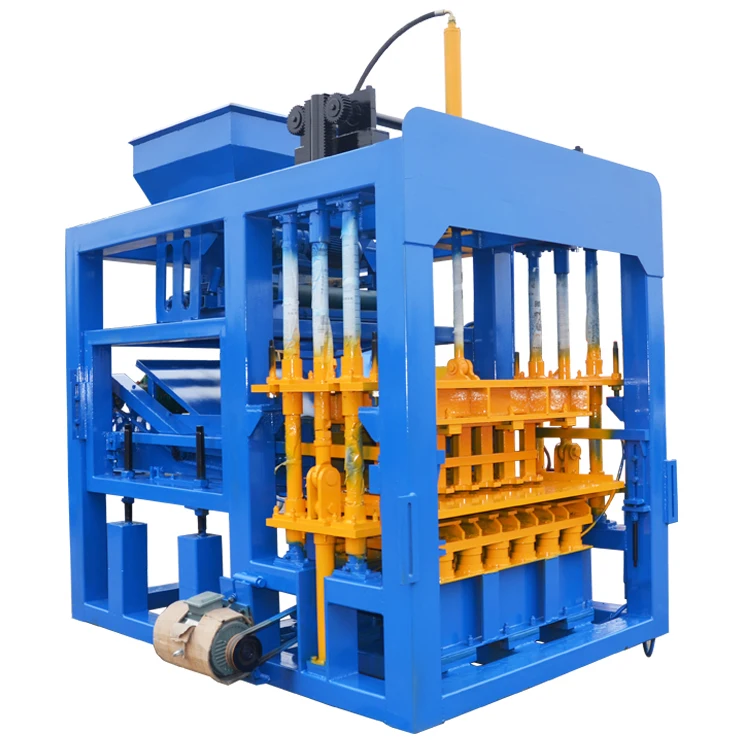


Description
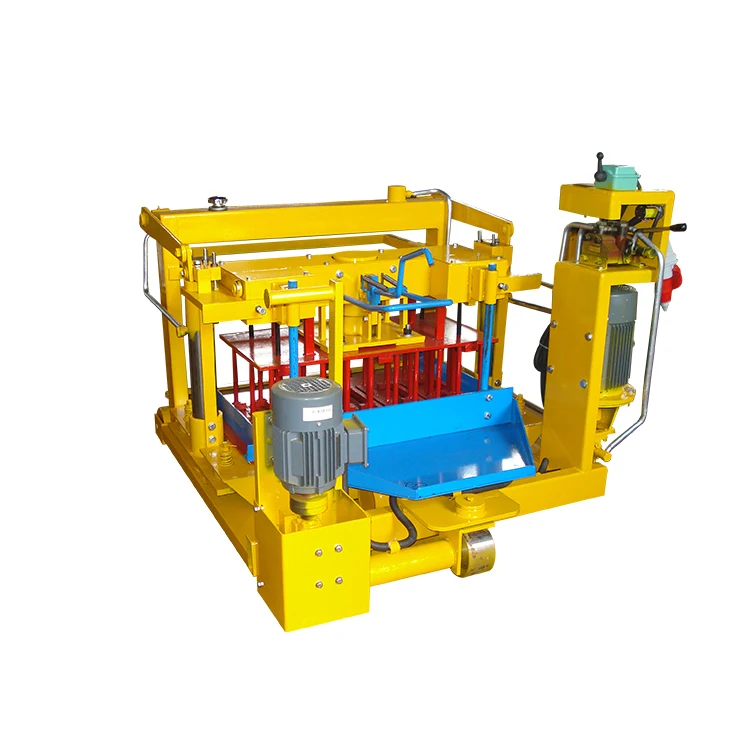
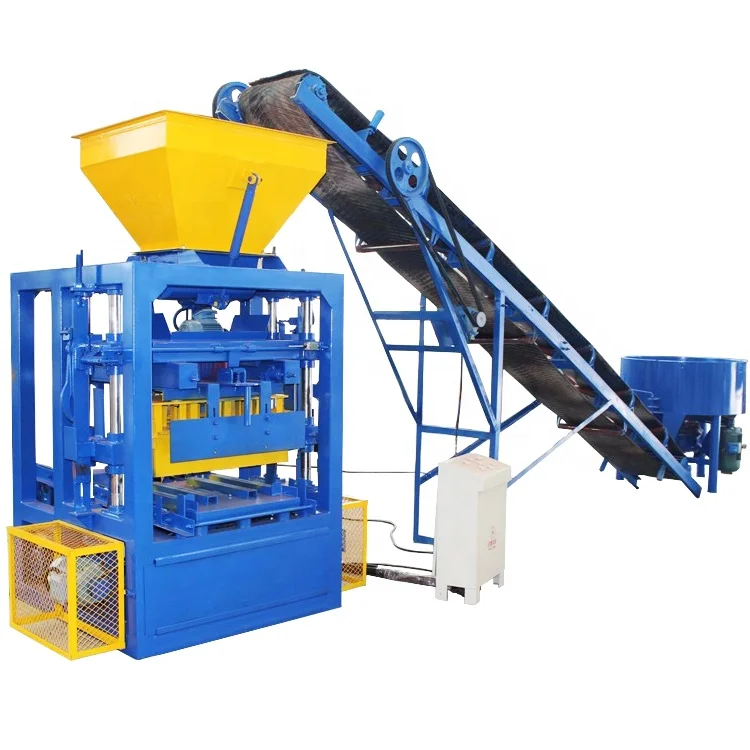
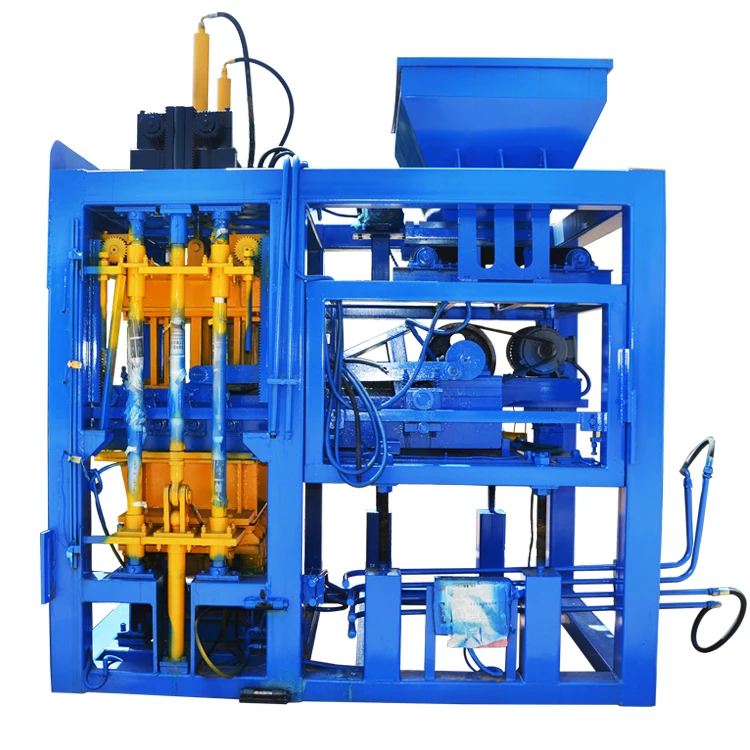
Stocked QT14-15 Automatic Block Machine — Dispatch-ready inventory with output capacity documented per block format so your project timeline stays intact from factory gate to port of destination.
Technical Specifications
| Parameter | Value |
|---|---|
| Model | QT14-15 |
| Product Type | Automatic Concrete Block Making Machine |
| Vibration Mode | Multiaxis synchronizer vibration, vertically downward |
| Guide Bearing | Long-period over-length guide bearing for upper mould and mould box alignment |
| Mixer System | Multiaxis forced mixer |
| Hydraulic System | High thermal efficiency, low heat generation |
| Control System | PLC, fully automatic |
| Rack Construction | High-strength special welding, vibration-shock resistant |
| Cycle Time | 15–20 seconds |
| Output — 400×200×200 mm hollow block | 4 pcs/mould, 900–1,200 pcs/h, 7,200–9,600 pcs/8 hr (basis: stated block size) |
| Output — 400×150×200 mm hollow block | 5 pcs/mould, 1,080–1,440 pcs/h, 8,640–11,520 pcs/8 hr (basis: stated block size) |
| Output — 400×100×200 mm hollow block | 8 pcs/mould, 1,440–1,920 pcs/h, 11,520–15,360 pcs/8 hr (basis: stated block size) |
| Output — 200×100×60 mm paving block | 16 pcs/mould, 2,880–3,840 pcs/h, 23,040–30,720 pcs/8 hr (basis: stated block size) |
| Output — 240×115×53 mm solid brick | 28 pcs/mould, 5,930–6,720 pcs/h, 47,400–53,700 pcs/8 hr (basis: stated block size) |
| Automation Level | Fully automatic |
| Mould Formats | Hollow block, solid brick, paving block, kerbstone |
| Warranty | 1 year whole machine (excluding spare parts) |
| Rated Power | not stated in source |
| Voltage & Frequency | not stated in source |
| Pallet Size | not stated in source |
Application Suitability
| Application | Material or Output |
|---|---|
| Hollow block production for wall construction | Crushed stone, cement, sand, water |
| Solid brick production for load-bearing masonry | Cement, fine aggregate, fly ash where permitted |
| Paving block production for walkways and plazas | Cement, graded aggregate, pigment for colour |
| Kerbstone production for road edges and channels | High-density concrete mix with coarse aggregate |
| Multicellular brick production for partition walls | Lightweight aggregate blended with cement |
What "Fast Delivery" Actually Means for a QT14-15 Automatic Block Machine
A stocked machine is only fast if the loading plan, voltage confirmation and customs paperwork are already settled before you sign.
I once watched a QT14-15 automatic block machine fast delivery order stall for three weeks at the port because the voltage sticker on the control cabinet did not match the buyer’s local grid documents. The machine had left our floor on time; the paperwork had not. A dispatch-ready unit still needs a container loading plan, hydraulic station securing method and pallet stack arrangement agreed before the container seal goes on. [NEED_CITE: export customs documentation requirements for industrial machinery]
Dispatch Lead Time and Container Loading Reality
When a project contractor calls asking for a QT14-15 automatic block machine fast delivery, the first question I ask is which block format they will run. A machine quoted as "1,200 pieces per hour" means nothing until you know that figure assumes a 400×200×200 mm hollow block. The same QT14-15 running 240×115×53 mm solid bricks will produce far more pieces per hour, but each piece is a fraction of the volume. Matching the stocked mould to your actual format is the difference between arrival and arrival-useless.
How We Prepare a Stocked Unit for Sea Freight
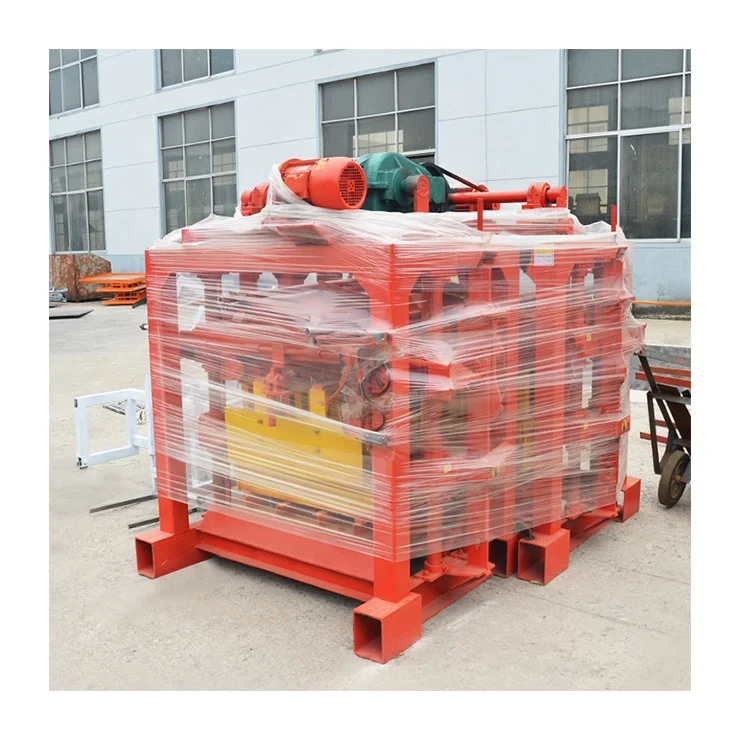
Every stocked QT14-15 goes through a final empty-load run before I sign the packing checklist. I listen to the multiaxis synchronizer vibration — if the pitch wavers, the guide bearings need checking before that unit goes anywhere. The hydraulic station gets drained to travel level, hoses capped and tagged, and the PLC cabinet wrapped against salt air. [NEED_CITE: container loading standards for heavy industrial equipment] A 40-foot high-cube container handles the main frame, mixer, and one pallet of moulds; the remaining pallets and spare parts ship in a second container or shared space, which I confirm with the buyer before sealing.
Reading the Spec Sheet Against Your Site Conditions
The QT14-15 lists a 15–20 second cycle time, but that number only holds if your mix design feeds the multiaxis forced mixer at the rate it expects. A dry, low-slump mix with well-graded crushed stone will compact cleanly under the vertically downward vibration; a wet or poorly graded mix will slow every cycle and shorten mould life. The long-period over-length guide bearing keeps the upper mould aligned with the mould box across thousands of cycles, which matters most when you are running thin-walled hollow blocks where even slight misalignment causes cracking. Hydraulic system heat generation stays low during extended runs, meaning an eight-hour shift does not end with the oil thinning out and pressure dropping. Buyers switching between hollow blocks and paving blocks on the same shift should factor in mould change time, which is not stated in source documents — confirm it before you commit your production schedule.
The Cost of Skipping Pre-Shipment Confirmation
I have seen a fully automatic block line sit on a dock for weeks because the PLC display language was never specified and the local electrician could not read the fault codes. The QT14-15 control system supports multiple language options, but only if someone asks before the cabinet is wired. The same applies to voltage and frequency: a machine wound for 380 V / 50 Hz will not start on a 440 V / 60 Hz grid without a transformer, and transformers add cost and floor space the buyer did not budget. [NEED_CITE: voltage and frequency standards by export market] These are not manufacturing defects — they are confirmation gaps, and every one of them delays commissioning.
Why Buyers Source This Machine Through Our Dispatch Channel
Block machinery is our single focus, so the QT14-15 ships as a matched system — press, mixer, pallets and moulds specified together rather than assembled from separate suppliers. Stocked units allow us to quote arrival estimates upfront, which matters when your contractor has a pour date that will not move. We configure against your local aggregate and target block format, not a catalogue default, so the multiaxis forced mixer is set for material you can actually source. Moulds for the formats your market sells — hollow block, solid brick, paving block, kerbstone — are drawn and stocked in-house, including custom profiles from buyer drawings.
Documentation & Verification
- Factory test record on your specified hollow block format before dispatch
- Container loading photograph showing hydraulic station securing and pallet arrangement
- Voltage and PLC display language confirmation sheet signed before wiring
- Hydraulic and electrical schematic matching the shipped configuration
- Packing list with customs HS codes for each component
- CE declaration where applicable to your destination market
Installation, Commissioning & Support
- Foundation plan sized to the QT14-15 rack weight and vibration load
- Dedicated circuit matching confirmed voltage and frequency before energising the PLC cabinet
- Hydraulic station refilled and bled on site after container unloading
- First production run supervised with your local aggregate mix design
- Operator training covering mould change procedure and cycle adjustment
- Wear parts list with reorder intervals for guide bearings and hydraulic seals
Before You Request a Quote
Send us the block format you will run most, your local aggregate type and moisture range, and the voltage and frequency at your site. If you already have curing racks and forklifts, share the pallet dimensions they accept so the QT14-15 pallet feeder is matched before shipping. Tell us your project deadline and destination port — we will reply with stocked availability, container loading plan and estimated arrival.
Frequently Asked Questions
Q: Which QT14-15 models are currently in stock and what is the dispatch lead time?
A: Stocked configurations vary by mould format and voltage specification. Once you confirm your block format and grid requirements, we check available inventory and quote a dispatch window. Typical multi-week lead times apply for custom mould sets not already on the shelf.
Q: How is the machine dismantled and loaded into containers for shipment?
A: The main press frame, mixer and hydraulic station are separated for loading into a 40-foot high-cube container. Hoses are capped, the PLC cabinet is wrapped for salt-air protection, and a loading photograph set is sent before the container is sealed.
Q: What is the estimated arrival timeline from order to port of destination?
A: Arrival depends on your destination port and current vessel schedules. We quote the estimate upfront once the dispatch date is confirmed, so you can align your foundation work and crane booking to the machine arrival date.
Q: Are standard moulds and pallets included in the stocked configuration?
A: Stocked units ship with moulds matching the block formats listed in current inventory. Pallets are included based on the configuration confirmed at order. Custom mould drawings are accommodated with additional lead time for fabrication and testing.
Q: What voltage and frequency options can be confirmed before shipping?
A: Voltage and frequency are confirmed during the order process based on your local grid. The PLC display language is set at the same stage so the control panel matches your operator’s requirements before the machine leaves the factory.


![QT4-20 Block Machine for Concrete Blocks – In Stock82 → 8+5+1+9+2 = 27, 27 % 6 = 3 结构3: [应用或物料] [品类词] – [站点修饰词] Concrete Block Machine QT4-20 – Ready to Ship](https://sdsyblockmachine.com/wp-content/uploads/2026/04/He8800ffe33484ed284537362a9105812u.webp)