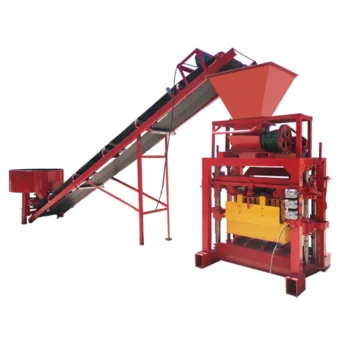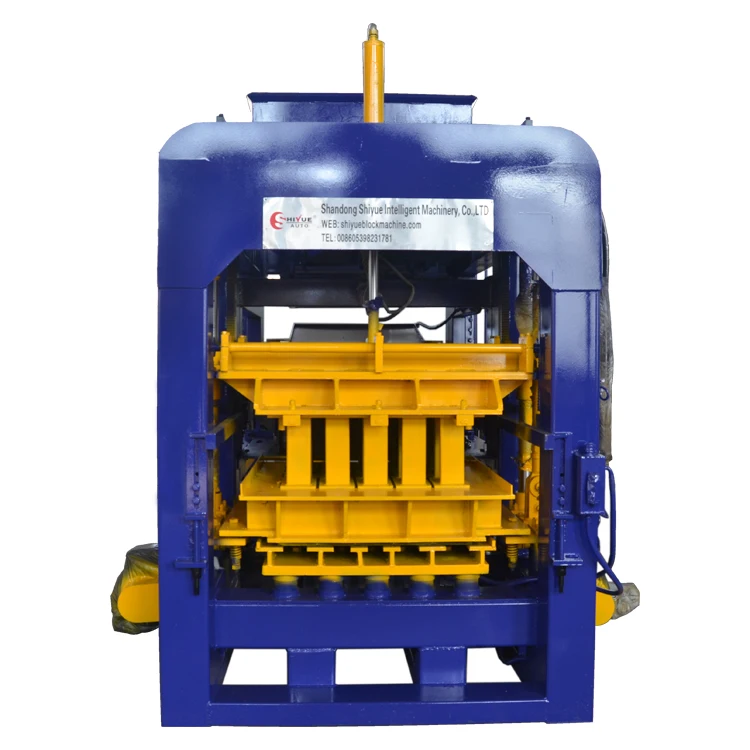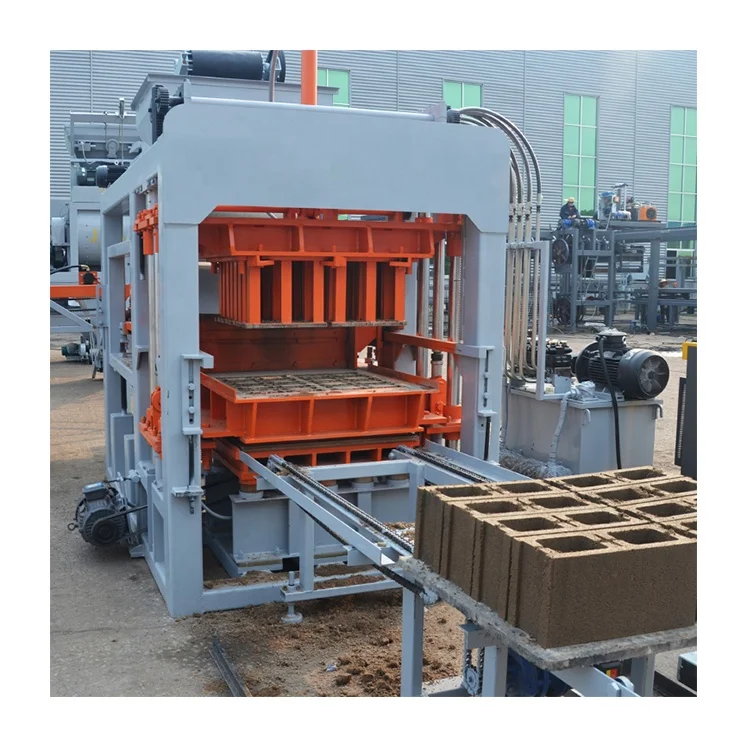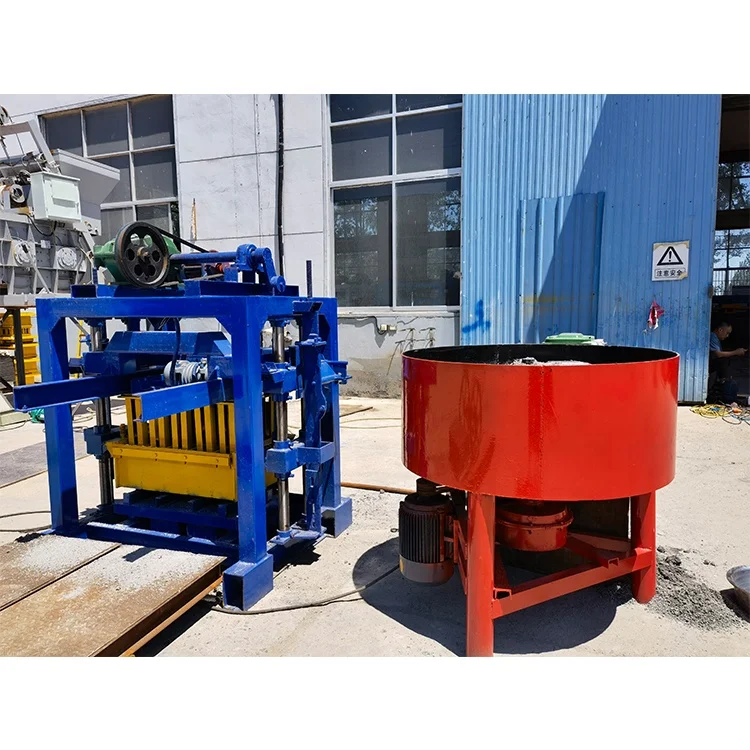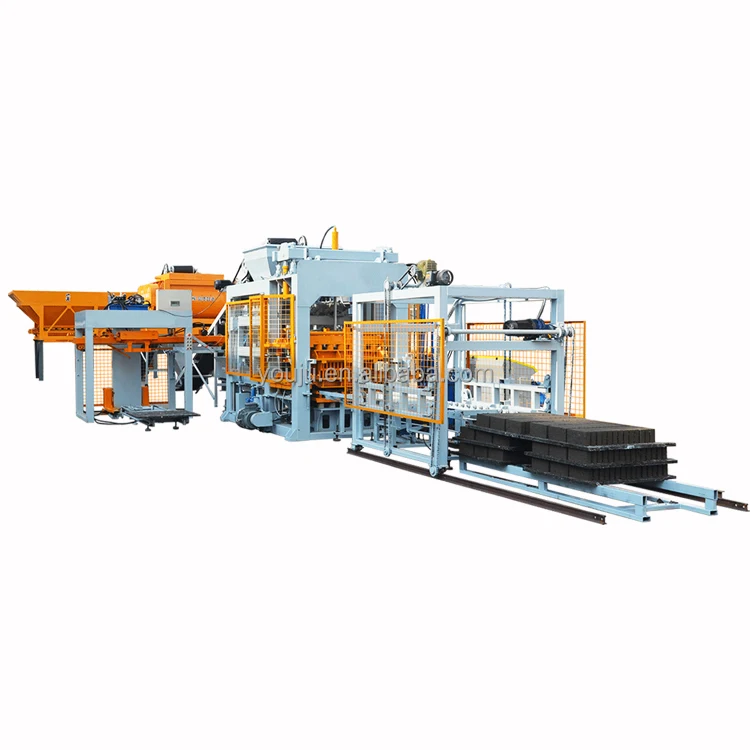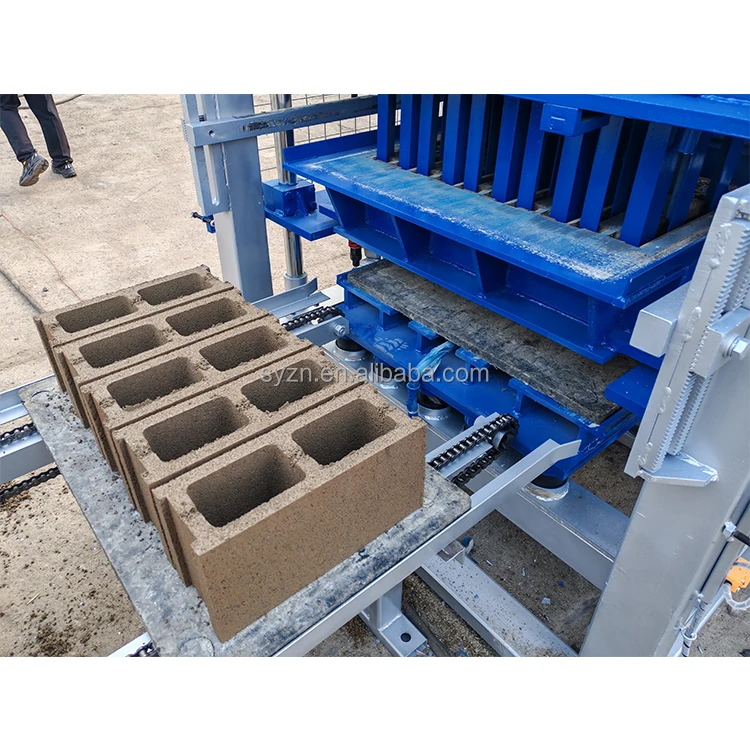
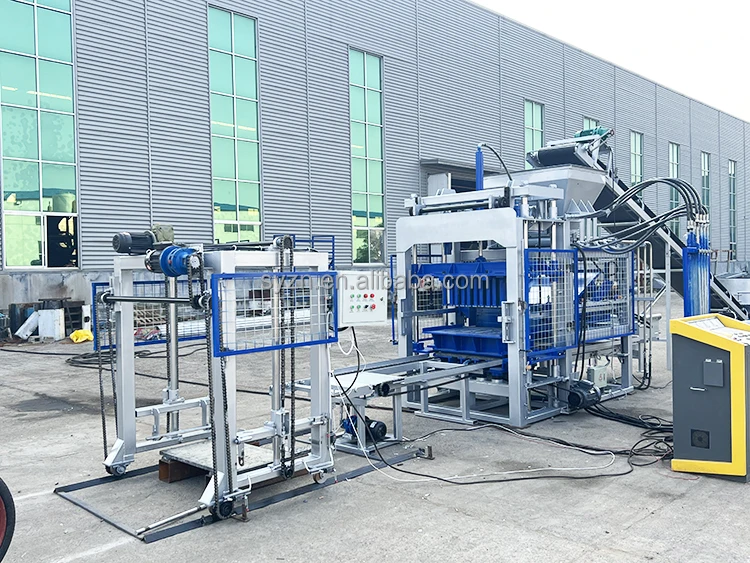
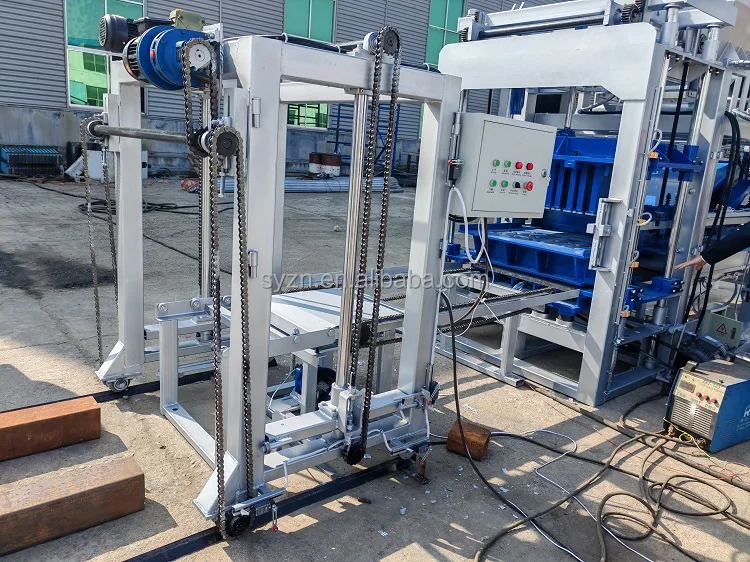

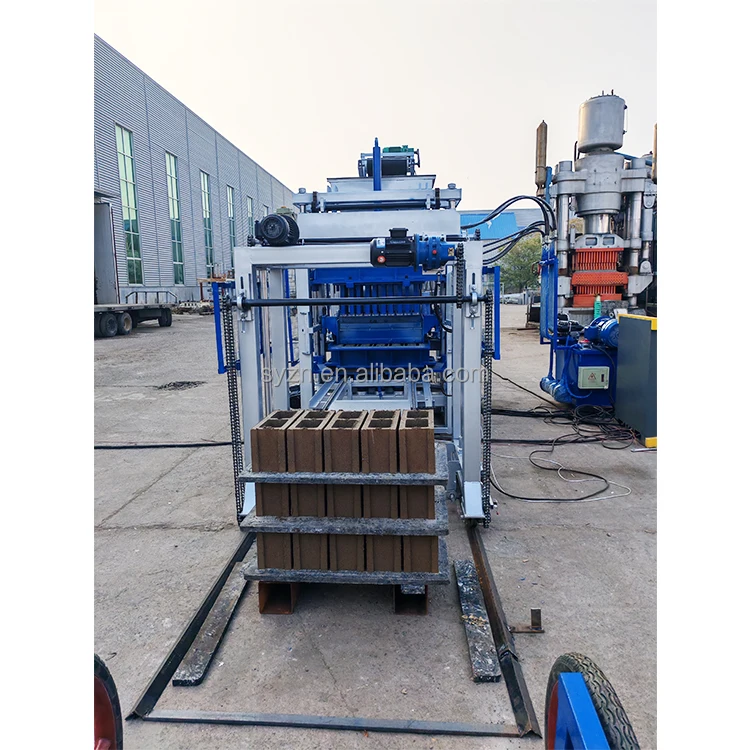

Description
Stocked QT4-15, Ready When Your Project Is — We hold completed QT4-15A units and standard moulds so dispatch lead time can be quoted before your deposit clears, not after.
Technical Specifications
| Parameter | Value |
|---|---|
| Product Type | Automatic Concrete Block Making Machine |
| Model | QT4-15A |
| Overall Dimensions | 4100×1600×2600 mm |
| Total Mass | 4 T |
| Rated Pressure | 16-21 MPa |
| Main Vibration Form | Platform Vibration |
| Vibration Frequency | 4200 r/min |
| Vibration Force | 55 kN |
| Pallet Size | 880×550 mm |
| Molding Cycle | 25-30 s (basis to be confirmed per block format) |
| Overall Power | 18.45 kW |
| Demolding Method | Hydraulic |
| Factory Area Required | 300 m² |
| Control System | PLC (confirm brand and language options) |
| Voltage & Frequency | Configurable to buyer’s site supply |
| Automation Level | Fully automatic |
| Warranty | 1 year (excluding spare parts) |
Application Suitability
| Application | Material or Output |
|---|---|
| Concrete hollow block production | Crushed stone, sand, cement, fly ash |
| Solid block manufacturing | Gravel, sand, cement, slag |
| Interlocking paver and curbstone | Colored aggregates, cement |
| On-site housing project production | Local aggregate and cement blends |
Why the Voltage Question Should Come Before the Price
A QT4-15 block machine in stock means little if the control cabinet arrives wired for a grid your site does not have. Confirming voltage, frequency, and PLC language before production starts is the single biggest factor in whether your machine runs on day one.
I have stood on a Middle East site where a fully automatic press sat idle for a week because the local supply was 415V/50Hz and the machine left the factory configured for 380V/60Hz. The contractor had paid for fast delivery and still lost ten working days waiting for a step-down transformer and a rewritten PLC program [NEED_CITE: voltage and frequency standards by export market]. The dispatch lead time was fast, but the commissioning lead time was not. Locking in the QT4-15 block machine in stock only matters if the electrical specification matches the destination.
Dispatch Lead Time Is Only Half the Arrival Story
Stock availability lets us quote a container loading date within days of deposit, not weeks. The QT4-15 block machine in stock is dismantled into press frame, hydraulic station, control cabinet, and pallet magazine to fit a standard 40-foot container. What still decides your arrival date is port congestion, destination customs clearance, and whether your shipping agent has the correct HS code before the bill of lading is issued.
Container Loading and Machine Dismantling for Shipment
The press frame ships upright with hydraulic hoses coiled and capped; the control cabinet rides in a separate wooden crate to protect the PLC and contactors from moisture. Pallets and standard moulds occupy the remaining floor space. We photograph every crate and container door seal before dispatch so your customs broker has the packing list verified against actual load, reducing the chance of a hold at destination [NEED_CITE: customs documentation requirements for heavy machinery imports].
What 55 kN Vibration and 21 MPa Pressure Actually Mean for Your Block
The 55 kN vibration force at 4200 r/min compacts the mix against the mould wall, while the 16-21 MPa hydraulic pressure holds the head plate down during the vibration phase. Together they determine the green density of the block before it leaves the press. If your local aggregate is a rounded river sand, the vibration frequency may need adjustment to achieve the same compaction as a crushed granite sand would deliver. The pallet size of 880×550 mm dictates how many blocks sit on each board; if your existing curing racks or forklift are built for a different pallet dimension, the mismatch will slow handling long before the press itself becomes the bottleneck. Molding cycle is quoted at 25-30 seconds, but the actual figure depends on the block format, wall thickness, and mix moisture you confirm during factory testing [NEED_CITE: relationship between vibration force, hydraulic pressure, and block compressive strength].
The Hidden Cost of Skipping the Pallet and Stacking Conversation
When a quotation covers only the press, the buyer inherits the job of moving, stacking, and curing every pallet of wet blocks by hand. A fully automatic line is only fully automatic if the pallet return system, stacker, and curing rack handling are included in the scope. Without them, the 300 m² factory area fills with hand-stacked cubes that must be manually broken down for kiln car loading, and the labor savings the automation level promised never materialize on the payroll [NEED_CITE: labor cost impact of manual versus automatic pallet handling in block plants].
Why Procure This Model Here
Single-focus machinery supply means the QT4-15A, its moulds, pallets, and handling equipment are specified as one matched system rather than assembled from separate vendors. We set the vibration force and hydraulic pressure against your actual mix design and target block format, not a catalogue default. Standard moulds for hollow, solid, and interlocking formats are kept in stock alongside the press, so the first container carries everything needed for a production start. Voltage, frequency, and PLC display language are confirmed line by line before the control cabinet is wired. Factory test records on your chosen block format are photographed and shared before the machine is dismantled for shipment.
Documentation & Verification
- Line layout showing 300 m² footprint and pallet flow path
- Machine specification sheet with confirmed voltage and frequency
- Mould drawing and format list for every standard mould shipped
- Hydraulic and electrical schematic matching the as-built cabinet
- Factory test record on your selected block format before dispatch
- Packing photographs and container seal number before vessel departure
Installation, Commissioning & Support
- 300 m² factory area must be level and cured before press frame arrives
- Dedicated power circuit sized for 18.45 kW plus starting surge
- Hydraulic station reconnected and bled on site within one shift
- PLC language and voltage verified again at first power-on
- Operator training covers mould change, pallet feed, and daily greasing
- Wear parts list identifies seals, springs, and vibration motor brushes
- First-week production monitored remotely via PLC data logs
What We Need to Quote Your Arrival Date
Share your target block format and daily output requirement so we can confirm which standard moulds ship with the press. Provide your site voltage and frequency, plus the control language your operators will need. If you already have curing racks or a forklift on site, send the pallet dimension they accept so we can match the 880×550 mm board or propose the closest standard alternative.
Frequently Asked Questions
Q: Which QT4-15 models and standard moulds are currently in stock?
A: We hold completed QT4-15A presses and standard mould sets for hollow, solid, and interlocking block formats. Exact stock quantity is confirmed at inquiry so you receive a written dispatch date before paying any deposit, rather than a generic estimate.
Q: What is the dispatch lead time and estimated arrival date after deposit?
A: Stocked units are container-loaded within days of deposit receipt. Total arrival time depends on sea freight transit and destination port clearance. We quote the vessel name and estimated arrival before you commit, so the date is fixed in your project schedule.
Q: How is the machine dismantled and loaded into container for shipment?
A: The press frame, hydraulic station, and control cabinet are separated and secured in a standard 40-foot container. Pallets and moulds fill the remaining space. Every crate is photographed before the door seal is applied.
Q: Are pallets, stacking equipment, and curing racks included or shipped separately?
A: Pallets and standard moulds are included in the press quotation. Automatic stackers and curing rack handling are optional line extensions. We confirm which items are in your scope before the quotation is issued so nothing arrives missing.
Q: What customs documentation is provided for destination clearance?
A: We supply commercial invoice, packing list, bill of lading, CE declaration where applicable, and a certificate of origin if your country requires it. All documents are cross-checked against the container packing photographs before release.