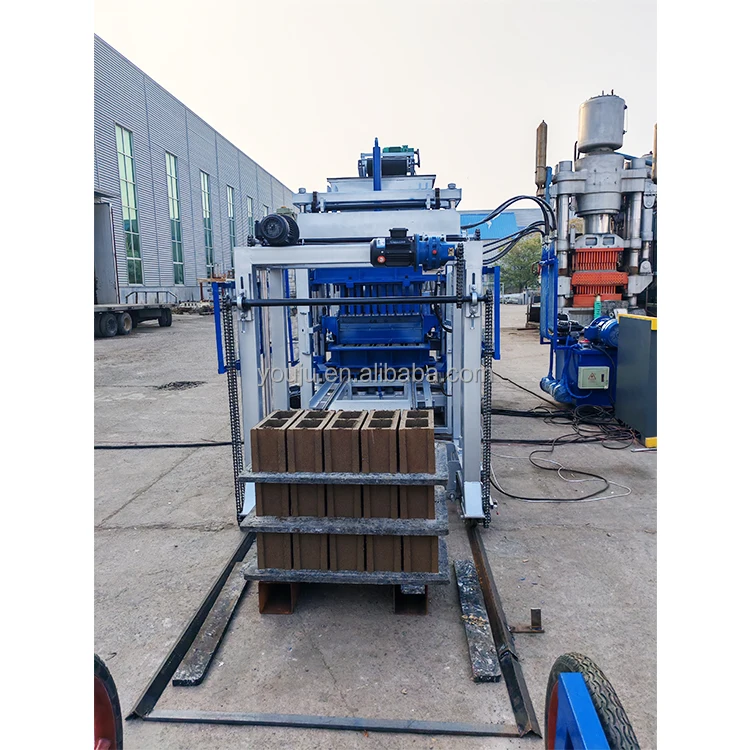
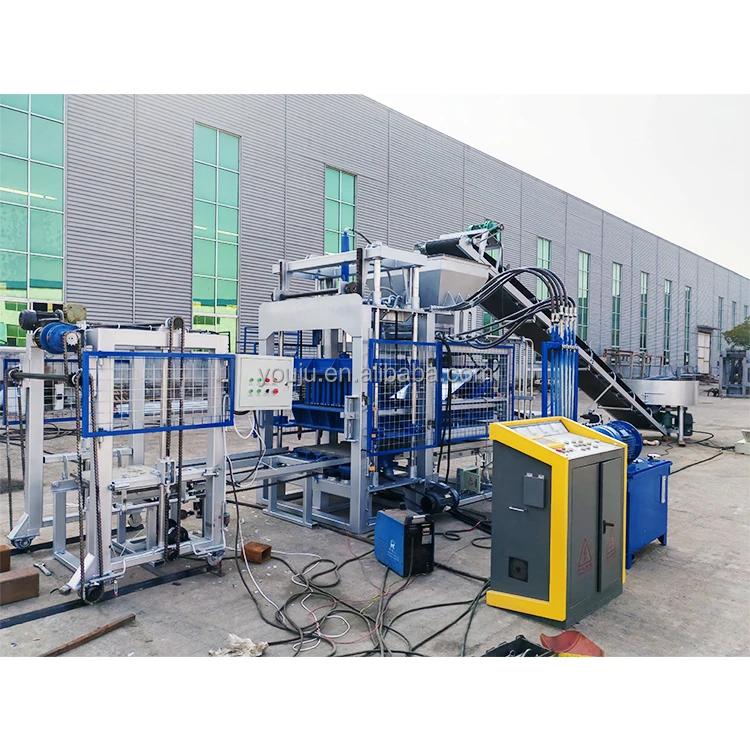


Description
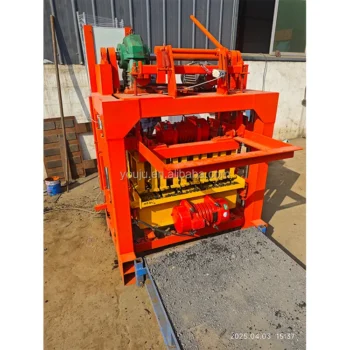
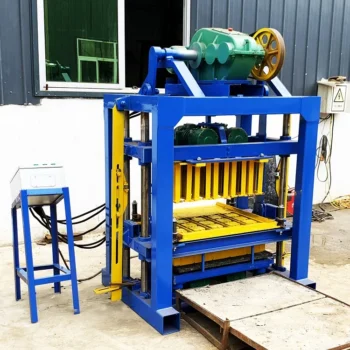
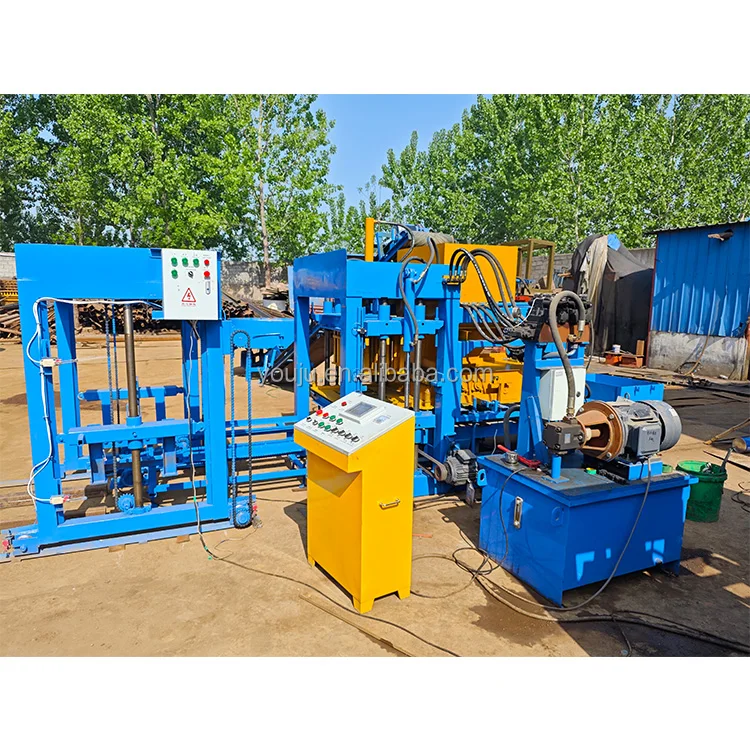
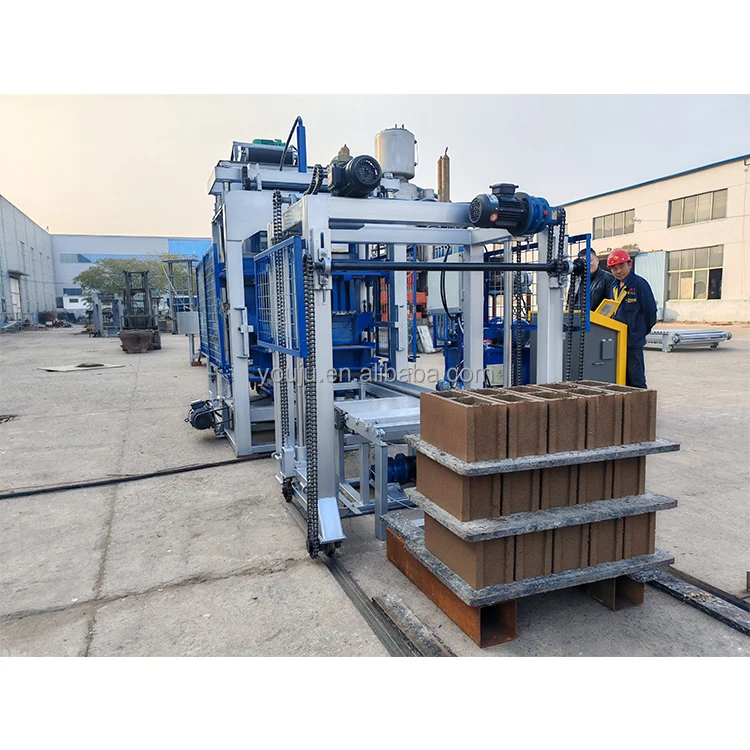
Stocked and Dispatch-Ready — The QT4-15 hydraulic block making machine sits crated in our yard with standard moulds, bypassing the typical multi-week production queue so your project timeline holds.
Technical Specifications
| Parameter | Value |
|---|---|
| Model | QT4-15 |
| Product Type | Hydraulic Block Making Machine |
| Molding Cycle | 15-30s (basis not stated in source — confirm block format / material / thickness) |
| Pallet Size | 900x500mm |
| Vibration Type | Platform vibration |
| Vibration Frequency | 50-70HZ |
| Product Height Range | 50-220mm |
| Overall Power | 24.5kW |
| Demolding Method | Hydraulic |
| Control System | PLC |
| Output Capacity (Hollow Block 400x200x200mm) | 900-1200 pcs/hour (7200-9600 pcs/8hr) |
| Output Capacity (Hollow Block 400x150x200mm) | 1080-1440 pcs/hour (8640-11520 pcs/8hr) |
| Output Capacity (Hollow Block 400x100x200mm) | 1440-1920 pcs/hour (11520-15360 pcs/8hr) |
| Output Capacity (Paver 200x100x60mm) | 2880-3840 pcs/hour (23040-30720 pcs/8hr) |
| Output Capacity (Solid Brick 240x115x53mm) | 5930-6720 pcs/hour (47400-53760 pcs/8hr) |
| Mould Cycle Time (Hollow Block / Paver / Solid Brick) | 15-20s |
| Raw Materials | Flyash, slag, gangue, sand, water, crushed stone, cement |
| Block Compressive Strength | More than 15 MPa |
| Key Features | PLC control, hydraulic demolding, platform vibration |
Application Suitability
| Application | Material or Output |
|---|---|
| Hollow block production | Flyash, sand, crushed stone, cement blends for load-bearing and partition walls |
| Paver brick production | Dense aggregate and cement mixes for walkways, driveways, and plazas |
| Solid brick production | Sand, gangue, slag, and cement for masonry infill and structural work |
| Mid-scale block plant operations | Suitable for middle and small factories running standard block formats |
Why Your Arrival Date Depends on What You Confirm Before You Pay
Voltage, frequency, and PLC display language must be locked in writing before the container is booked.
I have stood in front of a QT4-15 hydraulic block making machine in a West African yard with a client who had been waiting weeks, only to discover the control panel was wired for a frequency his grid did not supply. The machine was physically there, but electrically it was a paperweight. Commissioning stalled while a transformer was sourced locally at a premium. That delay was entirely preventable. [NEED_CITE: voltage and frequency standards by export market]
The same applies to PLC display language. Operators who cannot read the fault codes on screen will call you for every alarm, and the first week of production turns into a troubleshooting exercise instead of a ramp-up.
Container-Ready Configuration
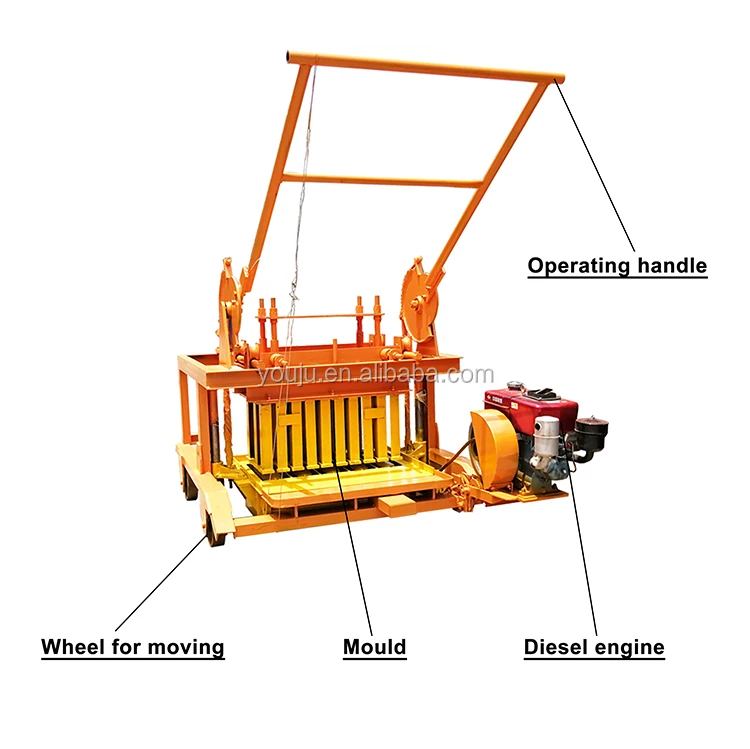
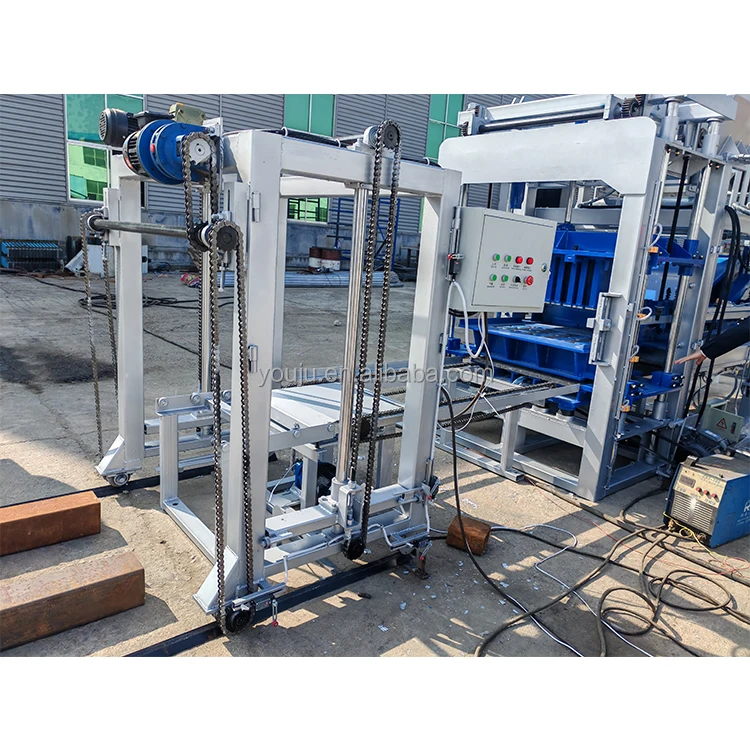
The QT4-15 hydraulic block making machine is configured as a mid-tier stationary press with a 900x500mm pallet footprint, which dictates how it dismantles for shipping. The main frame, hydraulic station, and mould assembly separate into distinct lifts that fit within a standard container alongside a set of pallets and one or two standard moulds. Buyers who know their container type in advance can request a loading plan before the crate is sealed.
Dispatch Without the Production Queue
Stocked inventory means the machine has already passed factory testing. You are not waiting for a build slot to open on the shop floor. Standard hollow block and paver moulds ship alongside the press, so the first production run can happen within days of on-site commissioning rather than weeks later when a custom tooling order finally arrives.
What the Cycle Time Actually Tells You
The 15-20 second mould cycle listed for hollow blocks, pavers, and solid bricks is a press-only figure. Real daily throughput depends on how fast the mixer feeds, how quickly pallets circulate through the curing area, and whether the stacking station keeps pace. A 900x500mm pallet moving every 15-20 seconds demands a curing rack system that can absorb that volume without bottlenecking. [NEED_CITE: typical block plant curing rack turnover rates]
The 24.5kW overall power rating covers the hydraulic pump, vibration motors, and PLC cabinet together. Sites running marginal generators need to account for the inrush current when the hydraulic pump starts under load. Platform vibration at 50-70HZ is tuned for standard aggregate mixes; if your local sand is unusually fine or your crushed stone runs oversized, the vibration frequency range tells you whether the press can adapt or whether a different exciter is needed.
The product height range of 50-220mm covers most structural and paving formats. Anything outside that envelope requires a different press class, not just a taller mould.
What Happens When Dispatch Speed Is the Only Priority
Rushing a machine onto a vessel without verifying the pallet size against your existing curing racks and forklift dimensions means the machine arrives and the blocks have nowhere to go. I have seen buyers stack wet blocks by hand on the factory floor because the 900x500mm pallets did not match the rack spacing they already had welded in place. The press ran fine; the handling chain around it collapsed. [NEED_CITE: common pallet handling mismatches in block plant setups]
Skipping the voltage confirmation step adds another layer of risk. A 24.5kW machine on the wrong frequency burns out the vibration motors within weeks, and the warranty claim becomes a debate about who was responsible for checking.
Why Source This Machine Here
Block machinery is the single focus of this operation, which means the QT4-15 is specified as a matched system — press, mould, pallet, and handling — rather than assembled from unrelated suppliers who each point at the other when something does not fit.
Standard moulds for hollow blocks, pavers, and solid bricks are stocked alongside the machine, eliminating the separate tooling lead time that delays first production at many plants.
Configuration is confirmed against your actual site voltage and local aggregate before dispatch, not after the machine arrives and fails its first test run.
Packing photographs and container loading plans are provided upfront so you know exactly how the main frame, hydraulic station, and pallets fit before the container door closes.
Documentation & Verification
- Factory test record run on your specified block format before crating
- Pallet specification sheet confirming 900x500mm dimensions and material grade
- Voltage and PLC display language confirmation signed before dispatch
- Container loading plan with dismantling sequence for the QT4-15
- Hydraulic and electrical schematic matching the shipped configuration
- Operation and maintenance manual in the confirmed control language
Installation, Commissioning & Support
- Foundation slab must accommodate the 900x500mm pallet footprint and press vibration load
- Dedicated electrical circuit rated for 24.5kW with confirmed voltage and frequency
- Main frame, hydraulic station, and mould reassembled on site per dismantling sequence
- First production run calibrated to local aggregate moisture and mix proportions
- Operator training on PLC fault codes and mould change procedure
- Wear parts list covering hydraulic seals, vibration motor bearings, and mould liners
Before You Request a Quote
Send the exact block formats your market sells, the daily volume you need to hit, and your site voltage and frequency. Include the pallet size your curing racks and forklift already accommodate, and note whether you need standard hollow block and paver moulds or a custom format. The QT4-15 hydraulic block making machine dispatch timeline depends on these details being settled early.
Frequently Asked Questions
Q: Which QT4-15 configurations are currently stocked versus built to order?
A: The base QT4-15 hydraulic block making machine with PLC control and standard hydraulic demolding is stocked. Standard hollow block and paver moulds ship with it. Custom mould formats, non-standard pallet materials, or specific PLC language packages outside the stocked range require a production slot, which adds lead time to your dispatch date.
Q: How is the QT4-15 dismantled for container loading?
A: The main press frame, hydraulic power pack, and mould assembly separate into individual lifts. A loading plan is provided before dispatch showing how each component and the pallet stack fit within the chosen container size, so nothing arrives loose or damaged.
Q: What is the realistic dispatch lead time once the order is confirmed?
A: Stocked QT4-15 units with standard moulds can be crated and moved to port within days of confirmation and payment clearance. Configurations requiring custom moulds or non-standard voltage packages follow a longer build schedule, quoted in writing before you commit.
Q: Do standard moulds ship together with the machine or separately?
A: Standard hollow block, paver, and solid brick moulds that are in stock ship in the same container as the QT4-15. Custom-format moulds are quoted and scheduled separately, and their lead time may not align with the machine dispatch date.
Q: Can an arrival estimate be quoted before the machine ships?
A: Yes. Once the port of loading and destination port are confirmed, a transit estimate is provided alongside the dispatch date so you can plan foundation work, electrical connections, and operator availability around a known arrival window.