


Description
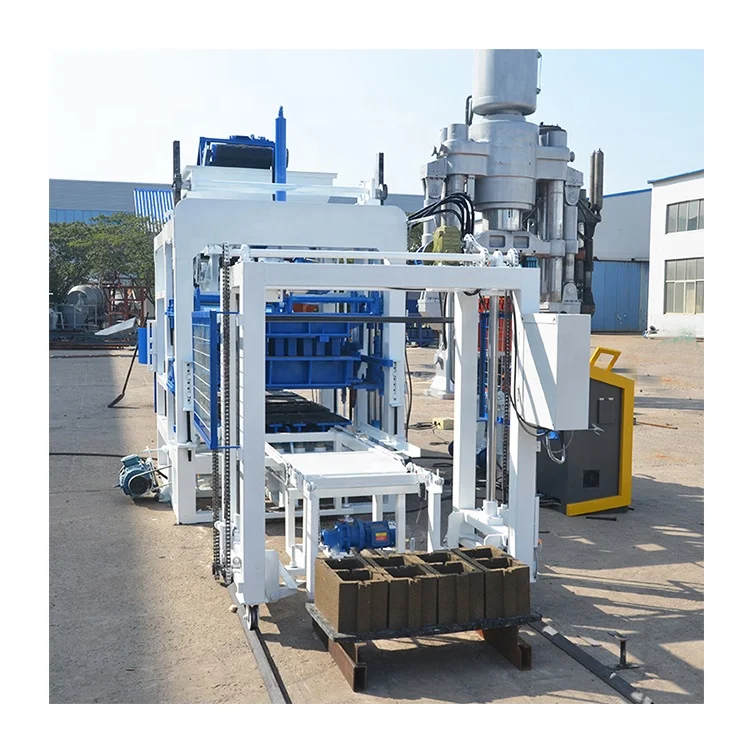
Stocked Hydraulic Press — dispatch lead time quoted before order confirmation, with the QT4-15A shipped as a complete station set rather than a bare press.
Technical Specifications
| Parameter | Value |
|---|---|
| Model | QT4-15A |
| Product Type | Hydraulic Block Making Machine |
| Overall Dimensions (L×W×H) | 7100 x 1600 x 2610 mm |
| Molding Cycle | 15–25 s |
| Vibration Frequency | 4600 r/min |
| Exciting Power | 40–50 KN |
| Rated Power | 18.45 kW |
| Mixer Model | JQ350 |
| Pallet Size | 850 x 550 x 25 mm |
| Net Weight | 3 T |
| Control System | PLC control system |
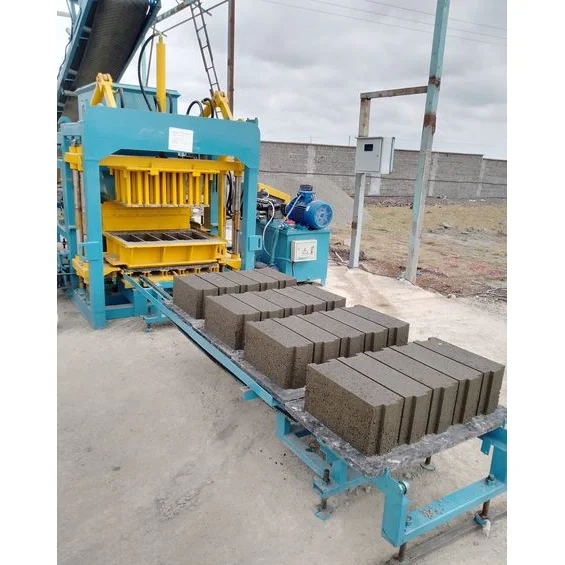
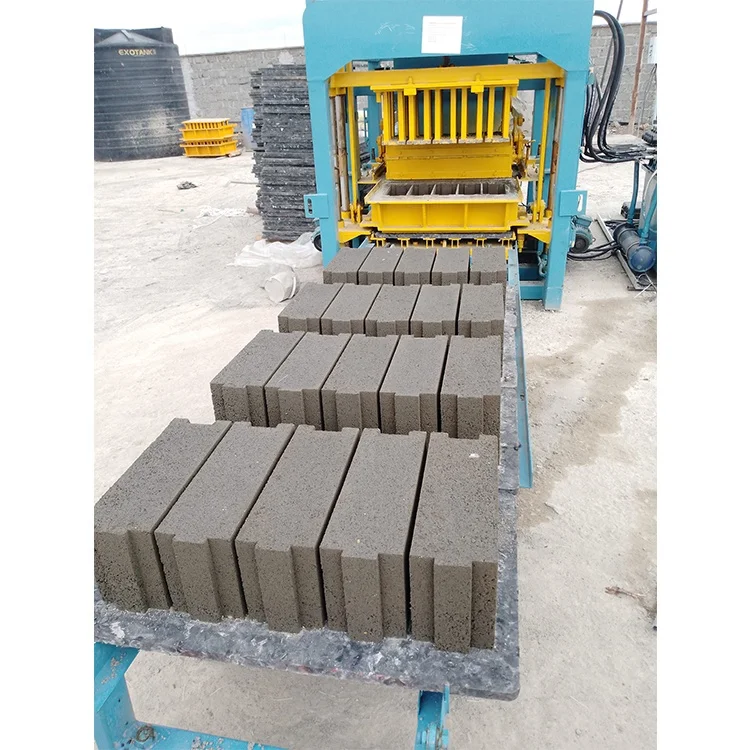
| Output Capacity | 408 pcs/hr (based on 400×200×200mm hollow block, 4 pcs/mould) |
| Output Capacity | 510 pcs/hr (based on 400×150×200mm hollow block, 5 pcs/mould) |
| Output Capacity | 2100 pcs/hr (based on 240×115×53mm solid brick, 18 pcs/mould) |
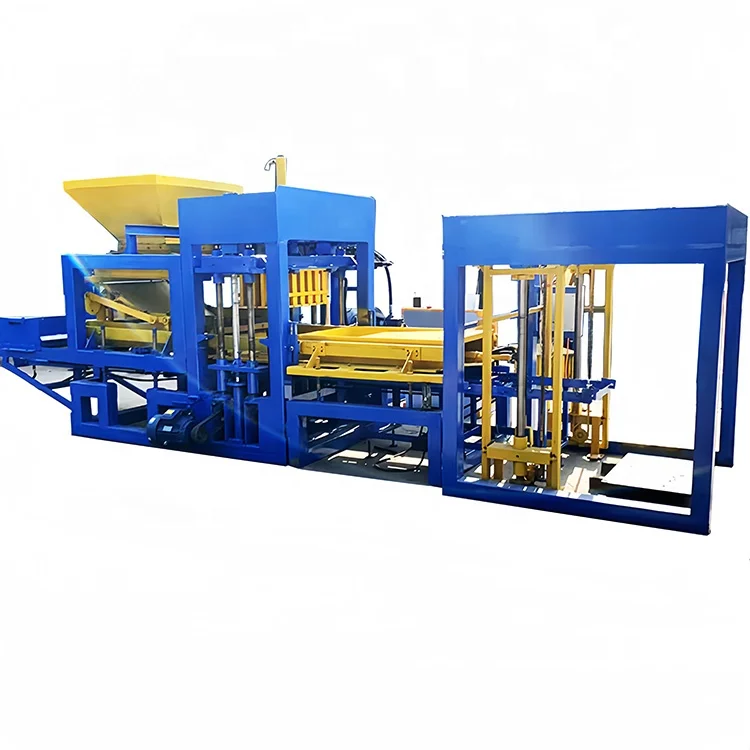
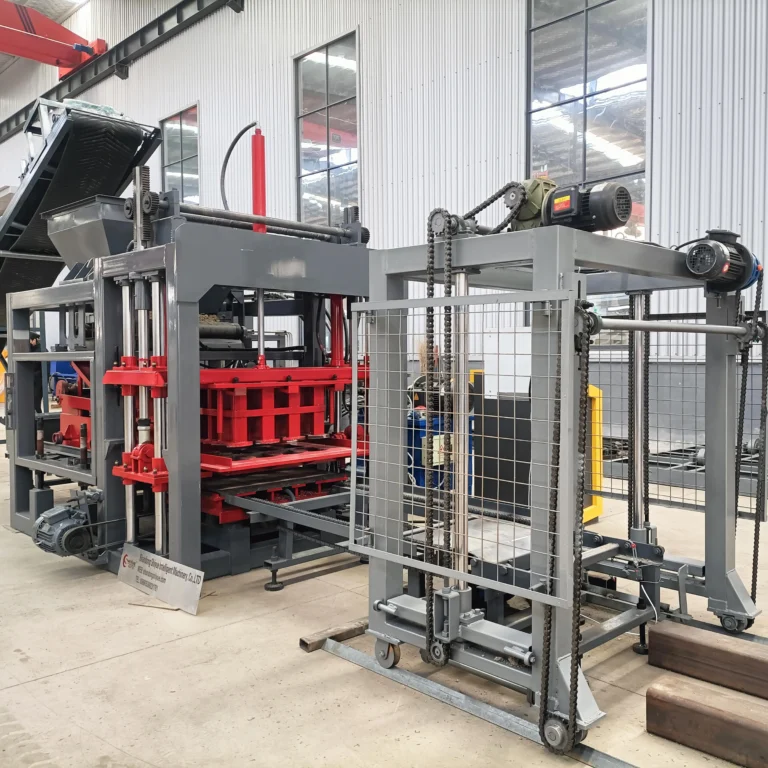
| Included Equipment | Block making machine, hydraulic station, PLC control system, pallet feeder, brick conveyor, block sweeper |
| Free Accessories | Manual hydraulic trolley, spare parts and tools |
| Hydraulic Pressure | (basis to be confirmed) |
| Voltage & Frequency | (basis to be confirmed) |
| Automation Level | Semi-automatic with hydraulic station and PLC |
Application Suitability
| Application | Material or Output |
|---|---|
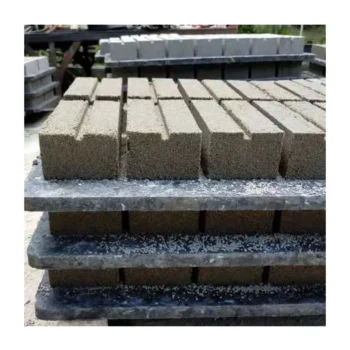
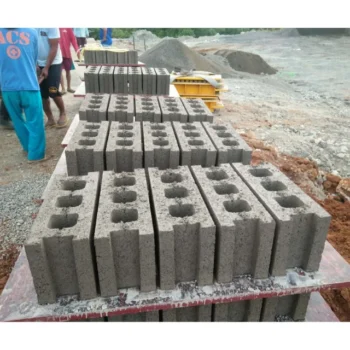
| Hollow block production for housing projects | Crushed stone, sand, cement, fly ash |
| Solid brick manufacturing for masonry walls | Cement, dust, sand, crushed aggregates |
| Paver production for driveways and walkways | Pigmented concrete mixes with fine aggregates |
| Curbstone forming for road infrastructure | High-strength concrete with coarse gravel |
| On-site block production by contractors | Locally sourced sand, stone dust, and cement |
Why the Voltage Question Must Come Before the Container Booking
A machine wired for the wrong grid sits idle on your slab while the project clock runs.
I have watched a block machine arrive at a site in West Africa, only for the main motor to trip the breaker the moment the operator pressed start. The local supply was 415V/50Hz, but the motor had been wound for 380V. The contractor lost three weeks waiting for a replacement electrical panel to ship. That delay cost more than the machine itself in idle crew wages and penalty clauses. When sourcing a QT4-15A hydraulic block making machine in stock fast delivery, the voltage and frequency confirmation must be locked before the unit leaves the factory floor [NEED_CITE: voltage and frequency standards by export market].
Dispatch Timing You Can Plan Around
Project deadlines do not wait for a production slot to open. The QT4-15A hydraulic block making machine in stock fast delivery is held in inventory so the quotation can include a realistic dispatch date rather than a vague estimate. Container loading plans are prepared at the order stage, showing how the press, hydraulic station, pallet feeder, and conveyor are dismantled and positioned inside the box. You know the loading date, the vessel name, and the estimated arrival before the deposit clears.
One Matched Set, Not a Parts List from Different Suppliers
The station list ships together: JQ350 mixer, pallet feeder, brick conveyor, and block sweeper arrive in the same container as the press. This eliminates the common situation where the press is installed but the pallet feeder is still on a second vessel, leaving the crew hand-feeding pallets for a fortnight. Every component has been tested as a single line before packing, so the first production run is not an unscripted commissioning exercise.
Reading the Specs That Actually Matter on Site
The 4600 r/min vibration frequency paired with 40–50 KN exciting power determines how tightly the aggregate particles lock together inside the mould cavity. Higher frequency alone does not guarantee block density; the hydraulic pressure must hold the mould head down while vibration consolidates the mix. The 15–25 s molding cycle reflects the time the press needs to fill, compress, vibrate, and strip — and that window shifts depending on whether you are running a dry hollow block mix or a wetter paver blend. The 850 x 550 x 25 mm pallet size defines your curing rack layout and the forklift tine width you need on the yard side [NEED_CITE: pallet sizing standards for concrete block curing]. Mismatch the pallet to your existing racks and you will be rebuilding the curing area before the first block leaves the line.
The Cost of Skipping Electrical Confirmation
Arriving on site to discover the PLC display is in a language your operator cannot read turns a training session into guesswork. Wrong voltage is worse — it can damage the motor winding on the first start attempt, voiding warranty coverage and stranding the line. Contractors who skip the confirmation step often absorb the cost of a local electrical rewind, which adds weeks and unbudgeted expense to an already tight schedule [NEED_CITE: CE machinery directive requirements for industrial equipment].
What Buying from a Block-Machine-Focused Supplier Changes
Every component on the QT4-15A is sourced and tested for block production, not assembled from a catalogue of unrelated machinery. The mould design matches the formats your local market actually buys, and custom drawings can be produced to buyer specifications. Voltage, frequency, and PLC language are written into the confirmation checklist at order, not discovered at commissioning. The factory test record shows the machine running your target block format before it is packed, so output claims are tied to a real production run. Spare moulds and hydraulic wear parts are listed on the packing slip so the first replacement is on the shelf when it is needed.
Documentation & Verification
- Factory test record showing cycle time on your specified hollow block format
- Capacity calculation sheet stating the block size assumed for each output figure
- Voltage and frequency confirmation form signed before production begins
- Container loading plan with dismantling diagrams for the QT4-15A
- Packing photographs taken at the factory before the container doors close
- Hydraulic and electrical schematic in the operator’s working language
Installation, Commissioning & Support
- Foundation slab must support 3 T net weight plus dynamic vibration loads
- Dedicated circuit required for 18.45 kW rated power at confirmed voltage and frequency
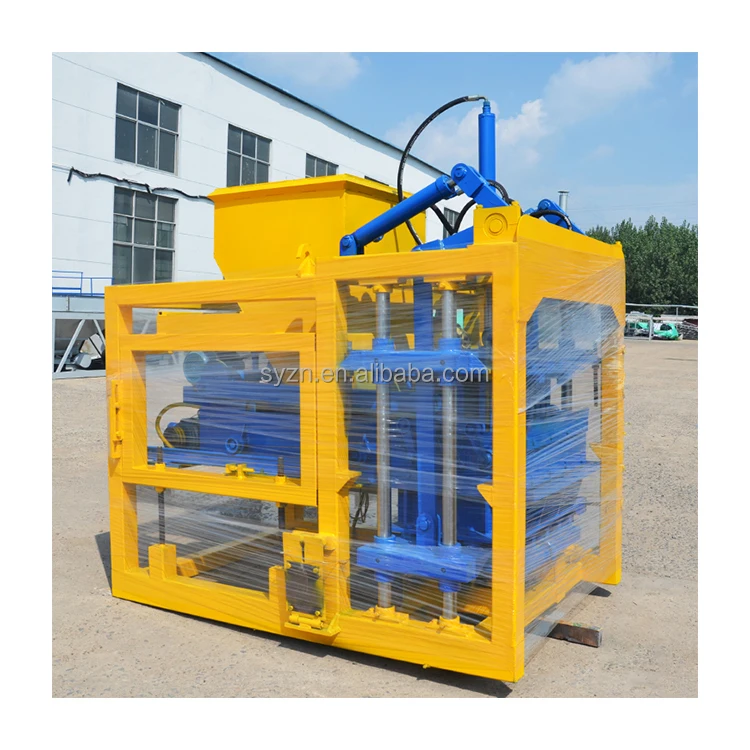
- Machine arrives dismantled; reassembly covers hydraulic station, PLC cabinet, and pallet feeder
- First-run parameter setting adjusts vibration frequency and molding cycle to your mix design
- Operator training covers PLC navigation, mould change procedure, and daily greasing points
- Wear parts kit and manual hydraulic trolley included for the initial production period
What to Have Ready When You Request a Quote
Provide the block format you sell most — dimensions and whether it is hollow, solid, or a paver. State your local voltage, frequency, and the language your operator reads. Describe the raw materials you have access to, including the type of aggregate and whether fly ash is available. If you already have curing racks or a forklift on site, share the pallet dimensions you are currently using so the 850 x 550 x 25 mm pallet can be matched or adjusted before production starts.
Frequently Asked Questions
Q: What is the dispatch lead time for the QT4-15A and is the machine currently in stock?
A: The QT4-15A is held as a stocked model, and the dispatch lead time is quoted at the proposal stage so you can align it with your project schedule. Container loading plans are prepared before shipment, and the arrival estimate is provided at quotation based on the destination port.
Q: How is the machine packed and dismantled for container loading?
A: The press, hydraulic station, PLC cabinet, pallet feeder, and conveyor are dismantled and positioned according to a loading plan prepared at order. Packing photographs are shared before the container is sealed, and the plan shows reassembly sequence for the site crew.
Q: Which block formats are included as standard moulds and which require custom tooling?
A: Standard moulds cover common hollow block, solid brick, paver, and curbstone formats. Custom moulds can be designed to buyer drawings for formats that are specific to your local market. Mould change procedure is covered during operator training.
Q: Are voltage, frequency, and PLC language confirmed before the machine leaves the factory?
A: Yes. The voltage and frequency confirmation form is signed before production begins, and the PLC display language is set to the operator’s working language. The electrical schematic is supplied in that same language for the site electrician.
Q: What spare parts and wear items ship with the machine for the first production run?
A: A spare parts kit, manual hydraulic trolley, and basic tools are included as free accessories. The packing list details every wear item so you know exactly what is on the shelf before the first mould change is due.