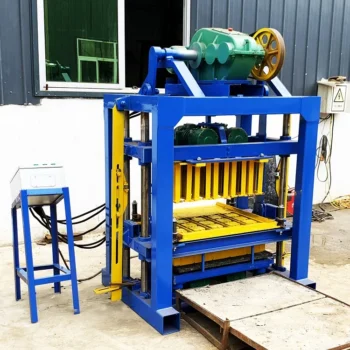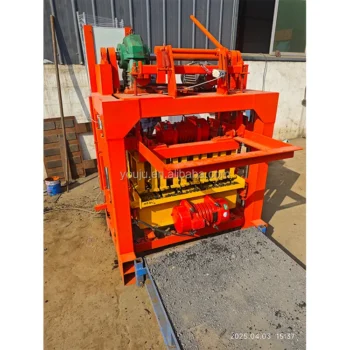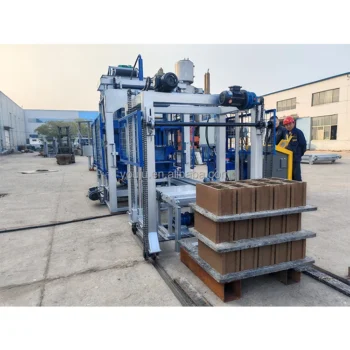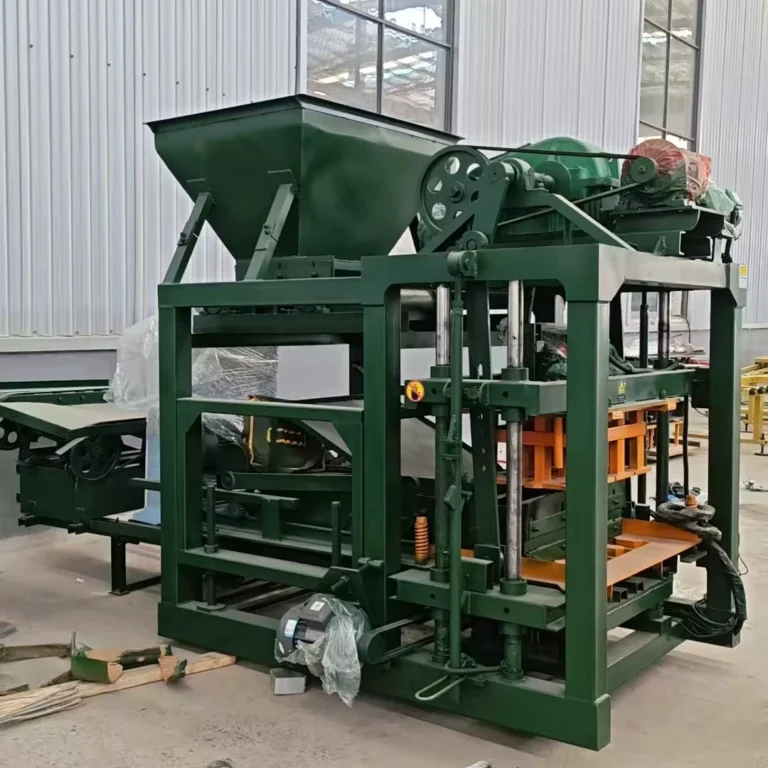
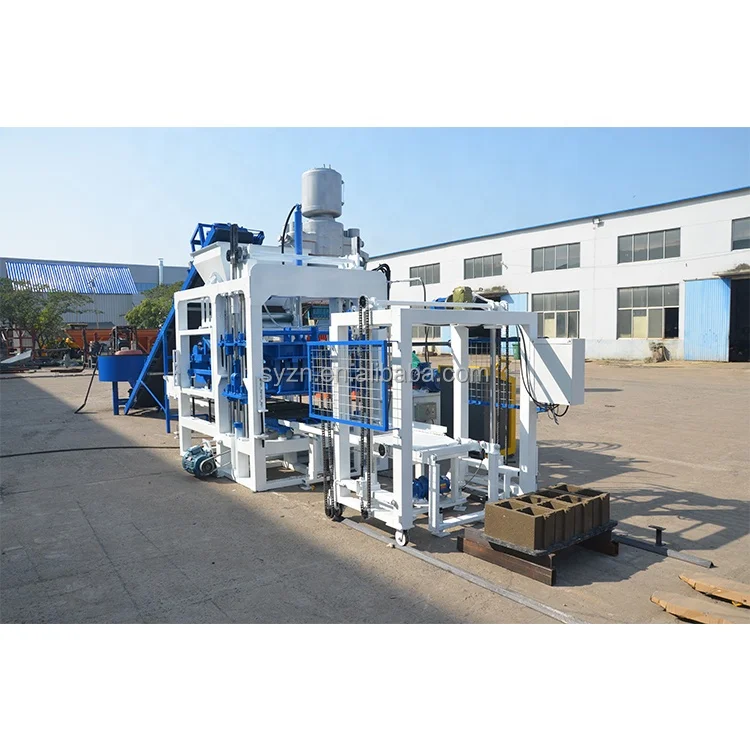
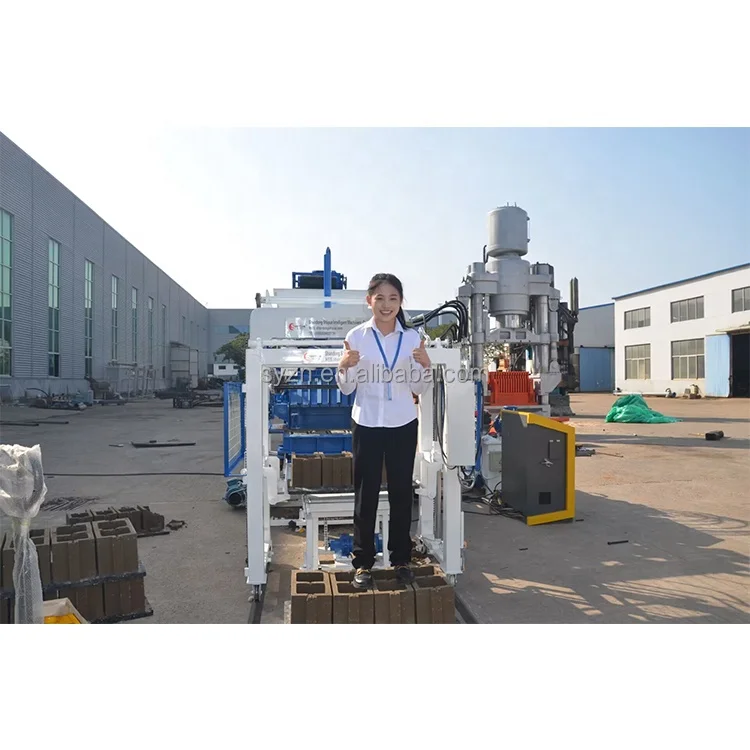
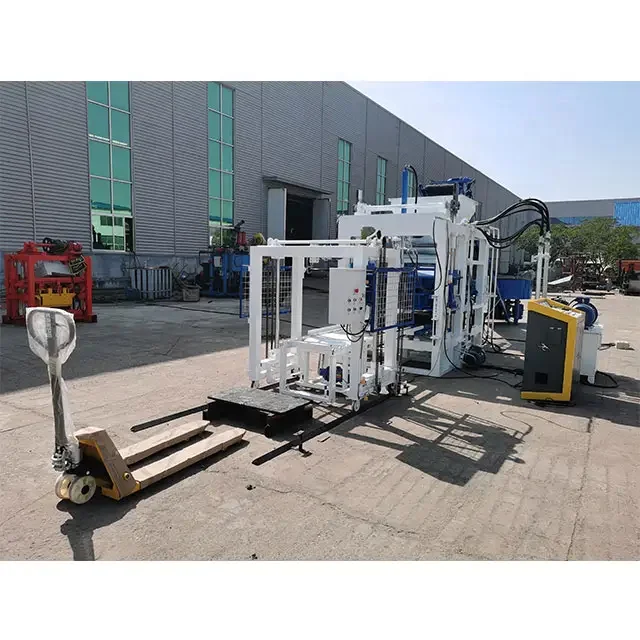
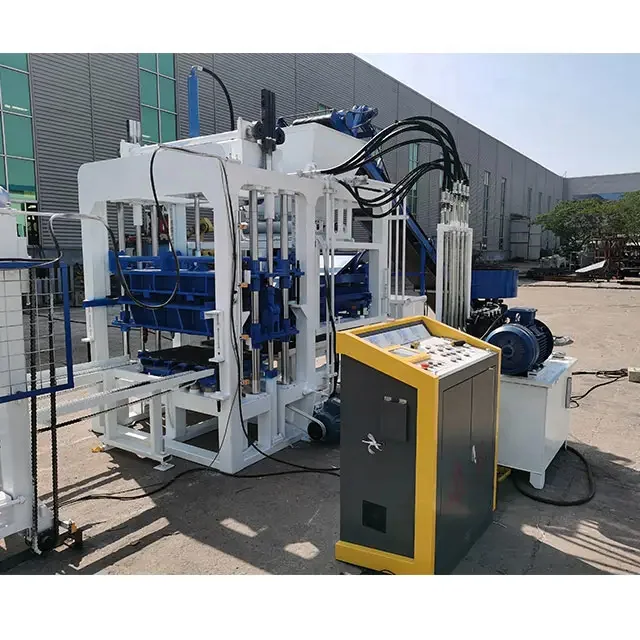
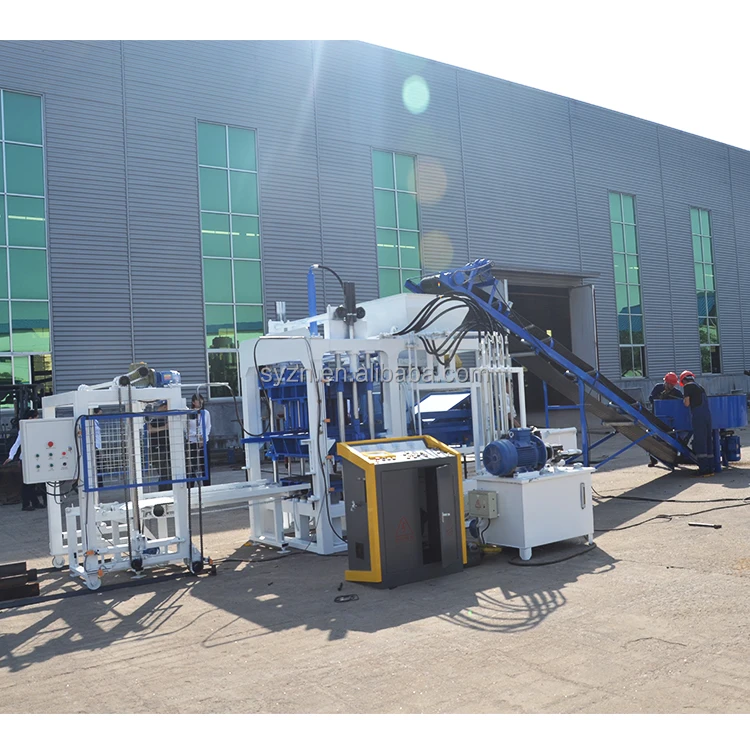
Description
Stock readiness verified — every QT4-18 stationary block machine in stock undergoes voltage confirmation and factory cycle testing before container loading, so your dispatch date holds.
Technical Specifications
| Parameter | Value |
|---|---|
| Model | QT4-18 |
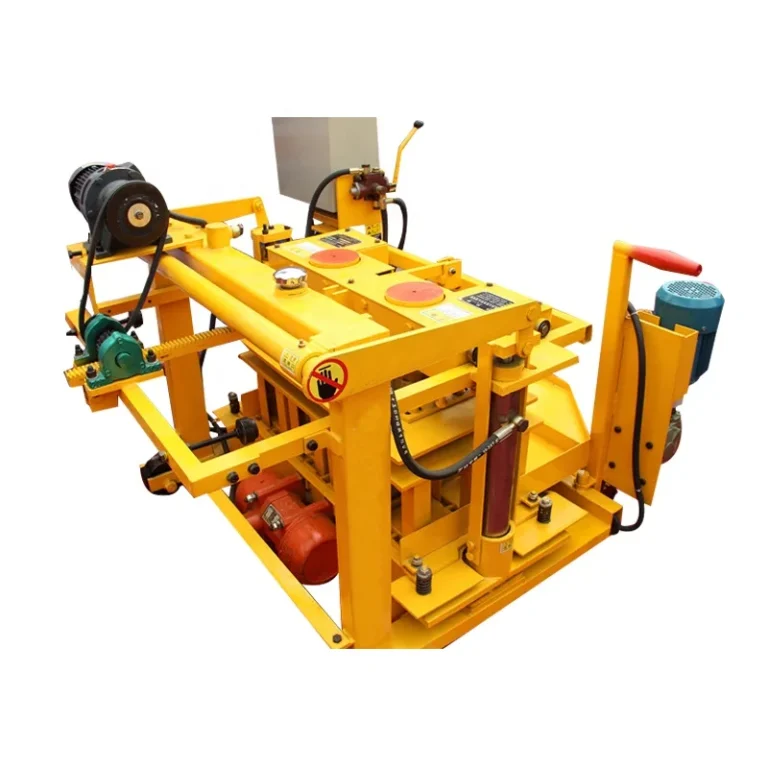
| Product Type | Stationary concrete block making machine |
| Overall Dimensions (L×W×H) | 3900 × 1600 × 2300 mm |
| Total Weight | 3T |
| Rated Power | 24KW |
| Mixer Model | JQ350 |
| Vibration Force | 40-50KN |
| Pallet Size | 850 × 550 × 25mm |
| Moulding Cycle | 15-25s |
| Output Capacity | 1200-1680 pcs/hour (based on 400×200×200mm hollow block) |
| Output Capacity | 1800-2400 pcs/hour (based on 400×150×200mm hollow block) |
| Daily Output (8hr) | 9600-13440 pcs (based on 400×200×200mm hollow block) |
| Daily Output (8hr) | 14400-19200 pcs (based on 400×150×200mm hollow block) |
| Applied Products | Hollow block, solid block, paver, curbstone |
| Raw Materials | Crushed stones, sand, cement, dust, fly ash |
| Hydraulic Station | Yes |
| Automation Level | Semi-automatic |
| Assembly State | Nude packing in 20GP container |
Application Suitability
| Application | Material or Output |
|---|---|
| Hollow block production for housing projects | Crushed stone, sand, cement, fly ash mixes |
| Solid brick manufacturing for masonry walls | Sand-cement blends with local aggregate |
| Paver production for walkways and yards | Cement, dust, and fine aggregate formulations |
| Curbstone forming for road and infrastructure work | Dense concrete mixes with coarse aggregate |
| On-site block production for construction contractors | Locally sourced raw materials at project locations |
Why the Voltage Question Must Be Settled Before the Container Ships
Voltage mismatch is the single most expensive mistake a buyer can make on a fast-track order.
I have watched a control cabinet burn out within minutes of first energisation because the destination grid ran at a different voltage than the machine was built for. The buyer lost weeks of production while replacement components were sourced and shipped. When you are ordering a QT4-18 stationary block machine in stock for a project with a hard deadline, confirming the exact voltage and frequency at your site must happen before the machine leaves the factory floor — not after it arrives. Factory test records should reflect the destination electrical standard, not a default setting. [NEED_CITE: voltage and frequency standards by export market]
Dispatch Lead Time and What "In Stock" Actually Means
The term "in stock" covers the QT4-18 stationary block machine in stock and standard mould configurations held ready for container loading. Dispatch lead time begins once voltage, frequency, and control language are confirmed in writing, because these parameters affect wiring and PLC setup. We quote the estimated dispatch date and container arrival estimate at the inquiry stage, so you can plan your project mobilisation around a realistic timeline rather than a promise made after payment.
Container Loading Plan and Pallet Inventory
A 20GP container carries the QT4-18 machine plus approximately 500 production pallets in nude packing, covering your initial inventory without a separate shipment. Pallet size is fixed at 850 × 550 × 25mm, which must match your existing curing racks and forklift capacity at the destination. Confirming this dimension early avoids a situation where pallets arrive but cannot be handled by the equipment already on site. The loading plan and packing photographs are provided before the container is sealed. [NEED_CITE: container loading standards for heavy industrial machinery]
What Vibration Force and Hydraulic Pressure Mean for Your Block
The QT4-18 delivers 40-50KN of vibration force combined with hydraulic pressure to compact the concrete mix into the mould. This combination determines block density and compressive strength — vibration alone settles the aggregate, while hydraulic pressure locks it under force. The 15-25 second moulding cycle varies depending on the block format: taller hollow blocks require longer cycles to fill and compact properly. The JQ350 mixer prepares each batch to a consistent moisture level, which is critical because a mix that is too dry will not compact fully, and a mix that is too wet will cause blocks to slump when demoulded. Matching the vibration force to your specific aggregate gradation and cement content is what produces consistent block strength batch after batch.
The Hidden Cost of Skipping Pre-Dispatch Verification
When a buyer rushes a stock machine to site without confirming electrical specifications, the consequences extend beyond a burnt control cabinet. The entire commissioning schedule collapses — electricians must rewire, replacement components ship internationally, and the construction crew stands idle. I have seen project penalties enforced because a block supply contract started late over an oversight that could have been caught with a ten-minute check before loading. The QT4-18 stationary block machine in stock moves fast, but skipping the voltage and frequency confirmation step turns a quick dispatch into a multi-week delay. [NEED_CITE: CE machinery directive requirements for industrial equipment]
Why Buyers Source This Machine Through Our Stock Channel
Block machinery is our single focus, so the machine, mould, pallet, and handling equipment are specified as one matched system rather than assembled from separate suppliers. Every QT4-18 in stock has its configuration set against the buyer’s actual mix design and target block format, not a catalogue default. Standard moulds for the formats your market sells are stocked alongside the machine. The dispatch date and arrival estimate are confirmed before you commit, and factory test records covering cycle time per block format are issued before dispatch. Customs documentation support is included for your destination port clearance.
Documentation & Verification
- Factory test record confirming cycle time per block format before container loading
- Voltage and frequency confirmation sheet matched to your destination country grid
- Packing photographs and container loading plan issued before shipment
- Pallet specification sheet with dimensions and material for curing area planning
- Machine specification sheet and mould format list for customs clearance
Installation, Commissioning & Support
- Foundation must support 3T machine weight with level concrete pad at 3900 × 1600mm footprint
- 24KW rated power requires dedicated three-phase circuit matching confirmed voltage and frequency
- Machine arrives in nude packing — assembly involves bolting the vibration table and hydraulic station to the frame
- JQ350 mixer setup includes adjusting water feed to match your local aggregate moisture content
- Mould change procedure and cycle time setting covered during on-site operator training
- Initial pallet inventory of approximately 500 units covers first production runs before reorder
Before You Request a Quote
To give you an accurate dispatch date and arrival estimate for the QT4-18 stationary block machine in stock, we need your destination port, local voltage and frequency, and the block formats you plan to produce. If you already have curing racks or forklifts on site, share their specifications so we can confirm pallet compatibility. Let us know your project start date so the lead time can be planned backward from your deadline.
Frequently Asked Questions
Q: Which QT4-18 models and standard moulds are currently in stock for immediate dispatch?
A: Standard QT4-18 units configured for common hollow block and paver formats are held in stock. Mould availability varies by block format — share your target products and we confirm which moulds can ship with the machine without adding lead time. Custom moulds require additional production time.
Q: What is the dispatch lead time from order confirmation to container loading?
A: Once voltage, frequency, and control language are confirmed in writing, the QT4-18 stationary block machine in stock moves to final factory testing and container loading. The exact dispatch date is quoted at inquiry stage based on current stock position and any configuration adjustments required for your destination market.
Q: How many pallets fit in one 20GP container alongside the machine?
A: Approximately 500 production pallets at 850 × 550 × 25mm fit alongside the QT4-18 in a single 20GP container under nude packing. This covers your initial pallet inventory for first production runs. Additional pallets require a separate shipment or a second container.
Q: What arrival estimate can I expect for my destination port?
A: Arrival estimates depend on the shipping route from the port of loading to your destination. We quote the estimated arrival date at the inquiry stage alongside the dispatch date, so you have both numbers before committing. Transit times vary by region and carrier scheduling.
Q: Can I add extra moulds or pallets to the same container without delaying shipment?
A: Adding standard pallets is straightforward if space remains in the 20GP container. Extra moulds can be included if they are in stock — custom moulds may extend the loading timeline. We confirm container space availability and any impact on dispatch date before finalising the order.