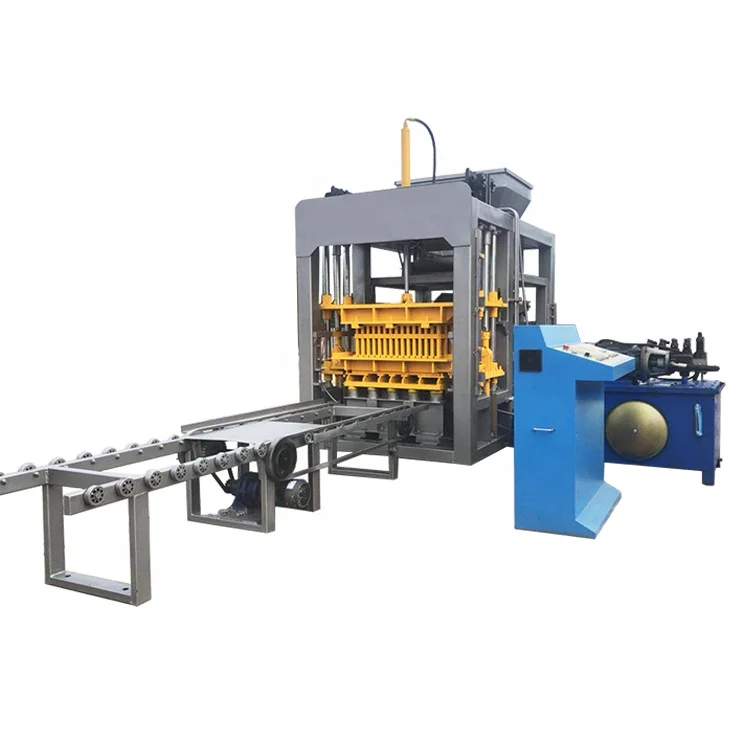


Description
Matched to Your Site, Not a Catalogue Default — the QT5-15 block machine in stock ships with pallet size, vibration force and hydraulic pressure confirmed against your local aggregate and curing layout before it leaves the factory.
Technical Specifications
| Parameter | Value |
|---|---|
| Model | QT5-15 |
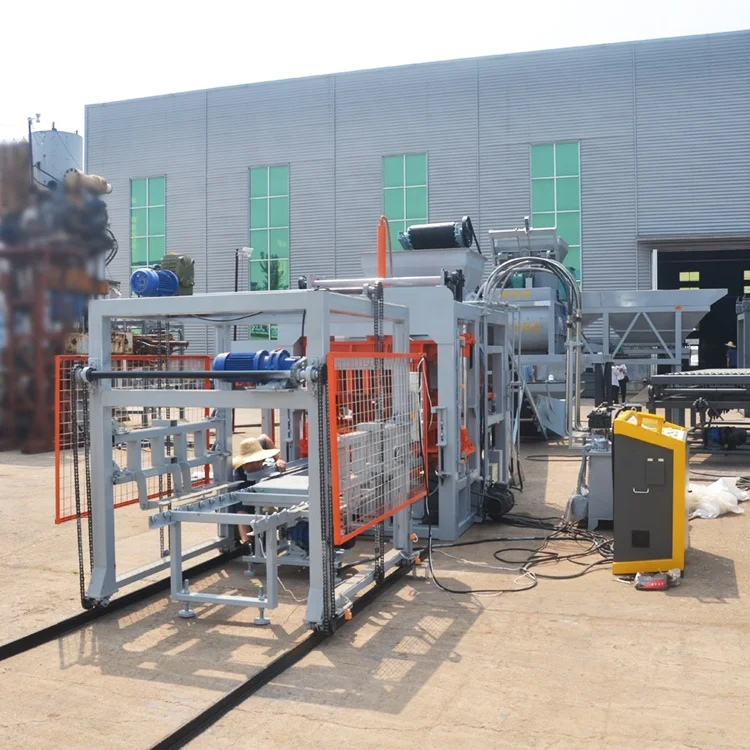
| Product Type | Stationary Block Machine |
| Overall Dimensions (L×W×H) | 7400×1950×2800 mm |
| Rated Pressure | 21 MPa |
| Main Vibration Form | Platform Vibration |
| Vibration Frequency | 2800~4500 r/min |
| Pallet Size | 1100×550 mm |
| Molding Cycle | 15-25 s |
| Overall Power | 26.5 kW |
| Demolding Method | Hydraulic |
| Output Capacity (Hollow brick 400×200×200 mm) | 1800 pcs/h (basis: 5 pcs/mold, 16-20 s cycle) |
| Output Capacity (Hollow block 400×150×200 mm) | 1300 pcs/h (basis: 6 pcs/mold, 15-20 s cycle) |
| Output Capacity (S paver 225×112.5×60 mm) | 3700 pcs/h (basis: 16 pcs/mold, 15-17 s cycle) |
| Applied Products | Concrete blocks, hollow/solid blocks, pavers, interlocking blocks, curbstone, colored pavers |
| Raw Materials | Crushed stone, sand, cement, dust, fly ash, gravel, slag |
| Voltage & Frequency | (basis to be confirmed) |
| Control System | (basis to be confirmed) |
| Net Weight | (basis to be confirmed) |
Application Suitability
| Application | Material or Output |
|---|---|
| Hollow block production for housing projects | Crushed stone, sand, cement and fly ash blends |
| Solid concrete block manufacturing | Gravel, sand and cement mixes for load-bearing walls |
| Interlocking paver production for roads and yards | Colored concrete with fine aggregate and pigment |
| Curbstone forming for municipal infrastructure | High-strength concrete with coarse aggregate |
| On-site block production for contractors | Locally sourced sand, dust and cement |
Why "Pieces per Hour" Means Nothing Without the Block Format
Capacity figures only hold weight when tied to a specific mold and cycle time. I have watched project owners sign off on a QT5-15 block machine in stock based on a single headline throughput number, only to discover on site that their primary product — a 400×150×200 mm hollow block — runs a different cycle and yields a different daily total than the brochure implied. The gap between expectation and reality stalls crews and delays handover dates. When the block format, mold cavity count and cycle seconds are not stated together, the number on the quote is decoration [NEED_CITE: capacity calculation standards for concrete block machinery].
Dispatch Timing That Matches Your Project Calendar
Stock availability means little if the machine still needs weeks of configuration after the order is placed. With the QT5-15 block machine in stock, standard moulds and pallets are matched to the unit before dispatch, so container loading can proceed once voltage, frequency and control language are confirmed. The dismantling method for shipment is documented so your crew knows what to expect when the container doors open.
Arrival Estimates You Can Plan Around
Project deadlines in construction do not shift for machinery delays. An honest arrival estimate — quoted before you commit — lets you schedule foundation work, electrical rough-in and raw material delivery around the actual date the QT5-15 block machine in stock clears customs and reaches your yard. Container loading plans show exactly how the press, hydraulic station and pallets are secured for transit [NEED_CITE: typical ocean freight transit times from Chinese ports to West African destinations].
Reading the Specs That Actually Shape Your Output
The 21 MPa rated pressure and platform vibration at 2800–4500 r/min work together: pressure compresses the mix while vibration settles fine particles into voids, producing a dense block that holds strength after curing. If your local aggregate is laterite or crushed coral rather than standard river sand, the vibration frequency range must be tuned to that material — otherwise blocks crack or crumble at the stacking stage. The 1100×550 mm pallet size dictates how many blocks cure per rack and whether your existing forklift can handle the loaded pallets. Molding cycle at 15–25 seconds varies by format; a solid block with higher cement content typically sits at the longer end of that range. Overall power at 26.5 kW tells your electrician what dedicated circuit to prepare before the machine arrives.
The Cost of Skipping the Pallet and Curing Conversation
When pallets arrive in a size that does not match the curing racks already welded on site, blocks end up stacked by hand on the ground — and daily throughput collapses regardless of what the press can produce. Voltage confirmed too late means the control panel sits idle while a transformer is sourced locally. These are not machine failures; they are specification gaps that surface only after the container is unpacked [NEED_CITE: common commissioning delays in block plant installations].
Why Source This Machine Here
Block machinery is a single focus, so the QT5-15 press, moulds, pallets and handling equipment are specified as one matched system. Standard moulds for hollow block, solid block and paver formats ship with the stock unit, and custom mould drawings are available if your market sells a format outside the standard range. Configuration is set against your actual mix design and local aggregate, not a catalogue default. Automation level is selectable, allowing a semi-automatic start with a defined upgrade path. Dispatch lead time is quoted upfront with container loading details so your logistics team can book the vessel slot.
Documentation & Verification
- Factory test record on your specified block format before dispatch
- Line layout with capacity calculation stating the block format assumed
- Pallet specification matched to your curing area dimensions
- Voltage and control language confirmation sheet signed before production
- Packing photographs taken at container loading for your records
Installation, Commissioning & Support
- Foundation pad sized to the 7400×1950 mm footprint with anchor bolt template
- Dedicated 26.5 kW circuit with voltage and frequency confirmed to your grid standard
- Machine dismantled into press frame, hydraulic station and pallet stack for container loading
- On-site commissioning with hydraulic pressure and vibration frequency set to your mix
- Operator training covering mould change procedure and daily maintenance checkpoints
- Wear parts list and mould inventory supplied with first shipment
What to Include in Your Inquiry
Send the block format your market sells most, the daily output you need to meet contract volumes, and a sample or description of your local aggregate. Confirm the voltage and frequency at your site, along with the preferred PLC display language. If you already have curing racks and forklifts on site, share their dimensions so pallets and handling can be matched before the QT5-15 block machine in stock is loaded.
Frequently Asked Questions
Q: Which QT5-15 models are currently in stock and what is the dispatch lead time?
A: Standard QT5-15 stationary block machines with hollow block and paver moulds are held in stock. Dispatch lead time is quoted at inquiry based on your voltage and control language confirmation, typically allowing container booking within a defined window after order confirmation.
Q: How is the machine dismantled and loaded into containers for shipment?
A: The press frame, hydraulic station and pallet stack are separated for container loading. A dismantling and loading plan is provided so your receiving crew can identify each component and follow the reassembly sequence when the container arrives at your yard.
Q: What arrival estimate can I expect after dispatch from China?
A: Arrival depends on destination port and sailing schedule. An estimated arrival date is quoted before you commit, based on the dispatch date and current vessel rotations to your region, so you can plan foundation and electrical work accordingly.
Q: Are standard moulds and pallets included in the stock package or ordered separately?
A: The stock package includes standard moulds for common hollow block and paver formats along with matching pallets sized at 1100×550 mm. Additional moulds for other formats can be added to the same shipment if confirmed before container loading.
Q: Can I confirm voltage and control language before the machine ships?
A: Voltage, frequency and PLC display language are confirmed with you before final preparation. This step is completed before the machine is dismantled for container loading, preventing commissioning delays caused by mismatched electrical standards or unreadable control screens on site.