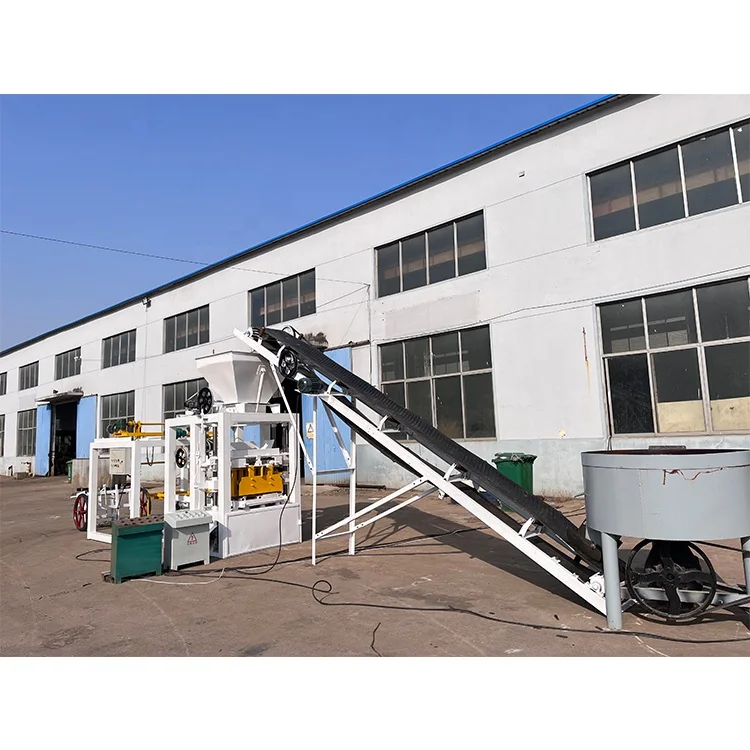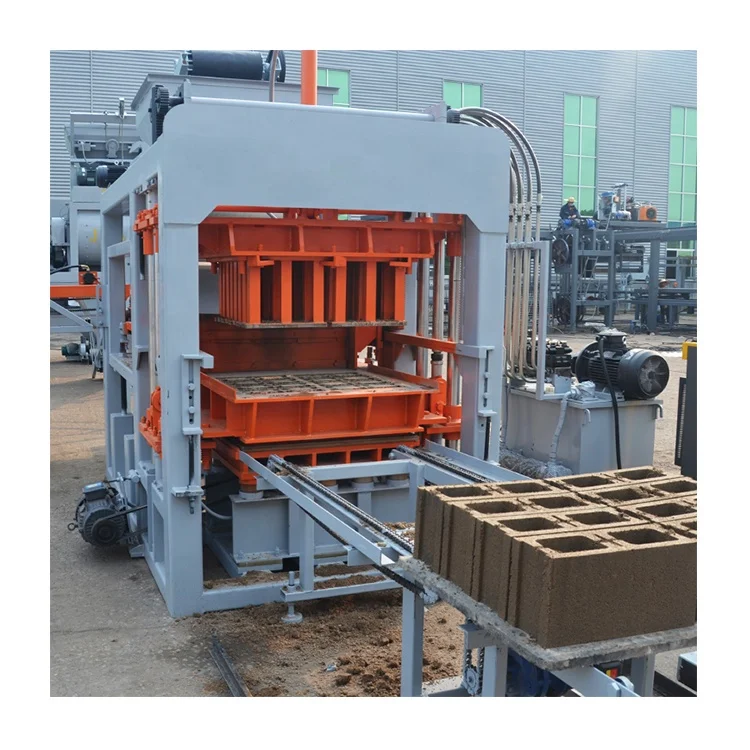


Description
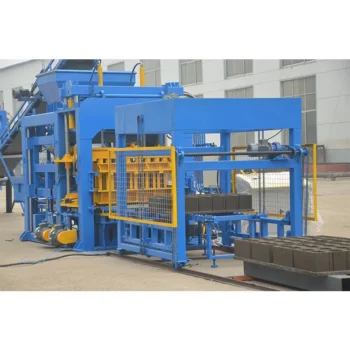
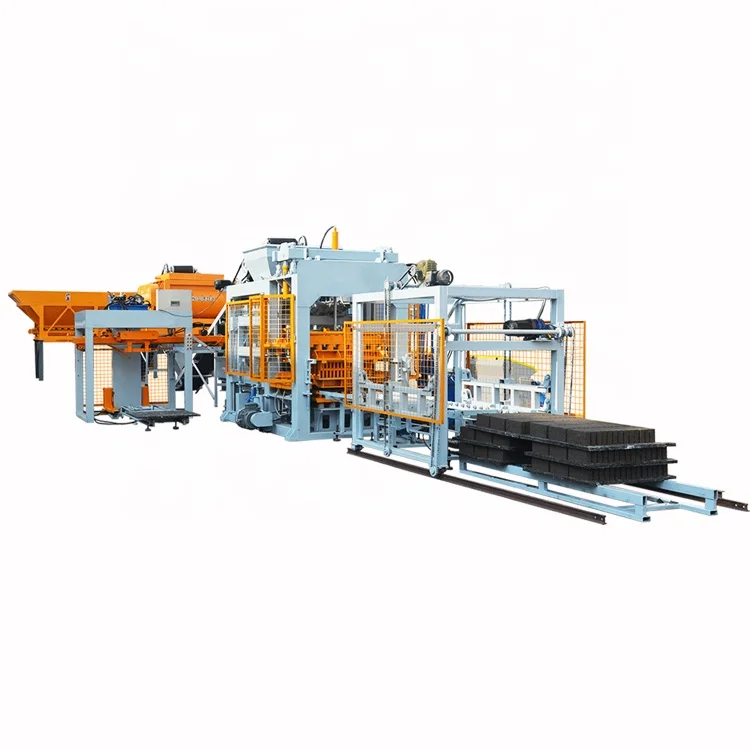
Stocked Configuration — QT6-15 block making machine units paired with standard hollow block moulds and hydraulic trolleys are held ready for container loading, cutting typical multi-week lead times down to dispatch windows measured in days.
Technical Specifications
| Parameter | Value |
|---|---|
| Model | QT6-15 |
| Product Type | Automatic Cement Concrete Block Making Machine |
| Molding Way | Vibration and hydraulic pressing |
| Rated Pressure | 21 MPa |
| Molding Cycle | 15s–20s (basis: standard formats, confirm against buyer mix) |
| Pallet Size | 900×700 mm |
| Main Machine Weight | 6000 kg |
| Output — Hollow Block 400×200×200 mm | 6 pcs/pallet, 1440 pcs/h, 11520 pcs/8h (basis: stated in source productivity table) |
| Output — Paving Brick 200×100×60 mm | 21 pcs/pallet, 5040 pcs/h, 40320 pcs/8h (basis: stated in source productivity table) |
| Output — Solid Brick 240×115×53 mm | 32 pcs/pallet, 7680 pcs/h, 61440 pcs/8h (basis: stated in source productivity table) |
| Raw Materials | Cement, sand, fly ash, stone powder, slag |
| Included Accessories | One hollow block mould, two hydraulic trolleys |
| Voltage & Frequency | Customizable to local standard (source value — verify against manufacturer catalog) |
| Control System | Not explicitly stated in source (basis not stated in source — confirm PLC type and language) |
| Warranty | 1 year (excluding wearing parts) |
Application Suitability
| Application | Material or Output |
|---|---|
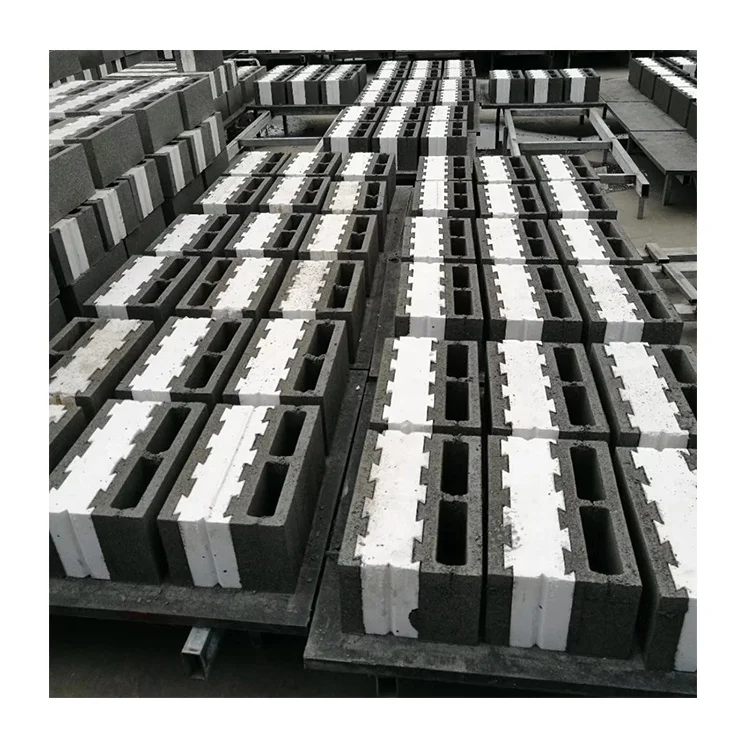
| Hollow block production for wall construction | Cement, sand, and stone powder blends |
| Paving brick manufacturing for walkways and yards | Fly ash, slag, and crushed aggregate mixes |
| Solid brick runs for load-bearing masonry | Local river sand or quarry dust with cement binder |
| On-site production for housing project contractors | Available raw material sourced near the jobsite |
What the Dispatch Clock Really Looks Like for a QT6-15 Block Making Machine in Stock
Buyers working to a fixed project start date need a confirmed loading date, not an estimate.
When a contractor has crews scheduled and a curing yard prepared, a delayed machine arrival cascades into idle labour and missed milestone payments. The question at inquiry stage is rarely whether the QT6-15 block making machine in stock can produce the required format — it is whether the unit, the mould, and the supporting pallets can be inside a container before the next vessel departure [NEED_CITE: typical container shipping booking windows for heavy machinery]. Quoted lead times that shift after order confirmation erode trust faster than any technical shortcoming on the production floor.
Dispatch Readiness and What It Actually Covers
A stocked QT6-15 block making machine in stock status means the main press frame, hydraulic station, and vibration assembly have completed factory assembly and testing. The standard hollow block mould included with the machine is matched to the 900×700 mm pallet size, so no separate mould procurement cycle delays the shipment. Two hydraulic trolleys ship alongside the press, allowing the buyer to move freshly pressed blocks to the curing area from day one without sourcing additional handling equipment locally.
Container Loading and Dismantling for Ocean Freight
The 6000 kg main machine weight and the press frame dimensions require a specific dismantling sequence to fit within standard container door clearances. The hydraulic cylinder and upper crossbeam are typically unbolted and secured to the container floor separately, then reassembled on the buyer’s foundation after arrival. Loading photographs are taken at each stage — naked machine, dismantled components, bracing and lashing — so the buyer’s customs broker and receiving team know exactly what to expect when the container is opened at destination [NEED_CITE: container loading standards for heavy industrial presses].
Pressure, Vibration, and Pallet Dimensions That Shape Your Line Layout
The 21 MPa rated hydraulic pressure working in combination with the vibration system determines the green strength of blocks as they leave the press — this directly governs how soon pallets can be moved to the curing rack without edge damage. The 15s–20s moulding cycle sets the rhythm for the entire line: the mixer must deliver a fresh batch within that window, and the pallet feeder must present a new board before the press completes its stroke. At 900×700 mm, the pallet size is a common industry dimension, which means replacement pallets in bamboo, PVC, or hardwood are generally procurable from multiple regional suppliers rather than locked to a single source. When planning the curing yard, buyers should calculate rack capacity around this pallet footprint to avoid a bottleneck where pressed blocks wait on the trolleys because rack space is full.
When the Wrong Configuration Arrives at the Wrong Port
A machine configured for 380V/50Hz arriving at a site running 440V/60Hz cannot be commissioned until a transformer is sourced or the motor is replaced — a delay that stretches weeks in markets where industrial electrical components are not locally stocked. Equally, if the control panel language is set to a script the operators cannot read, every fault code and parameter adjustment becomes a translation exercise, slowing first production runs and increasing the likelihood of settings entered incorrectly [NEED_CITE: electrical commissioning delays in cross-border machinery installations]. These are not manufacturing defects; they are specification gaps that close only when voltage, frequency, and interface language are confirmed before the machine leaves the factory floor.
Why Buyers Source This Machine Here
Block machinery is the single product focus, so the QT6-15 press, its mould, the 900×700 mm pallets, and the hydraulic trolleys are specified and shipped as one matched system rather than assembled from unrelated suppliers. The configuration is checked against the buyer’s actual mix design and target block format before dispatch, not defaulted to a generic catalogue setting. Standard moulds for hollow blocks ship with the machine, and custom mould drawings for paving bricks or kerbstones can be added to the same container if confirmed at order stage. Stock availability is communicated with specific dispatch dates at inquiry, not estimated ranges. Installation support and operator training are included so the machine produces saleable blocks within the first commissioning week on site.
Documentation & Verification
- Line layout showing the QT6-15 press position relative to mixer and curing racks
- Machine specification sheet with confirmed voltage and control language noted
- Mould drawing and block format list for the included hollow block mould
- Pallet specification covering 900×700 mm dimensions and recommended material
- Factory test record documenting cycle times on a standard mix before dispatch
- Packing photographs and container loading plan for customs clearance support
Installation, Commissioning & Support
- Foundation plan matched to the 6000 kg main machine weight and vibration isolation requirements
- Electrical connection schedule specifying the confirmed voltage and dedicated circuit rating
- Reassembly guide for the dismantled hydraulic cylinder and upper crossbeam after container arrival
- First-run parameter setting covering vibration duration and pressure hold against the buyer’s aggregate
- Operator training on mould change procedure, daily lubrication points, and fault code responses
- Wear parts list identifying hydraulic seals and vibration springs with recommended reorder intervals
What to Prepare Before Requesting a Quote
To move from inquiry to confirmed dispatch date, share the block format you intend to produce first, the daily volume your project schedule demands, and the raw materials available at your site. Confirm the local voltage and frequency so the motor and control panel are wired correctly before loading. If you have existing pallets or curing racks, provide their dimensions so the 900×700 mm pallet size is either confirmed compatible or adjusted at order stage.
Frequently Asked Questions
Q: Which QT6-15 configurations are currently available for immediate dispatch?
A: The standard configuration includes the main press, one hollow block mould sized to the 900×700 mm pallet, and two hydraulic trolleys. This package is held in stock and can be loaded into a container once voltage and control language are confirmed. Additional moulds for paving bricks or solid bricks can be added to the same shipment if ordered together.
Q: How long does container loading take once an order is placed?
A: With a stocked QT6-15 unit, dismantling for container fit, securing components, and completing loading photographs typically takes several working days after voltage confirmation. The exact dispatch date is quoted at inquiry stage based on current stock status and container availability at the nearest port.
Q: How is the machine dismantled for shipping and reassembled on site?
A: The hydraulic cylinder and upper frame section are unbolted to reduce overall height for container door clearance. All removed fasteners are bagged and labelled. On arrival, the press is reassembled on the prepared foundation using the supplied reassembly guide, and hydraulic lines are reconnected and pressure-tested before first production.
Q: What happens if my site voltage differs from the machine’s original configuration?
A: Voltage and frequency are confirmed with the buyer before the machine is wired at the factory. If the machine is already built to a different standard, a motor or transformer change may be required — this is why early confirmation of site electrical supply avoids delays at commissioning.