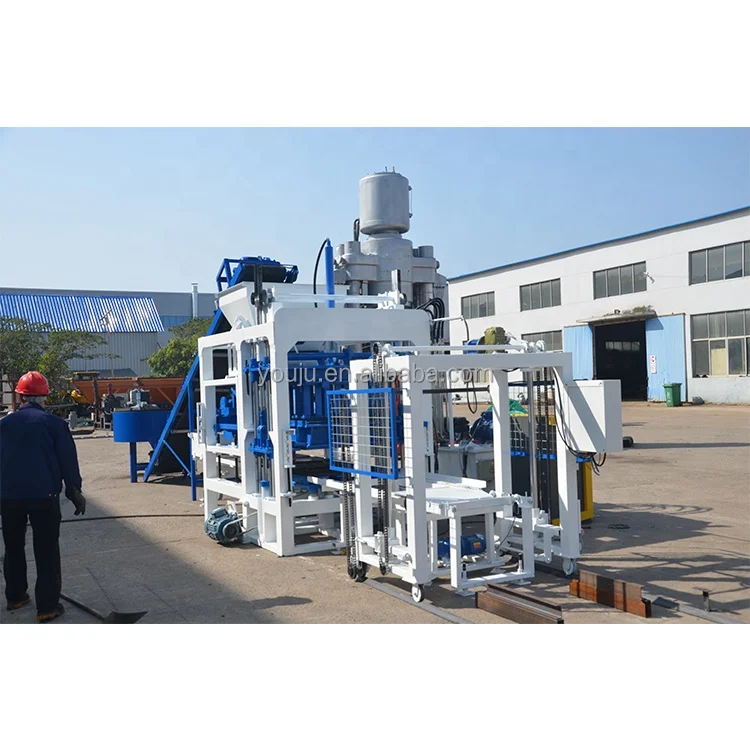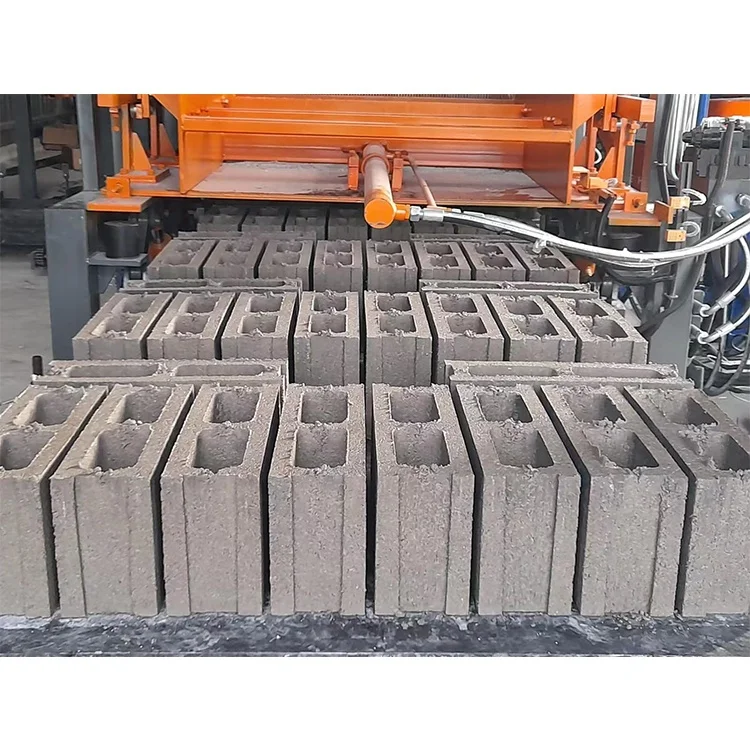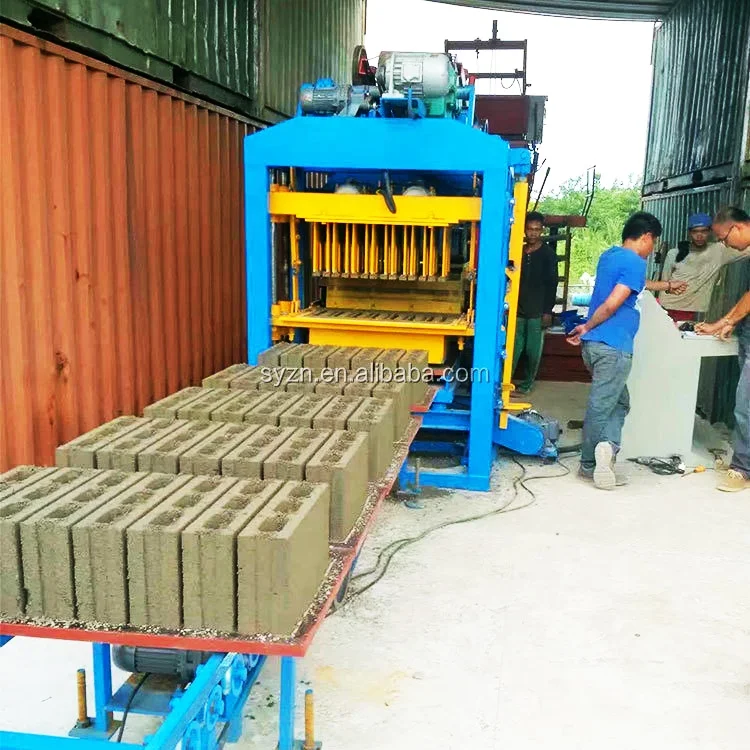
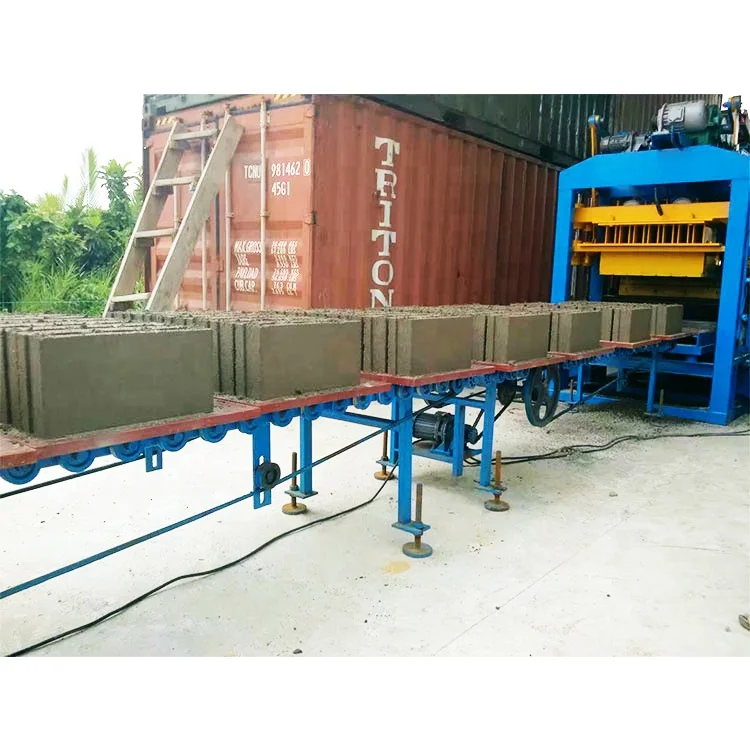
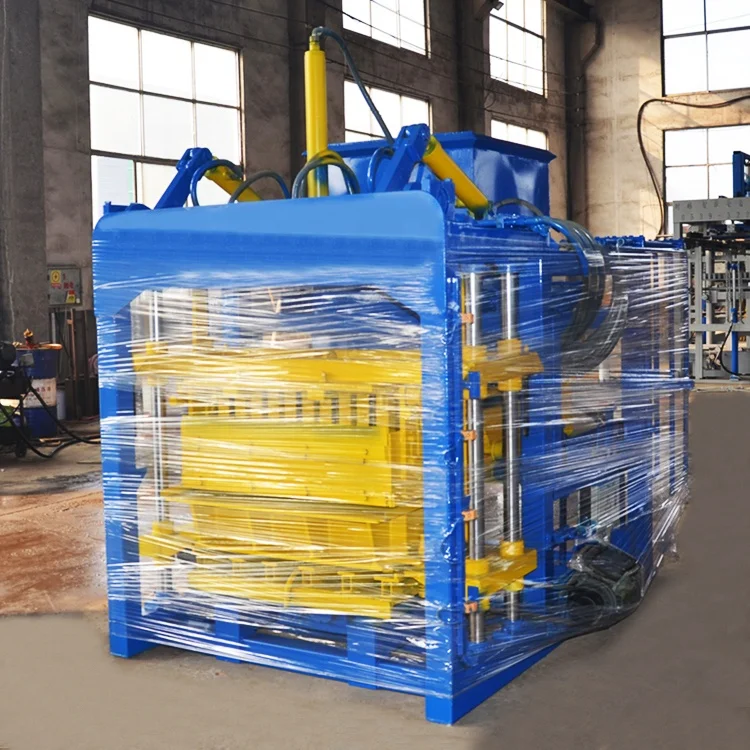
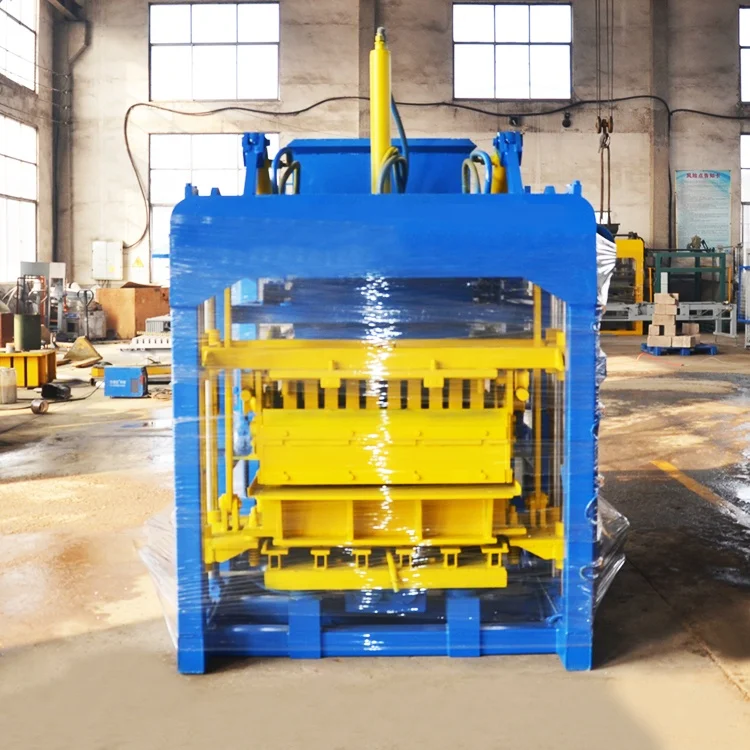
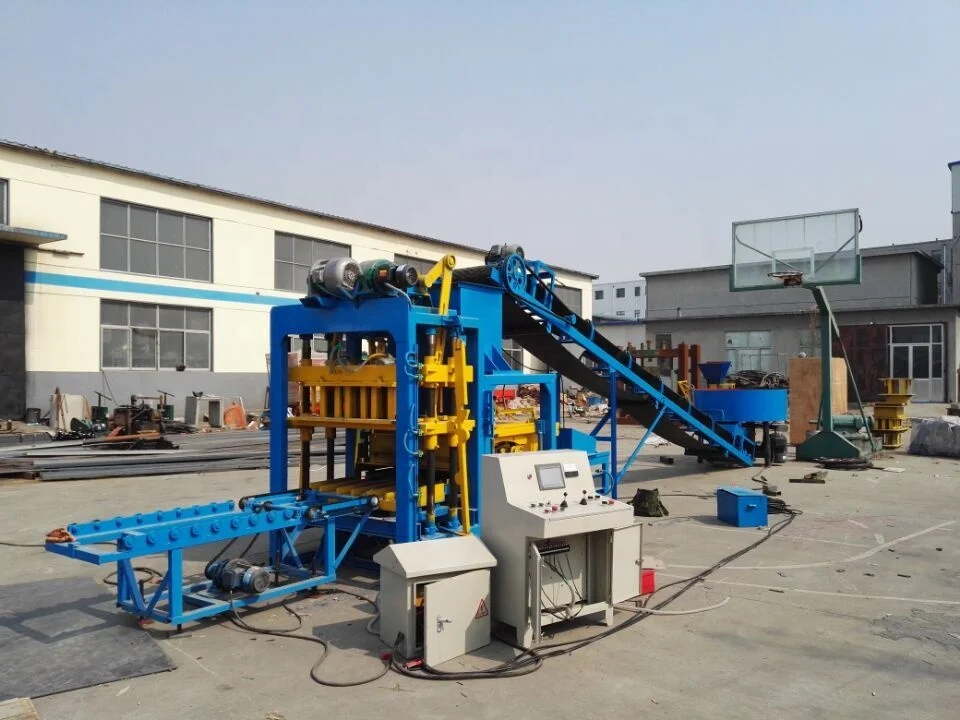
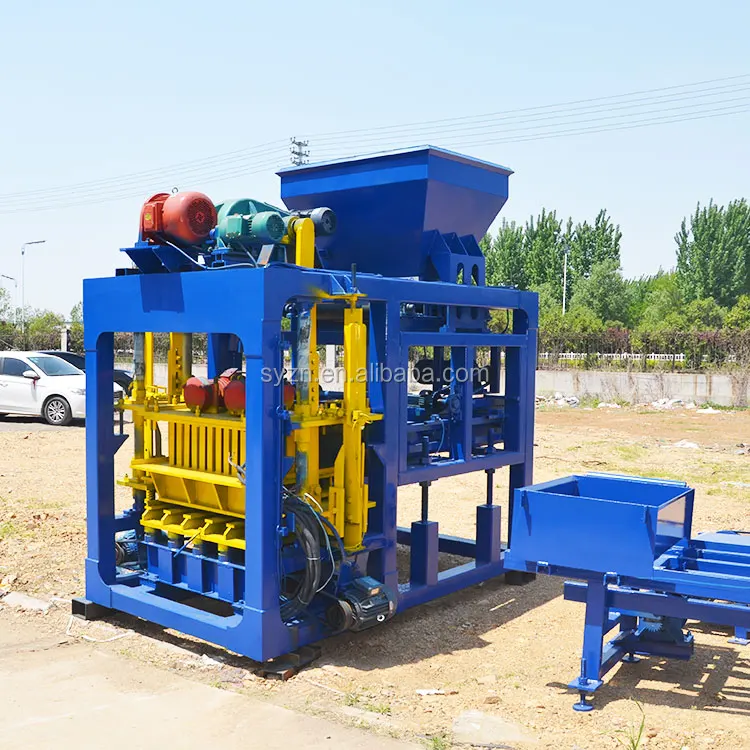
Description
Stocked & Dispatch-Ready — QTJ4-25 units pre-assembled with matched JQ350 mixers and standard pallets waiting in the yard, container loading plans confirmed before you pay.
Technical Specifications
| Parameter | Value |
|---|---|
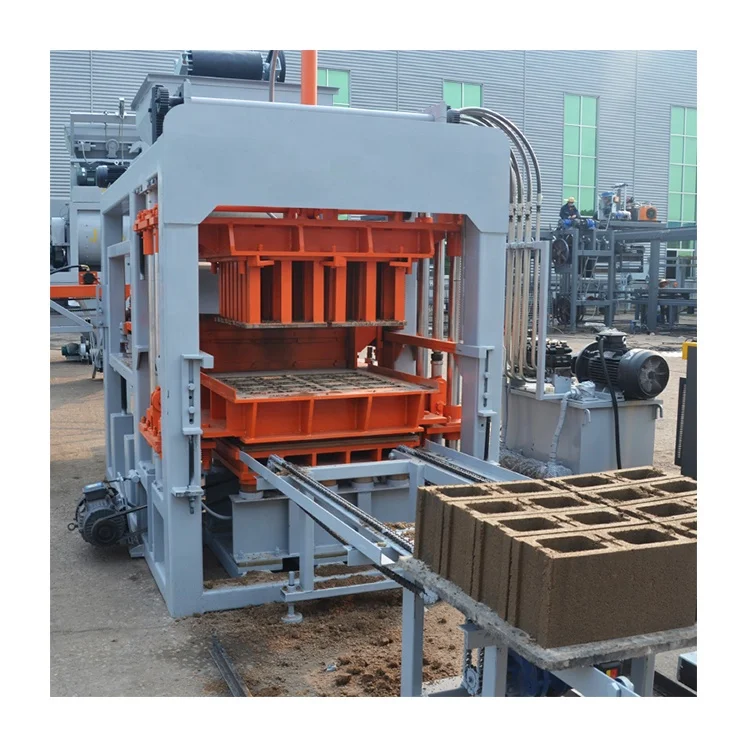
| Product Type | Semi-Automatic Concrete Block Making Machine |
| Model | QTJ4-25 |
| Overall Dimensions (L×W×H) | 6400×1500×2700 mm |
| Molding Cycle | 25 s (basis not stated in source — confirm block format) |
| Vibration Frequency | 2800–5100 r/min |
| Exciting Force | 60 kN |
| Vibration Type | Bed mould vertical vibration + upper mould compression vibration |
| Total Power | 17.9 kW |
| Mixer Model | JQ350 |
| Pallet Size | 850×550×20 mm |
| Net Weight | 2500 kg |
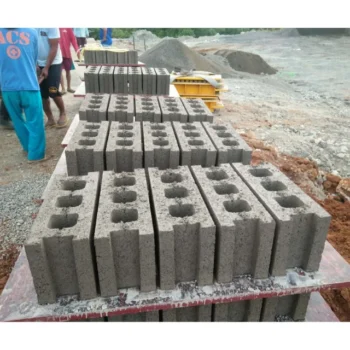
| Output Capacity (390×190×190 mm hollow block) | 4 pcs/mould, 3800 pcs/8 hr |
| Output Capacity (400×150×200 mm hollow block) | 5 pcs/mould, 4800 pcs/8 hr |
| Output Capacity (240×115×53 mm solid brick) | 18 pcs/mould, 17000 pcs/8 hr |
| Raw Materials | Crushed stones, sand, cement, dust, fly ash |
| Automation Level | Semi-automatic |
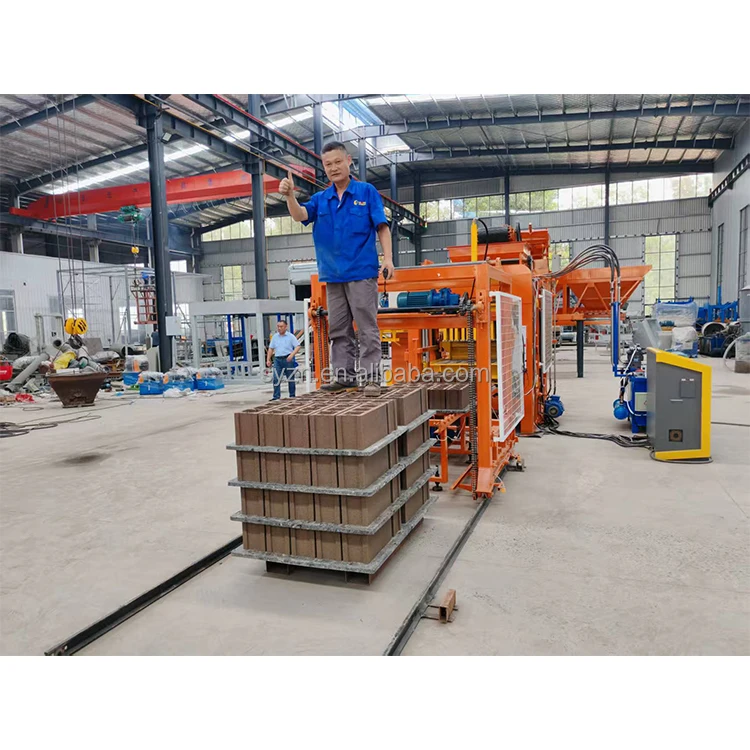
| Stacking Method | Manual pallet handling, trolley transfer to drying area |
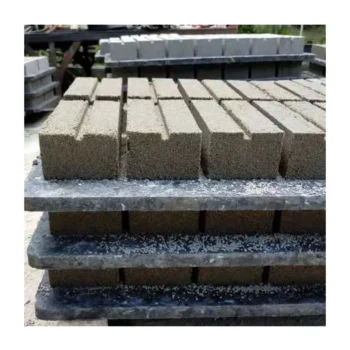
| Applied Products | Concrete hollow blocks (8 inch, 6 inch), solid bricks |
Application Suitability
| Application | Material or Output |
|---|---|
| On-site contractor hollow block production | Crushed stone, sand, cement mixes for 6-inch and 8-inch blocks |
| First block plant for local entrepreneurs | Solid bricks and hollow blocks using fly ash and local aggregates |
| Regional distributor stock for quick resale | Standard hollow block and solid brick formats from stocked moulds |
| Project-deadline production without fixed plant | Semi-automatic operation with manual pallet transfer to curing area |
Why the Voltage Question Should Come Before the Price
A QTJ4-25 block machine in stock means nothing if the motor will not spin when it reaches your site.
I once watched a mining camp lose three full weeks of production because a block machine arrived wired for a frequency the local grid did not supply. The crew had cement, aggregate, and a deadline. What they did not have was the right transformer, and by the time one arrived the project schedule had already slipped. That is the kind of delay no dispatch speed can fix. Before a machine leaves the factory floor, the voltage, frequency, and control panel language must match the destination country exactly. Confirming these three items takes minutes; ignoring them costs weeks [NEED_CITE: voltage and frequency standards by export market].
Container Loading and Dispatch Timing
When a buyer needs a QTJ4-25 block machine in stock, the real question is how fast it can be dismantled, loaded, and on a vessel. This model ships in a standard 20GP container with nude packing, meaning the host frame, mixer, and pallet stack are secured directly to the container floor without a crate. Dismantling follows a fixed sequence — vibration table separated from the host frame, electrical cabinet bolted to the sidewall, pallets stacked and strapped — so the loading crew knows exactly what fits where. Lead time from order confirmation to gate-out is quoted in writing before the deposit is made.
What Arrives and What You Source Locally
A fast delivery semi-automatic block machine only solves half the problem if the supporting items are missing on arrival. The standard dispatch includes the host machine, JQ350 pan mixer, electrical control cabinet, a set of standard moulds, and an initial batch of production pallets. What the buyer arranges locally is the foundation slab, the water supply for the mixer, and the curing area layout to match the 850×550 mm pallet footprint. Pallet quantity in the shipment can be adjusted — typical first orders include several hundred units, with fiberglass or treated wood options depending on the curing method planned [NEED_CITE: pallet material selection for block curing environments].
How Vibration and Pressure Shape Block Density
The QTJ4-25 uses bed mould vertical vibration combined with upper mould compression vibration, a dual-action approach that settles aggregate into the mould cavity from below while pressing from above. The exciting force of 60 kN at frequencies between 2800 and 5100 r/min determines how tightly the crushed stone and sand pack together before the cement binder sets. When vibration frequency is too low for a given mix, blocks emerge with weak corners and inconsistent weight; when it is too high, the finer particles separate from the coarse aggregate. The 25-second molding cycle is a starting reference point, but actual cycle time depends on the block thickness and the moisture content of the raw material blend fed from the JQ350 mixer.
When Arrival Timing Goes Wrong
The hidden cost of a poorly planned dispatch is not the shipping invoice — it is the idle crew, the rented equipment sitting unused, and the penalty clauses in a construction contract that start counting the day the blocks were supposed to be on site. Buyers who skip the factory test record and packing photographs before container loading often discover missing bolts or damaged wiring only after customs clearance. Semi-automatic machines depend on every sensor and limit switch being intact; one crushed cable in transit can silence the whole line until a replacement arrives by air freight [NEED_CITE: CE machinery directive requirements for industrial equipment].
Why Source a Stocked Machine Here
Block machinery is the single focus of this supply chain, which means the QTJ4-25 host, its moulds, pallets, and the JQ350 mixer are specified as one matched system rather than pulled from separate vendors. Dispatch plans include the exact mould formats the buyer needs for the local market, not a default set chosen by the factory. Voltage and control language are confirmed against the destination grid before production or release from stock. Factory test records and packing photographs are shared before the container door closes. Installation guidance covers the foundation requirements for the 6400 mm frame length and the power circuit needed for the 17.9 kW total load.
Documentation & Verification
- Factory test record on your specific hollow block and solid brick mould formats before dispatch
- Voltage, frequency, and control panel language confirmation sheet signed prior to shipment
- Container loading plan with pallet count and mould list itemized per purchase order
- Packing photographs showing dismantling sequence and securing method inside the 20GP container
- CE declaration documentation where applicable for the destination market
Installation, Commissioning & Support
- Foundation slab must accommodate the 6400×1500 mm footprint with level tolerance for the vibration table
- Dedicated power circuit rated for the 17.9 kW total load with correct voltage and frequency confirmed before wiring
- Host frame and vibration table reassembled on-site following the documented dismantling sequence from packing photographs
- JQ350 mixer positioned and connected to water supply, with first test batch run to verify mix consistency
- Mould change procedure walked through with operators, including manual pallet handling and trolley transfer to curing area
- Wear parts list provided covering vibration springs, mould liners, and hydraulic seals specific to the QTJ4-25 configuration
What to Prepare Before Requesting a Quote
To match the right stocked unit to your project, share the hollow block or solid brick dimensions your market demands, the daily output target, and the raw materials available locally — including whether fly ash is part of your mix. Confirm the voltage and frequency at your site, the control panel language your operators need, and whether your existing forklift and curing racks are sized for 850×550 mm pallets.
Frequently Asked Questions
Q: What is the dispatch lead time and how is the machine packed for shipment?
A: Stocked QTJ4-25 units can be prepared for container loading within days of order confirmation. The machine is dismantled into major assemblies — host frame, vibration table, electrical cabinet — and secured directly inside a 20GP container without a wooden crate. A written loading plan and packing photographs are shared before the container is sealed.
Q: Which mould formats are stocked versus made to order?
A: Standard hollow block moulds for 390×190×190 mm and 400×150×200 mm formats, along with 240×115×53 mm solid brick moulds, are typically held in stock. Non-standard or custom block shapes are manufactured to buyer drawings, and the additional lead time for those moulds is stated before the order is placed so it does not delay the machine dispatch.
Q: How do I confirm voltage, frequency, and control language before dispatch?
A: The buyer provides the local grid specification — voltage, phase, and frequency — along with the preferred language for the control panel. These details are written into the order confirmation, and the electrical cabinet is configured or verified against them before the machine is released from stock or completes factory testing.
Q: What is included in the quotation and what must I source locally?
A: The quotation covers the QTJ4-25 host machine, JQ350 mixer, electrical cabinet, specified moulds, production pallets, and basic tools. The buyer arranges the concrete foundation slab, water supply plumbing, and the curing area infrastructure. Pallet quantity and material can be adjusted based on the planned curing cycle and available drying space.
Q: How is the arrival estimate calculated and what documentation is provided?
A: Arrival timing is estimated from the confirmed dispatch date, the booking confirmation from the shipping line, and the destination port transit schedule. Customs documentation support includes the commercial invoice, packing list, bill of lading, and certificate of origin where required. The buyer is responsible for import clearance and local transport from the port to the site.