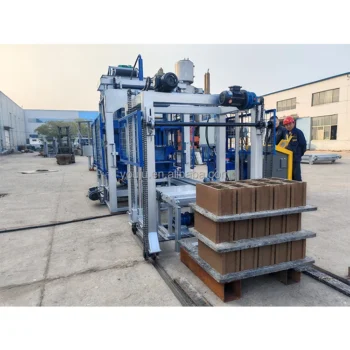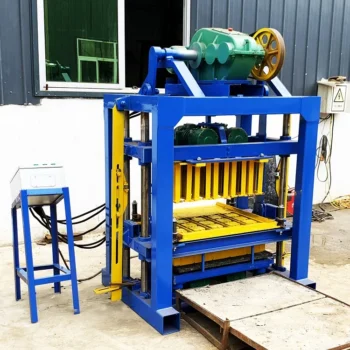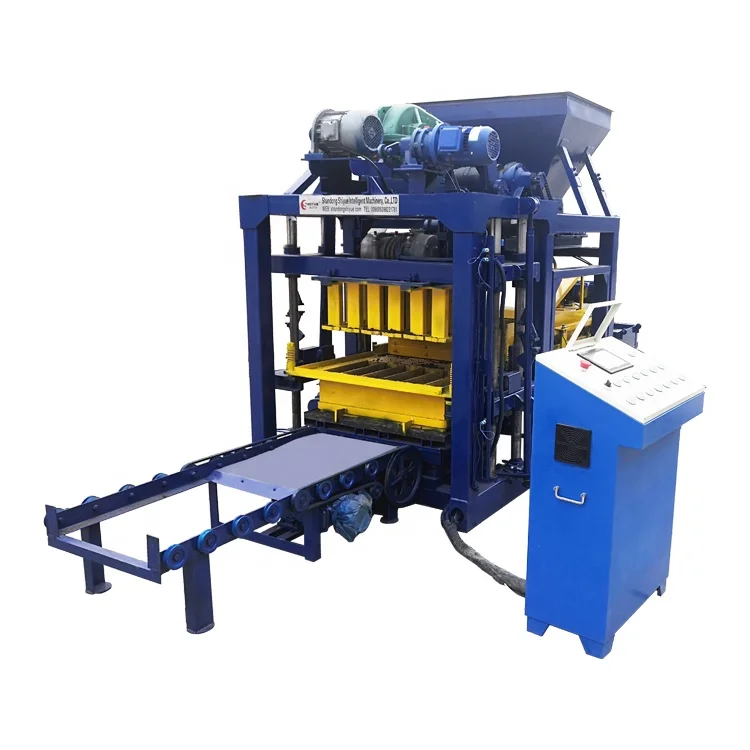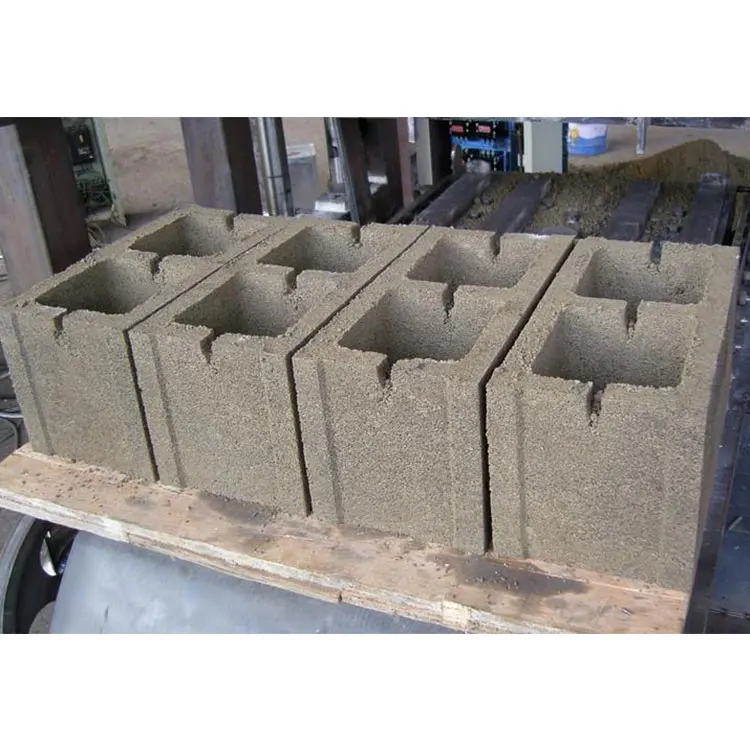
Description
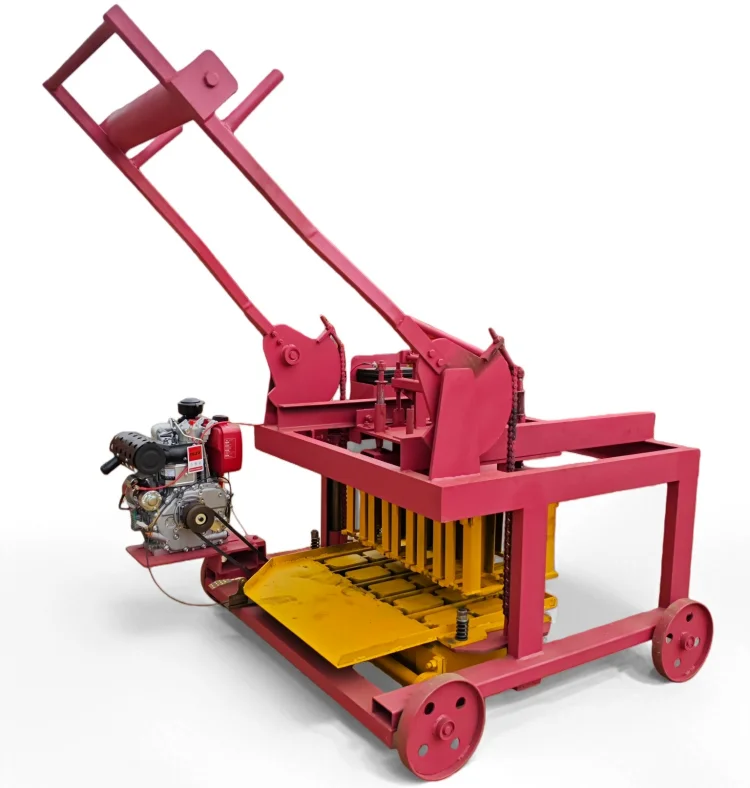
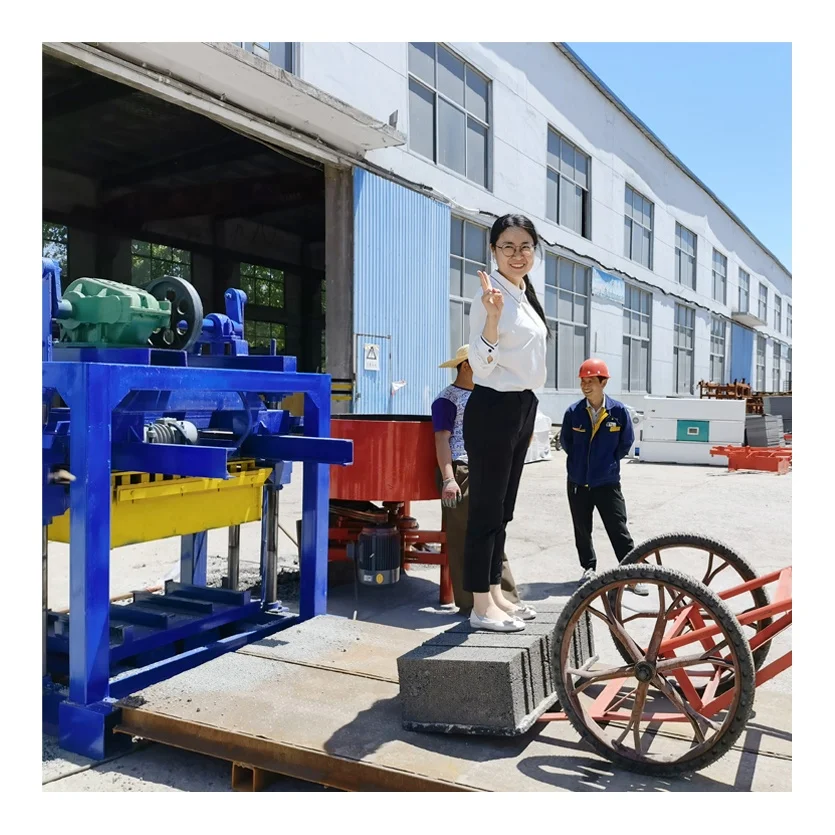
Stocked Machine Availability — QTJ4-40 units held in warehouse with container loading plans prepared before dispatch, so project-deadline buyers skip the typical production wait.
Technical Specifications
| Parameter | Value |
|---|---|
| Model | QTJ4-40 |
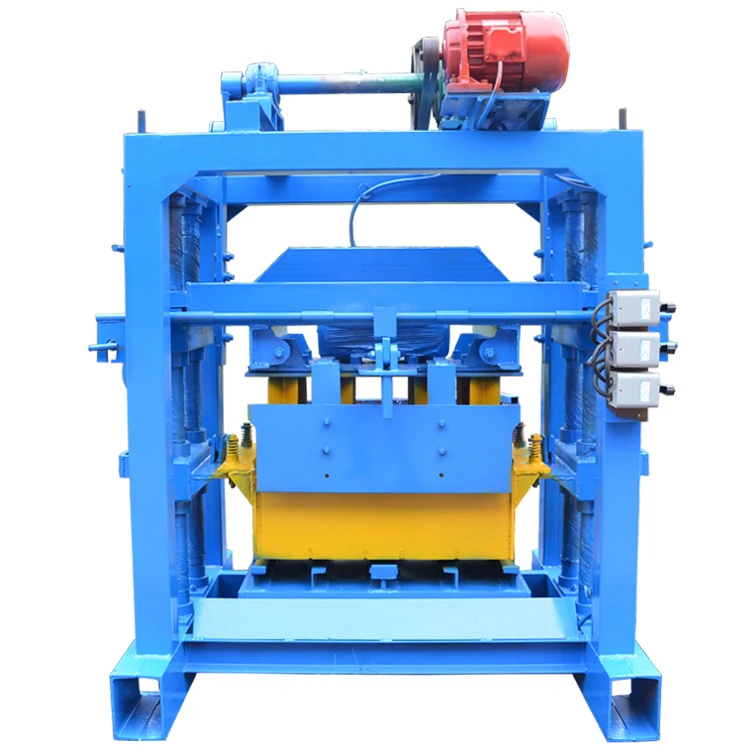
| Product Type | Manual Concrete Block Making Machine |
| Overall Dimensions | 1350 × 1460 × 1800 mm |
| Pallet Size | 850 × 450 mm |
| Overall Power | 9.5 kW |
| Vibration Frequency | 2800 RPM |
| Vibration Force | 35 kN |
| Control System | Mechanical and electric combination |
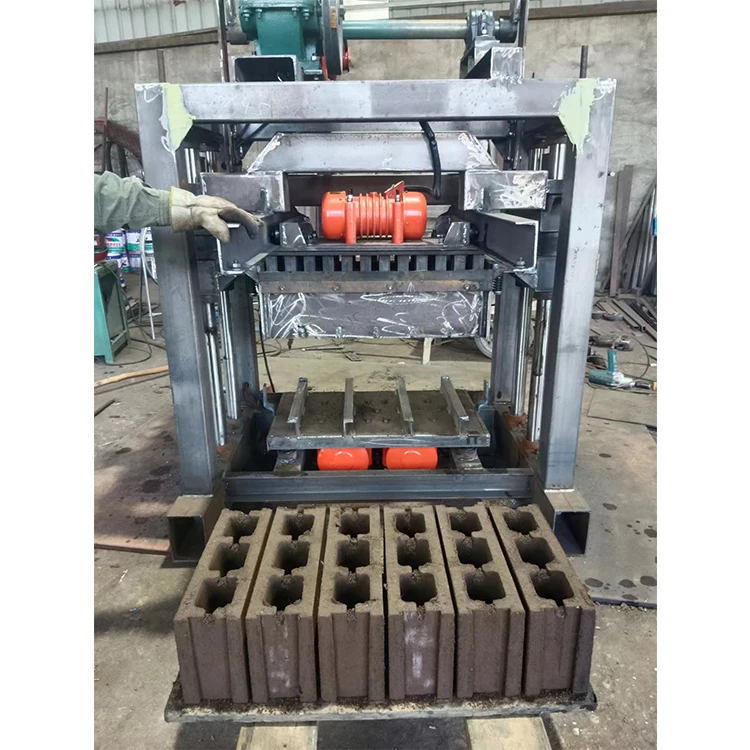
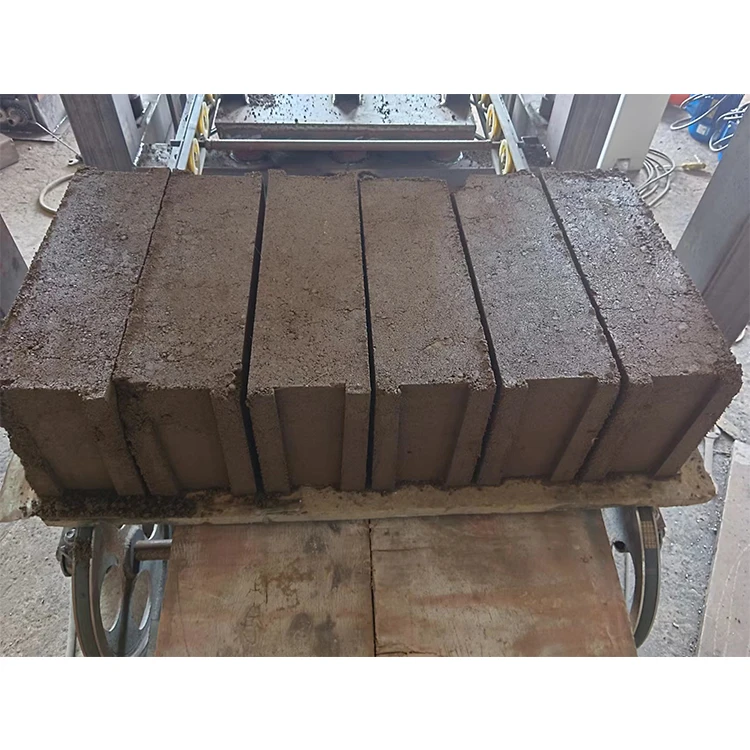
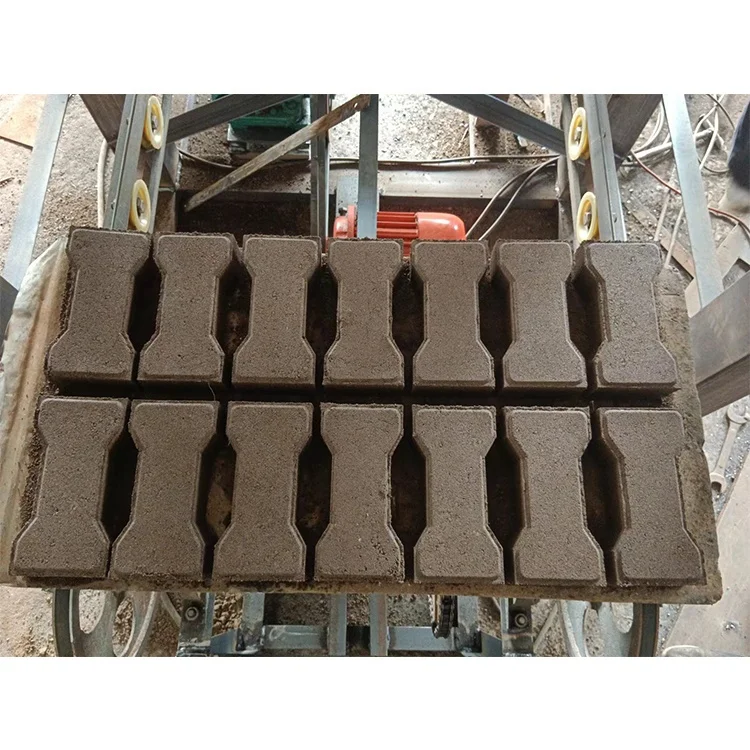
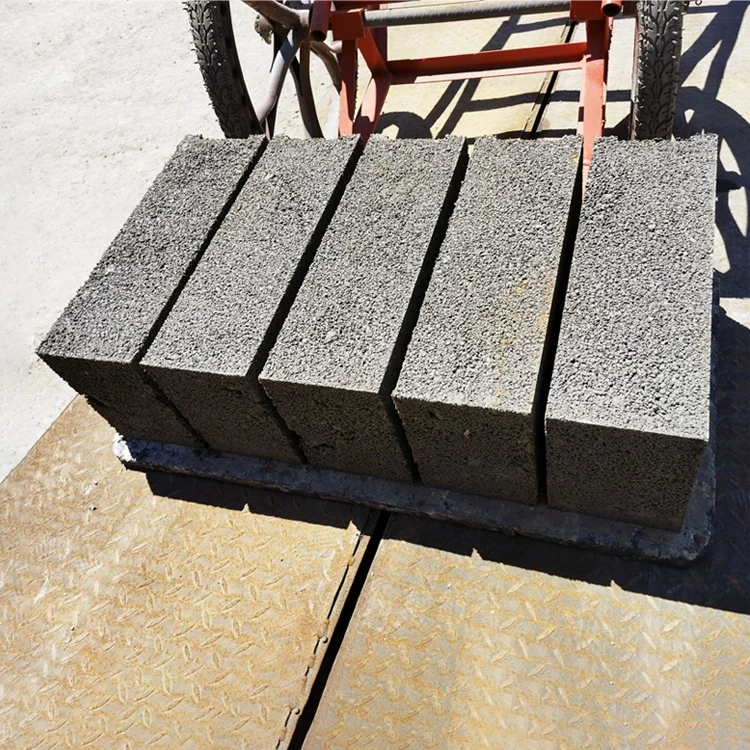
| Mould Format | Hollow block, paver block |
| Automation Level | Manual / Semi-automatic |
| Assembly State | Stationary type, small platform |
| Recommended Mixer | Vertical type 350 |
| Voltage & Frequency | Configurable to target market grid |
| Daily Capacity | Listed at 2880 pcs/day (basis not stated in source — confirm block format / material / thickness before quoting) |
Application Suitability
| Application | Material or Output |
|---|---|
| Small-scale hollow block production | Crushed stone, sand, and cement blends |
| Paving block manufacturing for local contractors | Aggregate and cement with pigment additives |
| On-site block making for housing projects | Locally sourced sand and gravel mixes |
| First-time plant startup with limited space | Standard concrete mix designs for solid blocks |
What the "Quick Dispatch" Promise Actually Requires
A stocked QTJ4-40 block machine in stock fast delivery means the unit is assembled, tested, and crated — not that it can run your mix on day one. [NEED_CITE: typical export machinery commissioning variables]
I have seen buyers assume a machine arriving next week will produce sellable blocks the same week. The reality is that voltage mismatch, pallet incompatibility, or an unconfirmed mix design can stall a site for days after arrival. Confirming these details during the inquiry stage — not after the bill of lading is issued — is what keeps a project-deadline purchase on schedule. The gap between "shipped" and "producing" is where most delays hide.
Stock Status and Dispatch Lead Time
When we say a QTJ4-40 block machine in stock fast delivery is available, it means the host frame, vibration motor, and control panel are assembled and run through a dry-cycle test in the workshop. Dispatch lead time covers dismantling for container loading, crating, and inland transport to port — not a production queue. For buyers working against a construction milestone, this distinction removes the largest variable in the procurement timeline. The inquiry stage locks in the lead time estimate so the shipping window is predictable.
Container Loading and Machine Dismantling
The QTJ4-40 is designed as a stationary unit on a compact platform, which simplifies container loading compared to fully automatic lines. The host machine is separated from the mixer and pallet stack for loading, and reassembly at destination requires basic mechanical tools and the provided electrical schematic. [NEED_CITE: standard container loading practices for small industrial machinery] We provide dismantling photographs and a reassembly sequence so the local team can position the unit and reconnect power without waiting for a visiting technician.
Understanding the Power and Vibration Configuration
The 9.5 kW overall power rating covers both the host machine vibration motor and the mechanical mould lifting system. The 35 kN vibration force at 2800 RPM is calibrated for standard concrete mixes with typical aggregate sizes. What matters on-site is whether the local voltage and frequency match the motor winding configuration — a 380V/50Hz motor on a 440V/60Hz grid will not deliver its rated vibration force, and block compaction will suffer accordingly. The mechanical-electric control system avoids complex PLC commissioning but still requires the correct phase sequence and breaker sizing at the installation point.
When Pallet Size Becomes a Bottleneck
The 850 × 450 mm pallet is the interface between the machine and the curing area. If the buyer’s existing forklift forks are wider than the pallet, or if the curing rack spacing was built for a different dimension, the entire output flow stalls after pressing. [NEED_CITE: pallet handling compatibility in block production] I once reviewed a dispatch where the buyer had already poured curing racks sized for 900 × 500 mm pallets from a previous supplier. The QTJ4-40 pallets did not sit flush on those racks, and blocks had to be re-stacked manually — negating the speed advantage of having a stocked machine in the first place.
Why Voltage Confirmation Cannot Wait Until Shipment
Sending a machine wired for the wrong grid standard turns a fast delivery into a slow commissioning problem. The QTJ4-40 block machine in stock fast delivery is configured during the pre-dispatch stage to match the buyer’s local voltage and frequency, and the motor nameplate, breaker rating, and cable sizing are all verified against that standard. [NEED_CITE: voltage and frequency standards by export market] Skipping this step means the buyer either runs the machine at reduced output through a transformer or waits for replacement motor windings — both outcomes destroy the timeline advantage of buying stock.
Why Procurement From a Focused Supplier Matters
Block machinery is our single product line, so the machine, mould, pallet, and recommended mixer are specified as a matched set rather than sourced from separate vendors. The QTJ4-40 leaves our warehouse with the vertical type 350 mixer recommendation confirmed against the buyer’s batch size and the pallet specification checked against their curing setup. Mould formats are selected for the block types the buyer’s local market actually purchases, and custom mould drawings are available when standard formats do not match. Dispatch documentation includes packing photographs and customs paperwork so the container clears the destination port without hold-ups.
Documentation & Verification
- Factory test record on your specified block format before crating
- Voltage and frequency confirmation sheet matched to your local grid
- Pallet dimension drawing cross-referenced with your curing rack layout
- Container loading plan with dismantling and reassembly photographs
- Packing list and customs documentation package for destination clearance
- Lubrication schedule covering 35# gear oil and engine oil quantities
Installation, Commissioning & Support
- Level cement ground required; overall footprint 1350 × 1460 mm needs no special foundation
- Dedicated circuit breaker sized to 9.5 kW draw with correct phase sequence for vibration motor
- Host machine separated from mixer for shipment and bolted back on-site with basic tools
- Mechanical-electric control requires no PLC programming; commissioning is wiring verification and test cycle
- Operator training covers mould change procedure and daily lubrication of host and mixer
- Wear parts list provided at dispatch with mould and vibration motor service intervals
Before You Request a Quote
To confirm whether a stocked QTJ4-40 block machine in stock fast delivery fits your project timeline, share the block format you intend to produce, your local voltage and frequency standard, and the pallet dimensions your curing area can accommodate. If you already have a mixer or handling equipment on site, include those specifications so we can confirm compatibility before locking in the dispatch date.
Frequently Asked Questions
Q: Is the QTJ4-40 currently in stock and when can it ship?
A: Stock status is confirmed at the inquiry stage along with a dispatch lead time estimate that covers dismantling, crating, and inland transport to port. This is not a production lead time — the unit is already assembled and tested. We quote the shipping window upfront so you can plan your site preparation around a known arrival date rather than a production queue.
Q: What is the container loading plan and how is the machine dismantled for shipment?
A: The host machine, mixer, and pallets are separated for container loading to maximize space and protect components during transit. We provide dismantling photographs and a reassembly sequence so your local team can position and reconnect the unit on arrival. The compact 1350 × 1460 mm footprint typically allows the full set to fit within a standard container alongside moulds and spare parts.
Q: How is arrival timing estimated and what affects the delivery window?
A: Arrival timing combines the dispatch lead time with the sea freight transit duration to your destination port. Variables outside our control — such as port congestion or customs inspection — can shift the window, but the dispatch date itself is fixed once the unit is crated. We provide the inland transport schedule and vessel booking details so you can track the shipment independently.
Q: Can voltage and frequency be matched to my local grid before dispatch?
A: Yes. Voltage, frequency, and motor winding configuration are confirmed against your local grid standard during the pre-dispatch stage. The control panel wiring, breaker rating, and cable sizing are all adjusted accordingly. This step is completed before crating so the machine can be powered on immediately after reassembly without requiring a local transformer or motor replacement.
Q: What documentation is provided for customs clearance at destination?
A: Each shipment includes a commercial invoice, packing list, bill of lading, and any certificates required by your destination country’s import regulations. We also provide factory test records and machine specification sheets that customs authorities may request for industrial equipment. The documentation package is reviewed with you before dispatch to ensure nothing is missing at the port of entry.