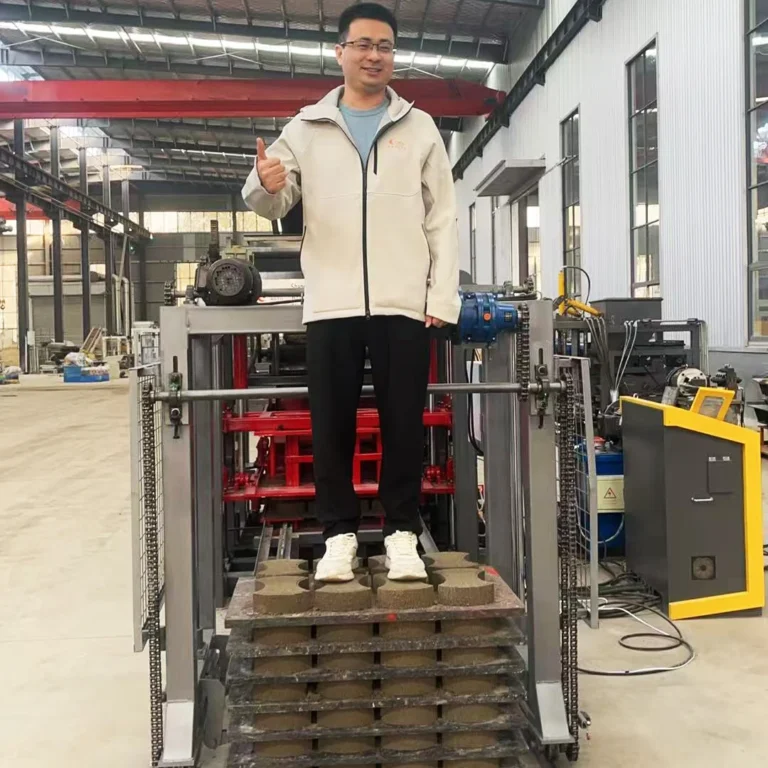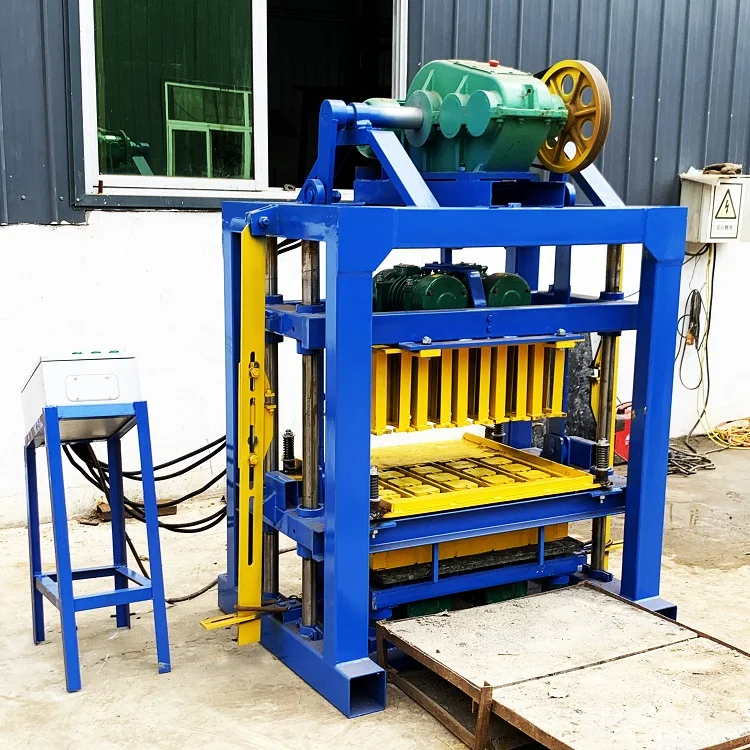
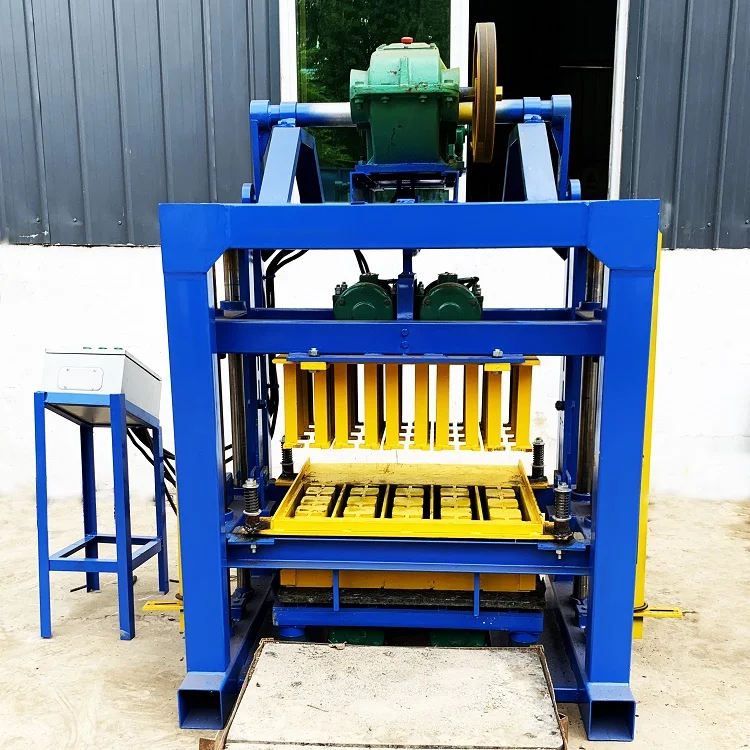
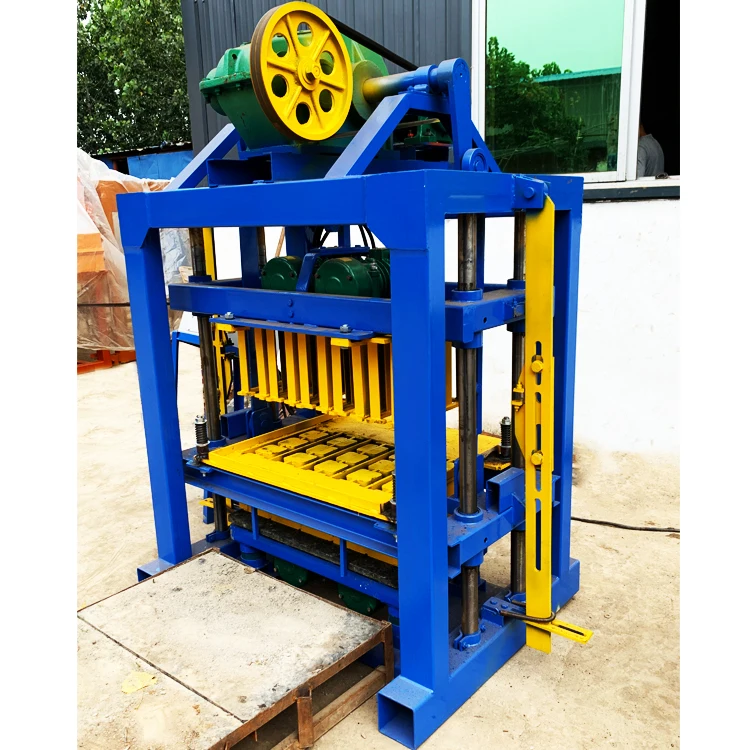
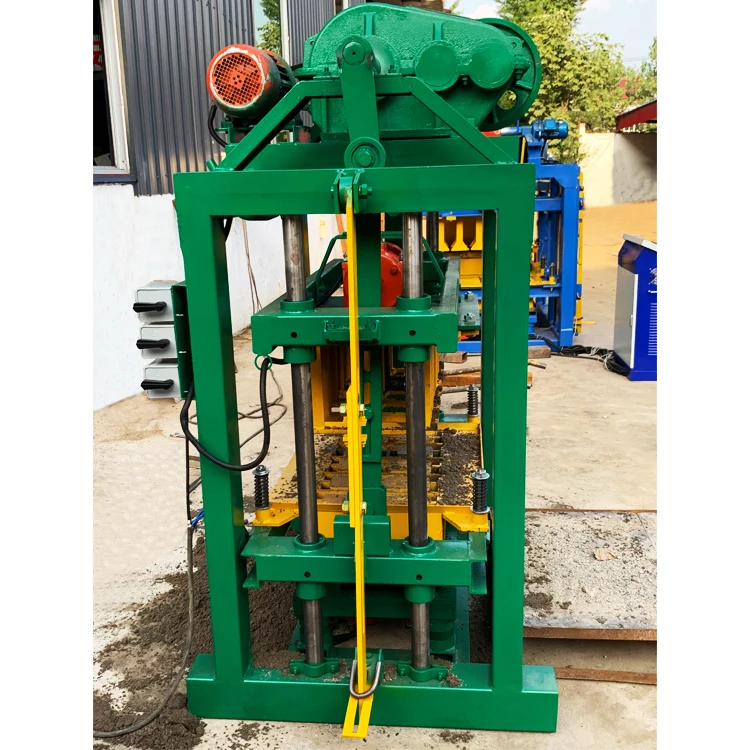
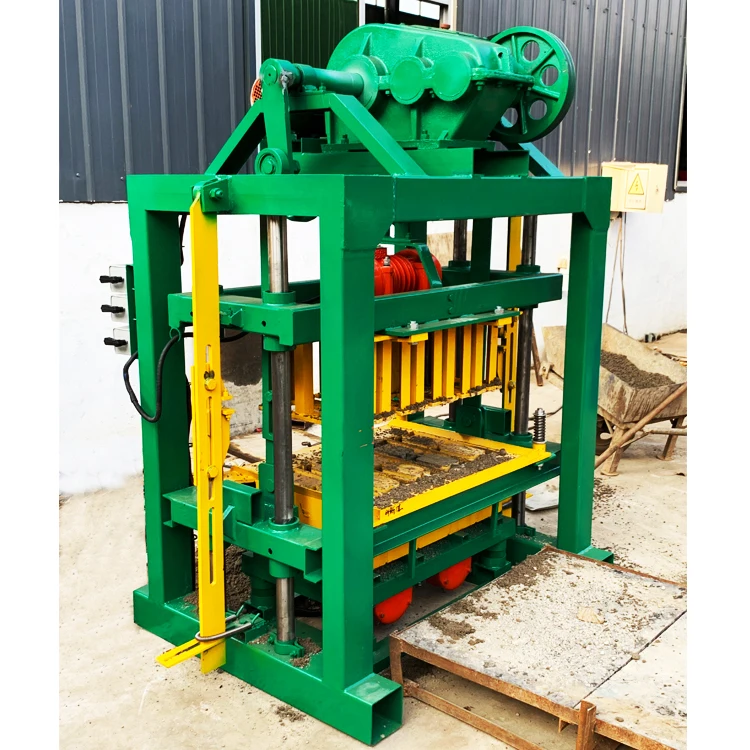
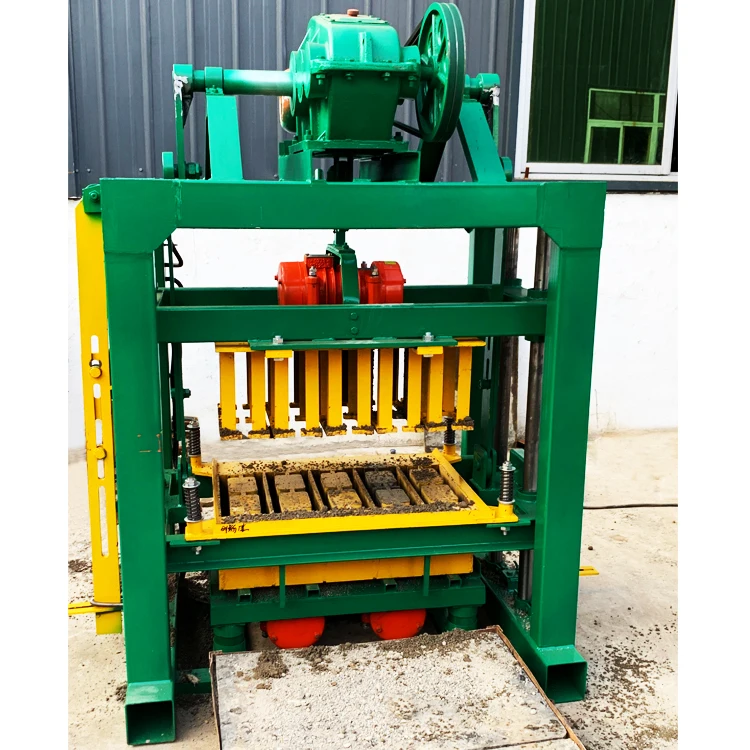
Description
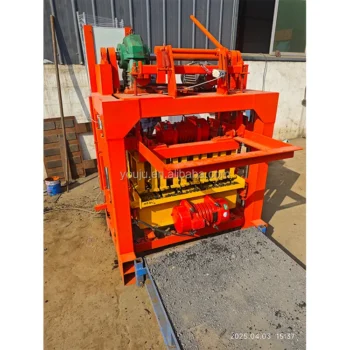
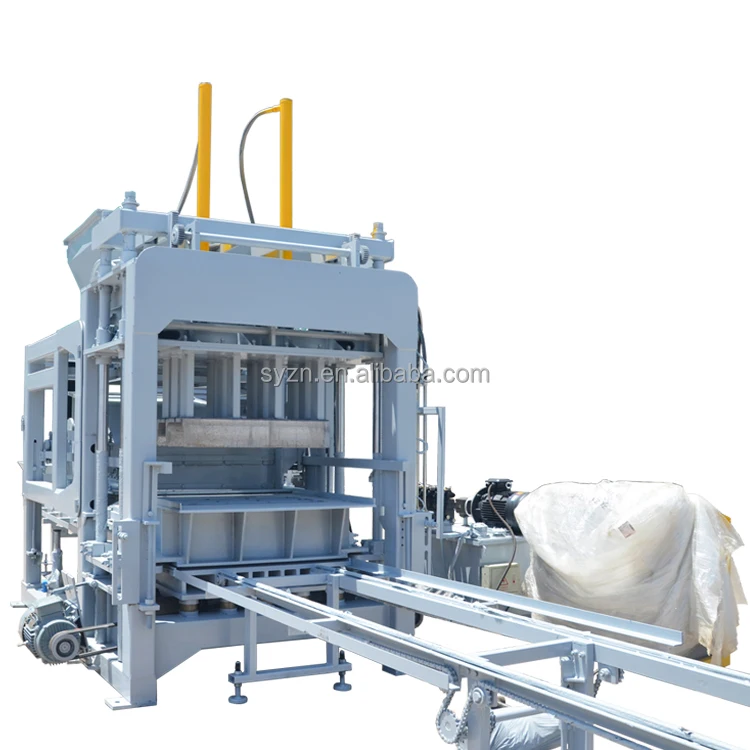
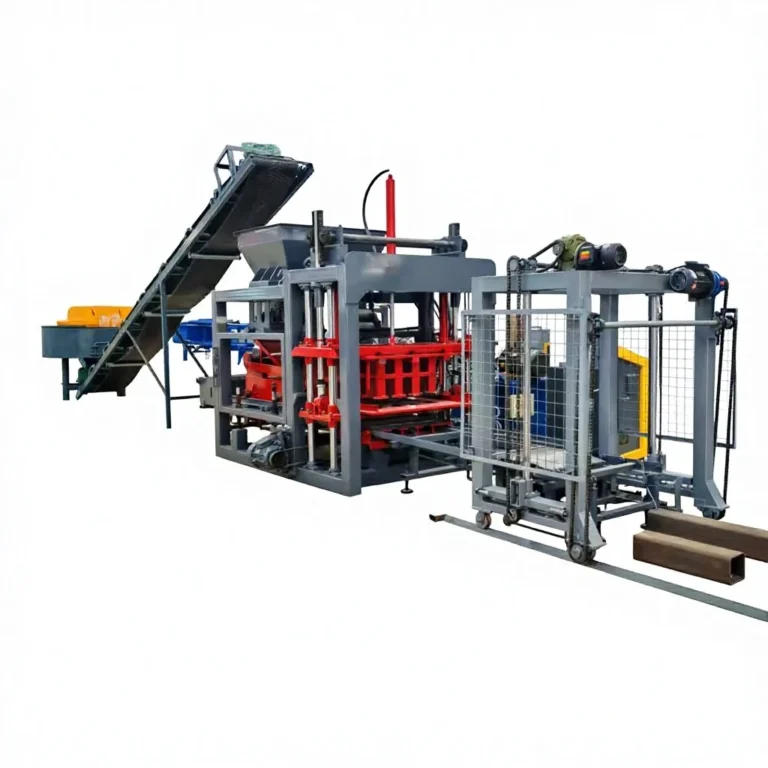
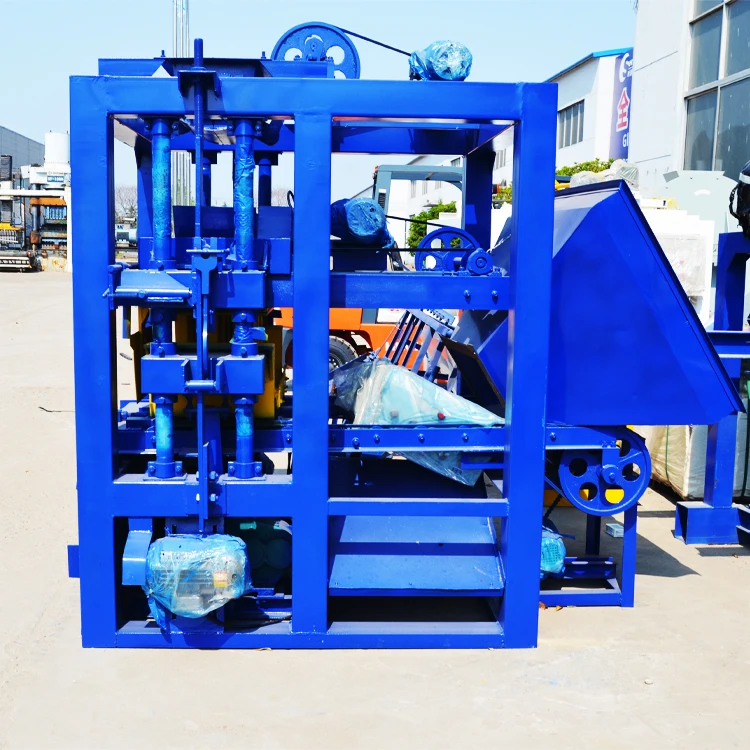
Stocked readiness confirmed before you pay — QTJ4-40 units held in Linyi yard with standard hollow block and paver moulds pre-matched to dispatch schedules, not built after the order lands.
Technical Specifications
| Parameter | Value |
|---|---|
| Product Type | Manual Concrete Block Making Machine |
| Model | QTJ4-40 |
| Main Vibration Form | Platform Vibration |
| Vibration Frequency | 2800 r/min |
| Pallet Size | 850 × 450 mm |
| Overall Dimensions | 1350 × 1460 × 1800 mm |
| Machine Weight | 1 T |
| Factory Area Requirement | 200 m² |
| Worker Requirement | 1–3 people |
| Motor Option | Diesel and Electric Motor |
| Automation Level | Manual (top die push and pull, automatic scraper) |
| Hydraulic Pressure | Not applicable (manual mechanical press) |
| Applicable Raw Materials | Concrete, cement, fly ash, crushed stone, sand, dust, gravel, slag |
| Applicable Products | Concrete blocks, hollow/solid blocks, pavers, interlocking blocks, curbstone, colored pavers |
| Capacity (400×200×200mm hollow block, 4 pcs/mould) | 360 pcs/h, 2880 pcs/day |
| Capacity (400×150×200mm hollow block, 5 pcs/mould) | 500 pcs/h, 4000 pcs/day |
| Capacity (225×112.5×60mm interlocking/paver, 9 pcs/mould) | 900 pcs/h, 7200 pcs/day |
| Raw Material Ratio (approx.) | cement 8–10%, sand 30–40%, stone 50–60% (≈ 1:4:5) |
| Certification | CE (image shown in source — validity to be confirmed) |
Application Suitability
| Application | Material or Output |
|---|---|
| Small-scale hollow block production on a construction site | Cement, sand, and crushed stone in a 1:4:5 approximate ratio |
| Interlocking paver manufacturing for local hardware distributors | Colored concrete mixes with fine aggregate and fly ash |
| First-time block plant setup in rural or peri-urban areas | Locally available sand, gravel, and slag with manual pallet handling |
| Curbstone and solid block runs for housing projects | Coarse aggregate blends compacted under platform vibration |
What Dispatch Lead Time Actually Means for a Manual Block Machine
A quoted lead time only matters if the machine, its moulds, and the pallets are physically in the same yard when the container is booked — otherwise you are financing a production slot, not buying available equipment.
I have watched buyers pay deposits on manual block machines that were listed as in stock, only to learn weeks later that the matching mould set was still in the machining workshop three towns away. By the time the tooling caught up, the shipping window had slipped and the project site was waiting on blocks that should have been curing already. The QTJ4-40 manual concrete block making machine in stock conversation should start with a warehouse walk-through on video, not a brochure promise [NEED_CITE: container booking lead times from Chinese ports during peak season].
Stock Status You Can Verify Before the Invoice
The QTJ4-40 is held as a complete skid: main press frame, vibration platform, and top die assembly bolted and greased. Standard hollow block moulds for 400×200×200mm and 400×150×200mm formats sit on the same pallet rack as the machine itself. When a buyer confirms the order, we photograph the serial plate against the packing list before the crate lid goes on. This manual concrete block making machine in stock approach removes the gap between order confirmation and the day the forklift driver actually moves the crate toward the container door.
Loading Plan Dictates Whether Your Machine Arrives Intact
A manual block press is compact enough to share a 20-foot container with pallets, spare moulds, and a diesel engine crate if the dismantling sequence is planned in advance. The QTJ4-40 breaks down into three main lifts: the base frame with vibration motor, the upright column assembly, and the top die carriage. Each lift is secured against container wall lashing points with timber bracing cut to the exact crate dimensions. Rushed loading without a written plan leads to hydraulic lines — or in this case, mechanical linkages — rubbing through paint and arriving with corrosion already started [NEED_CITE: ocean freight lashing standards for heavy machinery in open-top or standard containers].
Reading the Specs That Determine Your First Week on Site
Platform vibration at 2800 r/min is the force that compacts the mix against the mould walls; too low and t*ine aggregate segregates to the bottom. The QTJ4-40 uses a fixed-frequency vibration motor rather than a variable drive, which means the compaction profile is set by the mix design and moisture content you feed in, not by an operator dial. Pallet size at 850×450mm defines the curing rack spacing you need to build before the machine arrives — if your existing racks were cut for a different press, you will be rebuilding them while the QTJ4-40 sits idle. The diesel motor option matters for sites where grid voltage drops below the threshold the electric motor needs to hold speed under load; a diesel-driven QTJ4-40 runs independently of the local transformer, which is often the difference between producing blocks and producing excuses during the first month.
What Happens When Pallet Size Is Chosen Without Checking the Curing Yard
Buyers who skip the curing-area survey often discover after arrival that their forklift tines are too wide for the 850×450mm pallet, or that the rack slots were welded for a machine that used a larger format. The result is pallets stacked on the ground, blocks curing unevenly, and a manual block machine that technically works but cannot feed a consistent product to the customer. This mismatch costs more in wasted cement and rejected loads than a site visit would have cost in airfare [NEED_CITE: concrete block curing temperature and humidity requirements for consistent compressive strength].
Why This Is Where the Dispatch Conversation Starts
Block machinery is the only thing we build, which means the QTJ4-40 press, its moulds, the pallets, and the handling tools are specified as one matched set rather than sourced from three different workshops and bolted together at the port. Moulds are cut to the block format that your local hardware yards actually sell, and the raw material ratio we quote is based on the aggregate you send us, not a default catalogue figure. Diesel and electric motor options are both held in inventory, so a site without stable grid power does not trigger a six-week rebuild cycle. Every dispatch is backed by a factory test record shot on your specified mix, voltage and control language confirmed in writing before the crate closes, and a wear-parts list that tells you exactly what to reorder before the first mould needs replacing.
Documentation & Verification
- Line layout and capacity calculation stating the block format assumed for the QTJ4-40
- Mould drawing and format list covering hollow, solid, and paver profiles ordered
- Pallet specification sheet matched to 850×450mm size and your curing rack spacing
- Voltage and control language confirmation for electric motor versions before dispatch
- Factory test record filmed on your raw material blend with block strength readings
- Packing photographs and customs documentation checklist prior to vessel booking
Installation, Commissioning & Support
- Foundation slab poured level to within 5mm across the 1350×1460mm machine footprint before the QTJ4-40 is set down
- Dedicated 3-phase circuit for the electric motor version, or level concrete pad with diesel fuel bunding for off-grid sites
- Top die carriage and vibration platform reassembled on site with bolts torqued to spec before the first test cycle
- Mix design trial run on your local aggregate with moisture adjusted until platform vibration at 2800 r/min produces clean block edges
- Operator training on mould change procedure, pallet feeding rhythm, and manual scraper adjustment for consistent block height
- Wear parts list with part numbers for vibration motor mounts, scraper blades, and mould liner plates stocked for fast re-dispatch
Before You Request a Quote
Send the exact block format your customers order most often, the daily output you need to hit in the first ninety days, and a sample of your local sand and stone so we can run a compaction trial on the QTJ4-40 before the machine leaves the yard. Confirm your site voltage and frequency if you are choosing the electric motor, and let us know the pallet size your existing curing racks were built around so the 850×450mm standard can be verified or adjusted before dispatch.
Frequently Asked Questions
Q: Which QTJ4-40 configurations and moulds are physically in stock right now?
A: The base QTJ4-40 press with platform vibration is held complete with standard 400×200×200mm and 400×150×200mm hollow block moulds on the same pallet rack. Diesel and electric motor options are both stocked. Custom mould profiles require a separate machining cycle and are quoted with their own lead time once drawings are confirmed.
Q: What is the confirmed lead time from order to port, and how is the machine packed?
A: Standard stock configurations of the QTJ4-40 manual concrete block making machine are typically crated within a few working days of deposit clearance. The machine dismantles into three main lifts that fit inside a 20-foot container alongside pallets and spare moulds. A written loading plan with bracing dimensions is shared before the container is sealed.
Q: Can the diesel motor version ship from stock, or does it require a build cycle?
A: The diesel-driven QTJ4-40 is held in stock alongside the electric motor version. Both configurations are tested on the same yard floor before crating. Buyers who need a specific diesel engine brand or emission rating should confirm at inquiry stage, as non-standard engines may introduce a procurement lead time.
Q: What pallet size ships with the QTJ4-40, and will it fit my existing curing racks?
A: The standard pallet is 850×450mm. Before dispatch we ask for your curing rack slot width and forklift tine spacing so any mismatch is caught before the machine ships. If your racks were built for a different press, we can discuss pallet adjustment or supply rack modification drawings with the shipment.
Q: How quickly can replacement moulds and wear parts follow the initial machine?
A: Standard hollow and paver moulds for the QTJ4-40 are typically machined and dispatched within a short production cycle once the order is confirmed. Wear parts such as vibration motor mounts and scraper blades are packed with the initial shipment, and a reorder list with part numbers is included in the documentation so replacements can be requested without re-measuring on site.