


Description
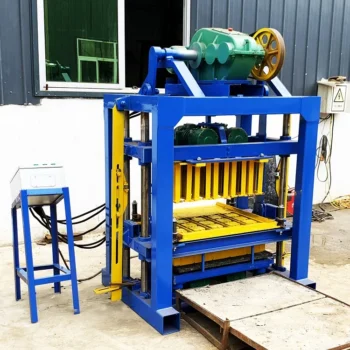
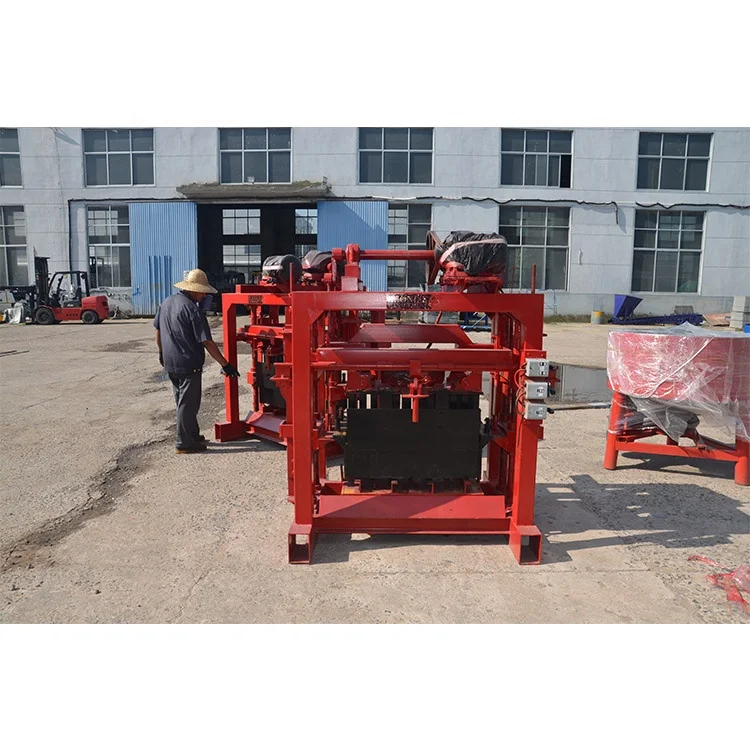
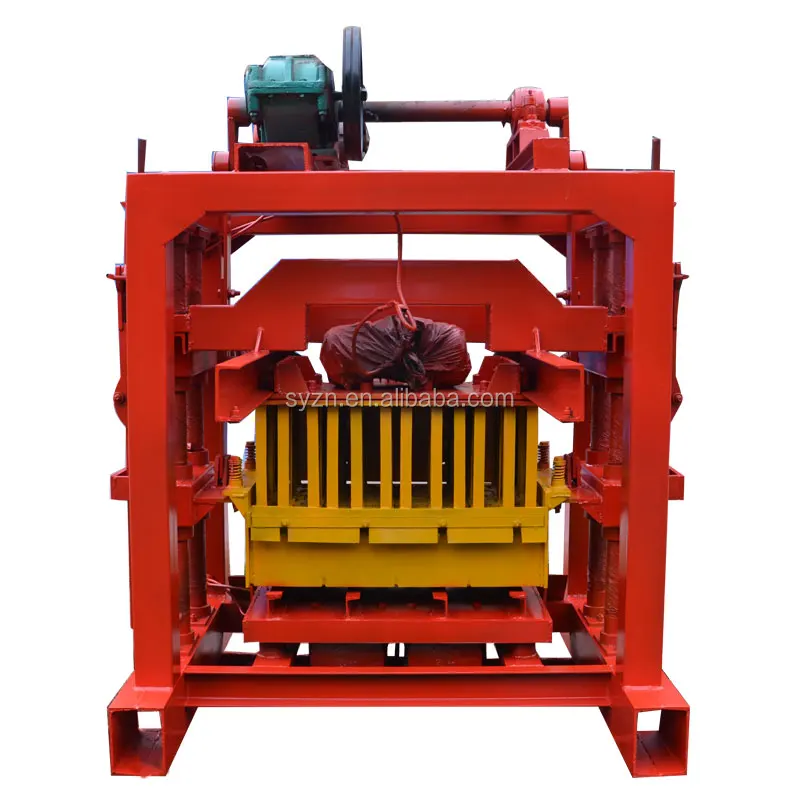
Proven availability — QTJ4-40 block machine in stock and configured against your local voltage and pallet standard before dispatch, so the machine runs the day the container opens.
Technical Specifications
| Parameter | Value |
|---|---|
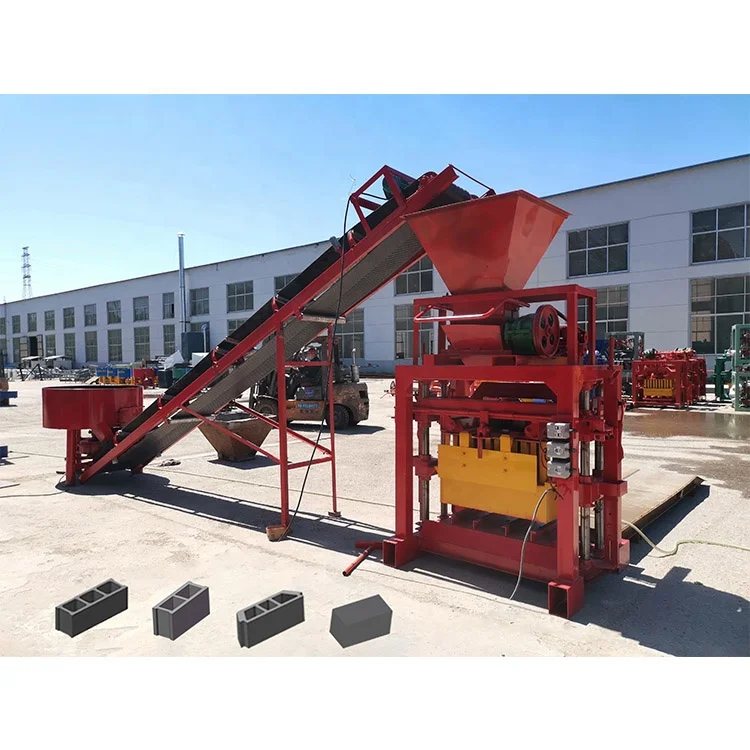
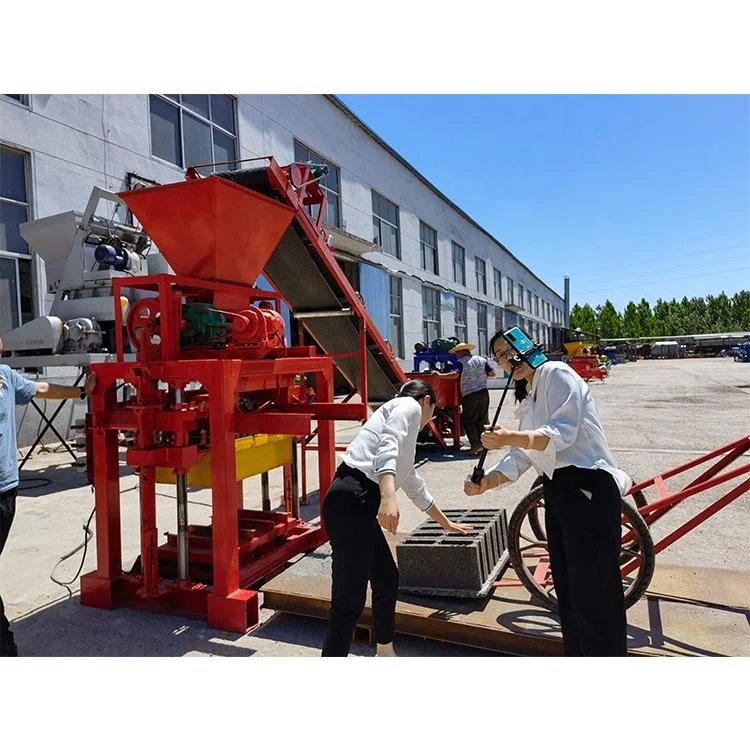
| Product Type | Semi-automatic Concrete Block Making Machine |
| Model | QTJ4-40 |
| Overall Dimensions (L×W×H) | 1350×1460×1800mm |
| Net Weight | 1.2T |
| Rated Power | 10.4kW |
| Molding Cycle | 40s |
| Output Capacity (Hollow 400×200×200mm) | 360 pcs/hour, 2880 pcs/day (4 pcs/mould) |
| Output Capacity (Hollow 400×150×200mm) | 450 pcs/hour, 3600 pcs/day (5 pcs/mould) |
| Output Capacity (Solid 225×112.5×60mm) | 800 pcs/hour, 6400 pcs/day (9 pcs/mould) |
| General Output Reference | 2000-2500pcs/8hours (basis not stated in source) |
| Vibration Type | Bed mould vertical vibration + upper mould compression vibration |
| Pallet Size | 850×450×20mm |
| Raw Material | Concrete, sand, cement, fly ash, lime, gypsum |
| Mould Format | 8, 6, 5, 4 inch hollow/solid/paver (custom sizes on request) |
| Automation Level | Semi-automatic |
| Assembly State | Host machine + mixer + pallets (mixer and pallets optional) |
| Voltage | According to local voltage (confirm frequency and phase) |
Application Suitability
| Application | Material or Output |
|---|---|
| On-site production for housing projects | Hollow blocks from crushed stone and cement, solid bricks from local sand |
| Small-scale commercial block plants | Interlocking pavers and kerbstones using fly ash or gypsum blends |
| First-plant entrepreneurs | Standard hollow blocks with straightforward manual pallet handling |
| Contractors needing immediate output | Quick-dispatch machinery for deadline-driven construction sites |
The Real Lead Time Behind "Fast Delivery"
A semi-automatic block machine fast delivery promise often assumes the electrical standard and pallet size are already settled; when they are not, the machine sits on the dock while transformers are sourced locally. Confirming voltage, frequency, and curing-area compatibility before loading is what actually makes delivery fast. I once watched a project stall for three weeks because a 440V/60Hz requirement was discovered only when the container reached the site, and this QTJ4-40 block machine in stock is only half the solution if the buyer’s forklift cannot handle the pallet dimensions. [NEED_CITE: common voltage and frequency mismatches in cross-border machinery trade]
Dispatch Readiness and Stock Verification
When a contractor is working against a pouring schedule or a housing milestone, waiting six weeks for a factory build is not an option. The QTJ4-40 block machine in stock status means the host unit, standard moulds, and matching pallets can be assembled, tested, and loaded into a container on a compressed timeline. This semi-automatic block machine fast delivery window is realistic only when the standard 850×450×20mm pallet and common hollow-block formats are involved; custom mould drawings still require fabrication time.
Container Loading and Arrival Estimation
The 1.2T net weight and compact 1350×1460×1800mm footprint allow the host machine, optional mixer, and a bundle of pallets to share a single 20-foot container, keeping freight costs contained. Dismantling the upper vibration assembly for transit and reassembling it on site is part of the standard loading plan. Arrival estimates are quoted against the destination port before the booking is confirmed, so the buyer can align the unloading crew and foundation work to the vessel schedule. [NEED_CITE: standard container loading practices for compact construction machinery]
How the 40-Second Cycle Translates to Daily Output
The 40-second molding cycle is the mechanical heartbeat, but what matters to the plant owner is how many saleable blocks leave the curing rack each shift. At 4 pieces per mould for a 400×200×200mm hollow block, the press delivers 360 pieces per hour; switch to a 225×112.5×60mm solid brick mould and that figure rises to 800 pieces per hour because the mould cavity count increases to nine. The rated 10.4kW power draw covers both the bed mould vertical vibration and the upper mould compression vibration working together to consolidate the mix. Pallet size is fixed at 850×450×20mm, so the curing area and any existing forklift must accommodate that footprint before the first block is pressed.
The Cost of Skipping the Pre-Shipment Checklist
Ordering a QTJ4-40 without locking down the local aggregate gradation and mix design often leads to inconsistent block density, because the vibration force and hydraulic pressure were never matched to the material actually available on site. Buyers who confirm the pallet specification after arrival sometimes discover their curing racks were built for a different dimension, forcing a costly retrofit or a second pallet purchase. [NEED_CITE: block density failures linked to unconfirmed mix design and aggregate]
Why Source This Machine Through This Channel
Block machinery is the sole focus here, so the press, mould, pallet, and handling accessories are specified as one matched set rather than assembled from unrelated suppliers. The configuration is set against the buyer’s actual mix design and target block format, not pulled from a catalogue default. Mould design covers the formats the local market actually sells, with custom drawings accepted. Voltage, frequency, and PLC display language are confirmed in writing before production begins, avoiding the commissioning delay that once held up a Kuala Lumpur site for three weeks. Installation support includes operator training so the crew can run the semi-automatic sequence from day one.
Documentation & Verification
- Capacity calculation stating the exact block format behind each output figure
- Pallet specification confirming 850×450×20mm dimensions and material grade
- Voltage and frequency confirmation recorded before the machine enters production
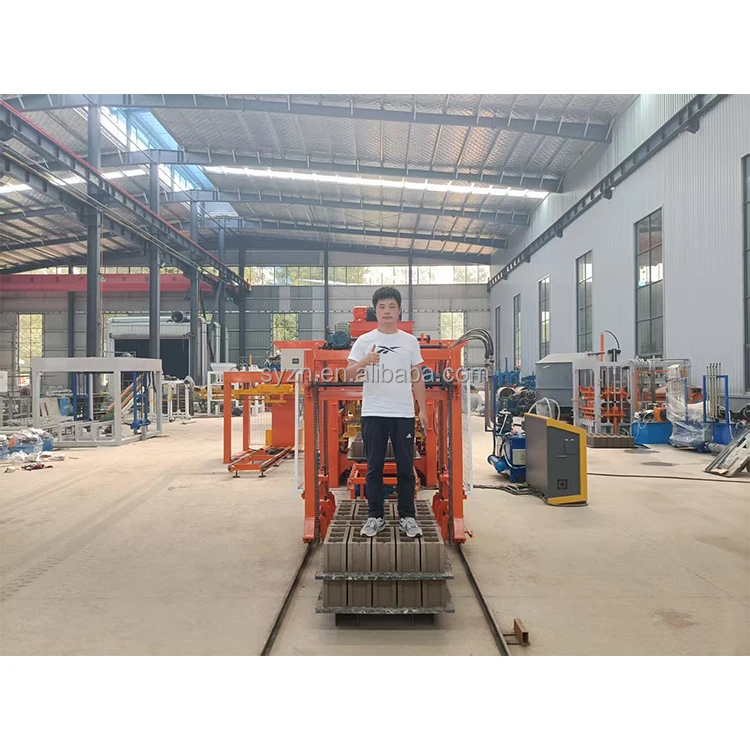
- Factory test record with photographs taken before container doors close
- Packing photographs showing dismantling points and securing method
Installation, Commissioning & Support
- Foundation pad leveled to suit the 1350×1460mm footprint and 1.2T static load
- Dedicated circuit rated for the 10.4kW draw at the confirmed local voltage and frequency
- Upper vibration assembly re-bolted and aligned after transit dismantling
- First-run cycle timed against the 40-second target with the buyer’s own mix
- Operator trained on manual pallet feed sequence and mould change procedure
- Wear parts list provided covering vibration springs and mould liner plates
What to Include in Your Inquiry
To move from a stock check to a firm loading plan, share the block format your market buys most, the daily volume you need to sustain, and the local aggregate and cement type you will feed into the mixer. Include your site voltage, phase, and frequency so the motor and control panel are wound correctly. If you already have curing racks or a forklift, send the pallet dimensions they accept so the 850×450×20mm standard can be verified or an alternative arranged before the container is booked.
Frequently Asked Questions
Q: How is the daily output calculated and which block format does it assume?
A: Every output figure on this page is tied to a specific block format and mould cavity count. The 2880-piece daily figure, for example, assumes 400×200×200mm hollow blocks at 4 pieces per mould running an 8-hour shift. If your primary product is a different size, the capacity calculation is recalculated against that format before the quotation is issued.
Q: Which models and moulds are currently stocked for fast dispatch?
A: The QTJ4-40 host machine and its standard hollow and solid block moulds in 8, 6, 5, and 4-inch formats are held in stock. Matching pallets in the 850×450×20mm size are also available. Custom mould drawings are accepted but require a separate fabrication lead time before they can join the shipment.
Q: What is the container loading plan and estimated arrival timeline?
A: The machine, optional mixer, and pallet bundle fit within a single 20-foot container. The upper vibration assembly is dismantled for transit and reassembled on site. Arrival estimates are quoted against the destination port at the time of booking so the buyer can schedule the unloading crew and foundation work accordingly.
Q: Can I use locally sourced pallets instead of buying from you?
A: Yes, provided the local pallets match the 850×450×20mm specification in both dimension and load-bearing capacity. If the local pallets differ in thickness or material, the vibration transfer and block release may be affected. Send a sample or drawing for verification before committing to a local supply.
Q: What happens if I need a different voltage or frequency after ordering?
A: Voltage and frequency are confirmed in writing before the motor is wound and the control panel is assembled. If the local supply changes after that point, a transformer or variable-frequency drive may be required on site. This is why the confirmation step is treated as a hard gate before the machine enters production.