
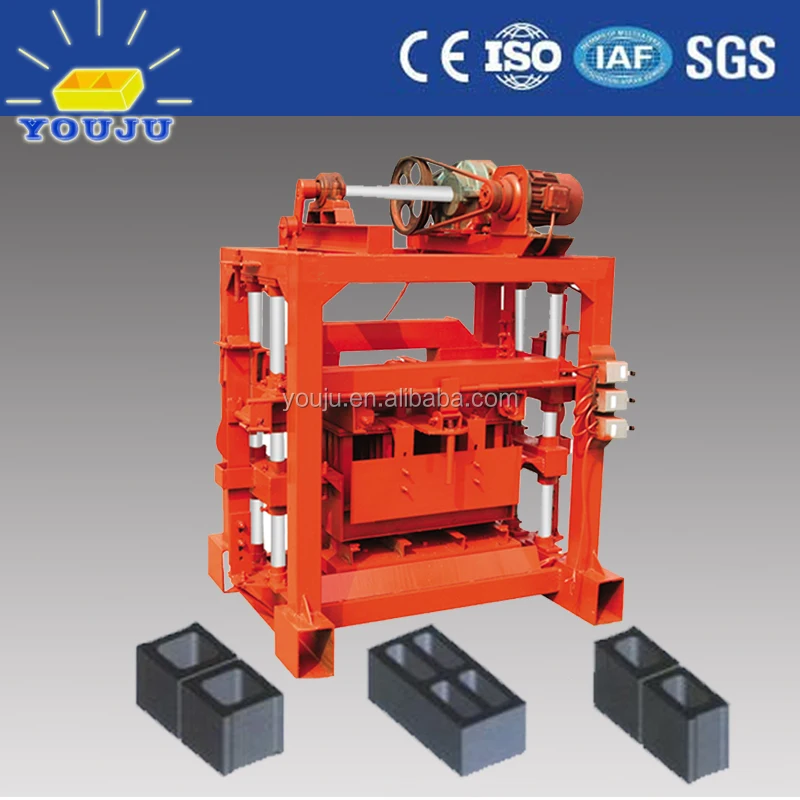


Description
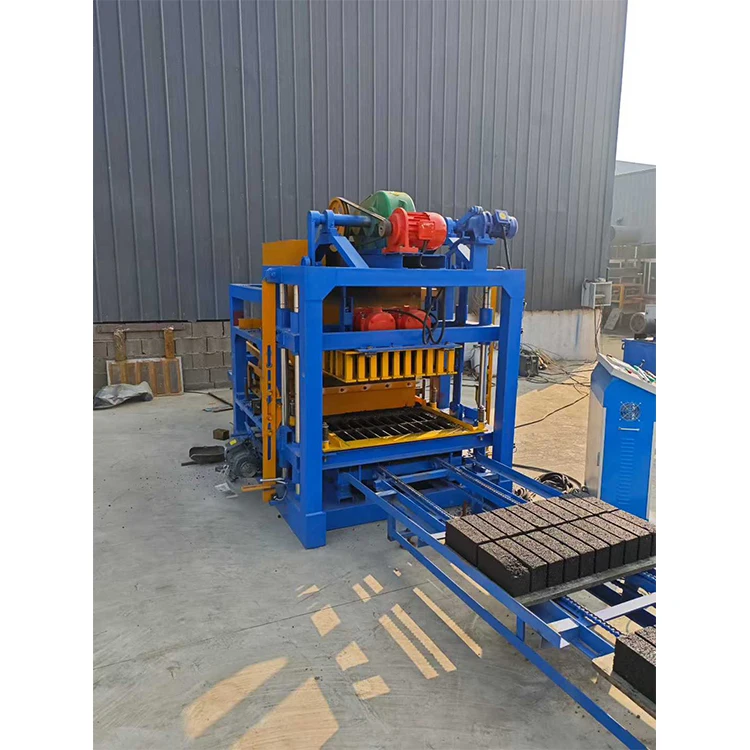
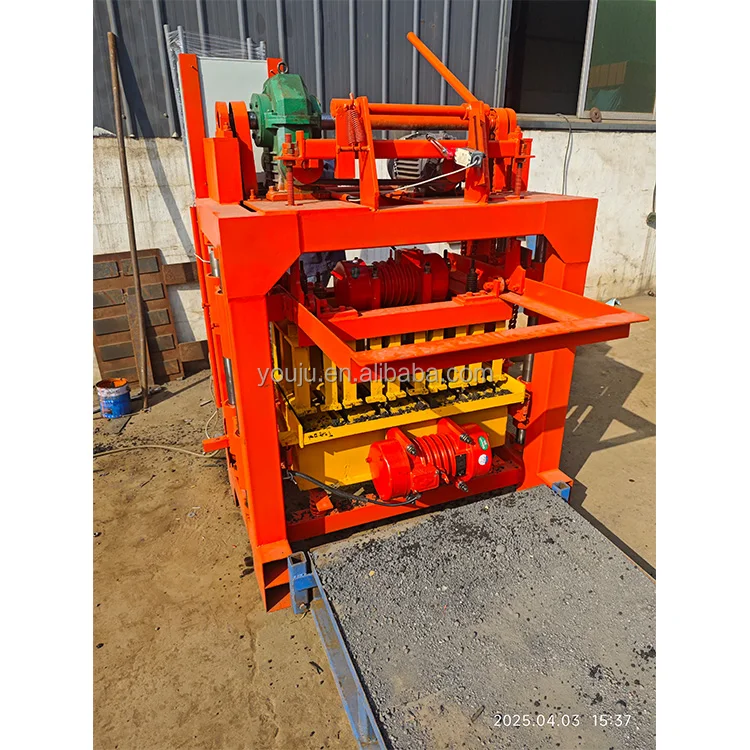
Single-Focus Supply — Every QTJ4-40 stationary block machine leaves our Linyi yard with voltage and frequency matched to the buyer’s grid, not assumed from a default export list.
Technical Specifications
| Parameter | Value |
|---|---|
| Model | QTJ4-40 |
| Product Type | Stationary Concrete Block Making Machine |
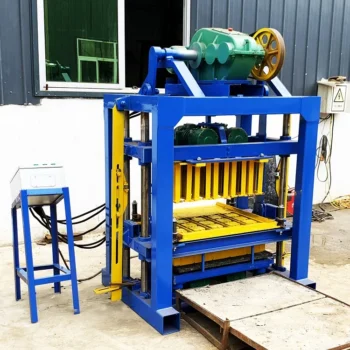
| Overall Dimensions (L×W×H) | 1350 × 1460 × 1800 mm |
| Net Weight | 1000 kg |
| Rated Power | 9.5 kW |
| Voltage & Frequency | Configurable to local supply (basis to be confirmed before dispatch) |
| Control System | Manual / Semi-automatic operation |
| Vibration Frequency | 2800 r/min |
| Standard Mould Format | 390 × 190 × 190 mm (4 pcs per mould) |
| Workers Required | 3–5 |
| Warranty | 1 year |
| Automation Level | Semi-automatic with manual pallet handling |
Application Suitability
| Application | Material or Output |
|---|---|
| Small-scale hollow block production | Crushed stone, cement, sand aggregate mixes |
| Solid block manufacturing for local housing | Cement, river sand, and fine gravel |
| On-site block production for contractors | Project-sourced aggregate with standard cement binder |
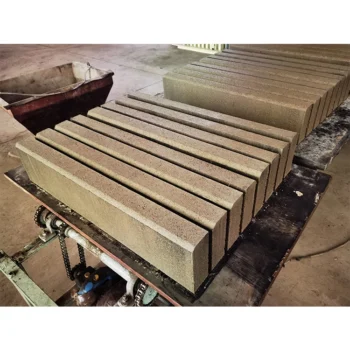
| Paver and kerbstone runs (with mould change) | Concrete mixes with colour oxide additives |
Why Voltage Confirmation Must Happen Before the Container Is Booked
A stationary block machine in stock is only ready when its electrical system matches the destination grid, not just the voltage number on the nameplate.
I once watched a QTJ-class machine sit idle for three weeks in a West African yard because the frequency was wrong — 60 Hz motors on a 50 Hz supply, overheating within minutes of start-up. The voltage matched, so everyone assumed the electrics were fine. That single oversight cost the buyer an entire pouring cycle and forced a motor swap on-site. When sourcing a stationary block machine in stock for export, frequency, phase configuration, and control panel language deserve the same attention as the mechanical spec [NEED_CITE: voltage and frequency standards by export market].
Dispatch Readiness and Container Loading
Stocked QTJ4-40 units are stored assembled and covered at our Linyi yard. Before any crate moves, we pull the nameplate data against your confirmed electrical requirements — voltage, frequency, phase — and photograph each tag for written sign-off. The 1000 kg net weight and compact 1350 × 1460 × 1800 mm footprint allow a single 20-foot container to carry the press, standard moulds, pallets, and loose spare parts without partial-load complications. This matters when your project timeline depends on a single sailing date.
Arrival Timing You Can Plan Around
A fast delivery promise means little without a container loading plan and a confirmed vessel booking. Once you approve the pre-shipment photographs, dismantling for shipment takes a defined number of steps: the hopper is unbolted, the mould is crated separately, and hydraulic lines are capped. We quote arrival estimates upfront based on the nearest port rotation, so you can schedule your foundation pour and pallet inventory to match the expected discharge date rather than guessing [NEED_CITE: typical transit times from Qingdao to major African and Southeast Asian ports].
Vibration Force, Mould Format, and Block Density
The 2800 r/min vibration frequency drives the eccentric blocks that compact concrete into the mould cavity. At this speed, the QTJ4-40 consolidates standard hollow blocks in the 390 × 190 × 190 mm format — four pieces per mould cycle — with sufficient density for load-bearing wall applications when paired with an appropriate cement-to-aggregate ratio. The semi-automatic cycle requires three to five workers: one feeding the mixer, one operating the press lever, and one to three handling pallets and moving green blocks to the curing area. Pallet size must be confirmed against your existing curing racks and forklift tines before the machine ships.
The Cost of Skipping the Pallet and Curing Conversation
Buyers who focus only on the press often discover, after arrival, that their pallets do not fit the curing yard they built, or that the forklift they already own cannot lift a loaded rack. Manual pallet handling on a semi-automatic line means workers carry or wheel each pallet from press to curing area — a process that sets the real daily throughput more than the mould cycle itself. When pallet dimensions, material, and curing area spacing are not confirmed before dispatch, the stationary block machine in stock you ordered arrives ready, but your yard does not [NEED_CITE: pallet material selection for concrete block curing environments].
Why Source This Machine Through Our Stock Channel
Block machinery is our single focus, which means the QTJ4-40 press, its mould, pallets, and handling tools leave as one matched set rather than separate purchases you must reconcile on-site. We configure voltage and frequency against your local grid before crating, not after the container is sealed. Standard moulds for hollow and solid block formats ship from stock, cutting the lead time that custom tooling would add. Every machine undergoes a factory test run under load before photographs are sent for your final release.
Documentation & Verification
- Pre-shipment nameplate photographs confirming voltage, frequency, and phase match
- Factory test record showing vibration motor run-up to 2800 r/min under load
- Container loading plan with pallet and mould crating positions marked
- Packing list, commercial invoice, and certificate of origin for customs clearance
- Operation manual with control language matching your confirmed preference
Installation, Commissioning & Support
- Foundation slab must bear 1000 kg static load plus dynamic vibration forces
- Dedicated 9.5 kW circuit with correct phase and breaker rating required before start-up
- Hopper and mould unbolted for shipment; reassembly typically completed on-site in a defined window
- First-cycle test run verifies vibration frequency and mould alignment with your aggregate mix
- Operator training covers mould change procedure, daily grease points, and pallet handling sequence
- Wear parts list and mould drawing included for local reorder planning
What We Need to Move Your Order Forward
Share your destination port, confirmed voltage and frequency, and the block format your market sells most. If you already have pallets and curing racks on-site, send their dimensions so we can match or supply compatible stock. Tell us your target start date — we will confirm whether a stocked QTJ4-40 can meet it or advise the next available vessel.
Frequently Asked Questions
Q: Which QTJ4-40 units and moulds are currently available for immediate dispatch?
A: Standard QTJ4-40 presses with 390 × 190 × 190 mm hollow block moulds are held in stock at our Linyi yard. Additional mould formats for solid blocks or pavers may require a short tooling lead. We confirm availability against your required format before quoting a dispatch date.
Q: How is the total delivery timeline estimated from order to port arrival?
A: Once pre-shipment photographs are approved and the container is booked, transit time depends on the vessel rotation from Qingdao to your destination port. We provide an arrival estimate based on the next available sailing so you can schedule foundation work and pallet inventory accordingly.
Q: Does the machine need to be dismantled for container loading?
A: Yes. The hopper is unbolted and the mould is crated separately to fit within a standard 20-foot container alongside pallets and spare parts. Reassembly at your site involves bolting the hopper back and reconnecting the vibration motor wiring.
Q: Can voltage and frequency be confirmed and matched before the machine ships?
A: Absolutely. We photograph the motor nameplate and control panel tags showing voltage, frequency, and phase, then send them for your written approval before crating. This step prevents the motor overheating issues that occur when frequency is assumed rather than verified.
Q: What support is available after the machine arrives at our site?
A: We provide an operation manual matched to your confirmed control language, a wear parts list for local reorder planning, and remote guidance during first-cycle commissioning. On-site installation support can be arranged depending on your location and project timeline.