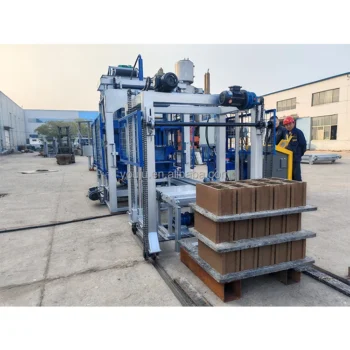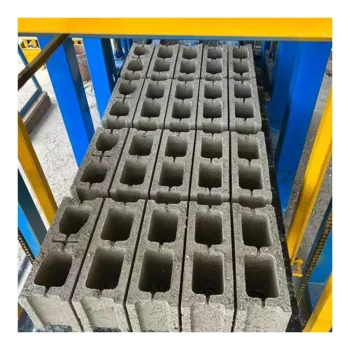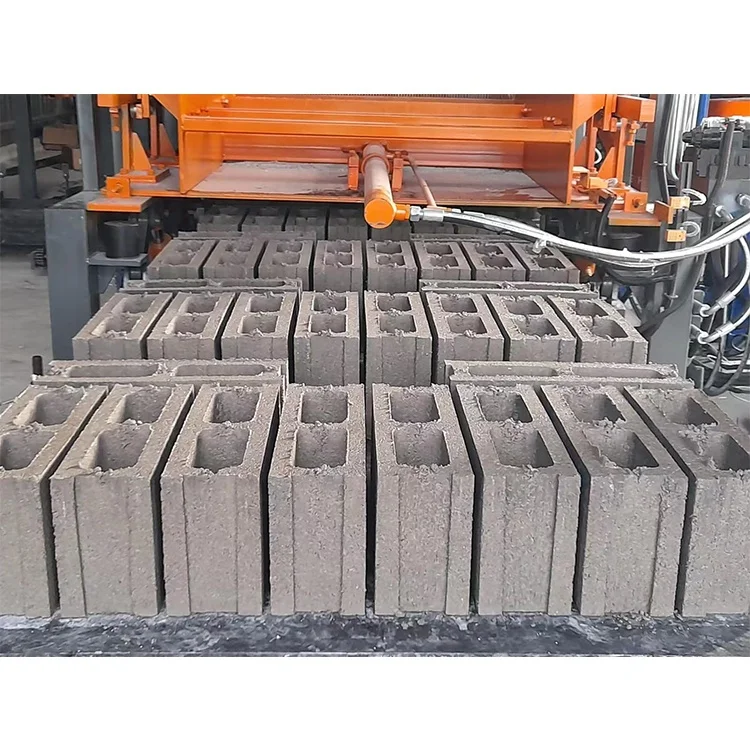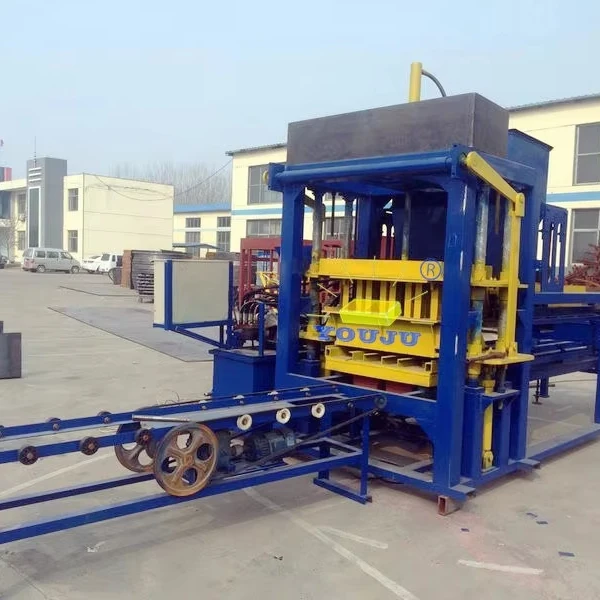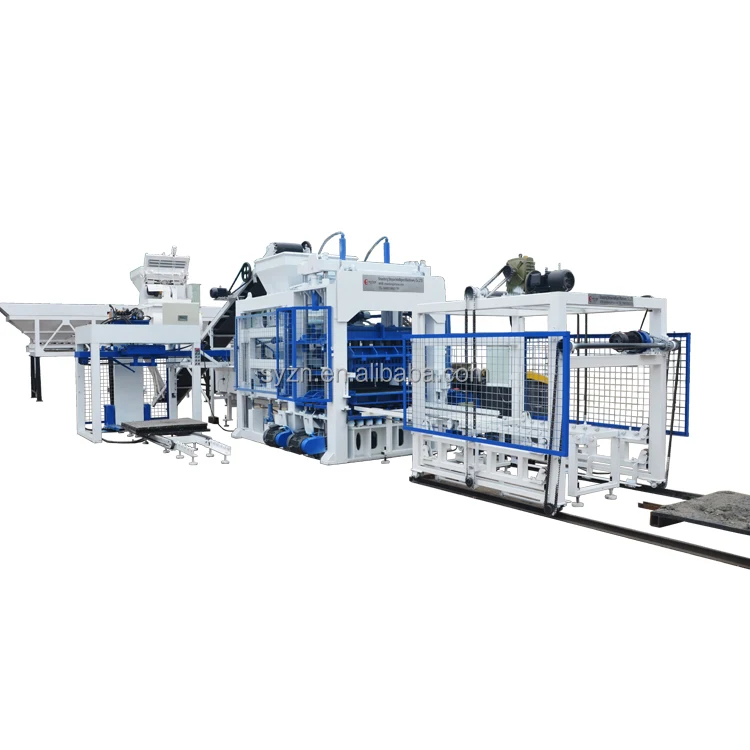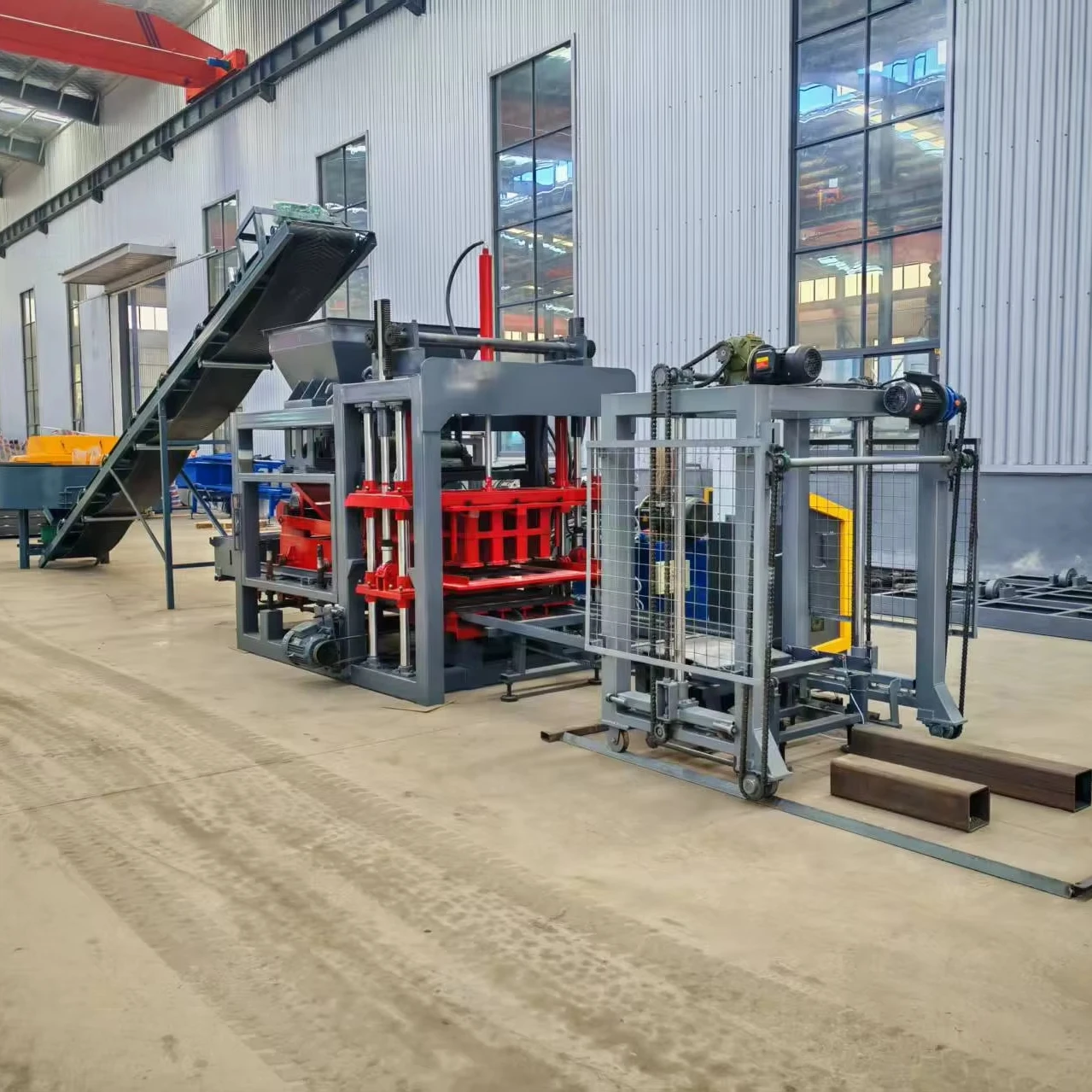
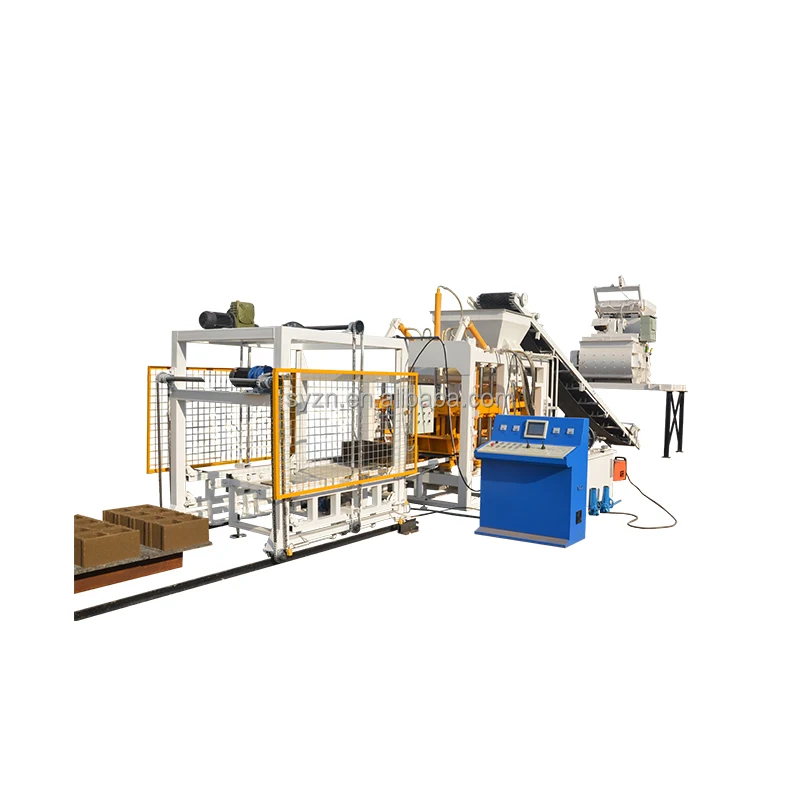
Description
Stocked Dispatch Advantage — QT4-15 units and matching pallets are held in inventory, meaning container loading plans and shipment dates are confirmed within days, not weeks, once your voltage and control language are locked in.
Technical Specifications
| Parameter | Value |
|---|---|
| Product Type | Automatic Hydraulic Block Making Machine |
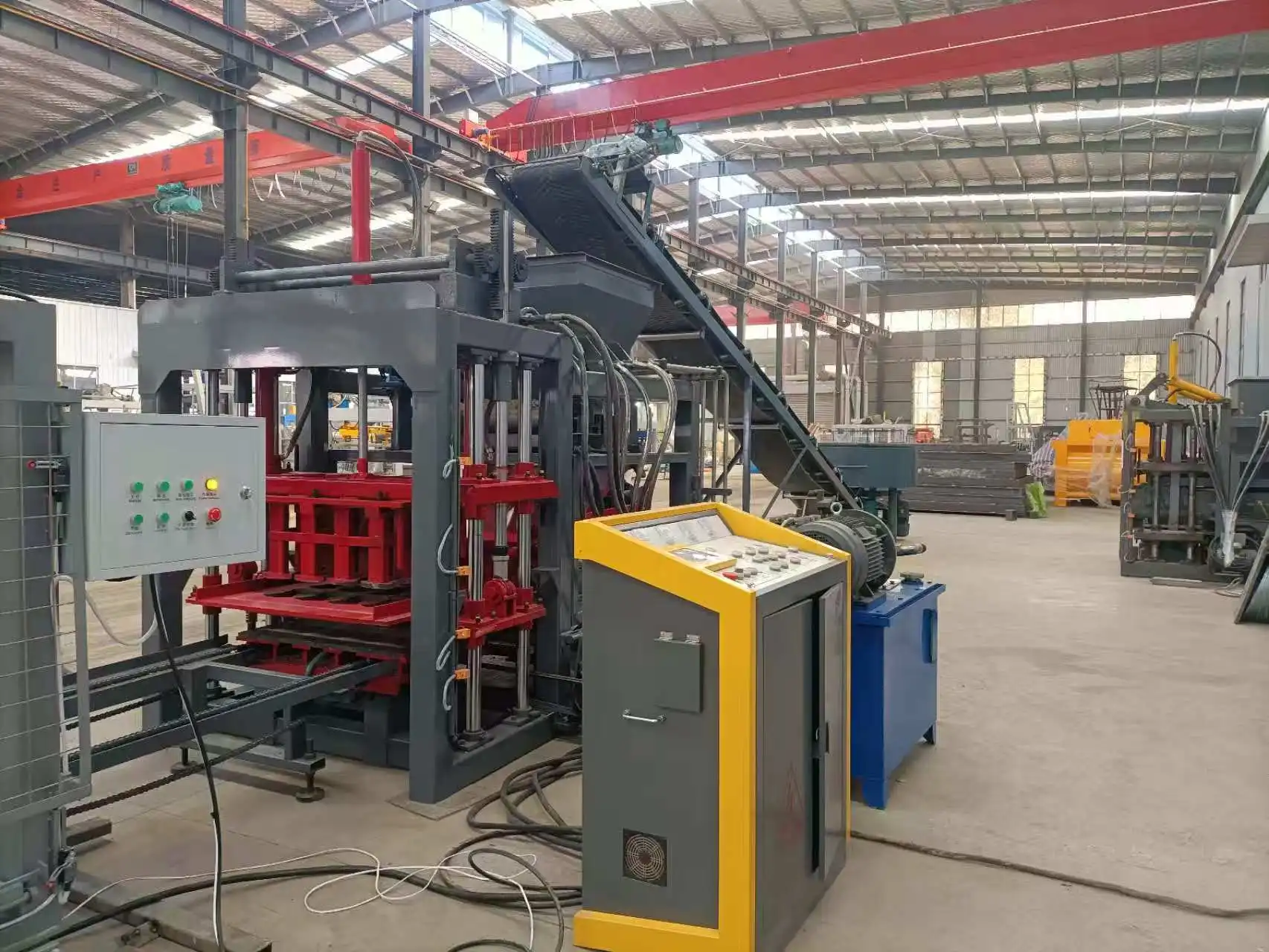
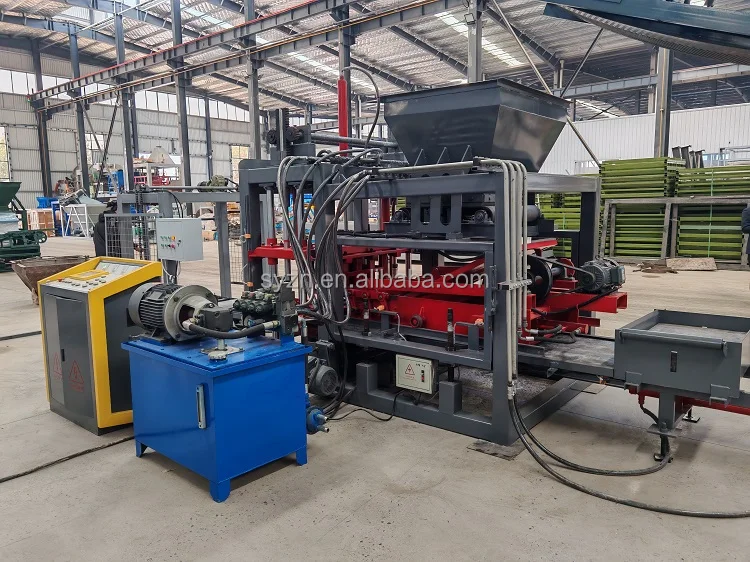
| Overall Dimensions (L×W×H) | 7100×1600×2610 mm |
| Host Machine Dimensions | 2800×1800×2550 mm |
| Rated Pressure | 16 MPa |
| Main Vibration Form | Platform Vibration |
| Vibration Frequency | 4600 r/min |
| Vibration Force | 40 kN |
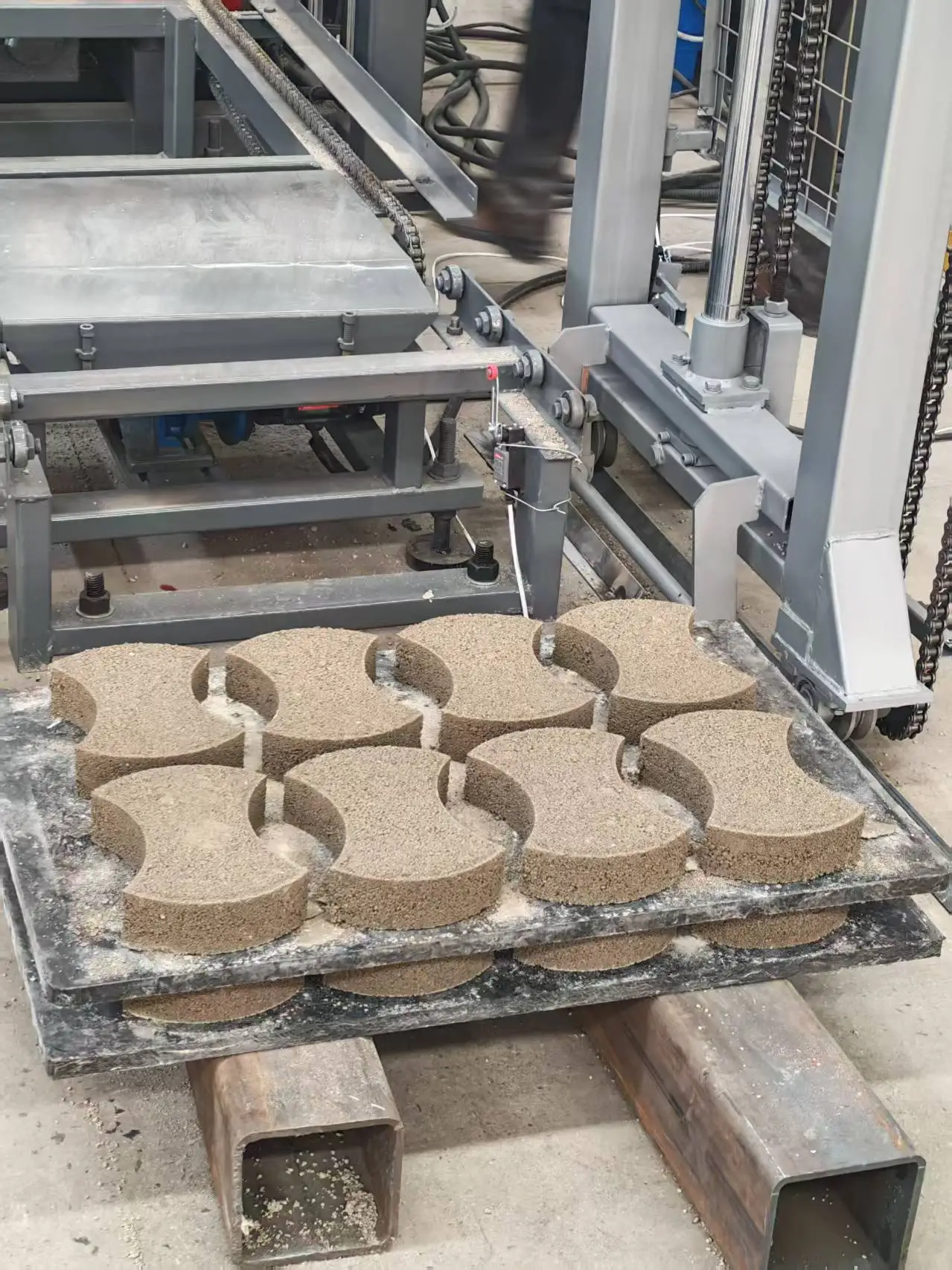
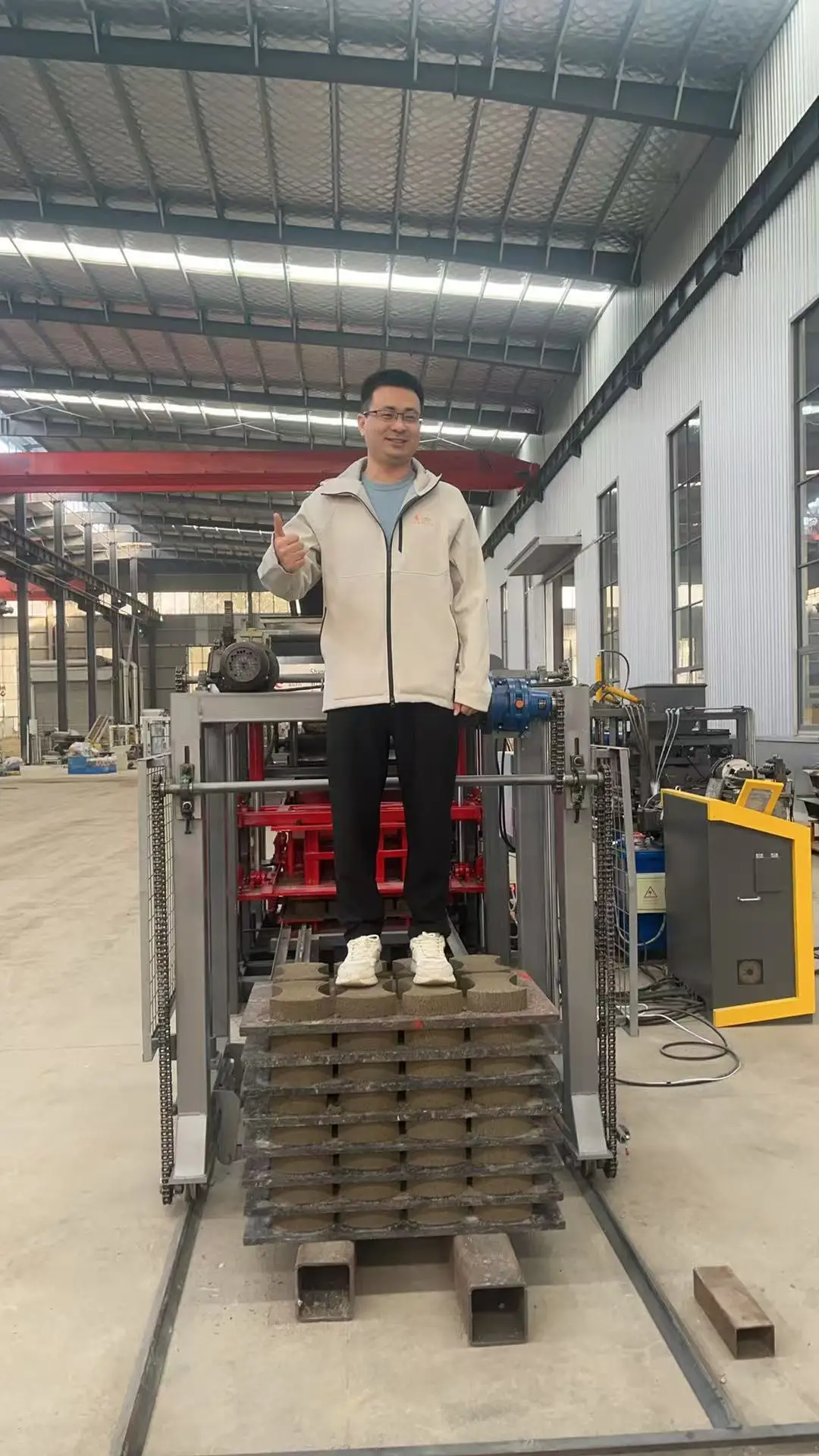
| Pallet Size | 950×550×20/25 mm |
| Molding Cycle | 15–25 s |
| Overall Power | 27.5 kW |
| Host Machine Power | 19.2 kW |
| Total Mass | 5 T |
| General Water Consumption | 4 T/day |
| Control System | Siemens PLC with independently developed control program (customizable) |
| Motor | Siemens or ABB (buyer selectable) |
| Hydraulic System | Double proportional hydraulic valve, Calyca or Youken brand |
| Output Capacity — Hollow Brick | 4 pcs/mould, 720–960 pcs/h, cycle 15–20 s (based on 390×190×190 mm block) |
| Output Capacity — Porous Brick | 14 pcs/mould, 2520–3360 pcs/h, cycle 15–20 s (based on 240×115×90 mm brick) |
| Output Capacity — Standard Brick | 28 pcs/mould, 5930–6720 pcs/h, cycle 15–17 s (based on 240×115×53 mm brick) |
| Warranty | 1 year (excluding spare parts) |
Application Suitability
| Application | Material or Output |
|---|---|
| Hollow block production for building walls | Crushed stone, sand, cement, fly ash aggregates forming 390×190×190 mm cavity blocks |
| Porous brick production for masonry | Lightweight aggregate and cement blends yielding 240×115×90 mm perforated bricks |
| Standard solid brick production | Dense aggregate mixes producing 240×115×53 mm solid units for structural and partition walls |
| Paving brick and road brick production | High-strength cementitious mixes for interlocking and rectangular pavers using compatible moulds |
| On-site block manufacturing | Fixed-plant setup for construction contractors producing blocks directly at project locations |
What "Ready to Ship" Actually Means for Your Project Deadline
A stocked stationary block machine in stock only helps if the voltage, PLC language, and mould format are confirmed before it leaves the factory floor.
I have watched containers get held at destination ports because the control panel displayed Mandarin characters and the local electrician could not read the fault codes. The physical machine arrived on time, but commissioning stalled while new HMI screens were sourced. A fast delivery schedule means nothing when the last three percent of the setup is unresolved [NEED_CITE: common commissioning delays in exported machinery]. This is why confirming electrical standards and operator interface language sits at the front of the dispatch checklist, not as an afterthought once the crate is already bolted shut.
Stock Availability and Dispatch Windows
The QT4-15 is maintained as a stocked stationary block machine in stock with standard moulds for hollow, porous, and solid brick formats sitting on the same warehouse floor. When a buyer confirms their electrical supply and control language preferences early, the unit moves from storage to the container loading bay within a matter of days. This eliminates the typical multi-week production queue that delays project mobilization.
Container Loading and Machine Dismantling
The host machine measures 2800×1800×2550 mm, which allows it to be dismantled into major assemblies and loaded into a standard 40-foot high-cube container alongside pallets and mould sets. The dismantling method is documented before dispatch so that reassembly on site follows a known sequence rather than guesswork. Fast delivery depends as much on how the machine is packed as on how quickly it leaves the factory [NEED_CITE: container loading standards for heavy industrial equipment].
Matching Pallet Size to Your Existing Curing Infrastructure
The 950×550 mm pallet dimension was chosen to align with common curing rack spacing and standard forklift tine widths found in block yards. Buyers who already operate a curing area need pallets that slide into their existing racks without modification. Confirming this compatibility before shipment prevents the situation where blocks are stacked by hand because the pallets do not fit the rack system already on site.
Spec Interpretation: Pressure, Vibration, and Cycle Timing
The 16 MPa rated pressure works together with the 40 kN platform vibration at 4600 r/min to compact the mix into dense, consistent units. Higher vibration frequency reduces the time needed for particles to settle, which is why the molding cycle reaches as low as 15 seconds depending on the block format. The double proportional hydraulic valve allows the press to modulate force smoothly rather than slamming at full pressure, reducing mould wear over long production runs. Siemens or ABB motors supply the 27.5 kW total power requirement, and buyer selection between the two ensures replacement parts remain locally available. The 5-ton total mass gives the frame enough inertia to absorb vibration without transmitting it into the factory floor, which matters when the machine sits near other equipment sensitive to ground shake.
The Cost of Skipping the Pre-Dispatch Checklist
When voltage and frequency are not confirmed before a stationary block machine in stock ships, the buyer often discovers the mismatch during unloading. A 380V/50Hz machine plugged into a 440V/60Hz supply will trip breakers or burn motor windings on first start. Replacing motors and rewiring control cabinets on site adds days of downtime and costs that erase whatever advantage the fast dispatch was supposed to deliver [NEED_CITE: electrical mismatch consequences in exported machinery]. The same applies to PLC display language: an operator who cannot read alarm messages will shut the line down at the first fault code rather than clearing it in seconds.
Why Source This Machine Through Our Dispatch Process
Block machinery is the only product line here, which means the QT4-15 is not bundled from separate press, mixer, and pallet suppliers and then made to fit. The machine, mould, and pallet are specified as one system, so pallet dimensions and mould bolt patterns match without field modification. Configuration starts from the buyer’s actual mix design and target block format rather than a catalogue default, which matters because a machine tuned for river sand will struggle with stone dust tailings. Standard and custom moulds are produced in-house, so format changes do not depend on a third-party tooling supplier’s schedule. The automation level can be set at semi-automatic for a first plant and upgraded later without replacing the entire press.
Documentation & Verification
- Factory test record showing cycle times on your specified block format before container sealing
- Machine specification sheet with confirmed voltage, frequency, and PLC display language listed line by line
- Mould drawing and format list matching the pallet size and block dimensions in your order
- Hydraulic and electrical schematic for on-site troubleshooting by your local maintenance team
- Packing photographs documenting dismantling state and load plan before the container doors close
Installation, Commissioning & Support
- Foundation pad must support the 5-ton mass with level tolerances to keep platform vibration uniform
- Power supply must deliver the 27.5 kW total load on a dedicated circuit matching the confirmed voltage and frequency
- Host machine reassembly follows the documented dismantling sequence so hydraulic and electrical connections align correctly
- First-run parameter tuning adjusts vibration force and hydraulic pressure to your local aggregate and mix moisture content
- Operator training covers PLC fault code reading, mould change procedure, and daily lubrication points on the press
- Wear parts and mould inventory list provided so replacements can be ordered before the first change-out is due
What to Include in Your Inquiry
Send the block format you intend to produce, your target daily output, and the raw materials available locally including aggregate type and moisture range. Confirm your site voltage, frequency, and the language your operators need on the PLC screen. If you have an existing curing yard, share the rack spacing and forklift specifications so pallet compatibility is verified before the order is finalized.
Frequently Asked Questions
Q: What is the actual dispatch lead time for a stocked QT4-15?
A: Once voltage, frequency, PLC language, and mould format are confirmed, a stocked QT4-15 can move to the container loading stage within a short window. The exact dispatch date is quoted at the time of order confirmation based on current inventory position and any pre-shipment testing required for your specific block format.
Q: Which moulds and pallet sizes are available from stock?
A: Standard moulds for 390×190×190 mm hollow blocks, 240×115×90 mm porous bricks, and 240×115×53 mm solid bricks are typically held alongside 950×550 mm pallets. Custom mould formats are produced to buyer drawings and require a separate lead time that is quoted at inquiry stage.
Q: How is the machine dismantled and loaded into a container for shipment?
A: The host machine is broken down into major assemblies that fit within a 40-foot high-cube container alongside pallets and mould crates. A documented dismantling and load plan is prepared before dispatch so that reassembly on site follows a known sequence and no components are left unaccounted for.
Q: Will voltage, frequency, and PLC language be confirmed before dispatch?
A: Yes. These three items are confirmed in writing before the machine leaves the factory. The specification sheet included in the shipping documentation lists the exact electrical supply rating and control display language so there are no surprises when the container arrives at your site.
Q: What is the arrival estimate once the machine ships?
A: Ocean transit time depends on the destination port and current shipping schedules. An estimated arrival date is provided at the quotation stage based on the confirmed dispatch date and the shipping route to your nearest port, giving you a timeline to plan site preparation and crew mobilization.