Description
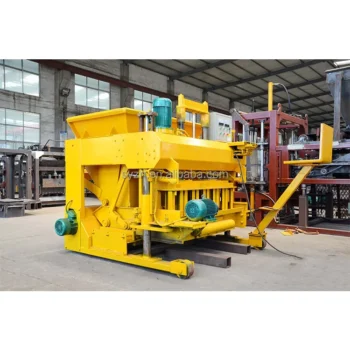
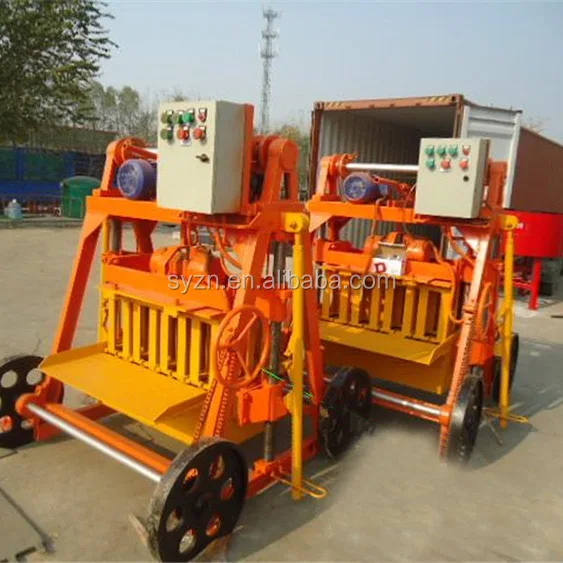
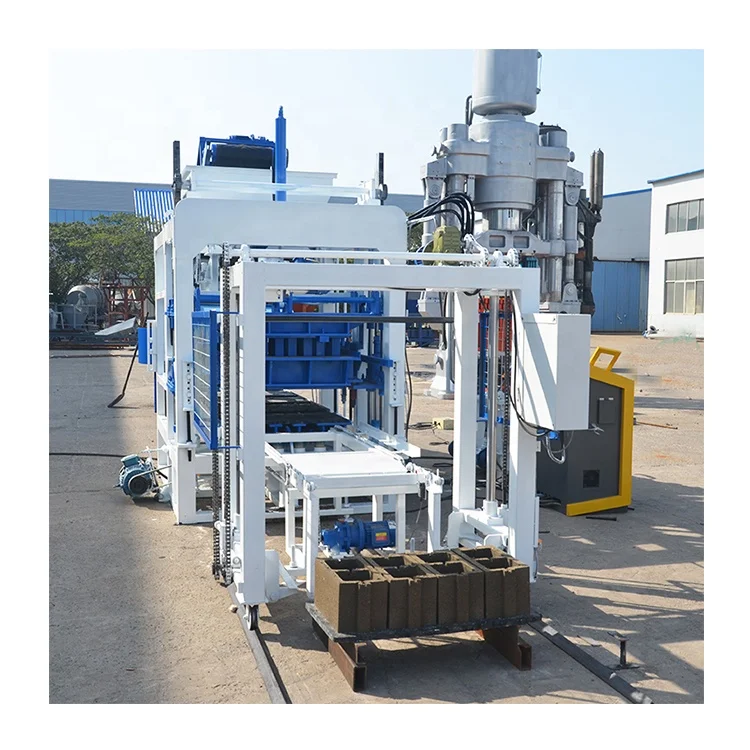
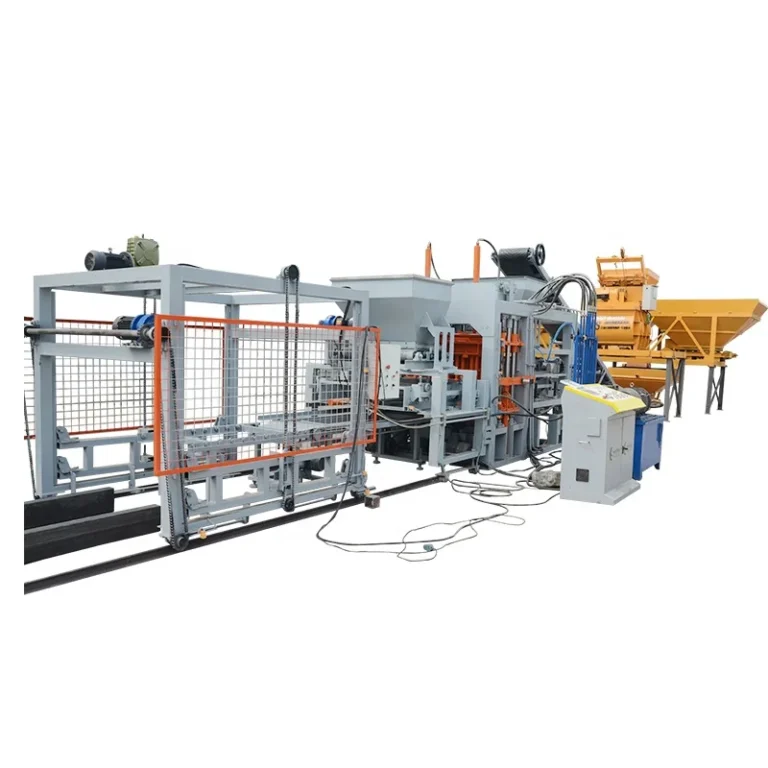
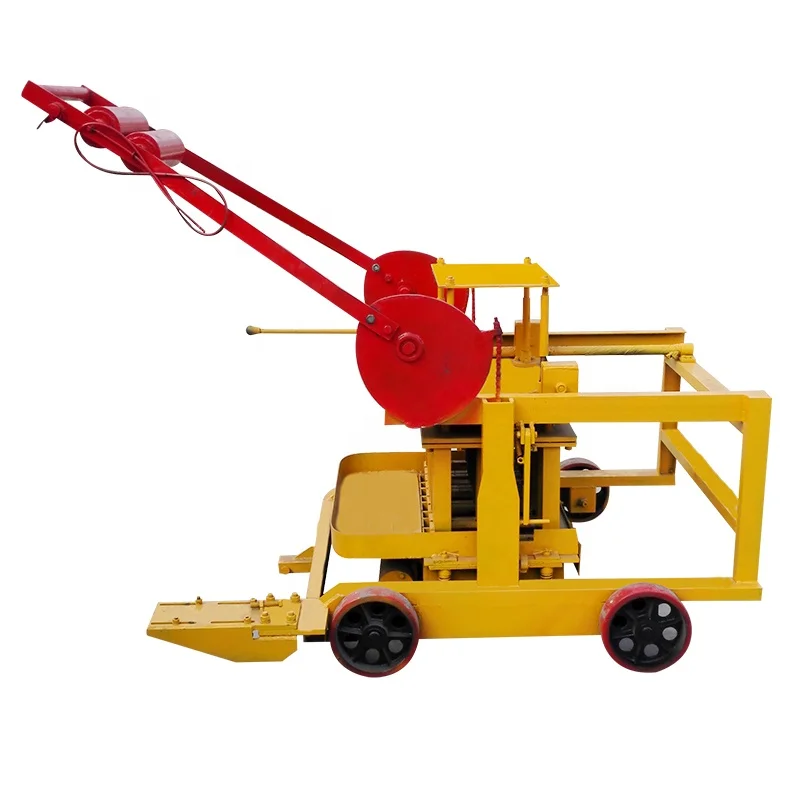
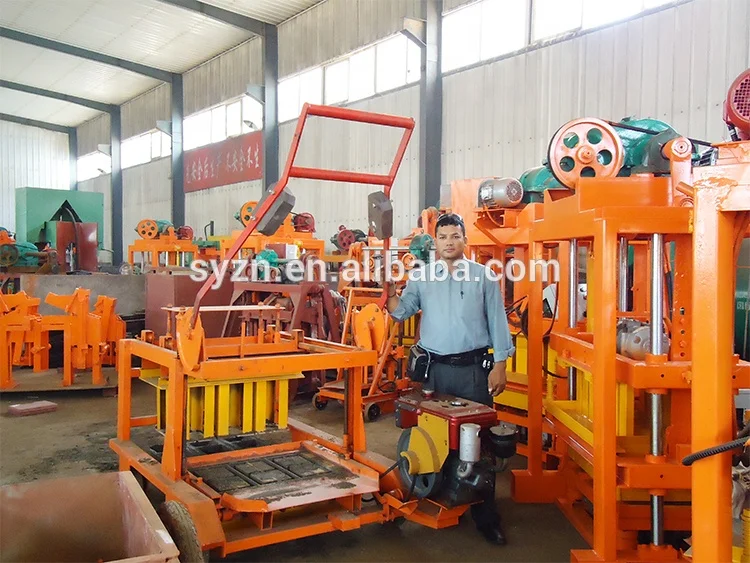
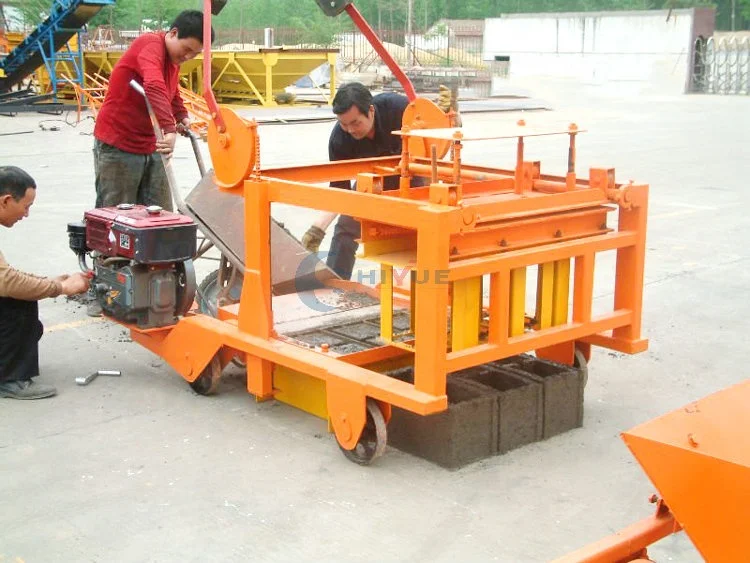
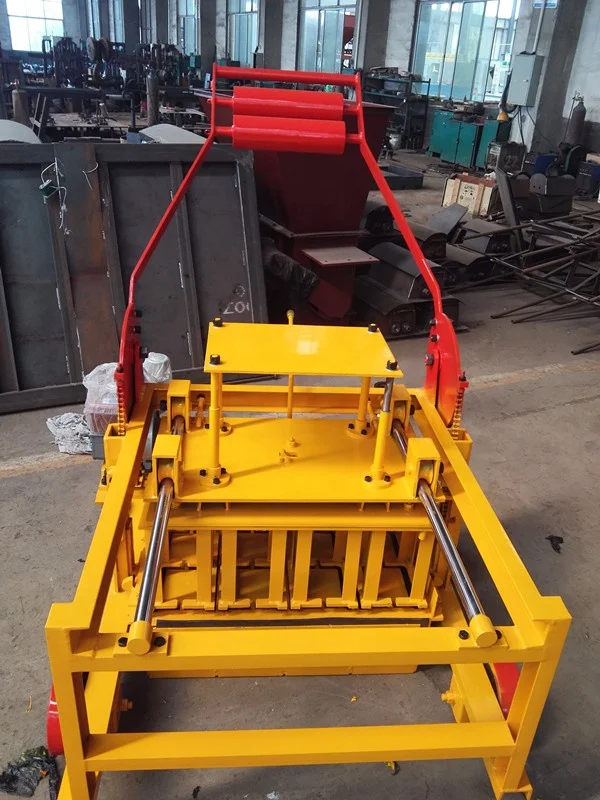
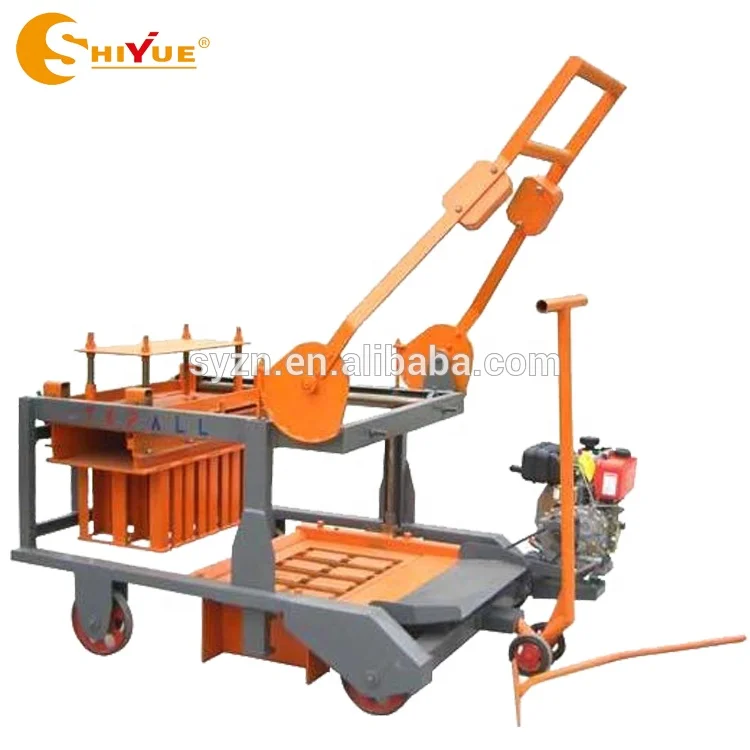
Stocked Configurations, Ready to Load — The QMR4-45 mobile block machine ships as a complete unit with mixer and trolley, eliminating the multi-vendor coordination delays that hold up site deployment.
Technical Specifications
| Parameter | Value |
|---|---|
| Model | QMR4-45 |
| Product Type | Mobile Block Making Machine |
| Overall Dimensions (L×W×H) | 1100 × 950 × 2100 mm |
| Total Mass | 810 kg |
| Molding Cycle | 30–45 s |
| Power Source Options | Diesel engine / Petrol engine / Electric motor |
| Output Capacity | 2560 pcs/day (basis not stated in source — confirm block format, material, and thickness before ordering) |
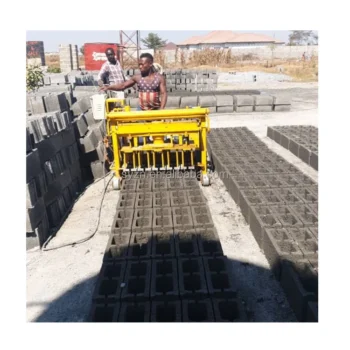
| Pallet Requirement | No pallet needed |
| Block Formats | Hollow block, solid brick, paver brick, fly ash brick, concrete block |
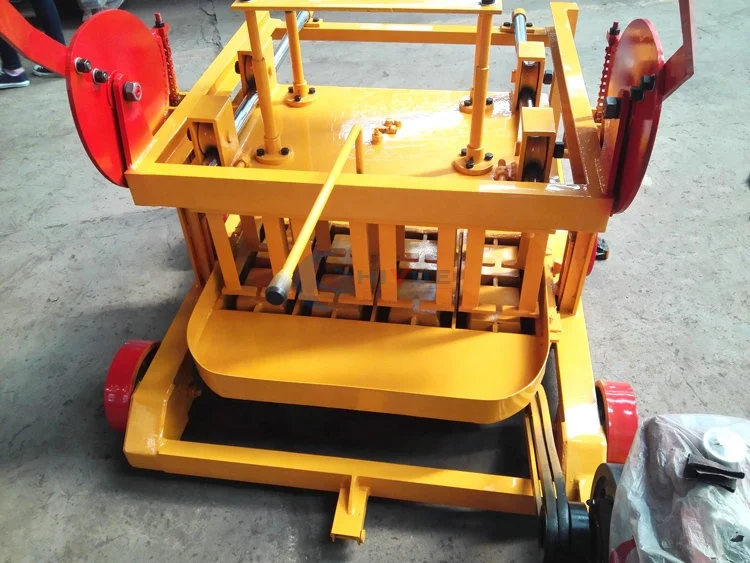
| Die Control | High pressure double crank |
| Included Equipment | JZC350 diesel concrete mixer or JQ350 electric generating unit mixer; trolley |
| Automation Level | Semi-automatic / manual operation |
| Structure | Linear type, simple structure |
| Warranty | 1 Year |
Application Suitability
| Application | Material or Output |
|---|---|
| On-site hollow block production for housing projects | Concrete mix with local crushed stone and cement |
| Solid brick making at remote construction sites | Fly ash blended with cement and sand |
| Paver brick production for infrastructure contractors | Concrete or fly ash mix, cured in place without pallet racks |
| First production run for entrepreneurs entering block manufacturing | Standard concrete mix with readily available aggregates |
Why "In Stock" Matters More Than You Think on a Project Timeline
A machine sitting in a warehouse today beats a better machine arriving six weeks after your crew has already been demobilized.
I have watched project schedules collapse not because the block machine was wrong, but because it was still on a production queue while the site crew burned through overhead. When a contractor commits to a housing development or a road-side kerb run, the deadline is fixed. Procurement lead times that stretch into double-digit weeks turn a profitable contract into a penalty clause. The QMR4-45 mobile block machine in stock changes that equation entirely — it is built, tested, and waiting for container loading. [NEED_CITE: typical procurement lead times for small-scale construction equipment in emerging markets]
For buyers working against a project handover date, the difference between a stocked unit and a built-to-order unit is measured in penalty fees and idle labor costs, not in machine specifications. This is the reality of mobile block machine fast delivery when your site cannot wait.
Dispatch Timing That Matches Your Mobilization Schedule
The QMR4-45 is compact enough — 1100 × 950 × 2100 mm at 810 kg — to load into a standard shipping container without oversized freight arrangements or special crating. That physical footprint means the mobile block machine in stock can move from warehouse to port without the delays that custom-built, larger machines require. Container booking, documentation, and dispatch can proceed on a timeline measured in days rather than the weeks needed for production completion.
We dismantle the unit into its linear frame, mixer, and trolley components for loading, then provide packing photographs so you can verify container utilization before the doors are sealed. The destination port arrival estimate is quoted at the time of order, not guessed at after the fact.
Power Source Availability Without the Custom-Build Wait
Sites in remote areas of the Middle East and Africa frequently lack stable grid power during early construction phases. Having diesel, petrol, and electric configurations available from stock means you select the power source your site actually has today, not the one the utility company promises will arrive next quarter. [NEED_CITE: off-grid construction site power availability challenges in developing regions]
The included JZC350 diesel mixer or JQ350 electric unit arrives as part of the package, so the machine produces blocks the same day it is unloaded and assembled on your slab. No waiting for a separate generator supplier to deliver, no voltage mismatch discovered at commissioning.
What the Specs Actually Mean on Your Job Site
The 30–45 second molding cycle is the mechanical timing of the press itself. In practice, your daily output depends on which block format you run — a standard hollow block, a smaller solid brick, or a paver — and how your crew feeds the mixer and moves finished blocks to the curing area. The high pressure double crank die system provides the compaction force needed for structural block, but the actual strength of your product depends on your local aggregate gradation and cement content. This is why we insist on knowing your material source before confirming suitability.
The no-pallet design is a significant logistical advantage for mobile operations. Without pallets to purchase, store, rotate through a curing rack, and eventually replace, your site footprint stays small and your material handling stays simple. Blocks are formed directly onto the ground or a prepared surface, which is exactly what a contractor moving between job sites needs.
What Happens When You Ignore the Dispatch Timeline
I have seen contractors order block machines based on catalogue specifications alone, only to discover that the lead time quoted was for a production slot three months out. By the time the machine arrived, the wet season had started, the curing conditions had changed, and the crew had been reassigned to another project. The machine sat in a container at the port while demurrage charges accumulated. [NEED_CITE: port demurrage and detention costs for delayed industrial equipment clearance]
Selecting a mobile block machine fast delivery option from stock eliminates this entire category of risk. The machine you see is the machine that ships, and the configuration — including power source and included mixer — is confirmed before the order is placed, not negotiated during a production build.
Why Buyers Source This Machine Through Our Stock Channel
Block machinery is our single focus, which means the QMR4-45 is specified as a matched system: machine, mixer, and trolley designed to work together rather than assembled from separate supplier catalogues. We confirm dispatch lead time and estimated arrival date upfront, against your project timeline, not after production has started.
The no-pallet configuration, multiple power source options, and included mixer mean fewer separate purchase orders and fewer vendors to coordinate. Installation guidance covers the linear frame assembly and mixer connection so your crew is producing blocks within a day of site arrival. Customs documentation support is included with every shipment, reducing clearance delays at your destination port.
Documentation & Verification
- Factory test record on your specified block format before dispatch
- Machine specification sheet confirming power source and mixer model
- Packing photographs verifying container loading and dismantling method
- Customs documentation package for destination port clearance support
- Dispatch timeline confirmation quoted against your project schedule
Installation, Commissioning & Support
- Linear frame assembly on a level concrete slab, no deep foundation required for the 810 kg unit
- Diesel or electric mixer connection verified against your site power or fuel supply before dispatch
- Machine dismantled into frame, mixer, and trolley for container loading, reassembled on site within hours
- First production run supervised remotely with block format and cycle timing confirmation
- Wear parts list provided at shipment so spares can be ordered before first replacement is due
- Daily maintenance checklist covering the double crank mechanism and mixer drum bearings
Before You Request a Quote
Tell us your destination port, your required block format, and your site’s available power source so we can confirm which stocked configuration matches your needs. Share your project mobilization date so we can quote a realistic arrival timeline against your construction schedule. If your site uses a specific aggregate or cement type, send a material description so we can flag any suitability concerns before you commit.
Frequently Asked Questions
Q: What configurations of the QMR4-45 are currently in stock and ready to ship?
A: Stocked units are available with diesel, petrol, or electric power sources, each paired with the corresponding JZC350 diesel mixer or JQ350 electric mixer and trolley. Available configurations are confirmed at the time of inquiry, and we advise checking current stock status before finalizing your order to ensure your required power option is available for immediate dispatch.
Q: How long does dispatch take and when will the machine reach my port?
A: Dispatch from our warehouse typically proceeds within days of order confirmation for stocked units, not weeks. The estimated arrival date at your destination port is quoted upfront based on current shipping schedules and container availability, so you can plan your site mobilization around a confirmed timeline rather than an estimate.
Q: How is the machine prepared for container shipment?
A: The QMR4-45 is dismantled into its main linear frame, mixer assembly, and trolley for loading into a standard shipping container. The compact 1100 × 950 × 2100 mm footprint and 810 kg mass avoid oversized freight complications. Packing photographs are provided before container doors are sealed for your verification.
Q: Which power source should I choose for a site without reliable grid electricity?
A: The diesel engine configuration with the JZC350 diesel mixer is designed for off-grid and remote sites where grid power is unavailable or unreliable during early construction phases. The petrol option provides similar independence for lighter-duty operations. We confirm your site conditions before recommending a configuration from stock.
Q: What shipping and customs documents come with the order?
A: Every shipment includes a customs documentation package to support clearance at your destination port. This covers the commercial invoice, packing list, and any applicable certificates. We provide documentation support throughout the clearance process to minimize delays and demurrage charges at arrival.