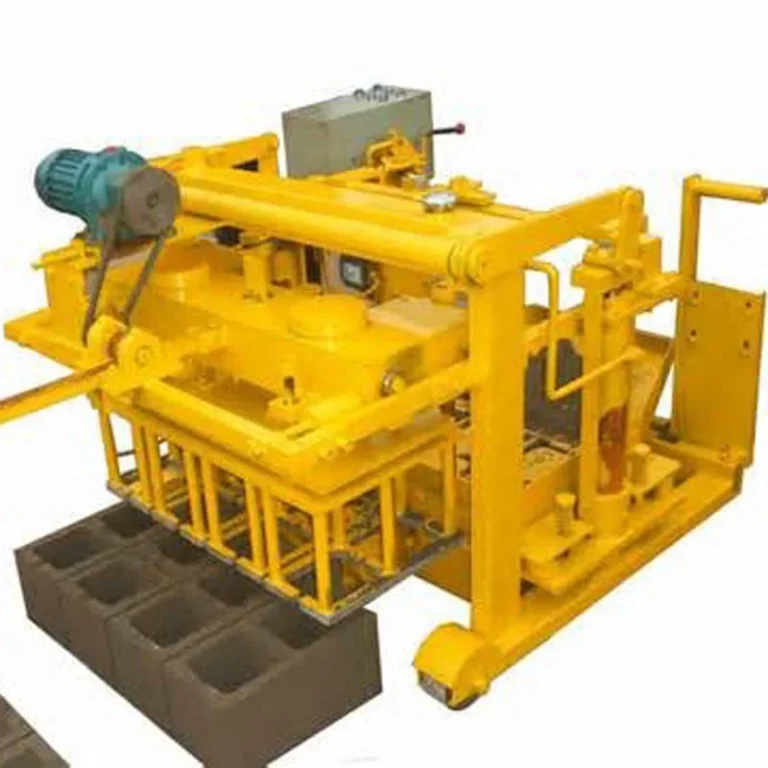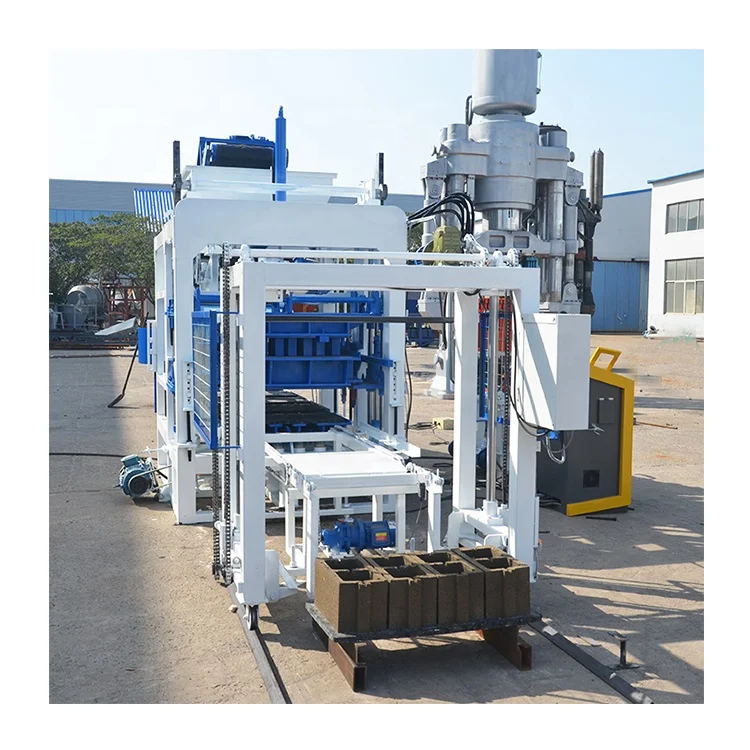


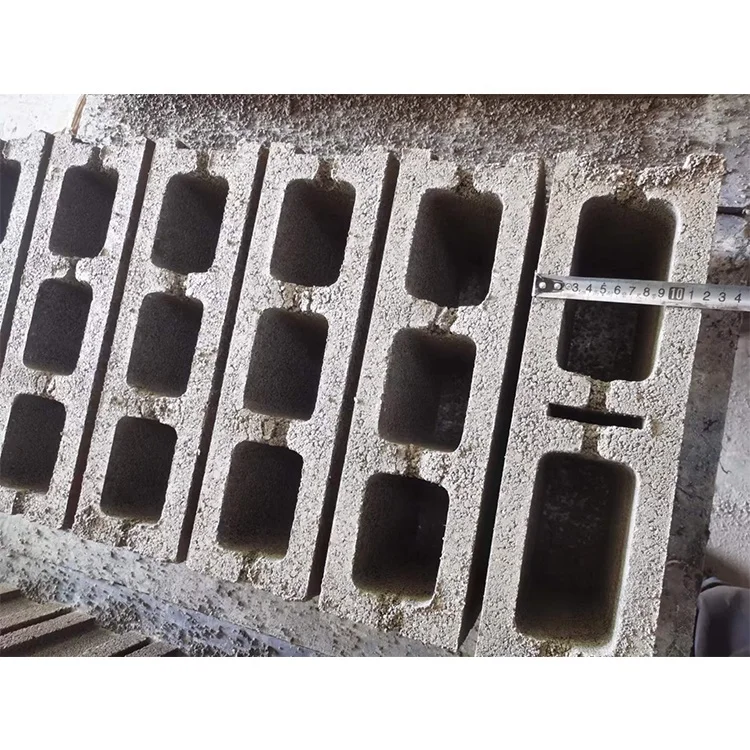
Description
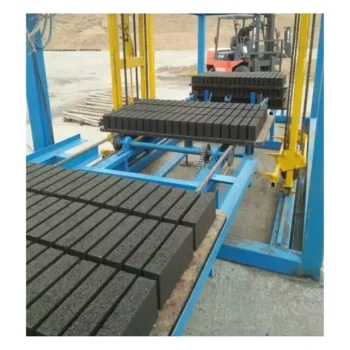
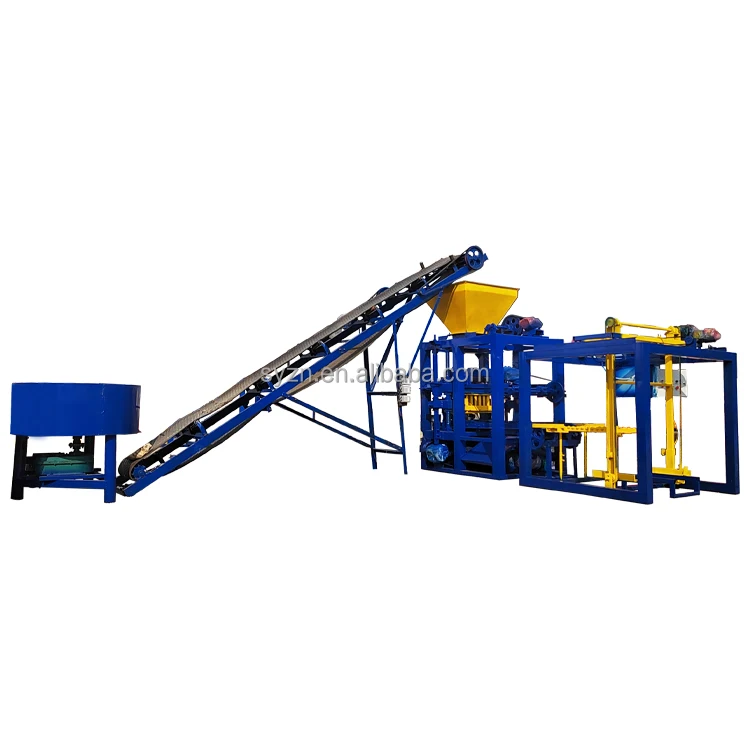
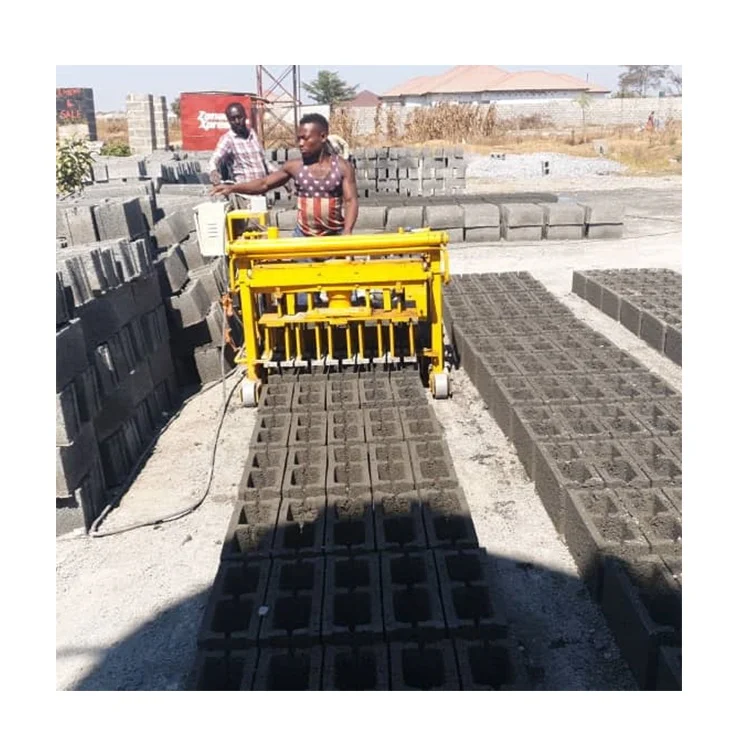
Stocked Block Machinery — The QT4-16 concrete block making machine leaves the warehouse ready to ship, with standard moulds and pallets verified against your container plan before dispatch.
Technical Specifications
| Parameter | Value |
|---|---|
| Model | QT4-16 |
| Product Type | Hydraulic Concrete Block Making Machine |
| Overall Dimensions (L×W×H) | 7400 × 1950 × 2800 mm |
| Total Mass | 5 T |
| Rated Pressure | 21 MPa |
| Main Vibration Form | Platform Vibration |
| Vibration Frequency | 2800–4500 r/min |
| Vibration Force | 40 KN |
| Pallet Size | 900 × 550 mm |
| Molding Cycle | 15–20 s (basis not stated in source — confirm block format / material / thickness) |
| Demolding Method | Hydraulic |
| Factory Area Required | 600 m² |
| Control System | PLC intelligent control with man-machine interface, remote control function, fault diagnosis system |
| Applicable Raw Materials | Crushed stone, sand, cement, fly ash, gravel, slag |
| Certification | CE |
Application Suitability
| Application Scenario | Typical Material or Output |
|---|---|
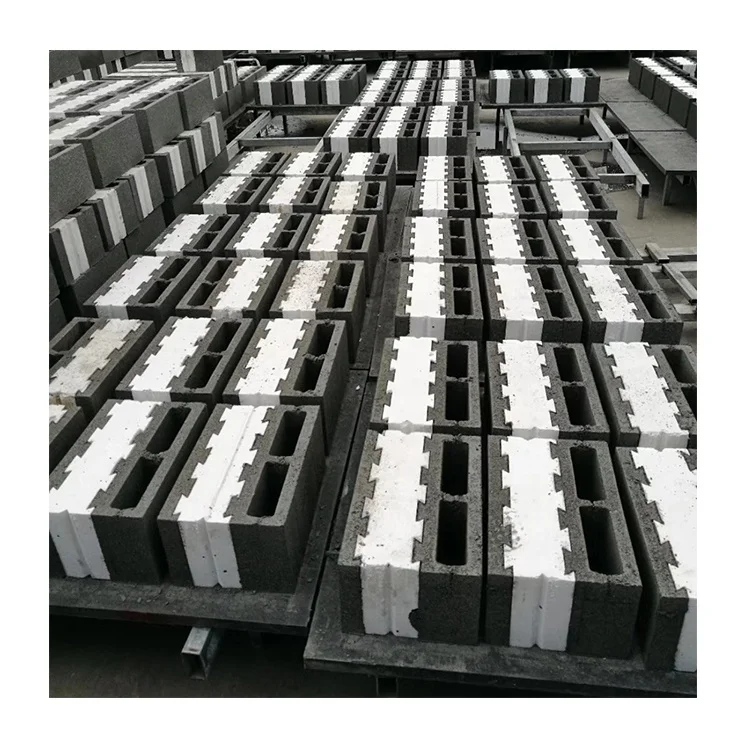
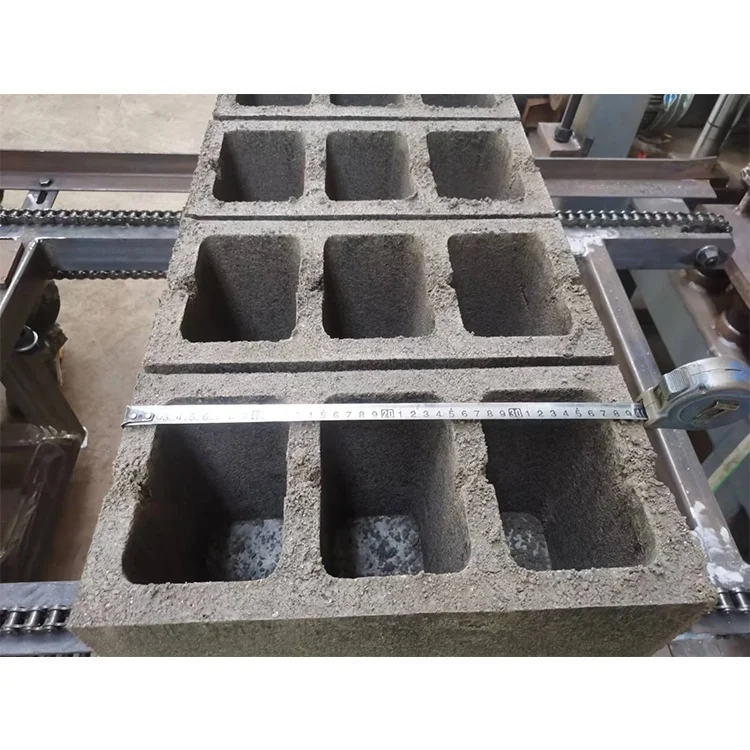
| Hollow block production for masonry walls | Crushed stone, sand, cement, fly ash blends |
| Solid block manufacturing for load-bearing structures | Gravel and cement mixes with local aggregate |
| Paving block output for driveways and walkways | Colored concrete with fine sand and pigment |
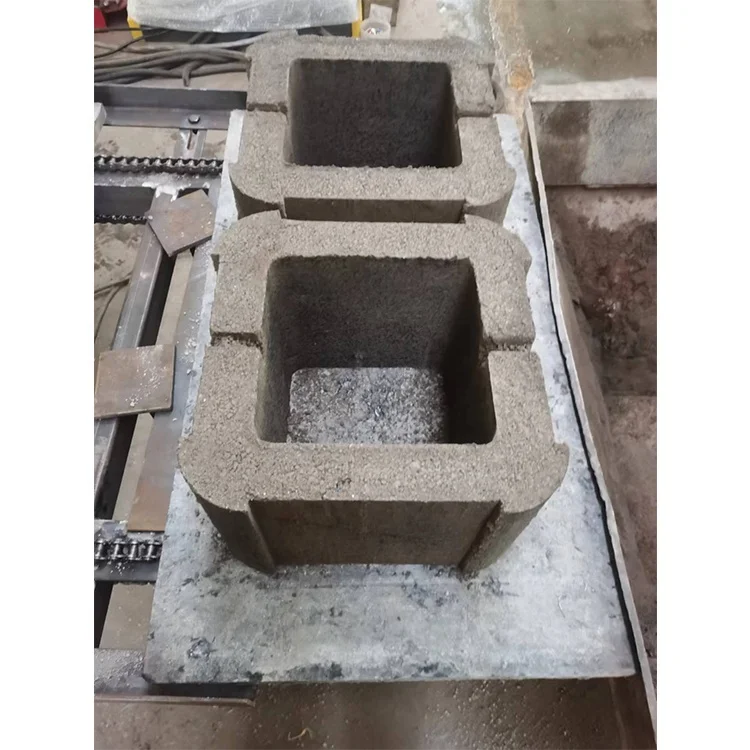
| Interlocking brick for landscape projects | Fly ash, slag, and cement combinations |
| Kerbstone production for road edging | Coarse aggregate and high-strength cement |
What "Stock Available" Actually Means for the QT4-16 Block Machine in Stock
A machine listed as ready to ship only matters if the mould, pallet, and voltage match your site on day one.
Many buyers have seen a QT4-16 block machine in stock promised for immediate dispatch, only to discover the PLC display language was never confirmed, the voltage did not match the local grid, or the standard mould on the shelf was for a block format their market does not buy. The machine sits in a container while these details get sorted, and the project deadline slips. [NEED_CITE: common commissioning delays from unconfirmed electrical and control specifications in export machinery]
Dispatch Timeline You Can Plan Around
When a buyer confirms an order for a QT4-16 block machine in stock, the focus shifts immediately to container loading logistics. The overall dimensions of 7400 × 1950 × 2800 mm and the 5-tonne mass determine whether the main press travels in a single 40HQ container or requires a split load with the pallet feeder and mixer station. I have watched a 40HQ loading plan get redrawn three times because the stacking station was measured against the wrong pallet orientation. Getting the dismantling scheme and packing photographs confirmed before the truck leaves the yard prevents a costly re-shipment at the destination port.
Arrival Estimates Quoted Before You Commit
The value of fast dispatch disappears if the sea transit time is a guess. For the QT4-16 block machine in stock, the arrival estimate depends on the origin port schedule and the destination terminal’s handling capacity. Buyers working against a construction start date need the departure date, transit window, and customs documentation support mapped out before the proforma invoice is signed. [NEED_CITE: typical ocean freight transit variables affecting machinery delivery schedules]
Reading the Specs That Affect Your Site Layout
The 900 × 550 mm pallet size is not an arbitrary number — it must align with the curing racks and forklift tine spacing already in place at the buyer’s yard. A mismatch here means either buying new handling equipment or running an inefficient manual transfer between the press output and the curing area. The platform vibration system, rated at 2800–4500 r/min with 40 KN of vibration force, works together with the 21 MPa hydraulic pressure to compact the mix into the mould cavity; the right balance between vibration and pressure depends on the local aggregate gradation and cement ratio, not a catalogue default. The PLC fault diagnosis system can flag hydraulic pressure drops or vibration motor issues before they cause a full stop, but only if the display language matches what the operator reads. The 600 m² factory area requirement tells the buyer how much ground the press, mixer, pallet circulation, and curing zone will occupy together.
The Cost of Skipping the Pre-Shipment Checklist
When pallets arrive in the wrong size, the press runs but the output piles up on the floor waiting for someone to carry it. When the voltage is confirmed after the machine lands, an electrician spends days rewiring the control cabinet instead of the operator running test cycles. When the standard mould on the shelf produces a block format the local market does not use, the buyer pays for a custom mould and waits weeks while the machine stands idle. These are not equipment failures — they are specification gaps that could have been closed before the container was sealed. [NEED_CITE: financial impact of specification mismatches in international machinery procurement]
Why Buyers Source the QT4-16 Here
Machine, mould, pallet, and handling equipment are specified as one matched system, so the 900 × 550 mm pallet and the standard mould formats are verified together before the QT4-16 leaves the factory. Standard moulds for hollow block, solid block, paver, and interlocking formats are kept on the shelf alongside the press, reducing the wait for a container to fill. Container loading plans account for the 7400 mm press length and the 5-tonne mass, with dismantling points marked so reassembly at the destination follows a known sequence. Voltage, frequency, and PLC display language are confirmed during the order stage, not after the machine clears customs. Factory test records document the machine running on the buyer’s target block format before it is bolted down for shipment.
Documentation & Verification
- Line layout showing the 600 m² footprint with press, mixer, and curing rack positions
- Factory test record captured on your specified block format before dispatch
- Mould drawing and format list matching the standard moulds shipped with the press
- Pallet specification sheet confirming 900 × 550 mm size and material grade
- Voltage and PLC display language confirmation signed off before packing
- Packing photographs showing dismantling points and container load sequence
Installation, Commissioning & Support
- Foundation must support the 5-tonne press mass across the 7400 × 1950 mm footprint
- Dedicated power circuit sized to the confirmed voltage and frequency for the hydraulic and vibration motors
- Main press arrives dismantled at marked points; reassembly follows the provided schematic
- PLC fault diagnosis system activated and operator trained on alarm responses during first run
- Mould change procedure demonstrated on site using the standard formats shipped with the machine
- Wear parts list provided with reorder intervals for hydraulic seals and vibration components
Tell Us What Your Site Needs
To confirm whether the QT4-16 block machine in stock fits your project timeline, share the block format your market demands, the local aggregate available, and the daily output target. Include the voltage and frequency at your site, the PLC language your operators read, and the curing area dimensions so the 900 × 550 mm pallet can be validated against your existing racks and forklift. If you have a fixed construction start date, let us know so the dispatch and sea transit window can be mapped before the order is finalized.
Frequently Asked Questions
Q: Which QT4-16 configurations are currently stocked versus built to order?
A: The base press with standard hollow block and solid block moulds is typically held in stock, along with 900 × 550 mm pallets. Custom mould formats, non-standard voltage configurations, and extended automation stations such as automatic stackers are built after order confirmation and require additional lead time.
Q: How long from order to container loading for a stocked unit?
A: Once voltage, frequency, PLC language, and mould format are confirmed, a stocked QT4-16 can typically be dismantled, packed, and loaded within a short window. The sea transit time varies by destination port and is quoted separately so the buyer has a full arrival estimate.
Q: Can the entire QT4-16 line fit in one 40HQ container?
A: The main press at 7400 × 1950 × 2800 mm and 5 tonnes, along with standard moulds and a basic pallet set, can be loaded into a 40HQ with proper dismantling. Additional line stations such as the mixer and stacking unit may require a second container depending on the configuration chosen.
Q: What standard moulds are on the shelf, and how long do custom moulds take?
A: Standard hollow block, solid block, and paver moulds matching the QT4-16 press are commonly stocked. Custom moulds designed to buyer drawings require a separate production cycle, which is confirmed at the order stage so the delivery timeline remains transparent.
Q: What does on-site commissioning involve after the machine arrives?
A: The press is reassembled at the marked dismantling points, the PLC system is powered on and language-verified, and test cycles are run on the buyer’s target block format. Operator training covers mould change, fault diagnosis response, and daily maintenance routines for the hydraulic and vibration systems.