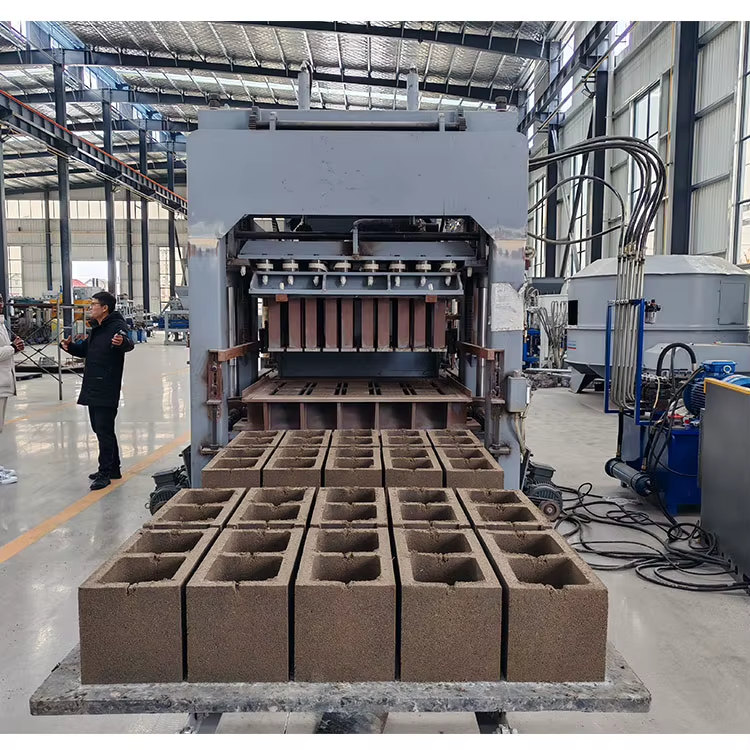


Description
Flexible automation scaling — Stocked baseline units ship ready for immediate dispatch while preserving future upgrade paths for automatic stacking and cubing as your plant expands.
Technical Specifications
| Parameter | Value |
|---|---|
| Model | QT10-15 |
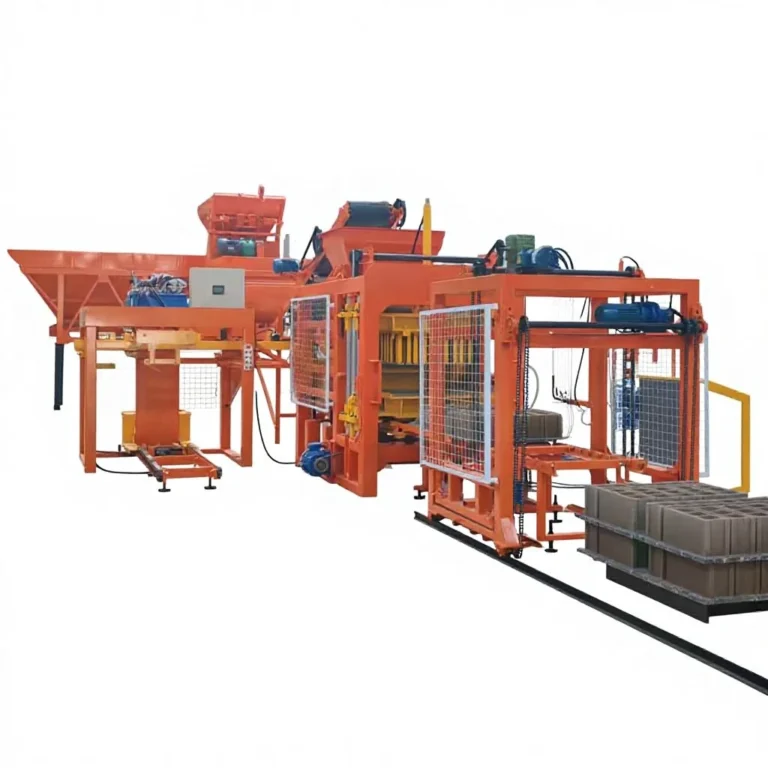
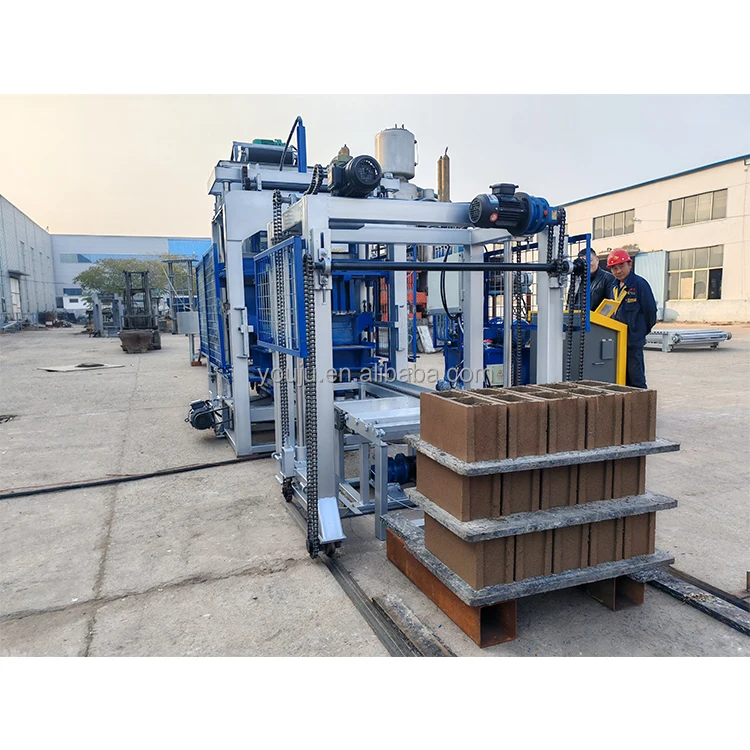
| Product Type | Automatic Concrete Block Production Line |
| Forming Method | Hydraulic pressure |
| Overall Dimensions (L×W×H) | 9350x2320x2950mm |
| Net Weight | 9500 kg |
| Standard Voltage | 380v |
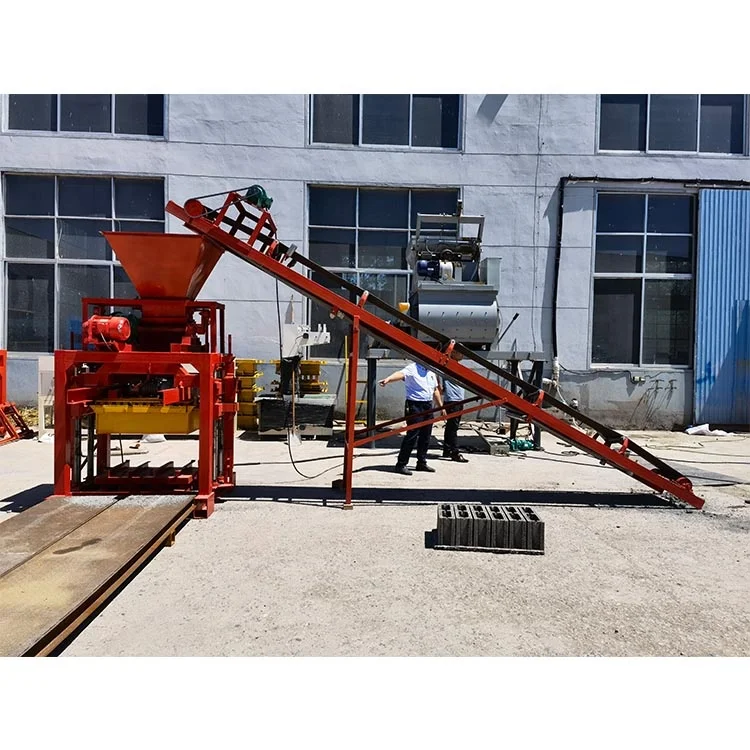
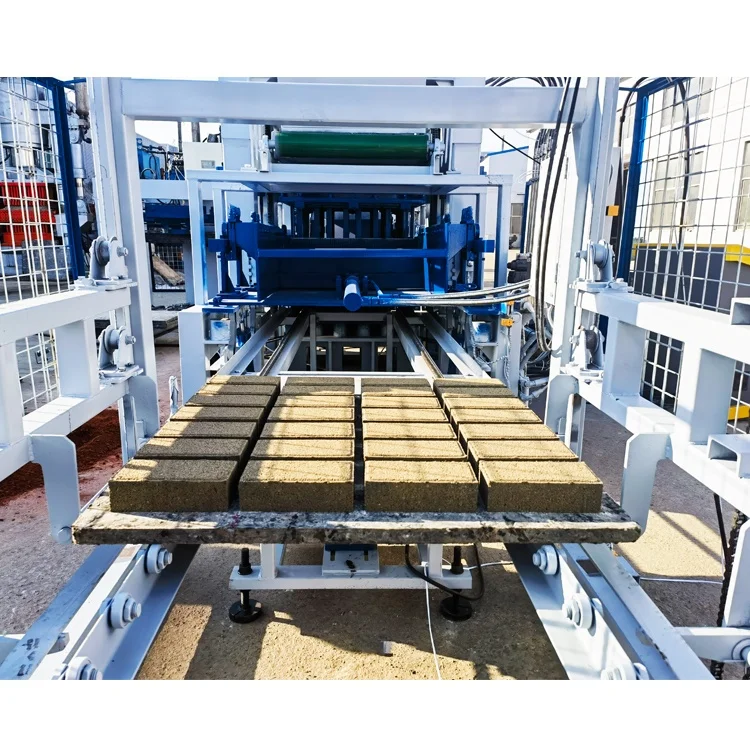
| Mould Format Compatibility | Hollow, paving, interlock, curbstone, and solid blocks |
| Core Drive Components | Motor and pump assembly |
| Cycle Time | Varies by block format and material (basis to be confirmed) |
| Warranty Coverage | More Than 5 Years |
| Key Features | Fully automatic operation, video outgoing-inspection, machinery test report provided |
Application Suitability
| Application | Material or Output |
|---|---|
| High-volume housing developments | Hollow and solid blocks from crushed stone and cement |
| Municipal infrastructure projects | Paving and interlock blocks from concrete and sand |
| Roadway and drainage construction | Curbstone blocks from heavy aggregate mixes |
| Commercial building frameworks | Solid structural blocks from clay and cement blends |
Why "Ready to Ship" Matters More Than Quoted Cycle Times
When a construction deadline is looming, waiting months for a custom-built press is not an option. Securing a QT10-15 block machine in stock eliminates manufacturing delays and gets equipment on the water immediately.
I have seen project managers lose entire phases of a build because they prioritized a slightly faster theoretical cycle time over actual availability. A machine sitting in a factory queue produces zero blocks. By choosing a QT10-15 block machine in stock, contractors lock in a known dispatch schedule, ensuring the equipment arrives before the foundation curing is even complete [NEED_CITE: impact of equipment lead times on construction project schedules].
Container Loading and Dispatch Readiness
Securing a QT10-15 block machine in stock means the mainframe and hydraulic stations are already assembled, tested, and prepared for dismantling. The 9350x2320x2950mm footprint requires strategic breakdown to fit standard shipping containers without damaging the core pump and motor assemblies. We map out the exact loading sequence before the forklift even approaches the crate.
Transit Security and Arrival Estimates
A 9500 kg mainframe shifts during ocean transit if not properly secured. Our dismantling procedures for stocked units focus on lowering the center of gravity and locking the hydraulic columns. Once loaded, we provide upfront arrival estimates based on current shipping routes, giving your site manager a reliable date to schedule the local rigging crew [NEED_CITE: international freight transit variables and port congestion].
Decoding the 9500 kg Mainframe and Hydraulic Pressure
The 9500 kg net weight is not just a shipping metric; it represents the mass required to absorb the intense vibration and hydraulic pressure during molding. A lighter frame would flex under load, causing uneven block density and premature mould wear. The dedicated motor and pump assembly delivers the consistent hydraulic force needed to compact crushed stone and cement into high-strength formats, ensuring the 400200200 mm hollow blocks meet structural load requirements without cracking during demolding.
The Hidden Cost of Ignoring Site Dimensions
My background in quality control and Middle East project deployment taught me a harsh lesson about site readiness. I once shipped a fully automatic line where the automatic stacker exceeded the local workshop’s door height. The client had to cut and reweld the steel frame on-site, delaying production by weeks. Now, before we dispatch any stocked unit, I require buyers to measure their facility clearances. A machine that cannot fit through your door is just expensive scrap metal [NEED_CITE: common site preparation failures in heavy machinery installation].
Why Source Your Line Here
We treat the block press, moulds, and pallets as a single matched system rather than assembling parts from unrelated vendors. Our dispatch process includes comprehensive video outgoing-inspections and machinery test reports, so you see the exact unit running before it is dismantled. We configure the 380v electrical setup and control language to match your destination market before crating. With over five years of warranty coverage and video technical support, our post-delivery assistance ensures your operators can troubleshoot minor issues without waiting for a fly-in technician.
Documentation & Verification
- Factory test record confirming hydraulic pressure stability before dismantling.
- Video outgoing-inspection showing the specific stocked unit running standard moulds.
- Machinery test report detailing motor and pump performance under load.
- Container loading plan illustrating the breakdown of the 9500 kg mainframe.
- Voltage and control language confirmation sheet matched to your destination.
Installation, Commissioning & Support
- Verify workshop door height exceeds 2950mm before the mainframe arrives.
- Prepare a dedicated 380v circuit with adequate amperage for the main motor and pump.
- Follow the provided dismantling map to reassemble the hydraulic columns safely.
- Use the machinery test report to baseline the hydraulic pressure during first startup.
- Access video technical support for immediate troubleshooting of the PLC interface.
- Schedule routine inspections of the hydraulic pump to maintain consistent forming pressure.
Preparing Your Site for Immediate Deployment
To ensure the stocked line integrates smoothly into your project, please provide your exact workshop ceiling height and door clearances. Confirm your local voltage frequency and the preferred language for the control interface. Finally, specify which standard mould formats from the compatibility list you need loaded into the container first to begin production immediately upon arrival.
Frequently Asked Questions
Q: What is the exact dispatch lead time for the stocked units?
A: Stocked units bypass the standard manufacturing queue, allowing for immediate dismantling and container loading once the commercial terms are finalized. We provide a precise dispatch schedule and upfront arrival estimate based on your destination port and current shipping routes, ensuring your site team knows exactly when to prepare the foundation.
Q: Which standard moulds are currently ready to ship?
A: The stocked inventory includes standard moulds for hollow, paving, interlock, curbstone, and solid blocks. Buyers can select their preferred formats from the available brick size options, and we will load the corresponding moulds into the container alongside the mainframe for immediate production upon arrival.
Q: How is the mainframe dismantled for safe ocean transit?
A: The 9500 kg mainframe and 2950mm high structure are strategically broken down to fit standard shipping containers. We disconnect the motor and pump assemblies, secure the hydraulic columns to prevent shifting, and provide a detailed reassembly map so your local rigging crew can reconstruct the line safely and efficiently.
Q: Can you confirm the voltage and control language before shipping?
A: Yes, we verify the 380v electrical configuration and the control interface language against your local site requirements before the unit is crated. This prevents commissioning delays and ensures your operators can interact with the system immediately upon startup.
Q: What verification is provided before the machine leaves the factory?
A: We provide a comprehensive machinery test report and a video outgoing-inspection of your specific stocked unit running under load. This allows you to verify the hydraulic pressure, motor performance, and overall structural integrity before the equipment is dismantled for shipment.