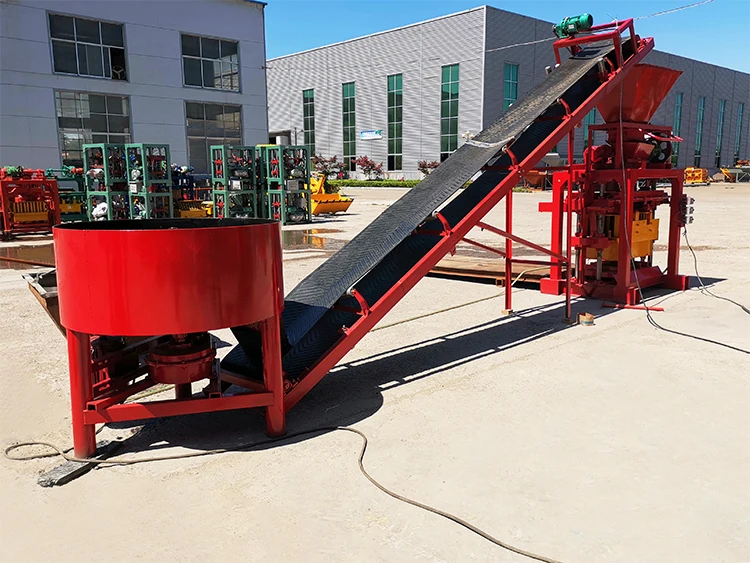
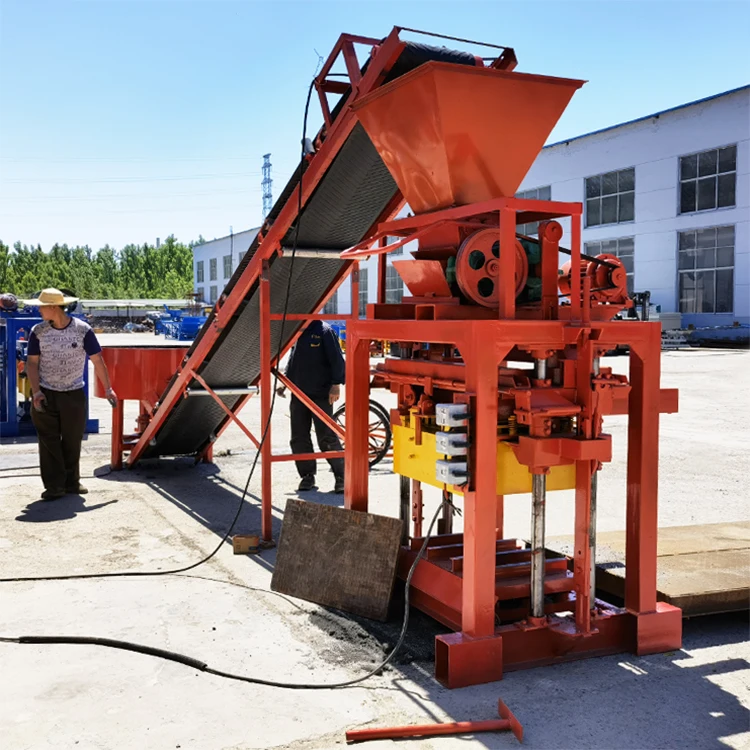
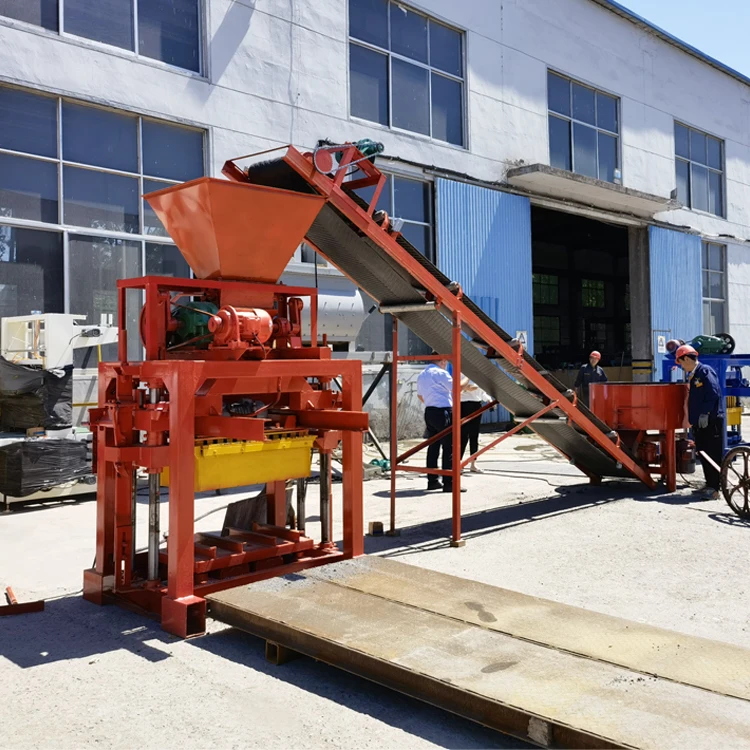
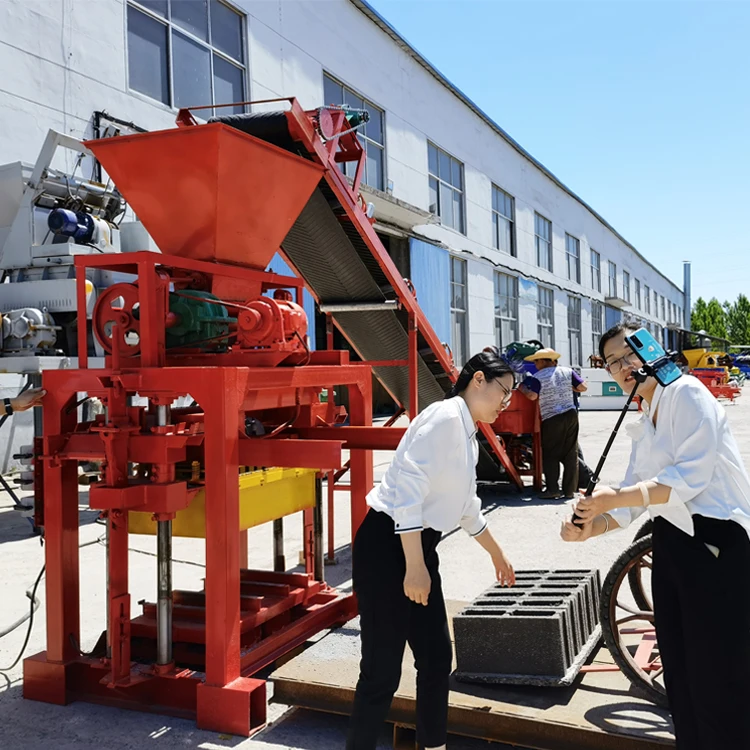
Description
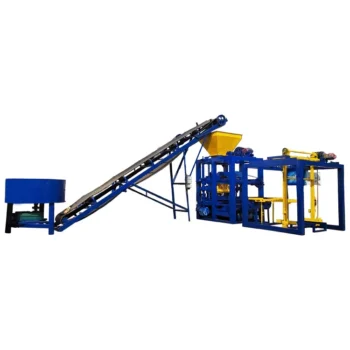
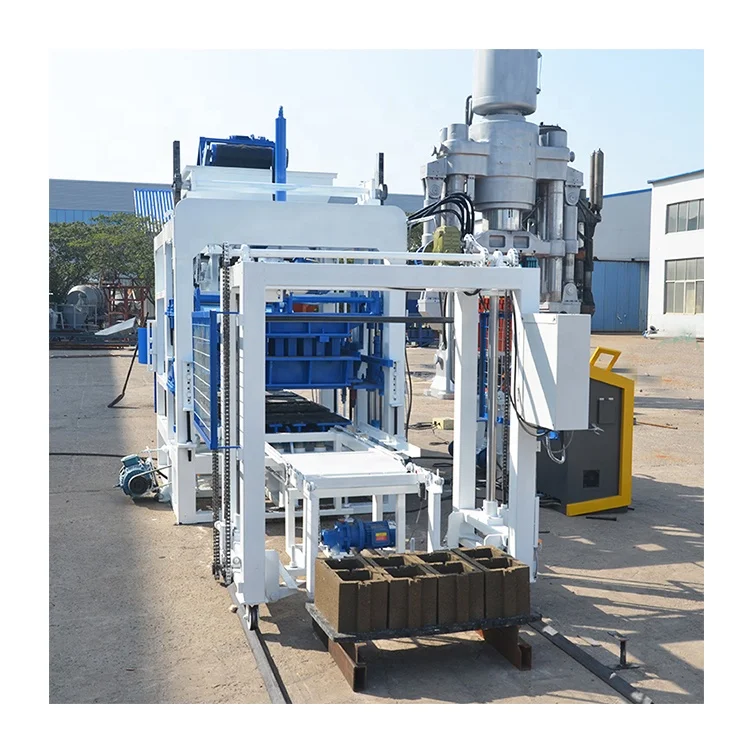
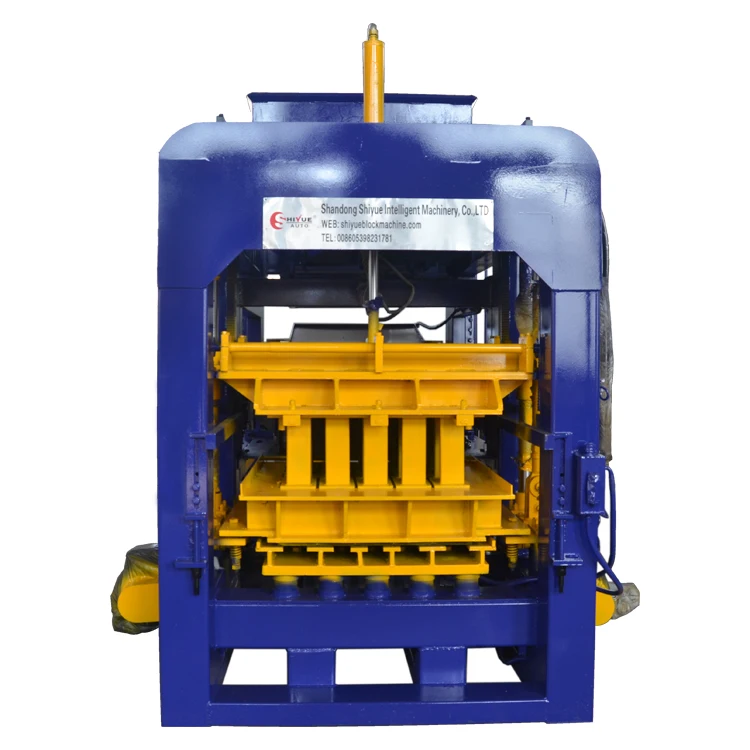
Stocked QTJ4-35 block machine for fast dispatch — container loading plans and arrival estimates confirmed at inquiry, so your project deadline is never held hostage by a 60-day production queue.
Technical Specifications
| Parameter | Value |
|---|---|
| Model | QTJ4-35 |
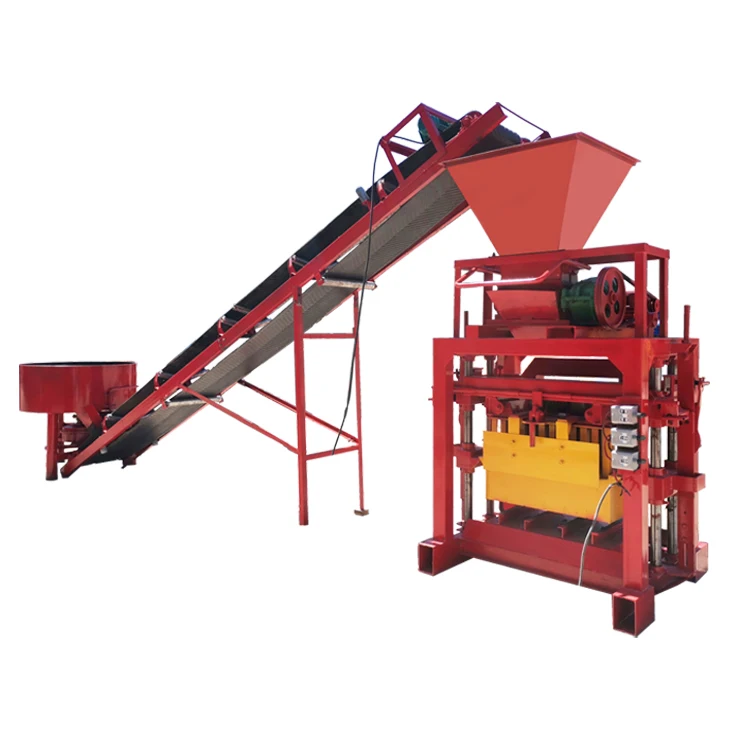
| Product Type | Semi-Automatic Concrete Block Making Machine |
| Overall Dimensions (L×W×H) | 1350 × 1460 × 1800 mm |
| Molding Cycle | 35 s (basis not stated in source) |
| Vibration Frequency | 2800 r/min |
| Exciting Power (Vibration Force) | 30 KN |
| Rated Power | 11.15 kW |
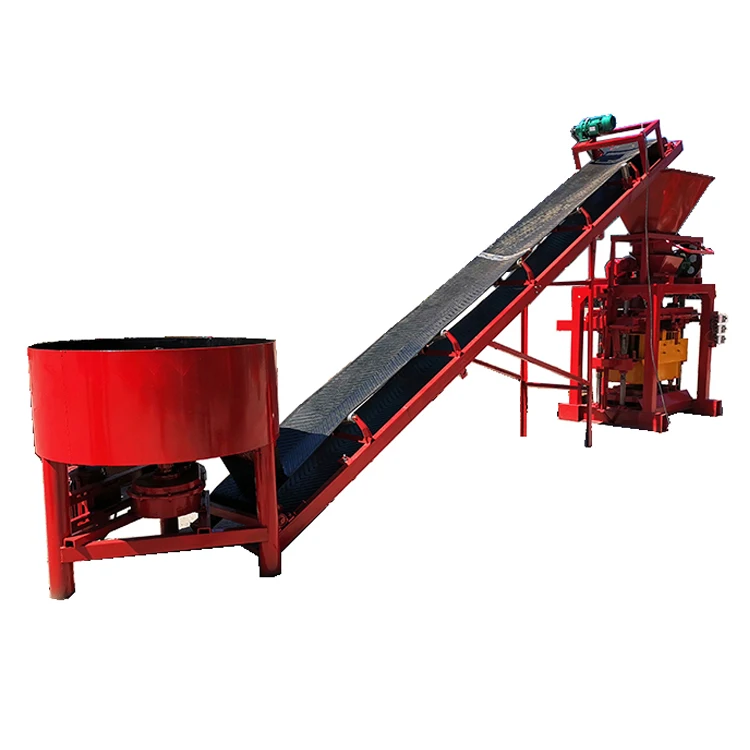
| Mixer Model | JQ350 |
| Pallet Size | 850 × 450 × 20 mm |
| Total Weight | 1500 KG |
| Frame Construction | Four-lead channel steel stand |
| Automation Level | Semi-automatic |
| Control System | Manual / Semi-automatic (PLC not stated in source) |
| Voltage & Frequency | Configurable (to be confirmed before shipment) |
Application Suitability
| Application | Material or Output |
|---|---|
| Small-scale block production plants | Concrete blocks from crushed stones, sand, cement, dust, and fly ash |
| On-site construction block making | Hollow blocks (8 inch, 6 inch) and solid bricks for local building projects |
| Entrepreneurs setting up a first block plant | Entry-level production of standard concrete masonry units |
| Contractors producing blocks locally | 400×200×200 mm hollow blocks, 400×150×200 mm hollow blocks, 240×115×53 mm solid bricks |
Why Voltage Confirmation Beats the Price Quote
A machine wired for the wrong grid sits idle for weeks, not days.
You have a site crew ready, a foundation poured, and a project deadline that does not move. The machine arrives, the electrician opens the panel, and the voltage on the nameplate does not match the local supply. Production stops while you source a transformer or wait for replacement windings. I have watched a semi-automatic block machine sit in a Lagos port facility for twenty days because the factory set it to 415V and the site ran 440V — a single unchecked field on a dispatch checklist [NEED_CITE: voltage and frequency standards by export market]. Every QTJ4-35 block machine in stock leaves our Linyi floor only after the voltage, frequency, and control language are written into the shipping release.
Dispatch Readiness and Container Planning
When a buyer needs a QTJ4-35 block machine in stock, the conversation starts with what is on the floor today, not what enters production next month. Standard moulds for hollow blocks and solid bricks ship with the press. Pallets are bundled in the same container. The total machine weight of 1500 KG and overall dimensions of 1350 × 1460 × 1800 mm mean the press, mixer, and pallet stack fit inside a 20GP container without partial-load delays.
Arrival Timing Quoted Before You Commit
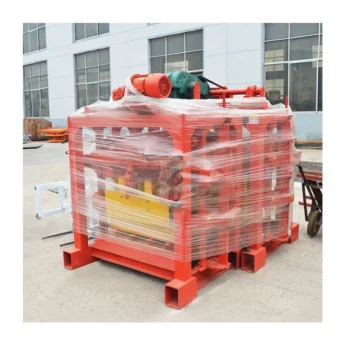
The fast delivery semi automatic block machine promise only matters if the arrival estimate holds. We confirm the destination port, map the sailing schedule, and give you a discharge date before the proforma invoice is signed. Machine dismantling for shipment — removing the hopper, securing the vibration assembly, and strapping the channel steel frame to the container floor — is documented so your receiving crew knows exactly what to expect on the other end [NEED_CITE: container loading standards for heavy industrial machinery].
How Vibration Force and Pallet Size Shape Your Daily Run
The QTJ4-35 delivers 30 KN of exciting power at 2800 r/min through a four-lead channel steel stand. That frame design absorbs vibration shock so the mould cavity fills evenly across every cycle, which matters when you are running 400×200×200 mm hollow blocks where uneven fill means weak corners and rejected units. The 850 × 450 × 20 mm pallet size is not arbitrary — it must match the curing rack spacing and the forklift tine width already on your site. A pallet that is too wide for your existing racks forces a capital spend you did not budget. The JQ350 mixer feeds the press at a rate matched to the 35-second molding cycle so the operator is never waiting on a half-batch while the vibration timer counts down.
The Cost of Skipping the Pallet and Voltage Check
A pallet mismatch does not show up in the quotation. It shows up on day one of production when cured blocks cannot be racked and must be stacked by hand on the workshop floor, cracking the bottom course under the weight. A voltage mismatch is worse — the motor protection trips on startup, the crew assumes a wiring fault, and hours pass before anyone reads the nameplate. These are not engineering failures. They are checklist failures, and they cost more per day than the machine itself [NEED_CITE: common causes of commissioning delays in exported block machinery].
Why Buyers Source This Machine Through Our Dispatch Desk
Block machinery is our single focus, which means the QTJ4-35 press, its moulds, pallets, and the JQ350 mixer are specified as one matched set rather than assembled from separate purchase orders. We confirm stock status at inquiry — model, standard moulds, and pallets — so there is no bait-and-switch on lead time. Container loading plans are shared before shipment, not after. Voltage and control language are verified against your site electrical report before the machine leaves the factory floor. Moulds and hydraulic wear parts are listed in the shipment so your first replacement cycle does not become a sourcing emergency.
Documentation & Verification
- Factory test record on your specified block format before dispatch
- Voltage and frequency confirmation sheet signed against your site electrical data
- Container loading photograph set showing pallet and mould placement
- Pallet specification matched to your curing rack and forklift dimensions
- Mould drawing and format list for every cavity shipped
Installation, Commissioning & Support
- 11.15 kW rated power requires a dedicated circuit with confirmed voltage and frequency before connection
- 1350 × 1460 mm footprint needs a level concrete pad with clearance for manual pallet handling on both sides
- Machine ships partially dismantled; hopper and vibration assembly re-secured on site with included hardware
- Commissioning includes first-run cycle timing on your local aggregate and mix design
- Operator training covers mould change procedure and vibration force adjustment for different block formats
- Wear parts list and mould cavity count documented at handover for reorder planning
What to Include in Your Inquiry
Send us the block format you sell most — hollow, solid, or paving — along with your target daily output and the raw materials available locally. Confirm your site voltage and frequency so we match the motor winding before the machine ships. If you already have curing racks and a forklift, share the pallet dimensions they accept so we verify the 850 × 450 × 20 mm pallet fits your existing setup.
Frequently Asked Questions
Q: Is the QTJ4-35 currently in stock and how fast can it ship?
A: Stock status is confirmed at inquiry for the press, standard moulds, and pallets. Dispatch lead time depends on container availability at the port and your destination, but stocked machines bypass the production queue entirely. We quote the sailing date and estimated discharge at your port before you commit.
Q: How is the machine loaded into a container and what ships with it?
A: The QTJ4-35 is partially dismantled — hopper removed, vibration assembly secured — and strapped to the container floor alongside the JQ350 mixer, pallets, and standard moulds. A loading photograph set is shared before the container is sealed so you know exactly what arrives.
Q: What is the estimated arrival time to my port after dispatch?
A: Arrival depends on your destination port and the current sailing schedule. We confirm the vessel, departure date, and estimated discharge date before issuing the proforma invoice. This gives your site crew a working timeline, not a guess.
Q: Can voltage and frequency be confirmed before dispatch to avoid delays?
A: Yes. We require your site voltage and frequency before the machine leaves the factory. The motor winding and control panel are set to match, and a confirmation sheet is included in the documentation package so your electrician can verify on arrival.
Q: Are standard moulds and pallets included in the shipment or ordered separately?
A: Standard moulds for hollow blocks and solid bricks, along with a starting set of pallets, ship in the same container as the press. No separate order is needed to begin production on day one.