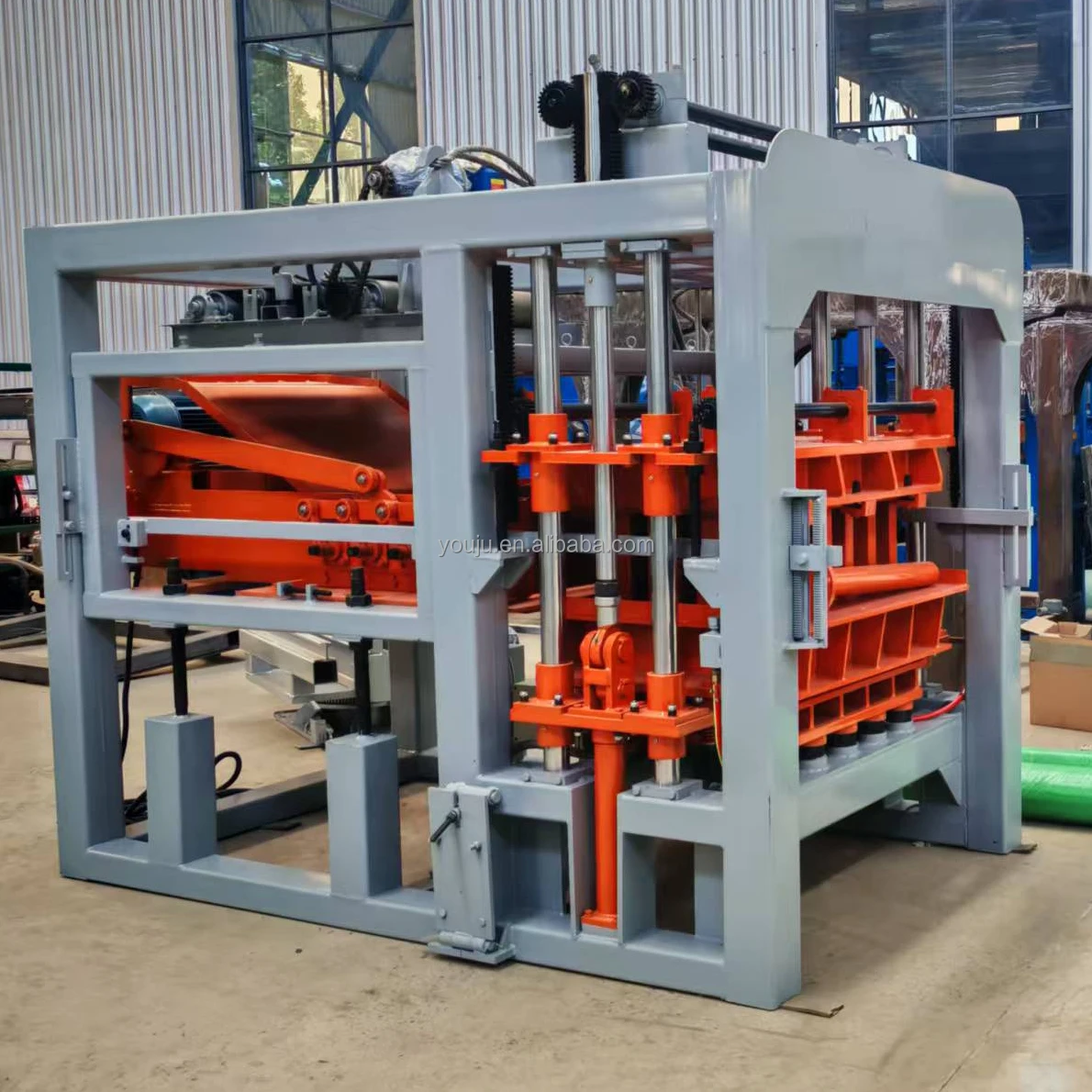


Description
Stocked Dispatch Readiness — QT6-15 units are held in factory inventory with electrical specifications verified before container loading, eliminating the typical multi-week delay caused by voltage mismatches at the destination port.
Technical Specifications
| Parameter | Value |
|---|---|
| Model | QT6-15 |
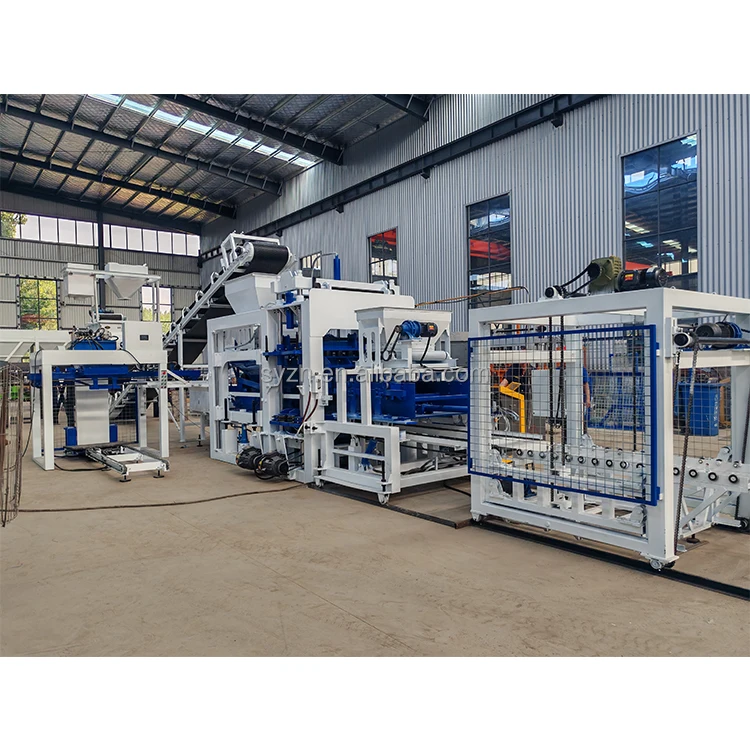
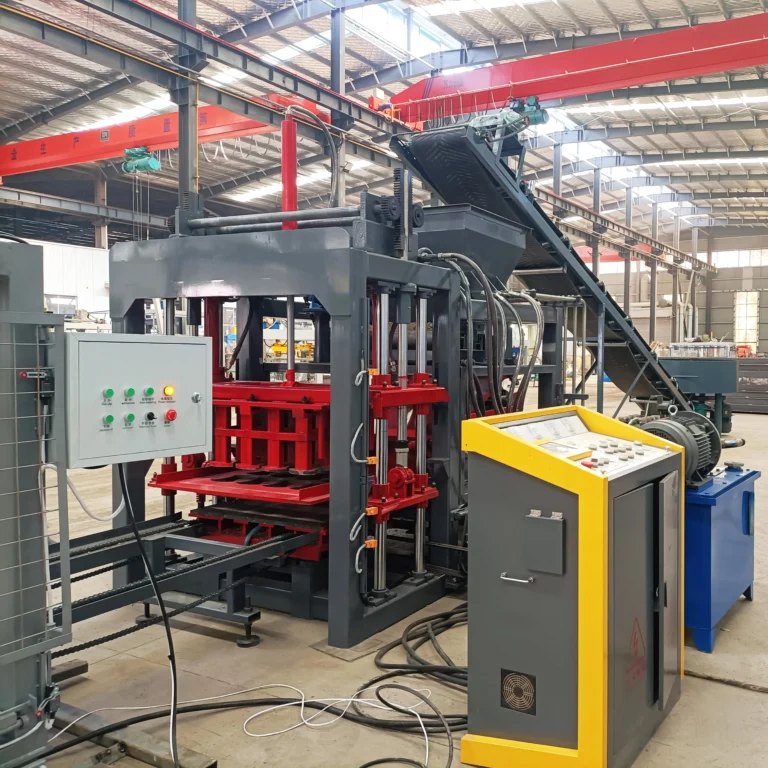
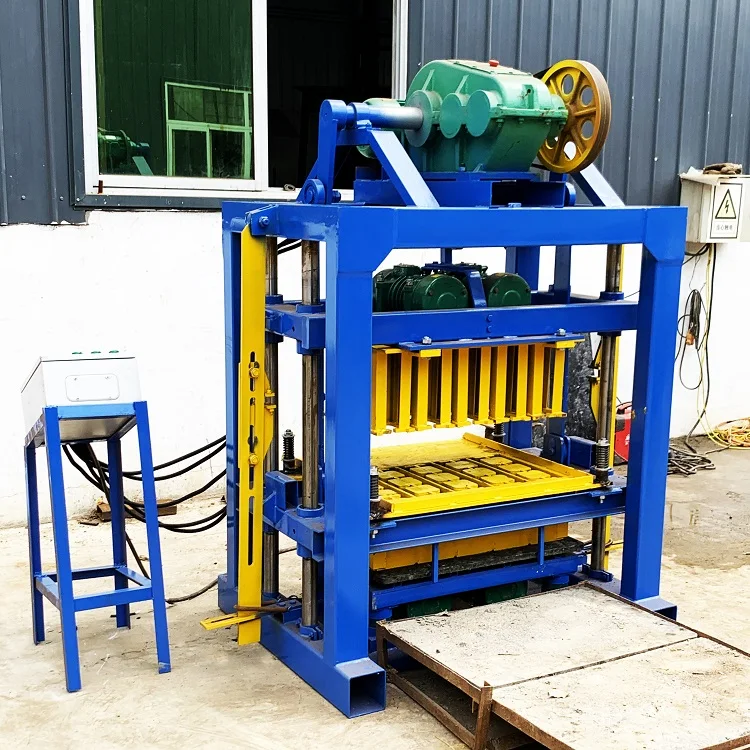
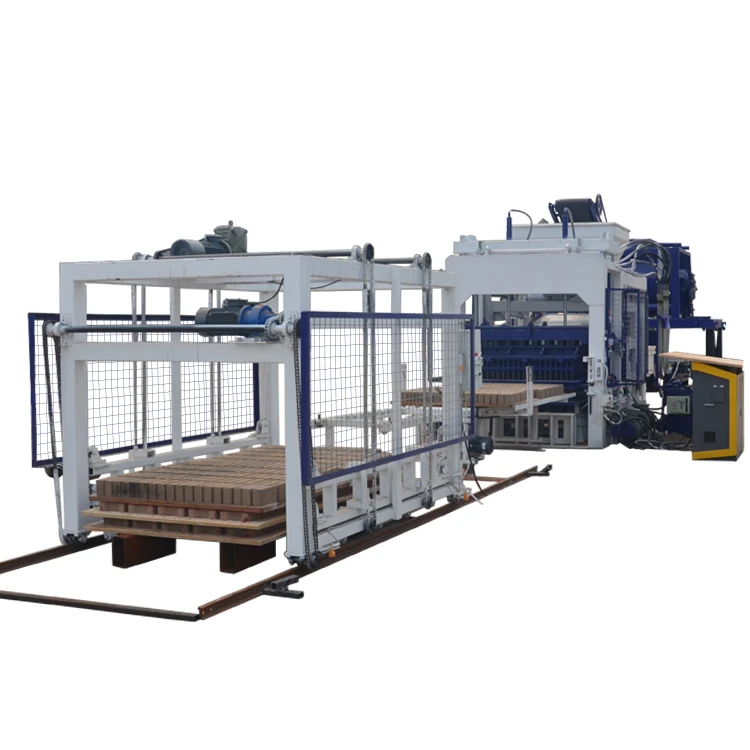
| Product Type | Automatic Hydraulic Concrete Block Making Machine |
| Overall Dimensions | 7100 × 1500 × 3000 mm |
| Rated Hydraulic Pressure | 21 MPa |
| Vibration Form | Platform vibration |
| Vibration Frequency | 4500–5100 r/min |
| Pallet Size | 880 × 850 mm |
| Molding Cycle | 15–25 s (basis not stated in source — confirm block format, material, thickness) |
| Overall Power | 31.25 kW |
| Machine Weight | 8700 kg |
| Control System | PLC intelligence control |
| Drive Type | Hydraulic |
| Raw Material Ratio | Cement 8–10%, sand 30–40%, stone 50–60% |
| Block Strength (Hollow) | 8–10 MPa |
| Block Strength (Solid) | 10–20 MPa |
| Voltage & Frequency | Configurable — confirm destination standard before dispatch |
Application Suitability
| Application | Material or Output |
|---|---|
| Hollow block production for residential and commercial wall construction | Cement, sand, crushed stone aggregate |
| Solid block manufacturing for load-bearing structures | Cement, sand, stone at higher compaction density |
| Paving block and kerbstone output for roads and walkways | Cement, sand, fine and coarse aggregate with mould change |
| On-site block production for housing and infrastructure projects | Local aggregate matched to available quarry sources |
Why the Voltage Question Should Come Before the Price
A QT6-15 block machine in stock means nothing if the motor winding does not match the grid at your port.
I watched a hydraulic block press sit idle on a Lagos site for nearly a full month because the buyer confirmed the machine order before confirming the local supply frequency. The inverter required to bridge the gap was not on the container manifest, and sourcing one locally added weeks of downtime. The QT6-15 draws 31.25 kW across its hydraulic and vibration systems — that load demands a dedicated circuit at the correct voltage and frequency, confirmed in writing before the machine leaves the factory floor. Every export market runs different standards, and a mismatch discovered after arrival turns a fast-dispatch advantage into a costly project delay [NEED_CITE: voltage and frequency standards by export market].
Dispatch Timing and Container Loading
The primary reason buyers come to this page is deadline pressure. A QT6-15 block machine in stock is dismantled into major assemblies — main frame, hydraulic station, mould assembly, and PLC cabinet — and loaded into a standard ocean freight container with securing points documented in packing photographs. The dispatch lead time is quoted at the inquiry stage, not after payment, so your project schedule can be planned around a confirmed arrival window rather than an estimate that shifts with factory backlog.
Electrical Verification Before the Machine Moves
Before any stocked QT6-15 is crated, the voltage rating, supply frequency, and PLC display language are matched to the destination site in writing. This step sounds basic, yet it remains one of the most frequent causes of commissioning failure on exported block presses. The PLC intelligence control system on this machine supports multiple interface languages, and the correct selection is a five-minute factory setting — provided it is requested before the control cabinet is sealed for shipment [NEED_CITE: PLC language configuration requirements for exported industrial machinery].
How Pressure, Vibration, and Pallet Area Determine What You Actually Produce
The 21 MPa rated hydraulic pressure and the 4500–5100 r/min platform vibration work together to compact the raw material across the full 880 × 850 mm pallet area. Hydraulic pressure alone does not guarantee block strength — it must be paired with sufficient vibration frequency to settle the aggregate evenly before the hydraulic head applies full force. On the QT6-15, this combination produces hollow blocks in the 8–10 MPa strength range and solid blocks reaching 10–20 MPa, depending on the mix design and curing conditions. The pallet size also dictates how the output moves through your curing area: if your existing forklift and rack system are designed around a different pallet dimension, the handling workflow will need adjustment. Mould interchangeability allows the same press to switch between hollow, solid, and paving formats, though each change requires the operator to swap the mould box and recalibrate the cycle parameters for the new format thickness.
The Cost of Skipping the Electrical Confirmation Step
When voltage and frequency are left as defaults, the consequences surface only after the container is opened. A motor wound for the wrong frequency will run at incorrect speed, altering vibration force and shortening bearing life. A PLC cabinet rated for the wrong voltage may trip breakers on start-up or, worse, power on with corrupted logic. Neither failure mode appears in a factory test run on the correct supply. These are not manufacturing defects — they are specification gaps that could have been closed with a single email before dispatch [NEED_CITE: common causes of commissioning delays on exported concrete equipment].
Why Buyers Source This Model Through This Channel
Block machinery is the single focus here, which means the QT6-15 is not assembled from mismatched third-party components — the press, mould, pallet, and handling stations are specified as a matched system. Standard models are kept in factory inventory specifically to serve project-driven buyers who cannot absorb typical multi-week production lead times. The raw material ratio range — cement 8–10%, sand 30–40%, stone 50–60% — is published so you can cross-check against your local quarry output before committing. Voltage, frequency, and PLC language are confirmed as part of the order process, not left as assumptions. Every unit ships with a factory test record and packing photographs so you can verify condition before the container reaches your port.
Documentation & Verification
- Factory test record showing hydraulic pressure and vibration output on the QT6-15 before crating
- Packing photographs documenting dismantled assemblies and container securing arrangement
- Voltage, frequency, and PLC display language confirmation sheet signed before dispatch
- Machine specification sheet covering all rated values and configurable parameters
- Mould drawing and format list for each mould included in the shipment
- Operation and maintenance manual with wear parts schedule
Installation, Commissioning & Support
- Foundation must support 8700 kg machine weight with level tolerance for the 7100 × 1500 mm footprint
- Dedicated 31.25 kW electrical circuit at confirmed voltage and frequency required at point of connection
- Major assemblies arrive dismantled — main frame, hydraulic station, and PLC cabinet are reconnected on site
- First-run commissioning includes hydraulic pressure calibration and vibration frequency verification across the pallet area
- Operator training covers mould change procedure, PLC parameter adjustment, and daily maintenance checkpoints
- Wear parts list and hydraulic seal schedule provided with recommended replacement intervals
What to Include in Your Inquiry
Send your target block format and daily output requirement so the correct mould set and cycle parameters can be matched to the QT6-15. Confirm your local supply voltage, frequency, and preferred PLC display language to ensure the electrical specification is locked before dispatch. If you have an existing curing area and forklift, share the pallet dimensions currently in use so the 880 × 850 mm pallet compatibility can be verified against your handling setup.
Frequently Asked Questions
Q: Is the QT6-15 currently in stock and what is the dispatch lead time?
A: Standard QT6-15 units are held in factory inventory for buyers working against project deadlines. Dispatch lead time is quoted at the inquiry stage and includes the time needed for electrical verification, dismantling, and container loading. Current stock status is confirmed in writing before any payment is requested.
Q: How is the machine dismantled and loaded into a container for shipment?
A: The QT6-15 is broken down into its main frame, hydraulic power station, mould assembly, and PLC control cabinet. Each component is secured inside a standard ocean freight container with documented tie-down points. Packing photographs are provided to the buyer before the container is sealed at the factory.
Q: Can the voltage, frequency, and control language be matched to the destination market before shipping?
A: Yes. Voltage, frequency, and PLC display language are confirmed in writing as part of the order process. The motor winding and control cabinet are set to match the destination grid before the machine leaves the factory, preventing the most common cause of post-arrival commissioning delay.
Q: What standard moulds are stocked alongside the QT6-15 for immediate order?
A: Moulds for common hollow block, solid block, and paving block formats are available from stock alongside the machine. Custom mould designs based on buyer drawings can also be supplied. The specific format list and mould drawings are shared during the quotation stage so the buyer can match them to local market demand.
Q: What is the estimated arrival time from port of loading to destination port?
A: Ocean transit time depends entirely on the destination port and current shipping schedules. An arrival estimate is provided once the container booking is confirmed. The dispatch date is planned backward from the buyer’s project deadline to align factory loading with the earliest available vessel.