

Description
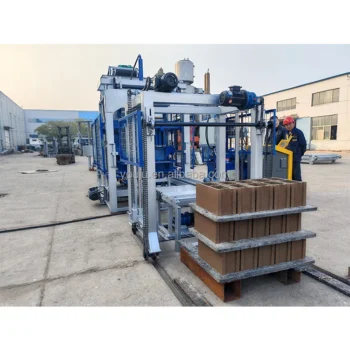
Stock Availability Confirmed Upfront — QTJ4-24 units with standard hollow block and solid brick moulds are prepared for dispatch, with container loading plans and arrival estimates quoted before you commit, eliminating guesswork on project timelines.
Technical Specifications
| Parameter | Value |
|---|---|
| Model | QTJ4-24 |
| Product Type | Semi-Automatic Concrete Block Making Machine |
| Molding Type | Platform Vibration |
| Overall Dimensions (L×W×H) | 3600mm × 1700mm × 2560mm (working state) |
| Total Mass | 1750 kgs |
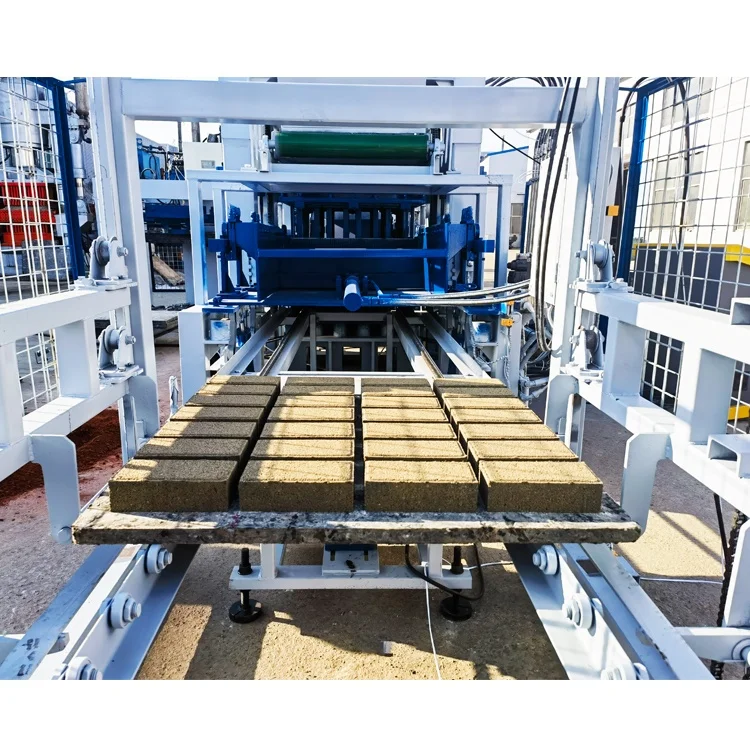
| Pallet Size | 850mm × 450mm |
| Overall Power | 14.25 kW |
| Vibration System | Lower platform vibration (2 × 3 kW motors) + Upper vibration (1.5 kW attached device) |
| Elevating System | Cone-shape motor with JZQ250 speed reducer |
| Delivery Device | Cycloidal pin wheel speed reducer with chain and V-belt drive |
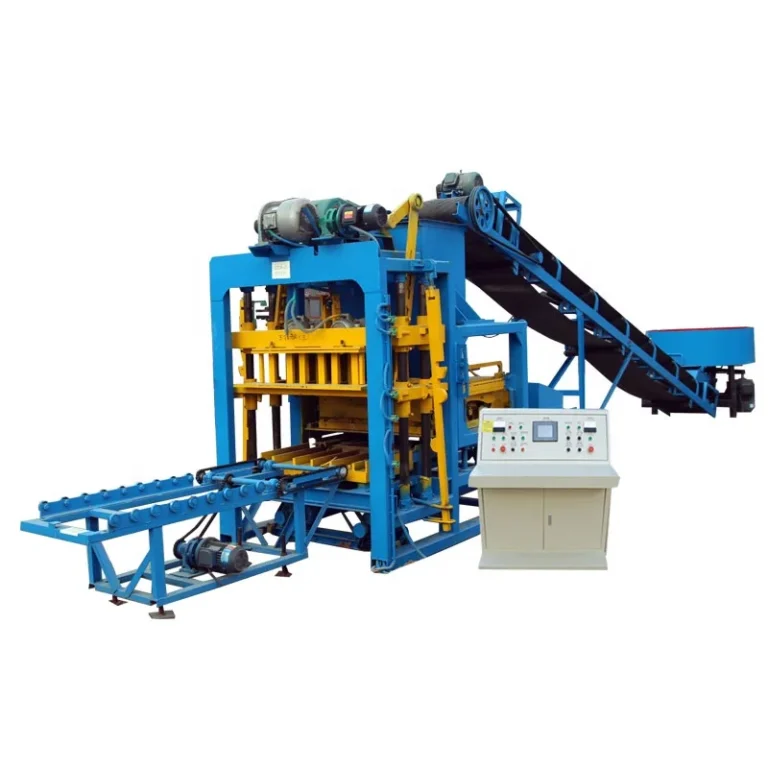
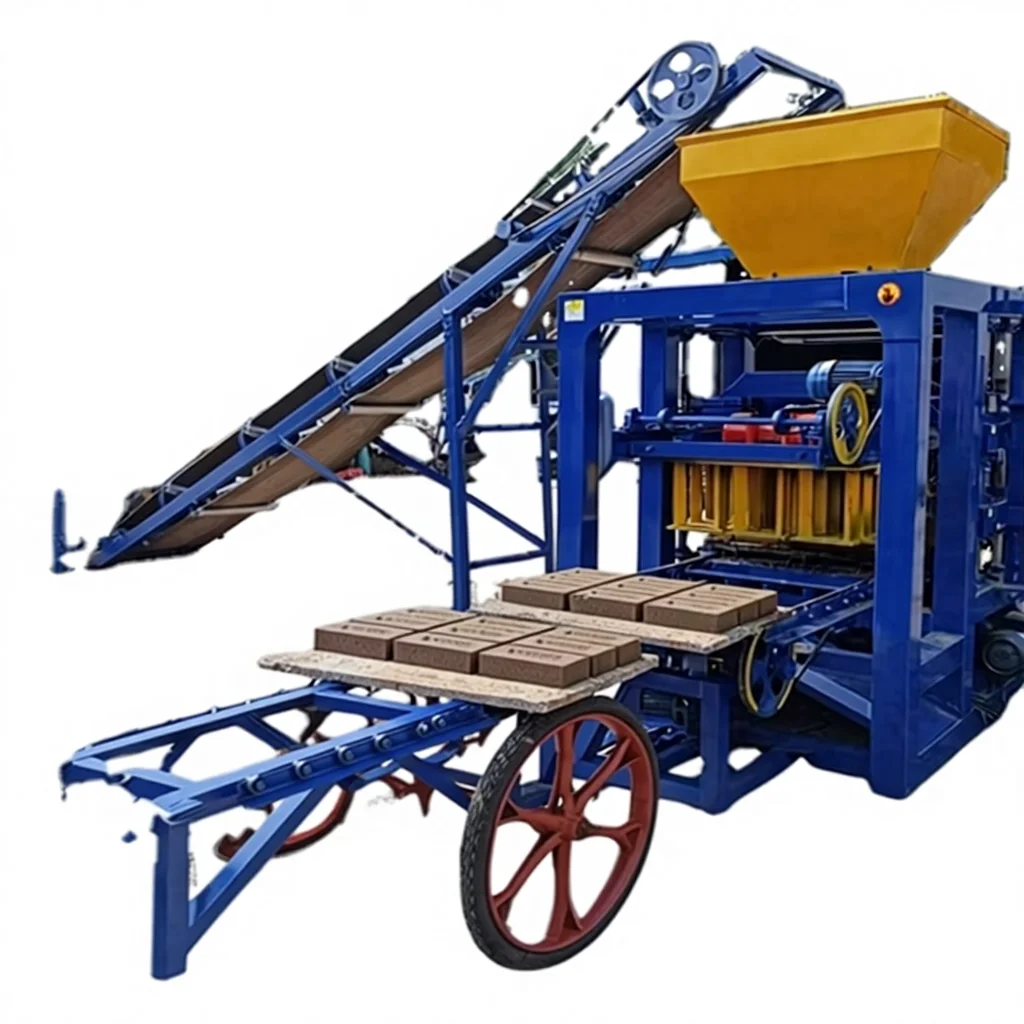
| Machine Frame | Dragon gate style, super steel construction, four vertical wear-resisting shafts |
| Control System | Mechanical and electronic combination |
| Automation Level | Semi-automatic |
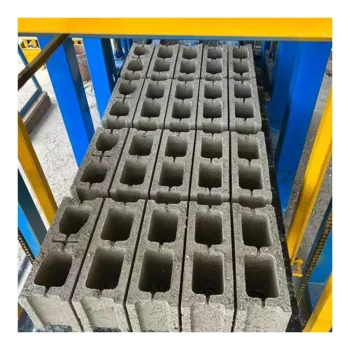
| Standard Mould Formats | 390mm × 190mm × 190mm hollow block (4 pcs/mould); 240mm × 115mm × 53mm solid brick (21 pcs/mould) |
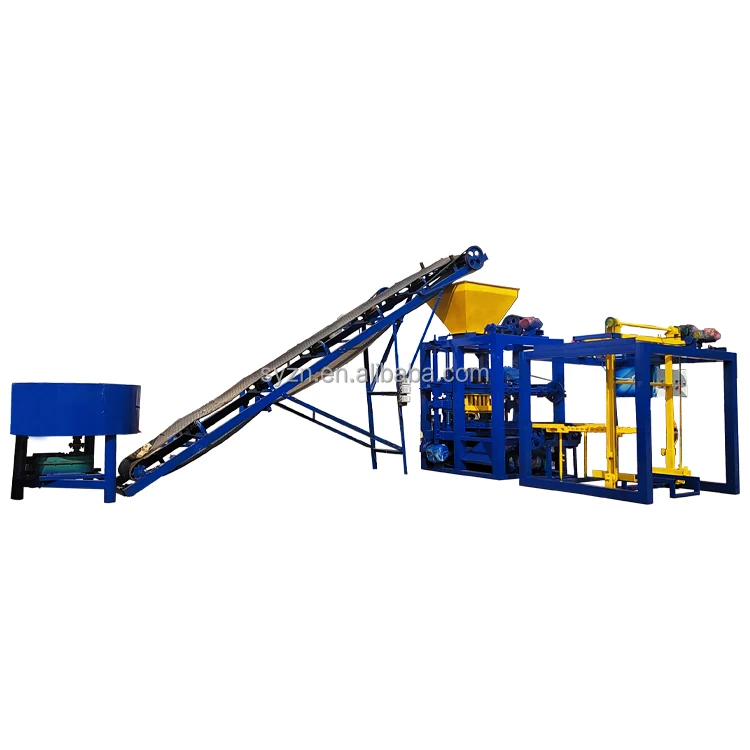
| Support Equipment (Basic) | JQ350 pan mixer, 6m belt conveyor, trolley |
| Support Equipment (Optional) | Auto stacker (3–6 layers depending on block height) |
| Assembly State | Stationary (fixed plant installation) |
| Voltage & Frequency | Configurable to buyer’s site requirements (basis to be confirmed) |
| Output Capacity | Dependent on block format, mix design, and operator cycle (basis to be confirmed) |
Application Suitability
| Application | Material or Output |
|---|---|
| Small-scale hollow block production | Crushed stone, sand, cement, and water mix for 390×190×190mm hollow blocks |
| Solid brick manufacturing for local masonry | Cement-aggregate blend for 240×115×53mm solid bricks |
| On-site block production for building contractors | Local aggregate and cement mixed on the construction site |
| First block plant for entrepreneurs | Low-investment semi-automatic setup with manual pallet handling |
| Format expansion for building material distributors | Hollow block and solid brick added to an existing product range using stocked moulds |
What "Output per Hour" Leaves Out When No Block Format Is Stated
A cycle rate means nothing until you know which mould is running and how many cavities it has.
I have stood on job sites where the owner counted on a certain daily tally based on a quoted cycles-per-hour figure, only to discover the number assumed a solid brick mould while the actual production plan called for hollow blocks with far fewer pieces per cycle. The semi-automatic block machine in stock you are evaluating must come with a capacity sheet that states the assumed format, the cavity count, and the realistic cycle time for that specific block. Without those three figures together, the daily output projection is guesswork. [NEED_CITE: capacity calculation methods for concrete block production]
Dispatch Timing and Container Loading for the QTJ4-24
Buyers working against a project deadline need more than a machine — they need a confirmed loading plan. The QTJ4-24 semi-automatic block machine in stock ships with its basic support line, including the JQ350 pan mixer and 6m belt conveyor, packed into the same container to avoid split shipments. The machine frame is dismantled at the gantry joints so the main body fits within standard container dimensions, and the moulds are crated separately to prevent transit damage. Arrival estimates are quoted at the order stage based on the destination port, so the buyer can align foundation work and raw material procurement with the expected landing date.
Mould Availability and Format Coverage from Day One
A frequent source of delay is discovering after arrival that the moulds needed for the buyer’s market were not part of the original shipment. The QTJ4-24 ships with two standard mould formats already in stock: a 4-cavity hollow block mould for 390×190×190mm units and a 21-cavity solid brick mould for 240×115×53mm units. This means the machine can produce both common formats immediately after commissioning without waiting for a separate mould production run. Additional or custom moulds can be added later, but the initial dispatch covers the formats most construction markets require. [NEED_CITE: standard concrete block dimensions by regional market]
How Platform Vibration and Pallet Size Shape Daily Production
The vibration system on this machine uses two 3 kW motors mounted beneath the platform and a 1.5 kW upper vibration device, delivering compaction force from both directions. This dual-source arrangement is important for hollow block formats where the core voids reduce the contact area — upper vibration helps consolidate the face mix around the cores. The 850mm × 450mm pallet size is fixed by the machine frame, and it determines the curing rack spacing and forklift tine width the buyer must have ready before the machine arrives. Choosing a pallet size without checking the existing curing area means either rebuilding racks or handling pallets by hand, both of which slow the line down after commissioning.
The Cost of Skipping Pre-Shipment Voltage and Language Confirmation
I once arrived at a site in East Africa to find a newly delivered block press sitting idle because the control panel was wired for a voltage that the local grid did not supply, and the relay labels were in a language the operators could not read. The fix required rewiring the panel and waiting for replacement labels, adding weeks of downtime before the first block was produced. The QTJ4-24 control system uses a mechanical and electronic combination, so confirming voltage, frequency, and display language before the machine leaves the factory is straightforward — but only if the buyer provides those details during the inquiry stage. Skipping this step turns a fast delivery advantage into a slow commissioning reality. [NEED_CITE: voltage and frequency standards by export market]
Why Buyers Choose This Source for Stocked Block Machines
Every QTJ4-24 dispatched undergoes a factory test run with the buyer’s specified mould format before crating, and packing photographs are shared so the buyer can verify condition before the container is sealed. The basic support line — pan mixer, belt conveyor, and trolley — is included as standard, not quoted as hidden add-ons that inflate the final cost at the last minute. Machine dismantling and container loading schemes are confirmed upfront, with an arrival estimate provided at the quotation stage so the buyer can plan site preparation. Standard hollow block and solid brick moulds are held in stock, removing the production lead time that custom-only mould suppliers add. A wear parts list and recommended spare set are reviewed before shipment to prevent the situation where the first seal or vibration motor failure leaves the machine waiting for parts from overseas.
Documentation & Verification
- Factory test record showing cycle operation on the buyer’s requested mould format before dispatch
- Machine specification sheet listing pallet size, power rating, and vibration motor details
- Mould drawing and format list for both the 4-cavity hollow block and 21-cavity solid brick
- Hydraulic and electrical schematic for the mechanical-electronic control panel
- Voltage and control language confirmation document signed off before production
- Packing photographs and container loading plan shared prior to shipment
Installation, Commissioning & Support
- Foundation pad sized to the 3600mm × 1700mm footprint with anchor bolt positions marked
- Dedicated power circuit matched to the 14.25 kW total draw and confirmed voltage rating
- Machine reassembled at gantry joints and leveled on the four vertical wear-resisting shafts
- Vibration motor rotation direction and cycle timing verified during first commissioning run
- Operator training on mould change procedure and daily lubrication of the elevating system
- Wear parts list covering vibration motor mounts, chain drive links, and speed reducer seals
What to Prepare Before Requesting a Quote
To match the QTJ4-24 to your site conditions, provide the block format and daily volume you need to produce, the local aggregate type and cement grade available, and your site voltage and frequency so the control panel is built correctly before shipment. Confirm the pallet handling method you plan to use — manual trolley or the optional auto stacker — so the line configuration is complete on arrival.
Frequently Asked Questions
Q: What is the dispatch lead time for a stocked QTJ4-24 with standard moulds?
A: Stocked QTJ4-24 units with the standard 4-cavity hollow block and 21-cavity solid brick moulds are prepared for dispatch shortly after order confirmation and pre-shipment payment. The exact lead time depends on the factory test schedule and container booking availability at the time of order. A dispatch date is confirmed in the quotation so buyers can plan around their project timeline.
Q: How is the machine dismantled and loaded into a container?
A: The dragon gate frame is separated at the gantry joints to fit within standard container dimensions. The pan mixer, belt conveyor, and trolley are loaded alongside the main press. Moulds are crated separately to prevent damage. A loading scheme is confirmed before shipment, and an estimated arrival date is quoted based on the destination port.
Q: Which voltage and frequency configurations are available for the QTJ4-24?
A: The control panel is configured to match the buyer’s site voltage and frequency before dispatch. Common configurations include 220V/380V/440V at 50Hz or 60Hz, but the exact requirement must be confirmed during the inquiry stage. This ensures the 14.25 kW motor set and control electronics operate correctly upon arrival without rewiring.
Q: What basic and optional support equipment ships with the press?
A: The basic package includes a JQ350 pan mixer, a 6m belt conveyor, and a trolley, all shipped in the same container. An optional auto stacker capable of stacking 3 to 6 layers depending on block height is available as an add-on. Buyers can start with manual pallet handling and add the stacker later as production volume grows.
Q: Are the standard hollow block and solid brick moulds in stock?
A: Yes, the 4-cavity hollow block mould for 390×190×190mm blocks and the 21-cavity solid brick mould for 240×115×53mm bricks are held in stock and ship with the machine. Custom moulds for other formats can be produced to buyer drawings but require a separate lead time. The stocked moulds allow production to begin immediately after commissioning.