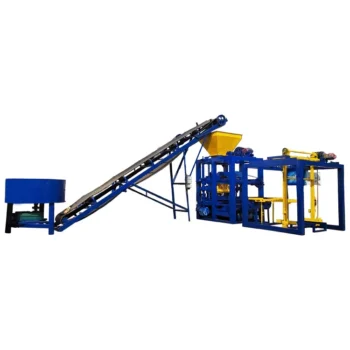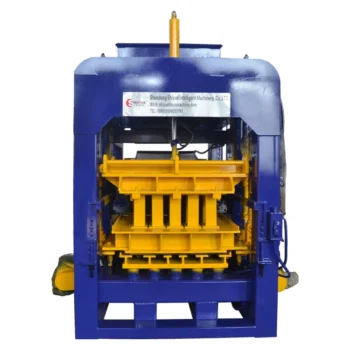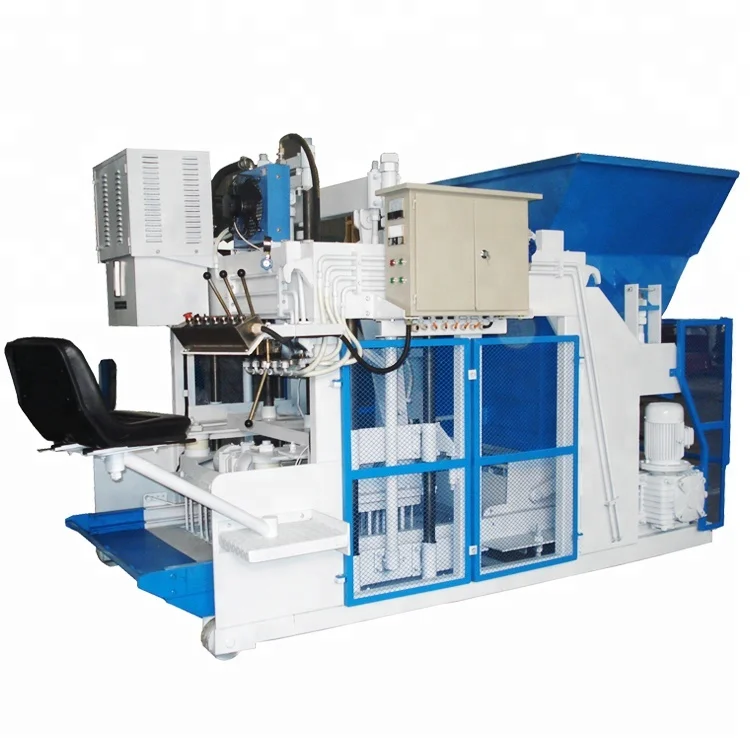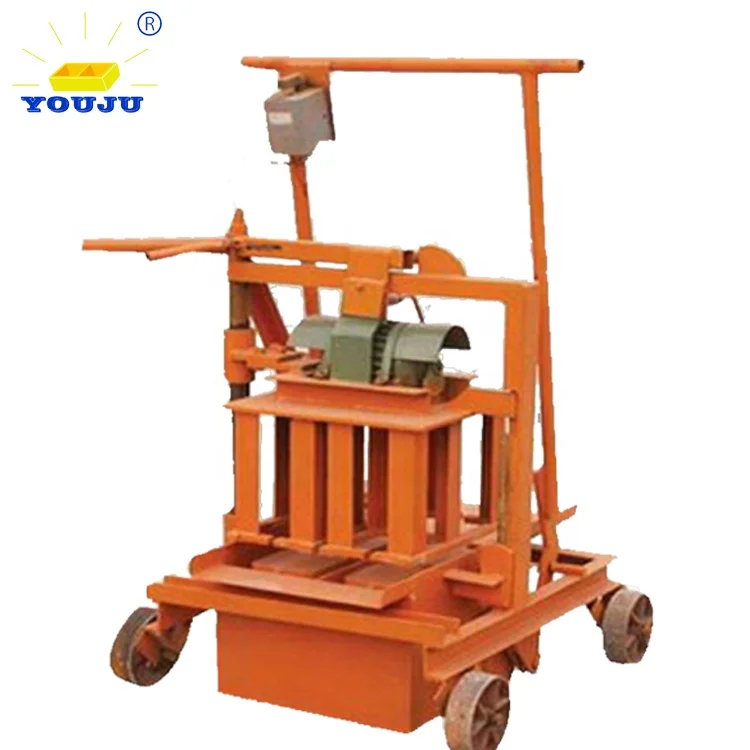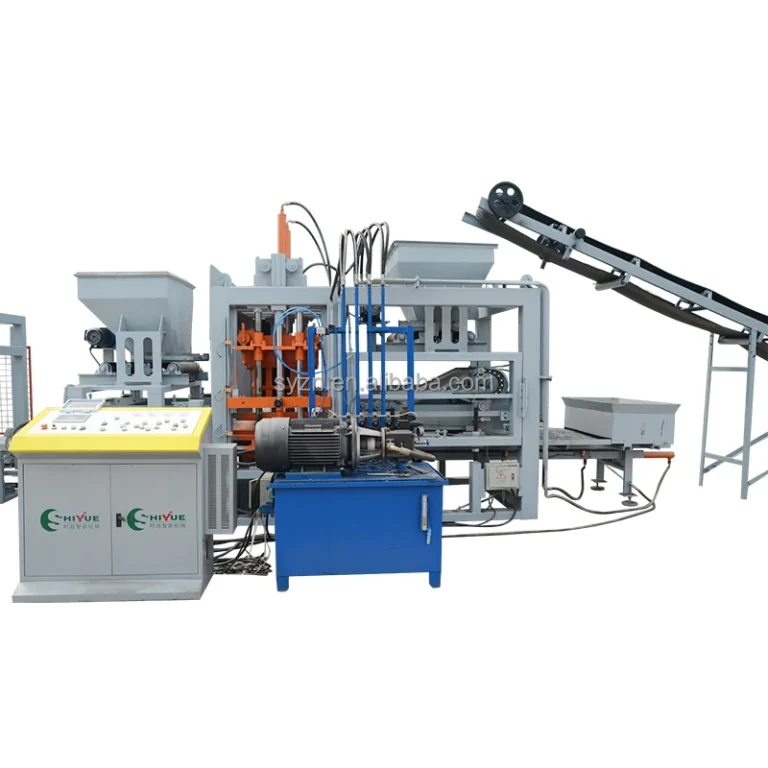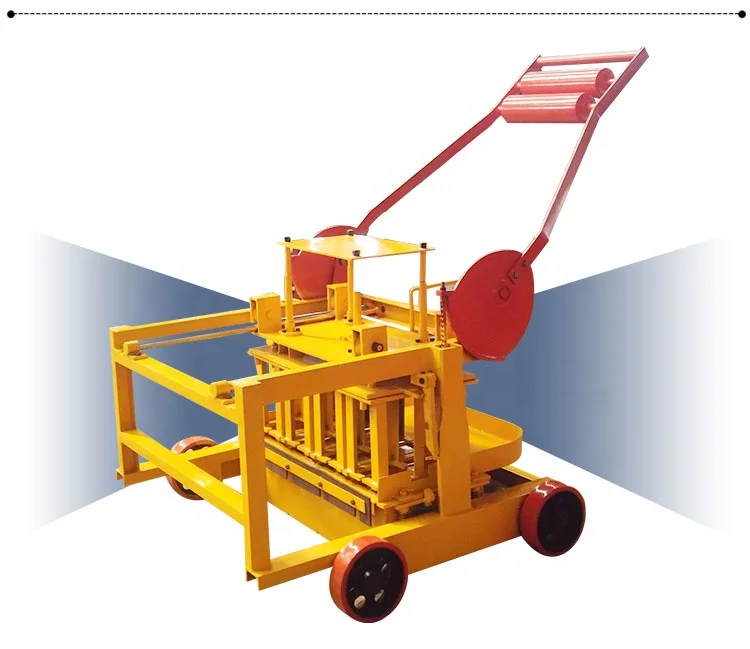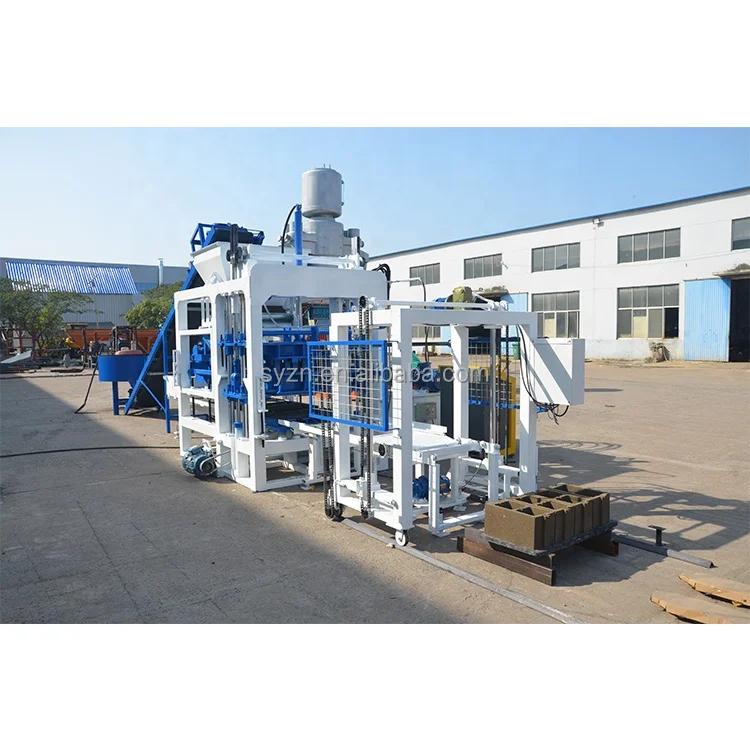
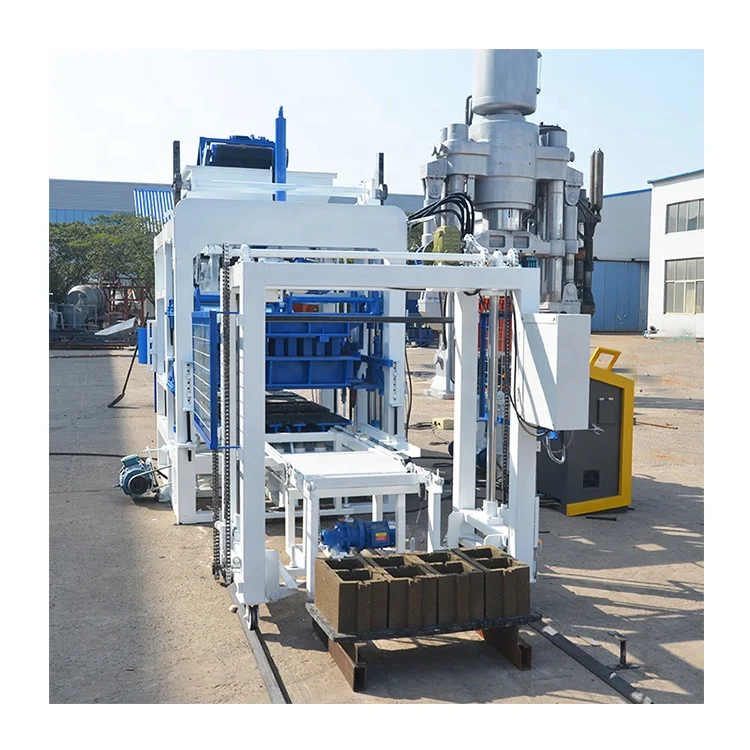
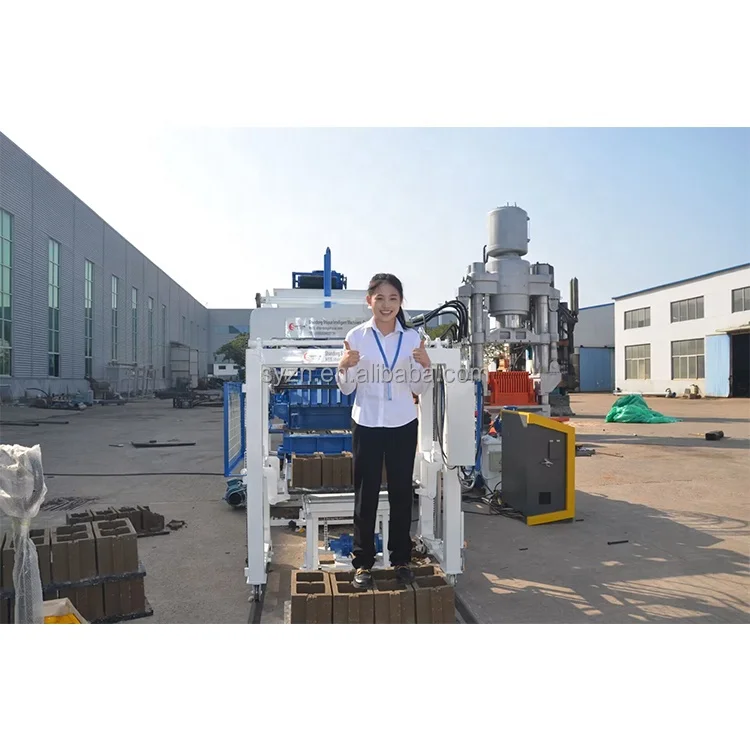
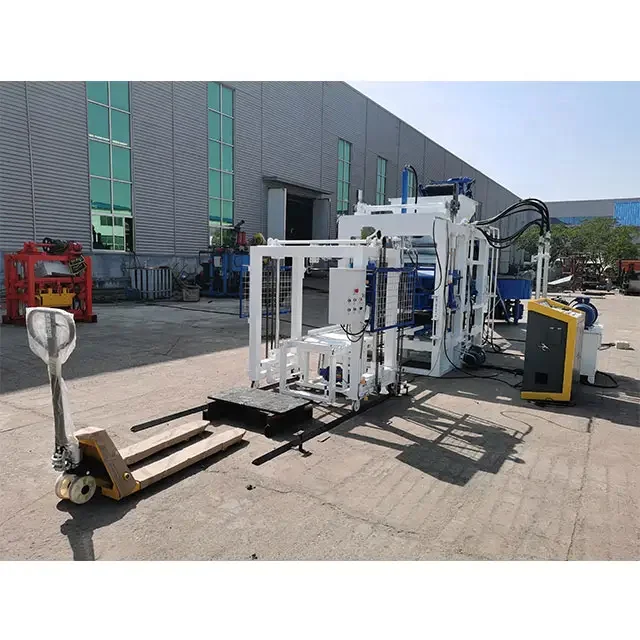
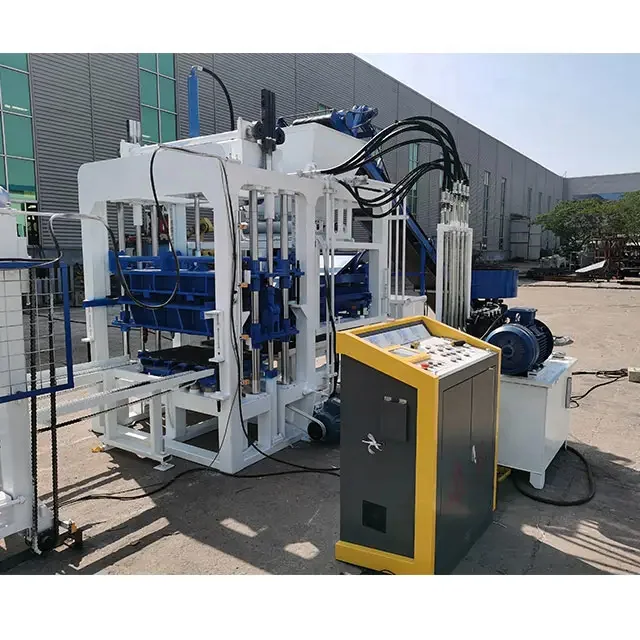
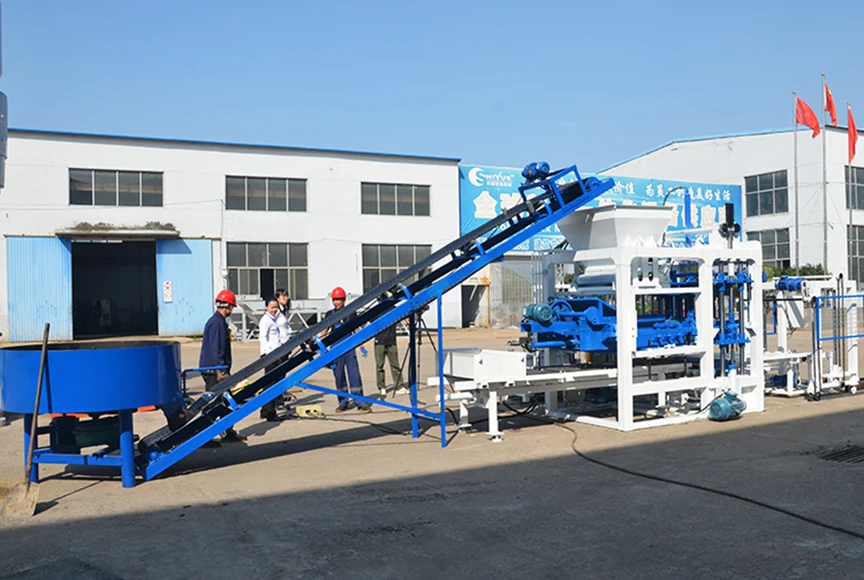
Description
Ready-stock dispatch — QT4-18 semi-automatic block machines and standard moulds are kept in inventory so buyers working against project deadlines can avoid typical multi-week manufacturing lead times.
Technical Specifications
| Parameter | Value |
|---|---|
| Model | QT4-18 |
| Product Type | Hydraulic Concrete Block Making Machine |
| Overall Dimensions (L×W×H) | 3900×1600×2300 mm |
| Total Weight | 3T |
| Rated Power | 24KW |
| Exciting Power (Vibration Force) | 40-50KN |
| Molding Cycle | 15-25s |
| Pallet Size | 850x550x25mm |
| Mixer Model | JQ350 |
| Applied Products | Paver, solid, hollow, curbstone |
| Raw Materials | Crushed stones, sand, cement, dust, fly ash |
| Output Capacity (Hollow Block 400×200×200mm) | 1200-1680 Pcs/Hr (9600-13440 Pcs/8hr) |
| Output Capacity (Hollow Block 400×150×200mm) | 1800-2400 Pcs/Hr (14400-19200 Pcs/8hr) |
| Output Capacity (Solid Brick 240×115×53mm) | 3240 Pcs/Hr (16200-19440 Pcs/8hr) |
| Automation Level | Semi-automatic |
| Voltage & Frequency | Configurable (basis to be confirmed with buyer’s local grid) |
| Control System | Configurable (basis to be confirmed) |
Application Suitability
| Application | Material or Output |
|---|---|
| Construction site hollow block production | Crushed stones, sand, cement, and fly ash mixes for 400×200×200mm and 400×150×200mm formats |
| Paver and curbstone manufacturing for municipal projects | Dense aggregate blends shaped into interlocking and kerb formats |
| Solid brick production for first-time plant startups | Standard 240×115×53mm format from locally sourced sand and cement |
| Small to medium block plant replenishment | Multi-format output using quick mould change on a single press |
Why Voltage Confirmation Must Happen Before the QT4-18 Block Machine in Stock Leaves the Warehouse
A machine sitting in a container for three weeks because the motor doesn’t match the local grid is a machine that isn’t producing blocks.
I’ve watched contractors in West Africa lose an entire mobilization window because a block press arrived wired for a frequency their site generator couldn’t supply. The crew stood around while electricians rewound motors and sourced new contactors. That delay doesn’t show up in any brochure, but it costs real money in idle labor and penalty clauses [NEED_CITE: voltage and frequency standards by export market]. Before we load any QT4-18 block machine in stock into a container, the motor nameplate, control panel transformer, and PLC display language get matched line-by-line to the buyer’s confirmed electrical standard.
What Immediate Dispatch Actually Covers
Having the QT4-18 block machine in stock means the press itself, the standard hollow and solid moulds, and the matching 850×550×25mm pallets are physically on the floor and can be crated within days rather than weeks. Buyers working against a foundation-pouring schedule or a municipal paving tender don’t have the luxury of a standard production queue. We pull from inventory, run a no-load cycle test, photograph every crate face, and hand the container booking to logistics before the buyer’s deposit clears the bank.
How Container Loading Protects Arrival Condition
The QT4-18 weighs 3T and stands 2.3 meters tall, which means it occupies a significant footprint inside a standard 20-foot or 40-foot container. Hydraulic hoses are capped, the vibration table is bolted to the skid, and the JQ350 mixer rides inverted on a separate pallet to keep its gearbox sealed. We dismantle only what the container opening demands — typically the hopper extension and the control cabinet — and label each connection point so the buyer’s team can reassemble without guesswork [NEED_CITE: container loading procedures for heavy industrial machinery].
Reading the Specs That Actually Matter on Site
The 40-50KN vibration force works in tandem with hydraulic pressure to compact the mix into the mould cavity. Too little vibration and the hollow block walls crack during stripping; too much and the fines separate from the coarse aggregate, leaving weak spots. The 15-25 second molding cycle range reflects different block formats — a 400×200×200mm hollow block takes longer to fill and compact than a solid brick, which is why the stated capacity of 1200-1680 pieces per hour is specifically rated for that hollow format. The 850×550×25mm pallet size dictates how many blocks cure per rack level and which forklift tine spacing the buyer needs.
The Hidden Cost of Skipping the Configuration Check
Ordering a block press without confirming the local aggregate gradation means the vibration table may be tuned for a sand-cement ratio that doesn’t exist at the buyer’s quarry. The result is inconsistent block density and a spike in breakage during curing. Similarly, if the buyer’s forklift has a different tine width than the pallet assumes, every pallet transfer becomes a two-man job instead of a one-man lift. These mismatches don’t appear on the quotation, but they show up the first week the machine runs [NEED_CITE: aggregate compatibility with vibration frequency in block production].
What Buying from Stock Really Gets You
Our focus stays on block machinery alone, which means the press, the moulds, the pallets, and the handling gear are specified as one matched system rather than assembled from separate suppliers. Every QT4-18 in the yard has a factory test record showing cycle times on at least one standard block format. Mould drawings and a format list ship with the machine so the buyer’s team can order replacement inserts without reverse-engineering dimensions. Voltage, frequency, and PLC language are confirmed in writing before the machine is crated, not after it arrives at the port.
Documentation & Verification
- Factory test record showing actual cycle time on the buyer’s selected block format before dispatch
- Hydraulic and electrical schematic matching the exact voltage and control language confirmed for the order
- Mould drawing and format list covering every standard mould included with the QT4-18
- Pallet specification sheet stating dimensions, material grade, and recommended curing rack spacing
- Packing photographs of each crate and container load point taken on the day of dispatch
Installation, Commissioning & Support
- Foundation pad must support 3T static load across the 3900×1600mm footprint with level tolerance under 5mm
- Dedicated 24KW circuit with confirmed voltage and frequency matching the motor nameplate installed at site
- Hopper and control cabinet reattached with labeled connectors; full no-load test run before first production batch
- Operator training covers mould change procedure, vibration force adjustment, and daily hydraulic oil level check
- Wear parts list identifies high-friction components and recommended replacement intervals for the vibration table
What to Share Before Requesting a Dispatch Quote
Tell us the exact block format you need to produce daily, the crushed stone and sand gradation available at your local quarry, and the voltage and frequency at your site panel. If you already have curing racks and a forklift on site, share the rack dimensions and fork tine spacing so we can confirm pallet compatibility. We’ll respond with a stock availability confirmation, a dispatch lead time, and a container arrival estimate for your destination port.
Frequently Asked Questions
Q: Which QT4-18 models and moulds are currently in stock?
A: The semi-automatic QT4-18 press with standard hollow, solid, and paver moulds is held in inventory. Standard 850×550×25mm pallets ship alongside. We confirm exact stock quantities and available mould formats at the time of inquiry, since inventory moves with daily orders.
Q: What is the dispatch lead time and container loading process?
A: Once voltage, frequency, and control language are confirmed, the machine is crated and booked into the next available container sailing. Loading takes one to two working days after confirmation. We provide photographs of the crated machine and container seal number before the vessel departs.
Q: How is arrival timing estimated for my destination port?
A: We quote a transit estimate based on the carrier’s published schedule from the loading port to your destination. This estimate is provided before order placement so you can plan site preparation and crane hire accordingly. Actual arrival depends on carrier routing and port congestion.
Q: Is voltage and PLC display language confirmed before shipment?
A: Yes. We require written confirmation of site voltage, frequency, and preferred PLC display language before crating. The motor nameplate, transformer, and control panel are all checked against these values. This step prevents the most common commissioning delay we see in the field.
Q: Can I order additional pallets and standard moulds with the machine?
A: Additional pallets and standard moulds for hollow, solid, paver, or curbstone formats can ship in the same container as the QT4-18. We confirm pallet material and mould cavity counts at inquiry stage so everything loads together and arrives ready for production.