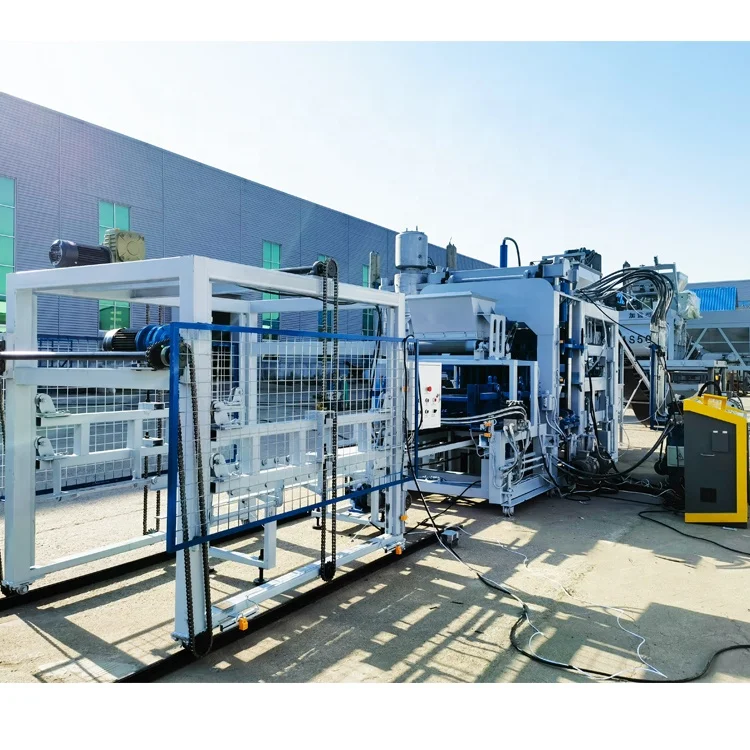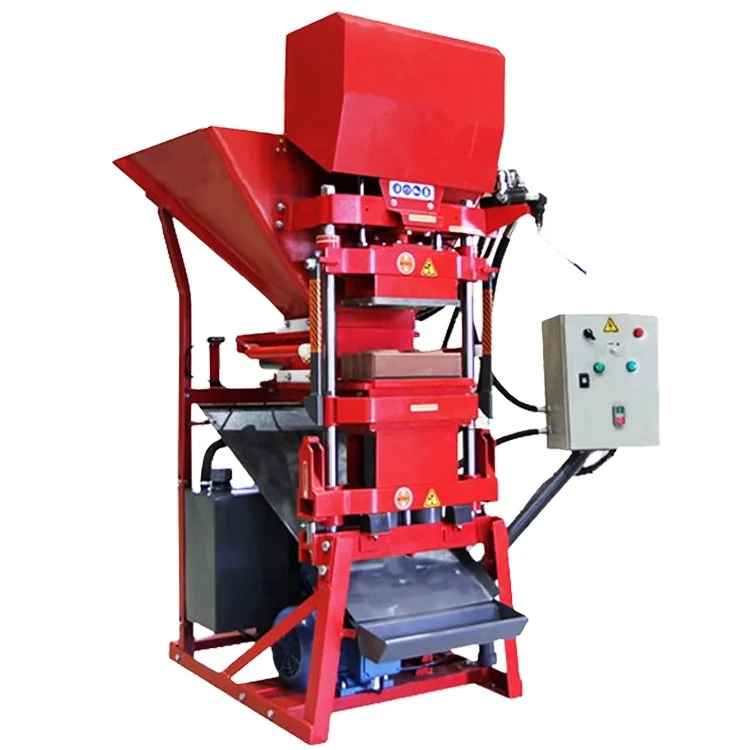
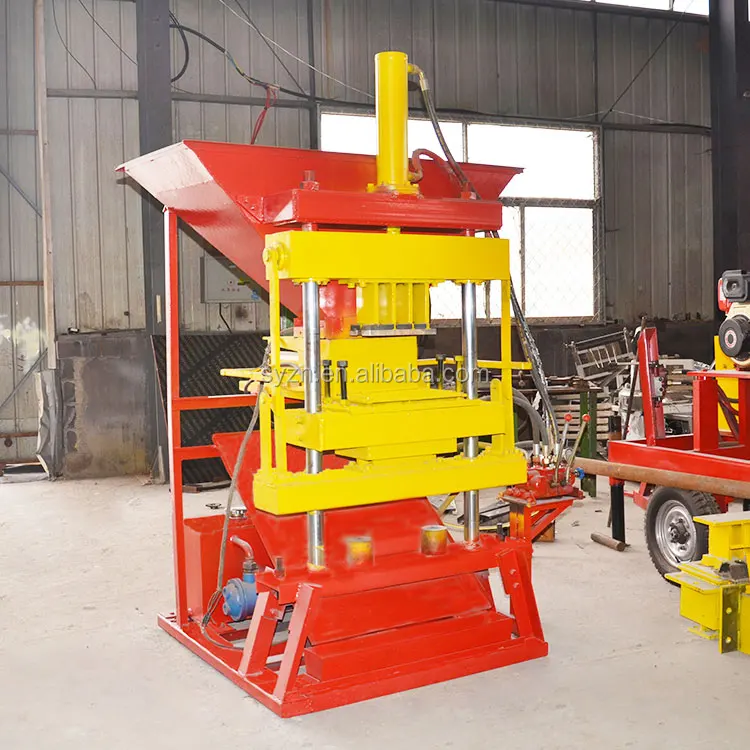
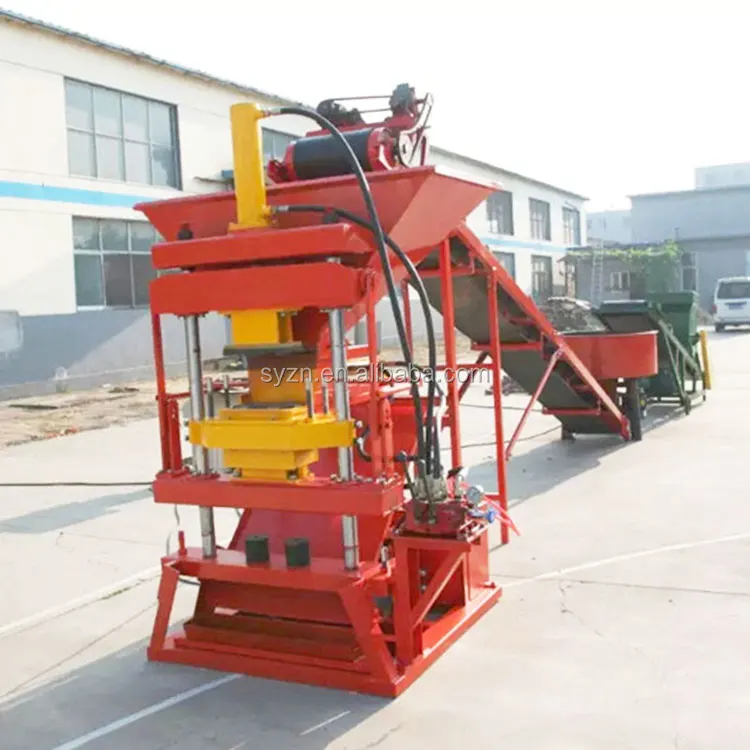


Description
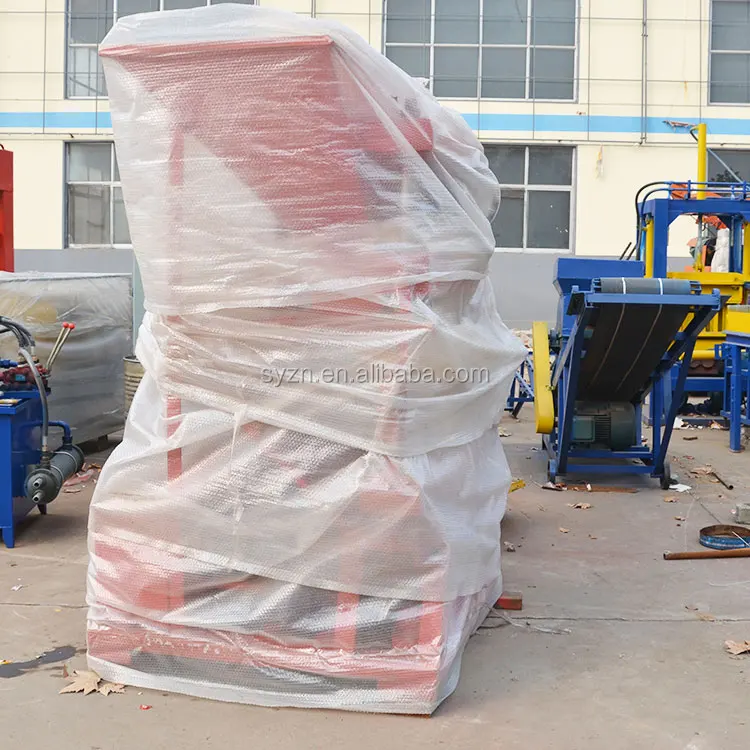
Rapid Deployment Focus — ECO 2700 units are held in standard configuration and prepared for container loading so buyers facing hard project deadlines can secure equipment without waiting through a full production cycle.
Technical Specifications
| Parameter | Value |
|---|---|
| Model | ECO 2700 |
| Product Type | Interlocking Clay Brick Machine |
| Overall Dimensions | 1000 × 1000 × 1800 mm |
| Net Weight | 1000 kg |
| Power Source | Electric motor (7.5 kW) or Diesel engine (12 HP) |
| Hydraulic Pressure | 16 MPa |
| Cycle Time | 10–15 s per mould |
| Pallet Requirement | Palletless (egg-laying type) |
| Mould Format Options | 300 × 150 × 100 mm (1 pc/mould); 250 × 125 × 60 mm (1 pc/mould) |
| Productivity (300 × 150 × 100 mm) | 320–400 pcs/hour, 2500–3000 pcs/day (8h) (basis not stated in source — confirm block format / material / thickness) |
| Productivity (250 × 125 × 60 mm) | 320–400 pcs/hour, 2500–3000 pcs/day (8h) (basis not stated in source — confirm block format / material / thickness) |
| Automation Level | Semi-automatic or Automatic (configurable per buyer request) |
| Voltage & Frequency | 380V, 3-phase, 50Hz (customizable to local voltage) |
| Raw Material (Clay + Cement) | Cement 6–8%, Clay 80–90%, Water 3% |
| Raw Material (Full Clay) | Clay 97%, Water 3% |
| Assembly State | Fully assembled, wooden box packaging |
| Warranty | 1 year (excluding wearing parts) |
Application Suitability
| Application | Material or Output |
|---|---|
| On-site housing project brick production | Interlocking clay bricks laid directly on prepared ground |
| Small-scale brick plant start-up | Clay-cement interlocking bricks without pallet infrastructure |
| Infrastructure contractor block supply | Pavers and interlocking formats produced adjacent to the work site |
| Building material distributor stock expansion | Standard interlocking brick formats for regional resale |
Why Voltage Confirmation Must Happen Before Dispatch
A machine that arrives without matching local supply sits idle while the project clock keeps running.
I once watched a construction crew stand around a brand-new interlocking brick machine for three weeks because the motor was wired for 380V 50Hz while the site ran on a different standard. The ECO 2700 interlocking brick machine in stock ships with configurable voltage and frequency, but only if the correct specification is confirmed before the unit leaves the factory. Rewiring a hydraulic press on-site is neither fast nor cheap, and the delay falls squarely on the project schedule [NEED_CITE: voltage and frequency standards by export market].
Stock Availability and Dispatch Timing
Buyers working against a project deadline need certainty on when equipment ships, not an estimate that shifts with production queue changes. The ECO 2700 interlocking brick machine in stock is held in standard configuration, meaning the core frame, hydraulic assembly, and mould set are ready for pre-shipment inspection. Power source selection between the 7.5 kW electric motor and the 12 HP diesel engine is confirmed at order placement so the correct drive train is installed before crating.
Container Loading and Shipment Preparation
The compact 1000 × 1000 × 1800 mm footprint and 1000 kg net weight allow the ECO 2700 to be loaded into a standard container without requiring specialized flat-rack arrangements. The fully assembled state means the machine is crated in a wooden box and secured for ocean transit. Dismantling is minimal — typically limited to removing the hopper and control panel for clearance — which keeps reassembly at destination straightforward and reduces the window between port arrival and first production run [NEED_CITE: standard container loading procedures for compact industrial machinery].
What the Hydraulic Pressure and Cycle Time Mean on the Ground
The 16 MPa hydraulic pressure acting through the mould cavity determines the green strength of each interlocking brick as it leaves the press. At this pressure level, clay-cement mixes in the 6–8% cement range achieve sufficient density for handling and curing without slumping. The 10–15 second cycle time across both listed mould formats — 300 × 150 × 100 mm and 250 × 125 × 60 mm — sets the rhythm of production. Because this is a palletless egg-laying design, each brick is deposited directly onto the ground or a prepared bed, eliminating the need for pallet circulation, pallet return conveyors, and the curing rack infrastructure that a stationary press requires. The trade-off is that ground conditions and surface leveling become part of the quality equation.
The Hidden Cost of Skipping Power and Language Checks
When voltage, frequency, or PLC display language are treated as afterthoughts, the consequences arrive at the worst possible moment — after the machine has been unloaded and the crew is ready to produce. A voltage mismatch requires an on-site transformer or a complete motor swap, both of which add weeks to a timeline that was already tight. A control panel displaying in a language the operator cannot read turns a simple parameter adjustment into a guessing game, increasing the risk of incorrect hydraulic pressure settings and inconsistent brick density. These are not manufacturing defects; they are communication failures that a pre-dispatch checklist eliminates entirely [NEED_CITE: CE machinery directive requirements for industrial equipment].
Why Source This Machine Here
Block machinery is the single focus of this operation, so the ECO 2700 is specified as a matched system — machine, mould, and power source confirmed together rather than assembled from separate suppliers. Stock units are configured against the buyer’s local power supply and preferred mould format before dispatch, avoiding the on-site surprises that derail project schedules. Mould options for both listed interlocking formats are available from stock, and custom mould drawings can be accommodated for buyers whose market demands a specific brick profile. Every unit undergoes a factory test run before crating, and the dispatch lead time is quoted at the quotation stage so the buyer can plan container booking and port arrival with confidence.
Documentation & Verification
- Factory test record on your selected mould format before crating
- Voltage and frequency confirmation sheet signed at order placement
- Hydraulic and electrical schematic matching the shipped configuration
- Operation and maintenance manual in your specified language
- Packing photographs documenting machine condition at dispatch
Installation, Commissioning & Support
- Level compacted ground required; no fixed foundation for palletless operation
- 380V 3-phase supply or diesel fuel source confirmed before dispatch
- Fully assembled arrival; hopper and panel reattachment only
- On-site commissioning and operator training available within approximately one week
- Mould and hydraulic wear parts list provided for first replacement planning
- Daily greasing points identified in manual for hydraulic pivot and guide rails
What to Include in Your Inquiry
To provide an accurate stock confirmation and dispatch timeline, share your destination port, local voltage and frequency standard, preferred power source (electric or diesel), and the mould format you intend to run. If your project has a fixed start date, state it upfront so the loading schedule and arrival estimate can be worked backward from that deadline.
Frequently Asked Questions
Q: Is the ECO 2700 currently in stock, and what is the dispatch lead time after balance payment?
A: Standard configuration units are held for rapid dispatch. Once balance payment is received and the pre-shipment inspection is completed, the machine is crated and released to the freight forwarder. Exact dispatch timing depends on the current stock position and your selected power configuration, which is confirmed at the quotation stage.
Q: How is the machine packed and loaded into a container for international shipment?
A: The ECO 2700 is shipped fully assembled in a wooden box crate. Its 1000 × 1000 × 1800 mm dimensions and 1000 kg weight fit within standard container loading parameters. Minor components such as the hopper may be detached for clearance, and all parts are secured to prevent transit damage.
Q: Can I choose diesel or electric power, and is the voltage confirmed before shipping?
A: Both the 7.5 kW electric motor and the 12 HP diesel engine are available options. Voltage and frequency are confirmed with the buyer before production or dispatch to ensure the machine matches local supply. This confirmation step is mandatory and is not skipped regardless of schedule pressure.
Q: What is the estimated arrival time at my destination port?
A: Arrival time depends on the destination port and current shipping schedules. An estimated arrival date is quoted before payment so the buyer can plan site preparation and crew mobilization accordingly. The dispatch lead time and transit window are provided together as a single timeline.
Q: Are standard moulds included in the stocked unit, or do I need to order separately?
A: Stocked ECO 2700 units include moulds for the standard interlocking formats listed in the specification. If your project requires a custom brick profile, a separate mould drawing and lead time apply. Confirm your required format at inquiry to ensure the correct mould is fitted before dispatch.